Africa
Douglas and Sarah Allison Center for National Security
Introduction
Africa is a region of great promise—but also of many challenges. Points of interest to America include Africa’s proximity to choke points between the Mediterranean and Red Seas and considerable natural resources. Moreover, the United States has some role in mitigating threats emanating from the region, to include terrorism, extremism, outbreaks of disease, and migration crises that can affect American security and safety. U.S. military forces on the continent must operate within an expansive, diverse, and challenging environment that includes unresolved legacy issues and rapidly increasing threats driven by political, societal, and ideological concerns.
The American perception of Africa is often one of a continent made up of similar countries. The reality is very different: more than 50 unique countries with varying geography, histories, governance and tribalism, economics, global alliances, and humanitarian and development obstacles. Historically, much of the U.S. approach to Africa has centered on specific security responses, foreign aid, and development assistance. Chief factors in Africa’s security profile currently include China’s 20-year rise on the continent, Russia’s aggressive expansion into key regions through military cooperation, France’s declining reputation in Francophone Africa, civil conflict and disruption of governance, and the spread of terrorism. Supply chain and shipping interests and potential growth in relations with reliable partners like Morocco, Ghana, and Kenya suggest areas for operational expansion, and such common threats as terrorism and disease crises can create a meeting point for like-minded actors on the continent.
Regional Overview
Africa is vast: Its geography includes the world’s largest desert and second largest rainforest, expansive mountain ranges, semi-arid lands, and critical locations among the world’s most traveled seas and straits. With much of the continent still pursuing an industrialized economy, environmental factors further hinder operational readiness and mobility. For example, low-lying regions near the Nile and Congo Rivers are prone to flooding, drought creates significant food and water shortages in the Horn of Africa, and a recent El Niño phenomenon exacerbated storms and flooding in East Africa, straining limited infrastructure and resources.[REF]
These environmental conditions are met by inconsistent infrastructure and development with poor transportation, communication, and energy access or continuity experienced throughout much of the continent. Regions can be extremely isolated from one another because of natural geographies and unreliable or nonexistent infrastructure.
The disparity in industrialization is present in every region of the continent, and although significant progress has been made, development gains are country-specific, and much of the continent remains seriously challenged. Kenya, Nigeria, Ghana, Morocco, and Egypt are examples of countries that are working to attract and accommodate foreign direct investment and that now enjoy modern road networks, high-speed rail systems, well-developed ports, internet access, and reliable and diversified energy portfolios as part of rapidly modernizing industrial economies. However, many other countries, including nations across the Sahel region, the Horn of Africa, and Central Africa, struggle to maintain any durable growth and are in zones of constant conflict. These infrastructure gaps leave countries with unreliable power, poor transportation options, and limited access to telecommunications networks, all of which not only affect security and mobility conditions, but also hamper prospects for the economic growth and social development that could help to avert future disruption.
Politically, several African states benefit from strong, mutually beneficial ties with the U.S.—stable working relationships with security, commercial, and other goals. Conversely, the continent presents many volatile and problematic situations, including countries that are under unstable government or uncooperative rule, are the targets of unrelenting terrorist attacks, face uncontrollable humanitarian challenges, and enable adversaries’ expansion on the continent, chiefly in support of Chinese and Russian interests.
In the security sphere (although results remain mixed), Morocco, Egypt, Somalia, Kenya, Ethiopia, Nigeria, and Uganda either partner with or have recently participated with the U.S. in counterterrorism and other military training and peacekeeping cooperation. Among the more successful examples, Kenya hosts several U.S. military operations and partners within the Combined Joint Task Force–Horn of Africa (CJTF–HOA), which works to counter violent extremism by the al-Qaeda–aligned al-Shabaab and execute maritime security operations. Morocco is a member of the Global Coalition to Defeat ISIS and remains a reliable partner in counterterrorism operations in North Africa and the Sahel—an increasingly valuable relationship with the recent loss of the U.S. capabilities in Niger and, to a lesser degree, Chad.
Conversely, the United States faces a multitude of conventional and other threats to its interests throughout the continent. Nigeria has been working for years to isolate violence by Boko Haram jihadist insurgents, based primarily in the north and northeastern provinces, and also more recently by ISIS–West Africa as well as to mitigate religious violence against Christians by other Islamic herders and other groups. South Sudan remains unable to achieve lasting stability and has sunk into a civil war, renewing a major humanitarian crisis. The Central African Republic (CAR) is under duress from rebel groups operating from remote regions. Zimbabwe’s regime and economic instability have created a roadblock to U.S. engagement.
The following countries and regions merit the strongest U.S. attention both because of their real and potential impact on U.S. interests and because of their possible bearing on U.S. military capabilities.
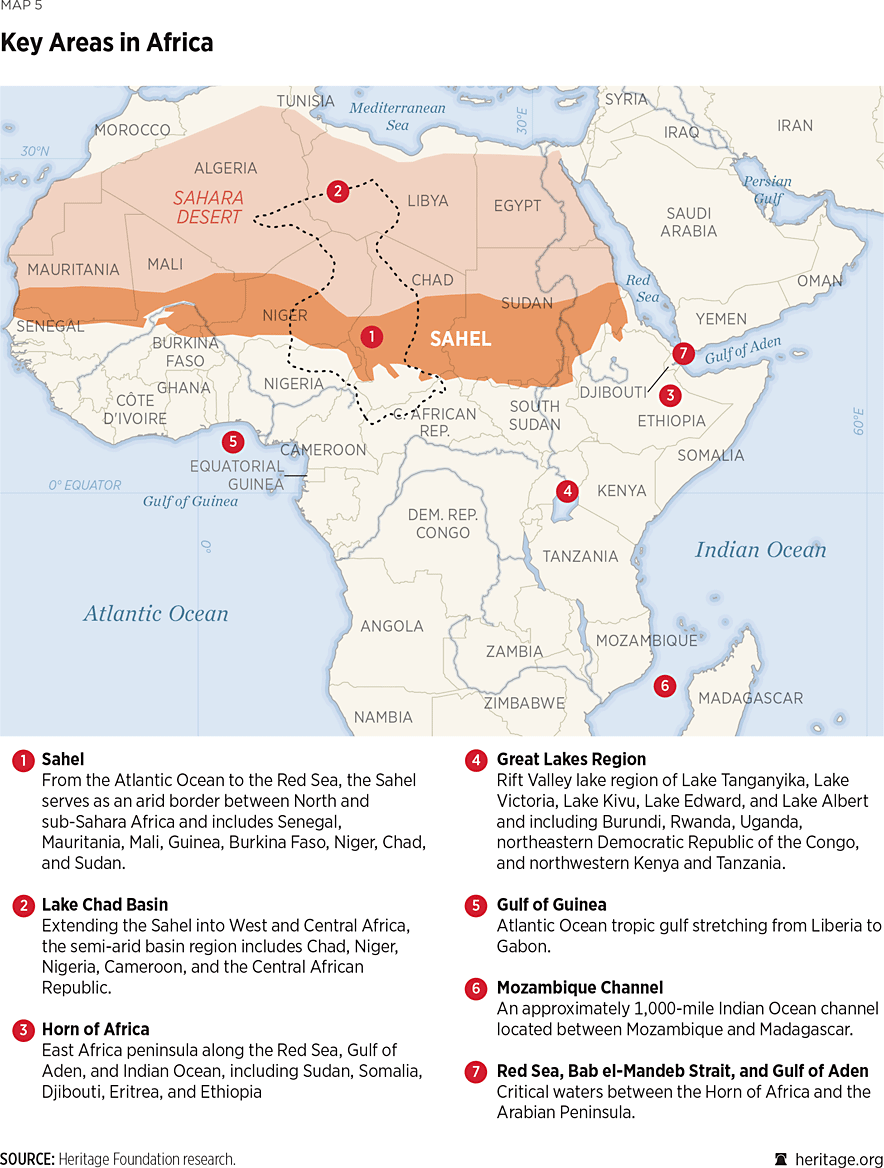
The Sahel. Stretching from the Atlantic Ocean to the Red Sea, the Sahel serves as an arid border between North and sub-Saharan Africa. The region has seen a complete undoing of its governance structures in just over four years: Mali, Guinea, Burkina Faso, Niger, Chad, and Sudan represent a sequence of coups d’états and conflicts by military juntas and other paramilitary groups, often under the influence of Russian support, insurgency pressure, or both. Resentment has been directed especially at the region’s colonial history with the French, who have been expelled summarily from several countries following coups.
This change finds U.S. interests, partners, and the people of the region imperiled. For the United States, this disruption directly impacts its leadership role in containing terrorism and extremism threats. With the fall of Niger’s government, the U.S. was forced to withdraw more than 1,000 military personnel and vacate Niger Airbases 101 and 201 in Niamey and Agadez in July and August 2024, respectively.[REF] This represents a more than $100 million loss of investment in the airbases, which had served as a launch point for counterterrorism cooperation since 2019. This asset is now under Nigerian control, which is heavily influenced by Russia. Moscow’s engagement is found elsewhere as well including in Chad, where a small contingent of approximately 100 U.S. military personnel conducting training exercises were required to depart the country in May 2024.[REF] The U.S. absence and the disruption of governance also enable greater terrorism and extremism: Al-Qaeda and ISIS affiliates are flourishing, pressing new ruling regimes, and working to recruit, stage attacks, and expand territorial control. As these new regimes attempt to establish order, civilian populations face increased violence, displacement, and disruption of basic services, further exacerbating the humanitarian crises that are common to the Sahel.
Additionally, the Sahel’s current regimes appear to be less inclined to cooperate with international partners, particularly traditional leaders like the United States and France, or with such African alliances as the African Union (AU) and the Economic Community of West African States (ECOWAS), the latter of which had condemned the coups and imposed sanctions on several Sahel states. Withdrawing from ECOWAS, Mali, Burkina Faso, and Niger formed the Alliance of Sahel States (AES) in September 2023 as a cooperative forum to engage security and regional issues. Sahel states like Mali and Niger are also revising approaches to managing natural resources; where metals like gold and uranium are sourced can directly impact global supply chains.
In the Sudan, an intra-military conflict between the Sudan National Army and the paramilitary Rapid Support Forces (RSF) ultimately ousted democratically elected leaders in April 2023. This ongoing civil war adds to the complicated landscape with the turmoil attracting competing influence and support from North African and Middle East peers and Russia. Instability has displaced thousands, has generated immigration concerns in neighboring states like Egypt and Chad, and is creating avenues for insurgencies to inject further extremism into an already historically stressed country.
Morocco. With dual access to the Atlantic and Mediterranean and long-standing political ties, Morocco is one of the U.S.’s most capable and dependable partners in Africa. Designated as a Major Non-NATO Ally (MNNA), it maintains a level of interoperability with U.S. forces that is unmatched anywhere else on the continent. The annual African Lion exercise demonstrates interoperability in practice, bringing together tens of thousands of troops across air, land, and maritime domains. Moroccan forces operate such U.S. platforms as the F-16 and the AH-64E Apache, ensuring seamless integration into joint operations. The State Partnership Program with the Utah National Guard has deepened its ties over the decades and has produced a generation of officers trained to NATO standards.[REF]
Morocco is a member of the Global Coalition to Defeat ISIS and contributes to counterterrorism coordination across North Africa and the Sahel. This cooperation is reinforced at the political level by Washington’s recognition of Moroccan sovereignty over the Western Sahara. First announced in 2020, the policy was reaffirmed in April 2025 by Secretary of State Marco Rubio, who stated that Morocco’s autonomy plan is “the only feasible solution” to ambiguity over territorial sovereignty. This further reinforced a relationship that has the potential to expand to basing, port access, and intelligence cooperation.[REF]
Algeria. Algeria is Africa’s largest country in terms of land area and commands vast natural resources that make it a significant if complicated factor in America’s regional calculus. Algeria has exhibited a slight tilt toward China and Russia during the past decade. In 2014, it became the first Arab state to establish a comprehensive strategic partnership with China, a status that signals top-tier political coordination with a defense component, not just commercial ties. Additionally, Russia remains a key partner in Algeria’s defense posture. Algeria’s force structure and training pipeline are tied to Russian systems, and joint naval drills in the Mediterranean and ground exercises reinforce that cooperation, constraining NATO-standard interoperability and narrowing the space for meaningful U.S. defense engagement.
The United States has tested limited openings. High-level engagements by U.S. Africa Command (AFRICOM)[REF] have included two visits by AFRICOM Commander General Michael Langley in 2024. That outreach was maintained early in 2025 with a U.S.–Algeria military cooperation memorandum of understanding,[REF] and Algiers has signaled interest in selected U.S. equipment while inviting U.S. investment more broadly. The channels opened by AFRICOM and Algeria’s interest in selected U.S. defense ties suggest that pragmatic cooperation is possible if it is aligned with clear American conditions and priorities—an uncertain outcome given regional tensions between Algeria and America’s long-standing partner Morocco.
Somalia. Somalia’s fragility cannot be overstated with the terrorist organization al-Shabaab controlling significant portions of south and central Somalia and threatening to topple the government in Mogadishu. Should the capital fall, U.S. troops and airbase access would immediately be jeopardized, and American and allied maritime security in the Gulf of Aden would suffer greatly from the loss of this position. Despite U.S. defensive attacks against terrorist forces, including airstrikes in February and March 2025 to prevent attacks on American interests,[REF] al-Shabaab continues to make gains against a weakened government.
In addition to the threat from al-Shabaab, ISIS maintains a limited but persistent presence in northern Somalia, particularly in the Puntland region. Smaller than al-Shabaab, ISIS in Somalia has established ties with regional and global jihadist networks. The group engages in targeted assassinations, extortion, and small-scale attacks, clashing with Somali security forces as well as with al-Shabaab.
Desperate for continued U.S. security assistance, Somalia recently offered the United States access to two strategic ports. Both ports, however, are controlled by autonomous territories in Somaliland and Puntland that advocate a possible deal by which the United States would recognize their legitimacy in exchange for basing and commercial port access opportunities. Somaliland’s push for recognition presents an inflection point for the country’s security, regional stability, and the U.S. presence in Somalia. Somaliland presents itself as a more stable partner against Somalia, and the Somali government cautions that any recognition would subsequently disrupt Mogadishu's relationship with Washington, although to what extent is unknown.
Ethiopia. A stable Ethiopia is important because of Ethiopia’s role in mitigating regional risks, including by supporting U.S. counterterrorism efforts against al-Shabaab and other terrorist groups in the Horn of Africa with airspace access, information sharing, and other permissions.[REF] The U.S. partnership with Ethiopia is currently minimal, however, because of civil conflict in the country’s northern Tigray region.
The two-year war between Ethiopian forces and the Eritrean-backed Tigray People’s Liberation Front (TPLF) in the Tigray region was resolved with a peace agreement in November 2022.[REF] However, periodic violence continues throughout the region, and both sides of the conflict have been accused of violating human rights. As the region attempts to recover, rebel groups operating into Ethiopia from across its borders present new risks. The possibility of a conflict between Ethiopia and Eritrea also exists.
In addition, the Grand Ethiopian Renaissance Dam (GERD), which opened on September 9, 2025, stands as a major point of contention among Ethiopia, Egypt, and Sudan.[REF] Essential for Ethiopia’s development and energy needs, the GERD affects the flow and control of Blue Nile waters that are critical to downstream countries, and Egypt is concerned that the dam will reduce water availability, threatening its agriculture and water security. Despite multiple rounds of negotiations, the three countries have struggled to reach a binding agreement on dam operations and water management, and the issue remains unresolved, keeping tensions high in a region that requires peer cooperation for lasting security.
Egypt. Egypt is among the continent’s most important security partners and plays a crucial role both in the Middle East and in North Africa. Egypt is involved throughout the region and can serve as a mediator in situations like Sudan’s and Libya’s ongoing civil conflicts. Egypt also cooperates with Gulf States to counterbalance the influence of Iran and terrorist groups, and its control of the Suez Canal ensures its importance in global trade and military logistics.
Egypt’s partnership with the United States remains a cornerstone of its security strategy. The United States provides $1.3 billion in military aid to support Egypt’s counterterrorism efforts and the modernization of its armed forces.[REF] Joint exercises, intelligence sharing, and arms sales, including sales of advanced fighter jets and missile defense systems, reinforce this cooperation. The U.S. and Egypt also continue to collaborate on maritime security to safeguard the Red Sea and Gulf of Aden from piracy and terrorist threats.
Internally, Egypt continues to face threats from Islamist militant groups, particularly in the Sinai Peninsula, where insurgent activity persists despite ongoing military campaigns.
Libya. It has been 15 years since 2011 when the government of Colonel Muammar Gaddafi was overthrown, yet Libya remains highly unstable, beset by multiple political and military conflicts. Tensions have diminished slightly in recent years, but disagreement persists between the Tripoli-based Government of National Unity (GNU) and the Libyan National Army (LNA) operating semi-autonomously in eastern Libya. Factions seeking control of valuable oil resources have ignored ceasefires and other agreements. Efforts to achieve a lasting peace stall partly because of foreign influences that include Europe, Algeria, Turkey, Qatar, and Russia, which operates through its Africa Corps. The ceding of ground to terrorist organizations, chiefly Ansar al-Sharia, by Libya’s government represents a serious threat not only to Libya, but to points north of the Mediterranean as well.
Kenya. The U.S. has designated Kenya as a Major Non-NATO Ally and has reinforced Kenya’s role as a key security partner by providing access to advanced military equipment and participating in joint training exercises. Recent agreements include the provision of 16 U.S.-manufactured helicopters and the acquisition of 150 M1117 armored vehicles. Kenya co-hosted the 2025 African Chiefs of Defense Conference with the U.S., underscoring its strategic role in regional security.
Kenya continues to confront threats from al-Shabaab, particularly in its coastal regions, and is a key partner in antipiracy efforts. Kenya has strengthened its military capabilities through joint exercises with the United States such as Justified Accord 2025, which was aimed at enhancing multinational combat readiness and crisis response capabilities. Kenya has been actively involved in regional peacekeeping efforts, and its increased participation as a global security partner includes leading a multinational force in Haiti to combat gang violence.
Democratic Republic of the Congo (DRC) and Rwanda. Historically, among the threats to Central African security, ongoing violence between DRC military forces and Rwandan-supported Tutsi insurgent organizations has presented the greatest risk to stability for the Great Lakes region. Fighting along the DRC–Rwanda border has been ongoing for 30 years with insurgent groups—chiefly the March 23 Movement (M23)—operating under the Congo River Alliance (CRA). M23 sees itself as defending Tutsi interests against Hutu militias, but its incursions into the North Kivu Province maintain the decades-long conflict that created the 1994 Rwandan genocide. Today, this conflict has grown to encompass fighting over territory, security, migration, and natural resources.
President Trump has actively engaged with the DRC and Rwanda since taking office. Shortly following the President’s inauguration, on January 27, 2025, M23 rebel fighters executed a rapid assault into the City of Goma, the largest metropolitan area in North Kivu, and immediately displaced residents in a city of approximately 3 million people.[REF] This latest incident risked becoming a major crisis, as the province faces hunger, migration, and health issues that include an Ebola outbreak, the chief humanitarian concern for the West. A peace agreement, brokered by the United States with support from Qatar, was announced in June 2025 and included commitments to resolve such decades-long issues as disarmament, border integrity, paramilitary groups, economic integration, the return of refugees, and humanitarian access to the region.[REF] Despite peer government cooperation, questions remain about the rebel groups’ willingness to end their attacks.
In addition to M23, the Lord’s Resistance Army (LRA) continues to disrupt DRC and other remote Central African populations in the Great Lakes Region through violence, kidnappings, and abuses of human rights including the use of child soldiers. Operating sporadically in jungles and rural areas from the DRC to Sudan, the LRA remains difficult to eliminate and continues to be a security threat because of weak local governance and the challenging terrain.
South Africa. The Republic of South Africa is the African continent’s sole G20 economy. Traditionally, it was viewed as a safe investment destination for Western trade and development, but during the past five years, President Cyril Ramaphosa’s government has stood increasingly in opposition to American positions on such issues as currency and Israel, either tacitly or explicitly, while simultaneously advocating for increased U.S. trade, investment, and aid.
South Africa only heightened concerns following a joint naval exercise with Russia and China in the Indian Ocean on the one-year anniversary of Russia’s invasion of Ukraine,[REF] and as recently as January 2026’s Will for Peace BRICS exercise, which expanded the drills to include Iran and the UAE.[REF]
Although there is no direct conflict or threat, South Africa’s openness to cooperating with these two global military powers, coupled with a tense relationship with the United States, raises the country’s risk profile.
Bilateral relations between the U.S. and South Africa have become progressively more strained since 2023; issues include U.S. accusations that South Africa has aided Russian weapons transports and South Africa’s support for Palestinian insurgents against Israel.[REF] U.S. presidential executive orders condemning South African racism and the expulsion of South Africa’s ambassador to the United States in response to derogatory remarks against America further underscore these tensions.[REF] South Africa has replaced its ambassador to Washington and continues to lobby in an effort to repair its relationship with the U.S., particularly regarding tariff relief and maintaining its Africa Growth and Opportunity Act (AGOA) trade program eligibility, but progress appears to be limited at best.
Terrorist Groups and Paramilitary Organizations in Africa
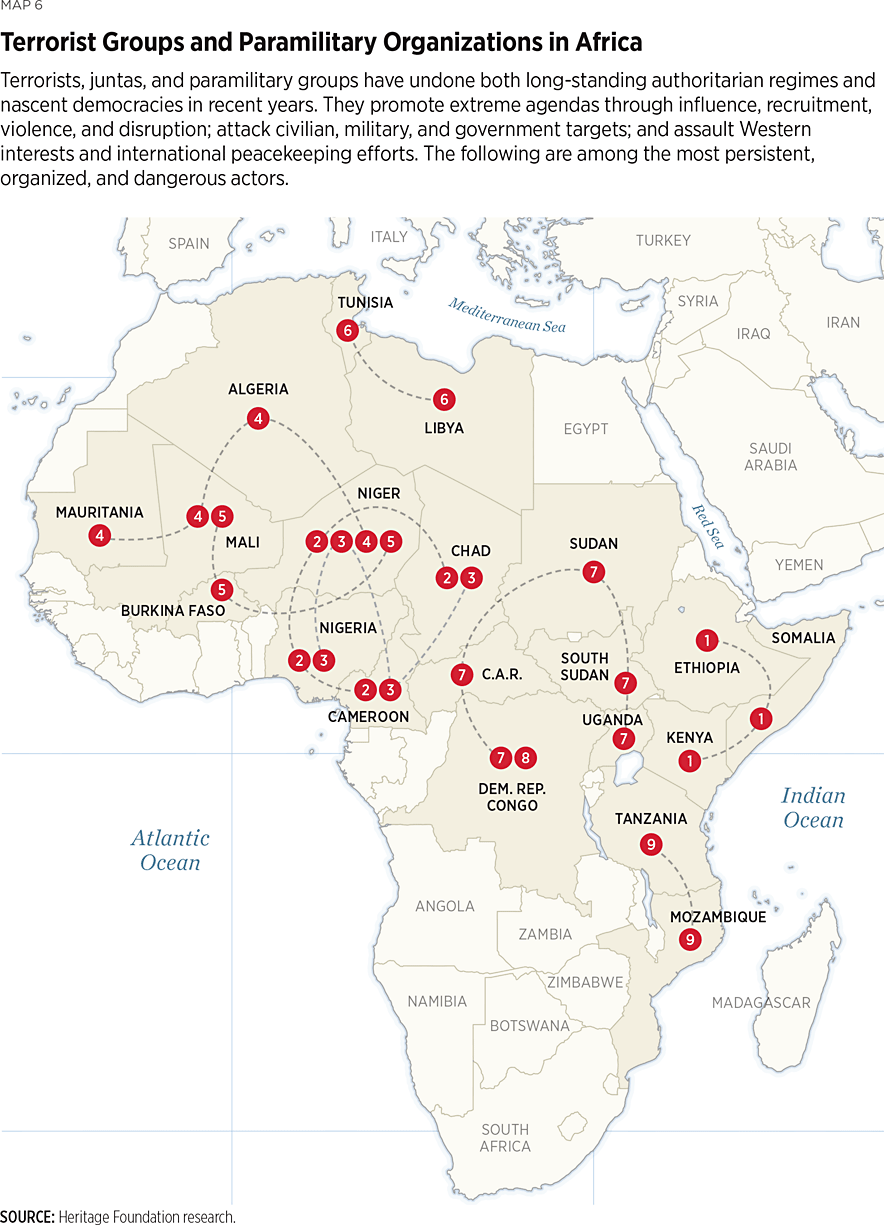
Terrorists, juntas, and paramilitary groups have undone both long-standing authoritarian regimes and nascent democracies in recent years. They promote extreme agendas through influence, recruitment, violence, and disruption; attack civilian, military, and government targets; and assault Western interests and international peacekeeping efforts. The following are among the most persistent, organized, and dangerous of these actors:
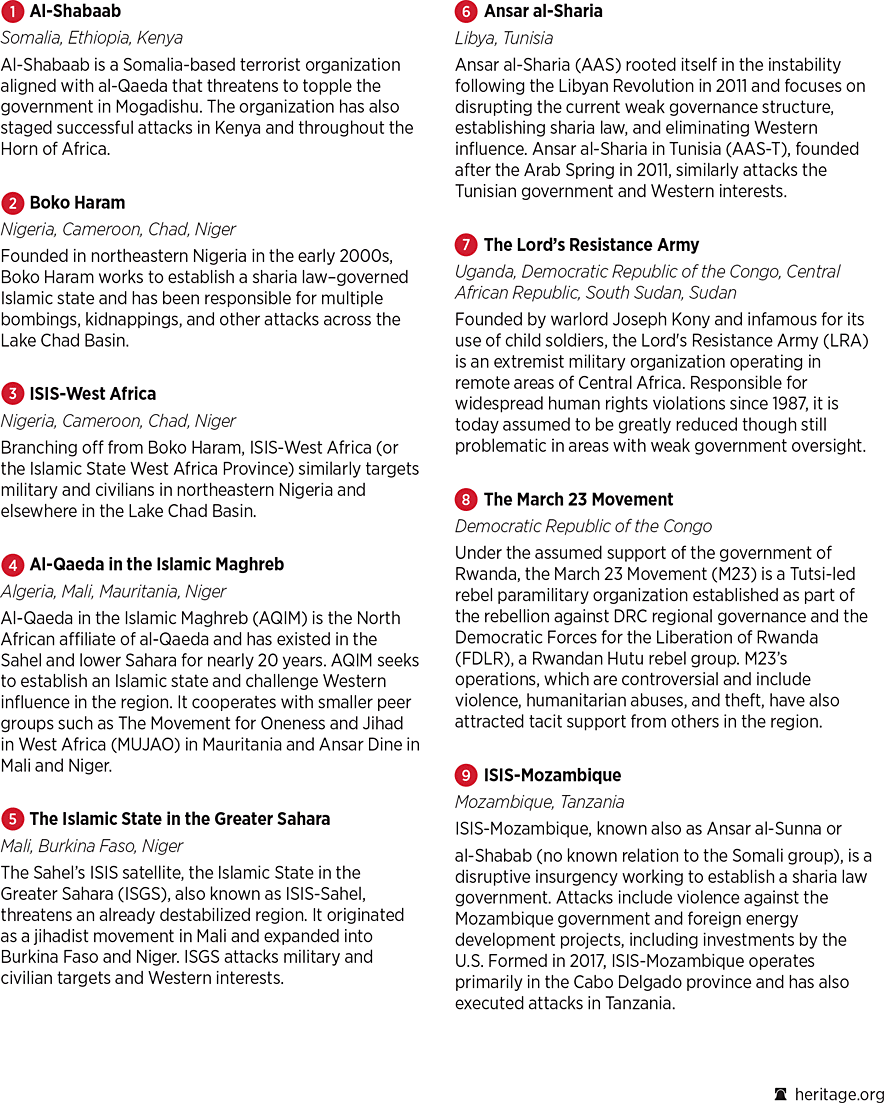
- Al-Shabaab: Somalia, Ethiopia, Kenya. Al-Shabaab is a Somalia-based terrorist organization aligned with al-Qaeda that threatens to topple the government in Mogadishu. It also has staged successful attacks in Kenya and throughout the Horn of Africa.
- Boko Haram: Nigeria, Cameroon, Chad, Niger. Founded in northeastern Nigeria in the early 2000s, Boko Haram works to establish an Islamic state governed by sharia law and has been responsible for multiple bombings, kidnappings, and other attacks across the Lake Chad Basin.
- ISIS–West Africa: Nigeria, Cameroon, Chad, Niger. Branching off from Boko Haram, ISIS–West Africa, also known as the Islamic State West Africa Province, similarly targets military and civilians in northeastern Nigeria and elsewhere in the Lake Chad Basin.
- Al-Qaeda in the Islamic Maghreb: Algeria, Mali, Mauritania, Niger. Al-Qaeda in the Islamic Maghreb (AQIM) is the North African affiliate of al-Qaeda. AQIM has operated in the Sahel and lower Sahara for nearly 20 years and seeks to establish an Islamic state and challenge Western influence in the region. It also cooperates with smaller peer groups such as the Movement for Oneness and Jihad in West Africa (MUJAO) in Mauritania and Ansar Dine in Mali and Niger.
- Islamic State in the Greater Sahara: Mali, Burkina Faso, Niger. The Sahel’s ISIS satellite, the Islamic State in the Greater Sahara (ISGS), also known as ISIS-Sahel, originated as a jihadist movement in Mali and expanded into Burkina Faso and Niger. ISGS attacks military and civilian targets and Western interests generally, further destabilizing an already destabilized region.
- Ansar al-Sharia: Libya, Tunisia. Ansar al-Sharia (AAS) rooted itself in the instability following the Libyan Revolution in 2011 and focuses on disrupting the current weak governance structure, establishing sharia law, and eliminating Western influence. Ansar al-Sharia in Tunisia (AAS-T) was founded after the Arab Spring in 2011 and similarly attacks the Tunisian government and Western interests.
- Lord’s Resistance Army: Uganda, Democratic Republic of the Congo, Central African Republic, South Sudan, Sudan. Founded by warlord Joseph Kony and infamous for its use of child soldiers, the Lord’s Resistance Army (LRA) is an extremist military organization operating in remote areas of Central Africa. Responsible for widespread violations of human rights since 1987, the LRA is assumed to be greatly reduced though still a problem in areas with weak government oversight.
- March 23 Movement: Democratic Republic of the Congo (DRC). Operating with the presumed support of the government of Rwanda, the March 23 Movement (M23) is a Tutsi-led rebel paramilitary organization that was established as part of the rebellion against DRC regional governance and the Democratic Forces for the Liberation of Rwanda (FDLR), a Rwandan Hutu rebel group. M23’s operations, which are controversial and include violence, humanitarian abuses, and theft, have attracted tacit support from others in the region as well.
- ISIS-Mozambique: Mozambique, Tanzania. ISIS-Mozambique, a disruptive insurgency formed in 2017 and also known as Ansar al-Sunna or al-Shabab (no known relation to the Somali group), seeks to establish a government under sharia law. Its attacks target the government of Mozambique and foreign energy development projects including investments by the United States. ISIS-Mozambique operates primarily in the Cabo Delgado province but also has executed attacks in Tanzania.
Threats to the Continent
Russia and China. The Russian Federation and the Chinese Communist Party (CCP) have established their respective presences across Africa with one or the other serving as the primary global relationship for much of the continent. Achieved through a combination of security partnerships, diplomatic relations that capitalize on post-colonial dissent, and commercial engagement and entrapment, Russia’s and China’s prioritization of African affairs during the past 20 years have led to a favorable view of their defense and commerce aims, replacing an American brand traditionally centered on humanitarian aid and development. This pair of malign actors complicates U.S. military cooperation with countries like their BRICS partner South Africa that find it easier to have connections with authoritarian regimes because of their shared political and social philosophies.
Moscow’s fingerprints in Africa’s disrupted regions include bilateral security agreements, paramilitary cooperation, and arms proliferation. Acting as a military counterweight to Western democracies, Moscow helps African authoritarian and nascent military regimes create the appearance of legitimacy and stability. Since 2021, Russian influence has been notably evident throughout the Sahel, where multiple coups d’état have been executed by Russian-trained juntas with support from the Wagner Group, a private military company that has since been folded into Russia’s Africa Corps.[REF] Today, the Africa Corps is involved in Niger, Chad, Mali, Libya, Sudan, the Central African Republic, and Mozambique, among other countries, and offers military assistance to regimes in exchange for access to natural resources, including gold and oil, as well as access to strategic locations along the Mediterranean and the Horn of Africa.
Russia’s geopolitical influence ultimately complicates U.S. efforts to promote peace and stability, economic cooperation, and better governance. As Nigerien paramilitary groups deposed the country’s democracy with the Wagner Group’s assistance, for example, Nigeriens waved Russian flags in celebration.[REF]
Unlike Russia’s security-focused engagements, China’s strategic investments in infrastructure, military cooperation, and resource extraction employ a commercial and development approach that is implemented primarily through Beijing’s Belt and Road Initiative (BRI), an emerging market investment program that has been accused of economic coercion and unfair asset acquisition. China has surpassed the United States and Europe as Africa’s chief trade and investment partner; it meets immediate needs (telecommunications, logistics, etc.) in exchange for resource rights and infrastructure primacy as well as influence in government regulatory and procurement entities. China’s commercial activities on the continent have strengthened its position in its rivalry with the U.S., and through these efforts, Beijing prioritizes its access to and control of such African resources as oil, gas, critical minerals, and rare earth elements, which are essential for China’s industrial growth.
The BRI includes a distinct focus on port development (Africa has more than 230 commercial ports[REF]) and creating avenues to enable Chinese naval positioning. China established its first overseas military base in Djibouti in 2021, supporting the naval anti-piracy operations of the People’s Liberation Army (PLA) off the coasts of Yemen and Somalia and providing a strategic position in the Gulf of Aden. The PLA Navy has made several visits around the continent during the past four years with an emphasis on West Africa that includes a naval exchange with Nigeria and sponsorship of military projects in Ghana. China also appears to be interested in establishing a second military base in Equatorial Guinea to create a dedicated military port on the Atlantic Ocean.
Terrorism and Extremism. Terrorism and extremism threaten most of Africa with various militant groups advancing violent ideologies and executing attacks on military, government, civilian, and foreign targets.[REF] Reaching every part of the mainland, terrorist organizations such as al-Shabaab, Boko Haram, and ISIS exploit unsettled and fledgling governance structures and long-term humanitarian crises, operating in spaces with weak government control to recruit, train, and orchestrate violence and messaging. Rapidly growing populations throughout Africa, combined with high unemployment rates and poverty among youth, increase vulnerability to terrorist recruitment.
African terrorist networks benefit from operational flexibility, peer organization cooperation, unstable operating environments, remote and disconnected environments, and self-defeating government turmoil. African governments seek global security and peacekeeping assistance, and the United States stands as a reliable partner, but the global commitment to mitigating terrorism and extremism on the continent is limited, partly because of governance issues that often fail to negate the appeal of terrorist ideology.
Maritime Concerns. Given its substantial coastline, Africa's maritime security is under constant threat of piracy. Key commercial waterways in the Gulf of Guinea, Red Sea, Gulf of Aden, Indian Ocean, and Mozambique Channel represent cruising grounds for pirates and crime organizations that present security challenges to U.S. and allied shipping. Conducted by a multitude of organizations and individuals to fund other illegal activities and terrorist operations, examples include attacks on oil and gas interests in the Gulf of Guinea, attacks on large commercial tankers in the Gulf of Aden, and the operations of Yemeni Houthi rebels in the Red Sea as well as widespread abductions and ransoming, drug smuggling, human trafficking, illegal fishing, and other transnational crimes.
The global community has increased naval patrols with a particular emphasis on the Red Sea and Gulf of Aden, and the United States remains a leader in anti-piracy efforts and naval training for African forces, deploying efforts such as the CJTF–HOA Bull Shark exercise and the Special Operations Maritime Task Unit’s training programs to enhance cooperation and readiness.
Humanitarian and Immigration Crises. Many of the world’s least developed countries are represented on the African continent and suffer from the greatest humanitarian challenges including famine, water shortages and drought, cyclones, flooding, and outbreaks of disease. Food insecurity is rampant, and more than half of the continent’s countries experience food shortages of greater than 60 percent.[REF] More than 600 million Africans also lack reliable access to electricity. Economies can be fragile and subject to corruption, which undermines economic freedom, and characterized by commercial barriers, underemployment, and unemployment, which deter the foreign direct investment that could help to facilitate sustainable change.
These conditions encourage the disruption that fosters desperation, migration, violence, and extremism. Humanitarian and development crises enable further extremism and violence and create opportunities for sophisticated terrorist organizations to exploit as well as global malign influences. Coups d’état across the Sahel, civil conflict in Sudan and Libya, and intensified terrorist activities in Somalia, for example, reflect the instability that terrorists have successfully exploited to expand their influence. As conditions continue to deteriorate, people are displaced and subsequently create added security challenges for neighboring countries as extreme ideologies and dissent are carried into other societies.
Persecuted Religious Minorities. Religious minorities, particularly Christians, face increasing persecution in several African countries, typically from terrorist groups and armed militias. In countries like Nigeria, Burkina Faso, and the Central African Republic, jihadist groups such as Boko Haram and al-Shabaab target Christian communities for killings and abductions as a way to eliminate Western influence. In Nigeria, Christians are especially vulnerable to attacks in the region’s Middle Belt by regional terrorist organizations and by local Islamic herdsmen who commit violence against Christian farmers over land disputes. The plight of persecuted Christians in Nigeria has earned the concern of Washington and Brussels, and the U.S. government has relisted Nigeria as a Country of Particular Concern. In response to escalating violence, President Trump ordered airstrikes against terrorist groups in the country on December 25, 2025, with further military intervention to be determined.[REF]
In Nigeria and elsewhere, the U.S. military plays a small but important role in preventing this persecution through select partnerships with African states for security training to improve the ability of state forces to protect religious minorities and combat terrorist groups.
Threats to the U.S. Homeland
Although disruption, terrorism, and individual malign state activities are not likely to present an immediate risk to the U.S. homeland, security issues in Africa threaten American interests on and around the continent as well as the interests of U.S. partners. Without mitigation, these security challenges have the potential to create or exacerbate global issues such as terrorism, the drug trade, or immigration crises that can impact the United States.
Quality of Local Forces by Country
A recent ranking of the world’s strongest military powers finds five African states in the top quarter percentile: Egypt (ranked 19th); Algeria (26th); Nigeria (31st); South Africa (40th); and Ethiopia (52nd).[REF] Military spending for the entire African continent totals an estimated $52.1 billion—just 1.9 percent of global military expenditures.
Military spending varies greatly from country to country but continues to increase overall: It rose by 3 percent during the past year and has grown by 11 percent since 2015.[REF] Reporting inconsistencies and other issues make data for many countries uncertain, but rising military expenditures in countries for which the data are more certain reflect such causes as civil and border conflicts, regional disruption in the Sahel, counterterrorism and anti-piracy efforts, and economic growth.
Algeria and Morocco lead the continent in military expenditures. Algeria’s military spending was more than $21.8 billion in 2024, a 12 percent increase over the prior year and more than twice as much as 2019’s $10.3 billion. This represents more than 40 percent of all military expenditures on the continent and accounts for more than 21 percent of Algeria’s total government budget and just under 8 percent of its GDP. Morocco spent $5.5 billion, a 2.6 percent increase, more than 10 percent of government spending, and 3.5 percent of GDP. These two North African states account for half of the continent’s total military expenditures.[REF]
Though their spending totals are smaller, nascent military-led and junta-led governments in the Sahel represent military growth. Burkina Faso (from $357 million in 2019 to $1.02 billion in 2024), Chad (from $234 million to $557 million), Guinea (from $197 million to $562 million), Mali (from $475 million to $929 million), and Niger (from $247 million to $435 million) have steadily increased both their military spending and the percentage of total government spending on military and defense since a series of coups during the past five years.[REF] Neighboring states such as Cameroon and Senegal also have consistently increased their military spending during the same period, possibly signaling a change in posture in response to regional disruption in addition to continuous terrorism concerns. Conflict states, states responding to civil disruption, and states like South Sudan, the Democratic Republic of the Congo, Mozambique, Somalia, and Uganda that face terrorism and migration crises also continue to devote more attention to military spending.
However, elsewhere in Africa, expenditures have decreased, most notably in several of the continent’s largest economies. Angola, Egypt, Ethiopia, Nigeria, and South Africa have consistently reduced their military spending, as well as military spending as part of total GDP and as a percentage of total government spending, in recent years. As it shifts its focus to economic development, energy, and infrastructure, South Africa, the largest military spender in sub-Saharan Africa, continues to reduce military spending and has decreased its budget by 17.5 percent since 2019 to $2.8 billion in 2024.[REF]
Among the most developed African states, Kenya has consistently funded its military. Kenya recently increased its spending from $1.05 billion in 2023 to $1.223 billion in 2024 and is assuming a greater role in regional and global security.
U.S. Force Presence and Infrastructure
The United States’ modest interests in Africa are maintained by military capabilities: conducting counterterrorism operations, protecting American interests, providing cooperative training, supporting global peacekeeping and stability efforts, and delivering humanitarian assistance and disaster response. U.S. security activities currently are organized under U.S. Africa Command, established in 2007 and headquartered in Stuttgart, Germany.
AFRICOM reports to the Secretary of War and is currently led by General Dagvin R.M. Anderson, USAF, who was appointed as AFRICOM’s sixth Commander on August 15, 2025. AFRICOM works closely with the U.S. Department of State and its embassies. AFRICOM’s scope includes security along two oceans, the Mediterranean coast, mountainous regions, deserts, and rainforest as well as a geopolitical arena that encompasses both stable and struggling democracies as well as kingdoms, authoritarian rulers, junta-led regimes, and the influence of international peers and transnational criminal and terrorist networks. In response to this challenging landscape, the U.S. military’s presence includes operations across the continent.
Camp Lemonnier, located in Djibouti near the Bab el-Mandeb Strait between the Red Sea and Gulf of Aden, serves as the American hub for operations in the Horn of Africa, including anti-piracy operations in local waters and counterterrorism strikes in Somalia. In addition to Camp Lemonnier, the U.S. has smaller, temporary bases and rotational deployments in such countries as Kenya and Uganda. These spaces serve as logistics hubs, training centers, and intelligence-gathering stations. In addition to working with African forces, AFRICOM partners with allied nations and regional and international organizations like the United Nations (U.N.); African Union (AU); and Economic Community of West African States.
Regions meriting consistent attention and response readiness include the Sahel, the Horn of Africa, the Gulf of Guinea, the Lake Chad Basin, the Great Lakes Region in Central Africa, and the Mozambique Channel. AFRICOM provides substantial support for counterterrorism, anti-piracy, and peacekeeping efforts, particularly in these conflict-prone areas. Security cooperation emphasizes prevention and response capabilities and training programs such as Flintlock, Africa Endeavor, and Cutlass Express as well as the Africa Partnership Station (APS) program, a maritime security effort to improve readiness capabilities.[REF] The Special Operations Command (SOCAFRICA) mitigates terrorist threats in countries such as Somalia and Libya, manages counterterrorism operations, coordinates joint task force responses, provides specialized training, and uses drone strikes to target militants.[REF]
In addition to protection and counterterrorism, the U.S. military plays a role in providing humanitarian assistance and disaster relief. AFRICOM coordinates efforts to deliver aid, assists in rebuilding efforts, and provides medical assistance for Ebola, malaria, and other outbreaks. For example, AFRICOM was instrumental in managing the West Africa Ebola outbreak in 2014 through its Operation United Assistance with U.S. military personnel constructing treatment centers, organizing supplies, and training local health care staff.[REF]
Overall Assessment
Africa is best understood in a regional and country-specific context. To navigate the current environment, U.S. military forces should continue to consider enhancements, programs, and future partnerships with an eye to regional and state needs. Given their impact on U.S. interests and the risk of global disruption, areas of focus should continue to include containment and stabilization in the Sahel and Lake Chad Basin and protection of maritime interests off the Horn of Africa and in the Gulf of Guinea and Mozambique Channel. Operational readiness in response to critical health events and outbreaks, like the Ebola virus, should be maintained.
AFRICOM can respond to ongoing challenges by building on existing frameworks such as the Africa Partnership Station program and regional counterterrorism preparedness and response training programs. It also should continue to identify counterterrorism program enhancements with aligned entities to mitigate the spread of extremism and disruption as well as immigration and other related effects. Maritime programs like CJTF-HOA’s Bull Shark exercise and the Special Operations Maritime Task Unit could be replicated for the Gulf of Guinea and Mozambique Channel. Other areas for expanded collaboration could include cybersecurity resilience, response to transnational crime, containing the spread of terrorism in North and West Africa, and deescalating regional conflicts and tensions in the DRC and Ethiopia.
Expansion of U.S. military capabilities in Africa should be considered carefully as it would involve navigating political, security, and logistical challenges that include the sensitivity of African governments to foreign military influence; Russian and Chinese competition; poor infrastructure, telecommunications networks, and access to energy; and, in Washington, budget considerations and political will. Advancing AFRICOM’s operations would require a direct and clear return on investment to achieve U.S. national security objectives.
In support of greater security, AFRICOM could emphasize partnerships with stable countries like Egypt, Morocco, Ghana, and Kenya and existing or recent security relationships with potential for careful growth such as those with Ethiopia, Uganda, Nigeria, and Senegal. Internationally, it should pursue further cooperation with such peers as the United Kingdom, Italy, Germany, Saudi Arabia, India, and Australia on security issues of common interest and the capabilities needed to address them.
With a direct correlation to stability, the Trump Administration has underscored the importance of strategic commercial investment to regain ground in the economic competition with China while ensuring a return on investment for the American people. This is especially clear with regard to critical mineral supply chains and logistics infrastructure. Whether advanced bilaterally or through multilateral organizations, greater market reforms and expanded economic freedom would help to solidify working alliances and improve security environments. Examples like Botswana, Mauritius, and Kenya demonstrate success for peer states in adopting free-market principles. Rival influences and governance challenges are among the issues that must be navigated by the U.S. Departments of State and Treasury and the U.S. International Development Finance Corporation (DFC). Nevertheless, the United States should continue to invest strategically and proactively in outcomes that will support its economic and national security goals.
Scoring the African Operating Environment
As with the operating environments of Europe, Asia, the Middle East, and Latin America, the 2026 Index assesses the African operating environment with a view to how it could reasonably be expected to facilitate or inhibit America’s ability to conduct military operations against threats to its vital national interests. This assessment uses a five-point scale that ranges from “very poor” to “excellent” conditions and covers four regional characteristics of greatest relevance to the conduct of military operations:
- Very Poor. Significant hurdles exist for military operations. Physical infrastructure is insufficient or nonexistent, and the region is politically unstable. The U.S. military is poorly placed or absent, and alliances are nonexistent or diffuse.
- Unfavorable. A challenging operating environment for military operations is marked by inadequate infrastructure, weak alliances, and recurring political instability. The U.S. military is inadequately placed in the region.
- Moderate. A neutral to moderately favorable operating environment is characterized by adequate infrastructure, a moderate alliance structure, and acceptable levels of regional political stability. The U.S. military is adequately placed.
- Favorable. A favorable operating environment includes good infrastructure, strong alliances, and a stable political environment. The U.S. military is well placed for future operations.
- Excellent. An extremely favorable operating environment includes well-established and well-maintained infrastructure, strong and capable allies, and a stable political environment. The U.S. military is exceptionally well placed to defend U.S. interests.
The key regional characteristics consist of:
- Alliances. Alliances are important for interoperability and collective defense, as allies would be more likely to lend support to U.S. military operations. Indicators that provide insight into the strength or health of an alliance include whether the U.S. trains regularly with countries in the region, has good interoperability with the forces of an ally, and shares intelligence with nations in the region.
- Political Stability. Political stability brings predictability for military planners when considering such things as transit, basing, and overflight rights for U.S. military operations. The overall degree of political stability indicates whether U.S. military actions would be hindered or enabled and reflects, for example, whether transfers of power are generally peaceful and whether there have been any recent instances of political instability in the region.
- U.S. Military Positioning. Having military forces based or equipment and supplies staged in a region greatly facilitates the ability of the United States to respond to crises and presumably achieve success in critical “first battles” more quickly. Being routinely present also helps the United States to maintain familiarity with a region’s characteristics and the various actors that might assist or thwart U.S. actions. With this in mind, we assessed whether or not the U.S. military was well positioned in the region. Again, indicators included bases, troop presence, prepositioned equipment, and recent examples of military operations (including training and humanitarian) launched from the region.
- Infrastructure. Modern, reliable, and suitable infrastructure is essential to military operations. Airfields, ports, rail lines, canals, and paved roads enable the U.S. to stage, launch, and logistically sustain combat operations. We combined expert knowledge of regions with publicly available information on critical infrastructure to arrive at our overall assessment of this metric.
For Africa, assessment profiles are as complex as the continent itself. The assessments for each country that contribute to the regional assessment highlight the diversity of the operating environment and take into account the following four factors:
- Alliances. The United States encounters both opportunities and challenges to sustainable alliance-building across the continent. American security interests benefit from long-standing counterterrorism, anti-piracy, and interoperability alliances found in each African region, and many African nations have worked with the U.S. National Guard State Partnership Program for enhanced training. Increased attention by African governments to counterterrorism suggests the United States as a most reliable partner, creating avenues for additional alliance-building. However, because of political disruption, nascent government structures, and deep ties to American competitors, many states are improbable if not altogether impossible security allies.
- Political Stability. The continent’s political stability profile is complex. Several states like Morocco, Ghana, Botswana, Mauritius, and Kenya remain stable and encourage political reform at the regional level; in other regions such as the Sahel, the Horn of Africa, and parts of Central Africa, instability persists. Key trends include recent military coups in Niger, Mali, Burkina Faso, and Gabon; disputed elections in Mozambique and Tanzania; the ongoing Sudan war; and terrorist disruption of government stability. Economic pressures, migration crises, and food insecurity exacerbate political risk. Conversely, reforms undertaken by African nations with a view to advancing economic freedom have attracted foreign direct investment, solidified governance stability, and increased geopolitical importance.
- U.S. Military Positioning. Permanent U.S. basing is limited to Djibouti, but the U.S. is involved in several joint exercises and other operations throughout the continent with an emphasis on the Gulf of Aden and the Horn of Africa. Greater attention is likely needed to reinforce positioning capabilities and readiness for North Africa, the Sahel, and West Africa.
- Infrastructure. The continent’s infrastructure varies from country to country. Generally, the need for greater infrastructure remains urgent for much of Africa, especially in its rural regions. Reforms have supported swift economic growth in some areas, and the continent often boasts that it is among the world’s most rapidly developing markets. In many countries, such as Ghana, Kenya, Rwanda, South Africa, and Morocco, infrastructure is reliable and improving, and multilateral and foreign direct investment further encourage expectations for development. However, this growth is not found consistently across the continent and can be influenced by malign partners and, for some regions, completely undone by governance issues, conflict, and terrorism.
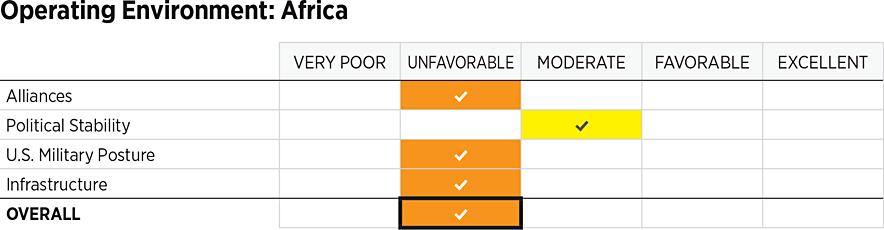
Taking into account the complexities encountered in the African operating environment, as well as weak governance and the limited U.S. footprint, we arrived at these average scores (rounded to the nearest whole number):
- Alliances: 2—Unfavorable.
- Political Stability: 3—Moderate.
- U.S. Military Positioning: 2—Unfavorable.
- Infrastructure: 2—Unfavorable.
Aggregating to a regional score of: Unfavorable.
[1] United Nations, Office for the Coordination of Humanitarian Affairs, “Eastern Africa: El Niño Floods Impact Snapshot (May 2024),” May 3, 2024, https://www.unocha.org/publications/report/kenya/eastern-africa-el-nino-floods-impact-snapshot-may-2024 (accessed December 24, 2025).
[2] U.S. Air Force, 406th Air Expeditionary Wing Public Affairs, “First U.S. Military Base in Niger Completes Withdrawal,” U.S. Air Forces in Europe–Air Forces Africa, July 8, 2024, https://www.usafe.af.mil/Units/406th-Air-Expeditionary-Wing/News-and-Articles/Display/Article/3828524/first-us-military-base-in-niger-completes-withdrawal/ (accessed December 24, 2025); Staff Sgt. Charles Welty, 406th Air Expeditionary Wing Public Affairs, “US Completes Withdrawal from AB 201,” U.S. Air Force, August 6, 2024, https://www.af.mil/News/Article-Display/Article/3863464/us-completes-withdrawal-from-ab-201/ (accessed December 24, 2025).
[3] Natasha Bertrand, “US Withdraws Troops from Base in Chad Following Government Demand,” CNN, May 1, 2024, https://www.cnn.com/2024/05/01/politics/us-withdraws-troops-chad/index.html (accessed December 24, 2025).
[4] Fact Sheet, “U.S. Security Cooperation with Morocco,” U.S. Department of State, Bureau of Political-Military Affairs, January 20, 2025, https://www.state.gov/u-s-security-cooperation-with-morocco/ (accessed December 24, 2025).
[5] Amine Ghoulidi, “Resetting U.S. West Africa Policy,” The National Interest, April 26, 2024, https://nationalinterest.org/feature/resetting-us-west-africa-policy-210765/ (accessed December 24, 2025).
[6] Sabina Henneberg and Amine Ghoulidi, “Balancing U.S. Relations in North Africa Without Undermining the Abraham Accords,” Washington Institute for Near East Policy, PolicyWatch No. 3817, November 22, 2023, https://www.washingtoninstitute.org/policy-analysis/balancing-us-relations-north-africa-without-undermining-abraham-accords (accessed December 24, 2025).
[7] U.S. Africa Command Public Affairs, “AFRICOM Commander Signs Memorandum of Understanding with Algerian Ministry of National Defense,” United States Africa Command, January 23, 2025, https://www.africom.mil/article/35698/africom-commander-signs-memorandum-of-understanding-with-algerian-ministry-of-national-def (accessed December 25, 2025).
[8] U.S. Africa Command Public Affairs, “U.S. Forces Conduct Strike Targeting ISIS–Somalia,” United States Africa Command, March 26, 2025, https://www.africom.mil/pressrelease/35764/us-forces-conduct-strike-targeting-isis-somalia#:~:text=March%2015%2C%202025.-,At%20the%20request%20of%20the%20Federal%20Government%20of%20Somalia%2C%20U.S.,on%20Feb.%2025%2C%202025 (accessed December 25, 2025).
[9] U.S. Department of State, Bureau of Counterterrorism, Country Reports on Terrorism 2023: Ethiopia, https://www.state.gov/reports/country-reports-on-terrorism-2023/ethiopia/ (accessed December 25, 2025).
[10] UN News, “Ethiopia: Peace Agreement Between Government and Tigray ‘a Critical First Step’: Guterres,” November 2, 2022, https://news.un.org/en/story/2022/11/1130137 (accessed December 25, 2025).
[11] Dawit Endeshaw, “Ethiopia Opens Africa’s Largest Hydroelectric Dam to Egyptian Protest,” Reuters, September 9, 2025, https://www.reuters.com/sustainability/boards-policy-regulation/ethiopia-opens-africas-largest-hydroelectric-dam-egyptian-protest-2025-09-09/ (accessed December 25, 2025).
[12] Jeremy M. Sharp, “Egypt: Background and U.S. Relations,” Congressional Research Service Report for Members and Committees of Congress No. RL33003, updated June 12, 2025, p. 8, https://www.congress.gov/crs_external_products/RL/PDF/RL33003/RL33003.126.pdf (accessed December 25, 2025).
[13] Carlos Mureithi, “Rwandan-Backed Rebels M23 Claim Capture of Eastern DRC City Goma,” The Guardian, January 27, 2025, https://www.theguardian.com/world/2025/jan/27/m23-rebel-group-goma-drc-democratic-republic-congo-rwanda (accessed December 25, 2025).
[14] Media note, “Joint Statement on Peace Talks Between the Democratic Republic of the Congo and the Republic of Rwanda, Mediated by the United States and Observed by the State of Qatar,” U.S. Department of State, June 18, 2025, https://www.state.gov/releases/office-of-the-spokesperson/2025/06/joint-statement-on-peace-talks-between-the-democratic-republic-of-the-congo-and-the-republic-of-rwanda-mediated-by-the-united-states-and-observed-by-the-state-of-qatar/ (accessed December 25, 2025).
[15] Carien du Plessis, “South Africa’s Naval Exercise with Russia, China Raises Western Alarm,” Reuters, February 18, 2023, https://www.reuters.com/world/south-africas-naval-exercise-with-russia-china-raises-western-alarm-2023-02-17/ (accessed December 25, 2025).
[16] Dzirhan Mahadzir, “Chinese, Russian, Iranian Warships Gather Near South Africa for Multilateral Drill,” U.S. Naval Institute News, January 9, 2026, https://news.usni.org/2026/01/09/chinese-russian-iranian-warships-gather-near-south-africa-for-multilateral-drill (accessed February 18, 2026).
[17] Gerald Imray and Michael Biesecker, “US Ambassador Accuses South Africa of Providing Weapons, Ammo to Russia,” Associated Press, May 11, 2023, https://apnews.com/article/russia-weapons-arms-south-africa-e89bac38997f240655ddf5d892e44f85 (accessed December 25, 2025); United Nations, Regional Information Centre for Western Europe, “International Justice: The South African Complaint Against Israel for ‘Genocide’ in Gaza,” October 1, 2024, https://unric.org/en/international-justice-the-south-african-complaint-against-israel-for-genocide-in-gaza/ (accessed December 25, 2025).
[18] President Donald J. Trump, Executive Order 14204, “Addressing Egregious Actions of the Republic of South Africa,” February 7, 2025, Federal Register, Vol. 90, No. 28 (February 12, 2025), pp. 9497–9498, https://www.govinfo.gov/content/pkg/FR-2025-02-12/pdf/2025-02630.pdf (accessed December 25, 2025); “Fact Sheet: President Donald J. Trump Addresses Human Rights Violations in South Africa,” The White House, February 7, 2025, https://www.whitehouse.gov/fact-sheets/2025/02/fact-sheet-president-donald-j-trump-addresses-human-rights-violations-in-south-africa/ (accessed December 25, 2025); Matthew Lee, “South African Ambassador Has to Leave the US by Friday, Trump Administration Says,” Associated Press, updated March 17, 2025, https://apnews.com/article/south-africa-ambassador-expelled-trump-rubio-dba7f4c25e5e91480a8429a53b86b8eb (accessed December 25, 2025).
[19] Eromo Egbejule, “More Control, Less Deniability: What Next for Russia After Wagner?” The Guardian, May 21, 2024, https://www.theguardian.com/world/article/2024/may/21/what-next-for-russia-in-africa-after-wagner-moscow-influence (accessed December 25, 2025).
[20] Associated Press, “Supporters of Niger’s Coup March, Waving Russian Flags and Denouncing France,” NPR, July 30, 2023, https://www.npr.org/2023/07/30/1190969703/supporters-of-nigers-coup-march-waving-russian-flags-and-denouncing-france (accessed December 25, 2025).
[21] Paul Nantulya, “Mapping China’s Strategic Port Development in Africa,” Africa Center for Strategic Studies, March 10, 2025, https://africacenter.org/wp-content/uploads/2025/04/Mapping-Chinas-Port-Development.pdf (accessed December 25, 2025).
[22] Office of the Director of National Intelligence, Counter Terrorism Guide, https://www.dni.gov/nctc/groups.html#africa (accessed December 25, 2025).
[23] World Bank Group, “Prevalence of Moderate or Severe Food Insecurity in the Population (%),” 2022, https://data.worldbank.org/indicator/SN.ITK.MSFI.ZS?locations=ZG&most_recent_value_desc=true (accessed December 25, 2025).
[24] News release, “U.S. Africa Command Conducts Strike against ISIS in Nigeria,” U.S. Africa Command, December 25, 2025, https://www.africom.mil/pressrelease/36158/us-africa-command-conducts-strike-against-isis-in-nigeria (accessed February 18, 2026).
[25] GlobalFirepower, “2025 Military Strength Ranking,” https://www.globalfirepower.com/countries-listing.php# (accessed December 25, 2025).
[26] Xiao Liang, Nan Tian, Diego Lopes da Silva, Lorenzo Scarazzato, Zubaida Karim, and Jade Guiberteau Ricard, “Trends in the World’s Military Expenditure, 2024,” Stockholm International Peace Research Institute Fact Sheet, April 28, 2025, https://www.sipri.org/sites/default/files/2025-04/2504_fs_milex_2024.pdf (accessed December 25, 2025).
[27] Stockholm International Peace Research Institute, “Military Expenditure Database,” https://milex.sipri.org/sipri (accessed December 25, 2025).
[28] Ibid.
[29] Ibid.
[30] United States Africa Command, “What We Do,” https://www.africom.mil/what-we-do (accessed December 25, 2025).
[31] United States Africa Command, “U.S. Special Operations Command Africa,” https://www.africom.mil/about-the-command/our-team/us-special-operations-command-africa (accessed December 25, 2025).
[32] U.S. Department of Defense, Joint and Coalition Operational Analysis (JCOA), Operation United Assistance: The DOD Response to Ebola in West Africa, January 6, 2016, https://www.jcs.mil/portals/36/documents/doctrine/Ebola/oua_report_jan2016.pdf (accessed December 25, 2025).