Executive Summary: Restoring Peace Through Strength
It is critical that the American people understand the condition of the United States military with respect to America’s vital national security interests, threats to those interests, and the context within which the U.S. might have to use military force to protect them. The Heritage Foundation’s Index of U.S. Military Strength employs a standardized, consistent set of criteria, accessible both to government officials and to the American public, to gauge the U.S. military’s ability to perform its missions in today’s world. The inaugural 2015 edition of the Index of U.S. Military Strength established a baseline assessment on which each edition builds that both assesses the state of affairs for its respective year and measures how key factors have changed over time. The 2026 Index can be compared to the initial year to see whether the U.S. military’s ability to defend America’s interests has improved or degraded. The 2026 Index is not an assessment of what should be, but should be seen instead as a report card that indicates how well or poorly conditions, countries, and the U.S. military have evolved.
What the Index Assesses
The Index of U.S. Military Strength assesses a number of factors, from the capacity, capability, and readiness of the U.S. military and associated major capabilities to the operating environment in various regions across the world and the threats posed by America’s major adversaries. Assessments of our adversaries are based on their capabilities, their intent, and the degree to which they threaten U.S. national interests. When it comes to U.S. military power, the 2026 Index, as with previous editions, assesses capabilities as measured by the effectiveness of modern equipment, the capacity to execute and potentially sustain combat operations during protracted conflict, and the readiness of the personnel and material to engage in combat operations. This framework provides a single-source reference for policymakers and other Americans who seek to know whether our military is up to the task of defending our national interests.
Any assessment of military power requires a clear understanding of what interests must be defended in which theaters of operation and in what types of contingencies. Three vital interests have been specified by various Administrations over a number of decades:
- Defense of the homeland;
- Stability within those regions that are of critical interest to the U.S.; and
- Preservation of freedom of movement within and across international air and sea lanes through which the world conducts its business.
To defend these interests, the United States requires a military force of sufficient capacity. The many factors involved make determining how big the military should be a challenging effort, but successive assessments and analyses across the decades have come to a general agreement on the driver of U.S. force size: an ability to deter and, if necessary, succeed in two major conflicts simultaneously. This rationale stems from American involvement in the Second World War, when the United States fought two high-intensity wars in two parts of the globe. Similarly, America’s experience in the Cold War suggested that the United States required requisite forces to deter and, if necessary, fight in East Asia and Europe simultaneously. The strategic logic that enabled the United States to deter Communist aggression in the Cold War—by presenting sufficient military force in Europe against the primary Soviet adversary while still presenting sufficient military force in Asia to deter and, if necessary, defeat lesser threats in the Indo-Pacific exists today, but with the prioritized theaters inverted. Today, the United States, across both Republican and Democratic Administrations, has prioritized China as America’s preeminent foreign security threat (and, therefore, the Indo-Pacific as the prioritized theater of operation) with Russia as a secondary foreign threat (with Europe as the theater of secondary strategic importance). For this reason, the 2026 Index continues the two-war force as the benchmark for its assessment.
Accordingly, the 2026 Index’s benchmark for a two-war force is derived from a review of the forces used for each significant conflict that the United States has undertaken since World War II and the toll that extended use of military forces can exact even when the enemy is not a peer competitor. Further, this analysis is augmented by analysis conducted at The Heritage Foundation, including the in-depth TIDALWAVE study that examined thousands of sets of data when assessing the impact of a protracted conflict between the United States and China. The 2026 Index therefore concludes that a standing two-war–capable force would consist of the following active-duty components:[REF]
- Army: 50 Brigade Combat Teams (BCTs).
- Navy: 400 battle force ships and 624 strike aircraft.
- Air Force: 1,200 fighter/ground-attack aircraft.
- Marine Corps: 30 battalions.
This recommended force does not account for missions in defense of the homeland, which are generally handled by Reserve and National Guard forces. Nor does it include the elements of the military that perform critical support and combat-enabling functions that are required for modern military operations such as logistics, transportation, communications, among many others.
The Global Operating Environment

Because the United States has interests in a variety of regions, threats can emerge from the Western Hemisphere, East Asia, Europe, or the Middle East. The U.S. military must therefore be ready to operate in a variety of regions when called upon to do so and must account for the range of conditions that it might encounter when planning for potential military operations. These considerations necessarily inform the military’s decisions about the types and amounts of equipment it purchases (especially to transport and sustain the force); the location or locations from which it might operate; and how easily it can or cannot project and sustain combat power when engaged with the enemy.
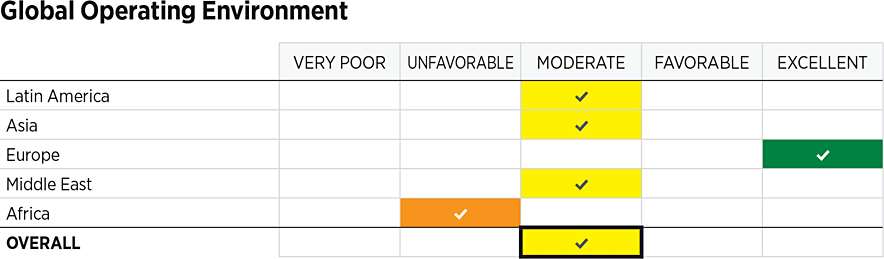
Aggregating the regional scores provides a global operating environment score of “moderate” in the 2026 Index.
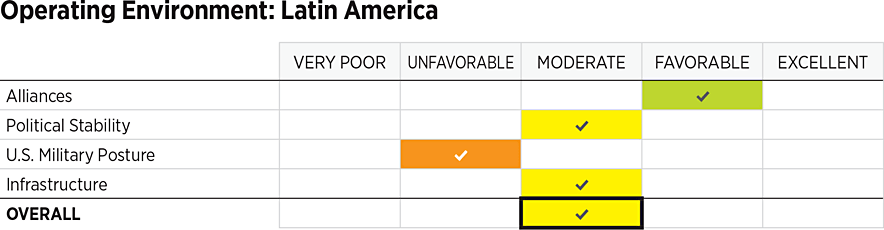
Western Hemisphere/Latin America. After years of military, economic, and political cooperation with the United States, the operating environment within the Western Hemisphere is broadly supportive of U.S. relations and military activities, but it also is under stress. Illegal immigration, drug cartels, and the malign influence of the People’s Republic of China have strained both regional stability and relations between many countries and the United States. The Venezuelan regime in particular, as well as continued activities by Cuba, has accelerated destabilization in the region, but the removal of Venezuelan President Nicolas Maduro could significantly mitigate some of these trends. We assess Latin America as “moderate” with respect to U.S. interests in terms of alliances, overall political stability, and military threats.
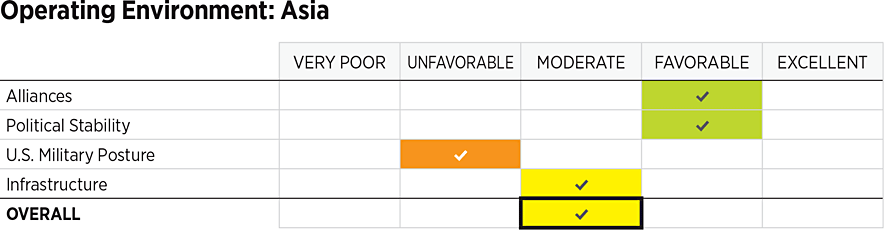
Asia. The Asian strategic environment includes half of the globe and is characterized by a variety of political relationships among states with widely varying capabilities. This makes Asia far different from Europe or Latin America, which in turn makes America’s relations with the region different from its relations with other parts of the world. American conceptions of Asia must recognize the physical limitations imposed by the tyranny of distance and the need to move forces as necessary to respond to challenges from China, the U.S.’s primary adversary, and the nuclear-armed regime in North Korea.
The complicated nature of intra-Asian relations and the lack of an integrated regional security architecture similar to NATO make the defense of U.S. security interests in Asia very challenging. However, the U.S. has strong relations with allies in the region, and their willingness to host bases helps to offset the vast distances that must be covered.
The militaries of Japan and the Republic of Korea are larger and more capable than many European militaries, and both countries are interested in further developing missile defense capabilities that will be essential in combatting the regional threats posed by China and North Korea. In Japan, public awareness of the need to adopt a more “normal” military posture in response to China’s increasingly aggressive actions continues to grow. This indicates a break with the pacifist tradition among the Japanese that has lasted since the end of World War II and could lead to improved military capabilities and the prospect of joining the U.S. in defense measures beyond the immediate vicinity of Japan. Nevertheless, however favorable alliances and political stability in the region may be, the continued growth of China’s military and its aggression in the region as U.S. military posture and infrastructure have weakened prompt a downgrade of the region’s overall stability from “favorable” to “moderate.”
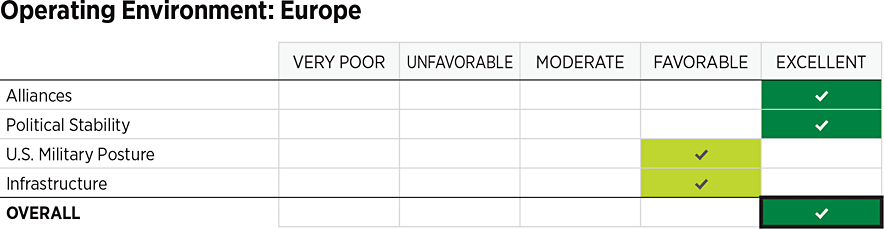
Europe. Overall, the European region remains a mostly stable, mature, and friendly operating environment with one notable exception. Russia remains the preeminent military threat to the region, both conventionally and unconventionally, and its invasion of Ukraine marks a serious escalation of its efforts to exert influence on its periphery. China continues to maintain a significant presence in Europe through its propaganda, influence operations, and investments in key sectors. By mitigating the effect of sanctions and covertly supporting Russian efforts, it also has significantly enhanced the Russian government’s ability to conduct the war in Ukraine. Both NATO and many non-NATO European countries should be increasingly concerned about the behavior and ambitions of both Russia and China, although agreement on a collective response to these challenges remains elusive.
In the 2024 Index, we noted a strengthening of Alliance relationships as NATO member countries conducted reviews of their respective military establishments and the ability of NATO as a whole to coordinate actions. NATO placed renewed emphasis on logistical matters and the extent to which it could respond to an emerging crisis. In the past two years, U.S. prodding and leadership have had a galvanizing effect on political establishments, causing them to focus their efforts on supporting Ukraine more effectively and increasing their defense expenditures. Subsequently, greater numbers of countries have increased their military budgets, seeking to meet their NATO obligation of 5 percent of national expenditures, although many other countries continue to fall short of this commitment. Within specific countries, there are shifts between liberal and conservative governments, but the net result has been generally positive with respect to U.S. security interests, especially as countries commit to improving their defense capabilities, readiness, postures, and industrial bases. However, significant work remains to be done if Europe is to assume more leadership of its collective defense and rebalance its national budgets to support greater defense spending.
Despite these enduring challenges, the overall picture has led us to score Europe’s political stability score as “excellent” once again in the 2026 Index. It is difficult to predict whether NATO’s renewed emphasis on collective defense and its reinvigorated defense spending will continue over the long term or are merely short-term responses to Russia’s aggression in Ukraine. Given the potential for Russia to replace its battlefield losses, NATO defense spending on capability will be an important issue, both in the medium term and over the long term.
Scores for Europe remained largely steady this year as they have in previous years. The 2026 Index again assesses the European operating environment as “excellent” overall.
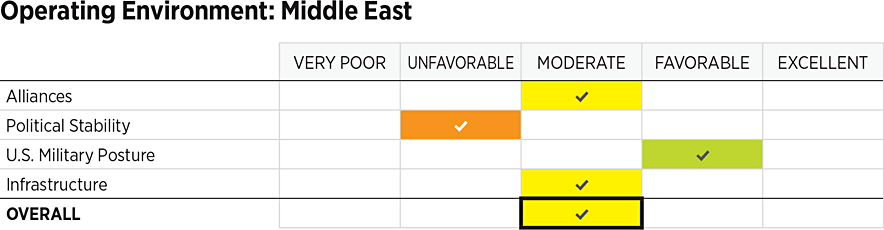
The Middle East. The Middle East will remain an area of concern for U.S. military planners for the foreseeable future because of the interests involved and the region’s volatile nature. The Middle East region is now significantly more stable because of Israel’s successful military operations against Hamas and Hezbollah and U.S. efforts to destroy Iran’s nuclear weapons infrastructure and capabilities. Additionally, successful operations against the Houthis in Yemen have reduced threats both to U.S. interests and to broader global economic shipping.
In the Middle East, the U.S. benefits from operationally proven procedures that leverage bases, infrastructure, and the logistical processes needed to maintain a large force that is forward deployed thousands of miles away from the homeland. The personal links between partner armed forces are also present, and joint training exercises improve interoperability and provide an opportunity for the U.S. to influence some of the region’s future leaders.
America’s relationships in the region are based pragmatically on shared security and economic concerns. As long as these issues remain relevant to both sides, the U.S. is likely to have an open door to operate in the Middle East when its national interests require that it do so.
Although circumstances in all measured areas vary throughout the year, in general terms, the 2026 Index assesses the Middle East operating environment as “moderate,” but the region’s political stability continues to be “unfavorable.”
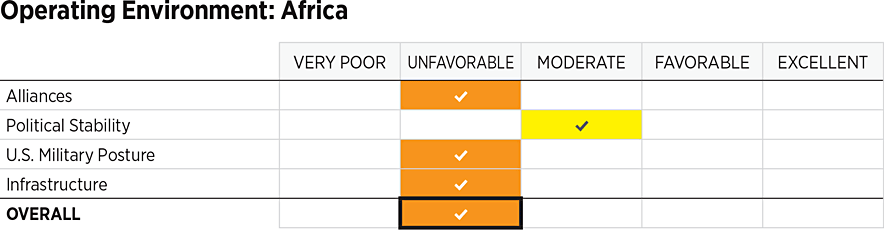
Africa. Africa is an enormous region of great complexity. Its operating environment is multifaceted, and what U.S. interests exist there vary based on military infrastructure, terrorist threats to the homeland, illegal immigration, unfavorable trade practices, and the destabilizing effects of Russian and Chinese influence. We assess Africa as “moderate” with respect to U.S. interests in terms of political stability but “unfavorable” overall because of alliance, infrastructure, and U.S. military posture challenges.
Summarizing the condition of each region enables us to get a sense of how they compare in terms of the difficulty that would be involved in projecting U.S. military power and sustaining combat operations in each one. As a whole, the global operating environment remains broadly stable with the United States able to project military power anywhere in the world to defend its interests without substantial opposition or high levels of risk. However, increased activities by China cause the overall global environment to be downgraded from “favorable” to “moderate” in the 2026 Index.
Threats to Vital U.S. Interests

America faces a range of challenges to its security and interests at home and abroad from a number of countries. The United States faces the challenge of employing the right mix of diplomatic, economic, intelligence, and military capabilities to protect and advance U.S. interests. Because this Index focuses on the military component of national power, its assessment of threats is based on the military threat posed by each of the following actors.
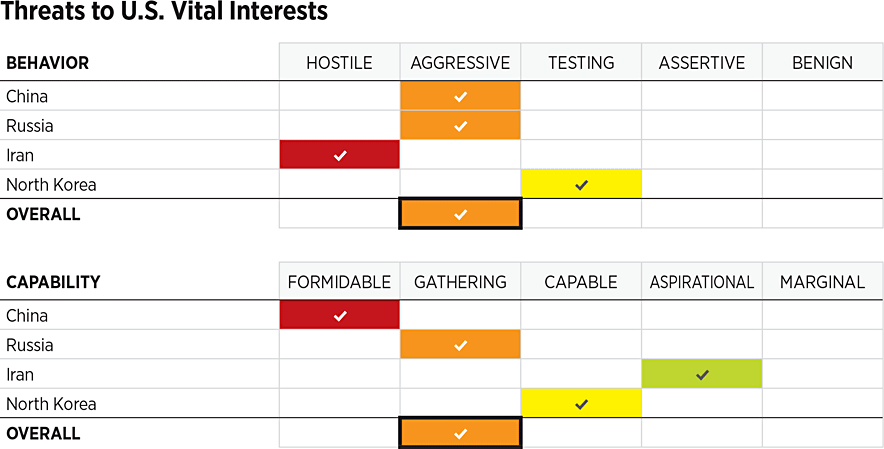
China—the most comprehensive threat the United States faces—remains “aggressive” in the scope of its provocative behavior and earns the score of “formidable” for its capability because of its continued investment in the modernization and expansion of its military and the particular attention it has paid to its nuclear, space, cyber, and artificial intelligence capabilities. The People’s Liberation Army continues to extend its reach and military activity beyond its immediate region and engages in larger and more comprehensive exercises, including live-fire exercises in the East China Sea near Taiwan and Australia and aggressive naval and air patrols in the South China Sea.
China is rapidly closing the capability gap between its forces and those of the United States and is no longer a distant competitor. It has continued to conduct probes of the South Korean and Japanese air defense identification zones, drawing rebukes from both Seoul and Tokyo, and its statements about Taiwan and exercise of military capabilities in the air and sea around the island have become increasingly belligerent. China is taking note of the war in Ukraine, recent U.S. actions in Venezuela and Iran, and broader U.S. military developments and has been adjusting its own posture, training, and investments accordingly.
Russia remains the primary threat to American interests in Europe. While Russia is unable to threaten U.S. global interests to the extent that the Soviet Union did, it threatens a number of U.S. allies and interests in Europe. Russia’s invasion of Ukraine reintroduced large-scale conventional war to Europe: it is the largest conflict on that continent since the end of World War II, and its economic and security repercussions are felt across the globe. Moscow also remains committed to massive pro-Russia propaganda campaigns in other Eastern European countries in addition to disruptive activities around its periphery and across the Middle East. It maintains the world’s largest nuclear arsenal, which poses an existential threat-in-being to the U.S. homeland. And although such a strike against the American homeland is unlikely at present, Russia’s massive arsenal of non-strategic nuclear weapons does pose a clear and present danger to European nations.
The 2026 Index assesses the threat emanating from Russia as “aggressive” for level of provocative behavior and “gathering” for level of capability. Although Russia remains aggressive, it has lost significant amounts of its combat power to Ukrainian forces and, while its manpower remains robust, has been forced both to conscript more forces and to rely extensively on foreign assistance from North Korea, Iran, and China. While Russia maintains the world’s largest nuclear arsenal, it is not the formidable conventional power it once was. Nevertheless, it still retains its industrial capacity and has shifted its economy to a wartime footing.
Iran represents by far the most significant security challenge to the United States, its partners, and its interests in the greater Middle East. Its open hostility to the United States and Israel, sponsorship of terrorist groups, illegal pursuit of nuclear weapons, and history of threatening the commons underscore the problem it could pose. Iran’s provocations are of significant concern to the Middle East region and America’s partners, friends, and assets there.
Iran relies heavily on irregular (to include political) warfare against others in the region and fields more ballistic missiles than are fielded by any of its neighbors despite its losses during its conflict with Israel. Its development of ballistic missiles and its remaining potential nuclear capability also make it a long-term threat to the security of the U.S. homeland. In addition, Iran has continued its aggressive efforts to shape the domestic political landscape in Iraq, adding to the region’s general instability. However, Israel’s campaign against the leadership and capabilities of Hamas and Hezbollah, its efforts to destroy Iran’s missile capabilities, and U.S. efforts to degrade Iran’s nuclear program through aerial strikes have significantly degraded the threat from Iran. The 2024 Index assessed Iran’s behavior as “aggressive” and its capability as “gathering.” The extended military campaigns between Iran and Israel have caused Iran to be assessed as “hostile” for level of provocative behavior in the 2026 Index, but the severe degradation of Iran’s combat power and nuclear capabilities has caused it to be rated “aspirational” for level of capability.
North Korea’s military poses a security challenge for American allies South Korea and Japan as well as for U.S. bases in those countries and on the island territory of Guam; for the United States, its ability to threaten the American homeland with a nuclear weapon is obviously a particular concern. North Korean officials are belligerent toward the United States, often issuing military and diplomatic threats. Pyongyang also has engaged in a range of provocative behavior that includes nuclear and missile tests and low-level attacks on South Korea.
North Korea has used its missile and nuclear tests to enhance its prestige and importance domestically, regionally, and globally and to seek concessions from the United States in negotiations on its nuclear program and various aid packages. U.S. and allied intelligence agencies assess that Pyongyang has already achieved nuclear warhead miniaturization, the ability to place nuclear weapons on its medium-range missiles, and the ability to reach the continental United States with an intercontinental ballistic missile. North Korea also uses cyber warfare as a means of guerilla warfare against its adversaries and international financial institutions. The 2026 Index therefore assesses the overall threat from North Korea, considering the range of contingencies, as “testing” for level of provocative behavior and “capable” for level of capability.
Just as there are American interests that are not covered by this Index, there may also be additional threats to American interests that are not identified in this analysis. This Index focuses on the more apparent sources of risk and those that appear to pose the greatest threat.
Based on our assessments of these threat sources, the 2026 Index rates the overall global threat environment as “aggressive” for threat actor behavior and “gathering” for material ability to harm U.S. security interests. China’s dramatic expansion of its power projection abilities (especially its investment in nuclear weapons) and Russia’s potentially desperate desire for victory in its war against Ukraine, which could lead it to be more aggressive in other areas of military competition with the U.S. and Western allies, in addition to Iran’s ongoing investments in its nuclear and ballistic missile programs, result in an overall score of “high” in the 2026 Index.
The Status of U.S. Military Power

The military power of the United States is assessed in three areas: capability, capacity, and readiness. We approached this assessment service by service as the clearest way to link military force size; modernization programs; unit readiness; and (in general terms) the functional combat power (land, sea, air, and space) that each service represents. These areas of assessment are central to the overarching questions of whether the U.S. has a sufficient quantity of appropriately modern military power and whether military units are able to conduct military operations on demand and effectively.
We characterized the services and the nuclear enterprise on a five-category scale ranging from “very weak” to “very strong,” benchmarked against criteria elaborated in the full report. These characterizations should not be construed as reflecting either the competence of individual servicemembers or the professionalism of the services or Joint Force as a whole; nor do they speak to the U.S. military’s strength relative to the strength of other militaries around the world in direct comparison. Rather, they are assessments of the institutional, programmatic, and material health or viability of America’s hard military power, benchmarked against historical instances of use in large-scale, conventional operations and current assessments of force levels that would likely be needed to defend U.S. interests against major enemies in contemporary or near-future combat operations.
Our analysis concluded with these assessments:
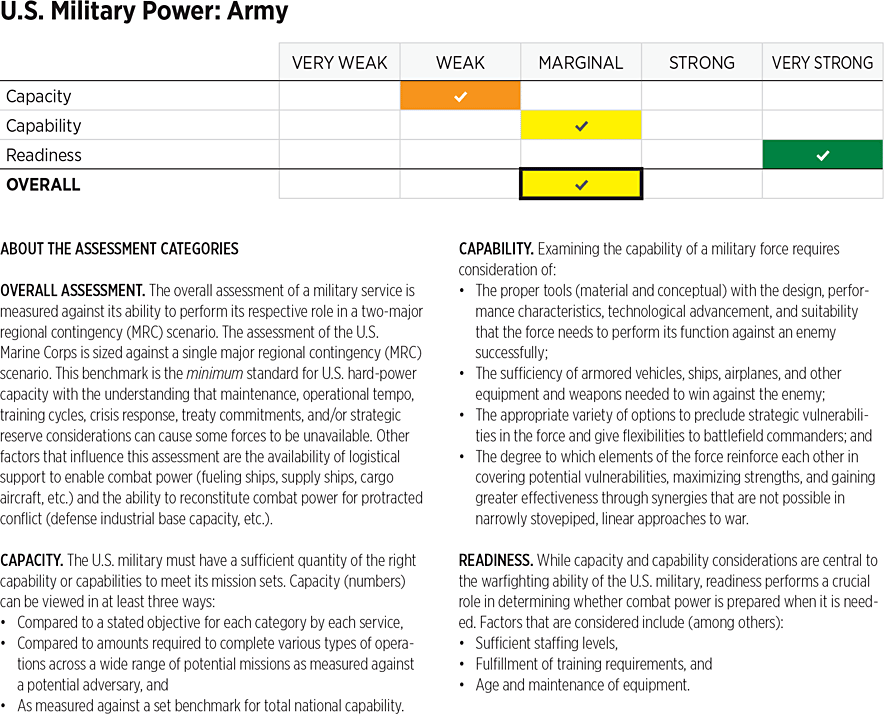
- The U.S. Army as “Marginal.” Based on the historical use of its ground forces in combat, the Army has less than two-thirds of the forces in its Active Component that it would need to handle more than one major regional contingency. This shortfall in capacity might be offset if the modernity or technological capability of its forces were very high, but this is not yet the case, and the Army has a long way to go in modernizing its key systems. The Army has fully committed to modernizing its forces for great-power competition, but its programs are still in their development phase, and it will be a few years before they are ready for acquisition and fielding. Insufficient capacity for more than one MRC might also be offset if capabilities and readiness in the National Guard and Reserves were enhanced.
- In other words, the Army is aging faster than it is modernizing, in addition to which it has faced relatively stagnant budgets in comparison to the Navy and Air Force. At the broadest strategic level, this makes sense, as the Navy and Air Force are more central to Indo-Pacific planning and need major investments to keep up with the People’s Liberation Army. The Army, however, also has an important role to play in the Indo-Pacific and needs targeted investment in new capabilities like the Multi-Domain Task Force (MDTF). More generally, the Army also needs to maintain an edge over all potential adversaries in the traditional aspects of ground power. The Army remains “weak” in capacity with 62 percent of the force it should have but has significantly increased the force’s readiness, exceeding its own internal requirement that 66 percent of its BCTs must be at the highest readiness levels, thereby earning the highest score of “very strong” for readiness.
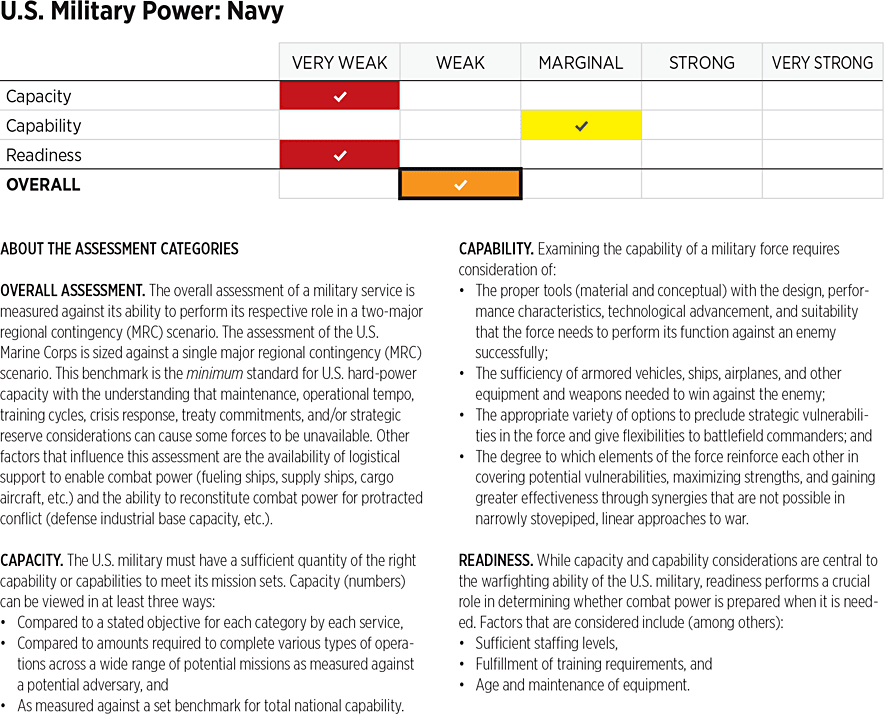
- The U.S. Navy as “Weak.” The technology gap between the Navy and its peer competitors is narrowing in favor of competitors, and the Navy’s ships are aging faster than they are being replaced. The fleet is too small relative to mission workload, and supporting shipyards are overwhelmed by the repair work that is needed to ensure that ships are available. This inadequate maintenance infrastructure contributes to ships not returning to the fleet in a timely manner, which in turn causes readiness problems as steaming days needed to train crews to levels of proficiency are lost. The Navy is projected to have a fleet of 280 ships by 2027, which is smaller than the current force of 290 and well below the 400 needed to meet operational demands. Current and projected funding shortfalls will make it harder to deal effectively with any of these serious deficiencies. This leaves the Navy unable to arrest and reverse the decline of its fleet as adversary forces grow in number and capability.
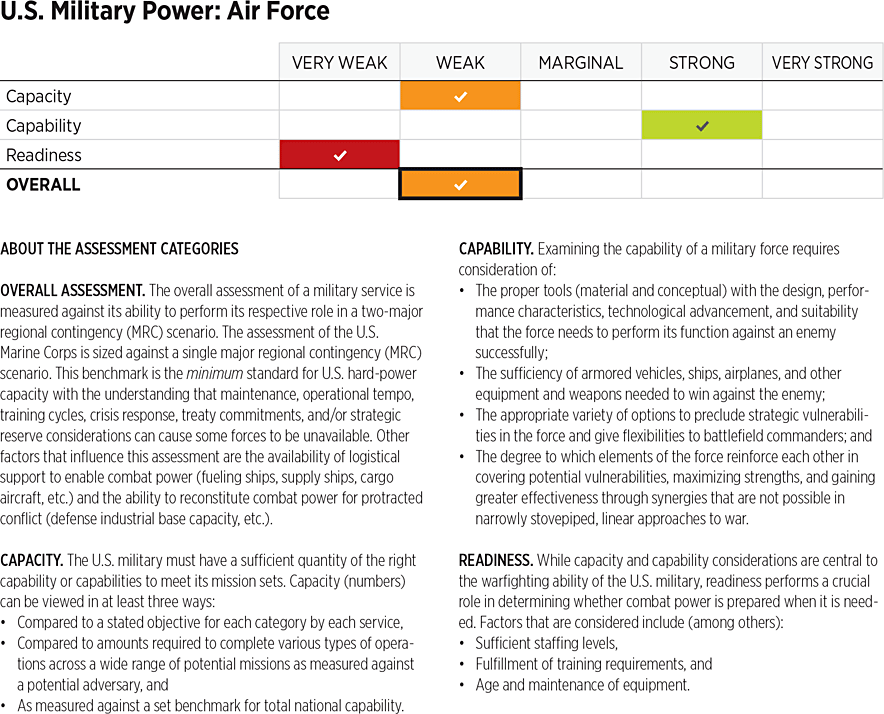
- The U.S. Air Force as “Weak.” Despite outstanding performances in Iran and Venezuela over the past few months and its next-generation bomber and fighter programs, the reality is that today’s Air Force is smaller, older, and less ready than at any point in its history. This matters because America’s asymmetric military advantage is the ability to own the skies and hold adversary targets at risk across the globe. The Air Force’s responsibility to America is to field an appropriately sized, capable, and ready force that can execute these critical, Joint Force–enabling military functions. During the decades following the Cold War, this responsibility has gradually been marginalized, and America’s ability to own the skies and hold adversary targets at risk has been steadily eroded, particularly in comparison to the extraordinary growth of China’s air capabilities. As a result, the United States is accepting more strategic risk than it should—risk not just of conflict or deterring a conflict, but risk of losing a conflict. For example, the Air Force has only two-thirds the number of active-duty combat-coded fighter aircraft required to fight two MRCs. Additionally, its warfighting readiness is very low because of aircraft age, aircraft availability, and low sortie rates and flight hours for its aircrew. Finally, the Air Force’s fleet seemingly gets smaller every year, and the fiscal year (FY) 2026 budget continues this downsizing trend despite President Trump’s OBBBA.
- Overall, the service is not ready for peer conflict at a time when the world is increasingly dangerous. Fortunately, a properly sized, capable, and ready Air Force can reduce strategic risk, deter conflict, and ensure that the nation could prevail if deterrence fails, and there are encouraging signs, including enactment of the OBBBA in July 2025, that Congress may be ready to resource the Air Force in line with today’s strategic environment. To this end, Congress should increase the Air Force’s budget to account for the immense cost of nuclear modernization, increase the size of the service’s fleet to meet the requirements the Air Force identified in 2018’s “The Air Force We Need” for a 2030 fight with China, and help the service to improve the readiness of combat units with the right mix of jets, maintenance capability and capacity, and trained aircrew, all while prioritizing the core missions the service is uniquely tasked to execute: air superiority and global strike. These actions would ensure that America’s Air Force is ready to “fly, fight, and win” anytime and anywhere.
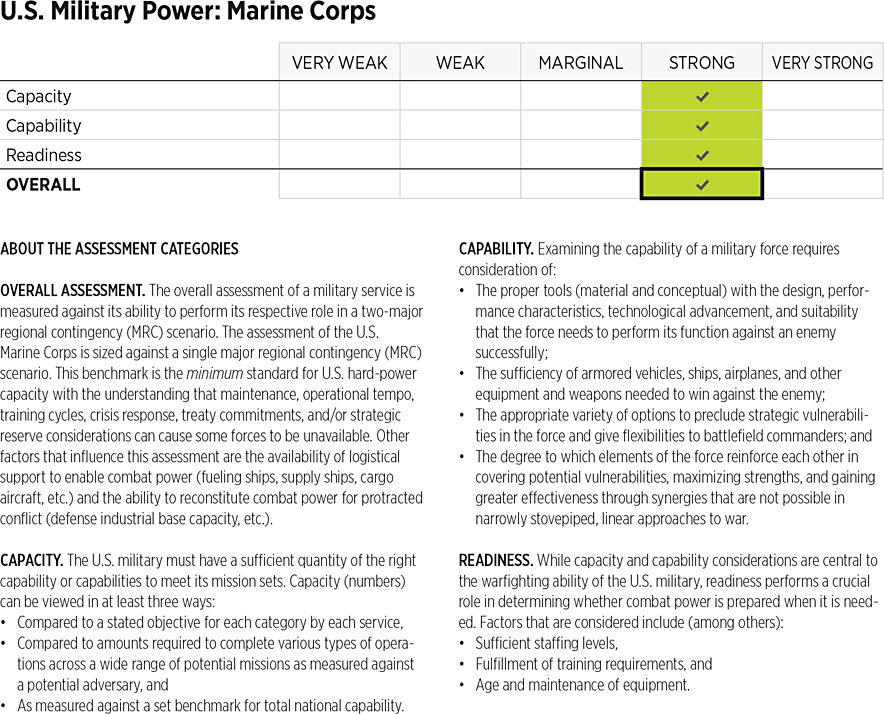
- The U.S. Marine Corps as “Strong.” The Marine Corps’ capacity is evaluated against a one-MRC standard, whereas the other services are evaluated against a two-MRC construct. The Corps consistently meets its unique requirement to produce three simultaneous Marine Expeditionary Units. The Corps’ strong capacity and capability ratings stem in large part from the inherent flexibility of fighting as O6-led Marine Air Ground Task Forces (MAGTFs). MAGTFs combine ground and air combat power with their associated logistics support under a single commander and can be modified as mission sets dictate. The Marine Corps’ strong readiness rating comes from a consistent equipment modernization campaign and being five years into reorganizing itself to fight the PRC more effectively if needed.
- The Marine Corps is not without its challenges. The shortages of amphibious shipping, sealift, long-distance transportation, and sustainment affect the entire Joint Force, but the Marines may feel those impacts most acutely in their role as America’s rapidly responsive expeditionary force. However, while these challenges are significant, they do not yet prevent the Marine Corps from completing its assigned missions.
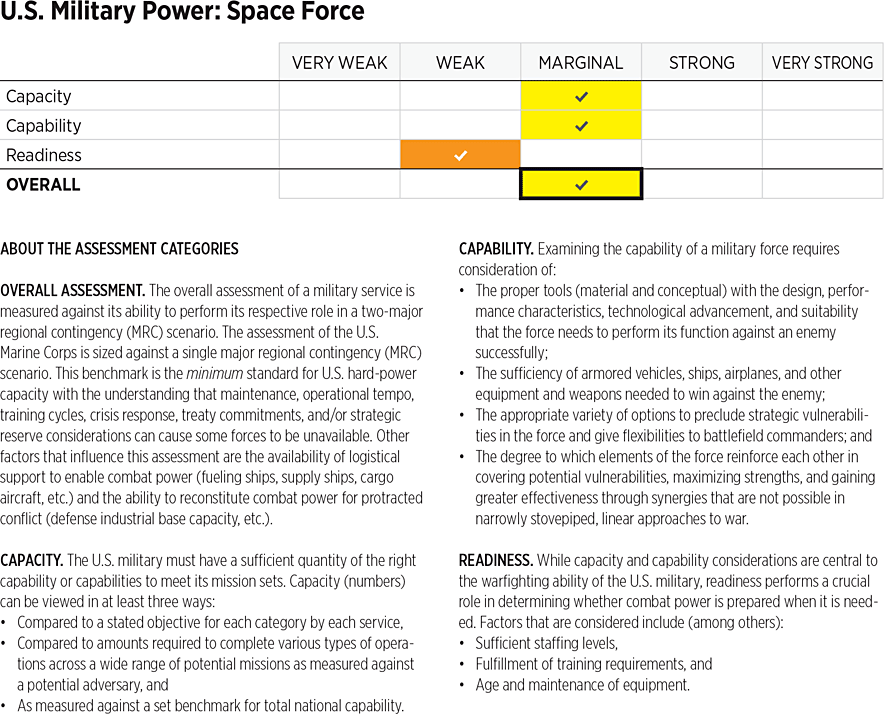
- The U.S. Space Force as “Marginal.” The Space Force is assessed the same in this year’s Index as it was in the 2024 Index. The Space Force has made significant progress in the six years it has existed. The service’s FY 2026 budget is projected to be more than 250 percent larger than its first-year budget. The Space Force established a field command dedicated to testing, training, education, and readiness. It has fielded many new domain awareness sensors and command-and-control systems, has launched many next-generation GPS satellites and operationally accepted the long-beleaguered GPS command-and-control program, is taking advantage of commercial space capabilities and international allies and partners, has architected and begun to field resilient data transportation and missile warning constellations of satellites, and has embraced and initiated many of the acquisition reforms directed by the FY 2026 National Defense Authorization Act and Secretary of War Pete Hegseth.
- At the same time, however, the Space Force has not kept pace with the rapidly advancing threats to and from space. China and Russia are fielding ground-based and space-based threats to our space assets that outpace the Space Force’s efforts to develop resilient architectures and defensive capabilities. China is also rapidly fielding space systems that will target our fixed and mobile air, land, and maritime forces in the Pacific Area of Responsibility (AOR). The Space Force must field capabilities to defeat these space-based threats. Additionally, our nation continues to ask more of the Space Force, which will need, for example, to provide critical sensors and interceptors as part of the Golden Dome missile defense program. The Air Force has retired or will retire airborne intelligence, surveillance, and reconnaissance (ISR) and air battle management sensors; the Space Force is racing to field capabilities to mitigate these retirements. The nation’s growing economic dependence on space capabilities suggests that the Space Force will need to have the capability to defend all of our interests in the domain. In short, while the Space Force has made remarkable progress in a few short years, it will need to accelerate its capabilities and capacities if it is to be fully capable of answering our nation’s demands.
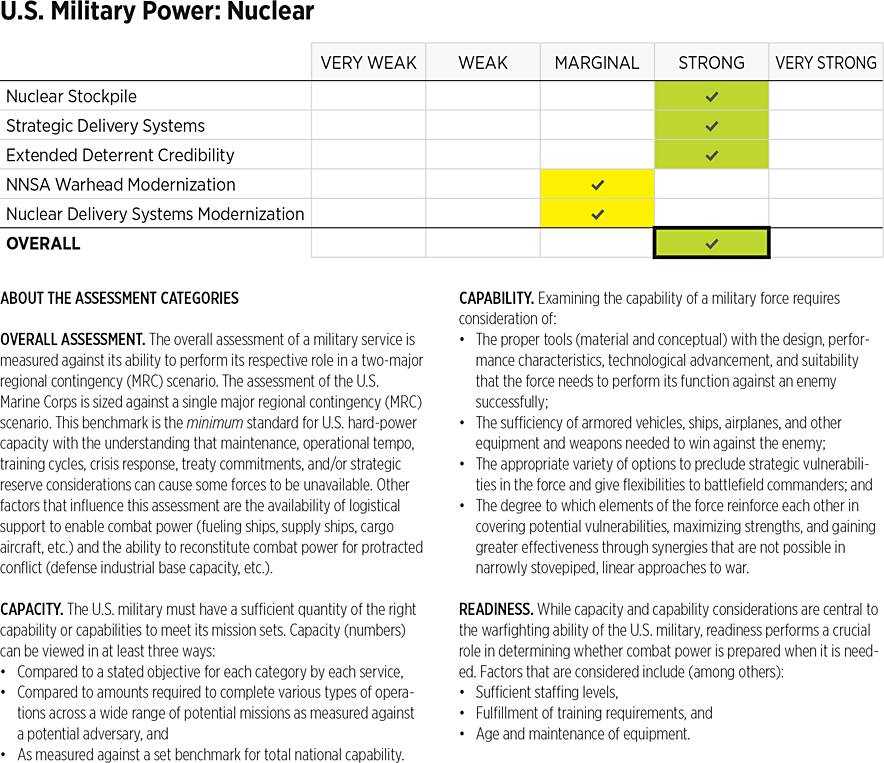
- U.S. Nuclear Capability as “Strong.” America's strategic deterrent remains strong and credible and able to impose significant—even catastrophic—costs on any who would carry out a strategic attack on the United States or its allies. However, challenges in modernization of delivery systems, particularly the Sentinel ballistic missile system, and the production of plutonium pits prevent a rating of “very strong.” Moreover, as time progresses, America’s nuclear-armed adversaries—particularly China—will field larger arsenals that will create ever larger deterrence challenges for the United States. Consequently, the United States in the coming years must field a larger and more diverse nuclear arsenal, particularly among theater nuclear weapons, to deter adversary aggression successfully. This means not only that the nuclear modernization program of record (to include the relevant components within the Department of War and Department of Energy) must be put back on schedule, but also that the United States will likely have to augment the program of record to increase the number of operationally deployed nuclear weapons.
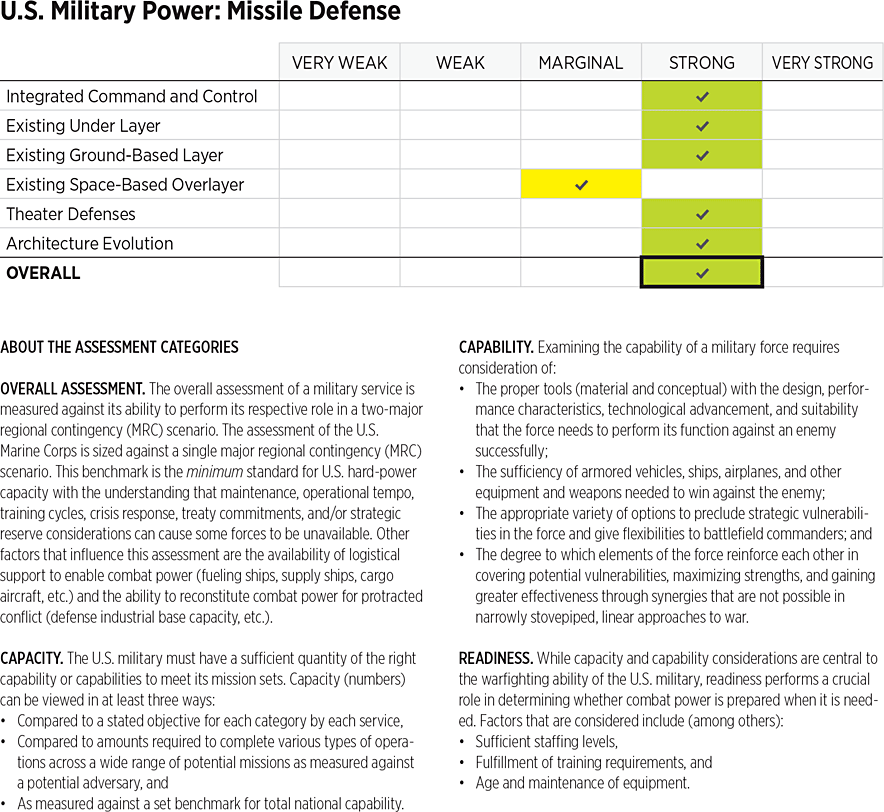
- U.S. Missile Defense as “Strong.” Missile defenses have shown—from Ukraine to the Middle East to live-fire tests—that they work remarkably well. Integrated air and theater missile defenses continue to demonstrate their value in deterring and, if necessary, mitigating the impact of adversary missile strikes. As the United States builds Golden Dome, which will integrate existing homeland missile defenses with regional missile defense architectures, and expands global sensor coverage while at the same time fielding additional ground-based and space-based missile interceptors, it will be better postured to deter and, if necessary, defeat enemy missile threats.
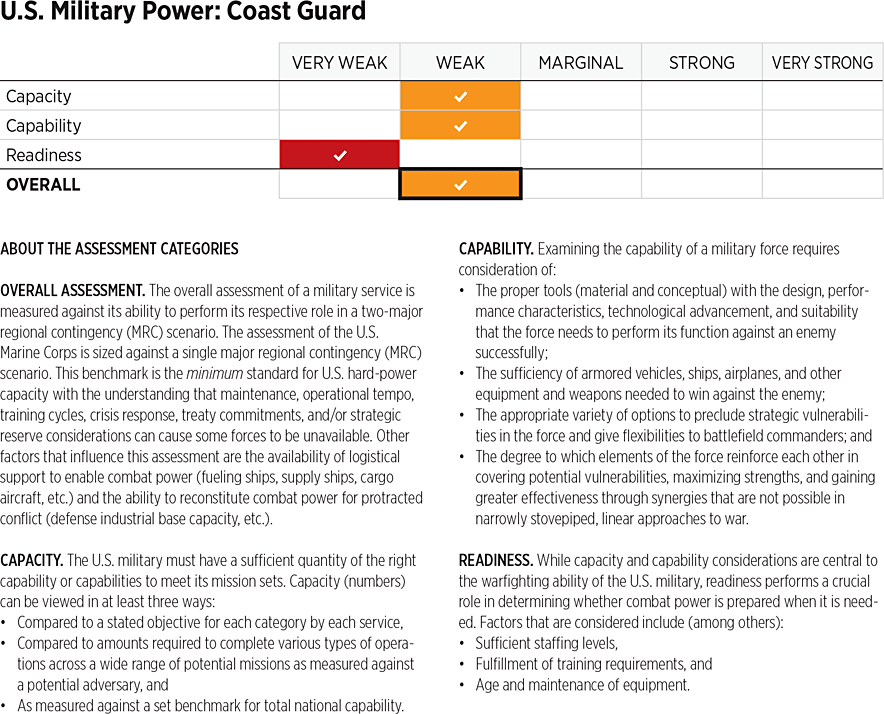
- The U.S. Coast Guard as “Weak.” Despite some successes in 2025, such as record-breaking drug seizures, a continued fast response to disasters and search and rescue missions, an improvement in recruitment, and a much-needed increase in funding from the One Big Beautiful Bill Act, the U.S. Coast Guard (USCG) remains burdened by a variety of negative issues. Historically, the Coast Guard has been an underfunded service, and many of its ships and aircraft are old and experience heavy usage, which causes further deterioration. In addition, newer vessel designs have been beset by delays. The USCG’s cutters, the backbone of its fleet, have suffered from poor maintenance, maintenance backlogs, and delays in programs that are intended to bring new, more advanced, and more functional modular cutters online. This necessarily has a negative effect on the interdiction of narcotics and illegal immigration insofar as they involve the Coast Guard.
- Faced with over 2,500 miles of U.S. Arctic coastline along with missions to U.S. bases in the South Pole, the USCG operates only two medium icebreakers and one heavy icebreaker—and its only heavy icebreaker is now 50 years old. Coast Guard helicopters, particularly the workhorse HH-60s, have experienced maintenance issues and groundings as a result of accidents and heavy use. Although recruitment improved in 2025, retainment issues persist. The Coast Guard has also gone without antisubmarine training, a deficiency that, in view of the drug cartels’ increased use of narco-submarines and the service’s duty to escort U.S. vessels during wartime, puts it at a distinct disadvantage. As a result, the USCG would also be at a disadvantage in the event of a conventional great-power conflict, particularly in the Pacific. Acquiring newer modular vessels, aircraft, unmanned systems, and newer training regimens can help to reverse these trends, but the process will necessarily be a slow one.
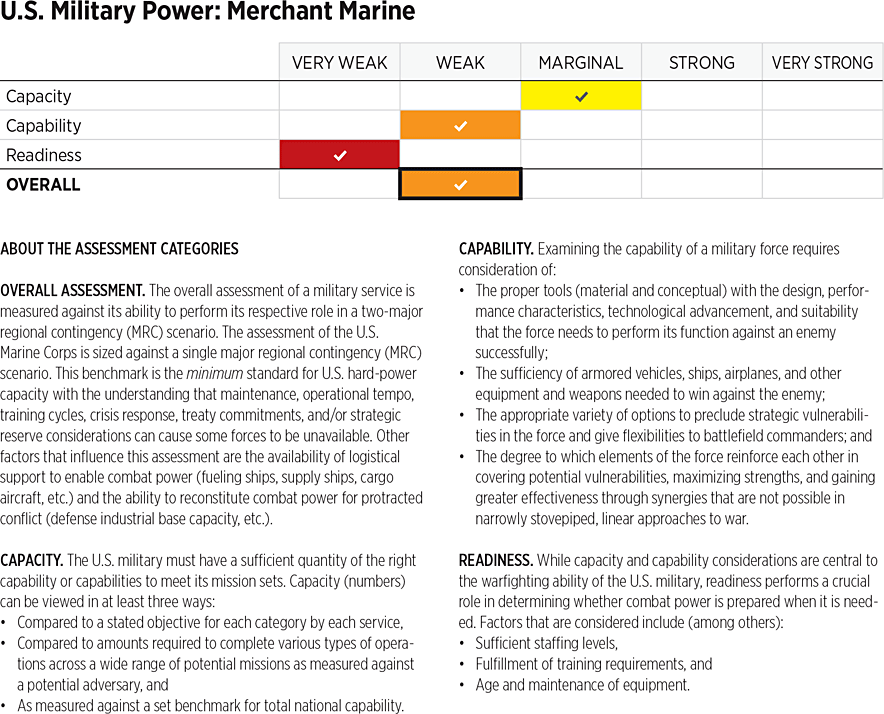
- The U.S. Merchant Marine as “Weak.” Most emblematic of this sad state of America's sealift is the sidelining of 17 Military Sealift Command ships because of crew shortages. That too few seaworthy commercial ships is a persistent problem that drives low readiness assessments is borne out in activation exercises like Turbo Activation 19 Plus. Moreover, there is little good news on the horizon as both future classes of logistic ships and the revival of America’s commercial maritime industry seem to be stalled and delayed. Action is urgently needed to reverse this trend and begin a serious effort to fill gaps in the military and assured commercial shipping that the nation would need to sustain a prolonged major war.
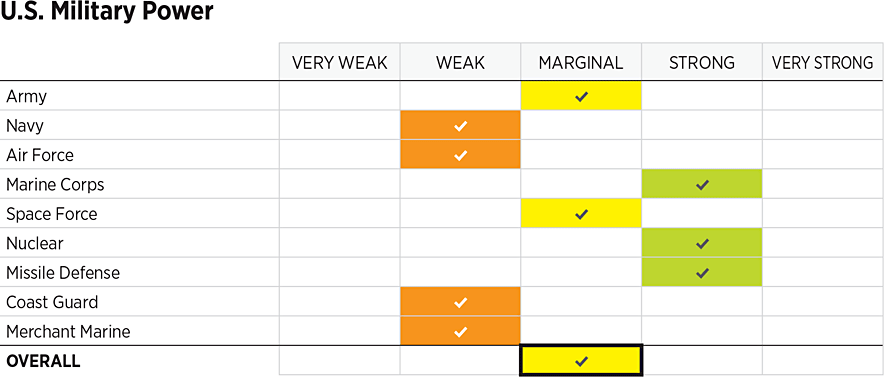
In the aggregate, America’s overall military posture must be rated “marginal.” The Space Force and Army are rated “marginal,” and the Navy, Air Force, Coast Guard, and Merchant Marine are rated “weak.” Only the Marine Corps, nuclear forces, and missile defense are rated “strong,” but the Corps is a one-war force, and its overall strength is therefore not sufficient to compensate for the shortfalls of the larger services. Strong conventional forces of necessary size are essential to America’s ability to respond to emergent crises in areas of special interest.
The 2026 Index concludes that the current U.S. military force is at significant risk of being unable to meet the demands of a two-MRC benchmark. The force would probably not be able to carry out successful operations greater than what is required to execute a single MRC against a peer-competitor such as China and is certainly ill-equipped to handle two nearly simultaneous MRCs—a situation that is made more difficult by the generally weak condition of key military allies.
In general, the military services continue to prioritize readiness and have made some progress over the past few years, but modernization programs, especially in shipbuilding and the production of fifth-generation combat aircraft, continue to suffer as resources are committed to preparing for the future, recovering from 20 years of operations, and offsetting the effects of inflation. With respect to the Air Force, some of its limited acquisition funds are being spent on aircraft of questionable utility in high-threat scenarios while research and development (R&D) receives a larger share of funding than efforts meant to replace quite aged aircraft are receiving. As observed in the 2021, 2022, 2023, and 2024 editions of the Index of U.S. Military Strength, the services have normalized reductions in the size and number of military units, the forces remain well below the level needed to meet the two-MRC benchmark.
As currently postured, the U.S. military is at significant risk of not being able to defend America’s vital national interests with assurance. It is rated “marginal” relative to the force needed to defend national interests on a global stage against actual challenges in the world as it is rather than as we wish it were. As demonstrated by The Heritage Foundation’s recent TIDALWAVE war simulation, these challenges are particularly grave in a protracted conflict. This is the inevitable result of years of sustained use, underfunding, unclear priorities, shifting security policies, poor discipline in program execution, and a lack of seriousness across the national security establishment even as threats to U.S. interests have surged.
Although the One Big Beautiful Bill Act signed by President Trump on July 4, 2025, added more than $150 billion in defense spending on top of annual defense appropriations, more investment is needed. The President’s January 7, 2026, call for a $1.5 trillion defense budget—more than $500 billion larger than the current budget—is a positive sign that greater investment is on the way, but this must be done in a disciplined and fiscally responsible manner that also seeks savings, reforms, and efficiencies from the U.S. Department of War.[REF] The focus of the United States should be on restoring peace through strength, and while some work has been done, much remains to be finished to reverse the effects of years of defense budgetary decline and lack of prioritization.
Endnotes
[1] The analytical work for this assessment is contained in the 2018 Index of U.S. Military Strength.
[2] See U.S. Senate Committee on Armed Services and U.S. House Committee on Armed Services, “SASC/HASC Defense Reconciliation Overview,” undated, https://armedservices.house.gov/uploadedfiles/obbb_hasc_and_sasc_defense_legislation_summary.pdf (accessed January 13, 2026).
