

Executive Summary
Theater Missile Defense Inventory: Inadequate for a U.S.–China Conflict
The American inventory of theater missile defense interceptors is insufficient for a U.S.–China conflict. Without sufficient interceptor magazine depth, the U.S. military will likely be unable to conduct sustained offensive operations necessary to degrade adversary strike capacity and regeneration. If the magazine-depth shortfall remains severe enough, it will likely result in operational failure and produce a strategic defeat for the United States, with long-term damage to U.S. military and economic interests. Interceptor inventory is not a supporting detail in a China contingency—it is what allows the Joint Force to survive long enough to win.
Missile defense inventories are critical to the United States because China not only has capable, modern, and expanding naval and air forces, but it has built and continues to expand the world’s largest inventory of conventional ballistic and cruise missiles.
This Special Report quantifies the gap between interceptor supply and demand for a U.S.–People’s Republic of China (PRC) conflict and provides recommendations and a decision matrix to bridge that gap. (The report is limited in scope to include only inventory requirements for a U.S.–PRC conflict. Global demand in wars beyond a U.S.–China conflict, to include two major regional contingencies or missile interceptors required for a global strategic reserve, are not included.)
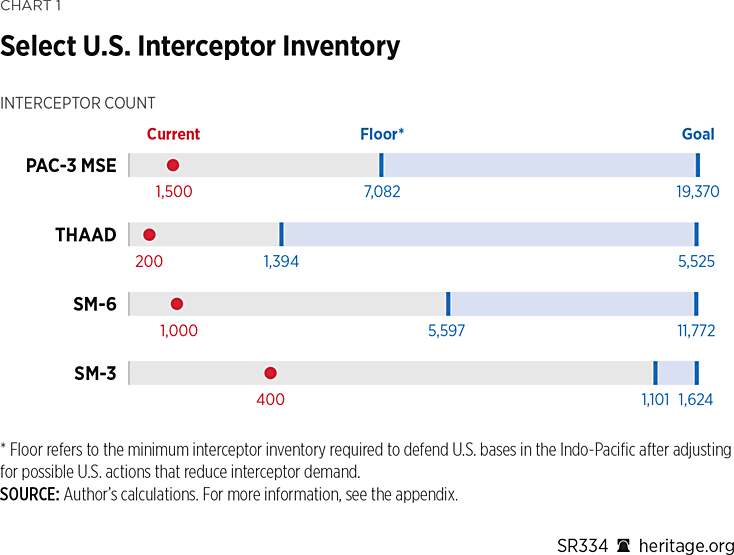
First, this report finds that U.S. Patriot, THAAD, SM-6, and SM-3 missile interceptor inventories are inadequate for a conflict with the Chinese military. According to this analysis, the United States has less than 10 percent of the aggregated PAC-3 MSE, THAAD, SM-6, and SM-3 interceptors required to deter or, if necessary, prevail in a protracted, high-intensity conflict with China, as modeled in this Special Report. In practical terms, the United States would run out of interceptors in the first few days of a conflict should China target U.S. bases with even a fraction of its missile inventory.
Second, this report identifies steps that U.S. decisionmakers can take to reduce the demand for interceptors, each with trade-offs. Enacting rules of engagement that allow mainland strikes at the onset of conflict require a prior political decision that immediately increases conflict stakes. Deploying surface combatants near bases to supplement land-based defenses precludes them from engaging in offensive action. A less conservative shot doctrine will result in higher levels of infrastructure damage, platform attrition, and casualties.
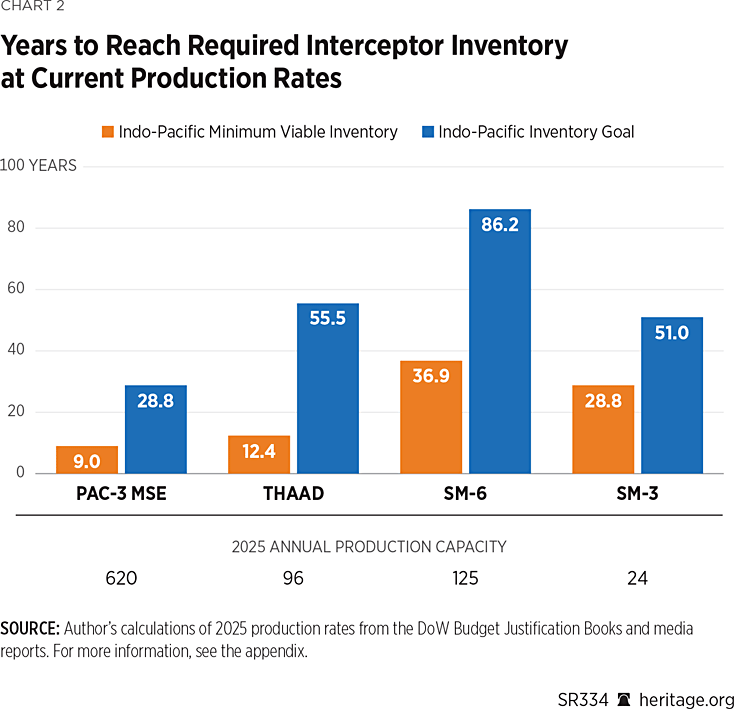
Third, this report addresses current production capacity shortfalls. At current production rates, it would take roughly 29 years to 86 years to achieve the inventory goals this report recommends. War with China, however, may come by 2027, according to Admiral Phil Davidson, former commander of U.S. Indo-Pacific Command. Moreover, expanding the United States’ capacity to produce new missiles will likely take years. To best address this, this report proposes a munitions procurement account and incentives to fundamentally restructure the defense industrial base around ongoing speed and scale instead of meeting minimum annual appropriated orders, while minimizing waste.
This report offers a number of recommendations for Congress, the Department of War, and other federal agencies:
- Set munition inventory goals based on prospective demand in a worst-case scenario—a protracted high-intensity conflict with China;
- Engage and destroy Chinese missile threats pre-launch, to include at the onset of a conflict;
- Identify how naval assets can best be deployed to supplement land-based interceptors without jeopardizing offensive firepower;
- Re-examine shot doctrine to allocate potentially fewer interceptors per inbound threat and identify measures that can mitigate the operational impact that increased People’s Liberation Army hits could cause; and
- Create a dedicated munitions procurement account and incentive program (either through a grant program or tax incentive) to fundamentally restructure the munitions industrial base around speed and capacity, rather than simply meeting one-time appropriated orders.
Procuring interceptors now, pre-authorizing rules of engagement that allow mainland strikes at the onset of a conflict, expanding U.S. ability to produce more interceptors, and preparing to make hard operational decisions is the most prudent path forward to prevent severe and lasting damage to U.S. military and economic interests.
Theater Missile Defense Inventory: Inadequate for a U.S.–China Conflict
The past four years have been a period of significant turbulence. Russia’s invasion of Ukraine in February 2022, the disruption of international trade by the Houthi terror group in Yemen, genocidal attacks on Israel, and Iranian aggression, such as the acceleration of its nuclear and ballistic missile programs necessitating American military responses, all strained America’s missile stockpiles—particularly those that are critical for missile defense systems.
Combating these threats—while absolutely necessary—has significantly depleted already inadequate U.S. interceptor inventories, leaving the United States unprepared for a high-intensity conflict with a competitor with large stockpiles of offensive strike missiles—such as the People’s Republic of China (PRC).
Both AirSea Battle and Offshore Control, the principal concepts for deterrence or operations against the People’s Liberation Army (PLA), rely on a sufficient interceptor inventory to withstand an opening missile campaign while suppression of PLA long-range fires is achieved[REF] or sufficient interceptors to constitute a credible deterrent against the PRC firing missiles at U.S. bases on allied territory.[REF] The current gap between supply and demand demonstrably affects the viability of both AirSea Battle and Offshore Control, or by extension anything in between.
This Special Report (1) establishes the inadequacy of U.S. Patriot, Terminal High Altitude Area Defense (THAAD), SM-6, and SM-3 interceptor inventories, based on the threats posed by the PLA alone; (2) quantifies how many interceptors the U.S. likely needs for a war with the PLA; (3) evaluates what interceptor inventory level constitutes a floor “minimum viable” threshold, below which defending all significant U.S. military bases and assets becomes untenable; and (4) identifies U.S. actions that can reduce interceptor demand and their trade-offs. This includes specific recommendations to rapidly improve the defense industrial base.
Section I: Strategic Background and the Role of Interceptors
Interceptor inventory is a critical factor in whether U.S. military forces survive long enough to fight and win.
The outcome of a U.S.–PRC conflict in the Indo–Pacific will be determined by a number of issues, including offensive capacity, effective plans, capable and willing allies, logistics and key enablers, and forces in being. All of these are critically important and necessary to win—but they are not sufficient. Missile defenses in many ways will determine whether U.S. forces can survive intense and sustained Chinese missile attacks long enough for U.S. and coalition forces to degrade Chinese strike capacity, and, ultimately, preserve the assets needed for a U.S.-led coalition to conduct decisive operations.
Operation Epic Fury demonstrated that missile defense demand is highest at the outset of a campaign and declines only after effective suppression of adversary launch capacity.[REF] During the first four days of Operation Epic Fury, U.S. and allied forces used approximately 1,738 theater surface-to-air munitions to defend against 565 Iranian ballistic missiles and 57 cruise missiles. After the first four days, daily launch rates dropped by roughly 90 percent,[REF] mostly attributed to a reduced number of launchers available for operational use as a result of effective strikes by U.S. and Israeli forces. In other words, the ability of the United States to rapidly achieve air superiority and engage in offensive operations with minimal difficulty enabled rapid suppression of Iranian missile launches.
Achieving air superiority or supremacy over China is unlikely to be achieved nearly as fast, if at all. It is reasonable to assume that Chinese air defenses will be more numerous and effective than their Iranian counterparts, and their offensive missile launchers are similarly far more numerous, protected, and dispersed than Iranian missile forces. Consequently, the ability of U.S. and allied forces to rapidly degrade or eliminate Chinese launch capacity is unlikely to be achieved as quickly, increasing demand on defensive systems.
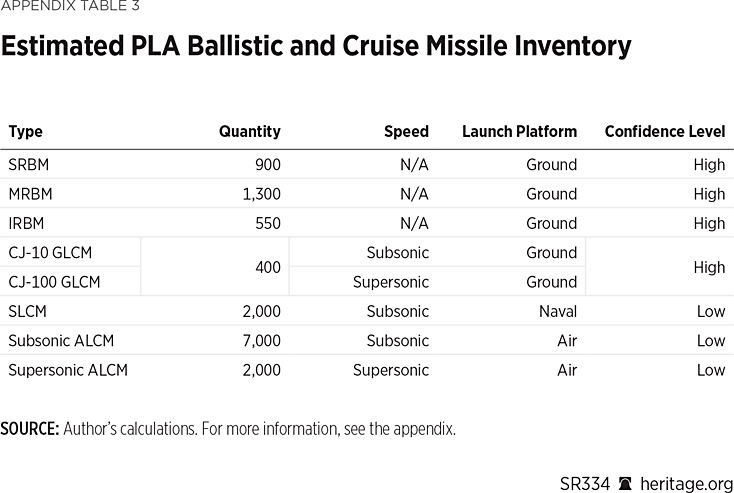
Further, while the U.S. initiated operations during Epic Fury, it is more likely that the PLA will initiate operations in the Indo–Pacific. Initiation by China rather than the United States offers the advantage of a first salvo, during which it has enough launchers for 28 percent of its short-range ballistic missiles (SRBMs), 23 percent of its medium-range ballistic missiles (MRBMs), and 55 percent of its intermediate-range ballistic missiles (IRBMs) before any potential mainland strikes degrade launch capabilities.[REF]
The military capacity available to the PLA for a first strike is more than sufficient to overwhelm U.S. defenses around Guam. Assuming a ratio of three interceptors per IRBM, just 12 percent of China’s IRBMs and 22 percent[REF] of its IRBM launchers would be necessary to deplete U.S. THAAD interceptors, even if only concentrated on a single, fully defended target.[REF]
Given the causal chain that (1) bases enable offensive operations; (2) abandoned or destroyed U.S. bases reduce American military power through inflicting casualties, destroying platforms, and reducing sortie rates; and (3) casualties, platform losses, and reduced sortie rates decrease the odds of an American victory, or increase the cost of attaining one, the central question becomes: What magazine depth is needed to defend U.S. bases against Chinese missiles in a high-intensity protracted conflict?
Section II: System Definitions and Scope
While the American military possesses a wide array of air defense capabilities, this report focuses on the four specifically designed to counter theater ballistic missiles: (1) the Patriot Advanced Capability 3 Missile Segment Enhancement (PAC-3 MSE); (2) THAAD interceptors, launched from the THAAD system; (3) Standard Missile 3 (SM-3); and (4) Standard Missile 6 (SM-6). Each has distinct characteristics, optimized for different threats or to be launched from different platforms:
- The PAC-3 MSE[REF] is a land-based interceptor designed to defeat cruise missiles and some ballistic missiles in their terminal phase.
- THAAD interceptors[REF] are land-based interceptors, designed for exo-atmospheric interception of MRBMs and IRBMs.
- SM-3s are exo-atmospheric naval interceptors, designed to kill ballistic missiles up to IRBMs.[REF]
- SM-6s are versatile naval interceptors designed to intercept cruise missiles, SRBMs, and MRBMs. They can also be used as anti-ship missiles.[REF]
Other U.S. systems not included in this report include the National Advanced Surface-to-Air Missile System (NASAMS), Patriot Advanced Capability 2 (PAC-2), Standard Missile 2 (SM-2), and a variety of smaller systems such as the Advanced Precision Kill Weapons System II (APKWS II). Each of these interceptors is designed to confront different threats, ranging from drones to cruise missiles. Their use is indirectly factored in against subsonic cruise missiles, as implied by the less than one PAC-3 MSE per subsonic cruise missile included in shot doctrine (as defined in Section III). However, it is beyond this report’s scope to derive an estimate for how many interceptors for each of these systems are needed.
Further, this report is scoped only to derive interceptor demand in the Indo–Pacific. Demand in other theaters or by allies is not considered.
Section III: Baseline Methodology
The methodology used to determine baseline U.S. land-based interceptor demand for a U.S.–PRC conflict follows four steps. First, the model analyzes open-source estimates of the PLA ballistic and cruise missile arsenal, noting where open-source intelligence gaps exist. Second, the model assigns an interceptor response to each missile class (SRBM, MRBM, IRBM, subsonic cruise missile, and supersonic cruise missile). Third, the model multiplies PLA missile inventory by the shot doctrine determined in step two to determine the number of interceptors (PAC-3 MSE and THAAD) that result. And fourth, the model applies a multiplier of 1.3 to the initial baseline interceptor count to account for friction[REF] and imperfect information. This establishes baseline PAC-3 MSE and THAAD interceptor demand for the Indo–Pacific.
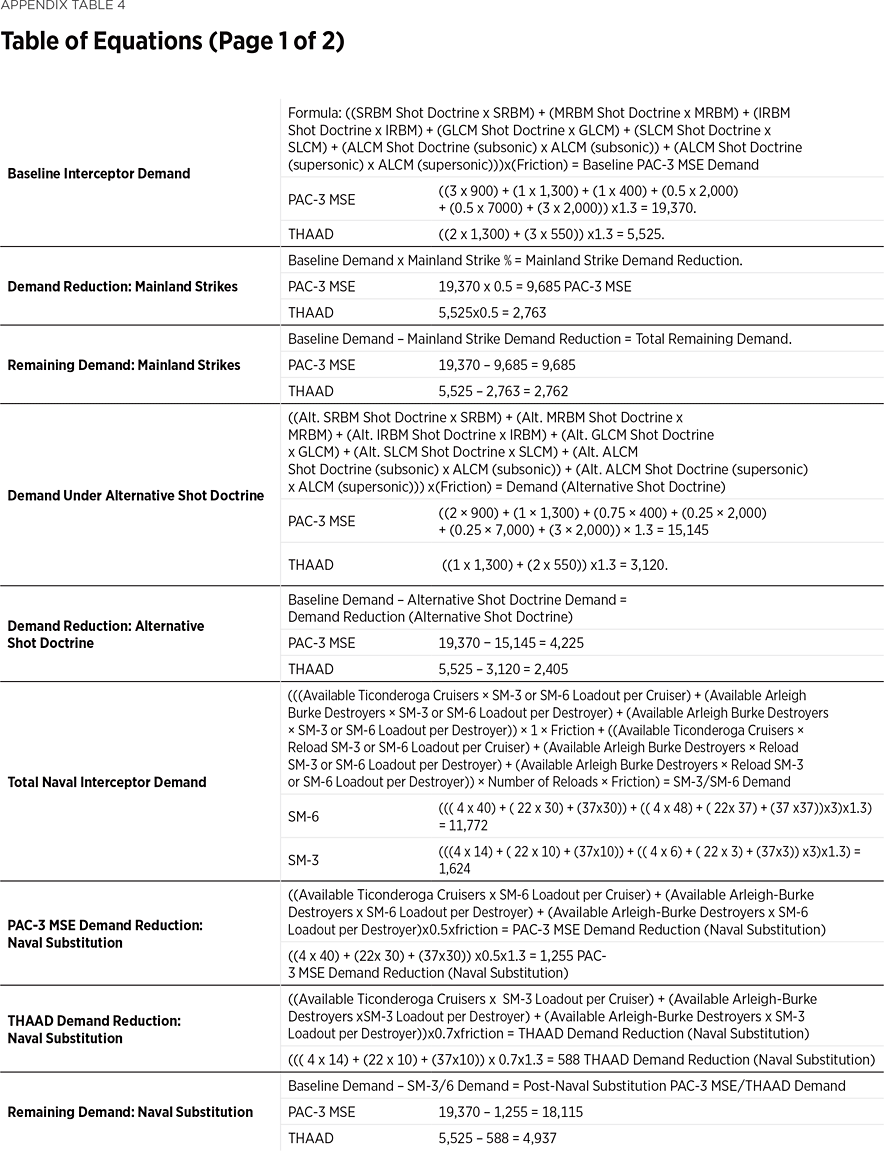
After establishing baseline demand, the potential impact of three actions—mainland strikes (attrition), revised shot doctrine, and naval interceptor substitution—are tested individually, at variable levels, against the baseline to determine the impact that action would have on results. Because mainland strikes, revised shot doctrine, and naval interceptor substitution are each tested at different values to provide sensitivity ranges, they allow readers or other analysts to run their own calculations with the same or different data without significant difficulty. To further simplify use of the model, formulas are provided in Appendix Table 4.
No variance from the sensitivity tests changes the overall conclusions of the report beyond changes to demand numbers, that are insufficient toalter the appropriation recommendation because the immediate appropriations recommendation is a floor and the defense industrial base policy proposed in Section VII is designed to adjust based on demand figures.
A separate methodology for naval interception is provided in Section VI, subsection “Naval Interception.”
Section IV: The Interceptor Gap
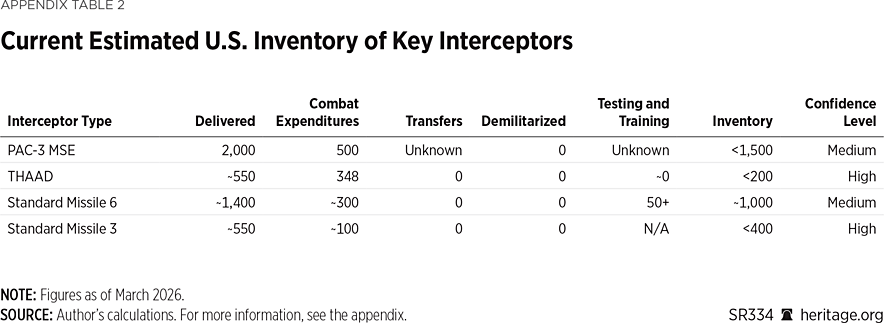
The United States requires 19,370 PAC-3 MSE interceptors and 5,525 THAAD interceptors to counter the PLA, a gap of 17,870 PAC-3 MSE and 5,325 THAAD interceptors, respectively, versus the current inventory of 1,500 PAC-3 MSE and 200 THAAD interceptors.
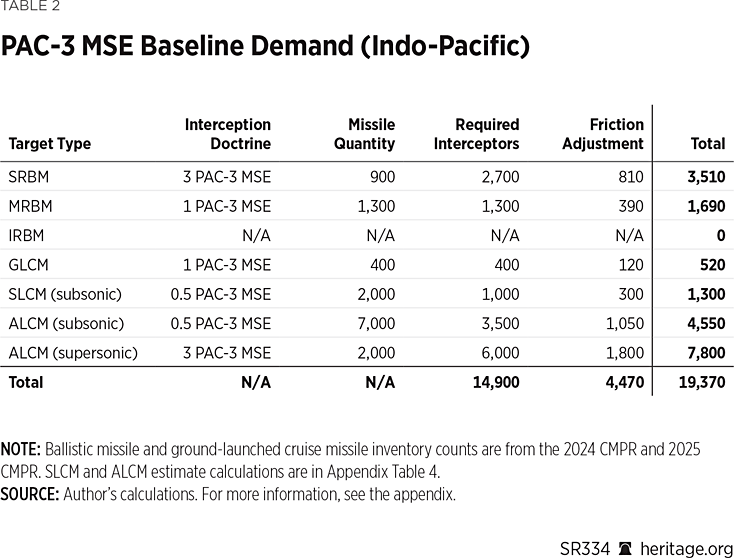
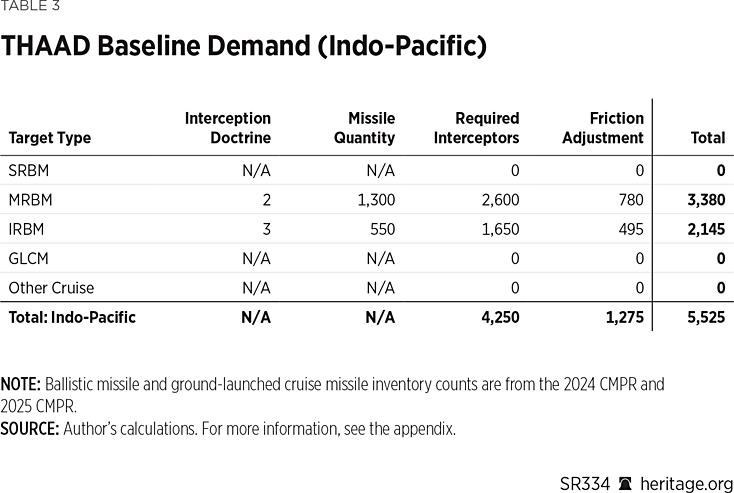
The 17,870 PAC-3 MSE interceptors and 5,325 THAAD interceptor gap between current magazine depth and interceptor demand relies on three primary assumptions.
First, it assumes that the entirety of the Chinese missile inventory will require interception by U.S. defenses. In reality, a number will be held in reserve for contingencies (conventional and nuclear) and as a “threat in being.” Others will malfunction or be launched at undefended targets. And if U.S. rules of engagement allow mainland strikes,[REF] still more Chinese missiles will not require interception.
Second, naval interceptors, such as SM-6 and SM-3, can supplement land-based systems, driving down overall demand for PAC-3 MSE and THAAD by spreading demand across more systems. As constructed, the model already accounts for the potential impact of other systems, capable of taking down some cruise missiles, by assuming most cruise missiles are shot down by those systems and require significantly fewer PAC-3 MSE interceptors. By adding naval interception, the model accounts for the only interceptors designed to eliminate ballistic missiles and higher-end cruise missiles, with a more realistic impact on THAAD and PAC-3 MSE demand. Further, one assumption made in the model is that all Chinese ballistic missiles that can be used as anti-ship missiles will be used as land attack missiles. Using SM-6 and SM-3 as substitutes mitigates this assumption by aggregating naval interceptors with land-based systems.
Third, current shot doctrine does not need to be future shot doctrine. While current precedent indicates a three-interceptor-to-one-missile ratio, interceptor scarcity could lead to changed operation decisions, reducing the ratio.
For planning purposes, assuming any rate of left-of-launch failure, allocation of naval assets to supplement land systems, or a reduced interceptor-to-missile ratio is suboptimal. Magazine depth should be geared toward maximizing flexibility and anticipating the worst-case scenario from Chinese actions.
However, when inventory is scarce, providing an inventory floor, below which American interceptor inventory is insufficient to withstand a Chinese missile attack, with harsh but acceptable levels of damage or losses, under optimistic conditions, provides value by allowing for better informed decision-making on the strategic level and developing alternative operational options given available means.
The inventory floor identified in this report should not be construed as a comfortable target. It is a minimum viable level under optimistic assumptions and reduced military and political flexibility that greatly constrains the options available to U.S. decisionmakers.
Section V: Inventory Floor Methodology
In order to determine an inventory requirement floor, the model first alters the estimated Chinese missile inventory used to calculate interceptor demand to account for attrition—both due to less than perfect performance and Chinese decisions (such as withholding missiles for contingencies) and potential U.S. actions. Second, it tests a revised shot doctrine, changing the multiplier associated with each Chinese missile that requires interception. Third, it accounts for naval interceptors supplementing land-based defenses. Naval interception requires its own methodology, to account for fleet defense requirements against anti-ship missiles. Fourth, it sequentially combines—mainland strikes, shot doctrine, and naval interceptor substitution—the optimistic results of all three actions, yielding the inventory floor.
For both the mainland strike and naval interception variables, a range of potential impacts is provided in matrix, allowing alterations of the procurement floor in the functional use of the model used in this report, based on individual judgment or alternative data. The end conclusion and recommended actions do not change regardless of changes in assumptions: U.S. inventory is below what this report identifies as an optimistic inventory floor, action must be taken to degrade the PLA missile arsenal before it is fully employed, and production and procurement must increase exponentially to rapidly increase interceptor inventory in preparation for a worst-case scenario in the Indo–Pacific.
Section VI: Inventory Floor Interceptor Gap
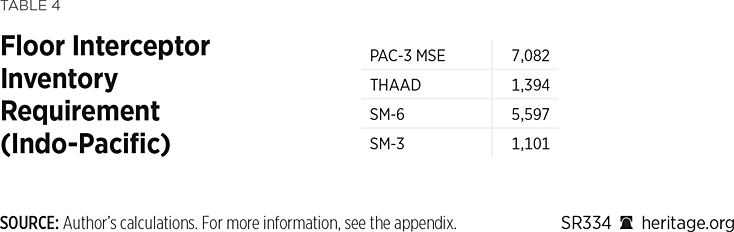
The United States requires 7,082 PAC-3 MSE interceptors and 1,394 THAAD interceptors to counter the PLA, a gap of roughly 5,600 PAC-3 MSE and 1,200 THAAD interceptors, respectively, versus the current estimated inventory of 1,500 PAC-3 MSEs and 200 THAAD. The floor requirement is predicated on PLA arsenal attrition driving launches down by 50 percent of total inventory, lowering the interceptor-to-missile ratio, and lowering SM-6 and SM-3 magazine depth to roughly 5,600 and 1,100, respectively.
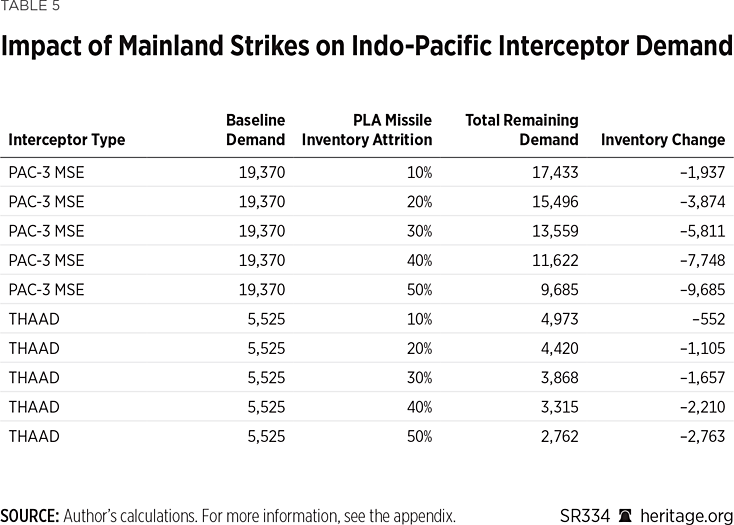
Non-Employment, Ineffective Employment, and Mainland Strikes. Reducing the number of PLA missiles that require interception through means such as mainland strikes constitutes the most impactful action to reduce interceptor demand. For every 10 percent degradation in PLA missiles that do not launch, 1,937 PAC-3 MSE and 552 THAAD interceptors are no longer required. That is more than the current U.S. inventory of PAC-3 MSE interceptors and more than 250 percent of THAAD interceptors.
The purpose of mainland strikes is to reduce the number of missiles fired at U.S. forces. It can be achieved by several means, among them airstrikes on launchers, missiles themselves, or enabling infrastructure such as sensors.
Similar in effect to mainland strikes are PLA missiles withheld from use against U.S. forces, as well as launch, guidance, and targeting failures not attributable to U.S. actions. While they are not the result of mainland strikes, they have the same functional impact on U.S. interceptor demand by reducing the number of missiles American and allied forces must intercept.
The model within this report combines PLA missile withhold rates and missile performance with externally imposed attrition caused by mainland strikes rather than separating the variables. This is done primarily because, in this instance, making judgments on the value of each variable individually compounds accuracy risk versus a single judgment. But, because they have the same functional impact on interceptor demand, there is no cost in aggregating the numbers together, and debate about the share becomes a secondary question relevant to operations but less so to appropriations. When modeling the cumulative impact of these factors, the report refers to the overall action causing them as mainland strikes, as it constitutes the series of U.S. actions available to decrease the number of missiles requiring interception.
The calculation to determine the impact of non-employment, ineffective employment, and mainland strikes on interceptor demand is straightforward: A 10 percent reduction in incoming missiles is a 10 percent decrease in interceptor demand.
As established, a base reduction in the quantity of missiles launched at U.S. and allied forces will be achieved regardless of U.S. actions, based on Chinese decisions regarding withhold rates and missile functionality. Further degradation requires mainland strikes.
For the minimum inventory calculation, this model sets the maximum number of PLA missiles attrited at 50 percent. It is currently uncertain if the United States will engage in mainland strikes at all. The PLA Rocket Force has launchers equivalent to 28 percent of its SRBM, 23 percent of its MRBMs, and 55 percent of its IRBMs.[REF] Assuming that U.S. and allied forces will not be able to prevent the PLA from firing an average of between one and two missiles per launcher is implausible when it has the initiative and the U.S. will not launch an overwhelming pre-emptive strike—whether simultaneously or over time—serving as an optimistic limiter on degradation of the rocket force.
Establishing a maximum attrition rate for air-launched cruise missiles (ALCMs) and ship-launched cruise missiles (SLCMs) would require public modeling with a number of variables that would render such a calculation of little value. As such, the model simplifies by matching the ALCM and SLCM degradation rates to the established maximum degradation rates used for the Rocket Force. This lowers the overall confidence level for the modeled PAC-3 MSE floor requirement but does not affect the THAAD estimate.
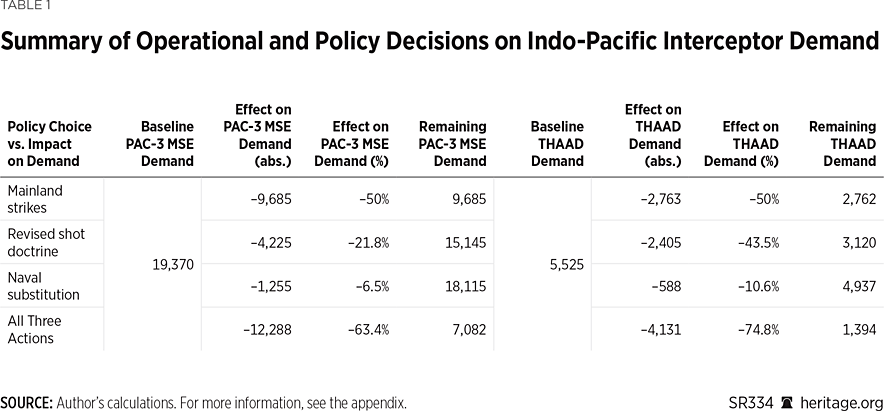
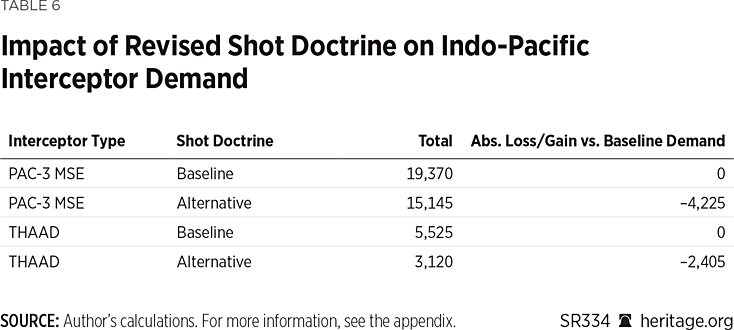
Shot Doctrine. A shot doctrine accounting for resource scarcity could have the second greatest impact on interceptor demand. By reducing the number of average interceptors fired at a given ballistic missile from three to two and the average number fired at a subsonic cruise missile from .5 to .25, demand for PAC-3 MSE and THAAD interceptors can be decreased by 4,225 and 2,405 interceptors, 21.8 percent and 43.5 percent, respectively.[REF] However, the cost of doing so is more extensive damage to U.S. bases, potentially backfiring if reduced sortie rates and platform losses increase the time required to achieve effective suppression.
Shot doctrine functionally constitutes the number of interceptors fired at a given target in order to have a high likelihood of successfully destroying the incoming missile. U.S. Army shot doctrine[REF] provides a variety of options depending on the battlefield scenario but implies an expectation that interceptor use will average greater than two, with two interceptors launched initially and the potential for re-engagement should initial interceptors miss and the opportunity exists to reengage.
Recent operational experience indicates that approximately three interceptors are used on average against ballistic missile threats. During the first four days of Operation Epic Fury, U.S. and allied forces used approximately 1,738 theater surface-to-air munitions to defend against 565 Iranian ballistic missiles and 57 cruise missiles. This implies an average of more than three interceptors used per Iranian ballistic missile.[REF]
If an operational decision is made to depart from this doctrine and move average interceptor usage below three, interceptor usage can be reduced, at the cost of increasing the number of successful enemy strikes on U.S. infrastructure. By reducing the average number of interceptors fired at a given ballistic missile from three to two, reducing ground-launched cruise missiles (GLCMs) from an average of 1.0 to an average of 0.75, and subsonic cruise missiles from an average of 0.5 to 0.25, demand for PAC-3 MSE and THAAD interceptors can be decreased by 4,225 and 2,405 interceptors, respectively (21.8 percent and 43.5 percent, respectively).
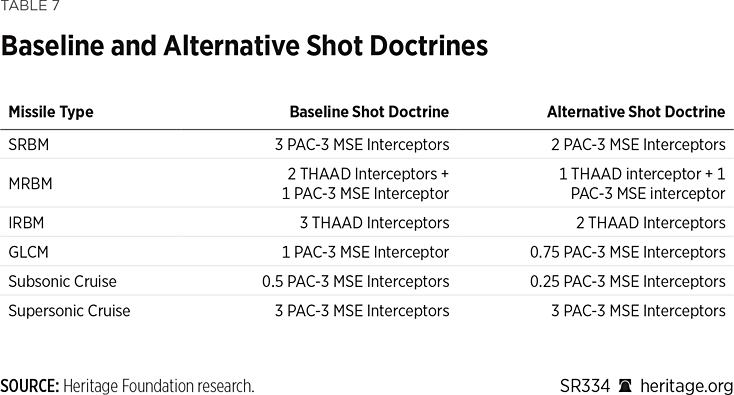
Revising shot doctrine due to scarcity is not unprecedented. Ukrainian forces have repeatedly claimed to fire fewer interceptors per incoming missile[REF] than during Epic Fury, adapting to resource scarcity.
Reducing the interceptor-to-missile ratio inherently comes with a significant military cost: While reducing the ratio could reduce PAC-3 MSE and THAAD interceptor demand by 4,225 and 2,405 interceptors, respectively, it would lead to increased casualty levels, platform losses, and infrastructure damage. All else equal, fewer interceptors launched at any given incoming missile reduces the odds of successful interception, thereby increasing the odds of a successful enemy missile strike. Successful enemy missile strikes can inflict casualties, destroy platforms, degrade defenses, and limit sortie rates through infrastructure destruction or disruption.
These casualties, platform losses, and infrastructure damage, in turn, adversely affect U.S. capacity and military potential, possibly having the unintended consequence of increasing interceptor demand in the long run by reducing U.S. capacity to conduct mainland strikes, allowing more Chinese missiles to be fired. It is not an optimal decision, but it is one that can be made to adapt interceptor magazine depth to the magazine depth of the PLA.
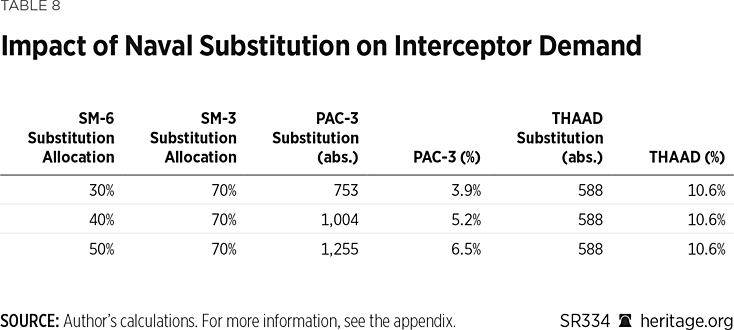
Naval Interception. Naval interception is likely to have a less significant impact on reducing land-based interceptor demand than either mainland strikes or a revised shot doctrine. Dedicating 50 percent of initially available SM-6s and 70 percent of initially available SM-3s could bring down demand for PAC-3 MSE and THAAD interceptors by 6.5 percent and 10.6 percent, respectively[REF]—but at a significant operational cost, reducing available SM-6 availability by 25 percent, assuming that only one fleet reload is available.
Carrier strike groups rely on ship-launched interceptors to ensure that fleets can generate combat power from the relative safety of the seas. Should sea-based missile defense platforms be used to augment land-based missile defense capabilities, that will create two significant trade-offs. First, the allocation of naval assets to a purely defensive role reduces the military’s overall available offensive striking power, which may delay suppression of PLA land-attack capabilities and inadvertently increase total interceptor demand over time. Second, after or if suppression of PLA anti-surface missiles is achieved, fewer interceptors will be available to the fleet, reducing the number of anti-ship missiles they can defend against and therefore the length of time that carrier strike groups can operate in highly contested environments.
The impact of allocating SM-6s as substitutes for PAC-3 MSE interceptors disproportionately depletes fleet endurance. Allocating 10 percent of the Joint Force’s modeled available surface combatants SM-6 loadout reduces demand for PAC-3 MSE by just 1.3 percent. If surface combatants dedicate 50 percent of their SM-6 loadout for a missile defense role, demand for PAC-3 MSE decreases by just 6.5 percent. Assuming only one available SM-6 reload—currently there are not even enough SM-6s to adequately loadout the fleet once—substituting for 6.5 percent of PAC-3 MSE demand reduces fleet endurance by 25 percent, curtailing not just the use of Tomahawk missiles but also the deployment of carriers, significantly degrading the Navy’s ability to contribute firepower to a fight.
Because the primary purpose of naval interceptors is for fleet defense, this Special Report first presents a simplified model detailing fleet defense. Second, it models the impact of allocation of SM-3 and SM-6s as substitutes on fleet endurance and land-based interceptor demand.
Fleet Defense Requirements. Fleet defense requirements are a product of available warships and their estimated loadouts, as well as of a judgment on how many reloads must be available to enable operations.
As of early 2026, the U.S. fleet contains 28 Arleigh Burke-class Flight I and Flight II destroyers, 46 Flight IIA and Flight III Arleigh Burke-class destroyers, and seven Ticonderoga-class cruisers. If—optimistically—80 percent of destroyers and four of seven Ticonderoga[REF] are available during the conflict, they would collectively have 6,020 vertical-launching-system (VLS) cells.
If each destroyer is equipped with 10 SM-3s, 30 SM-6s, and 50 or 56 other weapons, and each cruiser was equipped with 14 SM-3s, 40 SM-6s, and 68 other weapons (such as SM-2s, ASROCs, and ESSMs), it would take 646 SM-3s and 1,930 SM-6s to equip them, without accounting for friction.
Subsequent reloads would each consist of 201 SM-3s and 2,375 SM-6s.[REF]
Establishing a target number of reloads is subject more to a judgment of trade-offs—few will argue that “more isn’t better,” but under a constrained budget each interceptor purchased means a budgetary sacrifice is made elsewhere. As such, Appendix Table 7 presents requirements at three different levels (one reload, two reloads, and three reloads). One reload is used as a requirement floor, while three reloads reflects inventory levels with lower risk.
Of note, the proportion of SM-3 to SM-6 demand changes, reflecting the more specific role of the SM-3 in ballistic missile defense and the relatively more versatile SM-6. Rather than 10 SM-3s per destroyer and 14 SM-3s per cruiser, it is instead three and six, respectively. SM-6 allocation changes from 30 per destroyer and 40 per cruiser to 37 and 48, respectively.
Substituting for Land-Based Defenses. The number of SM-6s and SM-3s allocated to missile defense is set using as a percentage of the initial loadout of deployed vessels. For SM-6, that percentage is variable, ranging from 30 percent to 50 percent. For SM-3s, the percentage is held constant at 70 percent, reflecting its more specific use cases. Fifty percent allocation of the initial loadout of SM-6 as substitutes is used to calculate the floor PAC-3 MSE inventory requirement, along with 70 percent of SM-3s to calculate for THAAD. The result is demand for 1,255 SM-6 interceptors and 588 SM-3 interceptors, reducing PAC-3 MSE demand and THAAD demand by 6.5 percent and 10.6 percent, respectively.
Combined Effects. In combination, 50 percent attrition, a less conservative shot doctrine, and the modeled naval-substitution assumptions can reduce demand from 19,370 and 5,525 to 7,082 and 1,394, respectively. However, there still would remain an inventory gap of roughly 5,600 PAC-3 MSE; 1,200 THAAD; 4,600 SM-6; and roughly 700 SM-3 interceptors.
The THAAD, SM-6, and SM-3 inventory requirement estimates are high confidence within the model. Because PAC-3 MSE interceptor estimates are sensitive to low-confidence estimates of PLA cruise missile inventories, they are low-to-medium confidence. To assess the potential impact of inaccurate PLA cruise missile inventory estimates, Appendix A tests a 50 percent reduction and 50 percent increase in those estimates; neither adjustment changes the conclusion that current U.S. PAC-3 MSE inventory is inadequate by several multiples.
At current production rates, it would take between 9 years and 36.9 years for PAC-3 MSE, THAAD, SM-3, and SM-6 interceptors to even reach the demand required for the modeled inventory floor level.
The remaining gap between current inventory and—at the absolute minimum—the inventory floor requirement must be made up by new production on the fastest possible timetable.
Section VII: Current Industrial Base Production and a Plan to Expand Production
Current production rates are 620 PAC-3 MSE;[REF] 96 THAAD;[REF] 125 SM-6; and 24 SM-3 IIA interceptors per year, versus a baseline gap of 17,870; 5,325; 11,000; and 1,200, respectively. Given the threat from China, 28.8 years to 86.2 years is not a viable time frame to finish building U.S. inventory levels. Therefore, Congress must increase production rates—which it has, largely unsuccessfully,[REF] tried to do for years.
A large part of why Congress has failed to increase production is due to inconsistent demand signals, with actual orders below production capacity, when excluding Foreign Military Sales (FMS).
Often-cited reasons for production shortfalls, such as workforce shortages, are symptoms of these two problems rather than direct causes. While it is true that certain areas have workforce shortages, the solution itself does not need to be more workers overall (though that could help). Rather, workers could be lured from other industries through higher wages. In a hypothetical scenario where a competing industry offers $30 an hour for a welder, defense producers could offer $100 an hour and resolve their shortages in short order. However, that would increase the cost of munitions production and therefore unit cost, which Congress is not necessarily inclined to pay. Alternatively, facilities could become more automated, but that requires up-front investments and therefore a longer-term demand signal. And that demand signal cannot be a promise, it must be binding.
Evidently, current solutions are not working, or not working fast enough, to meet U.S. needs—which is why the munitions production base should be fundamentally restructured through two distinct but related policies: a one-time munitions procurement account and an output-based incentive (either as a tax credit or grant program).
Because both time and funding are binding constraints on interceptor availability, procurement mechanisms must be structured to accelerate production timelines. That entails creating a long-term demand signal that makes a better business case for capital investment, especially downstream suppliers, to make investments in new capacity, and incentivizing timely production.
The first policy would be a dedicated munitions procurement account that smooths out inconsistent demand signals and encourages capacity expansion. The account would be a one-time fund, replenishable via further congressional action, available to fund the procurement of critical munitions that are produced from newly built production capacity.
By creating a dedicated munitions procurement account—in many ways like the deals struck with industry to increase production capacity—instead of fully relying on the traditional year-to-year appropriations approach, a munitions account would provide a credible, front-loaded demand signal that smooths demand inconsistency. If production occurs, industry knows that the money is immediately available to pay for the munitions, rather than waiting on year-to-year appropriations. It smooths out and mitigates the risk of unpredictable, uncontracted demand.
A second major impact of the fund is that by making the munitions account usable for a congressionally designated list of munitions, with ceiling quantities, defense producers are incentivized to expand production capacity rapidly in order to capture limited available funding before their competition does. The logic behind this incentivized competition and munition procurement account holds so long as demand exceeds supply, which it currently does by an order of magnitude: As this report concludes, some munitions could take as long as 86 years to reach target inventory levels, without expenditures, for the Indo–Pacific alone. So long as demand exceeds supply and funding exists, there is room to capture market share.
The second policy would establish a production-conditioned grant program or tax credit. Paired with the dedicated munitions account, this performance-based incentive structure would accomplish several goals.
First, it deepens the impact of the demand signal. If baseline profit on a contract is approximately 10 percent,[REF] a matching 10 percent incentive could decrease the time required to pay off capital investments by roughly 50 percent. If it takes less time to pay off the capital investment, demand does not need to be as high as it otherwise would for the business case to be viable. Relatedly, it also would encourage solutions that reduce marginal cost and, in turn, could lead to long-term savings, shrink the gap between labor supply and demand, and lead to cost savings depending on order quantity.
Second, it can be used to incentivize timely delivery and to incentivize defense producers to make their own capital expenditures (shifting risk from taxpayers to industry).[REF] For example, profits derived from qualifying munitions contracts would be contingent on timely delivery and industry making its own capital expenditures. If deliveries are delayed, contractors would forfeit any incentive.
There would likely be several additional benefits. The performance-based incentive structure (either via grant or tax credit) incentivizes prime contractor accountability for execution, reducing the impact of supply-chain failures. Prime contractors would be fully responsible for meeting delivery timelines, including the performance of sub-tier suppliers. If the final product is late—regardless of responsibility—the incentive goes away, effectively halving available profits (if the value of the incentive is equivalent to average profit). This creates a massive incentive for prime contractors to more actively manage their supply chains, possibly even through direct funding to help sub-tier suppliers scale production.
If the grant or tax incentive program is only available to prime contractors and not their subcontractors, an inadvertent consequence could be excessive vertical integration, because in many cases vertical integration is the best way to control production scaling and production rates. While in many cases this may be healthy, in others, buyouts of certain companies that are sole-source suppliers or single-points-of-failure could unfairly influence competition and hurt the larger defense industrial base. To mitigate this risk, the incentive structure should extend to second-tier and third-tier suppliers, not only mitigating the risks of anti-competitive degrees of consolidation but also supporting capacity expansion, because smaller suppliers often have a harder time securing financing than larger firms.[REF] Energetics, seekers, guidance systems, castings, propellants, mil-spec microelectronics, and test infrastructure are prime examples of where this is most impactful.
Together, these mechanisms would shift procurement toward a production model that promotes rapid scaling and long-term savings by aligning industrial incentives with the urgent demands of the Indo–Pacific threat environment, while limiting risk to taxpayers and industry. As long as validated demand exceeds current supply, and dedicated funding is available to purchase additional output, industry will have an incentive to expand production, deliver on time, and make its own capital expenditures.
Still, a munitions fund and output-based incentive system would not solve all problems.
Regardless of whether the current defense industrial base structure is sustained, the first step to restoring interceptor inventory is actually buying to maximum capacity. While PAC-3 MSE and THAAD production capacity stood at 620[REF] and 96[REF] in 2025, procurement totaled just 233 PAC-3 MSE[REF] and 37 THAAD interceptors overall[REF]—well below capacity. Other production went to FMS partners, which are important orders to fulfill, but by not buying above capacity on a multi-year contract, it is not a demand signal to increase production.
While funding fixes the largest barrier to increasing production rates, regulatory barriers that increase the time needed to build new capacity should also be addressed. The National Environmental Policy Act (NEPA) and other regulatory barriers increase production timelines. To ensure that capacity expansion happens as quickly as possible, Congress and the executive branch should reduce construction timelines and remove regulatory barriers by providing targeted permitting relief for munitions and interceptor production facilities, energetics production, tooling, test infrastructure, and critical sub-tier capacity directly tied to congressionally identified priority munitions. The executive branch should also increase its use of existing authorities. One path not currently being exploited is 10 U.S. Code 2808,[REF] which could allow the Department of War to build facilities, or to kick-start construction of production facilities, with military construction funds.
Section VIII: The Costs of Inaction
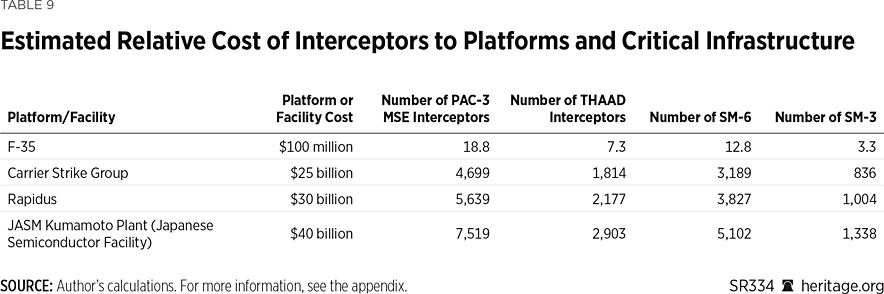
While the need to establish sufficient magazine depth is apparent, budgetary decisions do not occur in a void, and the cost of purchase must be justified by the return on investment. In the case of interceptors, that means measuring the cost of interceptors against what they defend—and just a limited number of the assets they defend are far more valuable than the cost of the entire recommended interceptor inventory, even if a war is won.
Fighting outside Taiwan (for example, PRC missile attacks on Japan) that destroys two of Japan’s most expensive manufacturing facilities—JASM Kumamoto Plant and Rapidus—which once complete, will be worth $40 billion[REF] and $30 billion,[REF] respectively, and a single carrier strike group would cost a combined total of nearly $100 billion.
The broader fallout of losing a war is even greater. Bloomberg estimates that, should the PRC invade Taiwan, the immediate economic impact would be roughly $10 trillion, or 10 percent of global gross domestic product (GDP).[REF] Unchecked, China could seize additional territories by force. Japan did not need to attack the United States at Pearl Harbor to achieve its territorial expansion and resource acquisition goals. It only needed the Dutch East Indies.[REF] However, it decided that, despite a high probability of failure,[REF] it needed to attack the United States to secure its gains.
When deterrence fails and there is no object in the way, a force in motion stays in motion. Hoping for a different outcome without planning for a worst-case scenario is not a prudent strategy. Failure to deter China—especially failure to decisively defeat the PLA and destroy the systems that could enable its regeneration in an Indo–Pacific—would have adverse impacts not just on U.S. military position and prestige, but also on its economic interests.
Short of force, losing a war or allowing the fall of Taiwan uncontested would still have immense adverse economic impact on U.S. interests. The defeat of U.S. forces would leave the PRC with more influence in Asia as a whole and a proven regional military advantage. In turn, this could enable the PRC to reduce U.S. access to Asian markets.
In addition to disrupting global trade flows—roughly one-third of which flow through Asia[REF]—Asian governments hold roughly $3 trillion in U.S. Treasuries.[REF] If those Treasuries were displaced, other governments or U.S. holders would need to take them on, crowding out investment[REF] and likely resulting in higher interest rates. A sustained 1 percent increase on the publicly held share of the current $39 trillion[REF] debt would cost the United States roughly $300 billion annually, not including the long-term impact of compounding. For the average American, that would translate to job losses, higher interest rates (including mortgage rates), higher rent, and other adverse economic impacts.
Consequences for China. China would also suffer severe economic damage in an Indo–Pacific war, possibly greater relative damage than the United States would have to bear. According to Bloomberg’s estimate, the damage would be global, and the economic damage to China would be even greater (11.6 percent of GDP) than to the United States (6.6 percent of GDP).[REF] This should come as no surprise, as an Indo–Pacific conflict would take place near China, and prospective mainland strikes on China would cause further and more permanent economic damage.
So, the stakes of a defeat in the Indo–Pacific are even greater for China than for the United States: If the United States loses, it will incur significant economic damage, while a defeat or victory is likely to damage China’s import- and export-dependent economy more, especially on a relative basis. The relative economic stakes should support deterrence, but economics alone cannot be relied on to prevent conflict. The United States still needs the platforms, munitions, and interceptor inventory required to make deterrence credible.
History is rife with misjudgments by leaders, economics are not the sole contributor to war, and war is always rife with uncertainty—especially in the long run. Japan attacked the United States during World War II with little prospect of victory, and the result was regime change.
Section IX: Recommendations for Congress and the Administration
Tier I priorities reflect fiscal year 2027 budget cycle measures or 2026 actions that, if not passed, executed, and/or enacted, will most significantly decrease the odds of a U.S. victory.
Tiers II and III are determined by a combination of urgency and impact. Because execution difficulty is not part of the determination, some Tier III priorities may include high return on investment “quick wins.”
Tier I Priorities. In order to rapidly expand U.S. interceptor inventory, Congress should:
- Establish and fund a munitions procurement account through the most viable legislative vehicle, including annual defense appropriations, supplemental appropriations, National Defense Authorization Act (NDAA) authority, reconciliation where appropriate, or a combination of these mechanisms with funding to jump-start procurement of 20,000 PAC-3 MSE interceptors, 5,600 THAAD interceptors, 12,000 SM-6s, 1,500 SM-3s, newly developed equivalent capabilities, or other munitions. Initial funding should total at least $100 billion for interceptors. If initial funding is procured through reconciliation but is insufficient to hit target inventory levels, additional funding should be appropriated annually to, at a minimum, backfill expenditures from the munitions procurement fund.
- Create a performance-based incentive (either as a grant, tax credit, or similar mechanism) to scale production with timely output for priority munitions and critical subcomponent production, conditioned on verified on-time delivery without government capital expenditures (CAPEX) and only newly built capacity.
The Secretary of War, with the approval of the President, should:
- Ensure that the Department of War has pre-planned, lawful, executable left-of-launch options to suppress PLA long-range fires at the onset of a conflict, including options against military targets, enabling infrastructure, and other strategically significant nodes. The department should brief the appropriate congressional defense committees on the operational assumptions, authorities, and force requirements associated with those options.
The Department of War should:
- Provide Congress with a report, including a detailed methodology, on the interceptors and munitions it requires. The estimate must account for the Indo–Pacific as well as all other theaters, and a strategic reserve, and not be tied to individual concept plans (CONPLAN) or operational plans (OPLAN) or budgetary considerations. This could include re-running the model in this Special Report with classified information.
- Use 10 U.S. Code 2808 with already appropriated military construction funds to kick-start facility construction and allow industry to contribute additional funds to complete construction and tooling.
The Intelligence Community, working with the Commerce and Treasury Departments, should:
- Identify ways to degrade PLA missile production rates and implement export bans and/or invoke the foreign direct product rule or other mechanisms.
Congress should:
- Explicitly exempt munitions and interceptor production facilities from regulatory requirements, including NEPA, within the NDAA or another legislative vehicle.
- Raise the dollar threshold through legislation for 10 U.S. Code 2808 actions and exempt any potential reconciliation funding for military construction from potential reconciliation funding toward the cap established in 10 U.S. Code 2808.
Tier II. The Department of War and Department of State should:
- Establish agreements with countries with PAC-3 MSE and THAAD inventories that enable munitions transfer from their inventory to U.S. inventory in the event of a conflict involving the United States.
Congress, in coordination with the Department of War and U.S. allies, such as Japan and Australia, should:
- Fund additional Indo–Pacific infrastructure improvements to harden them against ballistic missile attack, especially IRBMs.
Australia should:
- Purchase at least three THAAD batteries and hundreds of interceptors to defend key bases, such as RAAF Base Darwin, from PLA attack, reducing the inventory and cost burden on U.S. inventories of scarce munitions and enhancing Australia’s ability to defend itself.
Tier III. Congress should:
- Provide additional funding for infrastructure hardening in the Indo–Pacific to mitigate the impact of successful Chinese military strikes on U.S. operations.
The Department of War should:
- Assess the viability of repurposing retired Ticonderoga-class cruisers as floating missile platforms or onshore missile platforms, utilizing their VLS cells armed with naval interceptors to supplement ground-based defenses without sacrificing available naval assets.
- Continue, with congressional funding, research and development programs aimed at ensuring that the U.S. theater missile defense architecture can defeat increasing sophisticated missiles, including advanced hypersonic weapons.
Conclusion
American theater missile defenses are insufficient for sustaining operations in a protracted high-intensity conflict with China. At current inventory levels, the PLA could render key U.S. bases, such as Andersen Air Force Base on Guam, unable to sustain adequate operational tempo or render them inoperable within the opening days of a conflict. Offensive plans fail if the force cannot survive long enough to execute them. Interceptor magazine depth is what buys that time.
Actions, such as mainland strikes, are vital to reducing demand on U.S. interceptor inventories but paradoxically depend on having interceptor inventory at a level capable of buying the Joint Force sufficient time to suppress or destroy PLA long-range fires.
Attaining sufficient interceptor inventory requires increased production and procurement of interceptors. It also may require accepting operational trade-offs that can reduce demand for interceptors, but at the cost of operational flexibility and immediately available firepower (naval strikes) or selective acceptance of additional damage (revised shot doctrine). Adopting the recommendations in this Special Report—which support and expand on existing Administration efforts to increase munition production—is vital to enabling a U.S. victory against the PLA.
There is limited time to bridge the interceptor gap—which is why funding, authorities, and executive actions are needed immediately if the United States wants to deter and be able to defeat the PLA. The United States cannot intercept tomorrow’s missiles with tomorrow’s production. It must buy and build before the crisis begins.
The cost of failing to deter, and if not deter, defeat, the PLA is great. Not only would a global recession or depression affect the United States and China, but it could also potentially affect the U.S. global strategic position. It would hinder U.S. access to Asian markets, the loss of which would have cascading implications for the U.S. debt burden, trade flows, dominance of the U.S. dollar, and affordability for the average American.
The window to improve America’s deterrence posture is narrowing. The timing of a possible PLA invasion remains uncertain, but defeat is not inevitable if the United States acts now. Operations such as Epic Fury change the global operating environment in ways that can alter assumptions and force recalculation of existing plans. Rapidly expanding interceptor production is necessary to ensure that U.S. forces enter a crisis with the magazine depth required to survive, fight, and sustain offensive operations. Delayed corrective action increases the risk that both the United States and China incur severe military and economic costs that could have been avoided.
Jim Fein is Senior Research Associate for National Security and the Defense Industrial Base in the Douglas and Sarah Allison Center for National Security at The Heritage Foundation.
Appendix A: Modified PLA SLCM and ALCM Inventory Estimates
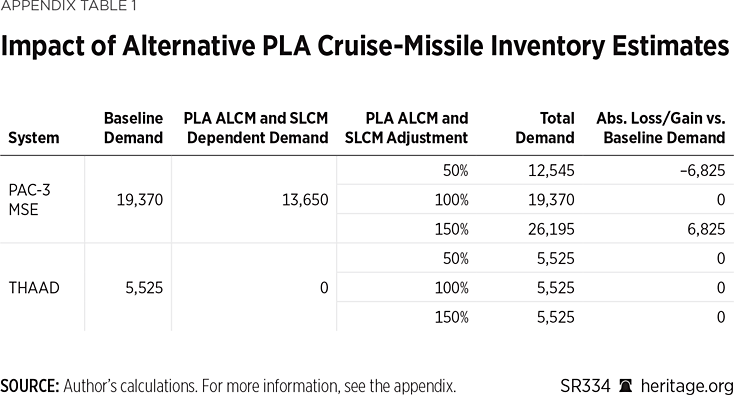
This section holds demand at its baseline value and changes only SLCM and ALCM inventory estimates.
Modifying uncertain PLA SLCM and ALCM inventory estimates to 50 percent, 100 percent, and 150 percent of the baseline yields an Indo–Pacific PAC-3 MSE demand range of 12,545 to 26,195 interceptors.
Relative to the baseline estimate, reducing uncertain PLA cruise missile inventories by 50 percent lowers Indo–Pacific PAC-3 MSE demand by 6,825, while increasing uncertain PLA cruise missile inventories by 50 percent raises Indo–Pacific PAC-3 MSE demand by 6,825. THAAD demand is unchanged across these cases because the baseline model does not assign THAAD interceptors to cruise missile defense.
Appendix B: U.S. and PRC Inventory Calculations
Appendix C: Methodology: Table of Equations
Appendix D: Naval Interception
Appendix E: Limitations of This Special Report
Inventory and expenditure estimates are as of March 2026 unless otherwise noted. Deliveries and expenditures since March 2026 are not included, but do not alter any conclusion.
Small disparities between tables are primarily the result of rounding methods.
Requirements in this report are geared only toward a U.S.–China conflict. Interceptor demand for allies and other theaters are not included.
To account for PLA ALCMs, the model uses estimated U.S. procurement[REF] of the AGM-158A/B Joint Air-to-Surface Standoff Missile (JASSM[REF]) and AGM-88E/G Advanced Radiation Guided Missile (AARGM) as proxies. The model uses total procurement of Tomahawk Block IV/V missiles as a proxy for PLA SLCM inventory, revised down so that it is proportionate to the difference between PLA Navy (PLAN) and U.S. vertical launch system (VLS) cells. The result is a total of 7,000 air-launched subsonic cruise missiles,[REF] 2,000[REF] supersonic ALCMs, and 2,000 subsonic SLCMs (PLAN VLS cells number roughly 50 percent of U.S. Navy VLS cells).[REF] The ALCM and SLCM inventory estimates are low-confidence and should be refined with classified information. Any change in inputs does not change the conclusions.
This model assumes that all PLA missiles will be used against ground targets. This constraint is mostly mitigated through the naval interception variable, which makes the model realistically agnostic on whether ballistic missiles are used against land or naval targets. Even if hypothetically it is not true, for practical purposes it is.
Inventory data does not account for future production. New production will drive demand for interceptors higher. The Department of War’s China Military Power Reports make it possible to estimate year-over-year increases in the PLA Rocket Forces’ missile inventory by comparing year-over-year total inventory. Increases in inventory are below probable minimum sustainment production rates, and therefore a precise analysis is unnecessary to inform appropriations totals.
Because CJ-10 and CJ-100 (one supersonic, the other subsonic) inventories are not delineated in the 2025 CMPR, this model uses one PAC-3 MSE as an average.
This model does not include allied inventories. However, allied inventories are de minimis, and in the case of THAAD, almost non-existent.
SM-3 production rates refer only to SM-3 IIA.


