
One number cannot fix the child welfare system—but it can help to refocus the system’s goals. The Administration for Children and Families (ACF) is centering its collective urgency on the ratio of foster homes to foster children to improve child welfare outcomes and shift away from compliance-driven activity.[REF] When I was Assistant Secretary for Family Support at the ACF, the department launched A Home for Every Child, an initiative which, at its core, aims to ask a straightforward but essential question: Are foster homes waiting for children, or are foster children waiting for homes? It also gives states an opportunity to improve both sides of the ratio by:
- Responsibly increasing the number of foster homes through recruitment and retention to boost the numerator; and
- Responsibly reducing entries into foster care and reducing the length of stay for those already in care to reduce the denominator.
As one observer noted about this initiative: “This is capacity planning in its most practical form: define the supply you need, understand the demand you face, and manage both deliberately rather than through crisis response.”[REF]
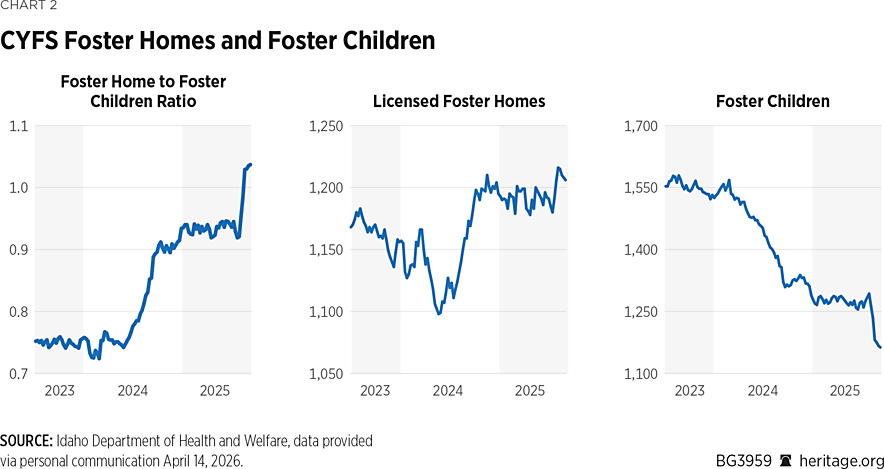
A Home for Every Child builds on my experience managing Idaho’s child welfare system during one of the most challenging eras in the program’s history. I saw firsthand how a single, unifying measure re-channeled the Idaho Department of Health and Welfare’s (DHW) energy into productive, measurable, child-centered work and, in so doing, expanded the ratio of foster homes from 74 to 104 homes per 100 kids in less than 15 months.[REF] It allowed the DHW to better manage capacity needs rather than reacting through emergency placements.
In this Backgrounder, I explain why Idaho selected this ratio as its compass, how early improvements were achieved, and why the ACF is now elevating the measure nationally to help participating states to strengthen families and to improve child welfare outcomes.
The Problem States Are Facing
When I became Idaho’s child welfare leader, the landscape looked similar to what many state administrators face today. Idaho’s legislative oversight body had recently issued three detailed and often critical reports.[REF] These reports identified inconsistent practices and growing frustration among families and other child-welfare stakeholders. In response, the legislature convened an oversight committee and held hours of emotional public testimony—stories from biological parents, foster parents, relatives, and former foster youth.[REF] The state established an ombudsman’s office, and the media spotlight intensified.[REF]
Before I stepped into the role, I had sat with dozens of people who had experienced the system in different ways—biological parents who felt unheard, foster parents exhausted from burnout, former foster youth carrying memories that should have been prevented, advocates from child-serving nonprofits, legislators who had championed reforms, specialized attorneys, and representatives from Citizen Review Panels and the Children At-Risk Task Force. Everyone saw pieces of the problem. Everyone cared deeply. But when I asked this question—“If you could fix one or two things first, what would they be?”—I got as many answers as people I asked.
All their concerns could fit into a Venn diagram. At the center sat the best interest of the child. But the outer rings were overwhelming: workforce issues, inconsistent court practices, training gaps, prevention needs, foster home shortages, budget pressures, unsustainable caseloads, congregate care challenges, and concerns about transparency and communication. Every thread mattered, and every thread felt urgent. But knowing where to start was a challenge.
Meanwhile, the system was buckling under pressure. Like many states, Idaho experienced a steep decline in both foster homes and in-state congregate care capacity post-COVID-19 and following the implementation of the Family First Prevention Services Act. With fewer placement options, children were sleeping in offices and short-term rentals—situations that are expensive, unsustainable, and harmful to children.[REF]
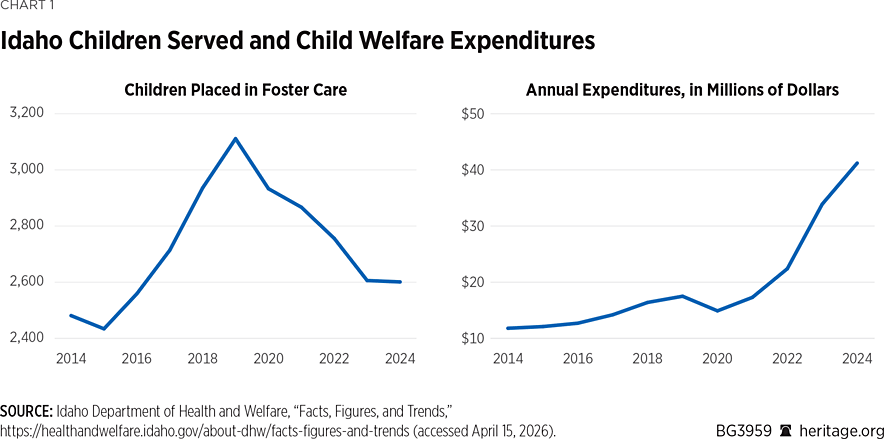
Costs soared. Child welfare spending correlated closely with caseload through 2020, but then per-child costs escalated dramatically, driven by out-of-state congregate care placements and reliance on costly emergency placements, such as short-term rentals. (See Chart 1.) DHW leadership stood before the legislature each year requesting supplemental appropriations to keep the system afloat, with costs increasing annually from $1.5 million in 2022 to $14.1 million in 2025.[REF]
These were not abstract policy problems. They were daily realities—constant triage, a sense of firefighting rather than forward motion, and a workforce stretched beyond its limits.
A Framework for Focus
To cut through the noise, Idaho DHW embraced the Four Disciplines of Execution (4DX) framework, a strategic model used across sectors to identify and execute on a “Wildly Important Goal.”[REF] The principle is simple: If you prioritize everything, you prioritize nothing. Focus creates traction. Traction builds progress. Progress builds trust.
The DHW leadership team went back to basics and began mapping the entire child welfare journey, from hotline call, to assessment, to the decision between prevention services or placement, through to permanency. (See Figure 1.)
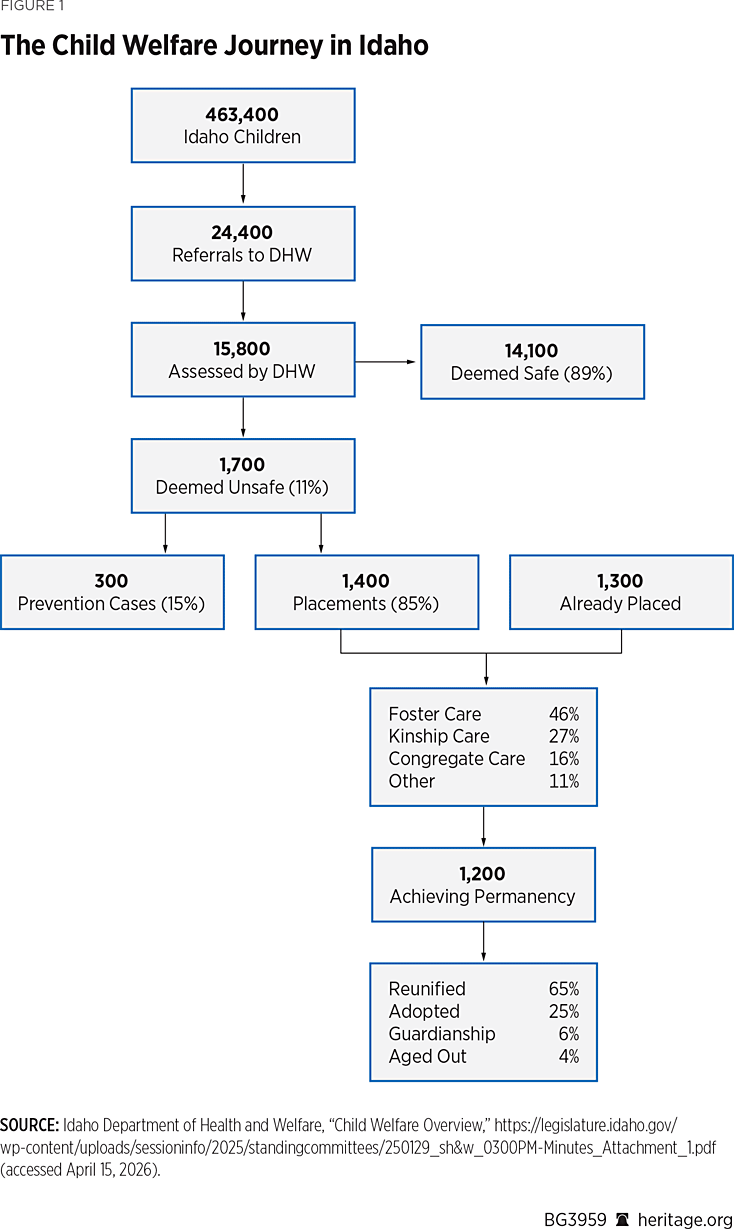
This mapping surfaced three primary levers that drive both cost and outcomes:
1. The Front Door. The DHW does not directly control who enters foster care—courts ultimately make that determination—but agencies influence it through thorough safety assessments, clear communication with the courts, and robust prevention capacity. Provision of strong prevention services can shift children from placement to in-home support when safety allows.
2. Length of Stay. How long children remain in foster care has profound implications. Shorter stays, when safely achieved through timely reunification or adoption or guardianship, can reduce trauma and reduce cost. Long stays often indicate system strain or ineffective court practices, where appropriate services are either inaccessible or take too long to access and fail to meet safety needs.
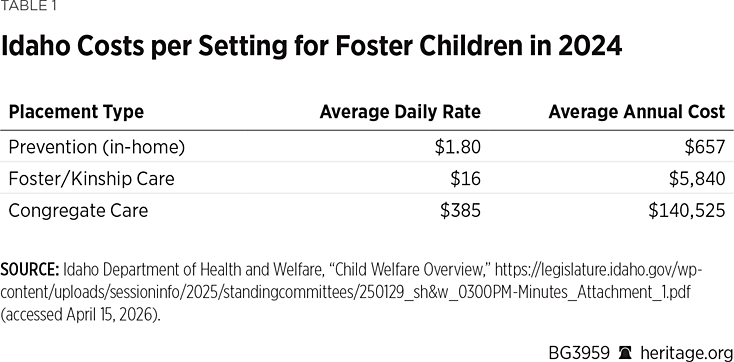
3. Placement Decision. In child welfare, better outcomes and better budgets are aligned. (See Table 1.) When a child can remain safely at home, the impact is positive across every dimension. When remaining home is not safe, kinship care generally produces better stability, continuity, and outcomes than does non-relative care. Congregate care must remain an exception, used only when clinically necessary and for the shortest duration necessary.
Stabilization Through Optimization
While long-term benefits, such as reduced risks of incarceration and homelessness, are substantial, it is not necessary to factor these in to demonstrate cost stabilization. Preventive services alone yield significant savings: For every 100 children kept out of Idaho foster care, the state saves approximately $518,300 per year, based solely on the difference in average annual costs between prevention and foster care placements, as shown in Table 1.
Prevention also frees up existing foster home capacity. If this newly available capacity enables even a portion of children in congregate care to move safely into appropriate foster homes, the financial impact is even greater: Every 10 children in Idaho who make this transition generate $1.3 million in annual savings. (See Table 1.)
These insights helped the DHW to articulate three mantras that guided Idaho’s reform:
- “Flip the script.” In recent years, roughly 85 percent of children in the child welfare system were removed from their homes and placed with kin or non-relatives, in congregate care, or other settings, and only 15 percent were in prevention cases in which they remained in their homes. DHW leadership believed that this ratio could be reversed and more children could be kept safely in their own homes with appropriate support.
- “Right kid, right place, right time.” No child should be placed in a setting simply because it is the only available option.
- “Create a flywheel effect.” Effective prevention frees foster homes; freed foster homes reduce reliance on congregate care; reduced congregate care frees dollars for more re-investment in front-end prevention.
But the child welfare department still needed a single, unifying benchmark that every staff member could understand and influence.
The department chose the ratio of foster homes to foster children.
Why This Ratio Worked
The foster-homes-to-foster-kids ratio became the department’s Wildly Important Goal because it focused on the best interest of the child and gave staffers a chance to measure progress weekly. When the ratio is low, everything becomes reactive. Staff scramble. Costs surge. Stability evaporates. Children pay the price.
But when the ratio improves, even modestly, the system can breathe. Staff at all levels generated ideas to move the numerator or denominator. And the urgency accelerated innovation.
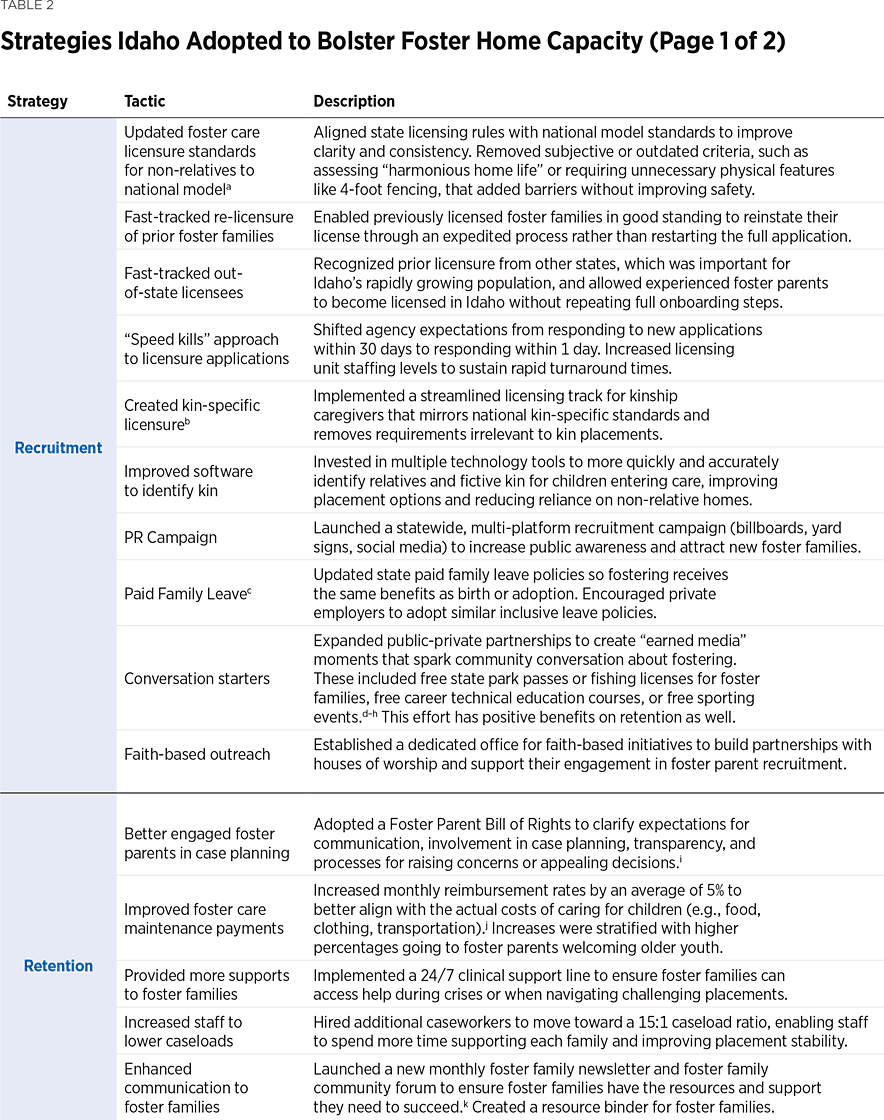
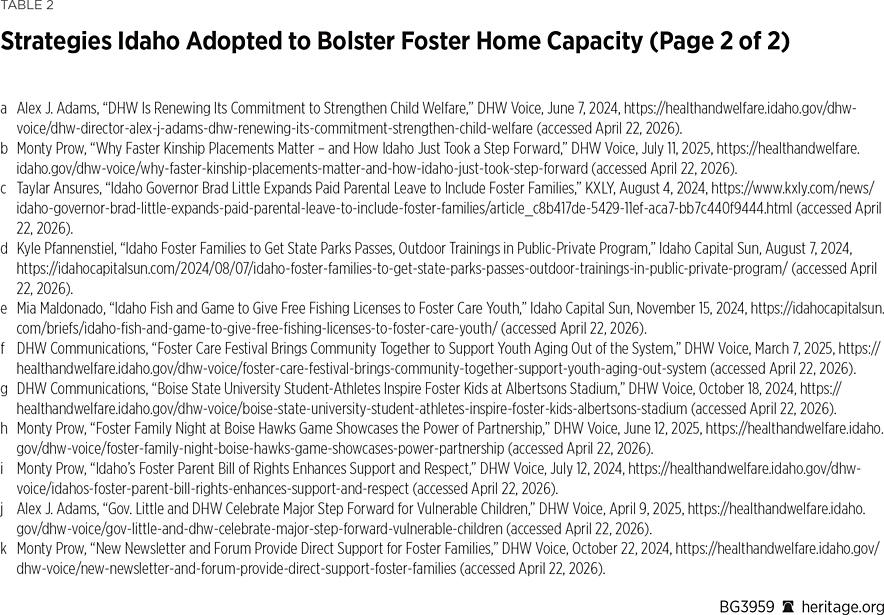
Strengthening the Numerator: Bolstering Foster Home Capacity. Idaho undertook many strategies to boost the numerator through recruitment and retention of foster homes. (See Table 2.)
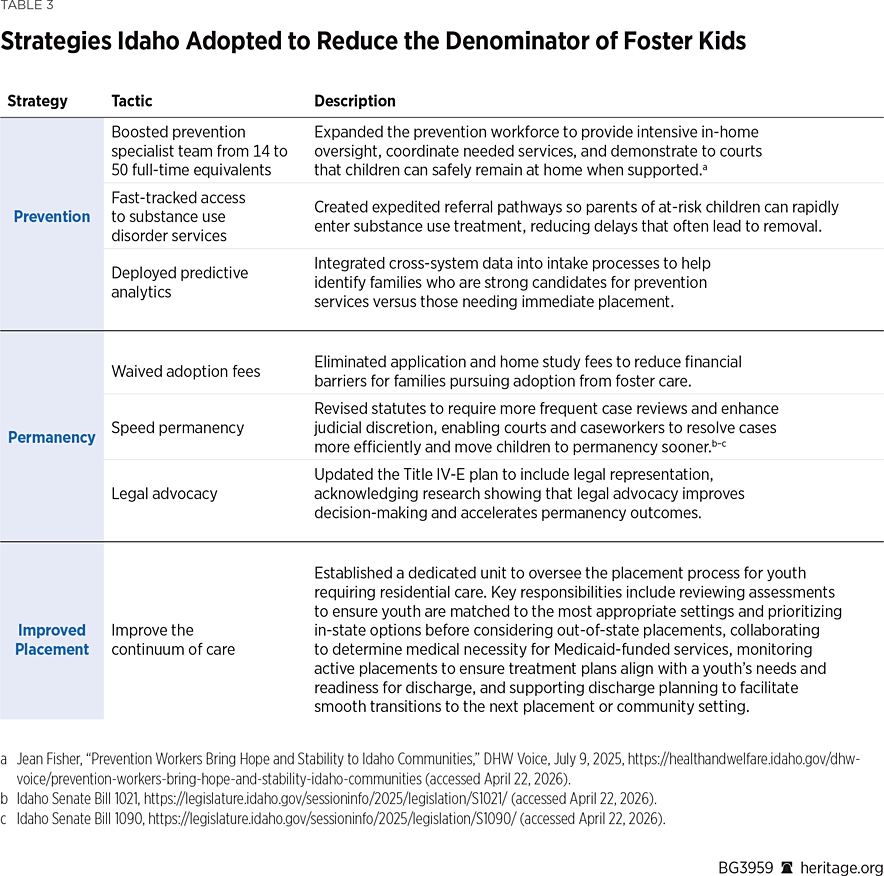
Reducing the Denominator: Prevention and Permanency. Idaho also undertook strategies to reduce the denominator of foster kids through effective prevention and efforts to improve permanency. (See Table 3.)
Collectively, these efforts delivered measurable results. Idaho increased its ratio of foster homes to children from 74 per 100 to 104 per 100 in just over one year, eliminated emergency placements in short-term rentals,[REF] reduced reliance on congregate care by 30 percent, expanded the use of relative and kinship care,[REF] and strengthened its prevention infrastructure.[REF] As capacity grew, system costs began to stabilize and legislative confidence improved.[REF] Remarkably, only a year after highly charged oversight hearings, the Idaho legislature approved the largest child-welfare funding increase in state history to help further create the flywheel effect.[REF]
These changes were not without critics. Some argued that the ratio itself was too simplistic, pointing out that it does not account for bed availability or distinguish whether the system is recruiting the right mix of homes rather than disproportionately attracting families seeking infant placements. Others objected to specific tactics, such as aligning Idaho’s standards with national model licensure guidelines, expressing concern that streamlined requirements might weaken foster-home quality.
There are, of course, both good and bad ways to improve this ratio. Simply boosting the numerator with homes that will only take infants does little to help a system whose biggest issue is placing older youth and sibling groups. But the DHW trusted its social workers and team to make the right decisions to safely improve both sides of the equation, because the status quo was failing. If it had been working, system costs would not have been escalating and children would not have been spending nights in short-term rentals.
Idaho succeeded by keeping the department in a posture of rapid-cycle innovation and decisive action—resisting calls for slow-moving adjustments in the face of mounting urgency.
Bringing This Focus to the National Stage
National data on foster-home capacity remains surprisingly limited. Despite ACF collecting more than 200 federally required state data elements, the number of licensed foster homes is not currently among them. Using the best available information from 2023—the most recent year with comparable but self-reported data—the ACF estimates a national ratio of roughly 57 foster homes for every 100 children in care.[REF] The country can, and must, do better.
At the ACF, leadership is elevating this measure to national visibility. A Home for Every Child is not a federal mandate. It is a federal–state partnership. States differ in size, geography, workforce constraints, court cultures, and provider networks. Yet every state can improve one or both sides of this ratio: increasing the number of available homes or reducing the number of children who need them.
The ACF’s national work focuses on:
- Partnering with states to build foster home capacity, particularly kinship care and homes that meet the individual needs of foster kids;
- Strengthening prevention pathways to safely reduce entries into care;
- Promoting agencies’ practices and procedures that emphasize safe and timely permanency; and
- Providing policy, technical assistance, and data tools that help states to monitor and improve their ratio over time.
Most important, the ACF is giving states a historic opportunity to pivot their required Program Improvement Plans (PIPs) to incorporate the foster-home-to-foster-kid ratio.[REF] For decades, every state has labored under PIPs driven by the Child and Family Services Reviews, which, as research shows, no state has ever fully passed in the 25 years since they began.[REF]
This reform represents a meaningful shift: It offers states the possibility of real relief from the cycle of penalties, often imposed by wide-ranging or fruitless PIP requirements, and allows them to focus on locally driven solutions that increase their numerator or reduce their denominator—or both. In short, it replaces compliance-oriented busywork with a practical, outcomes-focused strategy that truly supports children and families.
States opting in to the new PIP will focus their energy on initiating a small number of initiatives to improve their ratio and report progress to the ACF monthly. Such enhanced near-real-time reporting will lead to more actionable insights about what is working and what is not, leveraging the experience of participating states. The ACF will publish a scoreboard showing each participating state’s ratio and trendline. To date, the response from states has been illuminating: In just months since the new PIP requirements were released, 15 bipartisan jurisdictions and counting have already joined A Home for Every Child.[REF]
Through these actions, the ACF’s goal is simple but profound: homes waiting for children, not children waiting for homes. This measure does not solve everything. It does not replace the need for workforce stabilization, court collaboration, engaging youth who have experienced foster care, or practice reforms. But it creates momentum. And momentum creates possibility.
The ACF stands ready to partner with every state, every tribe, and every community that shares the same vision: a safe, loving home for every child who needs one.
Alex J. Adams is Assistant Secretary for Family Support at the Administration for Children and Families at the U.S. Department of Health and Human Services.


