

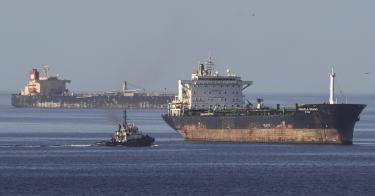
Earlier this month, the Cook Islands came under intense scrutiny when a sanctioned oil tanker was identified sailing under its flag while allegedly attempting to evade a U.S. naval blockade.
Under the flag system, responsibility fell on the South Pacific nation to prevent unlawful conduct. Similar incidents in the past have fueled broader doubts over whether some Pacific flag registries possess the adequate capacity, or political will, to police the vessels that fly their flags.
Since the adoption of the United Nations Convention of the Law of the Sea (UNCLOS), the maritime order has rested on individual nations faithfully regulating the conduct of vessels. Central to that are flag registries, which confer exclusive jurisdiction over administrative, technical, and social matters to the flag state in exchange for the right to operate under its banner. Over time, however, registries have become revenue-generating enterprises, sustained by registration and annual fees—often at the expense of regulatory responsibilities.
Several Pacific Island nations have acquired particular reputations for lax oversight of their flag registries. Six nations in the region operate open flag registries, which extend registration to foreign vessels without nationality requirements. Of these, two—Palau and Vanuatu—have been placed on the Paris Memorandum of Understanding’s blacklist, the primary international benchmark for port state control compliance. Another, Cook Islands, has been gray-listed, reflecting only partial compliance with certain standards, though not at the most severe level. Only one, the Marshall Islands, has been placed on the whitelist for satisfactory regulatory performance.
>>> Countering China at Sea: Inside America’s Cook Islands Play
Such poor regulatory environments are the results of intentional policymaking. Vanuatu’s Maritime Safety Commission has openly acknowledged that shipping companies and commercial vessels “really like Vanuatu” because it has, in practice, become a “tax haven.” In 2013, the government earned $1.2 million from its registry alone, an amount many times higher than the traditional income streams. Other Pacific Island nations have also been eager to take a bite out of this low-hanging fruit, triggering what a Federal Maritime Commission report called a “race to the bottom” where nations compete to lower standards to attract registrants.
While inadequately supervised registries may appear a lucrative business strategy, such an arrangement is illusory. Over time, such practices are financially unsustainable and will cause irreparable reputational damage to Pacific Island nations.
Illicit operators are drawn to these registries because they perceive the risk of prosecution and interdiction to be low. North Korea, for instance, has registered at least 17 vessels in Palau, Niue, Cook Islands, and Tuvalu to illicitly traffic oil. To move large amounts of contraband at scale, smuggling networks rely on ostensibly legitimate ship registries to evade detection while maintaining a façade of lawful commercial activity. Lax oversight attracts criminal enterprises, whose registrations ultimately finance the registries.
This strategy, however, is self-defeating. As a flag registry becomes increasingly associated with illicit conduct, it grows more likely to be placed on a targeted flag administration list—where the flagged vessels are subjected to heightened scrutiny. A case in point is Vanuatu, which wound up on the U.S. Coast Guard’s Targeted Flag List as “high-risk,” causing all vessels flying its flag to receive additional inspections.
Over time, increased scrutiny renders the targeted registry unattractive not only to subterfuge vessels, which previously supplied a good portion of its revenue, but also legitimate operators who are unwilling to face routine inspections and logistical delays. This effectively kills the commercial viability of the registry.
At the same time, perceptions of inadequate oversight can erode trust among neighboring states, diminishing the political capital of the flag state. When Cook Islands was found to have abetted Russia’s sanctioned fleet, its flag registry was promptly expelled from the Registry Information Sharing Compact (RISC), an information-sharing arrangement among leading registries. Such reputational losses diminish the flag state’s ability to influence regional arrangements and, worse, sideline it from cooperative arrangements essential to important security matters.
It remains in the clear interest of Pacific Island nations to reform these registries to ensure meaningful accountability over shipping activities, greater transparency in vessel ownership, and routine compliance checks.
First, Pacific Island nations should institute rigorous due diligence measures to verify beneficial vessel ownership. A vessel’s true owners are often obscured behind layers of subsidiary entities that bear no operational risk or legal responsibility if the ship is intercepted. Responsibility instead falls almost entirely on the crew and captain, who serve as the most visible, and expendable, actors in illicit operations. This problem is especially pronounced within open flag registries where beneficial owners are not required to reside in the flag state, making owner verification significantly more complex.
To address this, registries should mandate disclosure of all relevant financial stakeholders, including individuals who profit from shipping operations as well as those who finance them, categories that are not usually readily available on vessel registration documents. Port authorities should also conduct periodic recertifications to ensure information stays relevant.
Second, in nations that have privatized flag registries or operate through commercial structures, the governments should establish independent government bodies to oversee, investigate, and regulate registry operations. Palau offers a cautionary example. For years, its registry operated under a private commercial arrangement with International Shipping Bureau Management Ltd. with minimal government supervision. The result was a slew of serious operational deficiencies. It ranked second-highest in seafarer abandonment cases and the proportion of Palau-flagged vessels implicated in sanctions was abnormally high.
>>> To Honor Solomon Islands' Daniel Suidani, Americans Must Counter China’s Coercion
To prevent similar outcomes, transportation ministries should create independent investigatory authorities tasked with supervising private registry arrangements. In Cook Islands, a private company performs flag state functions on behalf of the Ministry of Transportation, yet no independent agency exists to monitor its performance. The absence of independent oversight raises serious questions about whether sanctions, safety standards, and sanitary regulations are effectively enforced.
Lastly, Pacific Island flag states should engage in regional and international information-sharing arrangements. While regional nations have improved their maritime domain awareness, capabilities remain uneven, limiting the ability of flag states to detect and respond to illicit maritime activity.
Accordingly, shared registry-information platforms are vital. Databases, such as the RISC, pool information from across registries to identify and track vessels. These systems document when a flag registry sanctions a ship, cancels or denies a registration, and when a vessel has been discovered to be engaging in unlawful behavior. Through sharing data, flag states can more easily pinpoint misconduct, strengthening their regulatory capacity.
The Marshall Islands, which runs one of the world’s largest registries, illustrates the benefits of operating a well-regulated system. With just under 5,400 vessels, it has become one of the preferred global registries. In its case, credible regulation builds trust and attracts registrants. For neighboring Pacific Island nations, that is the model they should follow: effective regulation is what makes a registry sustainable and profitable.
This piece originally appeared in The Diplomat


