


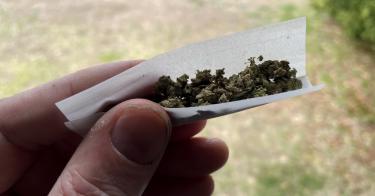
It’s hard to stroll through most great U.S. cities these days without getting smacked in the face with a waft of marijuana. From New York City to Los Angeles, the scent permeates the air, assaulting the nostrils of Americans, adults and children alike. And while few parents would willingly expose their children to “Mary Jane,” it seems they are oblivious to the toll it may have on their own reproductive capacities.
Despite this, the move to loosen restrictions on marijuana plows ahead.
Amid much pressure from industry lobbyists, obstacles to marijuana legalization are being removed. Most marijuana regulation remains under state jurisdiction. As of 2025, only 10 states (Idaho, Indiana, Iowa, Georgia, Kansas, North Carolina, South Carolina, Tennessee, Wisconsin, and Wyoming) still do not allow medical marijuana (legal in 40 states) or recreational use (legal in 24 and in the District of Columbia) for adults older than 21.
In the coming months, states with outright marijuana bans will be facing even more pressure to legalize, not only from lobbyists but also from the federal government. In December 2025, President Donald Trump issued an executive order to hasten the reclassification of marijuana from a Schedule 1 drug (with high abuse potential and no accepted medical use) to a Schedule III drug (with only moderate abuse potential and acceptable medical uses).
>>> Invasion of the Homeland: How Illegal, Chinese-Owned Marijuana Farms Have Consumed Rural America
Then-President Barack Obama deprioritized federal enforcement of possession in states with legalized marijuana in the early 2010s. Federal marijuana trafficking offenses are down by about 60 percent since 2020 and nearly 90 percent since 2012. Federal non-enforcement abets state legalization. Switching to Schedule III puts the weight of the federal medical establishment behind loosening state regulations.
Many will see this as a win. It isn’t.
Today’s marijuana isn’t yesterday’s. Ask anyone who used to smoke doobies behind the gym bleachers in the ‘80s and ’90s who has tried the herb today. Several Reddit threads give anecdotes of how the public describes the differences. Many say it was more about the overall “vibe” that smokers experienced: passing a joint, listening to music, feeling “mellow,” and so forth. Now, one user commented:
One or two hits of modern flower (or god forbid a dab) and you’re glued to the couch, sometimes anxious or paranoid. The high hits harder and faster because the THC levels are way higher—like 20–30%+ versus the 4–10% range back then. It doesn’t feel as ‘fun’ or social; more intense and isolating. The smell is stronger too (that skunky thing everywhere), and the whole vibe shifted from relaxed giggles to something heavier.
This is not conducive to men and women thriving, socially or, as many studies show, biologically.
States with legalized recreational marijuana have an average total fertility rate (TFR) of roughly 1.5, while states without have a TFR of 1.75, based on calculations from statistical reports. Among the top 15 most fertile states, only Alaska has legalized recreational pot. The Dakotas, Texas, Mississippi, and Utah—which bless medical marijuana only—have among the lowest pot usage rates in the country, according to surveys.
Much the same relationship can be found at the bottom of the TFR rankings. The District of Columbia (TFR 1.2), Vermont (1.3), Oregon (1.35), Rhode Island (1.37), Massachusetts (1.4), Maine (1.4), Colorado (1.45), Washington (1.47), California (1.48), Nevada (1.5), Illinois (1.5), Connecticut (1.52), and New York (1.53)—13 of the 14 least fecund states—all have legalized recreational pot.
Medical research suggests that cannabis consumption reduces sperm counts and sperm concentration, reduces sperm motility and viability, and ultimately inhibits the ability of sperm to fertilize eggs. A 2025 National Institutes of Health study found that cannabis users had significantly lower sperm concentrations, less powerful sperm, or lower sperm motility than tobacco smokers and non-users. Marijuana users are thus less able to fertilize eggs.
A 2015 Danish study in the Journal of Epidemiology found that men who smoked marijuana once per week had a 28 percent decrease in sperm concentration and a 29 percent lower sperm count than those who never smoked marijuana. Forty-five percent of cannabis users had impaired semen parameters, while only about a quarter of non-users did, according to a 2019 meta-analysis in Andrology.
>>> The Drug Crisis Hasn’t Gone Away. The Trump Administration Should Confront It
“The most extensive body of evidence for cannabis related alterations to sperm,” a 2019 survey in The Journal of Urology reads, “is for sperm motility.”
The sperm of men who smoke marijuana swim much less effectively than the sperm of those who don’t. The more potent the THC levels in marijuana, the more reduced the motility, according to a 2006 study in Fertility and Sterility. A 2020 study of Jamaican men found that cannabis users were between 2.6 and 4.3 times more likely to have below-average sperm motility.
More specifically, the psychoactive ingredient of pot, THC, causes dysfunction and the deoxygenation of mitochondria—the powerhouse of the cells. Power matters when sperm reach an egg, since it must penetrate the zona pellucida, a thin membrane around the egg. Research shows that nearly half the sperm of those who smoke marijuana may be inhibited in their ability to fertilize eggs at this late stage of the process.
Nor are women immune from the effects, although they are less likely than males to use marijuana often. Older studies show that women who had used marijuana within the past year were twice as likely to have infertility issues than those who had not. Cannabis use may be associated with a 41 percent decline in the ability to conceive compared with non-users, according to a 2021 study in Human Reproduction. More research on how marijuana affects female fertility is needed.
Many factors affect human fertility, from religious beliefs to adequate housing availability to possible endocrine disruptors in the food supply. We don’t need another variable, particularly one involving illegal drugs, further impeding fertility in a country with dangerously declining birth rates.
While many continue to applaud marijuana’s medicinal benefits, the Department of Health and Human Services also needs to consider the serious detriment it has on health and human flourishing before fast-tracking its approval.
This piece originally appeared in The Epoch Times



