
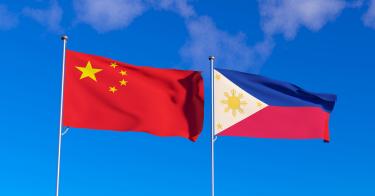
In July 2016, the Permanent Court of Arbitration (PCA)—an intergovernmental body joined by China in 1904—issued a significant ruling that favored the Philippines over China. The PCA determined that maritime boundaries must be defined by the United Nations Convention on the Law of the Sea (UNCLOS), not by historic claims like those used by China to support its nine—dash line.
The court further decided that China’s artificially constructed “islands” are not actual islands and do not justify an Exclusive Economic Zone (EEZ). Additionally, it found that China failed to protect the marine environment.
Part of the ruling process revolved around the PCA’s observations of China repeatedly violating the Philippines maritime sovereignty, and that Chinese maritime law enforcement not only endangered Philippines assets, but also violated multiple rules of the Convention on the International Regulations for Preventing Collisions at Sea. The court also found that China had aggravated the disputes throughout the course of court proceedings.
A decade later, China has shown precious little regard for the ruling and has only further entrenched precedent of highly selective adherence to international law.
>>> Sorry, Beijing—You Don’t Own the World’s Airspace
Despite PCA rulings declaring on the nine—dash line, China continues to include the nine-dash line on maps of the region, and continues to ignore UNCLOS— a binding multilateral treaty framework which China voluntarily belongs to. For example, the PCA ruled that China had illegally prevented Filipino fishermen from fishing at the Scarborough Shoal. Yet as recently as April 10, multiple Chinese vessels used floating barriers to block the entrance to the Scarborough Shoal, thus denying entry to Filipino fishing vessels.
Between 2013 and the present day, China has created 3,200 acres worth of artificial islands in the Spratlys. The island-building initiative shows no signs of stopping: China began creating a new artificial island along the Antelope Reef near Vietnam, working at breakneck speed amidst global attention spans’ diversion to the conflict in Iran.
Meanwhile, since legal proceedings began at the PCA in 2013, Malaysia has reported no fewer than 270 incidents of Chinese Coast Guard and Maritime Militia harassing or assaulting ASEAN member states’ vessels. Similar examples include incidents such as took place in December of last year, when five Chinese Coast Guard and several Maritime Militia vessels harassed 20 Filipino fishing boats at the Escoda Shoal, damaging two of the fishing ships and injuring three Filipino fishermen.
This, as Chinese state-run news sources vehemently criticize Operation Epic Fury as departing from “fundamental norms of international relations,” and have similarly criticized the United States’ capture of Venezuelan president Nicholas Maduro as a “clear violation of international law,” while stating that recent U.S. tariffs “gravely violate WTO rules.” The double standard could not be clearer.
Moreover, this double standard is not merely some moral squabble. It creates a dynamic mired with catch-22 style decision-making, with China’s competitors—including the U.S.—increasingly forced into two strategic pathways: either they continue to abide by international norms and find themselves on an unequal footing, or attempt to compete on an even footing with China.
Beijing’s double standard in the South China Sea is reminiscent of, for example, its regulatory approach to international trade. China has not played by the “rules of the game” as had been expected when they joined the WTO in 2001, whether through irregular trade mechanisms, blatant disrespect for other countries intellectual property, or otherwise— thus forcing other countries into difficult policy-making decisions.
>>> The U.S. Busted A Chinese Smuggling Ring For Nvidia Chips Before the Trump-Xi Beijing Summit
China’s decade of flaunting the PCA ruling paints a particularly grim picture for smaller third-party countries, who often lack the trade toolkit and leverage of larger economies in any tete-a-tete with Beijing. Washington can implement tariffs and does not need Chinese development finance, but countries in Southeast Asia, Latin America, and elsewhere possess a shorter menu of options.
Indeed, it is one of the bizarre features of Chinese international engagement that, on the one hand, Chinese maritime forces violate a nation’s sovereignty, while on the other hand, Chinese state-owned companies buy up shares in the same country’s key domestic infrastructure. It is not only bizarre, but clearly predatory.
Third-party countries’ deference to Beijing is obvious, and fears manifest even in multi-national institutions of small to medium powers: ASEAN did not issue a collective statement on aggression in the South China Sea until 2023— seven years after the PCA ruling. Even then, the statement of reference failed to directly address China’s malign behavior. Beijing’s disregard for international law is doubly effective as a deterrent.
The aftermath of the 2016 ruling points in only one direction: Beijing will disregard international law when in its own interest, it will validate international law when criticizing the United States, and it will exert maximal pressure on third-party countries to either ignore or abandon international standards and norms in favor of pragmatic Chinese interests. Difficult decisions await American allies and partners across Southeast Asia.
This piece originally appeared in The Diplomat



