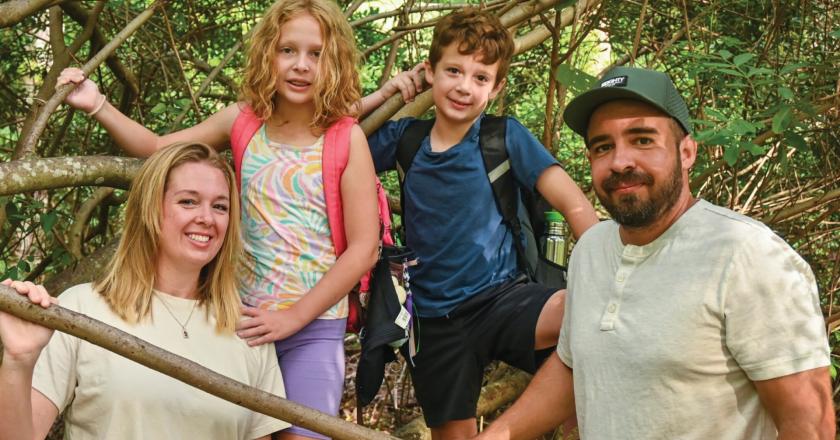
Kristina Furlano was worried when her daughter, Luciana, struggled in first grade. Kristina and her husband decided to hold Luciana back for a year, but the problems persisted.
After more research, Kristina discovered that Luciana has a severe case of dyslexia. “Public schools were most likely never going to be a good fit for her unless there was someone working with her one-on-one through the whole school day,” Kristina says. But Kristina and her family live in Sarasota, Florida, and state officials have made three education savings account options available to families. With an account, the state deposits a portion of a child’s spending from the state education formula into a private account that parents can use to buy education products and services.
Families can find personal tutors for their child, choose an education therapist, buy curriculum, pay for online classes and private school tuition, and more. Parents can even educate their child at home, which is what Kristina chose to do for Luciana.
Florida’s largest ESA servicer, Step Up for Students, reports that Luciana uses an online reading tutor paid for with her ESA and is now able to read on her own. Kristina explains that she also found a tutor for Luciana, as well as other learning programs for Luciana and Seppie, the Furlano’s middle child. “The tutoring we have received so far has been phenomenal. These are all covered through the scholarship,” Kristina says. She explains that all three of her children, two of whom are using ESAs, have a “full, full schedule.”
Every parent wants to be able to tell a story like this about their child. Education savings accounts are helping to write these stories of achievement and life change for children across states that have adopted them.
Every child should have the chance to succeed, no matter where they live or their parents’ income. With an education savings account, families can challenge their child or find the help a child needs to catch up to their peers. Either way, ESAs are designed to help students succeed—something parents, taxpayers, and lawmakers can agree on.