

Norway is one of America’s top security partners in Europe—but its investment policy is out of step with that reality.
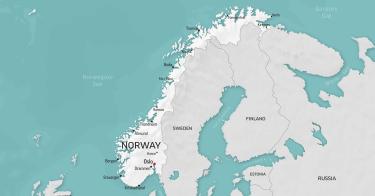
Guarding the Northern Flank and sharing a border with Russia, many Americans understand that Norway properly assesses the long-term threat Russia poses to Europe, even after an eventual end to the war in Ukraine. And while it is doing its part militarily, ramping up defense spending from 1.5% in 2022 to 2.1% in 2026—with actual spending being closer to 3.5% due to high levels of aid to Ukraine—Norway is uniquely positioned to do more via the vast capital it has available from its sovereign wealth fund, the Government Pension Fund Global (GPFG).
The GPFG exists to protect Norway’s future prosperity. In today’s threat environment, that prosperity depends not only on financial returns, but on the security that allows prosperity to exist.
As of mid-2026, the fund is worth $2.2 trillion or 20 trillion Norwegian kroner, more than any other sovereign wealth fund. That funding enables massive investments in Norway’s future, providing future generations of Norwegians with economic security not found in many other countries.
However, the fund’s current governance framework functionality prevents it from investing in many key defense producers—endangering that prosperity.
>>> U.S.–Andean Security Cooperation: Essential for Hemispheric Security and Stability
As a frontline state, there is a very real possibility that a reconstituted Russian military launches a conventional attack on Norway within the next decade, especially because Norway is a frontline state, with the city of Kirkenes sitting on the Norwegian-Russian border in the Arctic. If Russia does so, the 20 trillion Norwegian Kroner in the GPFG fund will mean little for Norway’s current and future prosperity. Future generations will be worse off, regardless of the wealth fund’s original size.
Norway has the unique ability to improve security for it and the rest of NATO, without risking its prosperity, by lifting restrictions on the GPFG fund from investing in defense producers and their broader supply chain.
Ethical concerns may have prompted restrictions on the GPFG fund from investing in defense producers, but those no longer align with Norwegian, European, or American interests or policy today. Take Norwegian defense expenditures. Norway is currently buying F-35s, yet Norway’s sovereign wealth fund is prohibited from investing in the F-35’s manufacturer, Lockheed Martin. It is not logical or practical to simultaneously believe that it is ethical to buy F-35s but also believe it is unethical to invest in the companies that produce them.
Further down the supply chain, GPFG restrictions also harm Norwegian and Western national defense. Energy companies and critical mineral companies are also blocked from investment on environmental grounds, increasing reliance on adversary nations such as China, who have no care about the environment at all. Furthermore, war is a far greater polluter than an energy producer or miner.
The first duty of government is the security of its people—and the cornerstone of national security is national defense. Rather than prohibit investment in military and economic security, Norway should encourage it for the good of the Norwegian people and the rest of the free world.
Unlike other possible actions, allowing the GPFG fund to invest in defense producers does not require government spending. Defense spending has turned the formerly relatively stagnant defense industry into a growth market, creating investment opportunities based on market signals.
It also has the potential to help strengthen relations with the U.S. Two core objectives stated by the Trump administration are strengthening the defense industrial base and drawing in foreign investment. Allowing the GPFG to invest in defense producers does both, and sends a strong signal of Norway’s commitment to collective security in Europe. This will be especially impactful given the impressive contributions of Nordic neighbors Sweden, Finland, and Denmark and the high esteem in which U.S. defense policymakers hold the Nordics as a whole.
>>> No, NATO Is Not Starting a New Arms Race
The Western world is no longer in a post-Cold-War era where security is an abstract concept, and no major threats exist. It faces the worst threat environment since WWII, with authoritarians in China, Russia, Iran, North Korea, Belarus, and other smaller satellites building up and using their militaries, including with whole-of-society approaches.
This axis of aggressors have been doing this for years, are doing it now, and will continue to do so. The longer the West takes to invest in its armed forces and defense industrial bases, the bigger the gap will be, and the more likely it is that deterrence fails. If deterrence fails, it means war—and against Russia, Norway will be on the front line.
There is significant risk in such a case that fighting occurs on Norwegian territory. If in an initial surprise attack, Norway is partially occupied before NATO reinforcements can arrive, precedent from Ukraine and Russian history indicates that Norway would be left with immense economic damage, and survivors would suffer from conduct outside the rules of war. And after liberation, Norway would require expensive rebuilding. The GPFG exists to safeguard Norway’s long-term prosperity, and any action it can take to strengthen deterrence or help defeat a Russian attack directly supports that goal.
The time to act is now. Delay widens the gap, and when the gap widens, deterrence breaks. Action must be taken now.
This piece originally appeared in RealClear Defense



