A wave of conservative political change is sweeping across Latin America, creating a timely opening for renewed U.S. leadership in the Western Hemisphere. After years of inconstant American engagement, the region faces a convergence of threats that directly affect U.S. national security: surging narco-terrorism, mass migration, organized criminal violence, and the expanding influence of extra-hemispheric adversaries China, Iran, and Russia.
President Donald Trump’s second Administration, recognizing that a passive posture toward Latin America is incompatible with protecting the security, health, and prosperity of the American people, has taken major steps to increase U.S. attention to our hemisphere’s critical threats and opportunities. Due to its outsized geopolitical impact on both Latin America and U.S. interests, the Andean region should be at the center of Washington’s renewed focus on the Western Hemisphere, which should include building on historic and strong ties within the Andean region, particularly the crucial partnership with Colombia, and recognizing the geostrategic importance of Andean stability for the U.S.
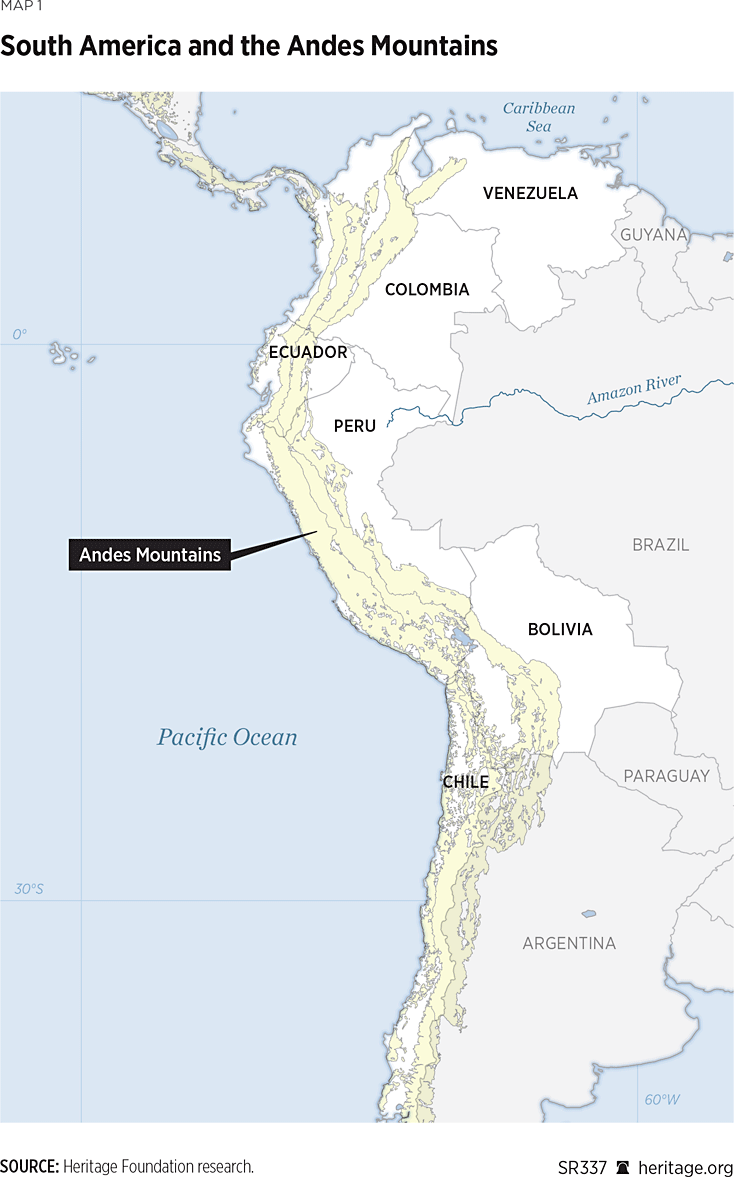
Stretching across the heart of South America and facing both the Atlantic and the Pacific, the Andean region sits at the intersection of critical mineral wealth, illicit trafficking routes, mass migration pathways, and strategic access to major nodes of global commerce. Colombia, Peru, Ecuador, parts of Venezuela, Bolivia, and Chile share long and thinly monitored borders of dense jungle terrain, mountains, and deserts—all of which makes the greater Andes a natural operating environment for transnational criminal organizations and a prime target for adversarial powers seeking influence in the Western Hemisphere.
Despite these pitfalls, however, recent electoral shifts across the Andean region make expanded U.S. investment in forward-leaning security cooperation especially fruitful for hemispheric stability. Up until recently, misaligned or unstable political leadership has limited meaningful and needed progress in confronting surging threats in Colombia, Chile, and Peru, collectively determining the trajectory of Andean security. Nonetheless, with the capture of Venezuela’s dictator Nicolás Maduro and historic new cooperation with Ecuador’s Daniel Noboa, the Trump Administration has laid the groundwork for transformational change of the regional security environment.
Just this year, the elections of Colombian President Abelardo de la Espriella, Peruvian President Keiko Fujimori, and Chilean President José Antonio Kast have radically shifted Andean political leadership toward favorable engagement with the U.S. and close alignment with the Trump Administration’s uncompromising stance on narco-terrorism. These leaders join Ecuador’s similarly aligned President Daniel Noboa and Bolivian President Rodrigo Paz, who took office last year, and together create a historically unprecedented alignment between the U.S. and the Andean region.
The Trump Administration’s removal of Venezuela’s Maduro marked a major advancement in Andean and hemispheric security, removing a longstanding nexus and safe haven for narco-terrorism. The Administration’s narco-boat strikes have also destabilized many underlying dynamics of narco-terrorist activity, effectively cutting off maritime drug routes to the United States. The United States should use this opening to deepen military-to-military ties, strengthen counternarcotics and border security cooperation, and support partner nations facing powerful armed groups.
Amid deepening narco-instability in Latin America, the Trump Administration has made a laudable shift in U.S. foreign policy by prioritizing the Western Hemisphere and rebuilding effective partnerships with regional governments, including through major new initiatives like the Shield of the Americas[REF] and new agreements with countries like Ecuador and Guatemala for joint military action against narco-terrorist targets. These efforts to revitalize and sharpen security cooperation with regional governments must continue to expand and enable security forces across the Americas to target the major bases of operations for the hemisphere’s most deadly and prolific narco-terrorist groups.
Without a concerted effort to bolster and sharpen security cooperation, the Andean region and the Western Hemisphere generally could see a return to the instability, mass migration, and resurgent narco-violence that have defined our hemispheric reality for more than a decade—all at the cost of U.S. national security and the security of the American people. However, if it can seize this moment by surging military resources, support, and practical cooperation to eager U.S. Andean partners, the Administration can leave behind a transformational legacy that defeats the scourge of narco-terrorism in the Americas and even cements hemispheric alignment against the encroaching influence of extra-hemispheric U.S. adversaries such as China and Russia.
U.S. Disengagement and Drift
The past several decades of U.S. engagement in Latin America have been characterized by political instability and misdirected military activity. Cold War–era human rights abuses gave leftist anti-American leaders effective weapons with which to stir public distrust of American engagement in the region, all while conflicts in the Middle East and elsewhere drew Washington’s attention away from its own hemisphere. Both Latin American and left-leaning U.S. policy leaders sought to frame insecurity and criminality solely as issues of economic development, neglecting both the security aspect of transnational organized crime and the renewed potential for adversarial influence operations in the Western Hemisphere. As a result, the rapid drawing down of traditional U.S. security cooperation in the region had the undesirable effect of enabling a resurgence of transnational organized crime while denying the United States the full use of a critical tool in preventing China’s rising influence in Latin America.
The task of leading security cooperation and military-to-military relationships between the United States and Latin America falls largely to U.S. Southern Command (SOUTHCOM). However, for the past several years, SOUTHCOM has had to contend with meager and dwindling resources because of a budget that is far less than 1 percent of the overall Department of War budget—a number that pales in comparison to the operational funding allotted to other regional commands. The U.S. military presence in Latin America has likewise dwindled with the closure of joint military installations in Ecuador, Brazil, and elsewhere in recent years. Today, only a tiny fraction of U.S. military personnel stationed abroad are based in Latin America and the Caribbean: Of roughly 260,000 U.S. personnel overseas, less than 1 percent are stationed in the region.[REF]
Although SOUTHCOM continues to perform some important work with Latin American partners, its overall level of engagement in the region has stagnated amid funding and logistical limitations. SOUTHCOM’s core mission and activities have also become increasingly diluted by a heightened focus on operations that are secondary to its core mission and fail to respond to rising insecurity challenges. Today, the presence of U.S. Southern Command in Latin America more often centers around goodwill humanitarian missions and natural disaster relief rather than new avenues of security cooperation or intelligence support—the functions that ought to be the primary concern of military combatant commands even as SOUTHCOM’s natural disaster relief and humanitarian missions continue.
Part of the decline of the U.S. military’s support role in Latin America stems from a regional shift toward civilian police and judicial-centric security strategies, and even this non-military security cooperation has seen a notable decline. Broader U.S. security cooperation with Latin America, such as that conducted through the State Department, has also declined. In the first Trump Administration’s fiscal year (FY) 2019 foreign assistance budget request for Latin America, 40 percent was dedicated to security cooperation.[REF] In the Biden Administration’s FY 2024 request, security cooperation accounted for less than 27 percent of the budget.[REF]
Even as regional instability has surged over the past five years with direct impacts on the United States, Washington’s response has been slow and partial. Amid surging narco-violence in Ecuador in 2023, the U.S. announced a $25 million security cooperation agreement focused on technical assistance and capacity building.[REF] By comparison, between 2000 and 2008, average annual U.S. security funding for Plan Colombia was $540 million.[REF] For further context and to demonstrate the low priority given to security cooperation with our closest neighbors, the Biden Administration in 2024 requested $114.7 million in funds for diversity, equity, and inclusion initiatives at the Department of War. An examination of the U.S. defense budget will show that increased spending on security cooperation in the Western Hemisphere need not be new spending on top of the existing budget but could be offset by secondary priorities elsewhere in the budget or (even better) by much of the politicized non-defense spending foisted upon the Department of Defense by the Biden Administration and Congress.
The United States has neglected its own neighborhood for decades and has expended exponentially more resources on places like Afghanistan and Ukraine in recent years than it has on the stability of its own region. This reflects strategic distraction and the refusal of Washington elites to put first the security and interests of the American people, who have consequently suffered from the migrant and drug flows originating from our southern neighbors. The two biggest security crises facing the United States are the rise of China as a peer competitor and the border crisis that is interlinked with the security crises to our south. It therefore follows that operational funding should be redirected from other regional commands, especially Africa Command (AFRICOM), into Southern Command and Pacific Command (PACOM). Additionally, as the Trump Administration pursues its ambitious expansion of U.S. military spending in line with force requirements and the global threat environment, Congress and the Department of War should ensure that SOUTHCOM and PACOM are assigned priority status in the allocation of this increased funding.
Security cooperation with the United States makes it possible for Latin American nations to be more self-sufficient when it comes to their own security, thereby obviating the need for our neighbors to work with adversarial powers from outside of the hemisphere. For example, the most significant security success story in Latin America in the past decade, the victory of El Salvador’s Nayib Bukele against the gang threat in his country and the unprecedented improvement of El Salvador’s domestic security situation, involved no substantive role for the United States. China and Russia were not involved in this case but have used joint training, exchanges, and arms transfers in an attempt to present themselves as alternative security partners for Latin American countries and win them away from friendly and productive relationships with the United States.
The Andean Security Crisis
Across the Andean region, criminal organizations, from drug trafficking guerrillas and migrant smugglers to illegal miners, are steadily growing bolder and more powerful. The result is a new wave of instability and violence. In Ecuador, for example, the arrival of transnational gangs has driven a surge in violent crime, kidnappings, and assassinations that has overwhelmed local law enforcement. Ecuador’s destabilization has fueled mass migration to the U.S.,[REF] and Peru and Colombia struggle against resurgent armed groups tied to drug trafficking and extortion.[REF] In addition, weak security measures have emboldened Chinese and Russian actors to expand their influence through financial and military support.
Instability and lawlessness in Latin America are not just regional concerns; they affect the security of the United States and the Western Hemisphere generally. Amid surging violence, migration from Ecuador and elsewhere to the United States has spiked. The production and trafficking of cocaine in South America have reached record highs, and the United States is the drug’s principal destination. Empowered cartels in Mexico and South America also flood the United States with narcotics.
Permissive U.S. border security policies combined with growing lawlessness and lack of territorial control across Latin America have also enabled criminal human smuggling networks to flourish, bringing mass migration to the United States that includes members of new criminal gangs like Venezuela’s Tren de Aragua (TdA). Without decisive U.S. engagement, regional instability will worsen and continue to undermine security at our southern border, particularly if future U.S. border enforcement proves less stalwart than today’s. A proactive security strategy is therefore essential to curb narco-terrorism, prevent the return of mass migration, and counter foreign malign influence.[REF]
Chinese Malign Influence
Over the past two decades, China has made an aggressive push into the Western Hemisphere, securing access to ports and other critical infrastructure throughout the region and deepening its military ties with regional governments.[REF] At a time when the United States has placed significant limitations and restrictions on U.S. training and exchanges with Latin American militaries, China has increased its offering of such exchanges to the extent that it is conducting joint exercises with Western Hemisphere countries. As the competition for influence in Latin America spills over from economic leverage into military advantage, military-to-military ties with regional governments will prove pivotal in protecting U.S. national security and preventing Beijing from drawing Latin America into its military ambitions.
Admittedly, China may have comparatively less to offer as a regional security partner than the United States has; much of its military equipment and weaponry has proven unreliable for Latin America’s security forces, and the rise of Chinese illegal fishing threatens Latin America’s maritime security. But China has nonetheless taken advantage of the reduced U.S. security presence to make important inroads even on the military front. For example, China has leveraged its military training and exchange offerings in Latin America to build important influence and relations with regional militaries. In 2024, Chinese troops participated for the first time in joint military exercises with the Brazilian Navy.[REF] China’s efforts to gain leverage and influence in Latin America have an increasingly undeniable geopolitical and military component. This is made clear by China’s increasing focus on dual-use strategic infrastructure, naval choke points, and other capabilities that bolster its military staging capabilities in the region.
At the same time, China continues to consolidate its influence over other spheres of cooperation within the region, such as infrastructure investment, giving it direct access to and even exclusive control of critical regional facilities such as maritime ports that have dual-use military applications. This is particularly true in the Andean region with Beijing’s concerted focus on Peru and the establishment of a new megaport.
The United States should capitalize on its comparative advantage in security cooperation to act as a counterweight to Chinese economic influence in Latin America. Unfortunately, this has not been Washington’s approach in recent years, particularly under the Biden Administration, which deemphasized security cooperation and did little to demonstrate any serious concern about Beijing’s hemispheric encroachment. By emphasizing the risks to sovereignty and security while simultaneously making a renewed offer of cooperation, the United States can present a powerful case to regional governments and security forces.
Strengthening security cooperation with Latin America also is not likely to conflict with other security priorities such as those related to China’s designs on Taiwan. At the same time, enhanced security relations in the Andean region would allow the U.S. to deny China important strategic advantages in the event of a conflict over Taiwan, thus supporting deterrence of Chinese aggression both in and beyond the Western Hemisphere.
Uprooting the Venezuelan Crime Nexus
For more than a decade, consolidation of the Venezuelan narco-state under Nicolás Maduro was a primary driver of insecurity and criminality across Latin America. Both Maduro and his predecessor Hugo Chávez offered Venezuelan territory as a safe haven from which Colombian narco-terrorist groups could operate. At the same time, Venezuelan criminal networks like TdA and the weaponization of mass migration by the Maduro regime flooded U.S. and Latin American cities with mass migration and surging criminality.
Fortunately, the U.S. arrest of Maduro in January 2026 and subsequent U.S. engagement in Venezuela have effectively upended the destabilizing threat posed by the regime. Many of the underlying threats persist, but U.S. leverage and power projection in Venezuela continue to provide a check on corrupt officials and organized criminal threats in Venezuela. Over time, this careful U.S. engagement and an eventual political transition in Venezuela can render ineffective the country’s longstanding narco-criminal threats. For this goal to be achieved, however, the Venezuelan security forces must reassume their role as guarantors of public security. To that end, the Trump Administration’s engagement through the Department of War has made some noteworthy early progress; Venezuelan security forces, for example, have recently targeted the country’s massive illegal mining industry—an industry in which narco-terrorist groups are directly involved.[REF]
At the same time, fully dislodging the damage done by 20 years of narco-rule in Venezuela will require continued and concerted U.S. engagement. This is both appropriate and necessary given the reality that actions pursued by the regime under Maduro and Chávez continue to shape the threat environment across the Western Hemisphere. Specifically, Venezuela’s narco-dictatorship facilitated the adversarial presence of China, Russia, and Iran in the region; collaborated with drug traffickers to poison Americans; deployed weaponized migration against the hemisphere; and accelerated narco-terrorism both in and beyond the Andean region. At the same time, Maduro’s Venezuela incubated new criminal gangs and projected them into Latin America and the United States. The regime also provided safe haven to drug trafficking guerrillas from Colombia, helping to insulate them from offensive efforts by the Colombian military. This in turn contributed to a resilient and now resurgent narco-terrorist threat in Colombia with groups like the National Liberation Army (ELN) and Revolutionary Armed Forces of Colombia (FARC) expanding and regaining territorial control.[REF]
Another deadly legacy of the Maduro regime has been the rise and proliferation of Tren de Aragua. This Venezuelan criminal gang originated in Maduro’s Venezuela and, with the complicity of the regime, gained a foothold across Latin America as well as throughout the United States. The regime’s weaponization of mass migration, aided by open borders policies, was key to TdA’s rapid expansion. Tren de Aragua has been involved in a number of high-profile criminal operations in the United States, including the targeted killing of law enforcement officers in New York City and sex trafficking rings in Louisiana and Arizona in 2024.[REF]
In February 2025, the U.S. Department of State formally recognized TdA as a foreign terrorist organization under the Alien Enemies Act, citing violent and criminal activities perpetrated by cells in the U.S.[REF] Security officials in Latin America have struggled to keep pace with this surging threat but have been hindered by a lack of resources and poor understanding of the group’s nature and operations. For Latin America, the rise of TdA has had a devastating effect on public security, bringing a surge of violent crime, human and narco-trafficking, and general instability to major urban centers like Bogota, Colombia.
Positive U.S. engagement in Venezuela and the Andean region should focus on helping partners to reclaim territory from criminal groups and crack down on drug cultivation and the illegal mining that finances these criminal economies. Especially in Venezuela’s Bolívar State and Orinoco Mining Arc, illegal gold mining has become the primary financing venture for transnational criminal organizations. The Trump Administration can aid Venezuela’s internal security efforts by pairing sanctions enforcement against criminal mining networks with intelligence-sharing to help local authorities.
The Administration has already begun to pressure criminal groups in partnership with local governments. In the Andes region more broadly, Washington should expand joint operations among local militaries to target illegal mining and the armed groups that it finances. This approach would demonstrate to the region that U.S. engagement offers a lawful and mutually productive alternative to the criminal and Chinese-linked extraction networks that are expanding across the region.
Eventually, restoring meaningful security cooperation and even joint operations between Venezuela and the rest of the Andean region will fill a major longstanding gap in such cooperation and mark major progress toward hemispheric security, reversing two decades of destructive regional dynamics. Perhaps nowhere would this be more important than in Colombia where the border with Venezuela and lawlessness and corruption under Maduro have long undermined security efforts. The new presidency of Abelardo de la Espriella restores Colombia’s historic commitment to confronting these narco-terrorist threats proactively. The Trump Administration should work to ensure that Venezuela’s security forces fully cooperate with Colombia’s security operations, particularly around border regions with Venezuela. Beyond a cooperative posture, the U.S. should press Venezuela to take complementary action within Venezuela, thereby targeting the narco-terrorism more effectively on both ends.
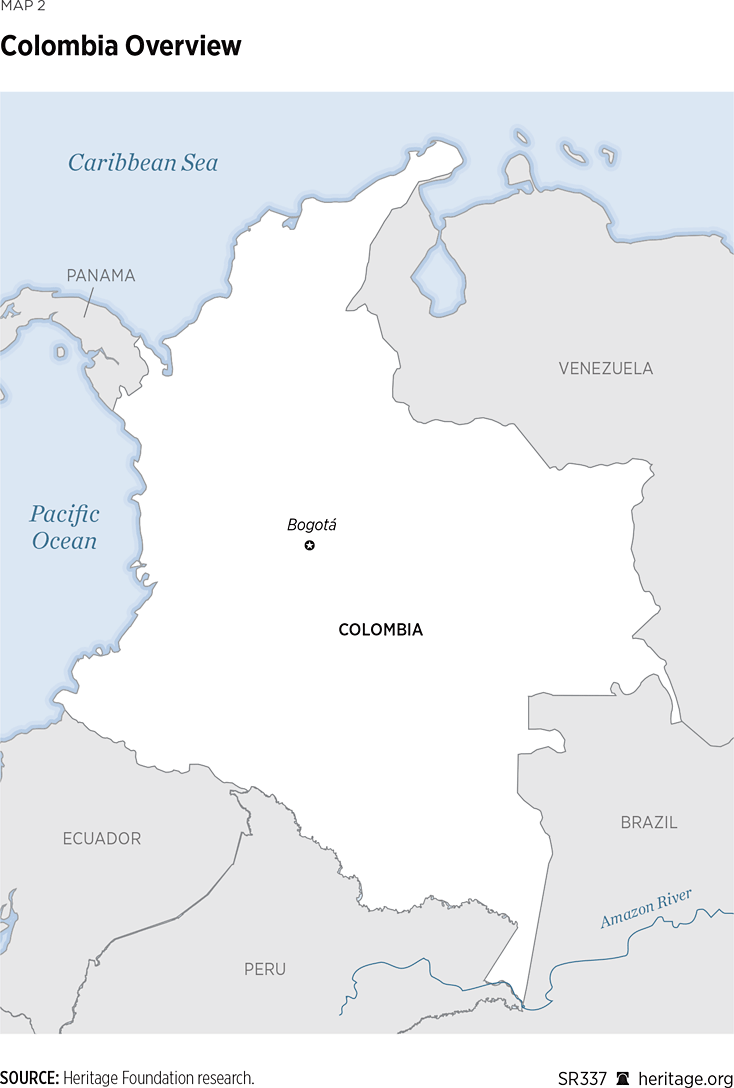
Colombia
Under the new leadership of President de la Espriella, U.S.–Colombia security alignment and cooperation are poised to enter a new era of depth and commitment to effective confronting of shared narco-terrorist threats. This opportunity comes as Colombia’s security has suffered markedly under the policies of the far-left Petro administration, despite a historically strong tradition of U.S.–Colombia cooperation. This leaves the new Colombian administration with massive challenges in confronting both rural-based narco-guerrilla activity as well as spiking urban insecurity driven by gangs like Tren de Aragua, along with longstanding underlying challenges such as lack of government presence in remote regions like the Darién Gap.
Colombia has long been the exemplar of effective U.S.–Latin America security cooperation and remains both critical to U.S. and hemispheric security and a crucial pillar of President Trump’s efforts to realign hemispheric relations. The U.S.–Colombian strategic partnership is among the most important in the Western Hemisphere, and “[a]s a member of the Rio Pact, Colombia is recognized as a Major Non-NATO Ally (MNNA).”[REF] Colombia is a major trade partner under the U.S.–Colombia Trade Promotion Agreement, and its size and influence in Latin America make its alignment with the United States an important bulwark against anti-American forces and extra-hemispheric adversarial influence. Sitting at the heart of the Andean region with both Pacific and Atlantic coastlines, Colombia is a principal source of and transit country for cocaine and a major hub for narco-guerrilla groups and cartels across the region. Security cooperation between Washington and Bogota is therefore especially important for both countries.
The election of far-left Gustavo Petro to the presidency in 2022 marked a major departure from Colombia’s historically pro-U.S. and conservative-leaning leadership. Colombia’s strong institutions proved to be a major check on the Petro administration’s more destabilizing initiatives, but the country still experienced worrisome economic and security losses. The victory of conservative candidate Abelardo de la Espriella in the 2026 elections marks a major and favorable shift in Colombia’s leadership and creates an opening for a needed realignment and deepening of U.S.–Colombia relations.
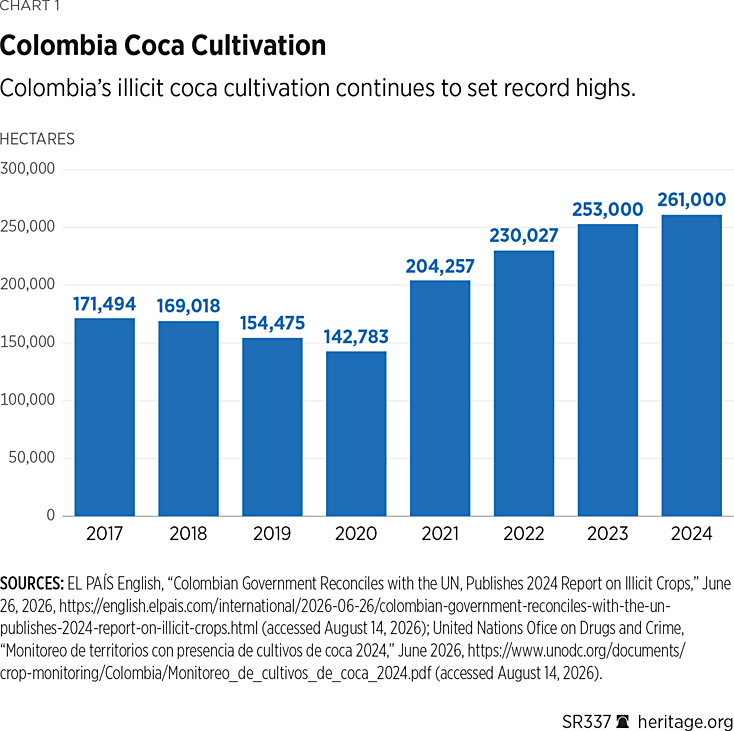
The past four years have been a period of degradation and atrophy for Colombia’s military. The worst of this took place during the first two years of Petro’s administration when both funding and operational freedom were severely restricted and many senior military officials were pushed to retire because of ideological differences. The results have left Colombia with cocaine production levels potentially as high as 3,300 tons and armed groups whose total membership has increased by as much as 90 percent as compared to four years ago.[REF] With the narco-terrorist threat having expanded significantly during Petro’s term, the incoming government of President-elect Abelardo de la Espriella will need to move quickly to restore the military’s effectiveness against shared security threats.
Other critical challenges will likewise need immediate attention. China’s infiltration of Colombia’s technology infrastructure is a matter of serious concern. In 2025, Colombia became the 21st Latin American country to accede to China’s Belt and Road Initiative (BRI), and more than 60 Chinese-led projects across roads, ports, and urban transit have been completed or are underway. Russia’s regional military influence is also steadily becoming more antagonistic toward Colombia, especially through defense cooperation with Venezuela. The cumulative effect of these activities is the emergence of a security architecture that, enabled by both China and Russia, threatens Colombian security while expanding extra-hemispheric influence in Latin America.
Deploying and reinvigorating U.S. security cooperation, weapons transfers, and technical assistance will therefore be of pivotal importance in countering these developments. The United States should support efforts to fill critical gaps in military capabilities including unmanned aircraft systems (UAS) and counter-UAS capacities to monitor and disrupt any narco-terrorist presence in remote jungle territory. The United States should also press for and enable major measures against booming illicit coca cultivation in Colombia, including the resumption of aerial fumigation of coca crops. Finally, the United States should move quickly to establish closer military engagement, including joint U.S.–Colombia military operations against narco-terrorist threats within Colombian territory.
President-elect Abelardo de la Espriella’s narrow margin of victory threatens to embolden his political opponents and other actors to employ subversive tactics to undermine his administration, particularly by stoking social unrest. Social unrest has a notable history of weaponization against Colombian leaders without regard to the success of their broader governing agendas. In 2021, President Iván Duque faced months of intense social unrest and disruptions that included violence, large-scale property destruction, and economically painful roadblocks. Underlying factors in Colombia, including major transnational criminal and narco-terrorist elements along with entrenched far-left social activist networks, heighten this destructive threat.
To ensure stability in Colombia, the United States should task and deploy intelligence assets to monitor and identify any foreign and narco-terrorist efforts to stoke or support social unrest, including by transferring resources to activist groups or urban criminal cells. Additionally, the United States should explore new support and training channels for the Colombian National Police that are focused on effective responses to violent social unrest.
Finally, the Darién Gap presents an ongoing vulnerability that the U.S. and Colombia must work to secure. The Darién Gap has been a major pathway for illegal migration from South America into Central America for decades. Although President Trump’s border-security measures have sharply reduced these flows, the United States should work with Colombia and Panama to prevent the reactivation of illegal migration networks. Colombia’s ability to control the gap is limited by its remote terrain, weak state presence, and difficult access. Washington can alleviate these difficulties by strengthening Colombia’s monitoring and disruption capacity, to include establishing an advisory board with the Army Corps of Engineers to advise on forward operating sites, Foreign Military Financing (FMF) support for helicopters and UAS, and formal intelligence-sharing channels between Colombia and Panama.
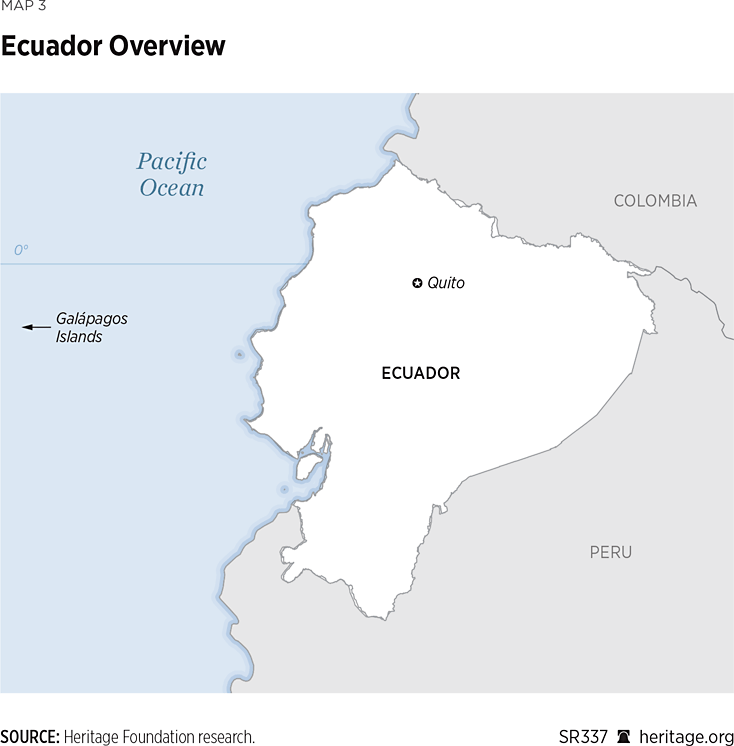
Ecuador
Ecuador’s current security crisis is similar to the challenges faced by Colombia, except that the current head of state, President Daniel Noboa, has taken a strong stand against traffickers and gangs and is trying to reverse decades of increasing instability enabled by the ineffective policies of his predecessors. President Guillermo Lasso was removed from office in 2023 after he unconstitutionally dissolved the National Assembly, triggering a snap election that brought Noboa into office. Like Petro’s administration in Colombia, Lasso’s administration (as well as the administration of Lasso’s predecessor, Rafael Correa) significantly weakened security forces through budget cuts, institutional restructuring, and policies that favored negotiation over enforcement. Lasso’s and Correa’s approaches included reducing military and police autonomy while granting leniency to criminal groups—policies that ultimately emboldened transnational gangs and led to a surge in violence that Noboa is now trying to address.[REF]
In January 2024, President Noboa declared an “internal armed conflict” after Ecuador’s security crisis sharply escalated with the escape of Los Choneros gang leader José Adolfo “Fito” Macías and the armed seizure of a television station during a live broadcast.[REF] President Noboa has since relied on both the military and police in aggressively targeting Ecuador’s criminal organizations, but the campaign has also contributed to gang fragmentation and retaliatory violence. Ecuador’s homicide crisis has also remained severe throughout this campaign. After a brief decline in 2024, the homicide rate reportedly rose again in 2025 to the country’s highest modern level: roughly 50 murders per 100,000 people.
Nevertheless, in its efforts to counter instability and trafficking in the Andean region, the United States has in President Noboa a strong partner, and the Trump Administration has already been proactive in building on this opportunity. In July 2025, Fito Macías was extradited to the United States to face federal drug and firearms charges,[REF] and in September 2025, Secretary of State Marco Rubio designated Los Choneros and Los Lobos as Foreign Terrorist Organizations and Specially Designated Global Terrorists.[REF] These actions allowed the United States to impose sanctions on individuals or entities that support these groups and to freeze the gangs’ assets. Beyond this, the U.S. should prioritize Ecuador for the donation of excess defense articles and foreign military financing with an emphasis on equipping Ecuador’s ground forces for stability operations. The Trump Administration should reward President Noboa’s efforts to target criminal gangs by resuming substantial FMF for Ecuador, which has received such assistance in the past.
Peru
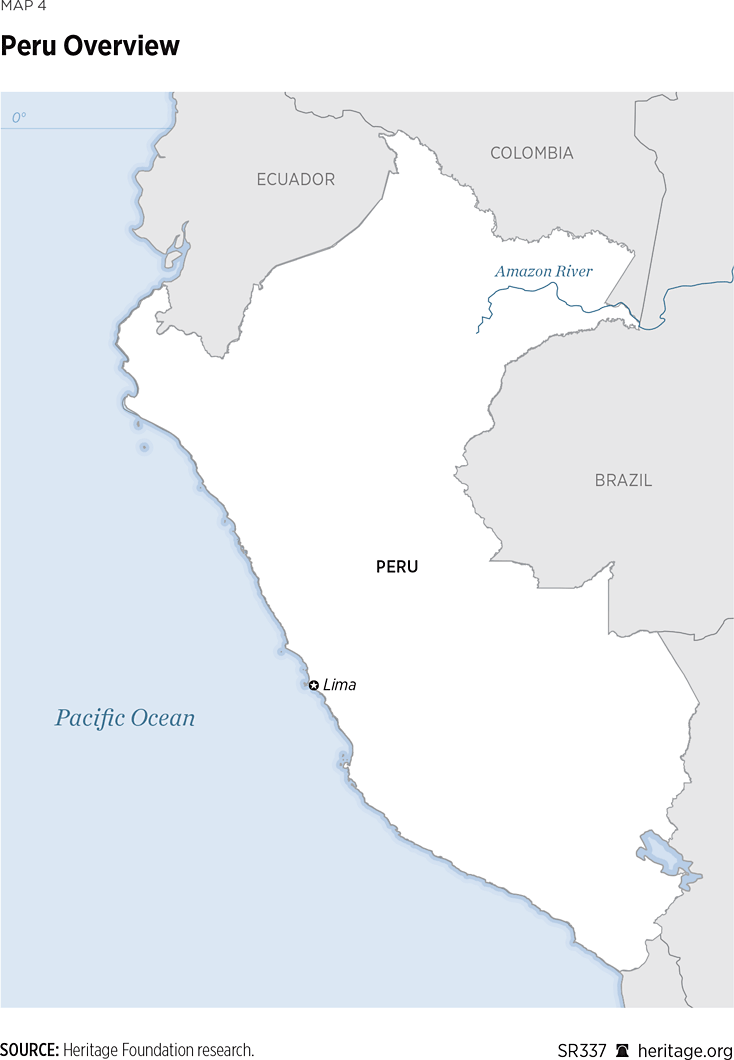
There is hope that things will soon improve dramatically in Peru given the election of President Keiko Fujimori and her likely focus on combating gangs and improving security for Peruvians. Fujimori has pledged to lead a “safe, prosperous, and united” Peru,[REF] but she and her incoming administration have inherited a host of difficult challenges from their predecessors.
In the past decade, Peru has made Latin America’s most significant geopolitical shift toward China. Peru acceded to China’s Belt and Road Initiative in 2019, expanding Beijing’s access to infrastructure, trade, and technology. Chinese shipping company COSCO owns a 60 percent stake in and exclusively operates Lima’s Chancay Port, Peru’s flagship BRI project that Xi Jinping himself formally inaugurated in 2024.[REF] An estimated 1 million global shipping containers will pass through Chancay Port each year, carrying millions of tons of cargo directly from Shanghai to the Americas. The port’s extensive surveillance infrastructure allows China to track anything moving through the port. As the third-largest port in Latin America, Chancay serves as a major commercial gateway to the Western Hemisphere.
Beyond economics, Chancay’s management by Chinese state-owned firms raises security concerns, as similar projects have been leveraged for intelligence gathering and military logistics.[REF] The port’s scale, strategic location, and extensive surveillance infrastructure raise legitimate concerns about its potential dual-use military value. Chancay provides China with a direct logistical hub for trade, reducing reliance on regional ports and expanding Beijing’s control of Pacific maritime commerce.[REF] In the event of a conflict in our hemisphere, Beijing could use the Port of Chancay as a military gateway to the region. This growing influence highlights the need for stronger U.S.–Peru security cooperation, which should include joint military exercises, intelligence-sharing, and defense infrastructure development.
The United States must also help Peru monitor illicit activities tied to Chinese investments, such as illegal gold mining and unregulated fishing, that fund transnational crime.[REF] Illegal gold mining generates at least $12 billion annually and is now the primary financial engine for organized crime in Peru.[REF] Peruvian news agency Andina has reported that “the financial flow from gold now exceeds that of drug trafficking,” and in July 2025, former Foreign Minister Elmer Schialer “said that [the] illegal gold economy in Peru was seven times bigger than the cocaine trade.”[REF] In addition, China’s distant-water fishing fleet (the world’s largest with over 500 vessels exploiting other countries’ fishing waters) has caused hundreds of millions of dollars in Peruvian export losses.[REF] In the energy sector, two Chinese companies control the entire electricity grid in Lima, Peru’s capital city.[REF] And in the agricultural sector, Chinese trade agreements have expanded Peru’s export market while directing a growing share of Peruvian agricultural exports toward China.[REF] Without proactive engagement, China’s foothold in Peru will deepen, weakening both U.S. influence and regional stability.
The risks associated with growing Chinese influence extend into the political arena as well. In February 2026, President José Jerí was removed from office after the public became aware of a series of illicit meetings he had held with Chinese businessman Zhihua Yang during the preceding year.[REF] Congressional investigations later uncovered connections between Yang and the Chinese Club del Dragon—a network that provides operative and logistic support to companies owned by the Chinese Communist Party (CCP).[REF] Jerí’s corruption demonstrates the political vulnerabilities that can emerge when economic dependence on China becomes deeply embedded within national institutions.
The case for making Peru a priority in new U.S. economic engagement can be questioned for several reasons, not least because it would send a message to the rest of the region about the benefits of welcoming Chinese economic and political influence. However, the rationale for bolstering U.S. security cooperation with Peru stands on a stronger footing.
For one thing, the benefits to U.S. national security are more clearly evident. Countering China’s growing presence in Peru, particularly in critical infrastructure like the Port of Chancay and strategic mining sectors, is essential to regional stability and U.S. interests.[REF] Stronger security ties would help to prevent Chinese-controlled facilities from being used for military or intelligence purposes while strengthening maritime security through joint naval exercises.[REF] Peru’s access to the Pacific makes it a key player in combating such illicit activities as illegal fishing, narcotics trafficking, and organized crime.[REF] Enhanced U.S. cooperation would also empower Peru’s military and law enforcement to combat insurgent groups and criminal organizations, reducing the instability that fuels migration and drug trafficking. A targeted security strategy is far more justifiable than economic engagement, as it addresses security threats and counters adversarial influence in the region.
China’s control of strategic infrastructure like the Chancay megaport poses a security risk that merits stronger U.S.–Peru cooperation.[REF] A deeper security partnership would deter Beijing’s potential militarization of commercial assets while ensuring Peruvian sovereignty.[REF] Joint military exercises and intelligence-sharing would enhance regional defense against covert military encroachments and illicit maritime activity. Additionally, employing financial levers like sanctions to address the illegal gold trade would provide a direct benefit to the government in Lima and decrease the ability of gangs and traffickers to self-finance.[REF] Strengthening these security measures would reinforce the status of the U.S. as a reliable partner in safeguarding Peru’s sovereignty and economic security.
Bolivia
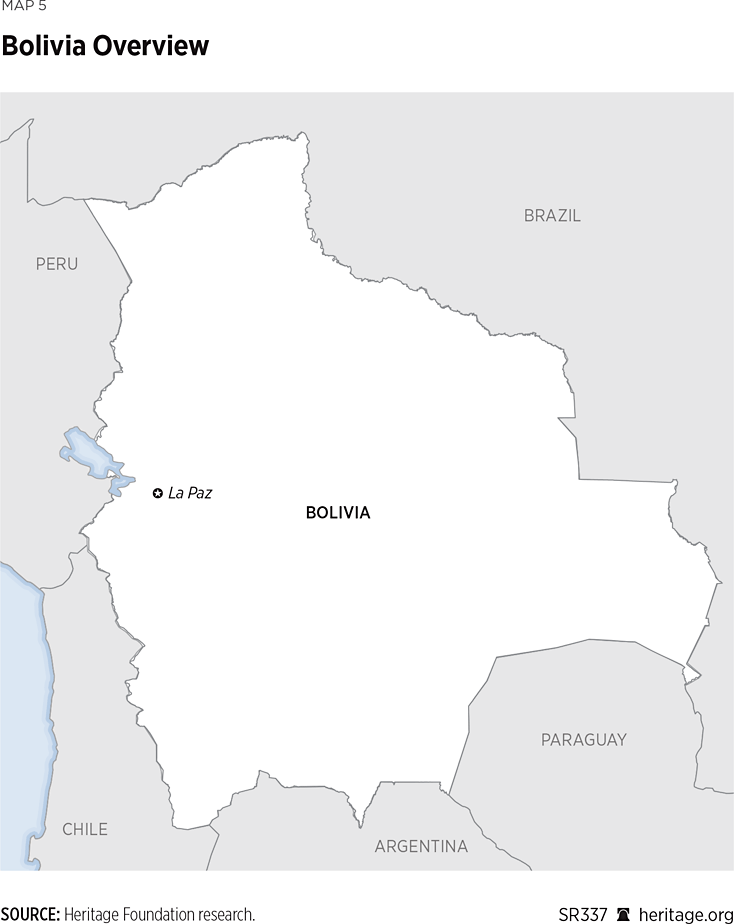
After 20 years of control by the leftist and anti-American MAS party dominated by Evo Morales, Bolivians elected conservative President Rodrigo Paz in November 2025. Secretary of State Rubio hailed Paz’s victory as a “transformative opportunity for both nations” and stated that the United States “stands ready to partner with Bolivia on shared priorities.”[REF] Coming to power after 20 years of nearly uninterrupted rule by Bolivia’s Movement for Socialism party, President Paz faces substantial challenges in restoring stability and institutional capacity to Bolivia, including the country’s military.
U.S. bilateral aid to Bolivia ended in 2013, in large part because of the anti-American policies of Evo Morales. President Paz has requested that American aid be resumed and has already opened the door to renewed security cooperation. One of the first moves Paz made after assuming office was to welcome the U.S. Drug Enforcement Administration (DEA) back to Bolivia for the first time since its expulsion by Morales in 2008.[REF] Vice Minister of Controlled Substances Ernesto Justiniano explained the move, saying that “[w]ithout the DEA, we fell behind in the fight, battling blindfolded. The problem with drug trafficking in Bolivia is that large quantities of cocaine are produced, but we don’t know how much and which organizations control it.”[REF]
The DEA can now provide technological, logistical, and training support for Bolivian law enforcement and military to the benefit of the entire Andean region. America has a vested national security interest in engaging with the new government in Bolivia, especially because Bolivia has been designated since 2008 as a major drug-producing country that has failed demonstrably to meet its obligations under counternarcotics agreements.[REF]
The opportunities for increased engagement with Bolivia should not end here, and the United States should explore other ways to deepen the renewed partnership between the two countries. The symbolic importance of this relationship in the context of regional security should not be underestimated, signaling as it does that Latin American countries have the ability to shift away from socialist, weak-on-drugs policies and move back into positive and mutually beneficial engagement with the United States.
Chile
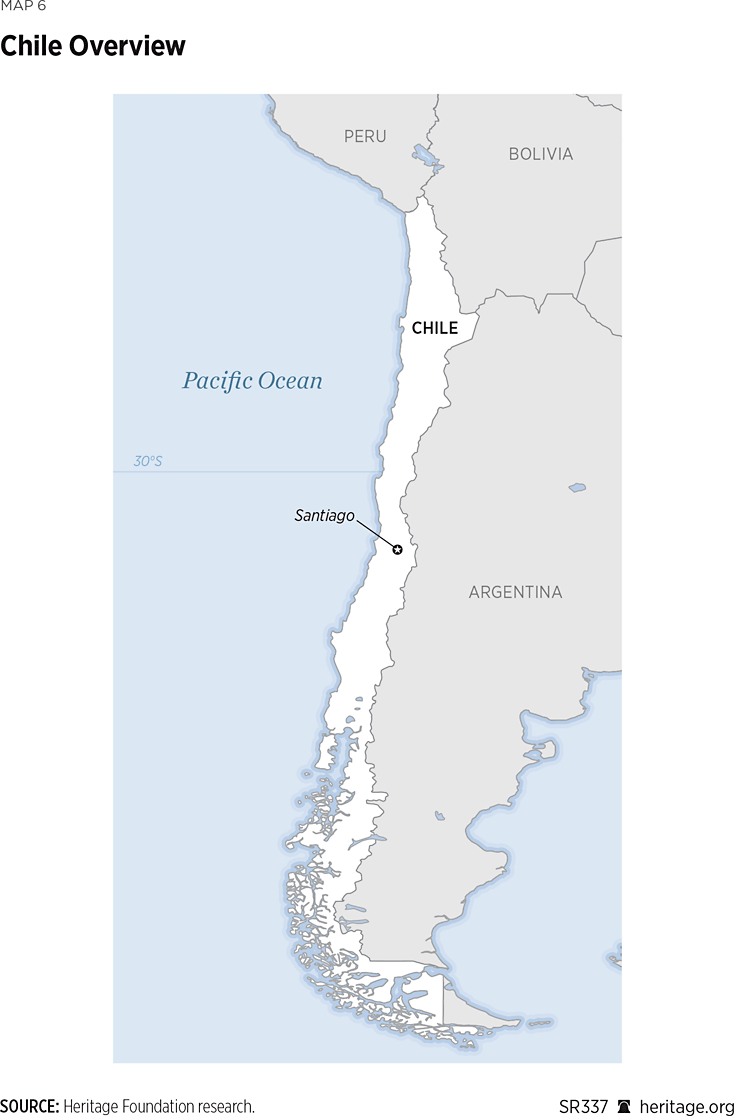
Despite the vast geographic distance between Chile and the United States, the two countries face common security challenges. Like the rest of the hemisphere, including the United States, Chile has suffered from left-wing mass migration policies and spikes in gang-related violence. In fact, well over a hundred thousand Haitians migrated to Chile (the majority illegally) over the past decade, and a significant number of the Haitian migrants that illegally entered the United States during the open-border era of the Biden Administration made the long trek from Chile to the U.S.–Mexican border.[REF]
President José Antonio Kast, who took office early in 2026, has taken significant measures to stem the flow of illegal mass migration into Chile, including by using the Army to build security barriers on Chile’s northern borders to prevent unauthorized entry into Chile.[REF] Secretary Rubio congratulated President Kast on his victory as well, and expressed confidence that the U.S. and Chile will be able to advance shared priorities including “strengthening public security, ending illegal immigration, and revitalizing our commercial relationship.”[REF]
Chile has one of the world’s longest coastlines, and maritime security—not least the need to protect the extensive Chilean exclusive economic zone (EEZ)—is therefore a prime concern. Chinese illegal fishing in the Chilean EEZ has been a problem, just as it has been elsewhere in Latin America.[REF] The Chilean Navy is equipped with P-3 Orion aircraft for maritime surveillance, and in April 2026, a U.S. Navy P-8A Poseidon aircraft (the next-generation U.S. maritime surveillance aircraft) deployed to Chile for a military air show, potentially signaling intent on the part of the U.S. to sell P-8A Poseidon aircraft to Chile to enhance Chilean maritime patrol and anti-submarine warfare capabilities.[REF] This would be a solid investment in the security partnership, as both Santiago and Washington benefit from the Chilean military’s ability to patrol and control the country’s EEZ and territorial waters.
Policy Recommendations
Given the range of threats facing the Western Hemisphere—threats that include both the corrupting presence of the cartels and the growing influence of China and Russia and are of direct concern to the United States as well as its allies in the hemisphere—the United States needs to take the following actions.
- Restore and deepen cooperation and ties with the Colombian military. This will be especially important and effective in the early weeks of the De la Espriella administration. Strengthening the U.S.–Colombia military partnership is crucial to countering the resurgence of guerrilla groups, drug cartels, and transnational criminal organizations that threaten both Andean regional stability and U.S. national security.
- Strengthen cybersecurity ties. As Beijing aggressively expands its technological and telecommunications offerings through Huawei and other companies, enhancing regional cybersecurity awareness and defenses to prevent espionage, data theft, and technological dependence on Beijing should be a U.S. priority.
- Prioritize maritime security cooperation, particularly by detecting and countering narcotics trafficking and illegal Chinese fishing. Strengthening naval patrols and intelligence-sharing will disrupt drug trafficking routes and prevent China’s illicit exploitation of Latin American waters, which threatens economic and environmental stability. Japan’s recent announcement that it will be engaging Latin America more in this regard should be welcomed and supported.
- Strengthen intelligence-sharing. Enhanced intelligence-sharing agreements with and between Andean nations, by providing real-time insights into criminal networks, narco-terrorism, and foreign adversary activities, will enable proactive security responses.
- Pursue complementary partnerships between U.S. allies and regional partners to maintain defense equipment sales with Colombia. Ensuring that Colombia has access to advanced defense technology and intelligence-sharing lines from Israel and other trusted allies in Europe and even Asia will strengthen regional capabilities against insurgents and border threats and reduce openings for unfavorable foreign suppliers such as China and Russia.
- Conduct joint military or security exercises to reassert local control of critical infrastructure and prevent disruption of supply chains or infrastructure operations by extra-hemispheric powers. Regular joint operations will help local governments to secure vital infrastructure, such as the Port of Chancay and critical energy facilities, from criminal and foreign exploitation, in turn preserving economic stability and building national defensive capabilities.
- Direct the U.S. Department of War to develop plans and joint military exercises to aid in the defense of critical regional infrastructure. A strategic focus on military readiness in Latin America will deter Chinese and Russian encroachment while ensuring that U.S. allies can maintain control of key infrastructure. This will remove or at least mitigate the ability of the CCP and the Chinese military to weaponize their control of infrastructure in a conflict situation. Preventing China from leveraging dual-use facilities—such as ports and telecommunications hubs—will deny Beijing a strategic foothold in the Western Hemisphere. Such an initiative would emphasize hemispheric sovereignty, demonstrating U.S. commitment to regional security, and reinforce Latin America’s autonomy and resilience against coercion by foreign adversaries.
- Expand cooperative security locations (lily pads) in Latin America. Establishing small, strategic military outposts with joint base access will enhance rapid response capabilities, increase regional training opportunities, and deter external threats. Permanent and exclusive U.S. basing is expensive and can be politically difficult to maintain. Basing-access agreements are more cost-effective and sustainable.
- Resume U.S. monitoring of coca production. Renewing surveillance efforts will disrupt drug cartel supply chains and signal to criminal organizations that the United States is serious about combating the narcotics trade. Ending the U.S. monitoring program sent a clear message to drug traffickers and governments alike that illicit narcotics trafficking was not a priority for the Biden Administration. Reinstating oversight will reaffirm U.S. leadership in the fight against the drug crisis that fuels crime and instability across the hemisphere.
- Increase SOUTHCOM’s operational budget. A shift in strategy requires a shift in budget. Allocating greater resources to U.S. Southern Command will enable it to conduct vital security operations, counter growing Chinese and Russian influence, and reinforce partnerships with Latin American allies.
Conclusion
The conservative electoral victories in the Andean nations of Colombia, Peru, Chile, Ecuador, and Bolivia have created an unprecedented opportunity for the renewal of U.S. leadership in the Western Hemisphere. After decades of American disengagement, the region now faces the converging threats of surging narco-terrorism, mass migration, organized crime, and the growing influence of China, Russia, and Iran. The United States should seize this strategic moment by deepening military-to-military ties, strengthening counternarcotics and border security efforts, and expanding intelligence-sharing both to stabilize the region and to counter adversarial encroachment near America’s own borders.
Andrés Martínez-Fernández is Senior Policy Analyst for Latin America in the Douglas and Sarah Allison Center for National Security at The Heritage Foundation. Wilson Beaver is Senior Policy Advisor for Defense Budgeting and NATO Policy in the Allison Center.