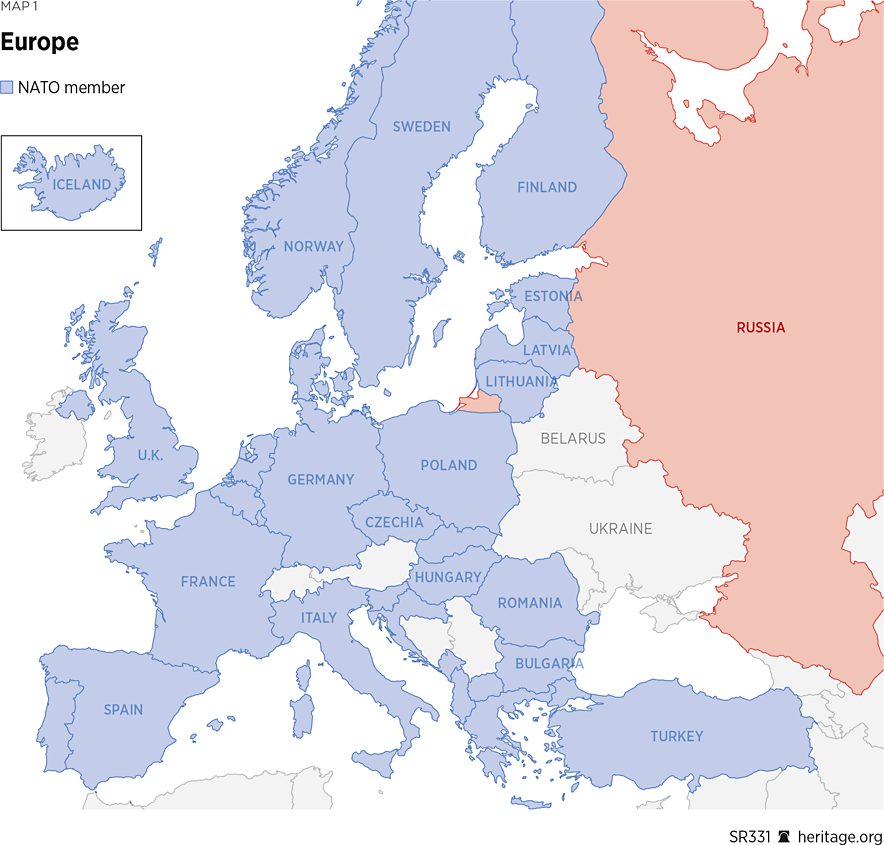
The relationship between the United States and Europe is based in the shared economic, security, and civilizational interests of both sides of the Atlantic. U.S. membership in the North Atlantic Treaty Organization (NATO) ensures the security of the North Atlantic, protects U.S. trade, and defends Western civilization from threats by China, Russia, and parts of the Islamic world, notably Iran.
Legitimate questions have arisen about the U.S. role in NATO, mostly stemming from the failures of Europe’s larger and wealthier nations to take their own security seriously since the end of the Cold War. Americans see a Europe that dwarfs Russia in economy and population yet has struggled to take the lead in providing military aid to Ukraine and where individual countries, often the richest, have failed to adequately modernize or rebuild their militaries to deter Russian aggression against the frontline states of Eastern and Northern Europe.
The role of the United States in NATO needs to shift to accommodate U.S. strategic needs in Asia, where the U.S. military is not postured to deter a rising China. To secure the Atlantic while attention shifts to the Pacific, continued U.S. involvement in NATO is in the U.S. national interest for the following reasons:
- Atlantic security and burden sharing. The security of the Atlantic and of Europe is a core interest of the United States, and pivoting forces to deter China is made easier by having strong allies on the other side of the Atlantic who can provide the majority of their own conventional deterrence. A NATO in which European allies provide most conventional deterrence is one in which the United States has fewer security concerns in the Atlantic region and can focus on the Pacific. Allies that can share the burden of global security concerns contribute to U.S. and their own security and prosperity.
- American trade. The European and U.S. bilateral trade and investment partnership is the largest in the world, accounting for 30 percent of global trade in goods and services and 43 percent of global gross domestic product (GDP).[REF] U.S. economic power is grounded in the relationship with Europe—and NATO ensures that trade (and, hence, a commensurate amount of U.S. economic wealth and power) is protected.
- Military sales and interoperability. Sales of military equipment to European militaries lower the per unit cost for systems in the U.S. defense industrial base, and interoperability across the Alliance sets the standard across the broader U.S. alliance network, stretching from Europe to Asia. At the same time, it is also good for the United States for there to be a European defense industrial base capable of supplying European militaries with weapon systems and munitions and working in tandem with the U.S. defense industrial base.
- Geostrategic positioning. Major logistics hubs in Europe allow the U.S. military to project force when needed in a way that would be far more difficult without a stable Alliance structure.
- Shared civilization. The United States and Europe are the twin pillars of Western civilization, founded on shared history, culture, and faith. NATO is the bulwark that defends Western civilization by unifying the military might of the world’s two biggest economic blocs.
As the 2025 National Security Strategy of the United States stated: “We want to support our allies in preserving the freedom and security of Europe, while restoring Europe’s civilizational self-confidence and Western identity.”[REF]
For almost eight decades, NATO has served American interests. NATO deterred Soviet aggression and enabled American victory in the Cold War without fighting the Soviets directly. Article 5—the North Atlantic Treaty clause that states that an attack on one NATO member is an attack on all and listing military action as a possible response—has only been invoked once, in response to 9/11.[REF] Thousands of European soldiers answered the call and subsequently fought and died alongside American troops in Iraq and Afghanistan.
It must be recognized, however, that there is no NATO without the United States, and that security for individual European governments would become far more difficult to manage without the United States. If the United States were to withdraw from NATO, the European continent would be destabilized, with detrimental consequences to any number of U.S. vital interests. Russia could attempt nuclear coercion against Poland, Finland, and the Baltic states to create a cordon sanitaire between Central Europe and Russia. Worse, Russia could attempt to absorb the Baltic states to re-establish Stalin’s empire. Other potential aggressions—from “gray zone attacks” to high-intensity conflict—could all arise. In short, the NATO deterrent makes broader war in Europe less likely, an outcome that is a U.S. vital interest.
Without NATO, many or most European countries would almost certainly choose to rely more on the European Union for defense, an outcome that would not be advantageous for the United States or for most Europeans, given the lack of any credible defensive capabilities or strategies offered by the European Union. Indeed, China and Russia would be the biggest winners of a U.S. withdrawal from NATO, as they would face a disunified West and an America with fewer allies.
Today, roughly 68,000 American troops are permanently stationed in Europe, with roughly 2 million European troops on active duty.[REF] The United States should continue to encourage European countries to take more responsibility for their own defense in a collaborative approach, even as the United States reduces its overall number of deployed troops.
Indeed, this is already happening. In 2025, every NATO ally except Spain agreed to spend at least 5 percent (up from the previous benchmark of 2 percent agreed to at the 2014 Wales Summit) of their GDP on defense.[REF] Many European countries are increasing defense spending and taking more responsibility for their own security, but the process needs to accelerate and laggards remain within the Alliance.[REF] Most of the wealthier nations of Western Europe have neglected their military capabilities for decades and are nowhere near where they need to be in allocating new spending to reverse that trend. These countries are Europe’s biggest economies and NATO can only function if they spend enough and arm themselves sufficiently.
Germany had been one of the least responsible spenders in the Alliance for decades, but over the past four years it has made significant investments in its military and begun reversing its decline.[REF] As of 2026, Germany has the world’s fourth-largest defense budget, after the United States, China, and Russia.[REF]
The American nuclear umbrella, under which nuclear coercion or attack on U.S. allies is deterred by the U.S. nuclear arsenal, is especially important to the Alliance, as the hundreds of nuclear weapons owned by France and the United Kingdom cannot alone deter the thousands owned by Russia. If the United States left NATO, Russia could easily engage in nuclear blackmail against Poland, Estonia, Latvia, Lithuania, Finland, and other countries.
Deterring China is made easier if Europe also understands Beijing as an adversary. A strong European NATO pillar frees up the United States to reduce personnel in Europe and shift them to the United States or to Asia, and a Europe allied to the U.S. secures the Atlantic theater, freeing up resources for a fight in the Pacific. Just as Europe expects continued American support in deterring Russia, the United States needs European support in countering China, especially by restricting defense-applicable research from reaching China, by derisking European economies from China to protect European countries’ industries, by foiling Chinese espionage operations, and by calling out Chinese aggression against countries in the Indo–Pacific and Chinese support for the Russian war in Ukraine. In the event of a war between the United States and China, European NATO members would need to deter Russia with minimal U.S. assistance, given how few U.S. assets would be available in any theater other than the Indo–Pacific.
The Strategic Challenge
The current strategic challenge facing the United States is one of prioritizing theaters and military capabilities around the world, so that it can deter adversary aggression in the areas that are most vital to U.S. national interest—while accepting moderated risk in lower-priority theaters while it rebuilds its military. For these purposes, the 2017, 2022, and 2026 National Defense Strategies prioritize the Indo–Pacific outside the Western Hemisphere, followed by Europe, and finally the Middle East. For the foreseeable future the strategic challenge in the Indo–Pacific will remain higher than in any other theater, as the United States and its Indo–Pacific allies and partners face a rising and aggressive China that seeks regional hegemony. Unlike in Europe, there is no NATO in the Indo–Pacific, and the United States has only a hub-and-spokes network of bilateral alliances in which its allies are not allied to each other, further complicating U.S. efforts to deter China from aggression. The far greater strategic challenge and insufficient U.S. force posture in the Indo–Pacific necessitates strategic focus on the region.
Such prioritization drills are not meant to convey a sense that some theaters are “liked” more than others or that the United States cares less for lower-priority theaters. It is merely meant to convey a sense of necessary risk acceptance as measured against vital interests and present threats. In all these prioritization efforts, Europe remains a critically important theater, with Russia proving to be an existential threat to specific NATO allies due to its conventional forces and a potential existential threat to the United States due to its nuclear forces.
Russia. Russia is an opportunistic and revanchist state that may seek power and advantage episodically and is the primary conventional security challenge facing European governments. First and foremost, the U.S. interest concerning Russia is to deter Russian aggression against a NATO member state. Official Russian government channels have repeatedly threatened U.S. allies, such as Estonia, Latvia, Lithuania, Finland, and Poland, among others, and the United States must make it crystal clear to Russia that it will defend NATO allies from attack and that Russia cannot pursue aggression against any member of the NATO Alliance. In large part because Russia has so clearly expressed the intent to threaten NATO members if given the opportunity, the United States has an interest in preventing Russia from achieving its core objectives in Ukraine, and U.S. intelligence sharing and materiel assistance to Ukraine is likely to continue in varying forms until conflict termination. The 2026 National Defense Strategy defines Russia as a “persistent but manageable threat to NATO’s eastern members for the foreseeable future.”[REF]
The large and wealthy European member states of NATO can and should take primary responsibility for the conventional deterrence of threats against Europe and have made major defense spending increases almost across the board since 2022. (Russian GDP is roughly comparable to that of Italy, Europe’s GDP is 10 times that of Russia, and Europe’s population is four times that of Russia.)[REF]
At the same time, the United States does not have an interest in a Russia that is fully enmeshed in an alliance with China against the West. It would be detrimental to the security of the United States for Russia to engage as a full ally of China, acting in concert across theaters against American interests and providing energy and raw materials to China during a protracted conflict between China and the United States.
The United States should pursue a policy with Russia that uses hard power within NATO to demonstrate that Russia cannot win a war against the Alliance and should not attempt aggression against Finland, Estonia, Latvia, Lithuania, Poland, or any other members. These countries are European and have made it clear that they wish to remain so. At the same time, America should make it clear to Russia that it does not seek to threaten Russian territorial integrity nor does it seek to undermine the government of Russia, and that the United States prefers to see Russia reposition itself as an independent pivot state and not as an ally (or, more likely, a vassal) of China. Given the marked and growing disparity in economic and military power between China and Russia, a no-limits partnership between the two would indeed eventually result in Russia being a de facto vassal of China. Russia should instead choose a third path, foregoing aggression against Europe and limiting its relationship with China.
History demonstrates, however, that Russia will not decide on its own to abandon its designs on its neighbors, and therefore the goal of NATO must be to present a combined and credible military force so convincingly capable of defeating Russia in a conflict that Moscow recognizes it cannot win a conflict with NATO and does not attempt one.
Russian forces have demonstrated significant shortcomings in the Russo–Ukrainian war, performing far worse than most analysts predicted before the full-scale invasion began. Russia, as of January 2026, has suffered approximately 1.2 million casualties, the most in any war since World War II.[REF] Further, the Russian advance into Ukraine is at an average rate of roughly 70 meters per day, which is slower than even some of the most brutal offensive campaigns in the past 100 years, including the Battle of the Somme in World War I.[REF] To cap it all off, since the beginning of 2024, Russia has captured less than 1.5 percent of Ukrainian territory all while devolving into a second- or third-rate economic power due to the strains of war, as economic growth was 0.6 percent in 2025.[REF] The Russian military has in more than three years of warfare failed to achieve its objective of seizing the Ukrainian capital and unseating the Ukrainian government, and Ukrainian forces have performed admirably in combat. The current lines of control are far short of what Russia held at its high point in 2022, and Russian casualties have been enormous.
Given this reality, it is hard to imagine that Russia could perform better against a far more capable military, such as Poland, let alone a unified NATO in a conventional force-on-force fight. Sustained increases in spending on capabilities and end strength by European NATO members, together with the U.S. nuclear deterrent and a reduced but continuing U.S. troop presence in Europe, should be sufficient to deter Russia. As George Kennan’s famous Long Telegram once put it in a lesson still salient today, Soviet power was
highly sensitive to logic of force. For this reason it can easily withdraw—and usually does when strong resistance is encountered at any point. Thus, if the adversary has sufficient force and makes clear his readiness to use it, he rarely has to do so….
Gauged against [the] Western World as a whole, Soviets are still by far the weaker force. Thus, their success will really depend on [the] degree of cohesion, firmness and vigor which [the] Western World can muster. And this is [a] factor which it is within our [America’s] power to influence.[REF]
Force Posture, Capability Gaps, and Strategic Enablers
In the coming years, the majority of conventional deterrence in Europe will be provided by European militaries, with the United States providing strategic enablers like intelligence, surveillance, and reconnaissance (ISR) and the nuclear deterrent—although the United States should also maintain a limited ground force in Europe for the foreseeable future.
To achieve this, shifts in force posture, planning, and procurement are required.
The United States should maintain fewer ground troops in Europe, and those that remain should be shifted east. To shift focus to the Indo–Pacific, it is necessary to reduce troops in Europe. If Pentagon planners decide to reduce the number of permanently stationed brigades in Europe, the 12th Combat Aviation Brigade at U.S. Army Garrison Ansbach could potentially be transferred to the western United States in support of INDOPACOM.
The Second Cavalry Regiment (2CR) currently stationed in Vilseck, Germany, should be permanently stationed in Poland. President Donald Trump has signaled that he plans to remove roughly a brigade’s worth of troops from Germany and that he intends to sustain or increase the U.S. troop numbers in Poland through rotational commitments. The obvious and sound solution is to move 2CR forward from Vilseck and permanently station it in Poland. When 2CR was first stationed at Vilseck it was only about 50 miles from the Iron Curtain; now it is many hundreds of miles from where it would need to be during a conflict.
The 173rd Infantry Brigade Combat Team (Airborne) should stay in Europe and be heavily equipped with anti-armor capabilities. In 2022, as Russian tanks moved into Ukraine, soldiers from the 173rd Airborne were rapidly deployed to Latvia as reassurance of the NATO commitment. These troops should not be leveraged as a tripwire but should be equipped heavily with anti-armor capabilities to contribute to NATO planning to defend every inch of NATO territory and blunt a Russian incursion into a NATO member state. However, the 173rd does not necessarily have to stay at its current location in Vicenza, Italy. The Italian government has one of the most restrictive Status of Forces Agreements (SOFA) and some of the most severe restrictions on military training of any country that hosts U.S. troops, so much so that the 173rd travels several times a year at great expense to Germany for training because of Italian government restrictions on flying drones and routine live fire training. If 2CR leaves Vilseck and is permanently stationed in Poland, one option (if the Italian government does not fix the current restrictions) would be to move the 173rd to the now empty base at Vilseck, where the paratroopers would be co-located with the Grafenwoehr Training Area and face fewer restrictions, thus saving American tax dollars.
The United States should initiate a new Base Realignment and Closure (BRAC) round for Europe to close or consolidate bases. There are still small U.S. bases around Europe that could be closed or consolidated during a new BRAC round to free up funding for other military priorities. To enable agile combat employment should the need ever arise, airfields with joint presence should be maintained.
The United States should remove the destroyers stationed at Naval Station Rota in Spain and permanently station them in the Pacific where they would be better postured to deter threats. The air defense mission of the destroyers in Rota can be well covered by European navies. Moreover, the United States has two Aegis Ashore Ballistic Missile Defense Systems in Eastern Europe. Given the requirement for additional surface combatants (particularly those relevant to the missile defense mission) to be permanently stationed in the Indo–Pacific, the United States should move these destroyers to Hawaii or Japan.
The most important U.S. logistics hubs—on Ramstein Air Base in Germany, U.S. Naval Support Activity Naples in Italy, and Lajes Field Air Base in Portugal—should be maintained. The United States should have the ability to rapidly move personnel and equipment into Europe, if needed, and to project force beyond Europe. Major logistics hubs enable this.
The United States should continue to provide intelligence, surveillance, and reconnaissance (ISR) as the major contributor to the NATO Joint ISR (JISR) system. One of the most important strategic enablers that the United States should continue to provide is space-based ISR, necessary for NATO operations and relatively cheap and easy for the United States to provide.
The United States should provide a five-year road map for reassigning significant numbers of refueling and transport aircraft from Atlantic planning to the Indo–Pacific. There are trade-offs between theaters, with some of the assets that are most important in Europe also essential for the U.S. posture in the Indo–Pacific. Airlift and refueling aircraft, in particular, are essential in both theaters. The United States should shift significant numbers of airlift and refueling aircraft from Europe to the Indo–Pacific on a five-year timeline, and European NATO members should make the procurement of these systems a high priority on the same timeline.
The NATO Defense Planning Process should identify European NATO member states to significantly increase procurement of manned warships, fighters and bombers, strategic airlift, and refueling aircraft. The U.S. military is most in need of naval and air assets to deter Chinese aggression in the Indo–Pacific and will likely need to allot fewer warships and military aircraft to the Atlantic theater. Northern European countries should procure warships and military aircraft to deter Russia and engage in routine naval and air operations across the north. Southern European countries should procure warships and military aircraft to track Russian and Chinese naval activities, and to protect European commercial shipping in the Mediterranean and in the Red Sea.
NATO regional planning should call for higher end strength levels for many if not most European NATO member states. Mass and maneuver are as relevant as ever. Deterring Russian aggression against the Baltic states will require infantry and armor brigades forward- positioned, and general collective deterrence will require expanded end strength for a number of European countries.
The United States should significantly expand co-production agreements with European NATO allies. All NATO member states including the United States face significant shortages of precision-guided munitions. The United States must replenish stockpiles depleted during Operation Epic Fury. In the coming years, the United States must prioritize newly produced precision-guided munitions first for itself and second for key Indo–Pacific allies, such as Japan and Australia. This prioritization will contribute to delays in deliveries to Europe, even as hundreds of F-35s in need of munitions are delivered to European NATO members. To help European NATO members to supply themselves (and indeed, to allow transfer to the United States in the event of an Indo–Pacific conflict and if Russia contingency planning allows), the United States should expand co-production agreements across NATO. Allies with significant industry and interest, such as Germany, the Netherlands, the United Kingdom, Denmark, Norway, Sweden, and Poland, are solid candidates for new co-production agreements. During the Cold War, for example, the United States co-produced AIM-9 Sidewinder missiles with West Germany, a move that both boosted Germany’s stockpiles and alleviated the strain on U.S. resources. West German co-production also led to design improvement and cost reduction for all parties producing the missile.[REF] Priority munitions for co-production would include the Standard Missile (SM) SM-6, Tomahawk Land Attack Missile, Joint Air-to-Surface Standoff Missile Extended Range (JASSM-ER), Advanced Medium Range Air-to-Air Missile (AMRAAM), and Precision Strike Missile (PrSM).
European NATO members should prioritize procurement of Deep Precision Strike capabilities. Europe should not depend exclusively on deliveries of American precision-guided munitions and should augment deliveries and co-production with indigenous European systems. To assist, Lockheed Martin should certify all relevant indigenously produced European munitions for use on the F-35. As a paper from the Kiel Institute for the World Economy put it, European long-range conventional precision strike must be “ground-based, ITAR [International Traffic in Arms Regulations]-free, drawn from a European supply chain and designed for mass.”[REF] Such capabilities will impose restraint on Russian action—to include a potential Russian attack on the Baltics even during a moment of U.S. engagement elsewhere in the world. Indeed, if European NATO members have deep stores of conventional deep strike munitions that could cut Russian supply routes and target units and critical infrastructure well behind the front lines, Europe’s centuries-old “Russia problem” can be contained.
NATO should center Baltic deterrence in planning and forward deploy a multinational corps by permanently stationing troops in Estonia, Latvia, and Lithuania. The conventional threat from Russia is higher against Estonia, Latvia, and Lithuania than against any other country. Northern European countries should prioritize planning for a Baltic contingency. Germany’s new permanent base in Lithuania is an excellent start and a model for contributions to Estonia and Latvia. Other NATO members, especially large and wealthy Western European members, should consider building permanent bases in Estonia and Latvia in conjunction with the host governments for a permanent deterrent force in addition to the rotational forces there now. The United Kingdom should shift from its current rotational model in Estonia to a permanently stationed brigade. Another European country, likely France, should commit to a permanent brigade stationed in Latvia. These three permanently stationed brigades, along with the Estonian, Latvian, and Lithuanian militaries, will form the basis of a permanent multinational corps forward-postured to defend the Baltic states, augmented by the presence and integrated planning of the U.S. Second Cavalry Regiment and co-located Polish units in northeastern Poland
NATO allies should be strict about what counts as legitimate spending within the 1.5 percent of GDP spending category (in addition to 3.5 percent of GDP required for core defense spending, NATO members have agreed to 1.5 percent of GDP to be spent on security-related infrastructure), and NATO planners should identify spending targets relevant to regional planning needs. In the event of a major war, mainland Europe needs ports and airfields sufficiently developed and defended to receive reinforcement and resupply from the United States, Canada, and Britain. Investing in such ports has the additional benefit of expanding economic opportunity and should be the top priority for much of Europe when looking at options for 1.5 percent spending.
NATO allies should replace Chinese suppliers with Western suppliers in telecommunications networks. China supports Russia’s war in Ukraine and uses its networks to spy on Europeans. Europeans have an interest in replacing Chinese suppliers, such as Huawei, with European suppliers in telecom networks.
Northern European NATO members should improve the logistical bridge to the Baltic states ahead of time. In the event of a conflict, the rest of NATO will need to move troops quickly. This requires heavy airlift, sealift, and rail and road improvements, especially along the east-west axis connecting Lithuania to the Netherlands and Germany through Poland.[REF] Rail and road improvements for this connection should be a priority for the Polish, German, and Dutch governments when allocating funds within their 1.5 percent infrastructure spending.
NATO should continue its procurement and planning focus on collective deterrence. NATO planning since the Russian invasion of Ukraine in 2022 has represented a return to form, shifting away from the crisis management and counterinsurgency focus since the end of the Cold War and back toward its original raison d’être of collective defense. The first step was to enhance deterrence posture with larger rotational force commitments, greater numbers of troops committed to the Enhanced Forward Presence (EFP) that consists of eight Forward Land Forces (FLF) multinational battle groups, combat-capable formations provided by select framework nations, and other contributing allies.
The United States should clarify any planned force shifts as quickly as possible to NATO allies so that NATO capability targets identified in the NATO Defense Planning Process can be clearly aligned to fill the most critical capability gaps created by the U.S. shift in assets to the Indo–Pacific.
As NATO shifts back toward collective deterrence, it should also shift to regional and capability specialization, where NATO members procure and plan based on geography and on capabilities in which they excel. For America’s Nordic and Baltic allies, this means doubling down on the High North and the Baltic Sea to reinforce strategic deterrence against Russian and Chinese aggression there. Southern NATO allies should augment their capabilities to guarantee Mediterranean and Red Sea security in contribution to NATO’s overall security activities securing NATO’s southern borders and immediate near abroad.[REF] Mediterranean militaries ought to be engaging in foreign internal defense operations with willing African partners, using their navies to defend European shipping in the Red Sea with lethal force, if necessary, and protecting European borders by stopping ongoing mass migration.
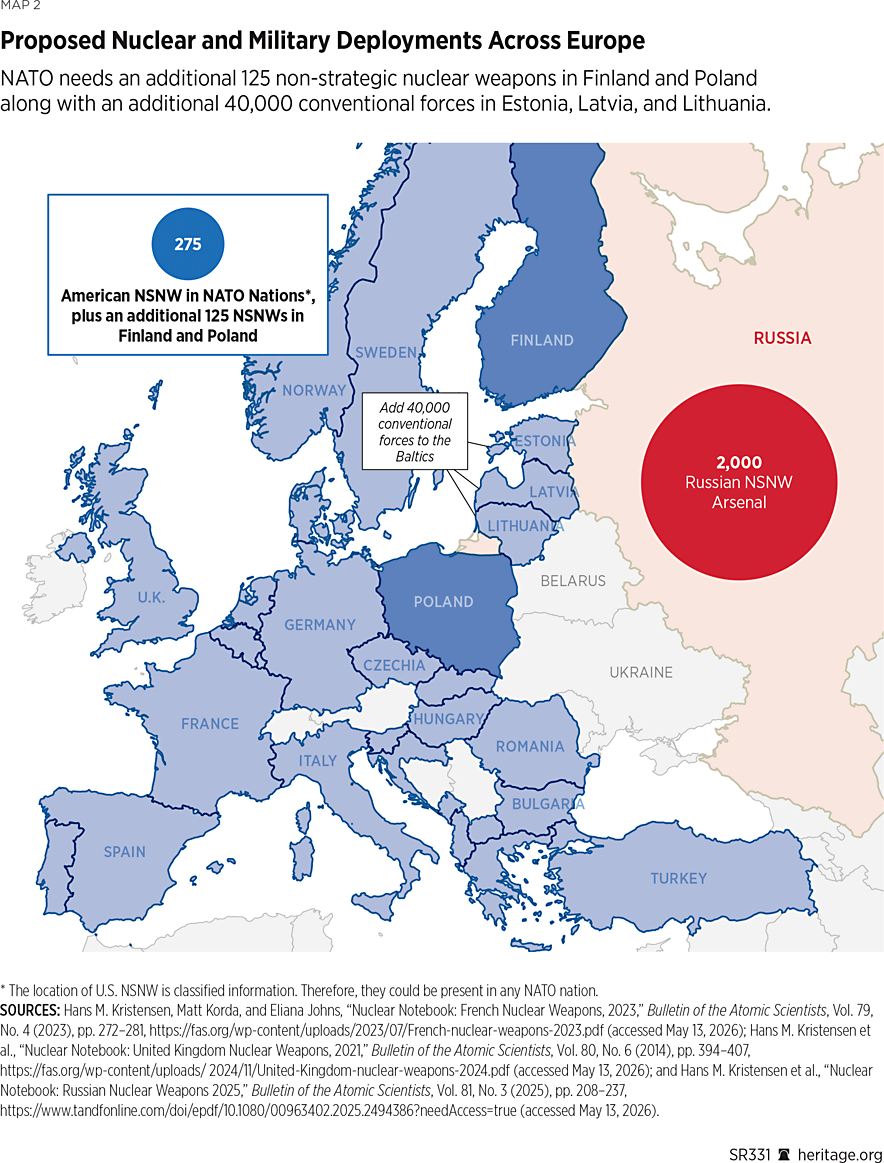
The U.S. nuclear deterrent in Europe should be strengthened. NATO faces the reality that Russia has roughly 2,000 theater-range non-strategic nuclear weapons, while only roughly 150 American non-strategic nuclear weapons are forward-deployed in Europe. How can NATO field a more credible nuclear posture to accompany its stronger conventional capabilities, while it faces a quantitatively superior nuclear Russia? NATO’s current nuclear policy is based on NATO’s 2022 Strategic Concept, which sets out deterrence and defense as one of NATO’s core tasks.[REF] It notes that NATO’s deterrence and defense posture requires an appropriate mix of conventional capabilities, nuclear options, and missile defense capabilities. These capabilities are augmented and complemented by space and cyber capabilities as part of an integrated deterrence architecture. The concept further states that
NATO will take all necessary steps to ensure the credibility, effectiveness, safety and security of the nuclear deterrent mission. The Alliance is committed to ensuring greater integration and coherence of capabilities and activities across all domains and the spectrum of conflict, while reaffirming the unique and distinct role of nuclear deterrence. NATO will continue to maintain credible deterrence, strengthen its strategic communications, enhance the effectiveness of its exercises, and reduce strategic risks.
For decades, NATO policy has been that the “fundamental purposes” of its nuclear arsenal is deterrence.[REF] NATO notes that while the Alliance focuses on the maintenance of effective deterrence, national political control of nuclear weapons will be kept under all circumstances and nuclear planning and consultation within the Alliance will be in accordance with national political guidance.
The circumstances in which NATO may have to use nuclear weapons are rare, and any use of nuclear weapons against NATO would fundamentally alter the nature of a conflict. Should the fundamental security of a NATO ally be threatened with strategic attack, NATO needs the capabilities and resolve to impose great costs on that adversary. Strategic nuclear forces, particularly those provided by the United States, are the supreme guarantee of NATO’s security. In addition, the independent strategic nuclear forces of the United Kingdom and France make an important contribution in deterrence and to the overall security of the Alliance.
As part of NATO’s nuclear mission, several members contribute dual-capable aircraft (DCA) to the Alliance. These are national aircraft, flown by national pilots, that can carry conventional or nuclear munitions and are available for nuclear roles at various readiness levels. The aircraft can be equipped to carry nuclear weapons in a conflict, and the personnel are trained accordingly.
While select NATO states host these munitions and their pilots are trained to employ these weapons, the United States maintains absolute control and custody of its forward-deployed nuclear weapons in Europe, and other allies provide military support for the DCA mission with conventional forces and capabilities. As an example, Exercise Steadfast Noon is NATO’s annual nuclear exercise involving fighter aircraft capable of carrying nuclear weapons.[REF]
Following the Russian invasion of Ukraine, NATO emphasized that it will strengthen training and exercises simulating a conventional and nuclear dimension of a crisis or conflict, which reflects the importance of NATO’s nuclear mission to the Alliance.
The NATO nuclear burden-sharing mission is a legacy of the Cold War as currently postured. In the nuclear burden-sharing mission, a small number of American nuclear gravity bombs are stationed at NATO bases in Europe. Allied pilots are trained by American instructors in such training activities to drop the nuclear weapons and fly their nations’ DCA.[REF] The weapons are stored in secure sites and may be employed only through the consent of the NATO North Atlantic Council and the American President.
In short, these are American weapons that allied pilots can deliver. As of today, only those states that joined NATO before the fall of the Berlin Wall may store and deliver American nuclear weapons under the NATO burden-sharing agreement.
The goals of the mission, which originated in the Cold War, are to deter aggression, particularly nuclear aggression, against NATO allies; assure allies that the American nuclear guarantee is credible; strengthen the Alliance politically by making the nuclear-strike mission an Alliance-wide activity; and signal resolve that NATO will not be intimidated by nuclear coercion. This is all done by providing a visible, geographic distribution and demonstration of NATO’s nuclear capabilities.
Russia possesses the world’s largest arsenal of non-strategic nuclear weapons (most of which are in its Western Military District, which abuts NATO states) and openly integrates nuclear escalation into its regional war planning. Moreover, Moscow has nearly completed the modernization of its strategic arsenal and, with the collapse of arms control constraints, faces few if any limits on its nuclear posture.[REF] By contrast, NATO retains a minimalist theater nuclear posture developed in the 1990s and centered on a small number of Cold War–era gravity bombs delivered by dual-capable fighter-bombers.[REF] Notably, these weapons-sharing arrangements are in full compliance with the Treaty on the Nonproliferation of Nuclear Weapons.
In comparison, Russia’s theater nuclear posture is designed to enable coercion. Moscow’s advantage is not simply numerical: It is structural. The Kremlin fields roughly 2,000 non-strategic nuclear weapons across a wide range of delivery systems, including cruise missiles, short-range ballistic missiles, naval platforms, and dual-capable aircraft.[REF] These capabilities are integrated into operational planning, giving Russian leaders multiple options to calibrate escalation at the regional level.
This imbalance creates a form of escalation density that gives Russian leaders optionality while creating targeting and escalation dilemmas for NATO leaders. Russia is therefore able to escalate at a time and intensity of its choosing.[REF] NATO, on the other hand, has far fewer credible nuclear options at the theater level. The result is an asymmetry in both capabilities and doctrine that leaves NATO exceptionally vulnerable to Russian nuclear coercion at the theater level.
If NATO is to deny Russia the ability to coerce through limited nuclear escalation, it must rebuild the escalation architecture it has allowed to atrophy. This requires a modernized doctrine of Flexible Response—Flexible Response 2.0—structured around three pillars: European conventional deterrence, U.S. control of theater nuclear escalation, and strategic deterrence provided by the United States, the United Kingdom, and France.
If Europe provides the bulk of the conventional denial capability within Europe, the United States must ensure credible control of escalation. The objective is less to fight a nuclear war than it is to deny Russia any advantage from limited nuclear use. This will require the expansion and diversification of NATO’s theater nuclear capabilities.
The United States should therefore consider deploying an additional 100 to 150 non-strategic nuclear weapons in the European theater, forward-deployed to bases potentially in Poland and Finland to ensure a credible deterrence posture and operational relevance.[REF] Such deployments would help to restore escalation ladder density and reinforce deterrence credibility across both theaters.
Historical Background
NATO was not always a lopsided Alliance in which the United States provided a disproportionate amount of the forces engaged in collective deterrence in Europe. For much of the Cold War, the backbone of collective deterrence in Europe was the conventional armed forces of Western European states, augmented by U.S. troops and the U.S. nuclear umbrella.[REF]
In the early Cold War, the United States and Western Europe were concerned about Soviet-backed communist expansion into Europe. After subverting coalition governments in Poland and Czechoslovakia, the Soviet Union attempted to subvert or overthrow governments across much of the continent, including France, Greece, and Italy, and precipitated the Berlin airlift crisis and a civil war in Greece.[REF]
The United States then decreased its overall military strength from 3.1 million people under arms to 391,000 by 1947, with similar relative drawdowns across Britain and France.[REF] By the late 1940s, however, as relations with the Soviet Union deteriorated and the Cold War manifested, the West began to reverse course.[REF]
By 1949, NATO (then a new military alliance) decided to field large military forces to deter a Warsaw Pact invasion of Western Europe.[REF] This approach combined the deterrence-by-denial and deterrence-by-punishment strategies. NATO believed that by fielding a robust conventional military force it could deny the Soviets and the Warsaw Pact a successful invasion of Western Europe by inflicting severe damage on the Soviets.[REF] The concept of massive build-ups of NATO forces is made clear by the 1952 Lisbon Communique, in which the North Atlantic Council said that NATO states would begin with “the earliest building up of balanced collective forces to meet the requirements of external security within the capabilities of member countries.”[REF] By the early 1950s, NATO fielded massive numbers of conventional forces in Europe to deter a Soviet-backed invasion of Western Europe. NATO’s large number of conventional forces was meant to convince the Soviet leadership not to initiate war just as much as it was designed to win a war should the Soviets decide to invade. The goal was to avoid war.
Today, it is easy to forget how many Allied forces were stationed at the front lines of the Cold War. The United Kingdom had four entire divisions in West Germany alone, with as many as 130,000 troops.[REF] By 1952, the United States had more than 250,000 military personnel across Europe, eventually reaching a high-water mark of 400,000 by the beginning of the 1960s.[REF] West Germany fielded a military of half a million, with 12 heavy-tank divisions providing the backbone of NATO’s conventional force in Europe.[REF] By 1955, NATO fielded 25 active divisions and 25 reserve divisions in Europe.[REF] As impressive as these numbers are, NATO ground forces were facing a quantitative disadvantage vis-à-vis Russian troops that they would be hard pressed to overcome.
Indeed, a potential Soviet invasion of Europe was an omnipresent threat, and, given the estimated size of Soviet-backed Warsaw Pact forces, such an invasion might have been successful even with NATO and the technological edge of its members. As the 1950s wore on, NATO force planners watched an ever-growing threat manifest. NATO estimated that the Soviet Union had approximately 2.5 million to 2.8 million troops in its ground forces, with 26 divisions comprising half a million soldiers deployed across Eastern Europe—with 10 heavy armored divisions and 10 motorized divisions stationed in East Germany alone.[REF] The Soviet army stationed 6,000 tanks in East Germany. NATO estimated that the 26 divisions in Eastern Europe were backed up with 75 divisions in the Soviet Union east of the Ural Mountains which were equipped with 29,000 tanks.[REF] These forces were again backed up with another 40 to 125 reserve divisions that could be mobilized within 30 days. In addition, Western defense planners estimated that non–Soviet Union Warsaw Pact nations fielded an additional 800,000 men across 60 divisions.[REF]
At the same time during the early Cold War, the United States was assuming greater defense commitments, particularly in East Asia, as it was rebuilding Japan, defending South Korea from communist invasions from the north, supporting Taiwan from threats from mainland China, and fighting the Vietnam War.
In large part to offset the seemingly endless growth of communist conventional forces, and to deter nuclear attack by the Soviet Union, U.S. nuclear employment strategy changed. In 1962 at the University of Michigan, Secretary of Defense Robert McNamara announced that the United States would not directly target cities (known as countervalue targeting), and instead use lower-yield nuclear weapons to destroy enemy conventional military targets (counterforce targeting).[REF] The allies would still field huge numbers of conventional forces, but they would be augmented not just by America’s ability to respond massively to Soviet nuclear use but by new generations of more limited nuclear options. By the mid- to late-1960s, NATO adopted a strategy and fielded the weapons systems necessary to give NATO the ability to respond to Soviet aggression with conventional or nuclear systems. Indeed, NATO’s strategy at this point centered on allowing “NATO a greater flexibility and to provide for the employment as appropriate of one or more of direct defense, deliberate escalation and general nuclear response, thus confronting the enemy with a credible threat of escalation in response to any aggression below the level of a major nuclear attack.”[REF] Thus, the key feature of the new NATO strategy that was evolving by 1967 was not just flexibility, which had already been a feature of earlier NATO strategy documents, but the idea of managed—as opposed to episodic or even spasmodic—escalation.
By the early 1980s, the Cold War was reaching its climax. The American people elected Ronald Reagan on a “we win, they lose” national security platform.[REF] This required doubling defense procurement, with the U.S. military researching and programming to buy new tanks, stealth bombers, munitions, a 600-ship navy, and new types of nuclear weapons, to include MX and Peacekeeper nuclear missile systems.[REF] President Reagan also pursued land-based and space-based missile defenses aimed at undermining what at that point was a significant Soviet nuclear advantage. In this sense, Reagan pursued a strategy designed to force the Soviet Union to make a choice: Match U.S. defense spending and run the risk of bankrupting itself or allow the economically stronger United States to achieve military advantage over the Soviet Union. Ultimately, the Soviet Union chose the former, which accelerated its economic collapse. Indeed, the Soviet leadership’s reaction to the Reagan build-up resulted in the Soviet Union “spending three times as much as the United States on defense with an economy that was one-third the size.”[REF]
The number of forces and associated platforms fielded by NATO and the Warsaw Pact by the late Cold War is staggering. By the mid-1980s, the Warsaw Pact fielded roughly 4.5 million men under arms in Europe alone, spread across 295 divisions, with almost 70,000 tanks and 14,000 combat aircraft.[REF] In comparison, NATO fielded slightly more than three million men under arms in Europe spread across 170 divisions, with roughly 28,000 tanks and 12,000 combat aircraft.[REF] There was of course a deterrence component to the Reagan military build-up: By fielding a conventional force that the Soviets could not possibly defeat (deterrence by denial) and would in fact suffer significant costs if they tried to attack (deterrence by punishment), the Reagan military build-up followed a strategic logic that blended Eisenhower’s New Look (massive retaliation) with Kennedy’s Flexible Response (the ability to inflict varying levels of violence and pain upon one’s adversary).
Almost immediately after the Cold War ended, the United States and Europe began to disarm. The de facto dissolution of the Warsaw Pact in 1989, followed by its de jure dissolution in 1991, combined with the dissolution of the Soviet Union later that year meant that the chances of an invasion of North America or Western Europe were minimal. Indeed, the economic collapse of Russia itself in the early 1990s required a massive shedding of its military power. The comparison of NATO forces at the end of the Cold War with those of NATO 2014 is striking. By the end of the Cold War NATO had 13 million people in the active and reserve military, 32,000 tanks, 11,000 aircraft, and 24,000 nuclear weapons.[REF] By 2014, despite expanding into the former Warsaw Pact nations and enjoying a population 45 percent larger than in 1986, NATO had only 6 million people in the active and reserve military, 7,000 tanks, 6,000 aircraft, and roughly 5,000 nuclear weapons.[REF] During this period, the Russians maintained a sizable non-strategic nuclear arsenal and the United States downsized its own theater nuclear arsenal. The United States dismantled thousands of nuclear weapons deployed in Europe and retired the sea-launched nuclear Tomahawk missiles, leaving the United States with only a small number of Cold War–era gravity bombs in Europe which it could employ in times of conflict.[REF] NATO, for all intents and purposes, lacked any cohesive deterrence strategy in the post–Cold War era and in many ways coasted on the investments and capabilities of the late Cold War.
NATO’s 1999 Strategic Concept document, the first major post–Cold War NATO statement, noted that the “Alliance has an indispensable role to play in consolidating and preserving the positive changes of the recent past, and in meeting current and future security challenges…. It must safeguard common security interests in an environment of further, often unpredictable change.”[REF] One would be hard pressed to find a more nebulous agenda or strategy uttered by a military alliance. At the same time, the United States engaged in several relatively minor operations, to include the Persian Gulf War, peacekeeping operations in the Balkans and the Horn of Africa, and the air campaign over Kosovo and Serbia.
After 9/11, from 2001 to 2018, the United States prosecuted a Global War on Terror on four different continents, including two nation-building exercises in Iraq and Afghanistan. NATO in Europe during the 1990s and early 2000s largely demilitarized and adopted expeditionary force models for remaining assets, largely in concert with the U.S. prioritization of counterterrorism, counterinsurgency, and humanitarian operations over the same period. Even smaller, newer NATO allies in Eastern Europe, whose resources would have been better spent on territorial defense as part of their Article 3 obligation to be able to defend their own national territory, were pushed to adopt expeditionary force models for out-of-area operations in the Middle East and Africa.
Concurrently, Russia was slowly but surely rearming. Vladimir Putin’s 2007 speech at the Munich Security Conference was a broadside aimed at the European security order, in general, and the United States, in particular, accusing Washington of creating a unipolar world “in which there is one master, one sovereign.”[REF] This speech was a warning bell to many in Washington who recognized that while Russia posed a diminished threat since the dissolution of the Soviet Union, it could still threaten the territorial integrity of a largely disarmed Europe. Given that America’s adventures in Iraq and Afghanistan were not going well, American policymakers, including Presidents George W. Bush and Barack Obama, began to privately and publicly urge their European counterparts to do more. The need for Europe to do more became even more evident following Russian president Vladimir Putin’s decision to maintain the Russian non-strategic nuclear arsenal, which is 10 times the size of the American non-strategic arsenal.[REF] By the mid-2000s NATO agreed in principle to spend more on defense. In 2014, NATO states agreed to spend 2 percent of GDP on defense, a number that only a small fraction of European states met in the decade after they committed to do so.[REF] In 2014, Russia invaded Ukraine and annexed Crimea. For some European governments, but not nearly enough, this was a wake-up call that Russia was once again a threat to European peace and security. Indeed, the demilitarization of Europe continued during this period. When the Berlin Wall fell in 1989, the Bundeswehr had more than half a million active-duty members. Five years after the invasion of Crimea (and 11 years after the Russian invasion of Georgia), the Bundeswehr had dropped by almost two-thirds—despite having 20 million more citizens due to German reunification.[REF] Many U.S. policymakers were frustrated with the failure of much of Europe to re-arm, but did little to incentivize European re-armament. By 2017, President Donald Trump’s National Defense Strategy noted that the United States military must increasingly focus on threats from China and that European NATO allies would have to significantly increase their role in the conventional defense of Europe.[REF] The Russian invasion of Ukraine in 2022, of course, changed the discourse in Europe about the threat that Russia poses to NATO itself, with most European NATO members increasing their defense budgets to deter further Russian aggression. The defense spending increases since then have been most pronounced in Northern, Eastern, and Central Europe, with the three Baltic states, Poland, Germany, the Netherlands, and the Nordic states leading the way in increasing defense spending and rebuilding force posture to deter Russia.[REF]
America’s NATO Allies
The United States has significant advantage over Russia due to its allies within NATO. Not all allies are the same, but all provide benefit to securing U.S. vital interests.
Germany. Germany is the most populous and wealthiest country in Europe, and thus foundational to any serious attempt for European NATO members to take primary responsibility for their own defense. When smaller or less wealthy allies make large increases in defense spending, it is something to be applauded, but a sense of perspective is required. When Germany, the world’s third-largest economy, makes serious defense spending increases it has the potential to rebalance regional security dynamics in NATO’s favor and make Russia seriously reconsider plans of attempted aggression against NATO member states. For the United States, the requirement to pivot forces and funding to the Indo–Pacific necessitates a far larger Bundeswehr that takes a leading role in European security.[REF]
Germany had been a lackluster defense spender since the end of the Cold War, but analysts err in connecting this to a post–World War II pacifism. During the Cold War, West Germany was heavily armed, and the Bundeswehr formed the backbone of conventional deterrence in NATO as it faced down the Soviet Union and the Warsaw Pact at its doorstep. In the 1980s, West Germany fielded a 500,000-man force that included 12 heavy-tank divisions. As now Under Secretary of Defense for Policy Elbridge Colby put it in an article for the German weekly newspaper Die Zeit: “What characterized postwar Germany’s role for its military was a powerful force dedicated to collective defense of free Europe within an Allied framework—not pacifism or disarmament.”[REF]
The Bundeswehr’s reduction in size and scope was not entirely a German decision, as it largely reflected the post–Cold War consensus in a Europe that was still apprehensive about the role of a unified Germany. One of the conditions for German reunification, as laid out by the United States, the Soviet Union, the United Kingdom, and France in the 1990 Treaty on the Final Settlement with Respect to Germany, was that Germany reduce its personnel strength to 370,000 military personnel within four years.[REF] The near-unanimous call now for increases in German military spending reflects a change in thinking not just by Germans, but also by their European neighbors and the United States, on what the role of Germany should be.
Since 2022, Germany has embarked on a Zeitenwende, a turning of the times in German national security thinking in which German policymakers recognize both the changed security environment and the enhanced role that Germany should play in European security. In 2026, Germany unveiled its new military strategy, “Responsibility for Europe,” in which the Bundeswehr announced plans to expand from roughly 185,000 active-duty personnel today to 260,000 in the mid-2030s, along with an increase in reservists from only 60,000 to 200,000.[REF] This would represent a combined total of 460,000 combat-ready personnel. Germany’s defense budget has grown rapidly in recent years, and German defense spending is rightly focused on higher end strength and procurement, with new Leopard 2 tanks, Puma infantry fighting vehicles, munitions, F-35s and Eurofighters, and warships.[REF]
France. France is and will always be one of the most important actors in European security. France pursues its own national interests as Paris perceives them, sometimes in a way that causes friction with other members of NATO. However, France backs rhetoric with real military power, fielding Europe’s most credible nuclear arsenal and Europe’s most impressive navy. Americans should respect France as an ally that unapologetically pursues its sovereign priorities which occasionally diverge, but usually overlap, with American interests. French independence of action and capability has more often than not proven itself to be a benefit to NATO and to European collective security. France is the United States’ oldest treaty ally, with an on-and-off military and economic partnership dating back to the Revolutionary War.
In its 2025 National Strategic Review, France sought to address national security concerns and lay out its plans to mitigate these issues through enhancing its defense strategy and budget, continuing its strong leadership role in NATO.[REF] France has troops positioned across the world to combat threats from foreign adversaries, as well as a strong and rapidly accelerating nuclear program. In 2025, France spent $68 billion on its military and has the world’s ninth-largest defense budget.[REF]
On March 2, 2026, French President Emmanuel Macron announced that France will be enhancing its nuclear program. In this speech, he emphasized the plan for a new forward deterrence for France. Macron noted that specific figures and enhancements in France’s nuclear capabilities will not be announced publicly, to ensure that these abilities remain classified. In this speech, President Macron stated, “To be free, one must be feared. To be feared, one must be powerful.”[REF] France has taken the U.S. call for burden shifting in NATO seriously, viewing it as “a requirement for greater continental autonomy.”[REF] With France’s capabilities and historical approach in mind, Washington should welcome French military reconstitution while encouraging engagement with NATO structures.
The United Kingdom. The United Kingdom has stood shoulder-to-shoulder with the United States as consistently as any other American treaty ally on Earth, and the concept of the “Special Relationship” between the two nations has been more than earned. If the United States is looking for civilizational allies, the United Kingdom is at the top of the list of countries aligned with the United States in history, culture, and interest.
American conservatives have a natural affinity for the United Kingdom—so much so that there is a tendency in Washington to overlook deficiencies in British military capabilities that would not be overlooked in other Western European countries.
These deficiencies are most apparent in the naval domain, where the Royal Navy is at a historical low point in vessel numbers and operational readiness. The relatively recent acquisition of the two Queen Elizabeth-class aircraft carriers has been marred by a serious lack of other surface combatants. As of 2026, the Royal Navy possesses only seven Type-23 Frigates—already in their third decade of service—and six Type 45 Air Defense Destroyers.[REF] Low overall numbers have been compounded by serious readiness concerns: As of March 2026, only three Type-23 frigates and one Type 45 destroyer were assessed to be operational.[REF] Similar problems afflict the submarine force: Of the six Astute-class nuclear-attack submarines, only one, the HMS Anson, was rated as active in early 2026.[REF] While replacements for the Type-23 frigates—as well as new Dreadnought-class ballistic-missile submarines—are expected to come online in the late 2020s and early 2030s, the overall size of the fleet is not expected to increase notably.[REF]
Problems within the British army are also substantial. As of 2026, the ground forces comprise 73,000 active soldiers and 30,000 reservists.[REF] Relative to its European counterparts, the British army has consistently struggled to field deployable units, and munitions and funding shortages remain a serious concern.[REF] Nonetheless, the army is undergoing a modernization effort, with the introduction of new Challenger tanks as well as Boxer and Ajax Armored Fighting Vehicles.[REF]
The Royal Air Force remains capable, possessing seven Typhoon squadrons and one F-35 squadron, and has contributed to operations against the Houthis since 2024 and defensive missions against Iranian attacks during Operation Epic Fury.[REF]
The United Kingdom can still play a pivotal role in the security of Europe and the North Atlantic and will be even more effective in this role if it pares down its ambitions in the short-term to focus on a fewer number of core tasks, while spending more on defense. The most important missions for the United Kingdom (both from its own perspective and that of the Alliance as a whole) are the maritime and air security of the North Atlantic and the British brigade leading the EFP group in Estonia.
The United Kingdom occupies a crucial geographic position in securing the North Atlantic. The British Isles mark the southern end of the GIUK (Greenland, Iceland, and the United Kingdom) Gap, and the Royal Navy and Air Force have traditionally played key roles in tracking Russian naval assets attempting to break into the North Atlantic. In the event of open conflict, British naval and air assets would play a central role in ensuring the viability of transatlantic lines of trade and communication. The United Kingdom is also a near-Arctic power, and the Royal Marines are among Europe’s most specialized winter-warfare troops, maintaining a year-round deployment in Norway. On NATO’s eastern flank, British ground troops play a key role in the Multinational Battle Group. The 700 to 900 British troops forward-deployed in Estonia are led by the Royal Tank Regiment, and the presence of British Challenger 2 tanks and Ajax AFVs is a key enabler of NATO’s conventional deterrent.
Poland. Poland has consistently shown itself to be among the most serious NATO allies in terms of defense spending and willingness to defend its sovereignty and has rightfully earned the respect of American policymakers by having built one of the most impressive militaries in Europe.[REF] Poland has used its increased defense spending widely, funneling many tens of billions of dollars into procurement to acquire systems such as 1,000 K2 Black Panther tanks, more than 350 K9 Thunder howitzers, 48 FA-50 Fighting Eagle fighters from South Korea, 300 M1A1 Abrams tanks, 32 F-35 fighters, and 96 AH-64E Apache attack helicopters from the United States.[REF] Poland has also been investing in its navy, most notably through the planned acquisition of Saab A26 submarines from Sweden. Poland’s armed forces have doubled in size since 2014, becoming the third-largest NATO military at approximately 216,000 soldiers.[REF] Polish defense spending and increases have so strengthened Polish military capabilities that Poland now stands as the critical linchpin in NATO’s eastern flank deterrence efforts.
Poland needs to work particularly closely with Lithuania, as the two countries share a border and would both be affected if Russia were to try to connect Belarus to Kaliningrad through the Suwalki Gap. Planning for the defense of the Suwalki Gap is by necessity a joint military planning concern of Poland, Lithuania, and Germany, given the now permanently stationed German armored brigade in Lithuania.
The relationship between Poland and Germany is among the most difficult in NATO, but Poles and Germans have a shared interest in a strong NATO that can deter Russia, and the defense relationship between Warsaw and Berlin is essential to the overall efforts of NATO. Closer cooperation between the two would be beneficial for the Alliance as a whole and should be encouraged and applauded in Washington.
The Nordic States. It is hard to overstate just how beneficial the accession of Finland and Sweden has been to deterring Russian aggression against the Alliance. Their accession has been one of the most positive changes to the security environment in Europe in decades and will seriously complicate Russian military planning for many years to come.[REF] With their neighbors Denmark and Norway, these four states are among the most capable and responsible allies within NATO. All Nordic states are among the biggest contributors of military aid to Ukraine and the highest spenders on defense.
The accession of Finland and Sweden into NATO presents numerous advantages for NATO, as it presents substantial security problems for Russian military planners and therefore enhances the security of NATO overall, including:
- Gotland’s ability to dominate the Baltic and contribute to the defense of Estonia, Latvia, and Lithuania; and
- The challenge to Russia posed by the massive border it now shares with Finland and Finland’s large reserves of military personnel.
Sweden. Sweden has an impressive navy tailormade for the Baltic that includes an advanced submarine fleet: three Gotland-class submarines and one older model that is scheduled to retire when new designs are delivered in 2027 and 2028.[REF] Sweden’s defense industry produces exceptional weapons systems, such as Saab’s JAS 39 Gripen and BAE Systems AB’s Combat Vehicle 90.[REF] Sweden’s air force is the largest in Scandinavia and one of the largest in Europe. Sweden has exceptional air capabilities, maintaining a fleet of at least 100 fighter jets.[REF] Gotland is the largest island in the Baltic Sea and sits between mainland Sweden and the Baltic states. Gotland is primarily an asset to NATO military planners, not a liability. Enhanced military capabilities hosted by the Swedish on the island would make it difficult for the Russian navy to project power in the Baltic Sea and hamper Russian planning for an attack on any of the three Baltic states.
Finland. Finland has one of the largest fully mobilized armies in NATO with 280,000 troops, despite a small population of 5.5 million.[REF] The Finnish air force has a fleet of 61 McDonnell Douglas F/A-18 Hornet jets, which are being replaced with 64 Lockheed Martin F-35A Lightning II jets.[REF] Finland’s border with Russia extends 830 miles north to the Arctic Ocean. Just across this border from Finland sits the Kola Peninsula, one of the most critical regions in Russia for Russian national security interests. The Kola Peninsula is home to Russia’s Northern Fleet, which includes ballistic missile submarines (a component of Russia’s nuclear triad), attack submarines, and various surface ships—and is home to one of the largest concentrations of nuclear weapons in the world. This exposure in a region that Russia had previously considered relatively secure complicates Russian military planning to a significant degree. Russia will likely have to introduce more conventional military assets in the region, troops that it otherwise would have preferred to keep further south, opposite the Baltic states or Ukraine. The inclusion of Finland in NATO thus introduces another layer of deterrence against any temptation for Russia to consider military operations against a NATO member.
Denmark. Denmark has impressive naval and air capabilities and has been increasing its defense spending in line with its Nordic neighbors. Danish geography is also critical to NATO efforts to deter Russia, as Denmark controls the entrances to the Baltic Sea and could thus prevent Russian oil exports in the event of a conflict. Danish defense planning and procurement balances between Baltic and Arctic responsibilities, as Greenland is an autonomous territory within the Kingdom of Denmark. Denmark has been increasing its contributions to Arctic security in recent years, and close U.S.–Danish cooperation in Greenland’s defense is important to both parties. The strategic rationale for a U.S. military presence became especially clear with the beginning of the Cold War, with the advent of strategic bombers and intercontinental ballistic missiles making Greenland the shortest path between the Soviet Union’s main bases and the United States. In 1951, the United States and Denmark signed a broad and comprehensive treaty allowing the United States to establish and operate bases and troops in Greenland.[REF] Today, Pituffik Space Base in Greenland supports missile warning, missile defense, and space surveillance missions, and there is a strong rationale for the United States to expand its military presence in Greenland through close cooperation with Nuuk and Copenhagen.
Norway. Norway has multiple major defense responsibilities within the Alliance that it supports with its capable and increasingly well-funded military. The Norwegian armed forces have a huge air and maritime space to defend, and Norway is sensibly prioritizing the acquisition of additional warships and fighter jets to do so. Maritime domain awareness is critical for Norway both to keep track of Russian submarines entering the Atlantic and to defend Norway’s critical offshore energy infrastructure that is so important to European energy security. This energy infrastructure is also one of Norway’s biggest advantages in defense terms, as it contributes to Norway’s $2 trillion sovereign wealth fund that makes Norway unique among European NATO members as a government that does not need to borrow money to increase defense spending.[REF] Norway’s biggest defense company, Kongsberg Defense and Aerospace, produces missiles that are used abroad (including by the U.S. Navy), such as the Naval Strike Missile (NSM) and the National Advanced Surface-to-Air Missile System (NASAMS).[REF]
Iceland. Iceland is the only NATO member that does not maintain a conventional military, and as such its contributions to the Alliance fall within the 1.5 percent spending category. One major priority of Icelandic 1.5 percent defense spending should be renovation and expansion of military facilities and airfields at Keflavik airport to accommodate greater numbers of NATO air assets, especially P-8 Poseidon patrol aircraft required for policing the North Atlantic.
The Netherlands, Belgium, and Luxembourg. Known as the Benelux countries, Belgium, the Netherlands, and Luxembourg play important roles in NATO, with the Netherlands playing an especially large role in maritime missions.
The Netherlands. The Netherlands is an important contributor to naval and air power in northern Europe both on the eastern flank and in the High North. Dutch defense spending has increased substantially in recent years, and the 2024 Defensienota outlined the Netherlands’ multi-year plan to continue rising well above the previous NATO defense spending target of 2 percent of GDP, with the goal of arriving at 3.5 percent of GDP by 2035.[REF] While the Netherlands’ need for rapid military modernization means that this increase in defense spending relies more on imports than domestic production, the Dutch can also harness their own high-tech industries. Dutch companies like ASML make the Netherlands a global leader in dual-use technology production, as ASML produces the world’s most advanced lithography machines, supplying dual-use semiconductors that augment Dutch economic and security strength. Key procurements from the United States and deals with other entities include: F-35A airframe expansion, with 52 new aircraft commitments increased from the current number of 40 F-35As in service; new commitments to the multinational air defense program European Sky Shield;[REF] the joint Anti-Submarine Warfare Frigate (ASWF) program with Belgium;[REF] procurement of four ships to replace their aging Karel Doorman-class M-frigates;[REF] and the Dutch army’s re-instated armor program, including 46 newly purchased Leopard 2A8 tanks.[REF] The current Secretary General of NATO, Mark Rutte, is the former prime minister of the Netherlands. Secretary General Rutte has performed admirably in his role as Secretary General in representing the interests of the various member states of the Alliance and pushing for increased defense spending, most notably the 5 percent commitment achieved in The Hague in 2025.[REF]
Belgium. Belgium’s military is highly integrated with those of its neighbors and has some high-end capabilities that contribute to NATO missions, but the Belgian military has long been underfunded. Belgium’s single-structure unified Defense Force currently includes approximately 26,000 active personnel, with plans to expand the force to 34,500 by 2035 and to institute a mandatory year of military service to mitigate recruiting challenges.[REF] Belgium’s land component integrates mechanized infantry and armored units with the French Army in the motorized capacity program.[REF] Belgium’s navy is fully integrated with that of the Netherlands, sharing command under the Admiralty Benelux.[REF]
Luxembourg. Luxembourg’s national security priorities are entirely integrated into NATO, with its 1,200-man military personnel (with no independent navy or air force) limiting it to a supportive role, although Luxembourg does also contribute to space communications and cybersecurity efforts. Luxembourg’s financial contributions to defense infrastructure elsewhere in NATO are notable and a tangible way for Luxembourg to contribute to NATO, and Luxembourg should be an important 1.5 percent spender investing in the security infrastructure needs of places that need it most like the three Baltic states.
The Baltic States. The threat from Russia to the three Baltic states of Estonia, Latvia, and Lithuania is more acute than anywhere else in NATO, but there are some positive trends that indicate that Russian aggression against the three can be successfully deterred and a level of strategic stability in the region achieved, preserving the independence of the three NATO allies. The Baltic states regained independence in 1991, joined NATO in 2004, and now sit directly on NATO’s northeastern frontier with Russia, Belarus, and the Russian exclave of Kaliningrad.[REF]
The Suwalki Gap, the corridor between Belarus and Kaliningrad, is the only land route connecting the Baltic states to the rest of NATO.[REF] If Russia and Belarus seized that corridor, they could isolate the Baltics and complicate NATO reinforcement.[REF]
Russia routinely engages in hybrid activities below the threshold of conventional warfare against the Baltic states, with drones, cyberattacks, sabotage, border provocations, and electronic warfare.[REF]
Along with Poland, the three Baltic states are the highest spenders in NATO as a percentage of GDP, all reaching NATO’s 5 percent target in 2026.[REF] Russia’s war in Ukraine pushed the Baltics to invest more heavily in civil defense, border security, ammunition, air defense, reserves, and national resilience.
The organizing principle of Baltic military planning must be to delay Russian advances for as long as possible, buying time for reinforcements to arrive from elsewhere in NATO. The Baltic Defense Line is an example of this, with Estonia, Latvia, and Lithuania building border fortifications, defensive positions, and anti-mobility infrastructure along their borders with Russia and Belarus, while withdrawing from the Ottawa Convention to leverage landmines.[REF] Latvia has recently reinstated conscription, and all three states are strengthening reserve, volunteer, and territorial-defense forces.[REF] The presence of forward-positioned troops from elsewhere in Europe is also essential. EFP battlegroups are already stationed, but permanently stationed brigades from other European NATO allies will be essential to a successful defense posture in the Baltic states.[REF]
Southern Europe. A relatively modest amount of American trade moves through the Red Sea and the Suez Canal, but this route is critical for European trade. Despite this, the U.S. Navy has taken the lead on threats in the Red Sea for many years, leading the fight against Houthi and Somali pirate attacks on shipping. Russian presence in the Mediterranean basin has expanded with hypersonic missile tests in the eastern Mediterranean, targeting support for the Houthis, and redeployment of forces from Syria to Libya. Southern European NATO members have been lukewarm supporters of military aid to Ukraine, preferring other countries to take the lead. To a certain extent this is understandable given the immediacy of Russia’s security challenge to northern Europe, but the Mediterranean countries are not taking the lead in securing Europe’s southern flank, either. For southern European NATO allies, European shipping routes protection, conflict and instability in North Africa, and Russian meddling in their backyard should be addressed as their most pressing security threats. Mediterranean militaries ought to be engaging in foreign internal defense operations with willing African partners, using their navies to defend European shipping in the Red Sea against Houthis and Somali pirates with lethal force, if necessary, and protecting European borders by preventing mass migration.
Italy. The Italian armed forces have impressive expeditionary capabilities and high-end systems and are supported by a substantial Italian defense industrial base. Indeed, the Italian Navy is among the finest in Europe and includes a STOVL aircraft carrier and an amphibious assault ship, destroyers, attack submarines, and some of the best frigates in the NATO Alliance.[REF] Italian airpower includes F-35 and Eurofighter fighter jets and some important air capabilities that few NATO members possess such as aerial refueling and tactical airlift. Italian capabilities are impressive, but Italy has not demonstrated the political will to use these capabilities to advance Italian or collective national security concerns on the southern flank. Houthis have been launching missiles at European commercial shipping for years now, and only the Americans and British have fired back. If the Italian armed forces were to take a more active and direct role in protecting European shipping in the Red Sea in conjunction with other navies such as France and Greece it would be a huge benefit to European security.
Spain. Under Prime Minister Pedro Sánchez, Spain has consistently shown itself to be the least responsible member of the NATO Alliance. Most egregiously, Spain was the only NATO ally to reject the 5 percent defense spending target set at the 2025 Summit in The Hague.[REF] During Operation Epic Fury, Spain closed its airspace entirely to the air forces of the United States, a particularly damaging action that has undermined confidence in the Alliance among many in Washington.[REF] Outrageously for a U.S. ally, Spain’s national defense strategy identifies competition between the United States and China as a challenge but blames the United States for rising tensions. The strategy states that “China’s economic expansion, together with greater US protectionism, have increasingly strained their trade relations” and that “US efforts to consolidate alliances and regain a certain degree of leadership in global governance are part of this tension between these two powers.”[REF] It is unfortunate that Prime Minister Sánchez has engaged in this damaging behavior, because the Spanish armed forces are professional and have some impressive capabilities. The Spanish navy, for example, is one of the more impressive in Europe and could play a decisive role in Mediterranean security.[REF] Ideally, the Spanish armed forces and law enforcement should contribute to the stability of North Africa and prevent illegal migration into Europe.
Portugal. Portugal plays a unique role in European security affairs as a result of its geography and history and plays an outsized role in both European and African security. Portugal has an especially extensive exclusive economic zone (EEZ) to protect in the Atlantic and thus puts a premium on its navy and its anti-submarine warfare (ASW) capabilities.[REF] Portuguese maritime domain awareness capabilities are important to the Alliance, tracking Russian submarines moving through the Atlantic. Portuguese air capabilities have contributed effectively to NATO’s Baltic Air Policing mission for nearly three decades.[REF] Portugal’s Lajes Field air force base also provides critical logistics and operational readiness capabilities to Europe, Africa, and the United States, particularly through its ample runway space and highly efficient refueling systems.[REF] This ground infrastructure can support multinational crisis responses across Europe, Africa, and the Middle East, making Lajes Field an invaluable NATO asset. Portugal’s extensive efforts in Africa mitigate the detriments of piracy, terrorism, illegal immigration, and transnational crime to Europe. Italy and Spain, despite having far more military capability and economic capacity than Portugal has, are far less involved in these sorts of security operations in Africa.
Greece. Greece has been a member of NATO since 1952 and is a valuable asset to the Alliance, consistently ranking among NATO’s top defense spenders. Greece’s ongoing support to NATO and specifically to the United States includes continued access to Souda Bay, which hosts the NATO Missile Firing Installation, the NATO Maritime Interdiction Operations Training Center, and the NATO Integrated Air and Missile Defense.[REF] Greece is upgrading its defense capabilities, including the purchase of F-35 and Dassault Rafale fighter jets, and modernizing its Navy. Greece’s military has approximately 140,000 active-duty personnel, with about 220,000 in the reserves.[REF] One specific investment and enhancement that Greece is taking is the announcement of the Achilles Shield, a planned integrated air defense system designed to counter threats such as ballistic and cruise missiles, naval platforms, and even submarine threats.[REF] Greek commercial shipping has been one of the most routinely targeted by Houthis in the Red Sea, and additional Greek contributions to protecting European shipping lanes would be good from both a national and collective security perspective. Greek military procurement and planning by necessity accounts for repeated Turkish threats of war over the years over disputed islands in the Aegean Sea.[REF]
Central Europe. The Czech Republic, Hungary, Slovakia, Slovenia, and Croatia contribute to NATO’s collective security in important ways, but their defense spending has long been just as lackluster as Southern Europe. However, this has largely flown under the radar for outside observers, as the low spending levels of Central European states have been criticized far less often than those of Southern or Western Europe. Given their proximity to the frontline states, Central European allies should be spending more on their militaries.
The Czech Republic. The Czech Republic is one of the most reliable Central European members of NATO. The Czechs are consistent contributors to NATO military operations and have increased their defense spending in recent years. NATO leadership has publicly praised Prague for its military assistance and growing defense commitments, and the Czech Republic’s impressive defense industry and munitions production stand out, in particular. Prague has led on an initiative to supply hundreds of thousands of artillery shells to Ukraine.[REF] However, the 2026 defense budget is insufficient as it fell back below 2 percent of GDP, moving in the wrong direction.[REF]
Slovakia. Slovakia has remained an important NATO member and has impressive industrial capacity, particularly in artillery and munitions production. However, in recent years, the country’s political leadership has raised concerns among Western allies due to increasingly friendly rhetoric toward both Russia and China.[REF] Slovakia has recently expanded relations with China, including deeper economic cooperation and expanding diplomatic ties.[REF] Slovakia’s military modernization includes important efforts that will contribute significantly to collective defense, especially its acquisition of the Barak MX missile defense system.[REF]
Hungary. While Hungary contributes forces and remains geographically significant to Central European security, its government has repeatedly frustrated allies through close relations with both China and Russia. Hungarian officials have openly opposed turning NATO into an alliance that actively deters and works against China.[REF] American conservatives have admired Hungary’s pro-Hungarian border security and immigration policies. However, conservatives should not allow overlap on certain domestic priorities to blind them to shortcomings in the national security and foreign policy activities of the Slovak and Hungarian governments. Hungarian military modernization is to be applauded, as Budapest continues to replace Soviet-era equipment with NATO systems like Swedish Gripen fighter jets and German Leopard 2 main battle tanks.
Slovenia. Slovenia’s armed forces are small and limited in heavy combat capability compared to most other Central European countries, operating as a unitary, single-branch force. Politically, Slovenia has remained more consistently aligned with broader NATO interests than some other Central European countries. The Slovene military participates actively in NATO and EU missions, especially in the Balkans.[REF]
Croatia. Croatia is undergoing a significant military modernization program and is strongly supportive of NATO. Croatia is acquiring French Rafale fighter jets, German Leopard 2 main battle tanks, and a joint procurement of howitzers with other European NATO members. Croatian 1.5 percent infrastructure investments are important to collective security, as expanding and upgrading Croatian ports and roads makes supply lines from the Adriatic a complementary route to supply forces in Central Europe.
Southeastern Europe. Southeastern Europe contains many of NATO’s newest allies and anchors the Alliance’s presence on the Black Sea.
Romania hosts important NATO infrastructure and has strengthened ties with the United States through military cooperation and missile defense programs. Romania generally aligns closely with NATO priorities and has become increasingly wary of both Russian aggression and Chinese influence in critical infrastructure projects. While its military is still modernizing, Romania is a dependable regional ally and one of the most pro-American governments in the region. Romania has also increased defense spending in recent years and supported modernization efforts involving fighter aircrafts, air defense systems, armored vehicles and naval capabilities in the Black Sea region. Its Black Sea coastline gives NATO an important position near Russian naval activity and critical regional trade routes. Romania has also participated in NATO exercises and multinational operations, helping fuel alliance unity and progress.[REF]
Bulgaria. Since joining in 2004, Bulgaria has supported NATO operations and provided regional access for Alliance logistics and military coordination. Bulgaria’s military is smaller and less modernized than those of other NATO actors, but Sofia has worked to improve its military through modernization programs, joint exercises, and increased defense spending. Bulgaria has invested in upgrading its air force, including purchases of F-16 fighter aircraft from the United States, while also expanding cooperation with U.S. and allied forces stationed in the region.[REF]
Albania, Montenegro, and North Macedonia. Albania, Montenegro, and North Macedonia maintain relatively small militaries but engage as enthusiastic members of NATO, sending troops routinely to multinational missions. The membership of the three countries anchors NATO’s presence in the Western Balkans and stands as a positive signal to the region’s non-NATO members of the possibility and benefits of further Western integration. Albania, Montenegro, and North Macedonia are engaging in military modernization programs, and their investments in 1.5 percent security infrastructure spending could be beneficial for the Adriatic and Western Balkans as a whole, with expanded and improved port and road infrastructure and applicability to NATO missions.[REF]
Turkey. Turkey maintains one of the largest and most capable militaries in NATO, standing as the southeastern anchor for NATO providing both border defense and a bridge from Europe to the Middle East. Among NATO members, Turkey currently holds the most direct and strategic control of the Black Sea due to its control of the Bosporus and Dardanelles Straits. Turkey also has the longest coastline in the Black Sea region with ports and naval bases along the entire southern and eastern shores. Turkey has NATO’s second-largest military by personnel after the United States, and its expansive array of ground capabilities are further augmented by growing naval and air power, some of the world’s most prolific military drone systems, and increasing domestic weapons production.
Within NATO, Turkey is viewed as an important, but difficult, member. It contributes manpower, military bases, and regional security support, but Turkish political leadership has been leading Turkey down a geopolitical path that may not be aligned with that of its Western allies. Among other things, Ankara has recently engaged in military adventurism in Syria and Libya and routinely threatens Greece and Israel with aggression. Turkey has supported the Muslim Brotherhood throughout the Middle East, including political and economic aid for Egyptian President Mohammed Morsi before a military coup removed the Muslim Brotherhood–linked Morsi from power in 2013.[REF]
Turkey acts more and more as a spoiler in Europe, with the Turkish government weaponizing migration against European states in a manner similar to Russia and Belarus, and at a far greater scale. President Recep Tayyip Erdogan has warned Turks in Germany not to assimilate into German culture and held political rallies in Germany and the Netherlands.[REF] Indeed, when Germany and the Netherlands moved to block Turkish politicians from holding such political rallies on their territory in 2017, Turkey’s interior minister threatened to “blow the mind” of Europe by sending 15,000 illegal migrants across the border every month in retaliation.[REF]
Despite these issues, it is better to have Turkey in NATO than outside it. Turkish foreign policy would likely grow even more adventurous outside NATO, and Ankara would be tempted to act in ways even more increasingly at odds with the strategic interests of the United States and Europe in the Middle East, the Balkans, and Africa. Without Turkey in NATO, Black Sea security would become far more contentious, southeastern European NATO members would have to start thinking more about their immediate security concerns and less about collective deterrence, and Russia and China would court Turkey to act in concert against Western interests. It is far preferable for all NATO members that Turkey remain in NATO, acting usually in concert with its allies and anchoring NATO security in the southeast. The United States should seek to engage Turkey on issues of mutual interest to mitigate Turkey’s more concerning foreign policy tendencies.
Canada. Like the United States, Canada also faces a changing security environment in the Western Hemisphere to which it must respond. Canada has a key role to play in the Arctic that no other NATO state can and will by necessity begin spending more of its time and resources on Arctic security. Traditionally, Canada has operated in a benign security environment at home and felt free to focus its defense efforts on expeditionary forces operating in NATO deterrence missions or in humanitarian or counterinsurgency operations alongside allies.[REF] Now, however, Russia and China are encroaching upon Canadian sovereignty in the Arctic and increasingly pose a threat to the Canadian homeland. From the perspective of the United States, Canada’s ability to secure its borders and airspace is critical to the security of the entire North American continent, and a prerequisite for great power competition with China and Russia. Accordingly, Canadian military procurement and planning should center on the air, naval, and infrastructure requirements for defending Canadian sovereignty and projecting power in the Arctic.
Non-Military Issues Affecting Alliance Cohesion
While NATO is a military alliance, non-military issues can greatly affect its cohesion.
Mass Migration. Mass migration is a threat to Europe: 2015 alone saw 1.3 million migrants move from the Middle East into northern Europe, with Syrians accounting for a record 378,000 asylum applications.[REF] Major terrorist attacks since 2015, including the 2015 Bataclan massacre in Paris, the 2017 Manchester Arena bombing, and the now almost routine attacks on German festivals and Christmas markets, have shown the severity of Islamic extremist activity in Europe resulting from Middle Eastern migration.[REF] Spanish Prime Minister Sánchez’s recent move to legalize roughly 500,000 undocumented migrants shows the continuing scale of migration into Europe, and rising crime and terrorist activity have driven immigration reform to the forefront of European politics.[REF] Despite this, Europe is not—yet—lost. Native European populations still account for majorities throughout Western Europe and conservative political parties in Western Europe are campaigning to both halt and reverse mass migration. Mass migration threatens America in all the same ways it threatens Europe, and efforts are needed to halt and reverse mass migration on both sides of the Atlantic. As the 2026 National Security Strategy puts it: “Should present trends continue, the continent will be unrecognizable in 20 years or less…. Yet Europe remains strategically and culturally vital to the United States.” It continues: “Not only can we not afford to write Europe off—doing so would be self-defeating for what this strategy aims to achieve.”[REF]
Poland has assumed a leading European role on a variety of issues, but perhaps its most forward-leaning contribution was tightening border security and immigration enforcement in advance of its European peers. Polish determination to restrict mass migration was increased by the weaponization of migration by Belarus and Russia in 2021.[REF] Belarusian President Aleksandr Lukashenko’s regime in Minsk orchestrated the crisis by authorizing visas for numerous visitors, primarily Afghan nationals, to visit Belarus with one-way flights and proceeded to funnel many of the arriving foreigners to the borders with Poland, Lithuania, and Latvia in an effort to destabilize their governments.[REF]
NATO members Spain, Italy, the Baltic states, Poland, Turkey, Greece, and Bulgaria should be investing in land and maritime border security (perhaps included in 1.5 percent security infrastructure spending) to halt illegal migration flows. Northern European countries that are the most common ultimate destination for illegal migration should work to disincentivize migration through deportations and cuts to welfare and other services that rightfully should be provided to European citizens and not non-citizens who arrived illegally.
Free Speech. American conservatives have also been dismayed by certain European governments curtailing the free speech rights of their own citizens, including jailing European citizens for social media posts. American conservatives strongly believe that free speech is among the shared civilizational values that ought to unite the United States and Europe, and indicators to the contrary make it difficult for American policymakers to make the case for shared national security priorities. In 2025, for example, the U.S. State Department published a report on human rights in the United Kingdom detailing numerous examples of categories of speech deemed illegal by the British government and British citizens being arrested for non-violent social media posts.[REF]
Non-NATO Countries and Issues
The United States has security interests in parts of Europe beyond NATO as well, and will continue to engage with partners in Ukraine, the Western Balkans, and the South Caucasus.
Ukraine. Ukraine has made it clear that it considers itself separate from Russian civilization and that it wishes to associate itself more closely with the nations of Europe. Putin’s goals of regime change in Ukraine and of bringing Ukraine into the Russian orbit are on course to fail and Russia is likely to emerge from the conflict weakened and having not secured the entirety of Ukraine as envisioned in original war aims. Regardless of the final lines of control in the Russo–Ukrainian war, post-conflict Ukraine will de facto, if not de jure, align itself with the West for generations to come because of the anti-Russian and pro-Western feelings the brutal Russian invasion has engendered among everyday Ukrainians. Post-conflict Ukraine may end up resembling Sweden during the Cold War, de facto aligned with the West although not a NATO member, and well-armed to protect itself. It is imperative that Ukraine maintain a standing military (albeit likely at a significantly smaller level than wartime numbers) post-conflict, both to protect Ukrainian sovereignty and so that Russia cannot shift all its forces back north to threaten the Baltic states. Americans want an end to the war in Ukraine with the best possible outcome for Ukrainians. As the National Security Strategy puts it:
It is a core interest of the United States to negotiate an expeditious cessation of hostilities in Ukraine, in order to stabilize European economies, prevent unintended escalation or expansion of the war, and reestablish strategic stability with Russia, as well as to enable the post-hostilities reconstruction of Ukraine to enable its survival as a viable state.[REF]
Many American conservatives have had mixed feelings about political leadership in Ukraine, and support for supplemental funding to Ukraine has been limited—both because of the pressing needs of the Indo–Pacific and the very real shortages in munitions the United States is facing as it attempts to balance commitments across theaters. However, American conservatives can clearly see and admire the determination with which Ukrainian soldiers and civilians have fought to defend their homeland and there is ample space for cooperation between the United States and Ukraine post-conflict.[REF] In particular, Ukrainians have more battlefield experience and innovation than any other American partner on Earth, and for years to come Americans will be learning battlefield lessons from Ukrainian partners.
The Western Balkans. The primary interest of the United States in the Western Balkans is not in the leadership or domestic politics of any given country in the region, but in stability, economic growth, and conflict resolution in the region that limits the ability of China, Russia, and others to act as spoilers using the region to destabilize Europe or to build economic inroads to influence Europe.
The efforts during the first Trump Administration to resolve the disputes between Serbia and Kosovo were laudable and may well have succeeded given more time. A renewed push to resolve the disputes and normalize relations between Serbia and Kosovo would be beneficial for all concerned and could serve as an early bridge to closer integration with the rest of Europe for both Serbia and Kosovo. Economic isolation from Europe has hurt Serbia’s neighbor Croatia, which, with half the population of Serbia, now has a higher GDP than Serbia as a result of its economic integration with the rest of Europe.[REF] Belgrade surely has an interest in normalizing relations with its neighbors and building economies ties that will allow Serbs to enjoy heightened economic development. There is nothing to be gained by isolating Serbia, as all it does is to push Serbia into the arms of adversaries like Russia and China. A more conciliatory approach is called for in which America and Europe engage Serbia and work to resolve regional disputes and stimulate economic development for both Serbia and Kosovo.
The government established in Bosnia and Herzegovina (BiH) by the Dayton Accords was never meant to be permanent, and Bosnians of all backgrounds have suffered as a result of the world’s least-logical and least-effective government structure being perpetuated in Sarajevo. The United States and Europe should consider a more representative and fair government structure that deflates separatist pressures, furthers the country’s tilt to the West, and restores sovereignty for BiH with three equal federal units based on existing territorial delineations within a confederal system similar to that of Switzerland or Belgium.[REF]
The South Caucasus. Georgia, Armenia, and Azerbaijan exist in a tough neighborhood, finding themselves between Russia, Iran, and Turkey and having spent much of their history under the control of one of their three larger neighbors. The three countries generally seek to balance their relationships with economic and security partners from farther afield while at the same time maintaining working relationships with their difficult neighbors. The United States and Europe should engage with the region to reduce dependencies while understanding that for their own survival the three countries need to maintain relations with their neighbors even while engaging positively with the West.
Georgia. Georgia is partially occupied by Russian troops, having lost the territories of South Ossetia and Abkhazia in the 2008 Russo–Georgian War. Russia now recognizes the territories as independent countries and maintains bases in both.[REF] NATO and Georgia cooperate through the Substantial NATO–Georgia Package designed to strengthen Georgia’s sovereign defense capabilities.[REF] Georgian economic integration with Azerbaijan and Armenia and inclusion in regional development and trade projects is a net positive for all concerned, and Washington should consistently engage and include Tbilisi on efforts to engage with Azerbaijan and Armenia.
Azerbaijan and Armenia. Azerbaijan and Armenia recently concluded their decades-long conflict over the disputed Nagorno–Karabakh region, with Azerbaijan emerging as the clear victor in the final phase of the war in 2023 and 100,000 ethnic Armenians fleeing the disputed region as Azerbaijani troops took control.[REF] In the aftermath of the conflict, both sides have sought to normalize relations, and President Trump presided over a peace deal between the two in 2025.[REF] Armenia is undergoing a shift after the deterioration of its relationship with Russia, which provided security through the Russia-led Collective Security Treaty Organization.[REF] Armenia has now sought closer ties with Europe and the European Union, giving Western actors a greater opening to shape the regional balance.
The recent peace process between Armenia and Azerbaijan could significantly change the region if fully implemented. Potential transportation routes across the South Caucasus could restrain further Iranian and Russian influence and contribute to economic development in the region.[REF] A durable settlement would strengthen east–west corridors while reducing dependence on Moscow-controlled and Tehran-controlled routes, an outcome that would be good for all three South Caucasus nations.[REF]
Conclusion
Eighty years into NATO’s mission, the United States is forced by geopolitical necessity to prioritize deterrence of China in the Indo–Pacific, a monumental effort that will require a shift in resources and a change in force posture. At the same time, the United States has “an abiding national security interest in a stable, integrated European region.”[REF] Americans care about the future of Europe for security and economic reasons, but also because America and Europe together form Western civilization, with shared culture, faith, and history. In security terms, a militarily strong Europe that is capable of defending its sovereign interests is in America’s interest, and America should work to promote European military capabilities and capacity so that European allies can take the lead in deterring Russia even as American membership in NATO, limited ground troops, and key strategic enablers continue to contribute as well.
Maintaining continued American engagement also depends on the sovereign decisions of European allies, as demonstrations of European commitment to collective security in Europe help to make the case to Americans that Europeans are taking their own security seriously and that European NATO members are capable and committed allies of the United States in advancing shared security goals. The stronger that America’s European allies are, the safer the Atlantic world will be, and the easier it will be for the United States to refocus resources on the Indo–Pacific. The success of this vision for NATO 3.0 is critical to ensuring that the great transatlantic Alliance endures to the mutual benefit of Americans and Europeans.
Wilson Beaver is Senior Policy Advisor for Defense Budgeting and NATO Policy in the Douglas and Sarah Allison Center for National Security at The Heritage Foundation. Robert Peters is the Acting Director of the Allison Center.