Alexander Frei
A country without secure borders is not truly sovereign. When a nation loses control of who enters and remains within its territory, it also loses control of its laws, its security, and ultimately its future. Borders are not just geographic markers; they are the foundation of national identity and self-governance. Without them, the distinction between citizen and noncitizen collapses and, with it, the principles of accountability and democratic rule.
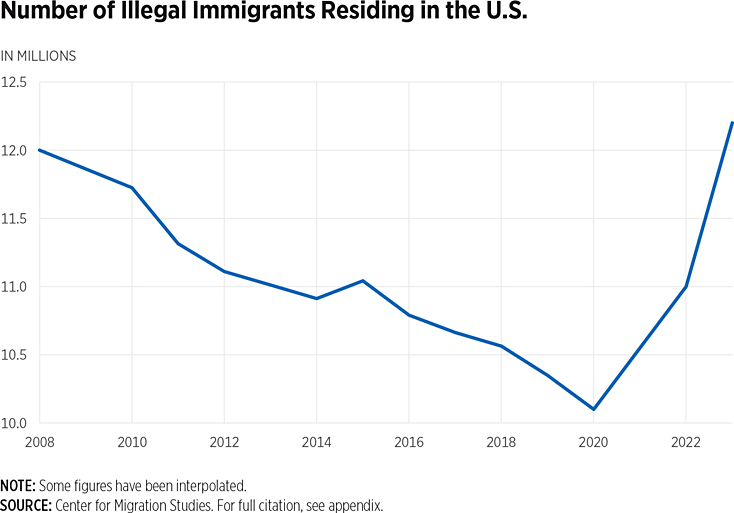
When Donald Trump ran for President in 2016, a central pillar of his campaign was cracking down on illegal immigration. Support for his proposed border wall was overwhelming among Republicans—and for good reason.[REF] At the time, the U.S. had around 10.6 million illegal immigrants. (See chart above.) However, what many overlook is that this number was already down significantly from an estimated 12 million in 2008, suggesting that even under President Barack Obama, illegal immigration declined by nearly 1.5 million.
Once in office, the Trump Administration followed through on its promises, continuing the downward trend. By 2020, the estimated number of illegal immigrants had dropped to just over 10 million—but then came a sharp reversal. Under President Joe Biden’s Administration, illegal immigration surged. In just four years, the number jumped to roughly 11.7 million, erasing a decade of progress in a fraction of the time.
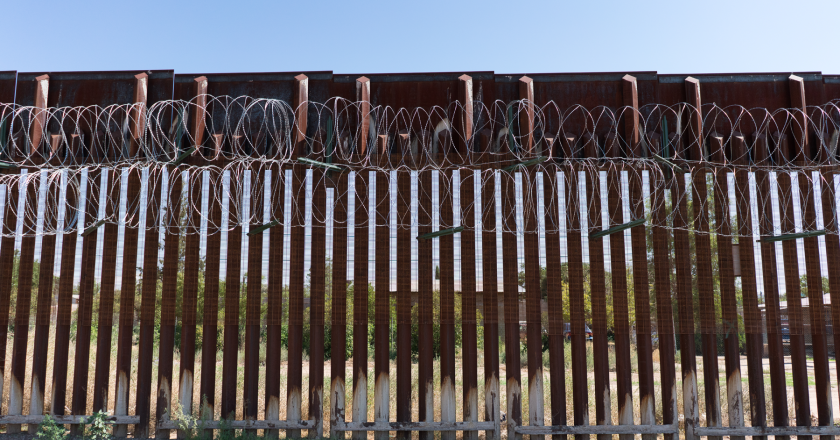
On his very first day in office, President Biden signed a proclamation halting construction of the U.S.–Mexico border wall, the signature initiative of the Trump Administration.[REF] This action marked more than a policy change; it sent a clear message that the United States was shifting toward a more permissive approach to border enforcement.[REF] It was the first in a series of deliberate moves that signaled to potential migrants that the southern border was effectively open. Soon afterward, the Administration dismantled the Migrant Protection Protocols (MPP), also known as the “Remain in Mexico” policy, which had required asylum seekers to wait in Mexico while their U.S. immigration hearings were pending.[REF]
While some progressives see no issue with the increase in illegal immigrants and display signs that read “No Human is Illegal,” and while some libertarians argue that borders are arbitrary and should not exist, the real-world consequences of unchecked illegal immigration are anything but abstract. When the number of illegal immigrants in the United States reaches into the millions—now estimated at over 11.7 million—the costs are borne by working Americans, strained public services, and the very foundation of our constitutional system.
One of the most overlooked consequences of unchecked illegal immigration is its distortion of our democratic representation. The U.S. Census counts every resident, regardless of immigration status, which means that states with large numbers of illegal immigrants receive more congressional seats and Electoral College votes than their citizen populations alone would justify. This shift disproportionately benefits blue states like California and New York, effectively granting them greater political power without a single additional legal vote.[REF] In short, illegal immigration does not just strain public services and depress wages; it also quietly reshapes our political system in favor of those who refuse to enforce the law.
The economic costs of illegal immigration are just as real.[REF] An oversupply of low-wage labor drives down earnings for working-class Americans and depresses upward mobility. Mass illegal immigration hurts those who can least afford it: our own citizens who are struggling to make ends meet. At some point, we must ask: Who is this policy really serving? From where we stand now, open borders look less like compassion and more like political engineering that benefits elites while leaving working Americans behind.
Fortunately for the American people, there are signs that the tide may be turning. A new Administration has taken steps to regain control of the border and enforce immigration laws as written. According to U.S. Customs and Border Protection (CBP), illegal border crossings dropped sharply in March 2025 with the lowest number of southwest land border encounters since February 2021, marking “the most secure border in history.”[REF] In March alone, the Border Patrol recorded approximately 7,180 southwest border crossings—a dramatic decline compared to the monthly average of 155,000 over the previous four years. Daily apprehensions have fallen to around 230 per day, a staggering 95 percent drop from the previous Administration’s average of 5,100.
This is what operational control looks like: a federal government that recognizes its obligation to protect the sovereignty of the nation and the dignity of lawful immigration. The lesson is clear: When leaders prioritize enforcement and the rule of law, good results follow.
Endnotes
- Kyle Cheney, “GOP Platform Embraces Trump’s Border Wall,” Politico, July 12, 2016, https://www.politico.com/story/2016/07/donald-trump-mexico-wall-225438 (accessed April 9, 2026). ↩
- President Joseph R. Biden Jr., Proclamation 10142, “Termination of Emergency with Respect to the Southern Border of the United States and Redirection of Funds Diverted to Border Wall Construction,” January 20, 2021, Federal Register, Vol. 86, No. 16 (January 27, 2021), pp. 7225–7227, https://www.govinfo.gov/content/pkg/FR-2021-01-27/pdf/2021-01922.pdf (accessed April 9, 2026). ↩
- Elliot Spagat, “Biden Halts Border Wall Building After Trump’s Final Surge,” Associated Press, updated January 22, 2021, https://apnews.com/general-news-political-news-bc664278ac096e6ff878116034ec06bb (accessed April 9, 2026). ↩
- Josh Christenson, “Biden Refused to Reinstate Trump-Era Border Policies Because ‘Mexico Doesn’t Want That,’ Speaker Mike Johnson Says,” New York Post, updated October 18, 2024, https://nypost.com/2024/10/18/us-news/biden-refused-to-reinstate-trump-border-policies-because-mexico-doesnt-want-that-house-speaker-says (accessed April 9, 2026). ↩
- Steven A. Camarota and Karen Zeigler, “Tilting the Balance: Estimating the Impact of Legal and Illegal Immigration on Apportionment and Political Influence in the U.S. House and Electoral College,” Center for Immigration Studies Report, October 31, 2024, https://cis.org/Report/Tilting-Balance (accessed April 9, 2026). ↩
- Alexander Frei, “Cracking Down on Illegal Immigration Would Raise Wages for Lower-Income Americans,” The Washington Times, January 22, 2025, https://www.washingtontimes.com/news/2025/jan/22/cracking-illegal-immigration-would-raise-wages-low (accessed April 9, 2026). ↩
- News release, “March Numbers Show Most Secure Border in History—Operational Control Is Becoming a Reality,” U.S. Department of Homeland Security, Customs and Border Protection, April 1, 2025, https://www.cbp.gov/newsroom/national-media-release/march-numbers-show-most-secure-border-history-operational-control (accessed April 9, 2026). ↩
Sources
- Center for Migration Studies, “Dataset: Undocumented Immigrants in the United States, by State, Race, and Year, 2010–2019,” August 30, 2022, https://cmsny.org/dataset-undocumented-immigrants-in-the-united-states-by-state-race-and-year-2010-2019/ (accessed May 10, 2026).
- Robert Warren, “US Undocumented Population Increased to 11.7 Million in July 2023: Provisional CMS Estimates Derived from CPS Data,” Center for Migration Studies, September 5, 2024, https://cmsny.org/us-undocumented-population-increased-in-july-2023-warren-090624/ (accessed May 10, 2026).
- Robert Warren, “The Undocumented Population in the United States Increased to 12.2 Million in 2023,” Center for Migration Studies, May 7, 2025, https://cmsny.org/publications/the-undocumented-population-in-the-united-states-increased-to-12-million-in-2023/ (accessed May 10, 2026).