

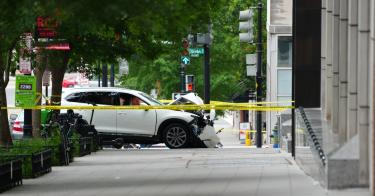
Carjacking has become an emblematic crime in Washington, a city where policy often lags public safety needs.
Over the past five years, the District has witnessed a stunning shift in carjacking offenses, exposing the consequences of political leadership and legal loopholes. We are at a crossroads: Do we continue to tolerate a revolving door for violent offenders, or do we demand accountability and reform?
Between 2021 and 2024, carjackings in the District soared to unprecedented levels. During President Biden’s four years in office, the District recorded 2,345 carjackings, averaging 586 per year. An alarming 74% of these crimes involved firearms, underscoring the violent nature of these offenses. Of the total cases, only 675 were closed, resulting in 590 arrests.
These numbers are not just statistics. They represent lives disrupted, neighborhoods destabilized, and a city under siege.
The arrest-to-offense ratio hovered at a meager 25%. Even more concerning, 64% of those arrested were juveniles. These figures exposed an administration unwilling to deter repeat offenders, especially among the young.
>>> D.C. Needs the Death Penalty
Under D.C. law, 16- and 17-year-old violent offenders, like armed carjackers, can be prosecuted as adults by the U.S. Attorney’s Office. But that didn’t happen in the Biden administration, or, for that matter, virtually any administration.
Between 2013 and 2023, only 176 juveniles were prosecuted as adults in the District for violent crimes and of those, only one was convicted of armed carjacking and two for unarmed carjacking.
Contrast this with the first year of the second Trump administration in 2025. Carjackings plunged to 232—less than half the annual average under Mr. Biden. The proportion of gun-involved cases remained high at 64%, but the law enforcement response improved dramatically. Of 232 offenses, 129 cases were closed, resulting in 134 arrests.
The 58% arrest-to-offense ratio speaks volumes. Juveniles still accounted for a significant share of those arrested (51%), but the numbers show a marked improvement in both enforcement and deterrence.
The difference is stark.
Under Mr. Biden, the District suffered 2 1/2 times more carjackings per year compared to Mr. Trump’s first year back in office. The arrest ratio more than doubled in Mr. Trump’s first year, and the closure rate of cases improved as well.
These are not coincidences; they are outcomes. Effective leadership and a willingness to enforce the law translate into safer streets. The drop in juvenile involvement from 64% to 51%—though still troubling—suggests that targeted policies can make an impact.
One theme persists across both administrations: youth crime. Most carjacking arrests involve juveniles, some as young as 12. And the vast majority of carjackings take place between 6 p.m. and 4 a.m. Where are the parents?
This isn’t just a policing problem; it’s a legal one. Current D.C. laws shield most juveniles from meaningful consequences, even for violent crimes. Most juveniles who commit crimes are handled by the local city attorney (the Office of the D.C. Attorney General) in juvenile court, where the focus is on rehabilitation, not punishment.
In most cases, that approach makes sense. But violent, repeat, armed offenders over the age of 13 are a different story. During the Biden administration, 57 carjackings were committed by 14-year-olds; 98 by 15-year-olds, and 110 by 16-year-olds.
The data clearly show that if young offenders are allowed to slip through the cracks, carjacking will remain a stubborn blight.
>>> New Yorkers Are Lab Rats in Mamdani’s “Safety” Plan
Looking at the arrest ratios, the improvement under Mr. Trump’s leadership is undeniable. A 58% arrest-to-offense ratio isn’t perfect, but it’s a vast improvement over the previous 25%. It signals a shift toward accountability and effectiveness in law enforcement.
Still, the fact that most offenders are juveniles points to a systemic issue—one that cannot be solved by policing alone.
U.S. Attorney Jeanine Pirro has called for a change in the law: allowing criminal charges against violent juveniles aged 14 and up. This proposal is not without controversy, but the numbers demand action. If we continue to treat violent young offenders with kid gloves, we send the wrong message—to victims, to communities, and to the offenders themselves.
Ms. Pirro’s plan would give law enforcement the tools they need to hold violent juveniles accountable, potentially deterring future crimes and restoring public confidence.
Washington’s carjacking crisis is a test of our resolve. The difference between the Biden and Trump administrations is not just in style, but in substance. The dramatic drop in offenses and improved arrest ratios show what happens when leadership prioritizes safety and accountability.
Now policymakers must follow suit. It’s time to close the loopholes, empower law enforcement, and protect our city from the scourge of violent juvenile crime. The numbers tell the story; it’s up to us to write the next chapter.
This piece originally appeared in The Washington Times



