

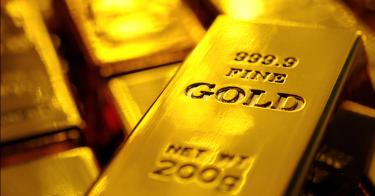
The year 2025 proved to be consequential for those who maintain that gold remains relevant in an age of algorithmic trading and central bank digital currencies. Gold climbed more than 60% in 2025, marking its strongest annual performance since 1979. North American gold-backed exchange-traded funds (ETF) attracted approximately $21 billion in inflows through July, according to the World Gold Council, while central banks continue purchasing the metal at rates double their historical averages.
The doubters—and there are legions in the faculty lounges and trading floors of our great nation—might wish to reconsider their contempt for this ancient store of value. Into this fevered atmosphere arrives Peter C. Earle’s slender volume, “Gold in Uncertain Times.”
Earle serves as Director of Economics and Economic Freedom and Senior Research Fellow at the American Institute for Economic Research. He has produced what might best be described as a primer: mercifully concise, refreshingly substantive, and admirably free of the mystical nonsense often attending discussions of precious metals.
This is not a text for those seeking get-rich-quick schemes or apocalyptic prophecies, but rather for the serious investor who recognizes, as Earle notes, that “certain economic truths, like sound money and the enduring benefits of fiscal restraint, were as inexorable as the laws of physics.”
>>> Stablecoins Strengthen the Dollar and Empower the Developing World
His central thesis—that gold represents permanence in a world characterized by flux—is articulated with admirable clarity. Gold, Earle observes, cannot be created by governmental decree or diluted through political caprice. It requires no counterparty, acknowledges no expiration date, and bears no one’s liability. Its physical resistance to corrosion and decay mirrors its resistance to obsolescence, he submits, even in our contemporary era of quantum computing and distributed ledgers.
One could scarcely ask for a more succinct refutation of the digital enthusiasts who proclaim the death of tangible value.
Earle’s objective is straightforward: “Through this book, the aim is to provide a comprehensive understanding of how to incorporate gold into an investment strategy.” Despite the book’s brevity, he delivers comprehensiveness. He addresses multiple avenues for gold exposure—from physical holdings in bars, coins and bullion to more abstract instruments such as ETFs, mining equities, and royalty companies. Each approach is examined with attention to both its merits and hazards, a balanced treatment that elevates this work above mere advocacy.
The discussion of market mechanics proves particularly valuable. Earle reminds us that the gold market functions simultaneously as an investment vehicle and an economic barometer, with pricing influenced by myriad global factors. Recent experience validates his framework: investors have flocked to gold as a hedge against inflation and geopolitical turbulence, with ETFs such as SPDR Gold Shares and iShares Gold Trust attracting billions precisely because they offer cost-effective exposure without the complications of physical storage. Gold futures, meanwhile, continue to serve both speculative and hedging functions for institutional players.
Where Earle truly distinguishes himself is in his treatment of gold’s role in portfolio construction. He identifies gold as a non-correlated asset: i.e., one that frequently moves inversely to equities and bonds, thereby providing meaningful risk mitigation during periods of volatility and economic distress.
Indeed, gold demand has surged as investors increasingly turned to the metal as a safe haven amid geopolitical uncertainty and a softening dollar. When inflation expectations rise, Earle argues, investors naturally gravitate toward gold as a wealth preserver while other asset classes hemorrhage value.
He also addresses gold’s broader cultural significance, noting that jewelry accounts for a substantial share of global demand, with India and China accounting for most of the consumption. In many societies, gold transcends mere ornamentation; it symbolizes wealth, power, and status, serving simultaneously as adornment and investment. This dual character helps explain gold’s enduring appeal across civilizations.
>>> What AI Means for the Future of Work
Practical matters receive their due attention as well. Earle provides guidance on the storage and protection of physical gold, whether at home or in institutional vaults, and addresses the oft-vexing question of insurance. He also discusses alternative precious metals—silver, platinum, palladium—for those seeking to diversify beyond gold itself.
He concludes with measured optimism about gold’s prospects. Rising economic uncertainty, persistent geopolitical tensions, and gold’s continuing function as both a store of value and an inflation hedge suggest a bright future for the metal. The ongoing central bank purchases and gold’s expanding role in emerging technologies reinforce its position in the global economy.
Yet Earle maintains his analytical discipline, cautioning that investors must remain cognizant of potential supply constraints, governmental interference, and technological disruptions. As the global economy evolves, gold will remain essential for wealth preservation, portfolio diversification, and risk management.
“To understand gold is to understand the limits of human intervention in markets,” Earle writes. It’s a profound observation, one that cuts against the grain of our technocratic age. When central bankers presume to fine-tune economic growth through monetary manipulation, when politicians promise prosperity through fiscal profligacy, and when commentators dismiss millennia of economic wisdom as relics of a benighted past, gold stands as a rebuke to hubris. It is, in Earle’s formulation, “no one’s liability,” which is to say, it is everyone’s refuge.
This brief paperback deserves a place on the shelf of anyone concerned with preserving wealth in uncertain times. Put more plainly: it belongs on everyone’s shelf.
This piece originally appeared in 1819 News


