Infertility and reproductive health conditions such as endometriosis, polycystic ovary syndrome, progesterone deficiency, insulin resistance, thyroid disease, and male-factor infertility affect millions of Americans, yet current insurance coverage models often drive patients prematurely to costly, invasive procedures while under-reimbursing providers who deliver effective, holistic fertility care.
That is because current infertility practices are often focused on symptom management. In contrast, the growing field of restorative reproductive medicine (RRM) prioritizes identifying and addressing underlying health issues that impair fertility. This approach can also improve overall wellness in patients who have chronic conditions that affect other bodily functions.
Current U.S. health insurance payment models, coding, and reimbursement structures largely neglect RRM, limiting patient access.
This proposal recommends four key strategies on how to improve affordability, access, and the quality of infertility care through RRM:
- Implementing step therapy to prioritize less invasive, cost-effective treatments before higher-cost interventions;
- Creating bundled payment models that reimburse the full spectrum of restorative care from diagnosis to delivery;
- Updating diagnostic and billing codes to accurately reflect treatments for chronic reproductive health conditions and minimally invasive procedures; and
- Ensuring appropriate relative value units so providers are fairly compensated for the time and complexity of delivering thorough diagnostic and restorative care.
Together, these reforms would expand patient options, incentivize high-quality care, reduce overall health care spending, and improve health and fertility outcomes for women and men.
Background
In the United States, 16 percent of married couples are diagnosed with infertility, while 13.4 percent of women (approximately 9.7 million) between the ages of 15 and 49 have impaired fertility.[REF] The current medical standards of care, however, tend to prioritize in vitro fertilization (IVF) despite its high cost, low success rates, and adverse effects on maternal and neonatal health. For example, families relying on IVF face much higher rates of:
- Multiple births,
- Preterm birth, and
- Low birth weight.[REF]
These conditions put infants at risk for lifelong adverse health consequences and developmental disabilities. IVF-conceived infants are also at a higher risk of birth defects,[REF] chromosomal anomalies,[REF] autism,[REF] and cancer,[REF] with infants conceived by intracytoplasmic sperm injection at the highest risk.[REF]
For mothers undergoing IVF, there are also increased risks associated with multiple pregnancies and higher rates of other harmful conditions such as gestational diabetes,[REF] ovarian hyperstimulation,[REF] cesarian sections,[REF] severe preeclampsia,[REF] and maternal hemorrhage.[REF]
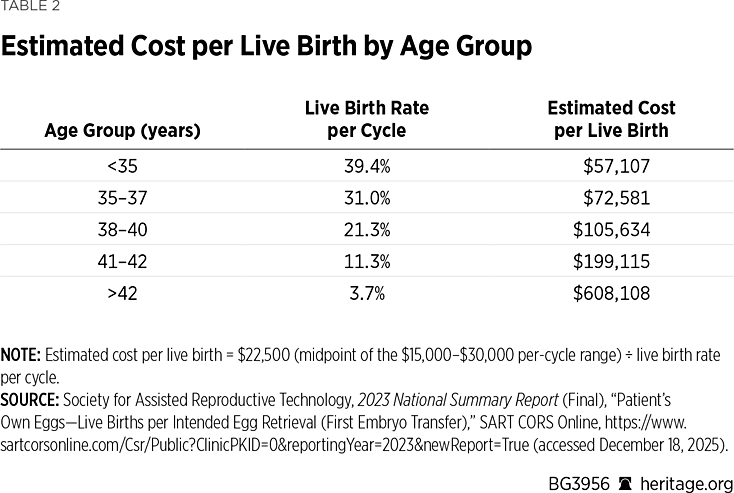
Taken together, these risks raise important ethical questions about informed consent for people who are considering IVF. Moreover, IVF’s low success rates must be compared to the high direct and indirect costs of IVF. Relying on the most recent data, IVF success rates were about 35 percent to 40 percent for pregnancy and led to a live birth only 25 percent to 30 percent of the time, with an average cost per cycle of $15,000–$30,000,[REF] including medications. For women 40 and older, the live birth rate is only 10 percent or less. Such women would have to spend between $150,000 and $300,000 to reach a 65 percent chance of a live birth.
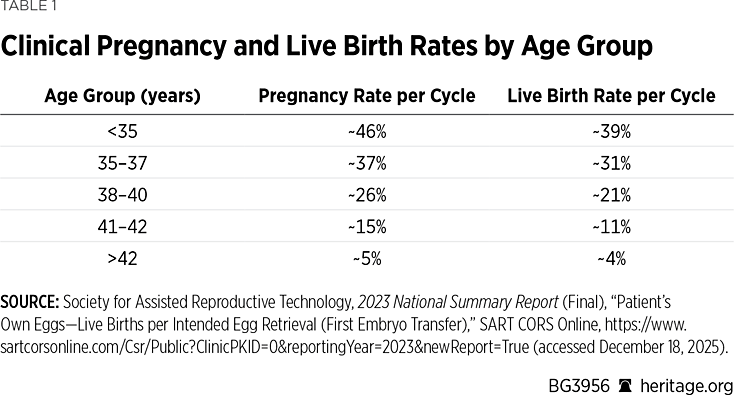
If every U.S. woman with impaired fertility underwent one IVF cycle, the total direct cost would be $146 billion to $291 billion. Yet, given current success rates, 64 percent to 75 percent of women would remain childless after one cycle, depending on age and assumptions about success rates.
Of the approximately 2.7 million infants that would be born in this “IVF-for-all” scenario, about 705,000 (26.1 percent) would be preterm. A further 3 percent of these IVF infants—roughly 81,000—would be very low birth weight, meaning they would weigh less than 1,500 grams (about 3.3 pounds) at birth.
The average hospital care cost for each preterm infant is estimated at $44,000, totaling approximately $31 billion. Additional lifetime health care expenses and lost productivity costs are estimated at $16,000 per child, adding another $11 billion.
Before debating what should be done about IVF, we should step back and ask why people turn to IVF to begin with. Are we providing the best possible care for women and their families who are struggling with infertility? Are we prioritizing care that optimizes health, improves the likelihood of a successful pregnancy, and minimizes the risks and costs for parents, children, and medical professionals?
RRM Is a Worthy Alternative to IVF. It is essential to explore treatments that address infertility more effectively and holistically. One promising approach is RRM, which has been steadily growing since the 1970s.
RRM refers to a range of medical and surgical treatments designed to diagnose and treat the underlying causes of infertility while preserving and restoring the body’s natural reproductive functions. Rather than bypassing the reproductive system, RRM combines cycle tracking, targeted lab testing, lifestyle interventions, medical and hormonal therapies, and corrective surgeries to restore natural fertility for both men and women.[REF] This approach not only supports fertility but also promotes overall reproductive health, often improving outcomes for both mothers and infants while reducing the need for expensive, high-risk interventions such as IVF. Addressing root causes should ensure that couples have access to RRM prior to and alongside IVF.
RRM is associated with dramatically lower rates of adverse pregnancy outcomes compared to IVF. While multiple births occur in about 21 percent of IVF pregnancies—compared with about 3 percent in the general population—RRM pregnancies have multiple birth rates of less than 2 percent, close to the natural baseline.[REF] Likewise, preterm birth affects about 26 percent of IVF infants[REF] compared to 8 percent to 10 percent after RRM,[REF] which mirrors the general population. The risk of low birth weight (less than 2,500 g) is also far higher in IVF (a little over 18 percent)[REF] than after RRM (6 percent to 8 percent).[REF]
Importantly, RRM success rates for most infertility diagnoses reach 30 percent to 50 percent over 12–24 months,[REF] comparable to or exceeding the per-cycle success rates of IVF, which range from 39.4 percent in women under 35 to less than 10 percent in women over 40.[REF] And while IVF often costs $15,000–$30,000 per cycle (with multiple cycles frequently required),[REF] RRM treatments typically range from a few hundred dollars to $16,000 depending on the medical and surgical treatments required per couple.[REF] RRM improves the health of mothers, fathers, and their children while directly addressing the root causes of infertility and reproductive dysfunction.
As a holistic approach to treating infertility, RRM recognizes that infertility is not a standalone disease but a symptom of underlying reproductive health conditions such as endometriosis, adenomyosis, polycystic ovary syndrome, blocked fallopian tubes, hormonal imbalances, thyroid disease, insulin resistance, and diet and lifestyle factors for women. For men, these include low sperm count, low sperm motility, erectile dysfunction, medications interactions, thyroid and hormone imbalances, and diet, lifestyle, and environmental factors.
Research shows that when couples are diagnosed with infertility, there are typically four or more contributing conditions affecting one or both partners. In fact, with more than 100 biological, anatomical, environmental, and lifestyle factors known to influence fertility, treatment must be personalized and comprehensive to address each couple’s unique needs. Moreover, because 15 percent to 30 percent of infertility cases are classified as “unexplained,”[REF] this highlights a significant gap in conventional fertility care where underlying causes go unaddressed, often for years or decades.
Practically, RRM involves cycle-informed diagnostics that include fertility awareness-based charting, timed lab testing, and regular follow-ups. It combines these diagnostics with targeted medical and surgical treatments, such as fertility-sparing laparoscopic excision for endometriosis, salpingostomy/salpingotomy, fimbrioplasty, and fallopian tube recanalization. In addition, RRM places strong emphasis on long-term, whole-person care to restore healthy reproductive function over time. The goal extends beyond simply achieving the conception of one child to include the restoration of normal reproductive health and the improvement of the couple’s overall well-being.
There is currently a disconnect between the type of care patients need for infertility and what is accessible through the U.S. health care system. RRM relies on longitudinal, diagnostic-focused care that emphasizes personalized treatment plans. A typical course of RRM care may include:
- Structured cycle tracking and fertility awareness education;
- Targeted laboratory testing and imaging aligned with each cycle phase;
- Medical therapy tailored to hormonal, inflammatory, or endocrine findings;
- Fertility-sparing laparoscopic surgery to remove disease while preserving reproductive anatomy when indicated; and
- Ongoing medical management through conception and, in some cases, through pregnancy to support healthy maternal and infant outcomes.
Under the current fee-for-service model, physicians providing RRM are typically reimbursed only for face-to-face visits and procedures. Yet the RRM model includes structured patient education, fertility charting support, data interpretation between visits, proactive care coordination with nursing staff, and extended clinical reasoning—all of which go largely uncompensated. As a result, many RRM providers have been forced to operate out of network or rely on self-pay and concierge models to sustain their practices. This leaves patients with fewer affordable options despite the demonstrated quality and long-term benefits of care.
Professional organizations that set standards of infertility treatment—most notably the American College of Obstetricians and Gynecologists and the American Society for Reproductive Medicine—have recently taken positions dismissing RRM as a legitimate model of care. By questioning its scientific foundation and reinforcing IVF as the default recommendation, these groups shape insurance coding and reimbursement structures in ways that lock in current business models and disadvantage RRM physicians and their patients. This dynamic entrenches reliance on costly assisted reproductive technologies while limiting access to approaches that could relieve the suffering of thousands of women and families. To ensure authentic choice and access, health insurance coverage models should be updated so they recognize the full range of legitimate, evidence-based infertility care.
Proposals to Modernize Health Insurance Coverage
To reduce overall health care costs, improve provider reimbursement rates, and expand access to RRM for infertility care and reproductive health conditions, this proposal recommends four key strategies:
- Implementing a step therapy requirement;
- Establishing an RRM bundled payment model;
- Updating diagnostic and procedural coding systems; and
- Assigning appropriate relative value units (RVUs).
Step Therapy Treatment Plan. Step therapy is a widely used approach in health care in which patients start with the least invasive and most cost-effective treatments before progressing to more intensive and expensive interventions. Insurers often use this model to balance medical necessity with financial stewardship, ensuring that patients receive appropriate care while controlling costs.
Today, most insurance plans skip directly to expensive interventions within assisted reproductive technology without requiring coverage for RRM or other lower-cost, corrective treatments. By modernizing step therapy to mandate coverage for RRM and root-cause care as the first line of approach in the evaluation and treatment of infertility, insurers could:
- Reduce costs for families and health systems alike;
- Improve maternal and infant health outcomes by avoiding unnecessary high-risk procedures; and
- Align coverage with evidence-based care rather than a one-size-fits-all treatment model.
With proper coverage for RRM as the first step in the treatment of infertility, couples will have increased access to comprehensive, corrective care, decreasing reliance on invasive procedures, ensuring better outcomes for both parents and children while preserving health care resources.
RRM Bundled Payment Models of Care. Bundled payment models represent an alternative to the traditional fee-for-service system, in which providers bill separately for each test, visit, and procedure. Under a bundled model, a single, comprehensive payment covers all services within a defined “episode of care.” This approach has already transformed maternity care in many states, where one payment now typically covers prenatal care, labor and delivery, and the postpartum period. The result has been better care coordination, long-term relationship building, clearer cost expectations for patients and payers, and reduced administrative burden for providers.[REF]
The same principle can be applied to RRM. An RRM bundle would create a single payment for the entire course of care—from initial consultation through diagnosis, treatment, and either successful conception, delivery, or care discontinuation. This episode would encompass diagnostic testing, fertility awareness education, medical therapy, surgical interventions when necessary, ongoing care coordination, and even prenatal management in practices that continue care through pregnancy. Instead of the fragmented billing that characterizes the current system, bundled payments would reflect the true scope and intensity of RRM care while incentivizing better outcomes at lower overall cost.
To ensure flexibility, multiple bundle types could be created:
- A medical RRM bundle would include evaluation, diagnostics, medical management, and ongoing care;
- A medical + surgical bundle would include indicated fertility-sparing surgical interventions; and
- A medical + obstetrical bundle would extend care through prenatal and delivery support.
Each bundle could be assigned RVUs through actuarial analysis to reflect the complexity and intensity of services provided.
The advantages would be far-reaching. For patients, bundled payments would create predictable coverage for the full course of care rather than piecemeal benefits that often exclude critical services. For providers, they would ensure reimbursement for the extensive diagnostic work, care coordination, and follow-up that RRM requires but the current fee-for-service model rarely covers. Payers and employers would gain a cost-effective alternative to IVF-centered care models that prioritizes early diagnosis, restoration of reproductive health, and healthy pregnancies rather than expensive, high-risk interventions. And for the broader health care system, bundled payments would simplify reimbursement, encourage value-based care, and reduce downstream costs from complications such as preterm birth and low birth weight.
By drawing on the success of bundled payment models in maternity care, an RRM bundled approach offers a financially sustainable way to expand access to high-quality, comprehensive fertility care while keeping costs predictable for patients and payers alike.
Diagnostic and Coding Updates. Accurate diagnostic and procedural coding is the foundation of insurance coverage, reimbursement, and quality measurement in U.S. health care. Every medical claim requires codes for why care is provided (diagnosis), what was done (procedures and services), and, when applicable, the supplies or additional services used. There are three main systems:
- ICD-10 (International Classification of Diseases) defines the diagnosis or condition—the reason care was provided;
- CPT (Current Procedural Terminology) describes the medical, surgical, and diagnostic services performed; and
- HCPCS (Healthcare Common Procedure Coding System) expands on CPT codes to include supplies, devices, and non-physician services, with Level I codes mirroring CPT and Level II codes covering items and services not included in CPT.
Currently, these code sets lack the precision needed to capture the full scope of RRM. Many services central to RRM—such as cycle-based diagnostics, fertility-sparing surgeries, chart interpretation, and patient education—are either under-coded or not coded at all. Without proper codes, insurance plans cannot consistently cover these services, providers cannot be reimbursed for the time and expertise required, and patients face fragmented care and unexpected costs.
To fix this, the Secretary of Health and Human Services—working with the Centers for Medicare and Medicaid Services (CMS), the National Center for Health Statistics, and the American Medical Association’s CPT Editorial Panel—should launch a coordinated update to ICD-10, CPT, and HCPCS codes within six months. This effort should do the following:
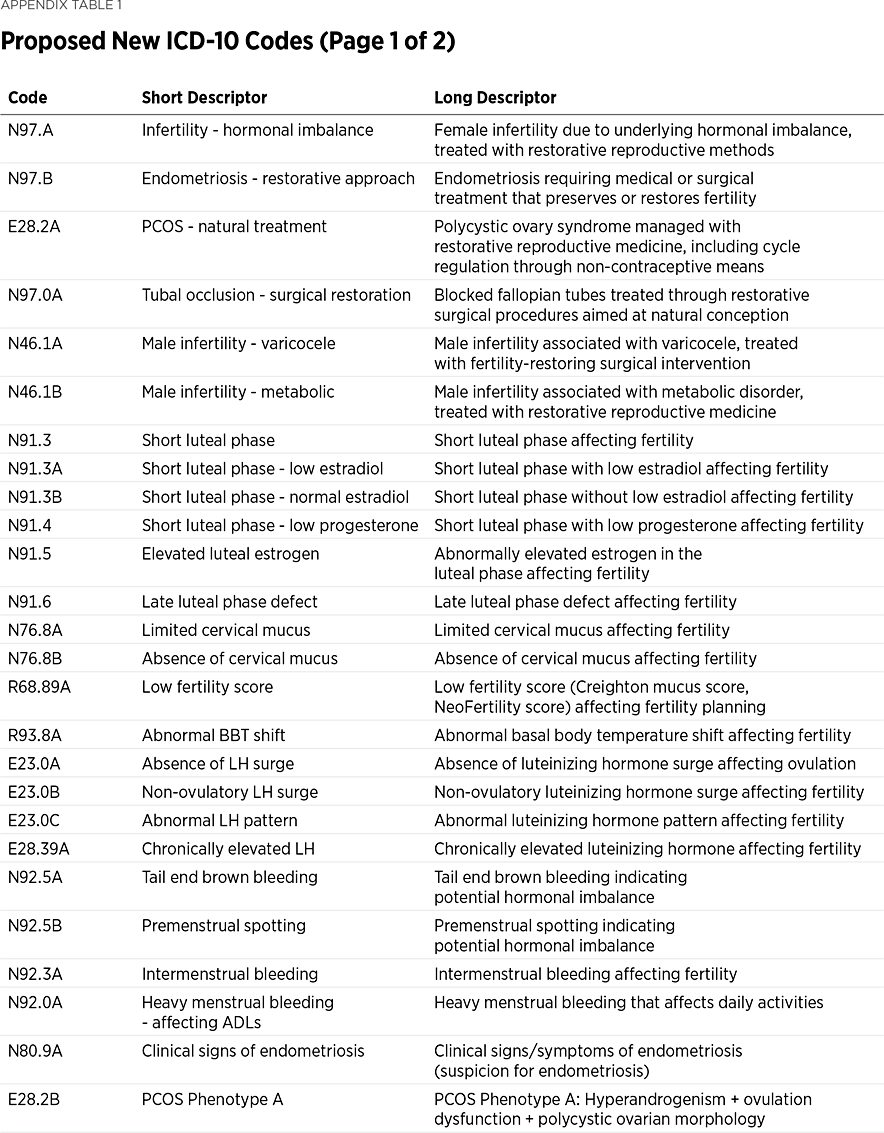
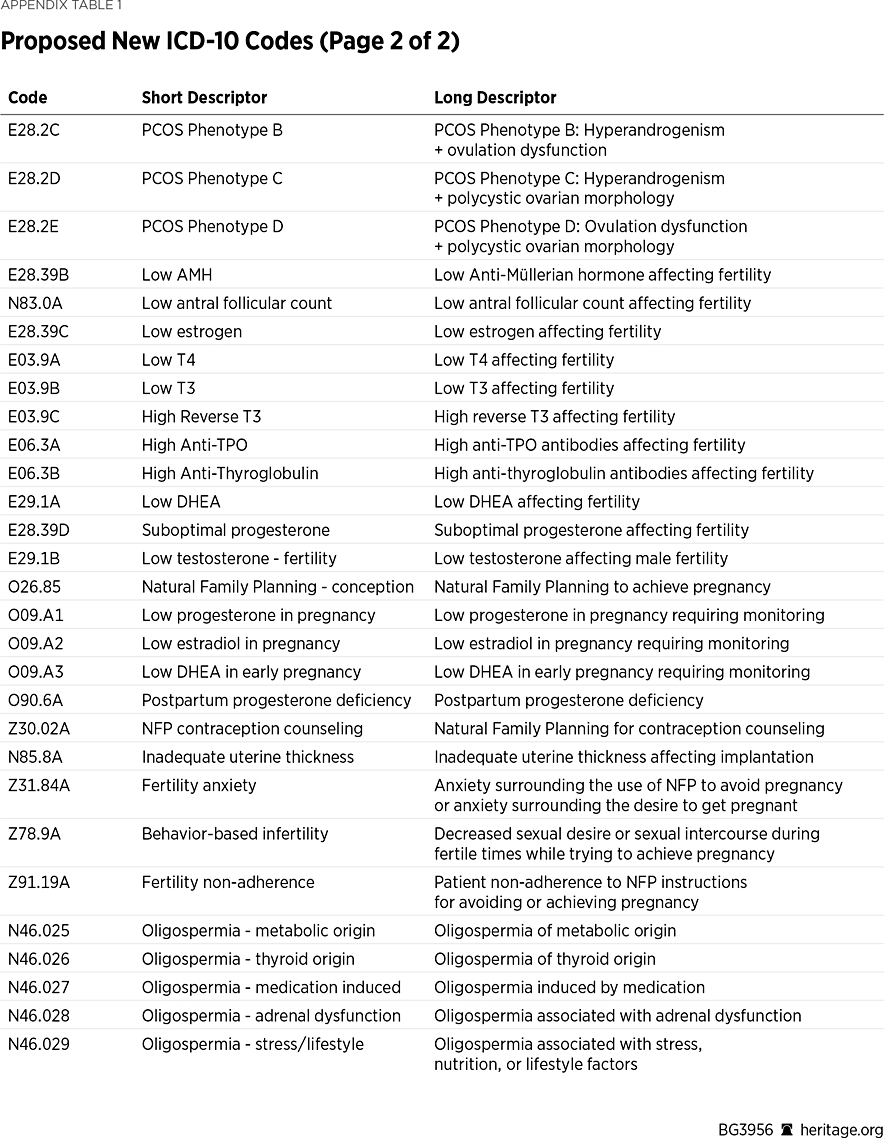
- Modernize ICD-10 diagnosis codes for reproductive health conditions such as endometriosis, polycystic ovary syndrome, adenomyosis, uterine fibroids, blocked fallopian tubes, and male-factor infertility. New codes should also capture functional and cycle-specific markers—such as short luteal phases; cervical-mucus disorders; abnormal LH/estrogen/progesterone patterns; thyroid and adrenal markers; and male-factor subtypes such as oligospermia, asthenospermia, and varicocele. Greater specificity would align coverage with medical necessity, support step-therapy requirements, and enable detailed outcome tracking.
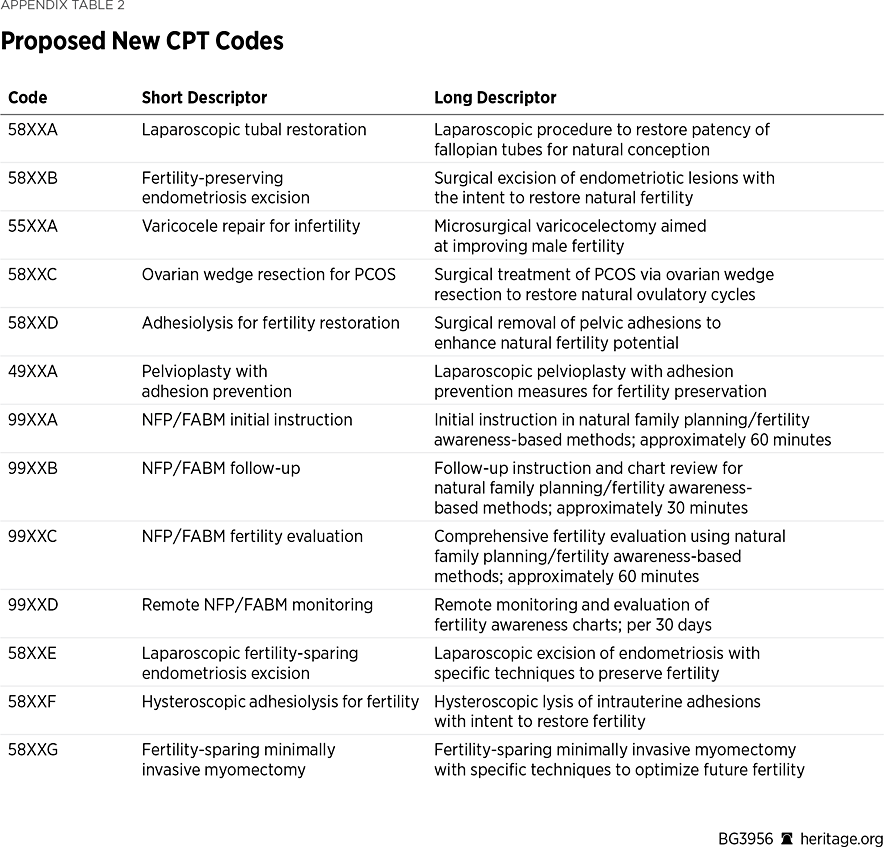
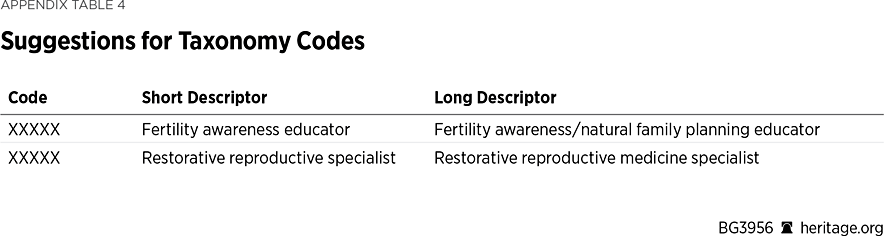
- Create new procedural codes in CPT and ICD-10-PCS for fertility-sparing surgeries and long-term care. Examples include laparoscopic excision of endometriosis, hysteroscopic myomectomy, ovarian cystectomy, adhesiolysis for tubal restoration, and varicocele repair for infertility—all distinguished by intent to restore fertility. Additional codes should cover initial 60-minute fertility education visits, comprehensive cycle-informed evaluations, and remote chart monitoring per 30 days to capture the time-intensive diagnostic and care coordination work that defines RRM.
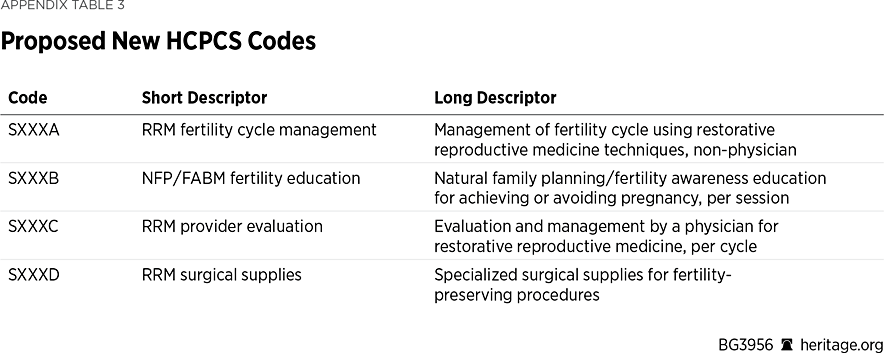
- Add HCPCS codes for fertility education, per-cycle physician reviews, non-physician care coordination, and surgical supplies specific to RRM procedures. These codes should ensure Medicare and Medicaid reimbursement for all phases of care, including post-operative management, and be explicitly tied to RRM bundled payments to prevent cost-shifting back to patients.
Together, these updates would allow insurance plans to fully cover the services RRM delivers, enable step-therapy and bundled payment models, and give researchers the data needed to evaluate outcomes and refine best practices. Interim payer guidance should direct plans to recognize new RRM codes as soon as they are published—even before full integration into claims systems—to avoid coverage delays.
For a complete list of recommended coding updates, see Appendix Table 1.
Updating RVUs. Assigning appropriate RVUs is essential to ensuring fair reimbursement and aligning payment with the true complexity and time investment required for RRM. In the current system, RVUs determine how much providers are paid for a given service. Each RVU reflects three components:
- Physician work: the time, technical skill, mental effort, and judgment required;
- Practice expense: overhead costs, including clinical staff, equipment, and supplies; and
- Professional liability insurance: the cost of malpractice coverage associated with the service.
RVUs for each service are multiplied by a conversion factor set by the CMS and private insurers to calculate payment rates. The problem is that most existing RVUs were created decades ago for brief, procedural encounters or single-visit services. They fail to account for the longitudinal, diagnostic-heavy, and multidisciplinary nature of RRM care, which often includes cycle-informed evaluation, advanced imaging, fertility-sparing surgeries, education, ongoing data interpretation, and care coordination over many months.
To address this gap, RVUs should be revised and expanded alongside the new CPT, ICD-10, and HCPCS codes proposed in this policy memo. Updated valuations would:
- Reflect the time-intensive diagnostic work behind RRM care;
- Recognize the specialized expertise required for fertility-sparing surgical techniques;
- Cover team-based care models involving physicians, nurses, and fertility educators; and
- Incentivize providers to offer thorough, restorative treatments rather than defaulting to brief visits or high-cost procedural interventions.
By aligning RVUs with the real work of modern RRM, insurers would create payment structures that make comprehensive, restorative fertility care financially sustainable, encourage best practices, and expand access for patients who currently face high out-of-pocket costs or limited provider availability.
Policy Recommendations
The Secretary of Health and Human Services should lead an effort to update diagnostic and procedural codes related to infertility treatments to reflect the latest knowledge and practices related to RRM. Specifically, that effort should include:
- Conducting a thorough review and revision of ICD-10-CM diagnostic codes for conditions such as endometriosis, polycystic ovary syndrome, uterine fibroids, adenomyosis, blocked fallopian tubes, and male-factor infertility to ensure accurate classification of severe, chronic reproductive health conditions requiring medical or surgical intervention;
- Revising ICD-10 codes to more accurately reflect severe and chronic reproductive conditions;
- Developing and implementing new ICD-10-PCS procedural codes for laparoscopic excision, hysteroscopic procedures, and other minimally invasive surgeries aimed at addressing these conditions, including the excision of fibroids, ovarian cysts, and adenomyosis-related tissue removal;
- Developing new CPT codes for minimally invasive surgeries and other interventions that target infertility-related conditions, specifically including laparoscopic excision, hysteroscopic myomectomy, cystectomy, and other minimally invasive procedures that directly treat underlying reproductive health conditions;
- Developing new CPT codes for medical conditions affecting fertility, such as thyroid disease and insulin resistance, recognizing that treating these conditions with the goal of achieving pregnancy represents more intensive care than treating these conditions for medical management alone;
- Establishing new HCPCS codes to ensure appropriate Medicare and Medicaid reimbursement for reproductive health-related surgical procedures and post-operative care;
- Assigning appropriate RVUs to reflect the complexity and time required for these procedures, ensuring that providers are incentivized to offer thorough diagnostic and restorative care;
- Commissioning actuarial analysis of RRM, defining the services to be included in the “bundled payment model” for RRM, and assigning new CPT codes for each bundle; and
- Establishing a Federal Procedural Coding Authority within the CMS, modeled on the ICD-10 Coordination and Maintenance Committee, to oversee the development, revision, and publication of all procedural codes.
In developing or implementing these recommendations, current RRM practitioners and researchers should be consulted. The opinions of medical associations that profit from preserving the status quo should be discounted.
Conclusion
Policymakers have a clear opportunity to modernize a system that undervalues and underfunds the comprehensive, health-restoring approach offered by RRM. As this brief outlines, outdated payment models and procedural coding fail to capture the time, expertise, and coordination needed to diagnose and treat the root causes of infertility and reproductive health conditions while also protecting individual conscience rights and religious freedom.
Emma Waters is a Policy Analyst in the Center for Technology and the Human Person at The Heritage Foundation. Merlot Fogarty is a JD Candidate and former Heritage Graduate Research Assistant. Kathleen Berchelmann, MD, is a board-certified pediatrician and member of the Catholic Medical Association.
Appendix A: Existing and Recommended Codes