

A wave of conservative electoral wins continues to sweep across Latin America, creating a strategic opening for the Trump administration to restore security and stability in America’s hemisphere. The most recent elections in Peru and Colombia are laying the stage for major U.S. inroads with the critical Andean region, which is a critical theater for determining the fate of hemispheric efforts on narco-terrorism, malign Chinese influence, and secure supply chains.
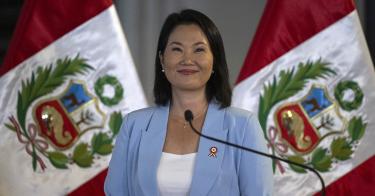
Peru's president-elect, Keiko Fujimori, emerges from a decade of political turmoil with the promise to restore Peru’s security relationship with the U.S. He joins Colombia’s president-elect Abelardo de la Espriella and Ecuador’s President Daniel Noboa as pillars of conservative leadership in the Andean region.
Colombia and Ecuador will be central to restoring Andean security and advancing President Trump’s “Donroe Doctrine” in our hemisphere; however, Peru’s new political moment offers some of the most transformational opportunities for the U.S. to counter Chinese influence, strengthen regional security, and rebuild a relationship that was once a cornerstone of cooperation in the Andean region.
>>> How China Is Building Ethiopia’s Infrastructure
The United States and Peru share a long history of economic and security cooperation, which was accelerated under President George H. W. Bush’s Andean Strategy, launching military and economic assistance programs across the region to combat the surging narco-guerrilla threats. Since 2009, U.S.-Peru Trade Promotion Agreement has more than doubled bilateral trade and supported key Peruvian export sectors, all while delivering a consistent U.S. trade surplus.
Yet Peru’s political instability over the past decade greatly complicated the prospect of deepened U.S.-Peru cooperation, particularly against the backdrop of Washington’s already limited attention to Latin America during the past several years. Without political continuity, Washington lacked a counterpart in Lima to pursue joint efforts on even a medium-term basis, whether on security or economic cooperation initiatives.
China quickly moved into this gap. Critically, Peru’s mix of an unstable political environment and stable natural resource-rich economic growth proved highly compatible for the CCP’s top-down politically directed economic system.
Aiming to secure mineral resources and other commodities from the Pacific-facing Andean nation, China surpassed the U.S. as Peru’s largest trading partner in 2011 and has spent the last decade entrenching itself deeply into Peru’s most valuable industries. More recent developments include Beijing’s penetration of some of Peru’s most strategic economic sectors: in the energy sector, two Chinese companies control the entire electricity grid in Lima, Peru’s capital city. In the agricultural sector, Chinese trade agreements have expanded Peru's export market while directing a growing share of Peruvian agricultural exports toward China. And in the fishing sector, China’s distant-water fishing fleet (the world’s largest, with over 500 vessels exploiting other countries’ fishing waters) has caused hundreds of millions of dollars in Peruvian export losses.
The risks associated with growing Chinese influence extend into the political arena as well. Beijing continues to amass political influence in Peru, as shown by the February 2026 removal of President José Jerí after Congressional hearings revealed links to the Chinese Club del Dragón, a network providing support for CCP-owned companies. The scandal demonstrates how deep economic dependence on China can create political vulnerabilities, pressuring Peruvian leaders to accommodate Beijing’s interests.
China's most adversarial investments, however, are in infrastructure. Peru acceded to China’s Belt and Road Initiative in 2019, and in 2024 Xi Jinping himself formally inaugurated the partnership’s most significant project: Chancay Port in Lima operated exclusively by CCP-owned shipping company COSCO.
An estimated 1 million global shipping containers will pass through Chancay Port each year, carrying millions of tons of cargo directly from Shanghai to the Americas. The port's scale, strategic location, and extensive surveillance infrastructure raise legitimate concerns about its potential dual-use military value. In the event of a conflict in our hemisphere, Beijing could use Chancay port as a military gateway to the region.
Fujimori’s victory offers a rare strategic opening for the U.S. to re-establish military engagement with the Andean region, and Peru’s recent purchase of 12 F-16 Block 70 fighter aircraft is an excellent first step. By purchasing American-made F-16s over European alternatives such as the French Rafale or Swedish Gripen, Peru has demonstrated its commitment to greater interoperability with U.S. forces—a strategic imperative if the United States and its partners hope to deter China's steady push into the Western Hemisphere.
The Trump administration—and particularly Ambassador to Peru Bernie Navarro—deserve considerable credit for helping secure this agreement. These efforts reflect a recognition of Peru's strategic importance on South America's Pacific coast and the need to strengthen partnerships with countries willing to cooperate on shared security challenges.
Washington and Lima should view the F-16 purchase not as an isolated effort, but as the beginning of a broader strategic partnership. Peru's existing army systems include U.S.-made armored vehicles dating back to the Cold War, creating a prime opportunity for Washington to update these platforms while strengthening military interoperability with Lima.
>>> The Marxist Threat to America Has Two Fronts. Both Are Advancing
A similar opportunity is in lethal aerial interdiction, which has been restricted for the past two decades since the Peruvian air force mistakenly shot down an American civilian plane in 2001. Washington should work with Lima to re-establish a framework for lethal aerial interdiction that will enable Peru to deter and disrupt illicit air trafficking. Such efforts would not only strengthen Peru's ability to protect its own territory and critical infrastructure, but would improve regional deterrence at a time when China's presence in the Western Hemisphere continues to expand.
Peru has made a clear choice to restore security collaboration with the U.S. under Fujimori’s administration. The United States should respond by ensuring that the relationship continues to deliver tangible benefits for Peru's security, while advancing American interests throughout the Andean region and the Pacific.
If the U.S. can seize these key opportunities in Peru, China’s foothold in Latin America will weaken and the Western Hemisphere will be strengthened. By reinvigorating U.S. security cooperation, deploying tools like the Development Finance Corporation in Peru can prove critical in driving substantive and mutually-beneficial U.S. economic engagement with Peru’s economy, including ensuring secure access to critical minerals and even manufactured goods that China cornered the market on for too long.
At the same time, the U.S. can work with Peru to ensure safeguard are put in place to prevent the weaponization of China’s malign influence and access to critical infrastructure. If pursued successfully, the Trump administration’s efforts will not only massively benefit Americans and the Peruvian people, but it will also close the chapter on China’s period of surging dominance in South America.
This piece originally appeared in RealClear World



