
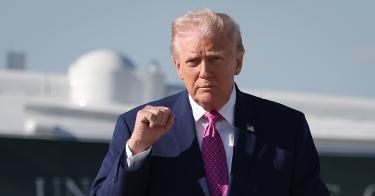
President Trump threatened early this month to “cut off all trade with Spain” after that country refused to allow jointly operated U.S.-Spanish bases there to be used for the war against Iran. The president renewed the threat last week as Prime Minister Pedro Sánchez’s far-left government dug in deeper.
It is unclear how Mr. Trump intends to end economic ties with Spain, as many of those links fall within broader trade agreements with the European Union. Tariffs may be part of the plan; levies targeted at Madrid in response to its security policies wouldn’t be barred by the recent Supreme Court ruling against the president’s broader trade measures. But new tariffs could also get held up in court.
There is, however, a neglected arrow in the administration’s quiver: federal laws dealing with boycotts maintained by foreign countries, especially when U.S. companies are pressured to comply. These laws provide significant authority to impose economic costs on Spain. They are a fitting tool, since they respond to the leftist turn by Spain—a North Atlantic Treaty Organization member—against America and its allies.
These laws were adopted in the late 1970s with the Arab League Boycott of Israel in mind but were written generally to cover boycotts of any country with which the U.S. has normal trade relations. The laws have been repeatedly sustained by U.S. courts against challenges on First Amendment grounds. That is because they don’t forbid companies themselves from boycotting a country on ideological grounds, only from doing so at the behest of or in concert with a foreign boycotting state.
>>> Spain’s New “HODIO” Speech Monitor Is the Latest Assault on Free Expression in Europe
These antiboycott measures have been enforced with far less frequency in recent decades as Arab states increasingly abandoned their boycott of Israel. But late last year Spain joined Yemen, Iraq and a handful of other states maintaining an Israel boycott. The move was part of the same political orientation that led it to turn down the U.S. in its time of need.
The Ribicoff Amendment, passed as part of the Tax Reform Act of 1976, requires that the Treasury Department maintain a “current list of countries which require or may require participation in or cooperation with an international boycott.” Being on the list isn’t harmful in itself but it does trigger tax consequences for U.S. companies doing business in listed countries.
Spain now meets the criteria for inclusion in Treasury’s list of boycotters. Before Madrid rebuffed U.S. efforts to defend itself from the mullahs’ threats, it had already tried to stop Israel from defending itself against Islamist terror. In late 2025, while Israel was still fighting to free hostages held by Hamas, Mr. Sánchez’s government prohibited any defense-related trade with Israel. The government also barred a broad category of materials and dual-use products and fuels, including their mere transit through Spain from third countries.
In addition, Madrid outlawed any trade with Israeli companies in the “Occupied Palestinian Territories.” That includes significant areas that Washington regards as part of Israel, such as Jerusalem, including the site of the U.S Embassy, and, bizarrely, the Golan Heights. Thus, Spain is boycotting an American wartime ally, with economic warfare particularly aimed at its defense industry and capital. In Europe, only Slovenia has adopted such a boycott against the Jewish state.
The Spanish government justified its measures against Israel with accusations of international crimes. Now Madrid accuses Washington and Jerusalem of violating international law governing the use of force in their campaign against Iran.
>>> Viktor Orbán Lost the Election but He Won the Argument
America is a major customer and partner of the Israeli defense industry. Several major U.S. defense firms have subsidiaries in the Iberian nation, which will now be compelled to comply with Spain’s boycott. Spain’s boycott hurts America too.
The Treasury should add Spain to its list of boycotting states, alongside Yemen and Iraq. This would create a tax-reporting obligation for American companies doing business there, including subsidiaries and firms where a U.S. shareholder has a significant stake.
In addition, the antiboycott laws impose a tax penalty on such companies, which can vary widely depending on the nature of a company’s activities, but typically results in a reduction of the company’s foreign tax credit. The amounts aren’t punitive, but they essentially function as a tax-code tariff on doing business in the boycotting country. Unlike tariffs, they aren’t limited to importers.
Putting Spain on the Treasury’s list of boycotters signals that the administration’s problem is the actions of the Sánchez government, not Spain itself. If conservatives come to power in the elections next year and drop the boycott (or if Mr. Sánchez does so), Spain could quickly come off the list, as the United Arab Emirates did when it joined the Abraham Accords.
The Trump administration may want to level additional economic sanctions against Madrid. U.S. boycott laws have the advantage of being easy to implement, intrinsically tied to Spain’s undermining the defense of America and its allies, and based on legislation with a history of bipartisan support.
This piece originally appeared in the Wall Street Journal on March 19, 2026



