

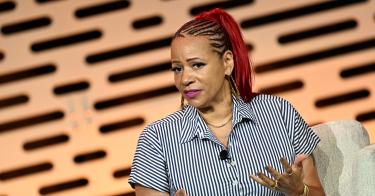
A decade ago, Nikole Hannah-Jones—who later coauthored the sloppy and debunked 1619 Project—told New York Times Magazine readers that she was enrolling her daughter in a struggling, predominantly black Brooklyn district school as a matter of principle. This week, she published a mea culpa addressed to that daughter, acknowledging that the school failed her and that, by choosing it, she failed her child.
It is a striking admission. Even more striking is how little Hannah-Jones has learned. Despite 10 years of firsthand experience with a failing district school, Hannah-Jones repeats the same debunked talking points about why the system fails, demonstrating a remarkable imperviousness to the facts and a stunning incuriosity about the real reasons her daughter’s school let her down.
The failures Hannah-Jones catalogs in her daughter’s schools are damning. Teachers were often absent, and her daughter complained of “substitute teachers who rarely taught and how sometimes there was no substitute at all.” When that happened, her third-grade class was sometimes sent to sit in a kindergarten classroom and work on their own. Parents’ complaints went unanswered for weeks. In middle school, there was no homework. Novice teachers let a handful of misbehaving kids disrupt their lessons, and severe grade inflation meant that the A’s her daughter “earned” in algebra were meaningless—tutors later found she hadn’t even mastered long division or fractions.
Hannah-Jones witnessed some of it firsthand. While visiting her daughter’s first-grade lunch period, she found two classes sitting without food or supervision while “children were running wild, chasing, hitting and pushing each other while the teacher’s aides and cafeteria workers stood by looking bored.” She had to physically separate two boys. Her daughter, Najya, told her: “It’s always like this, and that’s why I don’t want to go to this school.”
Hannah-Jones was horrified. Any parent would be. But as a journalist, what did she conclude was behind the school’s many failures? In Hannah-Jones’s telling, the answer is the same as it was in 2016: structural racism and underfunding. When her daughter Googled her school, Hannah-Jones writes, she confronted “the reality of the city’s deeply segregated educational landscape but also that the Brooklyn school they all attended existed firmly on the wrong side of the divide.”
She then treats her daughter’s school as the poster child for a national injustice, asserting that “most Black students — even middle-class ones—are forced to attend racially segregated schools with high rates of poverty,” and that “nationally, schools in predominantly nonwhite districts receive $23 billion less in annual funding than their heavily white counterparts, according to a 2019 analysis by EdBuild.”
The only problem with these assertions is that they are demonstrably false.
>>> Florida Leads in Education Freedom and Innovation
EdBuild’s figure has been thoroughly discredited. Its analysis conspicuously omitted federal funding, which flows disproportionately to high-poverty, predominantly non-white districts. It also made apples-to-oranges comparisons, using unweighted data to compare large urban districts with tiny rural ones, producing numbers so distorted that even friendly outlets struggled to reconcile them with reality.
Hannah-Jones’s daughter’s own schools refute her narrative. Public School 307 spends about $52,000 per pupil in grades K-5, and her middle school spends about $44,000 per pupil. The national average is roughly $18,000. New York City is projected to spend about $42,000 per student, the most in the country and up from about $31,000 just five years ago.
PS 307 is a poster child, all right, but in the opposite way Hannah-Jones intended.
A recent Brookings Institution study, drawing on district data spanning nearly five decades, found that “contrary to common narratives, high-poverty and predominantly non-white districts have spent more per pupil than their lower-poverty counterparts for decades.” The Brookings authors even singled out EdBuild’s 2019 report as one of several advocacy studies whose methods, such as excluding federal funding, obscure actual spending patterns. Although Hannah-Jones cited a Brookings report in her article a decade ago, she doesn’t mention the new report in her recent piece.
These facts undermine Hannah-Jones’s entire narrative. Her article serves as an apology to her daughter. But she also owes her readers an apology for failing to disclose easily verifiable information that contradicts her thesis. Indeed, the essay reads less like a reckoning than a justification. She apologizes, in effect, for the hypocrisy of now sending her daughter to a selective high school, not for the worldview that led her to sacrifice her daughter’s education in the first place.
So what is the problem with failing district schools? If not underfunding or structural racism, what is?
In short: incentives. As Milton Friedman explained decades ago: “You cannot make a monopolistic supplier of a service pay much attention to its customers’ wants—especially when it does not get its funds directly from its customers.” Instead, the solution is “to break the monopoly, introduce competition and give the customers alternatives.”
Hannah-Jones describes how despite numerous school visits, calls, emails, and meetings with teachers and principals, she failed to improve her daughter’s situation, or even “to get basic items” such as her daughter’s “graded work, her reading assessment, her test results.” Why? Because district schools are not directly accountable to parents.
As Manhattan Institute’s Daniel DiMartino observed, “Every failure Hannah-Jones catalogs, whether absent teachers, ungraded work, faked assessments or no-show principals is exactly the kind of failure that would get an employee fired in any private business.”
>>> From Mass Deception to Meaningful Accountability: A Brighter Future for K–12 Education
In the district system, it doesn’t. New York City teachers earn tenure after just four years, and, as DiMartino notes, “removing one requires a ‘just cause’ hearing, a process that routinely drags on for years and costs the city hundreds of thousands of dollars.” Indeed, teacher “[r]atings, evaluations, and discipline are all governed by a contract negotiated by the teachers’ union, whose entire purpose is to make sure no one is fired no matter what.”
Yet the word “union” appears nowhere in Hannah-Jones’s essay.
Instead, she absurdly blames school choice, conflating it with “academic sorting,” gentrification, and segregation. But choice is the solution, not the problem. When parents can choose from a wide variety of schools and public funding follows the child to their chosen school, those schools answer directly to families. In a competitive market, a school that lets first-graders brawl unsupervised at lunch would not retain its students for long.
New York has no private school-choice program, but its charter sector offers a telling glimpse of what accountability to parents can produce. On the 2024 state assessments, New York City’s black and Hispanic charter students, who make up 90 percent of charter enrollment, outperformed their district peers in math by an astounding 27.5 and 24 percentage points, respectively.
This isn’t a case of motivated families self-selecting. Rigorous studies comparing students who won New York City charter lotteries with applicants who lost them have consistently found large gains for charter students, and one peer-reviewed study of 39 New York City charter schools found that per-pupil spending was not correlated with school effectiveness.
The difference isn’t the funding; it’s who holds the power.
Hannah-Jones also fails to grapple with how progressive ideology has made schools worse. She was rightly appalled by “the callous disregard of the adults” in that cafeteria. But she never asks why the adults at her daughter’s school surrendered order so thoroughly. Instead, she sneers at the “zero-tolerance disciplinary playbook,” which she says “often simply remove[s] misbehaving students from classrooms, depriving them of precious educational time they cannot afford to miss.”
What about the precious educational time every other student loses when disruptive classmates derail instruction day after day, and teachers lack the authority to restore order?
Around the time Hannah-Jones enrolled her daughter at PS 307, Max Eden, then of the Manhattan Institute, documented exactly this dynamic. Seeking to eliminate racial disparities in suspensions, Mayors Michael Bloomberg and especially Bill de Blasio enacted policies between 2011 and 2016 that made it far harder for teachers to discipline students. Eliminating racial disparities requires either suspending white and Asian students more often or suspending black and Hispanic students less. The latter was the easier path, and suspensions in city district schools fell by roughly half.
The consequences were as predictable as they were disastrous. Eden found that middle and high schools “where more than 90% of students were minorities experienced the worst shift in school climate under the de Blasio reform.” The policies meant to help black and Hispanic students fell hardest on the Hispanic and black students—like Hannah-Jones’s daughter—who wanted to learn.
Hannah-Jones was right to apologize to her daughter, whose education she sacrificed at the altar of progressive ideology. But she continues to sacrifice her journalistic integrity at the same altar. Despite her personal and tragic experience with the failures of district schooling, she still refuses to confront why the schools are so dismal, let alone the role her ideological allies played in making them that way. Worse, she continues to push a false narrative of district school failure—that they are supposedly starved of money due to structural racism—and ignores the copious and indisputable facts that undermine her narrative.
Her daughter got an apology. Her readers are still waiting for theirs.
This piece originally appeared Civitas Outlook



