Executive Summary
The People’s Republic of China (PRC) seeks to return to its self-appointed role as the “Middle Kingdom” at the center of the world. To do this it must supplant the United States, both economically and militarily, by becoming the preeminent power on the world stage—at which point it will be able to rewrite the rules of the existing world order established by America after World War II.
The first step to overturning that order (and replacing it with a world order dominated by Beijing) is for China to become the world’s largest economy. The second and most threatening step is for China to make itself the dominant military power in the Western Pacific and expel American forces from the region while ending the long-standing system of alliances that the United States has maintained in the Indo-Pacific for the past several decades.[REF] The most decisive but also highly risky way for the PRC could do this would be to engage with and defeat U.S. forces in a large-scale military conflict.
China today is a threat in a way that the Soviet Union, even at the height of its power, never was. At its strongest, the Soviet Union’s economy was only one-half that of the United States and was handicapped by not having a population large enough to fully support the necessary economic growth of a world power.[REF] Today, the PRC economy is slightly more than two-thirds as large as the U.S. economy. China has the world’s largest navy and largest concentration of missiles, is building the largest fleet of fifth-generation aircraft, and is the world’s most rapidly growing military power.[REF]
Admittedly, the United States maintains military technological superiority over China, but quantity has a quality all its own, and China’s military expansion is impressive. The PRC regularly threatens its neighbors with economic punitive action, uses its military to carry out hostile actions against them, and even questions the legitimacy of elected governments, all the while exporting its population around the world under the guise of economic support to smaller countries but actually to create economic dependence and situations for coercion.
For these and other reasons, the United States—across both Democratic and Republican Administrations—has prioritized the People’s Republic of China as its primary foreign military adversary.[REF] The United States Department of War has embarked upon a massive modernization effort to field a force that can credibly deter and, if necessary, decisively defeat Chinese aggression across the Indo-Pacific theater. This revitalization includes investments in shipyards, missile production lines, next-generation fighters and bombers, more strategic airlift and sealift capabilities, air refueling tankers, the Golden Dome missile defense system, and a strategic deterrent to carry the United States through most of the 21st century.[REF]
Given American commitments to and responsibilities in parts of the world beyond the Indo-Pacific—including the Western Hemisphere, Europe, and the Middle East—the United States must and will work with allies and partners to deter aggression from the Beijing-led axis with other U.S. allies and partners that are threatened by Russia and Iran assuming a larger share of the burden for their own security. Such an axis is designed to overturn the existing U.S.-led world order. Working with allies and partners to deter aggression from such an axis means identifying which capabilities, provided by which countries, are needed in the world’s theaters to deter aggression and so avoid conflict from a position of strength.
Should deterrence fail, however, the United States and its allies and partners must field the forces and capabilities—and maintain the political will—to defeat decisively any aggressive action from the PRC or its vassal, North Korea. There are positive trends that indicate this strategy would be successful. They include especially the U.S.’s military modernization plans, which include new systems such as the B-21 that will provide a credible deterrent to Chinese military planners, and the seriousness with which American allies and partners like Japan, Australia, the Philippines, and Taiwan are taking the threat from China as exemplified by their expanded defense budgets and security cooperation.
This Special Report is part of a series that examines what the United States can and should do to secure its strategic global interests in key regions in the second quarter of the 21st century. It focuses on the Indo-Pacific and the need to deter PRC aggression in a variety of contexts while not losing sight of the less challenging but still deadly regional threat posed by North Korea, which is a critical component of the China threat.
In particular, this Special Report explores the historical background of the modern-era Indo-Pacific security architecture, the current global strategic challenges facing the United States, the particular dilemmas posed by the PRC and the status of America’s allies and partners in the region along with nonaligned actors. It also provides an overview of current U.S. national security guidance, various scenarios of adversary—particularly Chinese—aggression within the Indo-Pacific, key allied capabilities, the role of the U.S. strategic deterrent, the importance of working with nonaligned nations, key policy recommendations, and a conclusion.
While the focus of this report is on building the military capability and capacity of the United States, working with regional partners and allies, to deter adversary aggression, it should be remembered that the most credible and therefore most effective deterrence posture is the one that can achieve victory on the battlefield. There is essentially no difference between the fielding of capabilities that can best deter aggression and the fielding of those that can decisively defeat an adversary.
This Special Report therefore focuses on building a regional force posture that can secure American interests, maintain the peace, deter aggression, and if need be achieve objectives through the decisive application of overwhelming military force. To that end, the United States should:
- Support a peaceful and free Pacific with the United States as the status quo power against an aggressive PRC that seeks to overturn the regional balance of power and order in its favor.
- Encourage U.S. allies in the Indo-Pacific to adopt the NATO 5 percent spending model.
- Align the defense budget and force posture with security strategy.
- Expand U.S. airpower across the region.
- Reestablish the First Fleet.
- Proliferate air and missile defenses across the theater.
- Forward deploy ground-based long-range precision fires across the theater.
- Create a U.S. anti-access/aerial denial (A2/AD) zone within China’s A2/AD zone before a conflict erupts.
- Finance and sell inexpensive, asymmetric capabilities for Taiwan and the Philippines.
- Forward deploy non-strategic nuclear weapons to Guam and Korea.
- Expand maritime presence within the theater, to include destroyer and submarine operations.
- Procure many more air and sea logistics systems.
- Engage with allies and partners through creative alliance-building and partnership-building structures in peacetime.
U.S. Interests in the Indo-Pacific
The United States has been a Pacific power for almost two centuries, and American interests in the Indo-Pacific are deep and significant. Five of the United States’ mutual defense treaties are with countries in the Pacific: The Philippines; the Republic of Korea (South Korea, abbreviated ROK); Japan; Australia; and Thailand.[REF]
Additionally, the Indo-Pacific has been and continues to be an engine of enormous high-tech economic prosperity. Asia today accounts for 40 percent of global gross domestic product (GDP) and two-thirds of global economic growth, and those numbers will likely increase in the coming decades. They also increase when Australia and Oceania are included.[REF]
Given America’s reliance on overseas markets and its security relationships with allies in the region, Asia and the broader Indo-Pacific will remain the single most important overseas geographic region for the United States for most of the 21st century. The Indo-Pacific is not merely a challenge for the United States given the rise of China; it is also the region with the most opportunity for mutually beneficial economic growth between the United States and allies and partners with a stake in the current system: Japan, Australia, South Korea, Taiwan, the Philippines, New Zealand, Vietnam, Indonesia, India, and Thailand, among others.
Moreover, the economic damage would be immense, as a high-intensity conflict between the United States and China would result in enormous economic loss to the United States, China, and much of the region generally. The Heritage Foundation’s Tidalwave report suggests that a high-intensity conflict between the two nations would result in a global recession or even a worldwide depression.[REF] Taiwan is the United States’ fifth-largest trading partner, and the two nations exchange roughly $250 billion annually in trade, particularly in high-technology goods such as computer chips and the manufacturing of high-end goods.[REF] Any disruption of that trade would have cascading effects on the U.S. economy—particularly if the PRC occupied and forcibly integrated Taiwan. In addition:
- Japan engages in bilateral trade of over $322 billion a year in goods ranging from automotive products to high technology, energy, and foodstuffs in addition to being the top source of foreign direct investment in the United States.[REF]
- Trade in goods and services between the United States and South Korea amounts to approximately $240 billion annually.[REF]
- Vietnam likewise has robust trade with the United States: more than $200 billion in goods and services in 2025 alone.[REF]
- When other countries such as the Philippines, Indonesia, Australia are added, trade across the Pacific between the United States and East Asian economies exceeds $1 trillion—a number that excludes China.
In short, a war between the United States and China would have compounding and cascading economic consequences, and the long-term loss of access to these markets if China were to become the dominant power in the region (and therefore able to dictate trade arrangements among the smaller East Asian economies) would have lasting economic impacts for the United States, possibly for the next half-century. It is for these reasons that the United States must maintain the peace—but it must be a peace built on strength that is sufficient to deter our adversaries, assure our allies, and be a model by which allies can assume a greater burden of their defense responsibilities, all while fielding a capable, credible, and sizable military that can decisively defeat adversary aggression.
With these considerations in mind, the United States has four overriding interests in the Indo-Pacific theater:
- Maintain a favorable balance of power in the region so that no single adversary or coalition of adversaries can dominate the region militarily and exclude the United States from Asian markets.
- Safeguard the free Indo-Pacific, especially to include freedom of navigation, to ensure that China respects the land and maritime boundaries of its neighbors and is prevented from engaging in state-sponsored piracy to take the global economy hostage.
- Bolster regional allies so that they can do more to defend their national sovereignty against Chinese coercion.
- Prevent an adversary from carrying out a strategic attack on the U.S. homeland, which is a concern in view of China’s breathtaking nuclear breakout and North Korea’s acquisition of progressively higher levels of missile technology.
Historical Background
To understand the current national security environment in the Indo-Pacific, it is useful to review the trajectory of the region from the end of World War II to the present.
Economic Engagement and World War II. Beginning in the early days of the American Republic, merchants traveled to Asian markets to engage in trade, and successive U.S. governments placed a high premium on maintaining access to Asian markets. The U.S. has likewise always opposed domination of the region by a single power and in World War II decisively defeated Imperial Japan’s attempt to dominate the Pacific.
The Post–World War II Settlement. In the aftermath of the Second World War, Chinese Communists and Chinese Nationalists resumed their civil war. In 1949, the Chinese Nationalists fled to the island of Formosa (now more familiarly known as Taiwan), where they set up a government in exile.[REF] Despite securing the Chinese mainland, the Communists in Beijing were not internationally recognized as “China.” The Taiwan-based Chinese Nationalist government served as the official “Chinese government” until the 1970s when the United States ended formal diplomatic relations with Taipei and recognized the Communist government in Beijing in an effort to gain a partner against the Soviet Union in the Cold War while at the same time securing access to the vast market opportunities in post–Mao Zedong China.
During the Cold War, the United States exerted influence over allies and partners in East Asia and the Pacific. The United States predominantly built and deepened relationships with regional allies and partners that included Japan, Australia, the Philippines, South Korea, and Thailand. The Chinese Communists largely dominated land powers in East Asia.
By the 1980s, those in the American camp either were democracies or were transitioning to democracy. South Korea, Taiwan, and the Philippines became democracies by the end of the Cold War with American encouragement. Communist dictatorships held sway on the Asian mainland with China, North Korea, Vietnam, Laos, and Cambodia squarely in the anti-American camp.
Rifts within the anti-American bloc became clear by the end of the 1970s and throughout the 1980s as individual countries pursued their national interests in a way that did not align with the ideological struggle between capitalism and Communism. In 1978, for example, Vietnam, which had been supported by China during its war with America, invaded Cambodia and overthrew the Chinese-supported Communist Khmer Rouge under Pol Pot. In response, the PRC invaded Vietnam in 1979 in the short but bloody Sino–Vietnamese War.
The Post–Cold War Settlement. The end of the Cold War corresponded with the reduction of ideological competition in favor of greater emphasis on the pursuit of national interests and economic growth. The PRC and others embraced some market reforms and privatization efforts. The PRC’s shift corresponded with the Clinton Administration’s policy of “engagement and enlargement.”[REF] This policy, which dominated the U.S. diplomatic and economic approach to the PRC for two decades, posited that drawing the People’s Republic of China into the global economic structure characterized by the World Trade Organization would make the PRC more inclined to become a “responsible stakeholder” in the U.S.-led international order. In this vision, a vibrant Chinese middle class would demand political liberalization along with economic liberalization.[REF]
The hope was that “engagement and enlargement” would result in a PRC that was more integrated into the U.S.-led world order and, ultimately, a vibrant democracy that did not threaten its neighbors or seek to dominate the region. Instead, the nature of China’s political system has not changed, and Beijing’s foreign policy has become more aggressive as the country has become wealthier within the existing regional framework: China, in other words, is seeking to overturn the very international system that has lifted hundreds of millions of Chinese out of poverty. China has rarely contributed to its expected responsibilities as it has pocketed the benefits from what should be mutually beneficial agreements.
By the late 2010s and early 2020s, a new consensus had emerged in Washington: “Engagement and enlargement” with China had failed.[REF] Trade with the United States, Japan, and elsewhere had enriched the Chinese Communist Party (CCP), which was funneling hundreds of billions of dollars annually into its defense budget to support a historic military buildup.[REF] Policymakers in Washington finally began to acknowledge that “great power competition [had] returned.”[REF] This competition was characterized by newfound confidence within the PRC—particularly with regard to its willingness to escalate tensions with such neighbors as the Philippines, Taiwan, Japan, India, and South Korea—and the rapid expansion of the military power of the People’s Liberation Army (PLA). During this period, some in Washington also became focused on the “Davidson Window,” named for Admiral Philip Davidson, who testified before Congress in 2021 that the PLA sought to be capable of seizing Taiwan by 2027—even if faced with a U.S.-led coalition to oppose such an occupation.[REF]
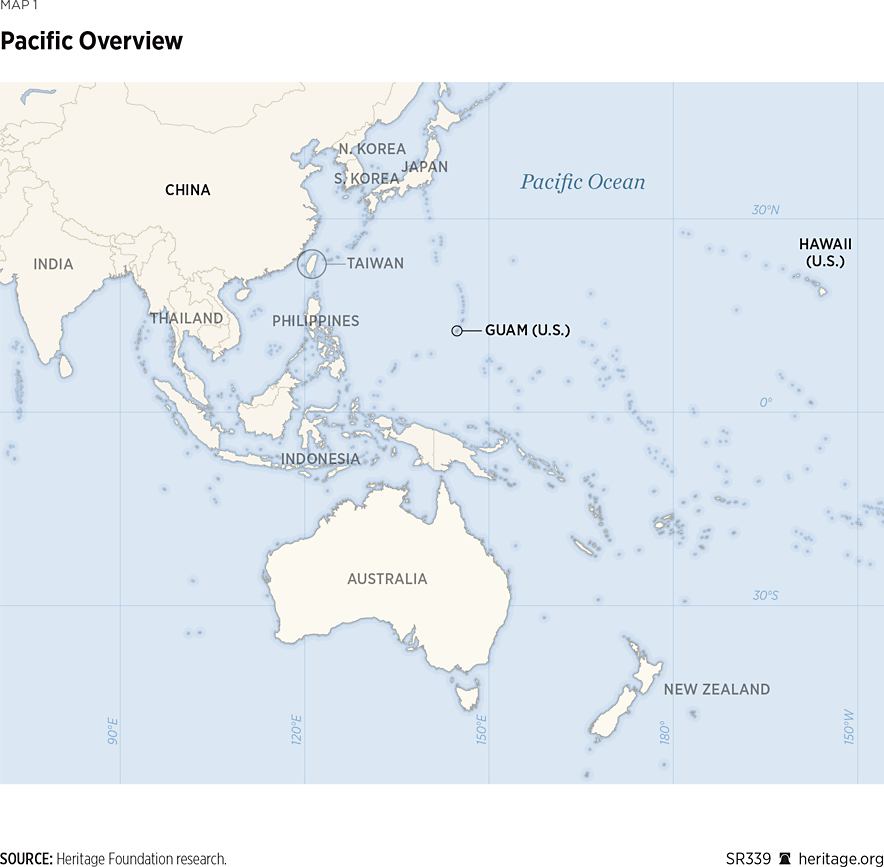
In the mid-2020s, the United States faces a new reality: It largely leads a loose alignment of like-minded, broadly democratic actors such as the Philippines, Japan, Taiwan, Australia, and South Korea with which it has mutual defense treaties and all of which are opposed to Chinese aggression. At the same time, other regional actors (notably Vietnam) that have not been explicitly aligned with either the United States or the PRC nonetheless have sought closer relations with the United States as a way to balance against ever-expanding Chinese power and influence.[REF]
In President Donald Trump’s second term, the United States is committed to building a military force built for purpose to oppose PRC aggression even while executing military operations in other theaters, including the bombing of Iran’s nuclear program in June 2025, the flawless arrest of Venezuelan dictator Nicholas Maduro in 2026, and Operation Epic Fury in Iran in 2026.[REF] A positive observed trend is that, in general, Russian and Chinese systems in use by Venezuela and Iran have performed poorly against U.S. systems that have performed with incredible levels of effectiveness—an observation that may give some pause to the more hawkish policymakers in Beijing.
The Strategic Challenge
The fundamental strategic challenge facing the United States is akin to that faced by the British Empire in 1937: How does it prioritize the allocation of finite military resources across multiple continents and hemispheres in order to deter adversary aggression in defense of its military outposts, economic interests, and allies and partners without overstretching itself in a way that leads either to military collapse in any one specific theater or to bankruptcy throughout its system?
The British answered this question by fielding ground forces and naval groups in Singapore, Australia, New Zealand, Egypt, sub-Saharan Africa, Latin America, and India as well as Europe.[REF] Ten years later, following the defeat of the Axis powers in World War II, the United Kingdom was victorious—but at the cost of its empire. As the British Empire collapsed, Britain itself faced long-term economic decline.
How, then, does the United States, as the British Empire of old, figure out how to prioritize the allocation of military force without suffering the same fate? Since 2018, both Republican and Democratic Administrations have identified the PRC as the primary foreign military threat to the United States, but the question remains: What can we do about it while not neglecting other global commitments?
During the 2000s and early 2010s, the United States prosecuted the global war on terrorism in the Middle East but paid little attention to the return of great-power competition as Russian power reconstituted and Chinese power dramatically expanded. U.S. defense budgets and planning deemphasized the systems needed to deter great powers, and the lack of spending on the U.S. Navy, the strategic deterrent, and precision-guided munitions stockpiles is a problem that is still being rectified.
Moreover, while the United States leads the world’s most enduring and capable multilateral military alliance, the North Atlantic Treaty Organization (NATO), there is no NATO analogue in the Western Pacific.[REF] Japan, Korea, Australia, Taiwan, and others field capable, modern militaries but lack the cohesive and integrated command and control structure enjoyed by European militaries in the form of the Supreme Allied Commander in Europe. Similarly, they do not field ships, planes, or munitions in sufficient quantities to deter Chinese aggression either by themselves or collectively. Successfully deterring Chinese aggression is therefore predicated on the forward deployment of American forces in theater until these allies improve their capabilities.
Furthermore, the Indo-Pacific region’s challenges are not limited to the PRC. North Korea is a monarchical, neo-Stalinist regime that possesses nuclear weapons and regularly threatens to turn the United States, Japan, and Korea into “seas of fire.”[REF] At best, North Korea would prove to be a complicating factor in any crisis in the region; at worst, it would prove to be the source of high-intensity conflict with the United States and its allies. Pakistan, while historically an American partner, is also a highly unstable nuclear-armed state governed by military leaders that support Islamist terrorist groups and are locked in a rivalry with neighboring India while inching toward an ever-closer relationship with Beijing.[REF]
In addition, a Chinese invasion of Taiwan, while frequently invoked and a possible flashpoint, is not the only potential source of conflict. China routinely provokes such U.S. allies as the Philippines and has territorial disputes with other nations like Japan and India. India and Pakistan have fought several large conflicts and several smaller skirmishes over their disputed border in Kashmir; in May 2025, for example, they exchanged airstrikes and artillery for several days and left more than 80 dead.[REF] India and China also have a contested border that was the site of deadly clashes in 2020 and remains a geopolitical flashpoint.[REF] Other, lesser conflicts, whether they emerged from ethno-sectarian violence, miscalculation, or some other heretofore unknown reason, could also erupt and threaten American interests.
Of course, the forward deployment of more forces in the Western Pacific to deter the PRC and North Korea and deal with other unknown threats means that fewer forces are available to combat narco-terrorists in the Western Hemisphere, deter Russian aggression in Europe, and conduct operations in the Middle East to defend vital interests and partners in the region. This demand requires prioritization of resources and more self-sufficiency by allies and partners worldwide.
The Indo-Pacific Challenge
Given the evolution of the regional security environment and the global strategic challenges facing the United States today, we must examine the specific contemporary security challenges within the Indo-Pacific itself.
The lack of a NATO analogue in East Asia is due in part to long-standing historical difficulties among various U.S. partners in East Asia and the Indo-Pacific. Although many of these animosities have lessened in recent years—for example, with the improvement in relations between Japan and South Korea—they continue to limit the ability of these states to coordinate security policy and defense priorities. However, it should also be noted that NATO was formed only a few short years after the end of World War II and included nations that had just been involved in a death struggle with one another. It is therefore certainly possible that ever-closer cooperation could continue in the Western Pacific.
Additionally, key U.S. partners in the region—particularly Japan, Taiwan, Australia, and the Philippines—have significantly smaller economies than modern China has and have begun to increase their defense budgets in response to the PRC’s expansive military spending only recently.[REF] Consequently, the PRC fields military forces that are quantitatively and in many cases qualitatively superior to those of any other nation—and in many cases any combination of nations—in the region. This disparity makes the challenge in the Indo-Pacific far more complicated than the one in Europe, where the united NATO alliance should dwarf Russia in both economic and military terms and serve as a guarantor of stability and American interest, despite ongoing problems involved in the rebuilding of European militaries after decades of chronic underfunding.
Compounding this weakness is the limited interoperability that characterizes the U.S. alliance network in the Indo-Pacific and is exacerbated by the great distances between them. While many of these countries share some similar platforms in key areas (such as the F-35 fighter aircraft), they do not have complete interoperability of munitions and communications systems as is the case with most NATO nations. In NATO, ground forces generally use interoperable munitions such as artillery rounds, rifle munitions, and weapons that can be employed on various national aircraft. There is some interoperability among America’s Asian allies and partners, but it is nowhere close to what is enjoyed among European allies.
In Asia, the lack of a central military command structure akin to NATO’s Supreme Allied Commander Europe, as well as the lack of subordinate functional commands and associated staff, limits operational integration and effectiveness in the Pacific. Instead, the United States has a series of bilateral relationships and agreements in the Pacific. This lack of integration means that responses, data sharing, targeting, and queueing all take more time. Moreover, the PRC is certainly a more capable adversary than the Soviet Union was and therefore poses a greater military threat. The Warsaw Pact, which was comprised of nations capable of entering a fight on the Soviet Union’s behalf (an advantage the PRC lacks), was more than offset by the militaries of Germany, France, the United Kingdom, and other large and comparatively wealthy powers within the NATO alliance.
In addition, the PRC has shown itself to be far more adept at employing state-of-the-art military technology than were the Soviets, who for decades tried to offset Western qualitative advantage with quantitative mass. The PRC, with its 1.4 billion citizens and massive manufacturing capacity, enjoys both quantitative mass and advanced capabilities. Also, any conflict that erupted in East Asia or the Western Pacific would be in China’s “front yard,” enabling the PRC to benefit from internal supply lines and short operational distances. By contrast, it would take weeks for U.S. naval vessels to arrive following a departure from West Coast ports or from the Atlantic seaboard or across a complicated air bridge using bases in neighboring countries. Supply lines and operations would stretch thousands of miles across a contested Indo-Pacific.[REF]
In essence, China could generate:
- Land-based cruise and ballistic missile fires,
- Air combat,
- Amphibious assault operations,
- Air assault,
- Armored and mechanized divisions,
- Special operations,
- Bombing sorties, and
- Surface and subsurface naval operations.
These effects can be generated from bases on the Chinese mainland and essentially be in the theater of operations immediately. The PRC therefore could carry out combat operations for days or even weeks before the United States was able to surge additional forces into theater from the U.S. mainland or other theaters.[REF] For this reason, the United States and its coalition partners must field capabilities that can defeat and therefore credibly deter these specific types of actions that could threaten any of the previously itemized key U.S. interests.
Further, there is a distinct asymmetry in the attack surface that directly benefits the PRC during any conflict in the Western Pacific. The United States has a number of bases within theater, many of which host forward deployed soldiers, sailors, airmen, and Marines, and these bases are by their nature attractive targets for PRC strikes.[REF] Such locations are largely hosted by the Japanese, Korean, Australian, and Philippine governments on permanent or rotational joint bases.
Even though such forward deployments give the United States a force in being that can respond rapidly to Chinese aggression, however, the PRC can nevertheless target and attempt to destroy these bases and their personnel to degrade combat power while not directly targeting the U.S. homeland. By contrast, there are targets on the Chinese mainland that the United States can choose to strike during a conflict, but doing so could be seen as highly escalatory by the PRC and open the door for reciprocal PRC attacks on bases within the U.S. homeland. In this sense, the PRC has the option to attack and potentially destroy large amounts of American military power without striking the American homeland, while the United States and its allies may strike the Chinese mainland only if they are seeking to destroy Chinese combat power before it can be generated.
This asymmetry in the attack surface therefore creates dilemmas for the U.S.-led coalition that the PRC may seek to exploit. It can be addressed immediately by declaring in the planning stages for future operations that Chinese mainland targets are not necessarily off limits to American weapon platforms in the event of a conflict initiated by Beijing. This declaration can also be used strategically to signal the seriousness of U.S. intent and the difficulty Beijing would face in attempting to limit the scope of a conflict if it chose to initiate one.
All of the above—the difference in alliance structures, the tyranny of distance, the asymmetry of the attack surface, and the significantly greater economic and qualitative military threat posed by the PRC compared to that posed by the Soviet Union—equals a more complex and significantly greater military challenge for the American-led coalition than the one NATO faced at the height of the Cold War. This strategy therefore will focus on what an American-led coalition can do to defend the unparalleled potential economic and technological partnerships between the U.S. and its Indo-Pacific allies, first and foremost by deterring and, if necessary, defeating Chinese aggression against America’s allies and partners.
More Than Military Capabilities
Of course, a strategy requires more than just military capabilities, and economics and technology may prove decisive factors in any conflict. Diplomacy, trade, and values are also critically important in defending vital national interests and engaging with allies, partners, neutral actors, or even adversaries. Perhaps most important, Washington should clearly convey two messages to Beijing.
- First, the United States should emphasize that it is a status quo power. This means that the United States wants to maintain peace in the region, support its allies, defend existing interests, and avoid any unilateral change to the status quo in the Taiwan Strait.
- Second, the United States should make clear that it is prepared to defend its interests and allies with force if necessary but be ambiguous with respect to precisely what elements of that force or delivered consequences may be. The United States should not create a “red line” regarding a military response to PRC aggression but a large and uncomfortable (for the PRC) “red zone” where a variety of responses and timelines exist at the United States’ choice. A U.S. strategy regarding the PRC must capitalize on the value of uncertainty in the minds of PRC leaders.
Potential Conflict Scenarios Against Key U.S. Allies and Partners
The United States must be prepared for a variety of contingencies involving potential hostilities or aggression. The following examples are not meant to be exhaustive or even necessarily to represent the most likely aggression scenarios. Instead, they are meant to be illustrative of the types of crises and conflicts that the United States should be prepared to deter and, if necessary, overcome or defeat.
Attempted PRC Absorption of Taiwan. An attempt at unilateral absorption of Taiwan by the PLA is perhaps the most canonical of the U.S.–China conflict scenarios envisioned by Washington. In this scenario, the PLA conducts any number of activities designed to absorb the island forcibly into the People’s Republic of China. These activities could include a naval and air blockade to prevent people and goods from entering or exiting Taiwan, thereby forcing a political crisis on the island. The PRC might hope that a divided political system could be coerced into accepting integration with the mainland and direct rule by the CCP.
Alternatively, and perhaps simultaneously, the PRC could execute an information campaign designed to undermine the will of the people of Taiwan and then initiate limited kinetic action such as air and missile strikes on key island targets. These strikes would hint at a much larger-scale campaign that would cause widespread death and destruction on the island. The strategy in this scenario would be to convince the people of Taiwan that absorption was inevitable, that defense by the Taiwanese was hopeless, and that the only way to survive with their lives intact was to accept “reunification” with the mainland.
Finally, the most stressing variant of this scenario is a forced absorption of Taiwan through a full-blown military invasion. In this scenario, the PRC uses air, maritime, and land assets to weaken Taiwanese defenses and then lands ground forces on the island to secure key locations by force. Ground forces would likely arrive through some combination of airborne drops delivered by relatively low-altitude aircraft, amphibious landings, and air assault units delivered by helicopter.
This is the most intense of the three scenarios and incorporates significant amounts of fixed-wing and rotary-wing aircraft, missile salvos, and fleets of surface and subsurface combatants. It is also the scenario that would most likely result in a direct conflict between the PRC and a U.S.-led coalition and therefore the most likely to escalate into a full-blown, high-intensity, and potentially protracted conflict. It is important to note that the PRC seizure of Taiwan can be considered both the goal of a smaller campaign and/or potentially the trigger for a wider regional war.
This is not to say that these three scenarios are mutually exclusive. They could unfold sequentially with blockades followed by strikes and eventually by invasion. But in all three, the goal seems to be the same: forcible absorption of Taiwan by the People’s Republic of China.
Recent trends in defense technology seem to have benefited defenders more than attackers and offset some of the natural advantages large states have when attacking smaller states, especially through the proliferation of much cheaper munitions and armed drones.[REF] Chinese military analysts may well be noting how much Russia has struggled to seize and hold Ukrainian territory even though the two countries share a long land border. A Chinese amphibious assault on Taiwan would be a far more difficult prospect. The Russian military, however, overestimated itself ahead of the invasion of Ukraine, and Chinese planners could well make the same mistake.
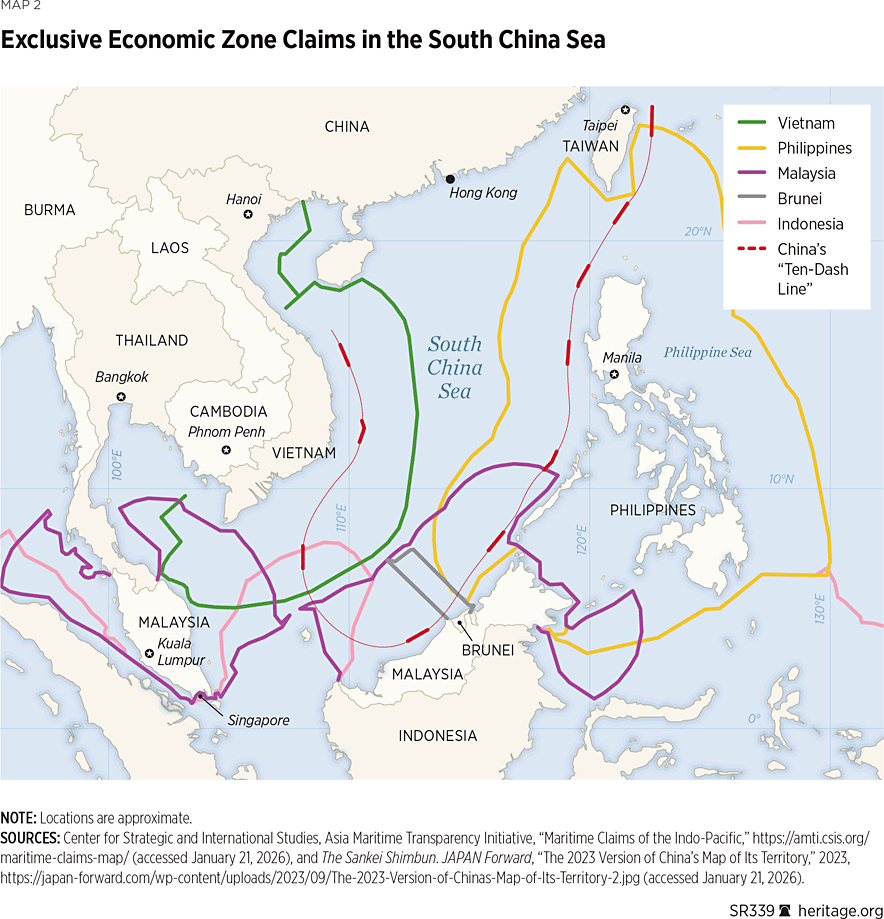
Seizure and Annexation of Disputed Islands in the South China Sea. The PRC is engaged in several territorial disputes with neighboring nations, particularly in the South China and West Philippine Seas. In this notional scenario, the PRC could employ its navy, maritime militia, and coast guard fleets to expel non-Chinese vessels (military, fishing, or privately owned) from disputed waters or territory; seize key islands (such as Second Thomas Schoal or the Spratly Islands); and assert territorial ownership of the waters within its so-called Nine-Dash Line.[REF] This scenario would likely incorporate swift naval actions to “detain” non-Chinese nationals, secure key islands with marine forces, reinforce their positions, and present the international community with a fait accompli.
Depending on the disputed waters or territories, the Philippines could invoke its mutual defense treaty with the United States, thereby increasing the likelihood of high-intensity conflict between the United States and China.
PRC–Japan Conflict. Long-standing and recently growing tensions could become a focal point for conflict between the PRC and Japan. In particular, China claims the Japanese Senkaku Islands and routinely engages in intimidation campaigns against Tokyo in attempts to assert its claims. Japan, despite historic constitutional restrictions on its ability to conduct offensive military actions, has signaled more openly that any Taiwan contingency could require Japanese responses and that Japan may well be on its way to reinterpreting its constitution.[REF] Japan is also increasing its defense spending significantly in response to the PRC’s dramatic military expansion and the threats of violence emanating from Beijing.[REF]
Such a conflict would likely be characterized by large volumes of deep precision missile strikes, air combat, and significant maritime action. The PRC’s goal in such a conflict would be to pry Japan away from its eight-decade alliance with the United States, potentially seize the Senkaku islands, and either bring Japan under PRC influence or at least have it remain “neutral” in a PRC-dominated region. It should also be noted that China’s ally, Russia, also has a territorial dispute with Japan and could be used to complicate a Western response during a crisis.[REF]
North Korean Aggression. North Korea has threatened aggressive actions against South Korea for generations. Since becoming a nuclear power in the early 21st century, it consistently has threatened to strike the United States, South Korea, and Japan with nuclear weapons.[REF] In this scenario, North Korea would initiate a crisis that ultimately escalates into a high-intensity conflict between the quantitatively superior North Korean military and qualitatively dominant South Korean military. Whether because of strategic miscalculation, battlefield losses, or the Kim regime’s ultimate priority of self-preservation, North Korea could threaten nuclear escalation unless South Korea and the United States agree to a ceasefire on terms favorable to Pyongyang.
Implications for U.S. Forces. These scenarios have one thing in common: They all include threats that involve massive amounts of enemy maritime power, air power, and missile attacks against U.S. territories or treaty allies as well as the ability to move land forces to achieve decisive effect. The United States and its allies must field forces that can address each of these major contingencies to deter, blunt, and defeat capable enemies.
The implication is that the United States needs dispersed, hardened basing across the Pacific at key locations not only so that forces can surge rapidly into multiple established, well-stocked bases, but also to ensure that there are no single points of failure or critical hubs that present attractive targets to America’s enemies. Further, dispersed basing enables the United States and its allies and partners to generate fires from multiple axes of attack, deploy missile interceptors at multiple locations to diminish adversary missile threats, resupply with prepositioned equipment already in theater, and refuel and restock critical munitions without having to return to the American homeland.
Other Notable Potential Conflict Scenarios
There are other potential conflict scenarios for which the U.S. must be prepared that would have major consequences for the region but do not directly involve a U.S. treaty ally. A key part of any U.S. strategy regarding the PRC must be to encourage or assist non-allied countries that are potential PRC targets to acquire defensive capabilities that are capable of inflicting enough damage to deter or blunt the PRC’s appetite for conquest and control.
PRC–Vietnam Conflict. The most recent war the PRC has fought was against Vietnam in 1979, but the two nations have a history of significant conflicts and disputes that spans millennia.[REF] Current maritime disputes are driven largely by the PRC’s declarations of ownership of waters and territory counter to established international law (the Nine-Dash Line). In this scenario, a conflict with Vietnam might be triggered by a border or maritime dispute and could serve as a laboratory for PLA tactics and a demonstration of PRC military prowess.
Put another way, it is possible that the PRC would not want to fight its first 21st century conflict against a key U.S. ally or partner—such as Japan or Taiwan—and run the risk of taking on the United States’ military as its first test of modern Chinese military modernization. Instead, it might choose to attack a smaller, nonaligned state and gamble that the wider world would not intervene. This effort could serve as a means to assess its military performance in actual combat before risking the humiliation of a possible defeat by well-trained U.S. forces Additionally, this scenario allows the PRC an opportunity to send strong signals to other countries in the region: Concede to PRC coercion or face the PLA.
Conversely, a poor performance by the PLA against Vietnam, which has a long history of successfully resisting and humbling much larger powers (including China), would signal that the PRC military has not progressed as much as becoming the world’s hegemon would demand. This outcome would likely set back the PRC’s desired outcomes elsewhere in the world. In addition, a Vietnam whose interests were aligned with those of the United States rather than those of China, with which it has a turbulent 3,000-year history, would create a number of interesting strategic opportunities for the United States.
PRC–India Conflict. The PRC and India have a series of territorial disputes along their 2000-mile border, called the Line of Actual Control (LOAC), and fought a brief war in 1962 as a result.[REF] The “actual” location and distance of the contested area are uncertain because of snow melt in the Himalayas, formation and disappearance of various lakes and rivers, and the PRC’s habit of stating what it wants to be true and declaring it to be a fact.
In recent years, the dispute has again escalated into shooting, most notably in 2020 when 20 people were killed. All along the LOAC, the PRC has been building civilian, military, and dual-use infrastructure that is being used for the de facto occupation of disputed territory or could be used for the rapid deployment of military assets against India if tensions were to flare again.
Concerningly from the point of view of New Delhi, the PRC is pursuing a strategy to deepen its connections with countries throughout South Asia and the littorals of the Indian Ocean in a series of moves that could prove detrimental to the security and regional strategy of India if left unopposed. Typically, these moves amount to economic coercion under the guise of economic development. Port construction in Pakistan and Sri Lanka provides examples; ports are constructed with the expectation of economic growth, but the PRC holds all the loans and demands payment.[REF] Most concerning from the Indian point of view is the ever-deepening partnership between China and Pakistan, India’s long-standing nuclear-armed rival in South Asia and opponent in a series of wars since 1947.[REF]
Expansion of the Myanmar Conflict. In 2021, Myanmar’s military, the Tatmadaw, deposed the democratically elected National League for Democracy (NLD), beginning a period of rule by military junta.[REF] Since the coup, China, through both its private and its government or military sectors, has provided vital support to the Myanmar junta in the form of aircraft and aircraft parts, munitions supplies, dual-use materials, and combat ground systems.[REF] In addition to these military supply chains, China has grown increasingly embedded within Myanmar’s junta, providing technical maintenance services as well as intelligence cooperation, particularly in areas of Myanmar bordering on southwestern China.[REF]
While it is highly unlikely that PLA troops will play a direct combat role in Myanmar’s civil war, the CCP continues to aid and abet the junta’s war efforts, leaving a clear Chinese footprint across the conflict. Despite the lack of direct, kinetic involvement on China’s part, the conflict’s lack of any near-horizon solution suggests continued and deepened Chinese involvement. As the war continues, China may choose to entrench itself further or intervene more aggressively in Myanmar’s internal affairs. China has invested heavily in infrastructure throughout Myanmar in an attempt to create a trade corridor from Yunnan Province to the Indian Ocean, and the endangering of this infrastructure corridor could easily elicit further Chinese engagement in Myanmar. Similarly, given how much China has already invested in support of Myanmar’s junta, the CCP could find itself having to intervene further if the junta begins to falter because of internal fragility or military losses to rebel groups.
A continued, unresolved conflict in Myanmar could not only further entrench China, but also cause destabilizing effects on the broader region. Bangladesh, Malaysia, and Thailand have received huge numbers of Burmese refugees, and the war’s generally destabilizing effects have empowered extralegal elements throughout Southeast Asia that thrive in conditions marked by weak institutional control.
Key Allies and Partners
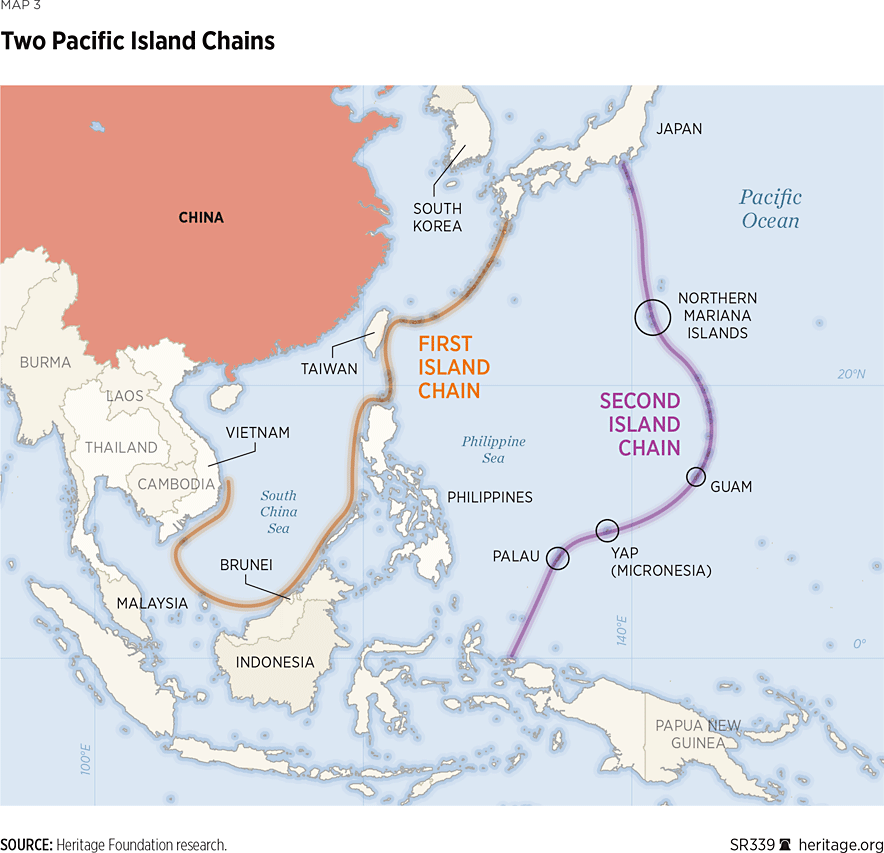
The 2026 U.S. National Defense Strategy says that the U.S. will prioritize homeland defense and “deterrence [of China] by denial.” To this end, the U.S. “will erect a strong denial defense along the First Island Chain” and urge and enable key regional allies and partners to do more for collective deterrence.[REF]
Moreover, the United States supports the United Nations Convention on the Law of the Sea, which supports freedom of navigation, fishing, and shipping in international waters.[REF] In 2016, the Permanent Court of Arbitration in The Hague ruled against the PRC’s claims that 90 percent of the South China Sea is comprised of Chinese waters.[REF] This was an important ruling for the Philippines, Indonesia, Vietnam, and other countries that are trying to uphold freedom of navigation and their own claims to territorial waters.
Pursuing regional security goals alone would be cost-prohibitive and therefore ultimately self-defeating. The United States should and must work with allies and partners within the theater to act as force multipliers, key staging areas, and—ideally—effective and credible cobelligerents if war should come. The United States should encourage and enable its allies to complicate PRC planning and thus make aggression by Beijing less likely by developing their own military capabilities.
In Europe, all NATO allies can gather and discuss security issues collectively; in the Indo-Pacific, however, the United States has a “hub-and-spoke” series of bilateral alliances and relationships with key actors—and rarely in a collective venue. The United States should continue to pursue closer alliances on a bilateral basis and at the same time encourage closer cooperation between these nations. America’s interests are served by pushing for greater defense collaboration and coordination among its regional allies and partners while keeping the door open for a more formalized regional collective defense pact.
Australia. The United States and Australia have fought shoulder to shoulder since World War I and have maintained a mutual defense treaty since 1951.[REF] The bonds of common language, culture, values, and interest, along with a mutual defense treaty, have facilitated close, positive relations that have endured across multiple different administrations in both Washington and Canberra. Today, Australia fields a medium-sized, highly capable and professional military that includes F-35 fighters, advanced submarines and surface combatants, and highly capable special forces.[REF] The United States and Australia (along with the United Kingdom) are part of AUKUS, the joint submarine and advanced capability development partnership, and Australia is set to purchase Virginia-class attack submarines from the United States and eventually produce its own AUKUS-class submarines in the coming years.[REF] Australia’s location in the southwest Pacific makes it an ideal location from which to generate combat mass and control key sea-lanes for the Australian and American militaries. The United States Marines maintain a capable rotational force in Darwin on the coast closest to the PRC.[REF]
Australia’s 2026 National Defense Strategy assesses that the strategic environment in the Indo–Pacific is rapidly deteriorating and predicts that the competition between the PRC and the United States will continue to define the region’s security dynamic for the foreseeable future. It recommends that Australia work even more closely with the United States (as well as other critical allies and partners, notably India, Japan, and South Korea) than it has in the past. It also recognizes that an unfavorable shift in the strategic balance in the PRC’s favor would increase the risk to Australia of being coerced and unable to pursue its own sovereign interests. The Australian National Defense Strategy’s organizing principle is a strategy of denial that requires a military that is capable of deterring attempts to “coerc[e] Australia through force” and signaling a “credible ability to hold a potential adversary force at risk.[REF]
Australia has been a dependable ally that shoulders responsibility for its own defense.[REF] It also has invested billions of dollars in the U.S. submarine industrial base in recent years.[REF] The United States should maintain and deepen its alliance with Australia through the successful delivery of Virginia-class submarines as part of the AUKUS Treaty, expanded joint training and basing access, expanded co-development and co-production, and progressively higher levels of defense technology-sharing.
Japan. In the years following World War II, Japan became a pillar of America’s Cold War security architecture in the Western Pacific. Today, Japan is among America’s closest and most dependable treaty allies. It not only serves as a key logistics, transportation, and command node for American power, but also fields a large and highly capable military.[REF]
Japan fields the Western Pacific’s second-largest navy, and its air power is based on such advanced fourth-generation and fifth-generation aircraft as the F-35. Japan also fields a number of helicopter carriers that are capable of serving as F-35 carriers, around which it can field capable surface action groups, and has developed an Amphibious Rapid Deployment Brigade.[REF] Japan is working to enable strike capabilities and field longer-range fires, effective naval fires, more missile defense, and additional air-refueling capabilities.[REF] Japan is becoming a true military powerhouse within the region, and the U.S.–Japanese alliance is in many ways the most important for deterring PRC aggression in the Indo-Pacific and maintaining a free and laws-based open order.
The Japanese government has recently authorized a much wider array of military systems for export. This decision will have a positive impact both in the region and in the Japanese defense industrial base, providing high-end systems to countries throughout the Indo-Pacific that need to defend their sovereign interests and making defense production more cost-effective in Japan.
Japan’s National Defense Strategy recognizes that the appropriate response to the increased defense spending and rapid expansion of military capabilities by other countries in the region is for Japan to increase its own defense spending to reinforce key capabilities and defense infrastructure.[REF] Despite Chinese protests to the contrary, Japanese defense spending is a direct result of China’s decision to pursue a massive military buildup. The strategy document highlights the centrality of close security cooperation with Japan’s only treaty ally, the United States, in balancing against regional challenges.
The United States should explore expanded coproduction of key missiles with Japan and enhanced collaboration in shipbuilding. As Japan continues to increase its defense budget, the United States should provide high levels of defense technology-sharing and sales, prioritizing Japan for higher-end systems like the F-35 and precision-guided munitions. An adequately armed Japan will prove to be an impressive deterrent to Chinese aggression and should be welcomed by the entire region as a stabilizing force.
The Philippines. With a mutual defense treaty that was signed in 1951, the alliance between Washington and Manila is strong, and both sides clearly see the benefit of enhanced cooperation.[REF] Both countries recognize the importance of the alliance and are seeking to reinforce and deepen their shared defense relationship. Although some of its equipment is somewhat aged, the Philippine military is highly motivated to modernize and defend sovereign Philippine territory from adversary encroachment. Manila is committed to military modernization and has recently created a Joint Forces Command, a Special Operations Command, and a Maritime Security Command to coordinate the capabilities of the various military services in a truly joint context.[REF] Manila is seeking capabilities that it can employ to deny adversary air and maritime incursions and defend its sovereign territory.[REF]
The Enhanced Defense Cooperation Agreement (EDCA) recently signed between the United States and the Philippines, under which the two nations will improve support infrastructure such as ammunition warehouses, command and control sites, fuel storage, and runway improvements at a number of sites in the Philippines, serves as a concrete example of increased partnership between the two nations and the willingness of the Philippine to invest in its own defense.[REF] From the American perspective, the EDCA is especially important because it authorizes access to bases for key U.S. systems like those fielded by the U.S. Army’s new Multi-Domain Task Force (MDTF) deployed to northern Luzon. The MDTF’s long-range fires and air defense systems have an outsized effect on deterring China from threatening U.S. allies and partners in the region.[REF]
The Philippines may possibly purchase F-16 fighter aircraft from the United States. This development is especially important for building up Philippine attack and defense capabilities while strengthening the alliance. Given the Philippines’ constrained budget options, the United States should consider foreign military financing and other incentives. This sort of Foreign Military Sales (FMS) diplomacy has proven to be effective in many parts of the world in cementing security cooperation between the U.S. and key partners.[REF] There are significant opportunities for the United States to help the Philippines help itself, including through the coproduction of drones in the Philippines. South Korea is investing in the shipyard at Subic Bay, which when completed could also offer significant opportunities for collaboration, including through maintenance on U.S. ships.[REF]
The Comprehensive Archipelagic Defense Concept (CADC), which is the Philippines’ joint strategic concept, was adopted by the Marcos Administration in early 2024 and implemented by the Philippine Department of National Defense.[REF] The strategy makes the Philippine armed forces more outward-looking and facilitates the integration of land, air, and naval capabilities into joint operations to defend Philippine sovereignty from external threats. Internal security operations previously conducted by the Philippine Army and Philippine Navy are now conducted by the Philippine National Police and Philippine Coast Guard, keeping resources available for the military services to complete their priority mission of defending the country’s sovereignty and territorial integrity.[REF]
South Korea. The Republic of Korea–United States alliance was born in the fires of the Korean War, and the two countries have operated under a mutual defense treaty since 1953. There are 28,500 American servicemembers permanently deployed to South Korea, serving on airbases that host American fighters and in front-line positions along the demilitarized zone, and South Korea fields one of the world’s most advanced and capable militaries.[REF] Its army constitutes one of the most well-armed and highly trained ground forces in Asia and fields indigenously produced tanks and self-propelled artillery. Its air force flies a combination of American-built and Korean-built fourth-generation and fifth-generation fighters and can hold its own with any air force in the world. South Korea is carrying the lion’s share of the burden of the peninsula’s conventional defense even as the United States remains cautiously open to diplomacy with North Korea.
While South Korea quite rightly prioritizes deterring threats posed by North Korea in its defense planning and investment, modern South Korea also is looking increasingly beyond the Korean peninsula and seeing itself as a major power in Asia, particularly in view of the ROK’s worldwide economic interests. That economic windfall is exactly why Seoul is becoming more concerned with aggression across the broader region.
South Korea has demonstrated that it can leverage its impressive defense industrial base to great effect, bolstering the military capabilities of regional countries like the Philippines and Malaysia.[REF] South Korean industrial might has also become a benefit to the United States; investment in American shipbuilding by South Korean companies, for example, advances both South Korea’s and America’s economic and national security goals.
Taiwan. Following the diplomatic recognition of Communist China in the 1970s, the United States ended its formal alliance with the government in Taipei, but it also continued to maintain a strong relationship with the island.[REF] Taiwan fields capable and credible defense forces that include a formidable ground army, fourth-generation fighters, and a modest naval capability. It is also acquiring more capabilities, particularly missile defenses, short-range air defenses, offensive drones, and precision-guided munitions. However, more is needed, and because its military equipment is either produced indigenously or purchased from the United States, Taiwan has few options available to it when choosing where to purchase the systems it needs.
The U.S. can help by placing Taiwan at the top of the list for the systems it needs most, such as the U.S. M142 High Mobility Artillery Rockey System (HIMARS), prioritizing Taiwan over other allies or partners that have ordered the system.[REF] There is a backlog in weapons systems purchased by Taiwan and not yet delivered by the United States that has long amounted to more than $20 billion.[REF] The approval of more than $11 billion of new FMS in December 2025 means that this backlog now amounts to approximately $32 billion. Given the centrality of the need to deter Chinese aggression against Taiwan in U.S. strategy, clearing this backlog and delivering these already purchased systems to Taiwan needs to be a top U.S. priority.[REF]
Fortunately, in addition to being a major purchaser of U.S. systems, the government in Taipei is also reinvesting in indigenously produced defense capabilities to meet the modern PRC threat. Taiwan’s defense strategy since 2025 has shifted to a more asymmetric approach to defense planning with the intent of turning Taiwan into a porcupine that China will be unable to swallow.[REF] This strategy focuses on purchasing large numbers of relatively low-cost but credible capabilities, including long-range precision fires, sea-denial capabilities, integrated air and missile defenses, and anti-armor capabilities, to offset the PLA’s enormous capacity advantage.[REF]
The 2025 U.S. National Security Strategy (NSS) uses clear language when describing the abiding U.S. national interest in “deterring conflict over Taiwan, ideally by preserving military overmatch.” The NSS states that the U.S. “does not support any unilateral change to the status quo in the Taiwan Strait,” not only “because of Taiwan’s dominance of semiconductor production, but mostly because Taiwan provides direct access to the Second Island Chain and splits Northeast and Southeast Asia into two distinct theaters.” The NSS also recognizes the substantial U.S. economic interests at stake given that “one-third of global shipping passes annually through the South China Sea.”[REF]
Key Allied Capabilities
The question then becomes: What capabilities should the U.S. military and the militaries of our allies and partners invest in to deter and defeat acts of aggression and secure their shared vital interests? This section explores critical capabilities and offers recommendations for key allies, partners, and the United States as to which capabilities they should prioritize.
Air Assets. The United States needs to recognize that in any conflict with China, it will have to rely heavily on airpower with important supporting contributions from naval and land-based forces. With this in mind, the United States should increase the number of fifth-generation aircraft in the theater, including F-35s and F-22s in South Korea and Japan, while expanding its ability to generate bomber sorties from bases across the theater. This concept requires working in close coordination with Japan and South Korea as well as with Australia. Distributed basing and the ability to execute agile combat employment operations can reduce reliance on key bases while creating targeting dilemmas for the PRC. Additionally, by distributing bombers, including large numbers of B-21s by the 2030s across the Indo-Pacific, the United States can hold all of China and North Korea at risk from multiple axes of attack using stealth platforms that can penetrate enemy air defenses and service highly defended adversary strategic targets with precision and decisive effect.
At the same time, the United States should continue to provide advanced manned and unmanned capabilities to key allies in the theater while expanding and elevating the technological level of systems provided. This includes providing additional F-35s and other capabilities to Japan, South Korea, and Australia.
Australia, as the authors have advocated previously, should be considered a candidate for B-2 and eventually B-21 ownership to give it an independent deep penetrating strike option. For the Philippines and Taiwan, the United States should proliferate large numbers of cost-effective manned and unmanned strike, reconnaissance, and surveillance systems, augmented by smaller numbers of high-end systems like fourth-generation fighters.[REF]
Air and Missile Defenses. Due to the PRC’s massive rocket and missile arsenal, which includes theater-range ballistic and cruise missiles that can be launched from air, maritime, or land-based locations, air and missile defenses are critically needed within the First Island Chain. These protections are particularly necessary at air bases, command and control nodes, logistics points, and home stations of forward deployed Marines and soldiers. Examples include Anderson Air Force Base in Guam, Osan and Kunsan air bases in South Korea, Kadena and Iwakuni in Japan, and other key locations in the Philippines and Australia. For bases that are identified as part of the distributed basing or agile combat employment (ACE) concept, missile defense systems such as Patriot and Terminal High Altitude Area Defense (THAAD) should be deployed.
Short-Range Air Defenses (SHORAD) will be needed in Taiwan and the Philippines to deal with cruise missile, unmanned systems, helicopter, and fixed-wing threats. Theater missile defenses capable of intercepting ballistic missiles while those missiles are exoatmospheric should be deployed across South Korea and Japan because of their criticality to American military basing within the theater.
Long-Range Precision Fires. Long-range precision fires—the cruise missiles, ballistic missiles, rockets, and other capabilities that can strike targets at distance—are critical to holding enemy targets at risk. Those targets include military staging areas, missile launch sites, air-defense radars, command and control nodes, enemy surface fleets, and key industrial and logistical nodes.
Such fires could be land-based, coming from U.S. Army or U.S. Marine Corps fires teams launching such ballistic missiles as the Precision Strike Missile (PrSM); the Dark Eagle Long-Range Hypersonic Weapon (LRHW); and various cruise missiles launched from systems like the Typhon launcher within the Army’s new MDTF formations.[REF] These systems also can and should be proliferated to key allies to supplement their own national capabilities. As important, these fires can be sea-based or aerial-based as demonstrated by the Tomahawk Land Attack Missile, which can be fired from ships, submarines, and B-52 long-range bombers.
The ability to strike targets deep inside North Korea or the PRC using weapons generated from within the theater and ideally deployed pre-crisis is critical to deterring potential adversary aggression. This is because the launch time of these and similar forward-deployed assets is inside the decision-making space of the adversary. Also, not as many U.S. forces would need to penetrate enemy long-range air defenses, because some would be positioned there before the conflict started.
While there has been much talk of enemy air defense bubbles and anti-access/area denial (A2/AD) capabilities posed by the PRC—and the United States should not dismiss these threats —the United States has the opportunity to create its own A2/AD bubble inside the Chinese bubble by deploying such capabilities pre-conflict. To this end, the United States ought to expand on the deployment of long-range fires, such as the Typhoon missile launcher in the Philippines, by stationing or rotating additional launchers in the Philippines, Australia, Japan, and South Korea.
Anti-Ship Cruise Missiles and Smart Mines. The People’s Liberation Army Navy (PLAN) is now the largest navy in the world, having surpassed the U.S. Navy in numbers of battle force ships during the period from 2015–2020.[REF] If the PRC is going to seize Taiwan or achieve decisive effect within the Western Pacific, the PLAN will be a critical component of any operation. Accordingly, the ability of the U.S. and regional partners and allies to engage and destroy large portions of the PLAN’s surface ships, coast guard, and maritime defense forces is critical to deterring hostile action.
To meet this need, anti-ship cruise missiles (ASCMs) and smart mines should be proliferated across the region, but particularly among those nations that do not field large, modern navies but find themselves geographically close to the Chinese coast. For this reason, Taiwan and the Philippines should be prioritized for the transfer of ASCMs, smart mines, and other types of anti-ship capabilities.
Non-Strategic Nuclear Weapons. The PRC is the world’s fastest-growing nuclear power and is fielding low-yield nuclear weapons on theater-range missiles that can range targets from Japan to Guam and Australia. It also has the world’s largest field of intercontinental ballistic missile (ICBM) silos. Given these two facts, it would seem that the PRC is no longer seeking an arsenal that is optimized to deter a strategic attack on the Chinese mainland, but instead is seeking an arsenal that is optimized to engage in nuclear warfighting.[REF] Meanwhile, North Korea now fields ICBMs tipped with nuclear munitions that can range the American homeland and regularly threatens to turn America—along with our allies in South Korea and Japan—into a “sea of fire.”[REF]
This rhetoric is troubling, because neither the United States nor its allies have any nuclear weapons forward deployed in the theater. At the same time, most nuclear weapons that the United States has in its arsenal are high-yield, strategic nuclear weapons that are meant to deter an attack on the homeland and not optimized to counter low-yield, theater-range nuclear weapons.
In order to deter the PRC or North Korea from believing it can escalate a conflict to a limited theater nuclear conflict using low-yield warheads, the United States should reintroduce low-yield theater nuclear weapons to the Western Pacific.[REF] These weapons should go to bases in Guam and South Korea. Given the severity of the nuclear threat from North Korea, the United States should begin discussions with South Korea to gauge the ROK’s willingness to join (and the value of its joining) the U.S. in a NATO-style nuclear-sharing arrangement in which South Korean pilots flying South Korean aircraft could employ American nuclear weapons if the Presidents of the United States and South Korea deemed it necessary to do so.[REF]
Maritime Assets. The United States desperately needs more naval capabilities. It needs more attack submarines on regular patrol in the Western Pacific, more destroyers, more naval lift and support vessels, more ships to carry Marines, and an additional carrier strike group (CSG) permanently stationed in theater, as well as the logistics ships to support all of those at sea in the event of combat. To this end, the United States not only should expand its shipbuilding industry and partner with allies such as South Korea and Japan to purchase additional ships for the U.S. fleet, but also should also establish or expand maintenance, repair, and operations (MRO) agreements with Japan, Korea, and Australia (and potentially the Philippines and Taiwan) so that American ships can be maintained and repaired within theater without having to return to the American homeland for servicing if conflict were to erupt. MRO agreements with partners like Vietnam and Indonesia, especially for logistics ships, also should be pursued.
The in-theater maintenance being performed on U.S. Virginia-class submarines at HMAS Stirling in Western Australia should serve as the template for these agreements, which would benefit both the U.S. Navy and the host nations.[REF] These MRO agreements keep U.S. Navy vessels continuously in theater with weeks of sailing time to the South China Sea reduced when compared to the number of weeks required for ships departing from the U.S. An additional benefit is that the in-theater MRO removes ships from the CONUS[REF] shipyards where construction is being performed, reducing delays and over time delivering more ships at a faster rate.
The United States should work with Japan, South Korea, the Philippines, and Australia to improve the quantity and quality of their navies. This will mean sharing increasing amounts of defense technology, recognizing that there is now more risk involved in restricting access to critical defense technologies by our most important allies than there is in sharing them.
The United States also should reestablish the First Fleet in the Western Pacific, rotating naval assets through the South China Sea at a far higher rate with rotational naval assets in Western Australia and permanent naval assets based out of Japan. This should include moving the destroyers currently based in Rota, Spain, to a new permanent home in the Indo-Pacific. Excess capacity for hosting these and other restationed ships moved from the Atlantic exists in Honolulu.
Within U.S. defense budgets, procurement of both Virginia-class submarines and Arleigh Burke–class destroyers needs to stay at a two per year minimum, although three per year would be preferable. Funding for new carriers and amphibious assault ships must likewise be maintained, as these are the cornerstone of U.S. expeditionary power projection and are far more difficult for Chinese missiles to hit than stationary targets like airbases. Once production of new unmanned surface combatants begins, these ships should be permanently stationed in the Western Pacific to augment the capabilities of manned warships.[REF]
Critical Enablers. There are several critical enablers that should be pursued simultaneously. This effort would include building and fielding many more air refueling tankers and strategic transport capabilities. The authors of this paper recommend that the number of air refueling tankers dedicated to the Pacific theater be doubled. More autonomous systems, particularly those that serve intelligence, surveillance, and reconnaissance (ISR) functions, should be increased by 25 percent.
Additionally, the United States, in partnership with Australia and the United Kingdom, should establish an “AUKUS Center for Experimentation” in Australia where new land, air, cyber, and maritime capabilities can be developed and rapidly tested.[REF] Finally, the United States Marines should increase their presence within the theater and field three additional Marine Littoral Combat Regiments: one in Okinawa, one on rotation in Darwin, and one in Guam.
Non-Material Solutions. There are some non-material solutions that the United States should also pursue, largely in conjunction with allies and partners. These capabilities include increasing the number of bilateral and multilateral exercises (with the emphasis on multilateral), including with and between the Japanese and South Korean navies, and multidomain air defense exercises with the Philippine armed forces. Additionally, the United States should increase the frequency and volume of officer exchanges between the various militaries with special attention to partners serving in each other’s tactical formations and aboard ship during at-sea operations.
A School of the Philippines could be established by which American military officers can train and train with Philippine and regional partners in how to defend sovereign air and maritime spaces from adversary incursions.[REF] This sharing of experience would be especially impactful in view of the shift in Philippine strategic thinking away from internal security operations and toward a focus on defending Philippine sovereignty against external threats.
All of the above capabilities and strategies are designed to deter aggression. Submarines, munitions, long-range fires, air-refueling tankers, missile defenses, even nuclear capabilities, and especially training are meant not to provoke war—but to prevent one. Should a conflict erupt, these capabilities and the relationships forged while building them will be required to defeat such aggression.
The Strategic Deterrent
For years, the United States has underinvested in its strategic nuclear arsenal and its homeland missile defense capabilities. Despite U.S. restraint in these areas and pleas for arms control, America’s adversaries are investing in nuclear capabilities at a rapid rate with capabilities designed to target the American homeland. Accordingly, the United States must not only field capabilities designed to deter an attack on the United States, but must, in a world of multiple-armed nuclear adversaries, field offensive nuclear strike capabilities and credible missile defenses that can impose restraint on our adversaries.
The United States should field expanded, modernized, and diversified strategic nuclear capabilities that, on order, can destroy enemy strategic targets while still limiting damage from an adversary that decides to carry out a strike on the American homeland. Taking these steps means that an adversary will be deterred from expanding a theater conflict to one that incorporates the American homeland.
Emerging Partners and Nonaligned States
The United States understands and acknowledges the historical nonalignment of many states across Southeast Asia, South Asia, and the Pacific Islands. The United States therefore should not seek to force countries in the region to choose sides between it and the PRC, but should instead provide opportunities and in some cases assistance for Indo-Pacific countries to resist Chinese economic and political coercion and threats of military force.
Cambodia. Cambodia has deep structural problems and a close relationship with the PRC that has been underscored by the continuous presence of PLAN vessels at Ream Naval Base in Cambodia—a presence that many commentators have described as amounting to a Chinese overseas military base.[REF] Cambodia has had many differences with its neighbors, especially U.S. treaty ally Thailand, with whom Cambodia fought a short war in 2025.[REF]
Nevertheless, there is considerable opportunity for U.S.–Cambodian engagement and relationship building, especially during the second Trump Administration. President Trump won widespread praise in Cambodia for his negotiated end to the conflict with Thailand, and opinion polls among Cambodian policymakers reflect higher favorability ratings for the U.S. than in many other parts of Southeast Asia.[REF] Cambodian policymakers have been sending signals that they do not want to become more dependent on the PRC and are looking for ways to balance their relationship with the PRC through deeper economic and security connections to the United States, Japan, South Korea, Australia, and others.[REF]
The relationship was previously built on foreign aid managed by the U.S. Agency for International Development (USAID) and was problematic from the perspective of both Cambodian and, more recently, American policymakers for many reasons. With the dissolving of USAID, a more equitable economic partnership needs to be built based on infrastructure development through organizations like the Development Finance Corporation (DFC) and security cooperation.[REF] This positive shift was made apparent in 2025 when the U.S. resumed joint military exercises with Cambodia after an eight-year hiatus.[REF]
Indonesia. Both the United States and Indonesia have an interest in preventing domination of the region by a hegemon and want to keep the current system of trade that has catapulted Indonesia into the ranks of the world’s top 20 economies over the past two decades.[REF] Indonesia is the most populous country in Southeast Asia and the largest Muslim country in the world.[REF] In terms of both population and geography, it sits astride many of the region’s most important trade routes. Indonesia has close defense ties with U.S. ally Australia, a relationship that is deeply positive from the American point of view.
The U.S. recognizes that it is in the American interest for states like Indonesia to have the ability to defend their sovereign interests across the board: protecting their exclusive economic zones (EEZs) through enhanced maritime surveillance and naval and air capabilities, building resilient economies that are not dependent on the PRC and are resistant to its coercion efforts, and contributing to security across the region.[REF]
The Trump Administration has rightly recognized the importance of this relationship, and in April 2026, the U.S. Secretary of War and the Indonesian Minister of Defense established a Major Defense Cooperation Partnership (MDCP) between the two nations with a focus on military modernization and capacity-building, training and professional military education, and exercises and operational cooperation.[REF]
Since 2007, the U.S. and Indonesian militaries have been conducting Super Garuda Shield, an annual multinational military exercise, in Indonesia. Super Garuda Shield 2025 featured airborne operations, jungle training, air assault operations, an amphibious exercise, and a HIMARS live-fire exercise.[REF]
India. The U.S. and India share strategic interests, and there is a strong case for expanding defense cooperation. Both countries seek to prevent PRC dominance in the Indian Ocean and to counter efforts that could encircle India through PRC bases and PRC-aligned states. India has clear incentives to bolster its naval capabilities in the region, and the United States is well positioned to support this through arms sales, joint development of certain military technologies, and coordinated diplomatic efforts. A formal alliance, however, is unlikely and is not being pursued by either side.
Both countries prefer an Indo–Pacific free from PRC hegemony and want to deter Beijing from using military force to solve any of its many territorial disputes, both in South Asia and in the Western Pacific. This issue is especially relevant to India, which has multiple territorial disputes with China along their expansive border. Drones are critical to India’s efforts to deter PRC aggression along their border, and the U.S. sale of 31 MQ-9B Sky Guardian drones that was approved in 2024 is a good example of the type of expanded cooperation that can be beneficial for both sides.[REF]
Malaysia. Like Indonesia, Malaysia sits astride the Straits of Malacca and has an EEZ that hosts some of the world’s busiest and most important shipping routes. Malaysia has a close economic and diplomatic relationship with the PRC but also maintains good relations with the United States.
Malaysia and the United States have a long history of defense cooperation, and this relationship deepened in 2025 with the signing of a Memorandum of Understanding on Defense Cooperation.[REF] U.S.–Malaysia security cooperation in the maritime domain is especially important from the perspectives of both sides. Malaysia and the United States conduct an annual joint military exercise, Keris Strike, which Australia joined as the third participant in 2024.[REF]
Malaysia’s status as a nonaligned, independent actor suits the United States, but American policymakers should seek to deepen the relationship, especially because of Malaysia’s critical geography and impressive economy.
New Zealand. The PRC’s extensive use of coercive statecraft in the Indo-Pacific has extended to New Zealand and has both negatively impacted New Zealanders’ views of China and led to significant policy responses from the government in Wellington that are aimed at increasing New Zealand’s ability to defend its interests domestically and within the broader Indo-Pacific. The New Zealand Security Intelligence Service’s 2025 public threat assessment identifies the PRC as the foreign actor that is most likely to engage in foreign interference against New Zealand.[REF]
New Zealand’s 2025 Defense Capability Plan is a major divergence from previous government initiatives in that it both recognizes the PRC as the region’s primary threat actor and seeks to increase New Zealand’s military capabilities. Defense spending is rightfully focused on air and naval capabilities that will help Wellington to secure its massive EEZ and project force in the South Pacific.[REF] New Zealand is integrating its military even more closely with that of its only formal ally, Australia, building out an interoperable Anzac force in which New Zealand can act as a force multiplier in regional security to its own benefit, its ally’s benefit, and the broader region’s benefit.
Pacific Island States. The U.S. should maintain and increase engagement with the island nations of the Pacific because free and reliable access to routes into the Western Pacific is strategically essential. In a crisis, the United States may need to move forces, equipment, and supplies across the Pacific, especially through the Micronesian subregion, to support allies and protect its interests and citizens in Asia. Keeping major trade routes between the United States and East Asia open is equally critical to American national interests.[REF]
Beijing has recognized these strategic imperatives for the U.S. and has worked in recent years to expand its influence in the Pacific Islands by buying “access and friendship” with efforts that are intended to restrict U.S. access and freedom of movement.[REF] The Compact of Free Association (COFA) agreements that govern U.S. relations with the Federated States of Micronesia, the Marshall Islands, and Palau are especially critical, as they give the U.S. exclusive defense privileges in much of the central Pacific, countering PRC efforts to hinder U.S. access.[REF]
The United States should both engage more with the region and support and applaud the far more extensive engagement by Australia and New Zealand throughout the Pacific Islands. Australia and New Zealand have the proximity, economic interest, strategic interest and bandwidth, and historical connections to engage with the island nations of the Pacific on a far deeper and more routine basis than is possible for the United States. From the American point of view, it is preferable for all concerned that these countries have closer ties to Australia and New Zealand than they do to the PRC.
Singapore. Singapore punches well above its weight in every regard. Its financial importance, critical geography, sustainment capacity, and highly capable and professional military are all indicators of a partnership that the U.S. should value and in which it should invest.
U.S.–Singaporean defense collaboration runs deep and has been successful for many years. The Strategic Framework Agreement signed between the U.S. and Singapore in 2005 reaffirmed and deepened the partnership, affirming that defense and security cooperation with the United Staters, a strong U.S. military presence, and strong Singaporean military capabilities are beneficial to both sides and to regional security.
The access that Singapore provides to U.S. rotational forces operating in the region, as well as the logistical support and sustainment that Singapore provides for the U.S. Navy, are especially important from the U.S. perspective. In turn, the United States sells high-level military equipment to Singapore and provides training personnel and space.[REF] Singapore has ordered F-35s and will soon be the sole operator of the fifth-generation platform in Southeast Asia and one of the very few in the Indo-Pacific alongside Australia, Japan, and South Korea.
Vietnam. Vietnam’s foreign policy in recent years has been noted for its unique approach to dealing with competing global powers, often referred to as “bamboo diplomacy.” According to the DiploFoundation, this diplomatic strategy, coined in the modern Vietnamese context by former Communist Party of Vietnam General Secretary Nguyen Phu Trong, “prioritises flexibility, resilience, and strategic non-alignment to safeguard national sovereignty and security” while also “compel[ling] a state to simultaneously build deep, overlapping strategic partnerships with competing powers.”[REF]
Washington should view “bamboo diplomacy” as a positive signal from Vietnam and an opportunity to increase engagement with the U.S. and U.S. partners and allies. The United States should continue to look for mutually beneficial ways to deepen such ties as trade, technological exchanges, and regional security in quiet and practical ways. This approach will encourage Vietnam’s continued willingness to work with the United States and build Vietnam’s capacity to defend its sovereign interests in an increasingly contested region. In many cases, Vietnam may be more willing to work on security issues with American allies or partners like Japan, South Korea, or Australia, and this too should be welcomed and encouraged by Washington. From the American perspective, a prosperous and strong Vietnam that can defend its sovereign interests in the region is advantageous even if Vietnam does not explicitly choose sides.[REF]
In terms of security, the cooperation between the United States and Vietnam that began during the first Trump Administration should continue and be expanded in the second Trump Administration, to include FMS/FMF, joint training, port visits, and official consultations.
Policy Recommendations
There are several actions the United States can and should take, both unilaterally and with allies and partners, to deter adversary threats to U.S. vital interests across the Indo-Pacific. These include:
- Support a peaceful and free Pacific with the United States as the status quo power against an aggressive PRC that seeks to overturn the regional balance of power and order in its favor. Convey to America’s adversaries that the United States is a status quo power that does not seek to overthrow the Chinese Communist regime or initiate regime change in North Korea. The United States also does not support unilateral changes in the Taiwan Strait and will oppose any forceful PRC unification of Taiwan and defend U.S. vital interests.
- Encourage U.S. allies in the Indo-Pacific to adopt the NATO 5 percent spending model with 3.5 percent spent on core defense spending and an additional 1.5 percent spent on infrastructure spending related to national security. The challenges in the Indo-Pacific are greater than those in Europe, and defense spending should reflect this reality. South Korea and Taiwan have already adopted the new spending construct, and Australia, Japan, and the Philippines should consider it to ensure adequate resourcing of their national security needs.
- Align the defense budget and force posture with security strategy. U.S. national defense strategy has prioritized deterring the PRC across several presidential Administrations, but budget and force posture have failed to align with this stated prioritization with most forces and funding still allocated to the Middle East and Europe and not to the Indo-Pacific. The U.S. needs to shift funding and troops to U.S. Pacific Command (USPACOM) immediately to ensure the effective implementation of its national security strategy.
- Expand U.S. airpower across the region. Deploy additional fifth-generation aircraft across the theater and prepare for a vast expansion of bombers into the theater while providing additional aerial refueling and strategic lift capability.
- Reestablish the First Fleet. Reestablish the First Fleet in the Western Pacific, partly by taking naval assets currently allocated to the Mediterranean and redeploying them to the Indo-Pacific.
- Proliferate air and missile defenses across the theater. This action includes both American bases and key logistics nodes and command and control centers in allied countries. Proliferation should include providing short-range air defenses and theater air defenses to key allies and partners.
- Forward deploy ground-based long-range precision fires across the theater. For credible deterrence, the United States needs the ability to strike strategic targets on the mainland of Asia using a combination of cruise missiles, ballistic missiles, and hypersonic missiles.
- Create a U.S. A2/AD zone within China’s A2/AD zone before a conflict erupts. Having offensive and defensive missile capabilities inside China’s A2/AD zone before a conflict begins would be far more effective and safer for U.S. troops than attempts to reinforce and resupply after a conflict began would be.
- Finance and sell inexpensive, asymmetric capabilities for Taiwan and the Philippines. Proliferate affordable anti-ship cruise missiles, smart mines, and other counter-shipping capabilities to the Philippines and Taiwan to offset the PRC’s advantages in size and scale.
- Forward deploy non-strategic nuclear weapons to Guam and Korea. The U.S. withdrew tactical nuclear weapons from the Indo-Pacific when the Cold War ended, but the PRC’s rapid nuclear expansion makes it necessary to reintroduce tactical options onto the escalation ladder in theater and is required to credibly deter PRC nuclear aggression.
- Expand maritime presence within the theater, to include destroyer and submarine operations. Most of the U.S. fleet is in the Atlantic or Middle East, whereas the preponderance of the PLAN on any given day is in the Indo-Pacific. If deterring China is our strategic priority, naval deployments should reflect this.
- Expand and modernize the strategic deterrent. Modernize, diversify, and expand offensive nuclear strike options in the U.S. homeland and field credible homeland missile defense capabilities such as Golden Dome.
- Procure many more air and sea logistics systems. Field more key enablers, such as air refueling tankers, airlift capabilities, and sealift into the theater. Given the Indo-Pacific’s long distances and likely PRC attempts to disrupt U.S. resupply, airlift, sealift, and refueling will be of greater importance during an Indo-Pacific conflict than they have been for any American conflict since the end of World War II.
- Engage with allies and partners through creative alliance-building and partnership-building structures in peacetime. Promote multiple non-material solutions that expand and deepen security cooperation with allies and partners, to include establishing an AUKUS Center for Experimentation, a School of the Philippines, and more multilateral and bilateral exercises.
Conclusion
None of these policy proposals are designed to trigger a war between the United States and China. In fact, all of them are meant both to prevent a war or, failing that, to provide America with the best starting point to win that war. Absent significant course corrections, however, large-scale conflict could erupt in the Indo-Pacific. This volatility is due to the PRC’s stated desire to become a regional, and ultimately global, hegemon and the unpredictable nature of the North Korean regime. When this desire is coupled with the significant military investments on the part of North Korea and China, it is apparent that these two Communist states are preparing for war.
The best way to prevent such a war is to present layers of uncertainty in such a robust series of credible military capabilities that the authoritarian rulers in Beijing and Pyongyang will wake up each day and say to themselves: “Today is not the day.”
It is important to note, however, that military capabilities are not the only answer. The United States should pursue diplomacy and assure our adversaries that we do not seek the destruction of the regimes in the PRC or even North Korea; we seek only to maintain the peace and the current system that has lifted hundreds of millions of people across the Indo-Pacific—including in China—out of poverty and has provided regional stability for decades.
But if our adversaries choose aggression, despite our assurances and deterrence postures, they must be assured that we will meet them with decisive force.