For many years, I kept a private rule as some men keep a flask in their coat pocket: one novel always at hand, open somewhere, patient, no matter how the briefs and research and obligations piled up.
Lately, I have broken the rule. I’ve felt its absence the way the tongue keeps returning to the place where a tooth once was. Then, the other afternoon, a television appearance was abruptly canceled, and I found myself holding two unclaimed hours like dollar bills found on the sidewalk. The day was bright and sunny, but it was October all the same. The light had that thin, cidery quality, and the shadows lay longer on the lawn than the clock said they had any right to.
It is, as friends of mine insist, Kirktober. Russell Kirk, the sage of Mecosta, Mich., whose “The Conservative Mind” gave postwar conservatism both its pedigree and its conscience, was born in October, and he loved nothing better than a ghost story told by firelight at Piety Hill, his ancestral house. He wrote them too, and wrote them well, for he believed the uncanny was a moral instrument: it reminds us that the universe keeps rules we did not write.
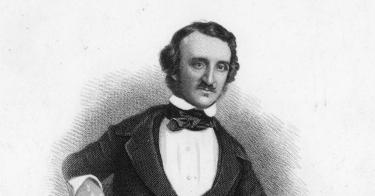
So, in his honor, I wandered from my usual shelves, took down an old leatherbound Poe whose spine had gone soft as a glove, and let it fall open where it wished. It chose “The Masque of the Red Death.”
>>> Manhattan’s Lost Its Screen Presence
The story is hardly longer than a sermon, and it haunted me in a way Poe could not have intended, because the plague years (yes, I mean COVID are not far behind us. His pestilence is “fatal” and “hideous.” “Blood was its Avatar and its seal—the redness and the horror of blood.” The whole business, from first dizziness to last breath, took half an hour.
And then there is Prince Prospero, whose very name is a boast of good fortune and an echo of Shakespeare’s magician, the one who withdrew to an island and commanded the weather. Poe’s prince gathers a thousand of his gayest knights and dames and retires “to the deep seclusion of one of his castellated abbeys.” The courtiers weld the bolts shut behind them. The external world could take care of itself.
One remembers the photographs from our own season of quarantine: the governors at the fine restaurants, the masks lowered for the cameras of the important, the rules that fell on ordinary people like rain and somehow never dampened those who made them.
Inside the abbey, Poe builds a fever dream. There are seven rooms, each a single color: blue, purple, green, orange, white, violet. The seventh is hung in black velvet, and its windows are scarlet, the deep color of blood. No lamp burns in any chamber; instead, braziers on tripods stand outside the tinted glass, throwing firelight through the panes so that every room swims in its own unnatural hue.
Here the masquerade whirls on. The costumes have much of the beautiful, much of the wanton, much of the bizarre, something of the terrible. A mask is a small lie that promises a large one: that you may become anyone, and so nothing can find you. But in the black room stands a great ebony clock, and on each hour it sounds a note so strange that the orchestra falters, the waltzers freeze, the giddiest go pale. The clock is the one guest who cannot be bribed. The rooms run east to west, dawn to dusk, and everyone knows where the last one leads.
At midnight, an intruder appears:
The figure was tall and gaunt, and shrouded from head to foot in the habiliments of the grave. The mask which concealed the visage was made so nearly to resemble the countenance of a stiffened corpse that the closest scrutiny must have had difficulty in detecting the cheat.
Prospero, furious at the insult, chases the figure through all seven rooms with a drawn dagger. In the black chamber, the stranger turns, the dagger drops, and the prince falls dead upon the sable carpet. The revelers seize the masker and find beneath the shroud and the corpse-like mask nothing at all, the garments “untenanted by any tangible form.” The Red Death has come and gone.
Poe knew this guest personally. Tuberculosis took his young mother when he was two, then his foster mother, then his brother. In January 1842, a few months before this story appeared, his wife, Virginia, was singing at the piano when blood came into her mouth. She lingered five years. The Red Death lived among him and his and was not merely the product of fiction.
>>> The Hidden Jewel at Jacksonville State
My mother would have shut the book. She hated stories like these and would not let us celebrate what she considered the devil’s holiday, so my brother and I were costumed in innocence: pirates, Batman and Robin, Superman, a clown, a nerd with tape on his spectacles, Auburn football players in orange and blue.
We could trick-or-treat, but as we grew older, we went instead to youth group for the Reformation Celebration, honoring Luther and his hammer on that same last night of October. Only as a grown man did I understand how my Catholic brethren must see such a party: as a festival of the Church’s broken body, a wound that Protestants and Catholics alike ought to mourn.
Kirk himself crossed that divide, entering the Catholic Church in middle age, and I think he would have seen what Poe’s story finally tells us. Prospero believed walls could save him. Not so long ago, all of us believed it, or were told to. We sealed ourselves in our own abbeys, masked our faces, and watched the clock of the daily COVID death count, while the powerful went on dancing in rooms we were not permitted to enter.
The churches went dark that spring, Catholic and Protestant both, and the old quarrel between them seemed suddenly beside the point. The Mass and the Lord’s Supper were suspended alike; the dying went to God alone, with no priest or pastor at the bedside; and Easter came to empty pews on both sides of the Reformation.
For a season, the divided church was united in the one way none of us would have chosen: in absence. Perhaps that was the lesson. Nothing we bolt shut keeps out the stranger at midnight, and the clock strikes for every room. What the dark cannot touch is what we share. All Hallows’ Eve is only the night before All Saints, and the night of masks gives way, at last, to the morning of faces.
This piece originally appeared in 1819 News