

For years, the U.S. has been urging Taiwan to increase defense spending amid mounting threats from an increasingly capable China hell-bent on “unification.” Nevertheless, this month Taiwanese legislators moved to block a critical increase in the defense budget. Their obstinacy not only undermines Taiwan’s own security but also risks damaging Taiwan-U.S. relations.
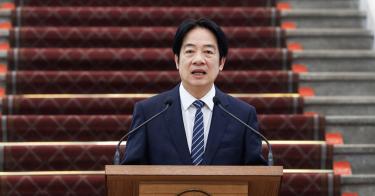
In November last year, President William Lai (賴清德) was applauded for announcing a special defense budget of US$40 billion. It would have funded critical capabilities, including advanced U.S. weapons platforms and a “T-Dome” multi-layered air and missile defense system.
Unfortunately, the Legislative Yuan controlled by the opposition Chinese Nationalist Party (KMT) and Taiwan People’s Party (TPP) repeatedly blocked the budget. On Feb. 1, the legislature instead advanced a slimmed-down alternative supplemental budget capped at US$12.7 billion.
The administration under U.S. President Donald Trump remains committed to deterring Chinese aggression in the Taiwan Strait, as explicitly stated in the National Security Strategy (NSS) released last year. At the same time, the U.S. increasingly expects allies and partners to shoulder more of the burden for their own security and the NSS explicitly calls on Taiwan to increase its defense budget.
>>> Limited Nuclear War Over Taiwan: An Initial Exercise
If Taiwan is not seen as pulling its own weight, it would give ammunition to Taiwan’s critics in the U.S. Lai correctly understands this dynamic, which is why he noted earlier this month that a failure to pass his special defense budget “could lead the international community to misunderstand Taiwan’s determination to defend itself.” Given the stakes, the Legislative Yuan should reconsider and pass the full defense budget.
Taiwan’s shortfall is especially noticeable as the U.S.’ other Indo-Pacific allies are answering the call for greater burden-sharing. Japan has approved a record-setting US$58 billion defense budget for next year. South Korea’s proposed defense budget is 7.5 percent higher than last year’s, while the Philippines continued to boost its defense capabilities.
The original defense budget would have financed several major U.S. arms packages, including high mobility rocket artillery systems, anti-tank missiles, tactical missiles, guided rocket system missiles and a “T-Dome” air defense system. The proposal promised significant enhancements to Taiwan’s deterrence posture, strengthening long-range strike and layered air defense capabilities. In its place, the KMT and TPP advanced a more pared-down defense procurement bill that cuts 70 percent of the original funding and jettisons plans for the “T-Dome” system.
The slimmed-down budget still includes funding for most of the planned purchases of U.S. defense systems. Nonetheless, the substantial reduction in overall funding significantly limits much-needed improvements to Taiwan’s defense-industrial base. Cuts to investments in domestic defense capabilities, including drones and critical infrastructure would hinder progress in areas that are crucial for sustained deterrence.
The nation already faces shortfalls in military intelligence, surveillance and reconnaissance capabilities. Without further funding, Taiwan risks exacerbating major shortfalls in its defensive capabilities at a time it can ill afford to do so.
The U.S. government has emphasized the importance of passing the special defense budget for months. Raymond Greene—director of the American Institute in Taiwan, the de facto embassy in Taiwan—said that the “international community” is worried about Taiwan’s underinvestment in defense and would struggle to understand “some of the criticism of increasing defense spending.”
Now, the advancement of the slimmed-down defense budget has led to a bipartisan chorus of concern. Republican Senator Roger Wicker, the chairman of the U.S. Senate Armed Services Committee, said that he is “disappointed to see Taiwan’s opposition parties in parliament slash President Lai’s defense budget so dramatically.” Democratic Senator Ruben Gallego echoed those sentiments, urging the Legislative Yuan to “reconsider” their decision.
The failure to pass the full defense budget is especially disheartening for U.S. friends of Taiwan, given that the U.S. has reaffirmed its commitment to Taipei through action and words in recent months. The U.S. recently signed a trade deal with Taiwan that lowered tariffs and boosted semiconductor cooperation. The U.S. Department of Defense also announced a defense sales package worth US$11 billion to Taipei in December last year—the largest ever.
U.S. leaders are also concerned that the KMT’s efforts to trim the defense budget parallels a broader and more alarming trend. The KMT has historically sought to pursue better relations with China. Just days after advancing the slimmed-down defense budget, KMT Deputy Chairman Hsiao Hsu-tsen (蕭旭岑) and his entourage attended a large “think tank exchange” in China, where he seemed to echo Chinese talking points about “national rejuvenation.”
>>> China Is Quietly Breaking America’s Pacific Defense Chain
The timing of the visit reinforces the impression among U.S. policymakers that the KMT has gone “soft” on China.
“The KMT is in Beijing meeting with the CCP [Chinese Communist Party] and planning bigger engagements,” Senator Dan Sullivan said. “It doesn’t take a genius to figure out what’s going on here. I’ve warned before—short-changing Taiwan’s defense to kowtow to the CCP is playing with fire.”
At the same time, Taiwanese legislators have some legitimate concerns about the transparency and funding source of the defense package. The ruling Democratic Progressive Party can do more to offer greater clarity about the substance and purpose of the budget. The U.S. should also expedite its shipment of already-promised capabilities to Taiwan to alleviate Taiwanese concerns that they are paying for weapons that could never arrive.
To prevail in a potential conflict in the Taiwan Strait, the U.S. requires all allies to pull their own weight. Japan, South Korea and the Philippines have all answered the call. Taiwan has also agreed to boost its regular defense spending to 5 percent of GDP by 2030, but more needs to be done.
The Legislative Yuan should strongly reconsider and support the full special defense budget.
This piece originally appeared in the Taipei Times



