
Let me begin by thanking Heritage and all of those who have worked hard at Heritage to influence this debate, starting with Bob Moffit, who for years has been working to inform policymakers about the benefits of a free-market influence on the government health care program, joined by Ed Haislmaier and also Walton Francis, an independent economist, who did some work on behalf of Heritage in providing us with some great ideas on how to proceed with regard to this legislation.
We have also been helped by others from some other think tanks--those of us who have been interested in reforming Medicare in addition to providing a prescription drug benefit.
The genesis of the legislation that is before us is really twofold. After 25 or 30 years, we all recognized that Medicare, which is supposed to supplement health care for our senior citizens, has been lacking a critical component.
Unlike when Medicare was created, the prescription drug is the treatment of choice, at least initially, for many different diseases and conditions. It wasn't that way in the beginning. As a result, anyone who seriously looks at providing quality health care to seniors understands that ensuring their access to prescription drugs is a critical component of their treatment. Therefore, we wanted to include some support for prescription drugs in Medicare.
Knowing that we had that opportunity, but also knowing that we have a huge challenge in paying for the benefits that we provide generally to our senior citizens, we looked at this as an opportunity to reform Medicare now so that we could actually continue to provide the benefits that have been promised when the baby boomers retire. The idea was to be able to provide a prescription drug benefit and also to use that opportunity to reform Medicare.
What I'm going to do today is to talk to you about two general themes that have animated my approach to this problem. Those two themes are interrelated.
First, I don't think Americans generally appreciate how important medical care is to them, and as policymakers we need to help them understand just exactly how important it is to them and, therefore, what they are willing to pay for.
Second, failure to follow three principles included in the delivery of health care leads to market distortions which in turn will lead to erosion in the quality of health care.
How Important is Health Care?
I want to begin by asking all of you a question. Other than freedom, is there anything more important to any of you than your health or the health of your closest relatives and family? Education is important; but when my dad was on his deathbed, education was not really that important to me. So, at the end of the day, the health of our families and the ability to treat our health conditions is probably the most important thing to most Americans.
One hundred years ago, we had to work just about six, maybe seven days a week to put the roof over our head and the clothes on our back and to feed our families. There wasn't any medical care to buy to speak of, so we spent very little on that.
Today, how long does it take to provide for those basic necessities of life: maybe two, three days of work? For a lot of people it's not even an entire workweek. We have a lot of disposable income, yet we seem to have an attitude in this country today that somebody else should pay for our health care.
If it's the most important thing to us, then shouldn't all of us be more concerned about how we're going to ensure good quality health care when we need it and when our families need it? Shouldn't we as individuals and families be willing to pay more as communities, churches, and synagogues, and indeed even as government, as a last resort? Every one of us that has some role to play in paying for health care today should consider just how important it really is to us and then think about our attitude toward paying for it, which generally is that we want somebody else to pay for it.
That's the first point: What do Americans think about this? I happened to see a poll in a Washington Post story from October 20. Eight in 10 said that providing health insurance to all Americans was more important than holding down taxes.
The survey also found that six in 10 would prefer a system that covers everyone, but that support drops below half if such a system meant a limited choice of doctors or waiting lists for care. That's part of our education mission right there. Overall, 78 percent of Americans say they are dissatisfied with the total cost of health care, and a majority, at 54 percent, say that they are dissatisfied with overall quality as well, which is an increase of 10 percentage points just since the year 2000.
There is no question that the quality of our health care will deteriorate over time if we continue to have the attitude that even though it's important to us, we want somebody else to pay for it, because that somebody else will not care as much about it as you will. Their primary motivation is to buy it cheaply. Your primary motivation is to get quality care.
A Public Policy
Dichotomy
Before I get to my second theme, let me note an interesting
dichotomy that illustrates the problems that we have politically
when we are trying to craft public policy. I don't think either
liberals or conservatives get this right.
Remember: We're talking about Medicare, not Medicaid, under which we are paying for folks that aren't getting enough care, we believe, so we are going to chip in and make sure that they get some support. Because they are poor and can't pay for the minimum care that they need, as a society, we are going to chip in.
Medicare isn't like that. Medicare applies to everybody over the age of 65. It's Medicare or no care.
Basically, you cannot get health care in this country if you are over 65 because whoever you get it with has to send the bill the Medicare or they are violating the law. The only folks to whom that doesn't apply are those who are willing to say we are not going to take care of any Medicare patients whatsoever for at least two years and therefore we're not under contract with the government to send the bill to Medicare--very few, although it's increasing.
So, with Medicare, this is something we have said all Americans must participate in. Now, liberals have a problem because they wouldn't want anybody to make any money on this. First of all, they wouldn't want any drug company to make any money. They surely don't want insurance companies to make any money, not to mention doctors or for-profit hospitals. Lawyers are a different matter: That's okay.
Conservatives have a problem with it because, obviously, we're concerned about taxpayer dollars. Just about every year, I rank number one in frugality from the National Taxpayers Union and Citizens Against Government Waste and so on, so I'm arguing this from the standpoint of somebody who's pretty frugal with taxpayer money.
But conservatives view this with a green eyeshade and say, well, granted this is an important public policy issue, but we want to be sure and do it cheaply. And remember what happens when a third party pays for something that's really important to you: They may not have quality health care first in mind. Frankly, that's where I think too many conservatives are coming from.
Hijacking
Reform
How should we both add this drug benefit to Medicare and
also reform it so we can pay the promised benefits to baby boomers?
The original idea was that we would take care of those in need,
that we would simply provide a drug benefit to those who didn't
have insurance.
Somewhere along the way, however, the concept of universal care hijacked the reform. The idea became ensconced in our political culture that it had to be a universal benefit. That decision has taken hold, and I think it's going to be impossible to reverse, with the result that there are several questions that arise.
The first is how are we going to encourage employers to continue to provide the retiree health benefits that they currently have, probably the number one concern of my constituents, and second, how are we going to be able to spread the payment universally so as to still provide a significant health care or drug benefit to people, but to provide it not just to those who are in need, but basically to everybody?
Applying Free-market Principles
That gets me into the second theme: how some of us believe that applying free-market principles could actually help solve both of those problems intelligently. It's this area in which I have a big debt of gratitude, as I said, to Heritage and others who really provided a lot of the intellectual firepower for the ideas, some of which I predict will be included in the legislation.
The idea is that adding a private option to traditional fee-for-service Medicare could provide the flexibility, the choices, the economics to produce both high quality and lower cost and that this private-sector option would basically be a reflection of something like the Federal Employees Health Benefits Program (FEHBP), which Members of Congress can participate in. This is private insurance, offered within a government program, that provides a variety of products at different costs. We all have to meet a basic minimum in terms of the benefits provided, but we're able to choose, and it's available everywhere in the United States. There's a postmaster, remember, in just about every community. All federal employees are entitled to that.
The idea would be to try to fashion an alternative to fee-for-service Medicare that looks a lot like the FEHBP. That's what the President originally announced was his intention, and he still believes that that would be a good model.
People would have a choice when they turn 65. They could either sign up with the traditional fee-for-service Medicare with a drug benefit added to it now, or they could choose a private plan, like a PPO (preferred provider organization), or perhaps an HMO (health maintenance organization), like a Medicare+Choice organization. It's their choice. Once a year, they could move back and forth, but they would have a choice.
Within the private sector, they would probably have several choices, like we do in the FEHBP. This would be an integrated Medicare plan. It would include all of the Medicare A and B benefits plus the D benefit of drugs.
That was the original concept, and I think that that general notion will be embodied in the legislation, although it won't be exactly as I've described it here. But seniors will have a choice between traditional Medicare and a private option.
Fighting the
Private Option
The problem is that the liberals in Congress fight the private
option. They just don't like the idea of the private sector being
involved in providing health care. They'd rather have it be a
government program. You've heard Senators like Senator Edward
Kennedy, for example, talk about this and understand that that's
simply where they are as a matter of philosophy.
The problem with conservatives is that they don't trust the private market frequently. This is a strong indictment, but I make it because I've sat through hours and hours and hours of meetings, and while the conservatives generally say we want to set up a private-sector option, they also want to control that, to regulate it to make sure it works properly.
If you have confidence in the market, you understand it: It's basically a law of nature. It's like water flowing downhill. You can try to regulate it all you want to, but one way or another it's going to find its way down hill. The private market will work because people will respond to the incentives and the disincentives of the private market, and it can work in health care just as well as it can work in other areas if you let it.
But people in Washington think that they are smarter than everybody else in the world, so they know how they can actually regulate the private market just like they regulate the government and it will all work out just right. Granted, we haven't had very good experience with regulating Medicare, but we'll learn from that experience and regulate the private-sector alternative too, so it's going to work just right.
The reason we want to do this is because we don't want it to be too expensive. Remember: The idea originally was that we were going to set up a private-sector alternative because we thought that it could not only provide better quality care, but also at a lesser expense. It might not do that the first year or two, but over time we are confident that that would be the case. Experience has shown that.
Regulation and
Market Distortions
Certainly, with the FEHBP I think we have a good model to base it
on. But what if the cost of the private-sector insurance would be a
little bit more than the cost of the fee-for-service Medicare? We
couldn't have that, some people say, so we'll have to regulate it
by making sure by government fiat that the premiums of the
private-sector option are virtually the same as the premiums of
traditional Part A and Part B Medicare.
This is the problem that I'm describing. Even conservatives say that what we should do, if there are 15 percent of the people in an area that are willing to go with the private and 85 percent that are sticking with traditional Medicare, then the private plan's premium is going to be 85 percent fixed by Medicare and 15 percent influenced by what the private insurer would like it to be.
Ford and GM compete, and they each are affected by each other's prices, I'm sure. But I don't think that we need the government saying that if 60 percent of the people buy Chevies and 40 percent buy Fords, then the cost of a Chevy is going to be 60 percent of what they'd like it to be and 40 percent of what Ford charges for Ford and vice versa.
That's the problem we have in crafting something. Philosophically, I think we are confused and we are not willing to create a private market alternative that really reflects how the private sector works. As a result, we are having to correct for potential problems.
This is always the problem. The first regulation, since it might not work, has to have two potential corrections to it. What if the product is too high or too low? (And, by the way, we are always either too high or too low.) Then each of those has to have a correction, and pretty soon you've got 16 different possible corrections. Because we are not sure that the private sector will get enough money in the government reimbursements to the plan, you know the government is either going to pay under traditional Medicare or it's going to pay a certain amount to the private insurers to take care of seniors.
We figured out that this might not be enough under this formula that people have been talking about, so we'll need to create some risk corridors. We need to create a stabilization fund. In other words, instead of just letting them set their own prices since we may not pay them enough, based upon how we're going to regulate this, we're going to compensate for that by setting up some other funds to help pay them just in case. It would be easier just to do it right in the first place, but that's an example of the kind of thing that people have talked about doing.
With regard to providing the drug plan, this is taking traditional Medicare and adding the drug benefit to it. Somebody likened that to haircut insurance. There's a lot of risk in this because there's going to be about 100 percent participation. If you've got a drug benefit, you're going to take advantage of it. So it is a little bit like haircut insurance.
So how are we going to get the private sector to provide that drug benefit in traditional Medicare? We are going to "dial down" the risk until we can convince the private sector to play. In other words, the government will accept the risk up to that magic point at which the private insurer says, "Okay, now I'm willing to take on the risk because of the potential profit that I might receive." For a while, as long as we do that, the government is going to get part of that profit because, after all, we're going to "dial down" the risk.
My point is that once you make the first fatal mistake of saying that you know better and you're going to regulate the private market, since you know you can't be right in every situation, then you have to have corrective actions that you can take to correct the situations, the distortion in the market that you have created, and pretty soon you're piling one on top of the other, and it bears little resemblance to the real market forces that could help you.
Let me illustrate this also with some examples of what we have in our current Medicare system--mistakes which I would hope we would not repeat, but which I fear possibly we might repeat if we're not careful. We, in traditional Medicare, set the price at which we will pay doctors and hospitals for services. For hospitals it's called DRG, diagnostic related groupings, and for 400 or 500 different procedures we know exactly how much we need to pay a hospital in order to pay its costs plus a little bit to stay in business.
Of course, we hardly ever get any of them right.
Reimbursing
Doctors
With doctors we use the SGR, the sustainable growth rate,
as well as some other factors to finally figure out each year how
much we're going to reimburse physicians for providing different
services. Experience shows we either pay too much or too little.
But it's virtually impossible in every case to hit that right on
the button.
So what do we have to do? Each year we have to correct it, or at least we should, and frequently we do.
Last year's correction was only $54 billion for physicians. This was over 10 years. But we were way low in reimbursing physicians, and you had a lot of bad news coming out of the physician community that if this is all we are going to get for treating Medicare patients, we're simply not going to be able to continue to do that. Therefore, the red flag went up, and we said we want to make sure there are some doctors around to take care of seniors, so we'll try to correct this distortion and we'll pay out $54 billion over 10 years.
A Pattern of
Instability
You can see how there is great instability in this
approach. We saw a chart the other day that showed over time what
the payments rate looked like. Every time the payment rate got just
about to the real cost, it dipped down sharply the next year. We
wouldn't want to pay too much, of course.
So you had this up-and-down line, great instability. This year, because the 2002 payment formula would have given a 5.4 percent cut, we provided some relief for the physicians. They still went up 7 percent, even with that reduction. We give incentives to the physicians to basically trade quality for volume so they can continue to make up for what they have lost.
In 2003, as I said, we provided this additional $54 billion, which would give the physicians the 1.6 percent increase. This shows you how big the problem is. If all you get out of $54 billion is a 1.6 percent increase, you can see how much money we're potentially talking about.
This year they are again looking at a cut under the formula in 2004. This time it's 4.5 percent. The Senate bill does nothing about this. The House bill would actually add 1.6 percent for two years. That's good, but it's not nearly enough. We're not going to stem the flow of doctors leaving Medicare. We're not going to correct the problem where they are trying to make up in volume what they've lost in terms of payments, all of these natural market forces that tend to try to adjust when you interfere with the real market.
What it shows you is that there is a great instability in the way that government sets these rates. We never are able to get it exactly right, so we keep trying to correct the situation. If we were willing to try to be more careful in reimbursing physicians and hospitals, the nurses and other providers, for their true costs, we'd be better off. That might cost a little bit more money, but we'd be better off in providing quality care and we'd have a whole lot less disruption in doing so.
Let me just illustrate this with a couple of other points. Here is the Denver Post: "Ever Fewer Doctors Accepting Medicare." Just a couple of quotations:
The number of primary care physicians accepting new Medicare patients dropped substantially for the third year according to the Colorado Association of Family Medicine Residencies. About 34 percent of Colorado family physicians are accepting new members of Medicare, the federal government's health care program for 65 or older. That's down from 52 percent in 2001.
"It's alarming it's gone down this much," said one of the executives. Doctors cite shrinking government reimbursements as the top reason for closing their practices to seniors."
Here is another example, from the Tucson Citizen: "Cancer RX Cuts Threaten Care." This has to do with oncology, and it's a good illustration of how, when you try to adjust rather than let the market work, we very seldom get it right. This article quotes a Dr. Richard Rosenberg, who's vice president of Arizona Oncology Associates.
What we've done over time is to cut what we pay oncologists to administer chemotherapy primarily to cancer patients, over 60 percent of whom are seniors. According to Dr. Rosenberg:
The cuts would be catastrophic, forcing many of the centers that do this to stop treating Medicare patients altogether. About 60 percent of the people they treat are on Medicare.
The centers would have to lay off nurses and other staff, reduce the clinics they hold in rural areas and cut their participation in clinical trials of new treatments, he said. And he noted, oncologists are an older group of physicians as a population and many would simply opt for early retirement.
The American Society of Clinical Oncology survey of 900 oncologists found that 19 percent would stop treating Medicare patients entirely if the legislation passes. Fifty-three percent would limit the number of Medicare patients they see or would maybe send them to emergency rooms.
Rosenberg said--and I think this is a critical point--"It is true that doctors are overpaid by about 15 to 20 percent for the cancer drugs they provide to their patients." In other words, they buy the drugs and jack up the prices to make up for the loss in reimbursements. He also said, "However, they are vastly underpaid by Medicare for the costs related to administering the drugs, from nursing and pharmacy services to patient support."
The reform bill that we are talking about now would ratchet their coverage up to the grand total of 36 percent of their cost--once again, a distortion. Instead of paying the oncologists based upon their true costs, plus a little bit to stay in business, we are going to pay them far less than what we know their costs are. We're going to let them buy the drugs and jack up the prices, but we're not going to let them charge as much as we have in the past.
Why does that make sense? Why not correct the problem? Don't let them buy the drugs at a discount and then overcharge for them. Why don't we just pay them what they deserve in the first place? It's the same amount of money.
Do you see how, when you try to fuss with the private market, you get all mixed up and have to keep trying to correct the situation?
There are about 6 million people in Arizona. Do you know how many oncologists there now are as a result of this? About 60--less than one per 100,000 people. If any of you have had to be concerned about chemotherapy, you might just think about that for a minute. You might not want to move to Arizona if that's your situation.
Reimbursing
Hospitals
How about hospitals? The same thing. We have not paid
hospitals what their expenses are, and as a result, 57 percent of
America's hospitals lose money every time a Medicare patient walks
through their doors. Think about that. Their expenses have
increased significantly despite the fact that we are not
reimbursing them.
Under the House bill, there is an update that would add 0.4 percent to what we reimburse hospitals for a period of three years. Otherwise, they are going to have about a $12 billion reduction over the next 10 years. That begins to compensate them for some of the expenses they have.
Roughly one-third of America's hospitals are in deep financial trouble, and when I discuss the reasons for this, it's not just because of what I have been talking about. We all know the high costs to hospitals and physicians from medical malpractice premium increases from huge regulation.
For example, in the case of hospitals, there's a federal law called the Emergency Medical Treatment and Labor Act, EMTLA, which mandates that hospital emergency rooms accept anybody that walks through the door regardless of whether they can pay. This is increasing costs particularly in the border areas because of the number of illegal immigrants who are presenting themselves for treatment.
So hospitals are stressed for a variety of reasons, as are doctors. It's not just that the federal government doesn't pay enough, but when over half of the payments to doctors and hospitals are a direct result of Medicare or Medicaid, you can see that the federal government payments have a significant influence.
This is now the case in Tucson and other communities where HMOs, for example, are pegging their reimbursement rates off of Medicare and in some cases will take the Medicare rate, which is itself insufficient, and reduce that by 20 percent so the physicians are getting 80 percent of that.
In this circumstance, I think one could legitimately be concerned about the quality of health care in the future. Hospitals closing down, emergency rooms shutting down, physicians leaving the practice--this does not bode well for quality care. It's unsustainable over time. In the past, we have been able to cost shift to the private sector, but that can't go on forever.
One of the results of this has been that doctors now will simply try to work a lot harder. The Denver Post article talks about one physician who never turns anybody down. He's working until 10 o'clock at night now, sees 100 patients, and says, obviously, I can't go on doing this. Then there are questions about waste, fraud, and abuse because it's simply impossible for a doctor to see that many patients in a day.
Another thing that's happened is that physicians start what they call specialty hospitals. They see that certain kinds of specialties can make money, so they will create a specialty hospital to treat just heart conditions, for example. Then the big urban hospitals that have to take care of every drug overdose or automobile trauma accident or anything else that comes along complain because they are getting stuck with the cases that cost a lot of money, for which there's very little reimbursement, while the specialty hospitals make money.
Why Not Give the Market a Chance?
At the end of the day, people are going to figure out how to stay in business somehow or other. Instead of just trying to correct every regulation with another regulation, wouldn't it be better to let the market work as much as possible in this environment?
That is the primary pitch that I have been making during these negotiations, and to some extent I think folks have listened. We'll see.
Let me deal with two other issues.
First, the biggest problem, as I said, when I go home and talk to seniors is, will I get to retain my employer coverage, my retirement health care coverage, which frequently includes drug benefits. Many of these are union-negotiated plans. They have been told that they should absolutely oppose the privatization of Medicare. We need to keep traditional Medicare as it is, no private-sector involvement in it whatsoever.
At the same time, however, the most important thing is, you're not going to take away my private insurance retiree health benefits, are you? I try to point out to them that there's a bit of a dichotomy there, but the issue remains. By making this universal, we give employers zero incentive to continue to provide the retiree benefits that they currently provide.
Subsidies to
Employers: A Good Deal?
How are we going to deal with that? Naturally, we have to
correct one problem by creating some others. We're going to provide
subsidies to employers.
I do not think this is a bad thing. It's pay me now or pay me later. We're going to pay, let's say, approximately $950 per Medicare beneficiary federal subsidy for drug benefits. That's a notional number, but it's probably not too far off. The value is about $950. There's an idea that perhaps we could pay employers about $750 for that same benefit if they would continue the coverage for their employees, an equivalent amount of coverage, actuarial value coverage. A lot of the employers say, "We could probably continue to provide the coverage if you'd give us that much support."
That's a good deal, I would argue. As long as we've decided to provide government money to do this, I think it's better to try to keep those private plans in operation covering those retirees, and actually it costs the government a little bit less to do that. I would even suggest--again, this is a Bob Moffit-Joe Antos idea--why not do the same thing for the integrated benefits under Medicare generally, Medicare A, B, plus the drug benefit?
Let's say that the value of the federal government for all of the Medicare service per individual is $7,000. We're going to give that money to an insurance company to take care of you, a senior citizen. Under traditional Medicare, that's about what we're going to pay, and we're going to pay the same amount to an insurance company to provide an integrated benefit that includes all of these things. If the private plan that the folks at Intel or Motorola out in Arizona have generally provides those same services, why not simply qualify it as a qualified plan and give that same amount of money to them to provide the integrated benefit?
There's no reason why you need to limit it to just one or two big insurance companies around the country. FEHBP basically says anybody that can provide the benefits can qualify. Why not have many different insurers providing that benefit?
I hope that a decision will be made that we're not going to limit the number of bidders to provide this Medicare benefit per region. One of the original ideas was that we should limit it to, let's say, the three lowest bidders. That would drive down the costs. But why not do like FEHBP and allow anybody that can play and wants to play to do so as long as they can sell their product? If they can't sell their product, they're out of business.
If we could have no limits on the number of providers who provide the service--and I think we might be moving toward that decision in this legislation--we could qualify these private plans and simply transfer the money to them to continue to provide the benefits. That would be some cost savings to the government, but it would keep these people in the private plans, and I think that would be a good thing.
That's an illustration of how, in many senses, there's no free lunch here. Once we've made the decision that we're going to provide the benefit with government dollars, then we may as well figure out the best way to do that.
Re-importation
of Prescription Drugs
My final point has to do with prescription drugs. You know
that there's been a big push in this country to import drugs from
countries that buy them much more cheaply than we do for resale in
the United States so people can get the break that they don't get
here in the United States.
The vast majority of my constituents and Americans generally believe that would be a bad idea. Understand why drugs are more expensive in the United States. The basic reason is that everybody else in the world has shifted the cost of researching and producing these drugs to the customer in the United States. Their laws essentially set government price controls backed up by either an explicit or an implicit threat that, if the drug company doesn't sell to a particular country at cost, this country will simply take the patent and produce a generic drug to compete.
There are a lot of different ways in which these countries manipulate their laws. It's an unfair trade practice, and like many unfair trade practices, they don't outright have a quota on beef or a quota on poultry or whatever; they just have a hard time inspecting this for health reasons, for example, and finding that it's a product that's safe coming out of the United States. What they do with the drugs is to tell the drug company, "We will sell it to you at your cost plus a penny or two, and if you don't sell it to us for that, then we are going to provide it anyway on our own terms."
The drug companies go along with that. They don't have much choice. But our Trade Representative does have a choice, and he ought to be aggressively pursuing as an unfair trade practice, with both the multinational and the bilateral negotiations that we have with these countries, the notion that there should be fairness in the pricing of drugs, especially by countries that buy in bulk for their entire citizenry through national health care programs.
If we all shared the cost of producing these drugs, the cost on American consumers would be significantly lower. We wouldn't have to pay nearly as much as we are preparing to pay for the prescription drug benefit in Medicare.
We are beginning bilateral negotiations with our good trading partner, Australia. Yet, when I asked the Trade Representative will you raise this, he said, no, it's already been determined to take that off the table. I asked why, because Australia is one of these countries that has this policy, and he said that you have to give up something to get something. What do you want me to give up, agriculture subsidies?
Treating
Symptoms, Not Causes
So, because we haven't been willing to get to the cause of
the problem, we do all kinds of crazy things to treat the symptom
of the problem. Now we are hanging by a thread in terms of policy.
The House has re-importation. The Senate has re-importation, but
with the caveat that we're not going to do it if the drug is not
safe. Well, no Secretary under either Bill Clinton or George Bush
has been able to say that it's safe to re-import these drugs.
You
perhaps saw the Washington Post story Sunday, "U.S. Prescription
Drug System Under Attack." The real story is the fraud and abuse of
producers in other countries who do not protect the efficacy of
these drugs. Many are produced fraudulently. There's no safety
guaranteed at all. In fact, it's my understanding that in Canada,
while there are strict laws regarding safety of drugs to be
consumed in Canada, there are none with respect to
re-importation.
There are many examples, including a poor fellow in Arizona who got one of these black market drugs and it knocked him out while he was driving. He had an accident and was killed. But there are so many different examples of that.
Price
Controls:
Another Problem, Not a Solution
Let's not be sucked into the notion that we can correct
one problem by creating another problem, and that's price controls
on drugs. We will kill the golden goose that has produced wonderful
cures for so many diseases. If we put such restrictions on the drug
companies that they won't invest to produce these new drugs, it's
just one more way in which we are going to reduce the quality of
medical care in the future.
Let's not do that. Let's instead attack the problem at its source and spread the cost all over the developed nations of the world who are able to pay it.
Conclusion
Let me conclude with this simple thought. It is no secret that we are going to move quickly on this Medicare prescription drug reform legislation. It is probably the most momentous decision, other than things dealing with national security, that many of my colleagues and I will have had the opportunity to make within the last several years, and it's going to affect us for many, many years down the road.
Will we be able to control the costs of this as a federal government? Will we have made mistakes that will result in eventual movements toward a national health system? Will we make mistakes that prevent the private sector from really being able to produce a viable alternative to traditional Medicare? Will we affect the quality of health care for years to come by the decisions that we make today?
These all are very difficult questions, and we are probably not going to have the time to ponder them as much as most of us would like. You all know that there is a rhythm in the legislative process. There's a time when you can get things done and a time when you can't.
I believe it's the perception of both the Administration and the House and Senate leadership that there's one best time to get this legislation passed, and that's within the next three or four weeks; that if we wait until the next session, politics could take over and the momentum is lost. We probably couldn't get it done.
There is a feeling, therefore, that this opportunity is only going to come this one time and we should take advantage of the momentum, notwithstanding the fact that there is no significant public understanding of what we are doing, even among the policymakers outside of the conference committee in the House and Senate.
That is not an unusual circumstance, as many of you familiar with the process know. It is simply one of the realities of the legislative process. But it does create big risks when you're talking about something as important as this subject.
So I hope that as we proceed, we will keep in mind the kind of free-market principles that I've tried to enunciate here and understand that the importance of providing good health care to a portion of our population that we say must get it through the Medicare system is a prime challenge and that we shouldn't try to do this on the cheap. Even those of us who are really concerned about taxpayer dollars must understand that if it's the most important thing in the world to us, we've got to try to ensure that we don't diminish the quality of care because we have the power, as the third-party payer concerned about the costs of it, to ratchet down that quality of care.
The Best of Both
Worlds
My own view is that if we rely on market principles,
we can have the best of both worlds to the extent that they are
possible. There is still going to be a lot of government
supervision, but the private sector can find ways to provide the
care to people in the way that they would like to have it be
provided at a cost which is reasonable. It's probably a better way
to gauge those two things than having smart bureaucrats in
Washington try to figure it out for everybody.
It is my belief that it is important to try to add a drug benefit to Medicare, and we have a good opportunity to reform the system. I'm very hopeful, because some of the decisions that I think we've made are good decisions, that we can put together a bill which on balance will provide this kind of reform that I've talked about.
But I am raising a red flag, and it's important for those of you who are knowledgeable in this area, who are motivated by the notion of principle, to engage in the debate so that in the small amount of time we have remaining, you can influence that debate in the right direction and we come out with a product that we can be very proud of and that will do what we want it to do for the American people.
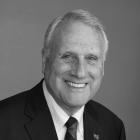
The Honorable Jon Kyl is a United States Senator from Arizona.



