The Douglas and Sarah Allison Center for National Security
Executive Notes and Key Judgements
The People’s Liberation Army (PLA) has designed its “systems-destruction warfare” doctrine to cripple U.S. logistics at the outset of a conflict. It has the capacity to paralyze fuel distribution and sustainment by targeting critical nodes. The U.S. military, meanwhile, depends on concentrated hubs such as Guam and Kadena as well as a network of single-point vulnerabilities across ports, pipelines, and oilers. The current Combat Logistics Force (CLF) capacity permits a throughput of only 265,000 to 280,000 barrels per day, which could easily fall below 200,000 under modest attrition—already far short of what is needed to maintain operations under sustained attack.
Wartime fuel demand is projected to surge to approximately 710,000 barrels per day of JP-8 and 210,000 barrels per day of F-76 across the modeled scenarios. Left unaddressed, these opposing forces—Chinese offensive capability, U.S. infrastructure fragility, and skyrocketing wartime demand—converge toward systemic collapse centered on JP-8 within 30 days of conflict onset.
The following key judgements describe our overall assessment of the U.S. fuel system, its critical vulnerabilities, and our phased approach to address them.
Key Judgment 1: Cascading Failure in First 30 Days
Heritage judges that it is very likely that a high-intensity conflict in the Indo-Pacific will trigger a cascading failure of the U.S. Indo-Pacific military fuel system (hereafter, U.S. Fuel System), beginning with the degradation of the at-sea replenishment fleet and culminating in theater-wide sortie rationing for air assets within the first 30 days. This collapse is not a story of running out of fuel; it is a story of inability to move it from strategic depots to tactical warfighters at the pace required.
This judgment is made with moderate confidence based on (1) TIDALWAVE’s four-scenario model consistently showed contested delivery bands, collapse inflection points, and mode ceilings; (2) quantified node-impact ranges, including pipeline and depot losses, CLF and underway replenishment (UNREP) ceilings, and tanker surge limits; and (3) linking PLA targeting concepts to the specific fuel nodes modeled in this project. The principal uncertainties involve the precise sequencing and duration of adversary strikes and cyber actions, the variability of allied berth access/insurance behavior under duress, and the realized survivability/cycle-time of the CLF force in a live-fire environment.
Key Judgment 2: PLA Targeting of Fuel Logistics
Heritage judges that the PLA is very likely to open with a combined kinetic–non-kinetic campaign against fuel logistics as a center of gravity. Coordinated strikes and access pressure would almost certainly degrade fuel intake, elongate CLF reload cycles, and drive diversion delays, pushing deliverable flow below modeled demand within days.
This judgment is made with high confidence based on authoritative PLA-doctrine synthesis, scenario-tied simulations, and engineering assessments of hub chokepoints. Any uncertainty of this judgement stems from sequencing and duration of strikes and cyber efforts as well as variable allied behavior.
Key Judgment 3: Insufficient Throughput Capacity
Heritage judges that it is almost certain that the U.S. fuel logistics network lacks the throughput capacity to meet the modeled wartime demand of a high-intensity Indo-Pacific conflict. This shortfall will very likely manifest as a structural, immediate F-76 delivery deficit at sea driven by “last-mile” delivery constraints and a large JP-8 deficit that forces sortie rationing inside the first two weeks.
This judgment is made with high confidence, based on a detailed analysis of simulated wartime fuel demand versus the U.S. fuel logistics network’s maximum throughput capacity. The underlying data, including logistics network assessments and conflict simulations, provides a robust quantitative foundation for this conclusion. Uncertainty is primarily rooted in the dynamic nature of conflict, including the actual attrition rates of fuel transport assets, specific timing and success of enemy attacks on fuel infrastructure, and the reliability and capacity of allied contributions to the fuel supply chain.
Key Judgment 4: Seven Critical Chokepoints to Drive Throughput Loss
Heritage judges that the seven critical vulnerabilities identified in this chapter are very likely to drive throughput loss below the 900 kbpd demand within weeks under contested conditions. Sortie rationing and degraded naval maneuver are almost certain unless the U.S. hardens flow, protects reloads, pre-decides allied access, manages operational tempo, enables substitution playbooks, and centralizes adjudication, actions that when integrated would address around 80 percent of the critical vulnerabilities.
This judgment is made with high confidence based on convergence between the four-scenario model outputs, analyses of berth, pump, and pipeline limits and repair tails, CLF and UNREP survivability-cycle modeling, and quantified limits of expeditionary substitutes. Uncertainty persists around the sequencing and duration of PLA strikes and cyber campaigns, variance in allied berth access behavior, and real-world CLF cycle-time slippage under fire.
Key Judgment 5: Current U.S. Government Programs Are Insufficient
Heritage judges that the Department of War’s and congressional efforts are almost certainly insufficient to close the fuel logistics gap in a timely manner. While existing programs and unfunded requirements (UPLs)1 demonstrate a clear acknowledgment of the problem, they are characteristically piecemeal, under-resourced, and lack the velocity and specificity needed to build a resilient wartime fuel posture.
This judgment is made with high confidence. It is based on a direct review of current budget documents, service procurement rates, and the text of recent National Defense Authorization Acts (NDAA) and UFRs from Indo–Pacific Command (INDOPACOM) and the Navy. These authoritative sources provide a clear picture of a system that recognizes the demand signal but has not yet matched it with sufficient resources or urgency. The primary source of uncertainty is the pace of shipyard production followed by future political and budgetary decision-making.
Diagnosing Critical Vulnerabilities
Overview
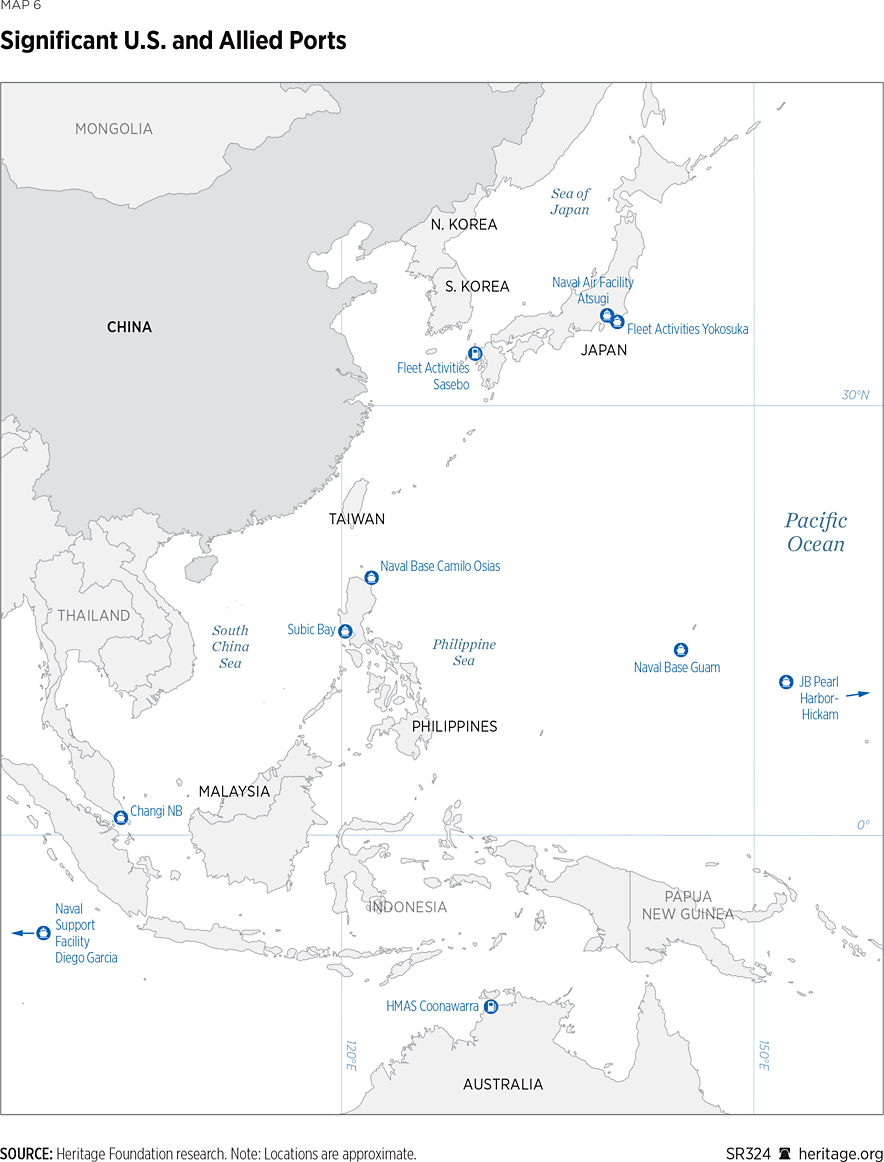
We identified seven critical vulnerabilities (CVs) of the U.S. Indo-Pacific military fuel system that will need to be addressed in order to project and sustain forces in a protracted conflict with the People’s Republic of China (PRC).
- CV 1: Fleet Oiler Force
- CV 2: Trans-Pacific Sealift
- CV 3: Marine Offload Terminals
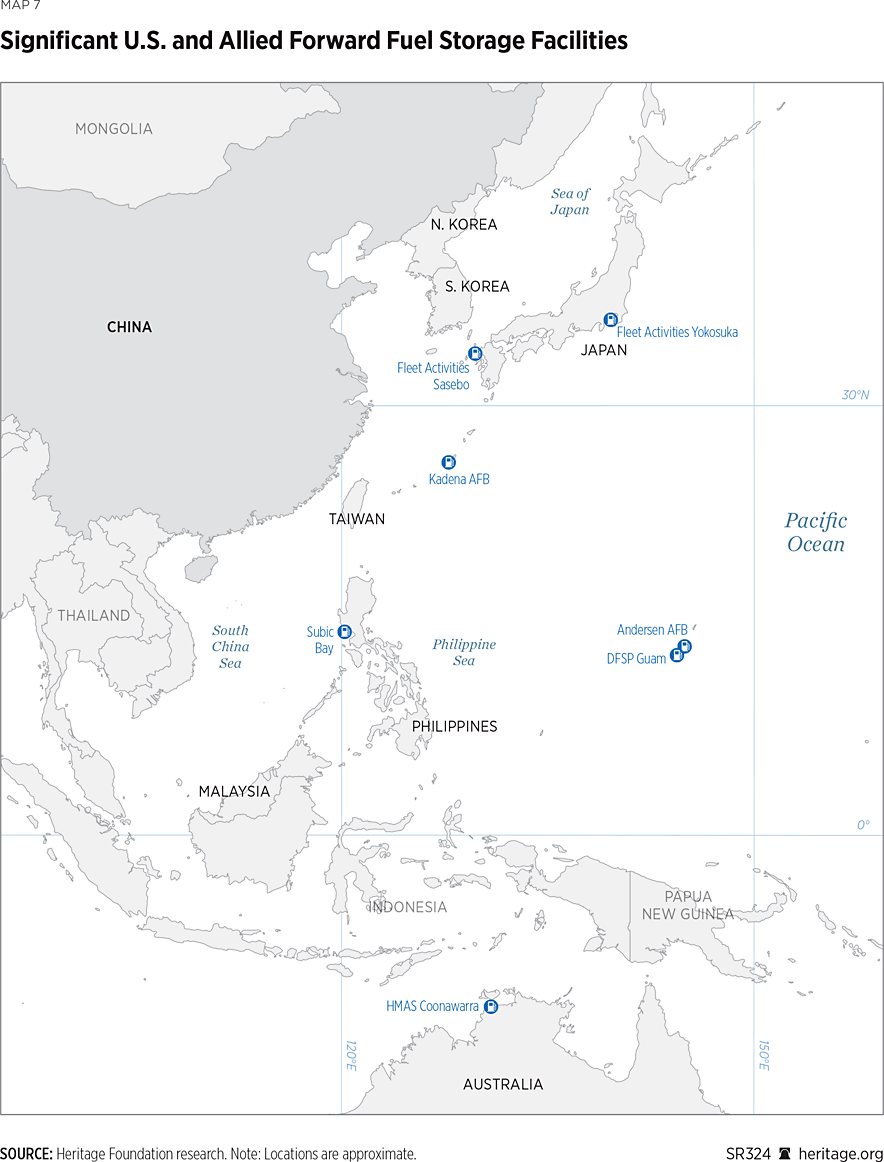
- CV 4: Concentrated Forward Fuel Hubs
- CV 5: Allied Port Access
- CV 6: U.S. Air Force (USAF) Aerial Refueling
- CV 7: Unhardened Fuel Infrastructure
System Vulnerabilities
Critical Vulnerability 1: Fleet Oiler (T-AO) Force
Problem: The thin, aging, and low-survivability CLF inventory likely makes at-sea fuel replenishment the primary throttle on sustained naval operations.
Constrained Metric: Sustainable (UNREP) kbpd and consolidated cargo operation (CONSOL) cycle time.
Capacity Lever: Oiler density, protected reload access, and dispersed CONSOL geometry.
Why It Breaks: The U.S. Navy relies on a small fleet of just 15 aging Kaiser-class oilers to meet the theater’s entire F-76 demand. The loss or delay of just a few of these irreplaceable hulls removes ~20 kbpd to 40 kbpd of throughput, pushing the effective at-sea flow from a permissive ceiling of ~280 kbpd to below the 200 kbpd crisis threshold and forcing combatants into predictable and vulnerable port visits for fuel.
Critical Vulnerability 2: Trans-Pacific Sealift (“Tanker Bridge”)
Problem: The strategic sealift capacity from the U.S. West Coast is almost certainly too slow and fragile to backfill forward losses in a timely manner, making it a critical lagging constraint.
Constrained Metric: From contiguous United States (CONUS) to theater sealift and days in transit.
Capacity Lever: U.S.-flagged tanker availability (Tanker Security Program); CONSOL cycle efficiency.
Why It Breaks: The “tanker bridge” is dependent on a small number of U.S.-flagged tankers and the uncertain willingness of commercial charter crews to enter a warzone.2 With 30-to-40-day round-trip cycles, the ~100 kbpd to 140 kbpd, too little to backfill early losses at forward depots or a degraded CLF fleet.
Critical Vulnerability 3: Marine Offload Terminals (Piers/Chokepoints)
Problem: Fuel throughput is almost certainly throttled by physical and procedural bottlenecks at the handful of fixed piers that serve as the primary intake valves for the entire theater.
Constrained Metric: Berth concurrency and barrels per day (bpd) pump rate.
Capacity Lever: Hardened manifolds or pumps, pier redundancy, and product-flex crossovers.
Why It Breaks: Key terminals are hobbled by aging infrastructure (World War II-era pipelines at Yokosuka), a lack of exclusive U.S. berths (Subic Bay), and inflexible fuel segregation (Sasebo). The loss of a single berth at a critical hub like Apra Harbor or Tengan Pier can reduce theater flow by ~15 percent per node, creating immediate queues of tankers offshore and starving the distribution system.
Critical Vulnerability 4: Concentrated Forward Fuel Hubs
Problem: An over-reliance on a few large, centralized “mega-hubs” almost certainly creates predictable, high-value targets and single points of failure for an adversary to exploit.
Constrained Metric: Node daily issue bpd; recovery (days).
Capacity Lever: Dispersal of assets, pre-staged repair kits, active or passive defenses, and product-flex crossovers.
Why It Breaks: PLA doctrine makes early strikes on these hubs almost certain, with modeling showing a potential 30 percent to 50 percent regional throughput loss in the first seven to 14 days if three to four hubs are degraded. A single pipeline severance at Kadena can remove ~20–40 kbpd, while a depot strike at Andersen can strip ~25 kbpd to 100 kbpd for two to four-plus weeks, forcing immediate sortie rationing.
Critical Vulnerability 5: Allied Port Access
Problem: U.S. logistics are critically dependent on access to allied ports, which is not assured and very likely can be denied or delayed through non-kinetic means.
Constrained Metric: Diversion delays and quantity of assured berths.
Capacity Lever: Pre-negotiated military-priority berth agreements and host-nation indemnity clauses.
Why It Breaks: An adversary can use influence operations, economic coercion, or cyber attacks to pressure host nations. The simple act of an ally withholding a civilian-priority berth or an insurer refusing to cover vessels entering the area can force tanker diversions around three to seven days.
Critical Vulnerability 6: USAF Aerial Refueling Tankers
Problem: The aerial tanker fleet serves as a brittle, short-term relief valve for aviation fuel, almost certainly not a sustainable logistics backbone.
Constrained Metric: JP-8 passed per day and tanker sortie rate.
Capacity Lever: Forward operating base survivability and tanker force availability.
Why It Breaks: The USAF tanker fleet can surge to provide up to ~115 kbpd of direct fuel delivery, but this is a temporary capability lasting only seven to 14 days. This capacity is entirely dependent on the same vulnerable forward bases (like Guam and Kadena) for its own refueling, meaning that any disruption to the main hubs immediately cripples this supposed “backup” system.
Critical Vulnerability 7: Unhardened Fuel Infrastructure
Problem: Pervasive use of “soft,” above-ground storage tanks makes the fuel inventory highly susceptible to attack, very likely accelerating throughput-to-issue losses during recovery.
Constrained Metric: Node loss per strike and days degraded.
Capacity Lever: Hardening berms or buried/recessed tanks and dispersal of storage assets.
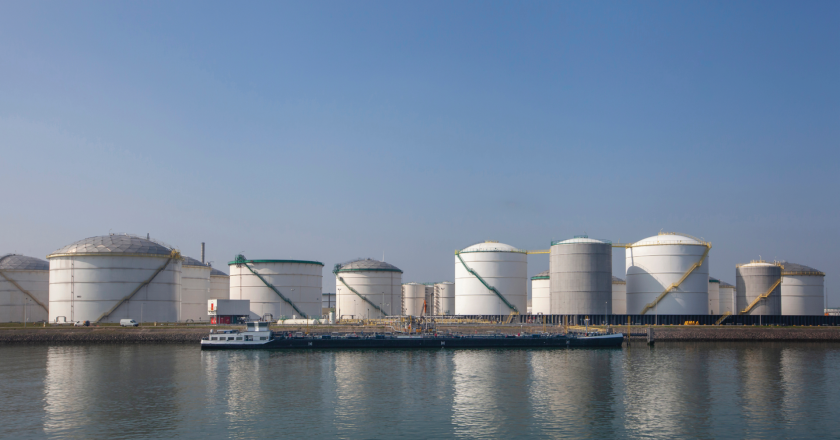
Why It Breaks: Many key forward locations, especially expeditionary sites in the Philippines, rely on exposed, above-ground modular tanks that are exceptionally fragile. While the system fails on flow before stock, successful strikes on these unhardened farms—removing 25 kbpd to100 kbpd of available issue per attack—amplify the cumulative deficit.
Cross-Cutting Simulation Insight
Even when CONUS stocks and sailing schedules are adequate, intake and last-mile constraints (berths, pumps, pipelines, CLF cycles) dominate the first month. For instance, removing one major pipeline and one oiler simultaneously produces a larger, faster shortfall than losing either alone, validating the focus on flow hardening and reload protection over new tankage.
System Chokepoints
Beyond the seven identified vulnerabilities, Heritage judges that the U.S. military fuel system contains at least eight non-substitutable dependencies. These consist of imported components, precursor chemicals, and minerals that are highly susceptible to disruption by the PRC.
█████████████████████████
█████████████████████████████████████████████████████████████████████████████████████████████████████████████████████████████████████████████████████████████████████████████████████████████████████████████████████████████████████████████████████████████████████████████████████████████████████████████████████████████████████████████████████████████████████████████████████████████████████████████████
██████████████████████████████████████████████
████████████████████████████████████████████████████████████████████████████████████████████████████████████████████████████████████████████████████████████████████████████████████████████████████████████████████████████████████████████████████████████████████████████████████████████████████████████
█████████████████████████████████████████████████████
██████████████████████████████████████████████████████████████████████████████████████████████████████████████████████████████████████████████████████████████████████████████████████████████████████████████████████████████████████████████████████████████████████████████████████████████████████████████████████████████████
- █████████████████████████████████████████████████████████████████████████████████████████████
██████████████████████████████████████████████████████████████████████████████████████████████████████████████████████████████████████████████████████████████████████████████████████████████████████████████████████████████████████████████████████████████████████████████████████████████████████3████████████████████████████████████████████████████████████████████████████████████████████████████████████████████████████████████████████████████████████████████████████████████████4█
███████████████████████████████████████████████████████████████████████████████████████████████████████████████████████████████████████████████████████████████████████████████████████████████████████████████5█████████████████████████████████████████████████████████████████████████████████████████████████████████████████████6████████████████████████████████████████████████████████████████████████████████████████████████████████████████████████████████████████████████████████████████7█
███████████████████████████████████████████████████████████████████████████████████████████████████████████████████████████████████████████████████████████████████████████████████████████████████████████████████████████████████████8████████████████████████████████████████████████████████████████████████████████████████████████████████████████████████████████████████████████████9█
- ████████████████████████████████████
██████████████████████████████████████████████████████████████████████████████████████████████████████████████████████████████████████████████████████████████████10███████████████████████████████████████████████████████████████████████████████████████████████████████████████
████████████████████████████████████████████████████████████████████████████████████████████████████████████████████████████████████████████████████████████████████████████████████████████████████████████████████████████████████████████████████████████████████████████████████████████████████████████████████████████████████████████████████████████████████████████████████████11█
████████████████████████████████████████████████████████████████████████████████████████████████████████████████████████████████████████████████████████████████████████████████████████████████████████████████████████████████████████████████████████████
- █████████████████████████████████████████████████████
- ██████████████████████████████████
████████████████████████████████████████████████████████████████████████████████████████████████████████████████████████████████████████████████████████████████████████████████████14███████████████████████████████████████████████████████████████████████████████████████████████████████████████████████████████15█
██████████████████████████████████████████████████████████████████████████████████████████████████████████████████████████████████████████████████████████████████████████████████████████████████████████████████████████████████████████████████████████████████████████████████████████████████████████████████████████████16████████████████████████████████████████████████████████████████████17████████████████████████████████████████████████████████████████████████████████████████████████████████████████████████████████████████████████████████████████████████████████████████████████████████████████████████████████████████18█
██████████████████████████████████████████████████████████████████████████████████████████████████████████████████████████████████████████████████████████████████████████████████████████████████████████████████████████████████████████████████████████████████████████████████████████████████████████
- ████████████████████████████████████
██████████████████████████████████████████████████████████████████████████████████████████████████████████████████████19███████████████████████████████████████████████████████████████████████████████████████████████████████████████████████████████20█
██████████████████████████████████████████████████████████████████████████████████████████████████████████████████████████████████████████████████████████████████████████████████████████████████████████████████████████████21█
███████████████████████████████████████████████████████████████████████████████████████████████████████████████████████████████████████████████████████████████████████████
- ██████████████████████████████████████
███████████████████████████████████████████████████████████████████████████████████████████████████████████████████████████████████████████████████████████████████████████████████████████████████████████████22█
███████████████████████████████████████████████████████████████████████████████████████████████████████████████████████████████████████████████████████████████████████████████████████████████████████████████████████████████████23█
█████████████████████████████████████████████████████████████████████████████████████████████████████████████████████████████████████████████████████████
- ███████████████████████████████████
██████████████████████████████████████████████████████████████████████████████████████████████████████████████████████████████████████████████████████████████████████████████████████████████████████████
█████████████████████████████████████████████████████████████████████████████████████████████████████████████████████████████████████████████████████████████████████████████████████████24███████████████████████████████████████████████████████████████████████████████████████████████████████████████████████████████████████████████████25█
█████████████████████████████████████████████████████████████████████████████████████████████████████████████████████████████████████████████████████████████████████████████████████████████████████████26█
- █████████████████████████████████████████████████
███████████████████████████████████████████████████████████████████████████████████████████████████████████████████████████████████████████████████████████████████████████
███████████████████████████████████████████████████████████████████████████████████████████████████████████████████████████████████████████████████████████████████████████████████████████████████████████████████████████████████████████████████████████████████████27████████████████████████████████████████████████████████████████████████████████████████████████████
██████████████████████████████████████████████████████████████████████████████████████████████████████████████████████████████████████████████████████████████████████████████████████████████████████████████████████
Broader Chokepoints Amplifying PRC Leverage
Civilian Infrastructure: The military’s dependence on commercial infrastructure like the Colonial Pipeline, which transports “more than 100 million gallons... of fuel each day,” creates a tangible vulnerability to cyberattack, as demonstrated by the 2021 ransomware incident.28
Finished Fuel Imports: The U.S. is exposed to concentration risk in finished fuel imports. According to the Energy Information Administration, in 2024, South Korea supplied 71 percent of U.S. jet fuel imports, creating a geographic chokepoint vulnerable to maritime pressure.29
Weapon System Dependencies: Key U.S. platforms are directly dependent on Chinese-processed materials. Each F-35 requires roughly 920 pounds of rare-earth materials, while an Arleigh Burke-class destroyer requires 5,200 pounds, tying front-line combat systems directly to PRC-controlled supply chains.30
Fuel Logistics Timeline
Day 0 to 3: Pier and pipeline disruptions at Guam and Okinawa trigger the first delays for inbound tankers, which loiter offshore as UNREP windows slip. Exposed marine offload piers and the Kadena cross-island pipeline are early limiters.
Day 4 to 10: JP-8 delivery drops into the ~500 kbpd to 600 kbpd range as hub offload capacity (berth concurrency, pumps, pipelines) degrades and CLF reloads bunch at the few remaining operational berths. A short-lived USAF tanker “relief valve” can add up to ~115 kbpd for ~seven to 14 days but is dependent on the same vulnerable bases and is not durable.
Day 11 to 18: With two to three oilers attrited or delayed or one to two combined with elongated CONSOL cycles, F-76 at-sea flow drops ~20 kbpd to 40 kbpd, below the ~200 kbpd crisis threshold needed to present fleet fuel starvation in our simulation (Scenario D), forcing Carrier and Amphibious Strike Groups to throttle their operational tempo.
Day 19 to 24: Activating OPDS/JLOTS and FARPs buys back ~5 kbpd to 15 kbpd, useful as a “tourniquet” but insufficient to clear tanker backlogs at Apra and Tengan while hub intake and UNREP remain the binding constraints.
Day 25 to 30: Prepositioned afloat stocks (Scenarios A and B) are heavily drawn down. Meanwhile, allied port-access risk (political/insurance gating) begins to bite, wobbling berth priority and forcing diversions that add 3–7 days to tanker arrival times and amplify queues. (See CV5: Allied Port Access (Political Risk)).
Wartime Demand and China’s Strategy
Heritage judges that it is almost certain that the U.S. fuel logistics network lacks the throughput capacity to meet the modeled wartime demand of a high-intensity Indo-Pacific conflict. This shortfall will very likely manifest as a structural, immediate F-76 delivery deficit at sea driven by “last-mile” delivery constraints and a large JP-8 deficit that forces sortie rationing inside the first two weeks.
This judgment is made with high confidence, based on a detailed analysis of simulated wartime fuel demand versus the U.S. fuel logistics network’s maximum throughput capacity. The underlying data, including logistics network assessments and conflict simulations, provides a robust quantitative foundation for this conclusion. Uncertainty is primarily rooted in the dynamic nature of conflict, including the actual attrition rates of fuel transport assets, specific timing and success of enemy attacks on fuel infrastructure, and the reliability and capacity of allied contributions to the fuel supply chain.
F-76 Naval Fuel
Demand: Peak wartime demand reaches ~210 kbpd after factoring in operational readiness, operational tempo, and other multipliers, with a sustained average of ~160 kbpd.
Throughput: Permissive UNREP at ~265 kbpd to 280 kbpd degrades to <200 kbpd under modest attrition.
Analysis: Losing or delaying two to three T-AOs (or elongating reload cycles) removes ~20 kbpd to 40 kbpd, forcing reliance on afloat reserves and accelerating collapse. Adding hulls or CONSOL-capable connectors or shortening reload cycles are likely the only levers that lift the structural ceiling rapidly; additional storage alone does not change the binding constraint.
JP-8 Aviation Fuel
Demand: Peak unconstrained requirement reaches ~710 kbpd after factoring in operational readiness, operational tempo, and other multipliers, with a sustained average of ~500 kbpd.
Throughput: The network’s sustainable delivery capacity under pressure is only ~500 kbpd to600 kbpd.
Analysis: The JP-8 problem is a high-stakes race between consumption and a finite, vulnerable supply chain. Rationing becomes policy within the first two weeks as initial kinetic and non-kinetic attacks on hub offload capacity (berth concurrency, pump rates) and cross-island pipelines remove 25 kbpd to 100 kbpd of daily issue capability per node (hose count × pump rate × duty hours). USAF tankers provide ~115 kbpd for seven to 14 days but rely on the same hubs and crowd out aerial refueling support. Kadena’s lack of marine offload plus a cross-island pipeline is a brittle early limiter.
Bomber-leg and nuclear alert commitments ring-fence a number of aircraft, but under the model basing profile, the 140-aircraft forward surge still closes the AAR requirement band once the basing/reload chokepoints are fixed and defended. Once this occurs, the binding constraint very likely shifts to node uptime, crew ratios, and protection of the reload window, not “tail count.” Near-term lift likely requires hardening flow (manifolds, pump redundancy, crossovers) and pre-deciding allied berths/indemnity to reduce diversion lags; OPDS/JLOTS and FARPs add only ~5 kbpd to 15 kbpd and should be treated as tourniquets, not substitutes.
Chinese Targeting Strategy
Given the identified vulnerabilities of the U.S. fuel system, Heritage judges that the PLA is very likely to follow campaign doctrine that emphasizes striking logistics nodes, especially fuel depots, piers, and terminals as vital nodes early in the conflict through a combined kinetic and non-kinetic campaign. Coordinated strikes and access pressure would almost certainly degrade fuel intake, elongate CLF reload cycles, and drive diversion delays, pushing deliverable flow below modeled demand within days. This judgment is made with high confidence based on authoritative PLA-doctrine synthesis, scenario-tied simulations, and engineering assessments of hub chokepoints.
Doctrine links wartime pacing and fuel availability—not platforms—as the element that governs sustained operations. This bridges authoritative doctrine with modeled campaign behavior and mitigates single-source bias by tying to the project’s scenario outputs (A–D), which show early throughput deficits under contested conditions. PLA strategic thinking is rooted in a “systems destruction warfare” concept, which seeks to cripple an adversary’s ability to operate by attacking critical nodes in their operational system. Authoritative PLA sources explicitly direct commanders to “strike the enemy’s logistics system” to paralyze its operational capability, viewing it as a decisive center of gravity.
Their targeting methodology identifies petroleum depots, cross-island pipelines, and port fuel terminals as priority nodes for initial strikes. We integrated PLA doctrine with CARVER scoring techniques to assess early-phase aimpoints. Project threat matrices identified key hubs like Andersen and Kadena as “Very Likely” targets for PLA intermediate-range ballistic missiles (IRBMs), such as the DF-26. Quantified node-impact ranges from the JP-8 sustainment analysis (~20 kbpd to 40 kbpd for pipeline severance; ~25 kbpd to 100 kbpd for depot strikes) translate doctrinal targeting into operational effects; this complements the oiler-survivability finding that small CLF losses remove 20–40 kbpd of at-sea delivery.
The PLA is very likely to open with coordinated missile/air strikes on depots, pipelines, marine terminals, and slow, thin-skinned oilers to induce immediate throughput collapse. To amplify kinetic effects, follow on targeting will likely include cyber, insurance, and political-access pressure that slows port services and gates allied berth availability.
Recovery and fallback analysis of Western Pacific terminals documents the practical choke: limited hardening, interchangeability gaps, and diversion delays of ~three to sevendays when ports restrict or reprioritize berths. It provides a concrete mechanism by which non-kinetic pressure translates to real throughput loss.
Items of Decision-Making Value
From our analysis we have assessed eight items of decision-making value:
- Flow Beats Stock. Decision-makers should prioritize investments that harden the flow of fuel—pump houses, manifolds, and pier concurrency, for instance—over simply adding more storage tanks. Tanks do not win wars if the pumps and pipes that fill them are broken.
- Protect Reloads. Oilers are the fuel maneuver arm of the fleet. Their reload windows at sea (CONSOL) and at port are predictable points of extreme vulnerability and must be treated like high-value combat sorties, with dedicated convoy and air covert.
- Buy Time by Pre-Deciding. The friction of wartime decision-making can be lethal. The U.S. can convert days into hours by securing pre-committed, military-priority berths at allied ports now, complete with pre-negotiated letters of commitment and indemnity.
- Redundancy Is Greater than Elegance. In a missile fight, having two adequate options is better than one perfect, but easily targeted, solution. This means prioritizing product-flexible crossovers at fuel terminals and staging substitution kits (hoses, valves, pumps) at key nodes like Guam and Kadena.
- Centralize Adjudication. Empower JMPAB and USTRANSCOM as the single fuel manager to allocate scarce flow by theater priority and prevent misallocation during strike windows.
- Throttle Demand (Dynamic OpTempo). Establish decision rules to modulate intensity. Minor shifts in intensity can dramatically increase endurance.
- Expand Assured Multimodal Lift. Close early lift gaps by fully activating/expanding the Tanker Security Program, placing fully-crewed charters on standby, and pre-positioning JPOTS/OPDS to bypass damaged ports.
- Monitor the Right Needles. A commander’s dashboard should track three critical indicators: (1) CLF availability (the number of oilers multiplied by their cycle time), (2) berth concurrency at the top three fuel hubs, and (3) the daily delivery of JP-8 versus the 710 kbpd peak requirement. These are the three needles that will signal an impending collapse.
Endnotes
- Unfunded Priority Lists (UPLs) are annual submissions by each military service to Congress identifying mission-critical requirements not funded in the President’s Budget due to topline constraints. John G.Ferrari and Elaine McCusker, “Observations on the FY2026 Unfunded Priorities Lists. AEI Foreign & Defense Policy Working Paper 2025-15, Washington, DC: American Enterprise Institute, July 2025, https://aei.org/wp-content/uploads/2025/07/WP-UPL-FY26-Final.pdf (accessed January 16, 2026).↩
- Stephen M. Carmel, “Tankers for the Pacific Fight: A Crisis in Capability,” Center for International Maritime Security, January 23, 2023, https://cimsec.org/tankers-for-the-pacific-fight-a-crisis-in-capability/ (accessed December 23, 2025).↩
- Patrick Tucker, “China’s rare-earth mineral squeeze will hit Pentagon hard,” Defense One, April 23, 2025, https://www.defenseone.com/threats/2025/04/chinas-rare-earth-mineral-squeeze-will-hit-penagon-hard/404776/ (accessed December 23, 2025); Macdonald Amoah, Morgan Bazilian, and Jahara Matisek, “Jet fuel, China, and lanthanum: a hidden risk to US military power projection,” Atlantic Council, September 15, 2025, https://www.atlanticcouncil.org/blogs/energysource/jet-fuel-china-and-lanthanum-a-hidden-risk-to-us-military-power-projection/ (accessed December 23, 2025); and Antonio Nieto, Kirsten Guelly, and Andrew Kleit, “Addressing criticality for rare earth elements in petroleum refining: The key supply factors approach,” Resources Policy, December 2013, https://www.sciencedirect.com/science/article/abs/pii/S0301420713000676 (accessed November 11, 2025).↩
- ██████████████████████████████████████████████████████████████████████████████████████████████████████████████████████████████████████████████████████████████████████████████████████████████████████████████████████████████████████↩
- ████████████████████████████████████████████████████████████████████████████████████████████████████████████████████████████████████████████↩
- ████████████████████████████████████████████████████████████████████████████████████████████████████████████████████████████████████████████████████████████████████████████████████████████████████████████████████↩
- ██████████████████████████████████████████████████████████████████████████████████████████████████████████████████████████████████████████████████████████↩
- ████████████████████████████████████████████████████████████████████████████████████████████████████████████████████████████████████████████████████████████████████████████████████████████████████████████████████████↩
- ██████████████████████████████████████████████████████████████████████████████████████████████████████████████████████████████████████████████████████████████████████████████████████████████████████↩
- ████████████████████████████████████████████████████████████████████████████████↩
- ███████████████████████████████████████████████████████████████████████████████████████████████████████████████████████████████████████████████████████████████████████████████████████████████████████████████████████████████████████████████████████████████↩
- ██████████████████████████████████████████████████████████████████████████████████████████████████████████████████████████████████████████↩
- █████████████████████████████████████████████████████████████████████████████████████████████████████████████████████████████████████████████████████████████████████████████████████████████████████████████████████████████████████↩
- ███████████████████████████████████████████████████████████████████████████████████████████████████████████████████████████████████████████████↩
- ████████████████████████████████████████████████████████████████████████████████████████████████████████████████████████████████████████████████████████████████████████████████████↩
- ███████████████████████████████████████████████████████████████████████████↩
- ███████████████████████████████████████████████████████████████████████████████████████████████████████████████████████████↩
- ██████████████████████████████████████████████████████████████████████████████████████████████████████████████████↩
- ███████████████████████████████████████████████████████████████████████████████████████████████████████████████████████████████████████████████↩
- █████████████████████████████████████████████████████████████████████████████████████████████████████████████████████████████████████████████████████↩
- ████████████████████████████████████████████████████████████████████████████████████████████████████████████████████████████████████████████████████████████████████████↩
- █████████████████████████████████████████████████████████████████████████████████████████████████████████████████████████████████████↩
- ████████████████████████████████████████████████████████████████████████████████████████████████████████████████████████████████████████████████████████↩
- ███████████████████████████████████████████████████████████████████████████████████████████████████████████████████████████████████████████↩
- ██████████████████████████████████████████████████████████████████████████████████████████████████████████████████████████████████████████████████████████↩
- █████████████████████████████████████████████████████████████████████████████████████████████████████████████████████████████████████████████████████████████████████████████████████████████████████↩
- ██████████████████████████████████████████████████████████████████████████████████████████████████████████████████████████████████████████████████████████████████████████████████████████████████████████████████████████████████████████↩
- “Our Operations,” Colonial Pipeline Company, https://www.colpipe.com/our-operations/ (accessed November 11, 2025), and “Colonial Pipeline Cyber Incident,” U.S. Department of Energy, https://www.energy.gov/ceser/colonial-pipeline-cyber-incident (accessed November 11, 2025).↩
- “U.S. Imports of Major Transportation Fuels Decreased in 2024,” U.S. Energy Information Administration, April 29, 2025, https://www.eia.gov/todayinenergy/detail.php?id=65124 (accessed November 11, 2025).↩
- Erich Wagner, “China’s Rare-Earth Mineral Squeeze Will Hit F-35s First,” Government Executive, June 4, 2019, https://www.defenseone.com/business/2019/06/chinas-rare-earth-mineral-squeeze-will-hit-f-35s-first/157467/ (accessed November 11, 2025).↩
