

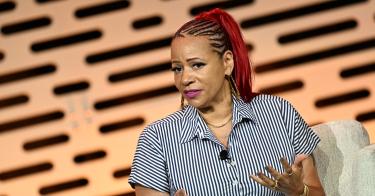
Nikole Hannah-Jones now admits what her daughter already knew: enrolling your child in a failing school system puts them at a serious disadvantage.
Hannah-Jones is a journalist catapulted to national attention by the controversial 1619 Project. In a New York Times Magazine essay this month, she is brutally honest about the cost of choosing a political statement over a child’s education. Daughter Najya Hannah-Jones, now 16, put it plainly: “I never really got the education I wanted.” Now that Najya wants to attend one of the city’s competitive high schools, she’s realized that her poorly performing elementary school (PS 307 in Brooklyn) didn’t adequately prepare her. Hannah-Jones agreed, per the essay, telling her daughter, “I feel like you got cheated.”
Ten years ago, Hannah-Jones made a political show of refusing to send her child to the better schools she could easily have afforded. She knew the school she picked was struggling. She sent Najya into a highly segregated, high-poverty New York City government school to put her ideology into practice, and wrote an essay encouraging other families to follow. The system was supposed to improve because a famous journalist stayed put.
“A NYT reporter in a high-poverty school f-ing changes the school,” she said at a 2018 event in Iowa City. “I can go to that school and say there is a problem and it gets fixed immediately.”
>>> American Schools Cost More Than Ever but Our Students Still Keep Failing
Things did not go as planned.
Hannah-Jones later discovered that her daughter thought she was acing math because nobody was grading the papers. “She thought she was correctly solving all her problems because her teacher was not checking her work,” Hannah-Jones wrote.
Writing assignments came home riddled with errors nobody corrected. A little girl believed she was soaring while she was falling behind. Her one shot at an education was sacrificed as a public-relations campaign.
Parents should not place children in a failing government school system because of ideology, or as an attempt to score political points.
Assigning kids to segregated government schools based on their zip code does nothing to help them. It is not the job of families to fix broken schools. The school system is supposed to exist to meet the needs of students. Families do not exist to prop up a monopoly that failed them.
New York City public schools spend more than $40,000 per student per year. That fortune buys mostly failure. Najya’s failing public school spends more than $52,000 per student per year: far more than average private school tuition. Forty-three percent of New York City kids are stuck in schools where fewer than half of the students are proficient in math or reading, or both, even after New York State lowered the bar for passing.
Many families chose differently than Hannah-Jones, seeking better opportunities for their children. New York City public schools had more than one million students in 2020 and have lost about 115,000 since then. Through a combination of demographics and the growth of choice, attrition is accelerating. More than 200 public schools now enroll fewer than 200 students each. Ever-more money will still be directed to the district reporting double-digit decrease in enrollment.
New York City also caps the number of charter schools, leaving tens of thousands of kids stuck on waitlists. The teachers unions fight and sue to keep that cap in place to block students’ options to leave, keeping per-student funding—and union dues—flowing into city-run schools.
The people who still lecture parents for leaving are getting louder as the classrooms empty. Over the weekend, Dominique Jean-Louis, the chief historian at the Brooklyn Public Library, posted that there should be “more shame (and consequences)” for good parents who pull their kids out of the failing government school system. She deleted the post after massive pushback.
Beware any ideology that pressures people to sacrifice their own children’s wellbeing. Shame is a tool for trapping kids, not teaching them.
Hannah-Jones blocked me on X (along with many other critics, I’m sure) long ago, after a disagreement over school choice. She could have had this realization sooner, before it was too late, if she had not put herself in an echo chamber. The evidence has been sitting in plain sight for anyone willing to look at the facts.
>>> America’s Public Schools Have an Empty-Desk Problem
Twenty-six of the 29 academic studies on the topic find that school choice improves outcomes even for students who remain in public schools. A peer-reviewed evaluation published in the American Economic Journal found that competition introduced by school choice correlated with improved test scores, attendance, and behavior in Florida’s public schools.
Public schools raise their game when families can walk away. They stagnate when families are trapped.
That Hannah-Jones wanted to improve New York’s public schools is admirable. She would likely have done more for those schools—and surely done better for her child—by pulling her daughter out than by trapping her in them. Competition would have given those schools a reason to check the math homework, keep the teachers in the classroom, and treat Najya like a student instead of a symbol.
School choice is an equalizer. Hannah-Jones can afford options most families cannot, and for that she felt guilty, instead of grateful. To improve outcomes and educational opportunities for students who can’t buy a ticket out, she could join the fight to ensure taxpayer funding follows the student, not the building.
You do not fix public schools by locking kids in them without any accountability. You fix them by giving them a reason to change their ways.
I welcome Nikole Hannah-Jones to the school choice revolution. Maybe she will start to understand that leaving would have done more, through competition, than the status quo ever did. Her daughter already understands the price of that choice. No other child should have to wait any longer.
This piece originally appeared in The Daily Economy



