

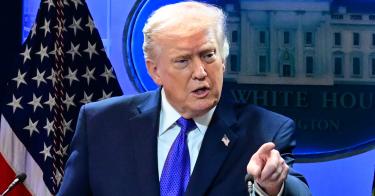
When the Supreme Court ruled against the Trump administration on tariffs on Friday, many mistakenly concluded that tariffs were now a thing of the past. Wrong. In his dissent, Justice Brett Kavanaugh explained why, even after this ruling, the President will still be able to advance his tariff agenda—just with extra steps.
Many legal scholars—and their impersonators—have missed this fact because they are busy weighing in on the merits of the case.
However, it’s worth stepping down from the ivory tower of legal theory to assess what the ruling practically means for international trade broadly and the American economy specifically, as well as how the Trump administration adapted to it, literally within hours.
Breaking Down The Case and The Tariffs
At the heart of this case was the President’s use of the International Emergency Economic Powers Act (IEEPA) to impose tariffs. The court ruled, somewhat ironically, that the President could use the Act to impose much more stringent measures, such as embargos, but not the less restrictive mechanism of a tariff.
>>> How We Can Finally Overcome the Affordability Crisis
Regardless, Justice Kavanaugh’s dissent is worth highlighting, and not necessarily because he disagreed with the six justices of the majority. Rather, it’s because he succinctly articulated what the Trump administration would likely do in response to the Court’s decision.
Kavanaugh was spot on: “Numerous other federal statutes authorize the President to impose tariffs and might justify most (if not all) of the tariffs at issue in this case—albeit perhaps with a few additional procedural steps that IEEPA, as an emergency statute, does not require.”
Congress has delegated to the President the authority to impose tariffs through at least half a dozen sections of three other statutes, not including IEEPA.
These other mechanisms are all at least half a century old—the oldest nearly a whole century—and most have already been not only used but held up in Court when challenged, so there’s precedent for what happened next.
The Tariffs Aren’t Dead Yet
Just hours after the ruling was handed down, President Trump used several of those alternative mechanisms to reimpose tariffs previously imposed under IEEPA. This included a 10% global tariff under Section 122 of the Trade Act of 1974. That was later increased to 15%.
Similarly, all tariffs not imposed under IEEPA but under other tariff authorities remain in effect. That includes tariffs imposed by the Trump administration under Section 232 of the Trade Expansion Act of 1962 and Section 301 of the Trade Act of 1974.
President Trump also wasted no time in announcing that his administration was also pursuing additional tariff powers, as outlined in Justice Kavanaugh’s dissent. One very important example is Section 338 of the Tariff Act of 1930.
Better known as the Smoot-Hawley Tariff, this law gives the President extraordinarily wide-sweeping authority to impose tariffs of up to 50% and to ban certain imports entirely. Few legal commentators have bothered to notice that President Trump has this very sharp arrow in his quiver—and he has shown he’s not afraid of firing such arrows.
>>> Trump’s Economic Wins Cancel Out Biden’s Losses in Latest Jobs Report
And in addition to these half dozen tariff authorities, the executive has, besides IEEPA, the Supreme Court’s ruling, which also said that although IEEPA couldn’t be used to impose tariffs, it could still be used to embargo nations entirely. In other words, the Court confirmed a nuclear option when it comes to President Trump’s trade negotiations.
Besides IEEPA, the other tariff authorities are slower and require the executive to check a few more boxes before actually imposing those higher customs duties. In that sense, the reduced flexibility and speed give the President less negotiating power, but that’s the extent of the limitation.
The Trump Tariffs Are Here To Stay
Love them or hate them, the fact is, tariffs are here to stay. Ironically, much ink has been spilled in a matter of hours covering this much-anticipated high court decision, which changes very little for those who live in the real world. Where an academic might see a landmark case, the rest of us just see a minor detour.
Tariffs aren’t going anywhere, whether you like it or not.
This piece originally appeared in 1945.com



