

Marriage rates in the United States have declined substantially, particularly among non-college-educated Americans and among those in moderate- and lower-income brackets.[REF] One of the common explanations is that wages have declined among working-class men and thus fewer men are able to support families.
But the data tell a different story. While inflation-adjusted earnings did decline among working-class and lower-income men during the 1970s and 1980s, earnings rose thereafter and have fluctuated since then—even as marriage rates have steadily dropped. Although economic factors may explain why marriage declined during some periods across the past several decades, cultural shifts instead have been the main drivers.
Increased material expectations for marriage and major changes in norms surrounding sex and childbearing have pushed the marital timeline further into adulthood. For many Americans—primarily the non-college-educated—this has led to large increases in unwed childbearing and to greater family complexity, reducing the likelihood of achieving a stable marriage. Fewer men are connected to the labor force today, too, primarily due to policies that have made joblessness more attractive for men with lower earning potential.
Marriage Rate Trends
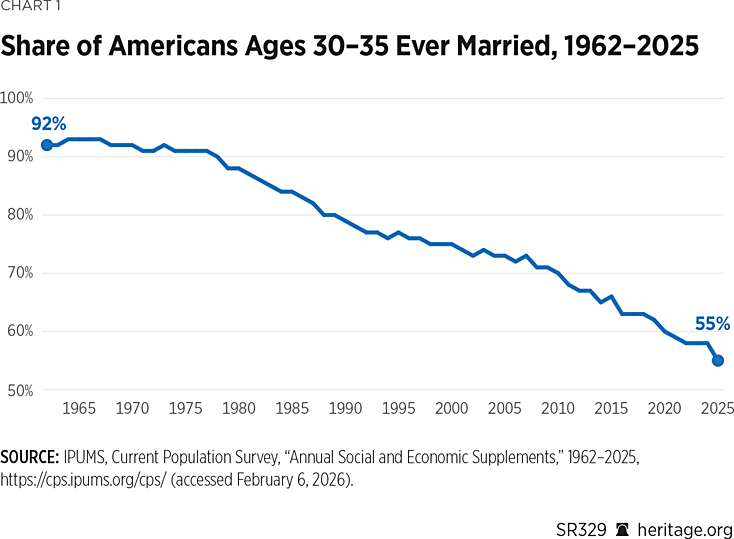
The share of Americans who are married has been on a steady decline for roughly five decades, decreasing from more than 90 percent of Americans having ever married by ages 30–35 in 1962 to 55 percent as of 2025.[REF] (See Chart 1.) Although some of the decline is due to delays in marriage rather than to people forgoing marriage altogether, researchers find that as marriage is delayed later into adulthood, it is less likely to occur.[REF] Some researchers project that one-third of Generation Z will never marry by age 45 or may never marry at all.[REF]
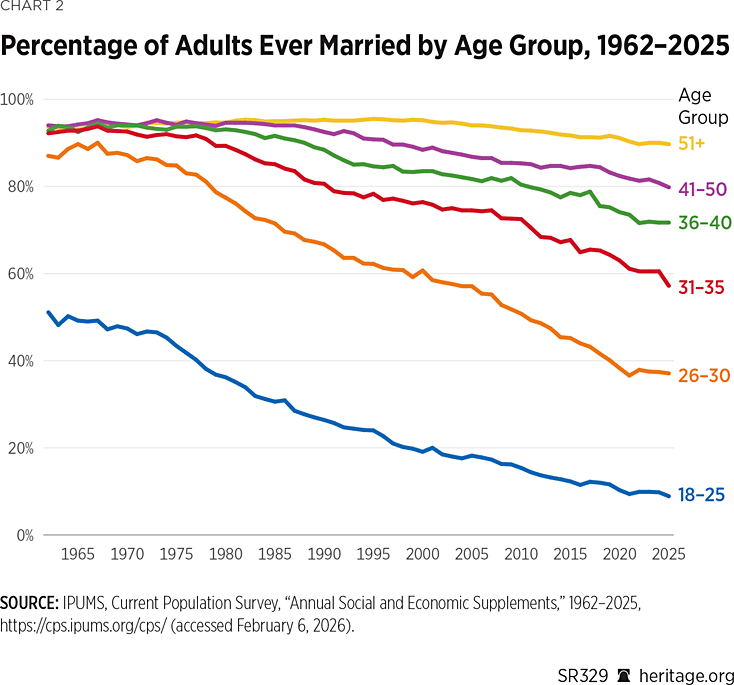
Marriage rates have declined across age groups, particularly among younger generations. (See Chart 2.) Marriage used to be a cornerstone of adulthood, but today marriage occurs later in the life course, for some not until after years of educational, career, and personal pursuits are accomplished.
Consequences of Declining Marriage
Marriage is one of the strongest factors associated with human happiness, as well as better physical health, mental health, and financial well-being.[REF] Even having an earlier “marital horizon”—expecting to marry earlier on in the life course than later—is associated with healthier behaviors in young adulthood.[REF]
Marriage is also important for the well-being of children. Children raised by their married mothers and fathers have substantially better outcomes in multiple areas of life, including greater educational attainment, better physical and mental health, greater financial well-being, and increased social mobility.[REF] Children raised by their married parents are also far less likely to ever experience poverty or child abuse.[REF] Even children raised in communities where there are more married parents are much more likely to experience social mobility, even if they are not raised in married-parent households themselves.[REF]
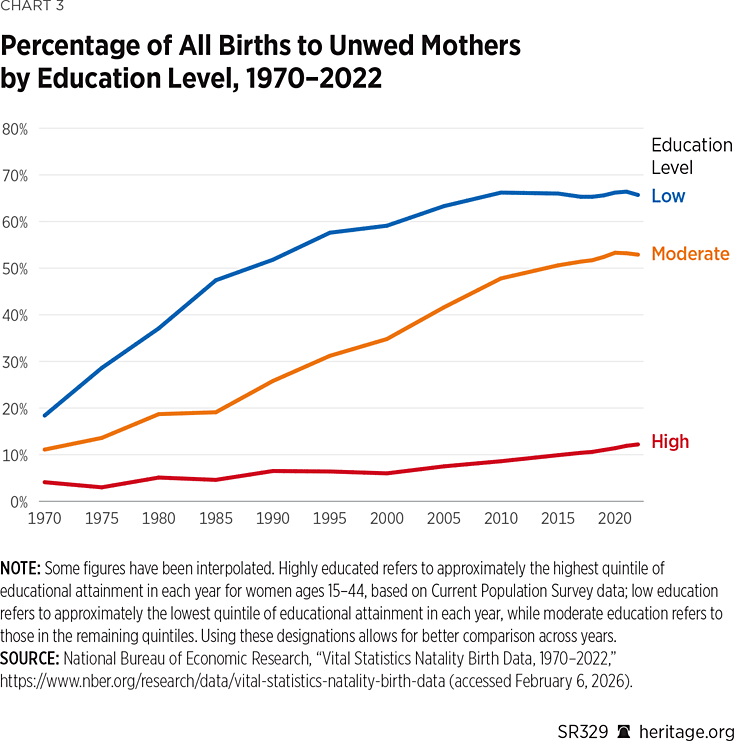
The drop in marriage is the driving factor in the increasing share of children born outside marriage in the United States every year.[REF] Forty percent of all U.S. children are born to unwed mothers today, compared to less than 10 percent in the early 1960s.[REF] Unwed childbearing is most common among those with low and moderate levels of education, with more than half of all children of non-highly-educated women currently born outside marriage, compared to only around 10 percent among highly educated women.[REF] (See Chart 3.)
The major divide in marriage by socioeconomic status is a substantial driver of inequality. Children with already fewer economic resources are also less likely to have the benefits and protections that being raised by their married mother and father provides, reducing their opportunities for upward mobility.
Less marriage also means fewer children born at all, as married women have more children on average than unmarried women do.[REF] The birth rate in the United States has been on a downward trajectory and is now well below the replacement rate, leading to thinner family networks and a decline in the valuable social capital family relationships provide—not to mention an aging population and its potential consequences for the elderly and for the economy.[REF]
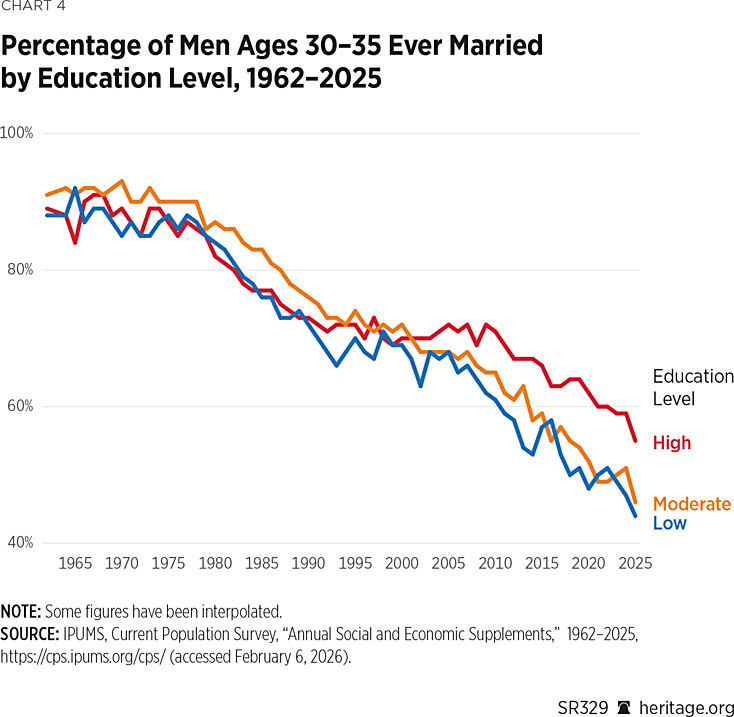
The divide in marriage by education and socioeconomic status has not always existed. In fact, highly educated men were a bit less likely to be married by ages 30–35 than were their less-educated counterparts until around 2000. Today, highly educated men between 30 and 35 are about 10 percentage points more likely to be married than are men with moderate or low education levels. (See Chart 4.)
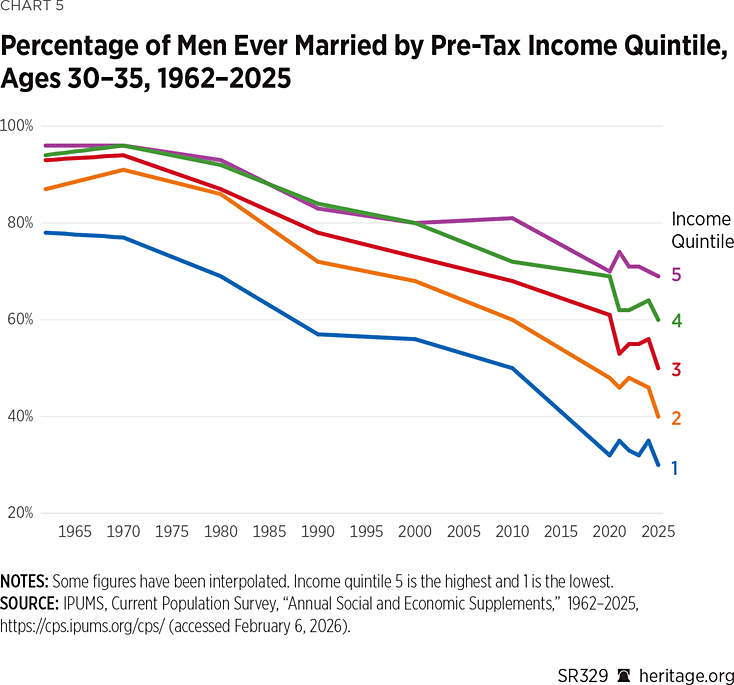
The divide in marriage rates by income level is much wider today. Like education, marriage used to be common regardless of income level. In the 1960s and 1970s, the share of Americans who were married was quite similar across income quintiles, although men in the lowest income quintile were somewhat less likely to be married. Most men in their early to mid-30s were married regardless of income level, though.
In 1962, more than 90 percent of men in the top three income quintiles, nearly 90 percent in the second quintile, and close to 80 percent in the lowest quintile had ever married by their mid-30s. (See Chart 5.)
Today, there is a much larger economic divide when it comes to marriage, though, with men in the highest income quintile being more than twice as likely to have ever married by their mid-30s (69 percent) compared to men in the lowest income quintile (30 percent).
Men as Breadwinners
Men’s ability to earn income has consistently been linked to their marriageability. Even though marriage rates were much more similar across income quintiles in the past, men with the highest incomes have consistently had the highest marriage rates.
Although the women’s labor force participation rate has increased substantially compared to prior generations, women still see a man’s ability to provide for a family as an important quality in a husband. While both men and women rank employment and economic ambition as important characteristics for a spouse, women place greater emphasis on these factors than men do.[REF] Both men and women are more likely to see paid labor as a responsibility that falls more heavily on husbands.[REF] And mothers most often prefer part-time work (47 percent) or not to be employed outside the home at all (20 percent) rather than to be employed full time (32 percent).[REF]
Husbands still most commonly bring in most of the household income, too, with 55 percent of married men being the sole or primary breadwinners today, although this is down steeply from 85 percent in 1972. In another 29 percent of marriages today, spouses earn about the same amount. However, in just 16 percent of marriages is the wife the primary or sole breadwinner.[REF]
What Is Driving the Decline in Marriage?
A common explanation for the economic divide in marriage is that working-class men are doing worse financially than they were in past generations. The argument goes that past generations of working-class men could find jobs that paid sufficient wages to allow them to support their families on a single income.[REF] In today’s economy, though, some argue, only those with the highest education and incomes can afford to support their families.
However, while the cost of raising a family has increased at times, the median earnings of young men today are similar in inflation-adjusted dollars to those of their predecessors. For example, the 80th percentile of earnings for men ages 25–29 in 2024 was $80,000, compared to $50,533 in 1962.[REF] Among some groups of men (e.g., black men), earnings have increased notably over time, however.[REF] Yet marriage rates have dropped nonetheless.
The quality of jobs for men—including perceived job stability, work hours, and job satisfaction—across education levels has also remained roughly similar over time.
However, today men are less likely to be in the labor force than in previous decades. This does not appear to be due to poorer or fewer job opportunities available today, though, but rather to policies that have made joblessness more attractive and to cultural changes surrounding marriage and childbearing that have had more severe effects among those in lower income brackets.
Men’s median earnings would have presumably grown more over time if marriage rates had remained what they were in the past, too. Researchers find a “marriage premium” for men in that entering into marriage causes an increase in men’s income, by some estimates by as much as 26 percent.[REF] The marriage premium could be due to married men feeling a greater need to be productive in their careers so they can provide for their families. It could also be due to other benefits associated with marriage that may serve to boost men’s productivity, such as better mental and physical health and having a spouse who can share household duties. Fewer married men in the population thus may have dampened men’s overall earnings over time.
Trends in Men’s Median Earnings
Overall, the data do not support the hypothesis that the median earnings of young men have been on a downward trajectory. While the pre-tax median earnings of young men declined during the 1970s and 1980s, median earnings increased in the mid-1990s and then fluctuated thereafter with economic cycles. (See Chart 6.)
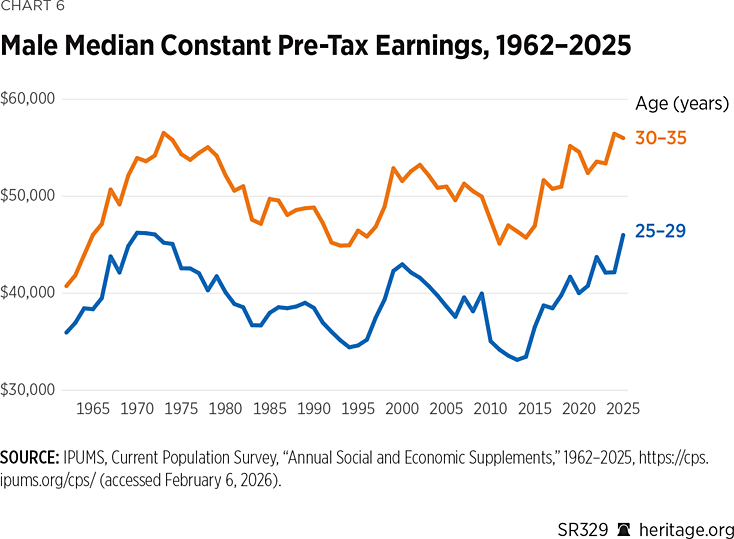
Specifically, among men ages 25–29 (most of whom are finished with higher education, so this helps control for the increase in college attendance over time), real annual median pre-tax earnings among men dropped during the 1970s and 1980s but increased during the 1990s and have fluctuated since.[REF] Further, as other researchers explain, post-tax earnings have increased more over time than have pre-tax earnings due to declines in income tax rates.[REF] Thus, post-tax earnings trends would show greater gains than pre-tax earnings trends do.
At the median level, young men’s annual pre-tax earnings have been relatively flat for the past three decades even as marriage rates have steadily dropped. In 2025, their median income was the highest it has been in about 50 years. (See Chart 6.)
Among men ages 30–35, real median annual earnings increased during the 1960s, declined during the 1970s and 1980s, increased thereafter, and have fluctuated with economic cycles since then. (See Chart 6.) Ultimately, at the median level, men’s annual inflation-adjusted pre-tax earnings were 37 percent higher in 2025 than they were in 1962 and higher than they had been in half a century.
Financial Marriageability
To examine the financial marriageability question further, Scott Winship of the American Enterprise Institute uses a financial “marriageability” threshold. He sets the baseline for marriageability by using the earnings of young men (ages 25–29) from previous decades who were single-earner, married fathers and compares their earnings to those of similarly aged men today, both single and married. He uses single-earner married fathers as his baseline comparison to get a comparison of what men who were married and providing for a family in the past were bringing in compared to similarly aged men today.
Men today who make more than the inflation-adjusted median earnings of 25- to 29-year-old single-earner married fathers from a past baseline year are counted as financially marriageable. (Winship uses three different years as the baseline for his analyses: 1962, 1969, and 1979.) This means that in the baseline year, half of married, single-earner fathers got by with less earnings, and half had more earnings.[REF]
Winship also conducts similar analyses using a lower threshold of marriageability: the 25th percentile of earnings of married, single-earner fathers ages 25–29 (meaning that 25 percent of young, married fathers from the past managed with less earnings, and 75 percent had more earnings). Winship examines earnings in a variety of ways: pre-tax earnings, pre-tax compensation (earnings plus benefits), post-tax earnings, and post-tax compensation.[REF]
His findings show that, while the share of marriageable men declined during the 1970s and 1980s, using both the median and 25th percentile threshold, it increased thereafter and has stayed roughly flat, cycling with the economy.
It may be that fewer working-class and lower-income men were considered marriageable during the 1970s and 1980s due to declining earnings during that time and that this change contributed to declining marriage rates in those decades. However, in the three decades following, when more men met the marriageability threshold, marriage would have presumably increased, according to the financial marriageability hypothesis.[REF] But marriage rates continued to drop.
Winship also examined marriageability by education level and by race. Using the median earnings of young single-earner fathers, he finds that the share of marriageable men at all education levels increased between 1969 and 2019, even as marriage rates fell across education levels. Although marriageability fell slightly across education level—using the 25th percentile earnings measure as the marriageability threshold—marriage rates fell much more dramatically during this period than men’s financial marriageability did.[REF] For example, among men in the bottom tercile of education, marriageability fell from 47 percent of men in 1969 to 43 percent in 2019. In contrast, during this same period, the share of married men who were ages 30–35 dropped by more than 30 percentage points in each education group. (See Chart 4.)
Winship also finds that the share of marriageable men between 1969 and 2019 was roughly flat for white men and Hispanic men but increased for black men.[REF] Nonetheless, marriage rates declined substantially for all racial groups.
While the drop in marriage during the 1970s and 1980s could be due, at least in part, to the drop in young men’s median earnings, it is hard to see how their median earnings would explain the continuing substantial decline in marriage rates thereafter. Young men’s earnings and the share of men considered financially marriageable increased after the 1980s, even as marriage rates tumbled.
Women’s Earnings Compared to Men’s Earnings Over Time
Men’s earnings could be just one part of the equation, though. Maybe the increase in women’s earnings, with the major influx of women into the labor force during the 1970s and 1980s, has reduced men’s financial marriageability in relative terms.[REF] If women expect to marry men who make at least as much or more than they do, women’s increased earnings over time could mean that fewer men are considered financially marriageable.
The ratio between young men’s and young women’s hourly wages dropped from about 1.4 in the early 1970s and leveled off at around 1.2 by the late 1980s until the Great Recession, when it dipped to around 1.0. It has increased again to around 1.1 for most years since about 2015. (See Chart 7.)
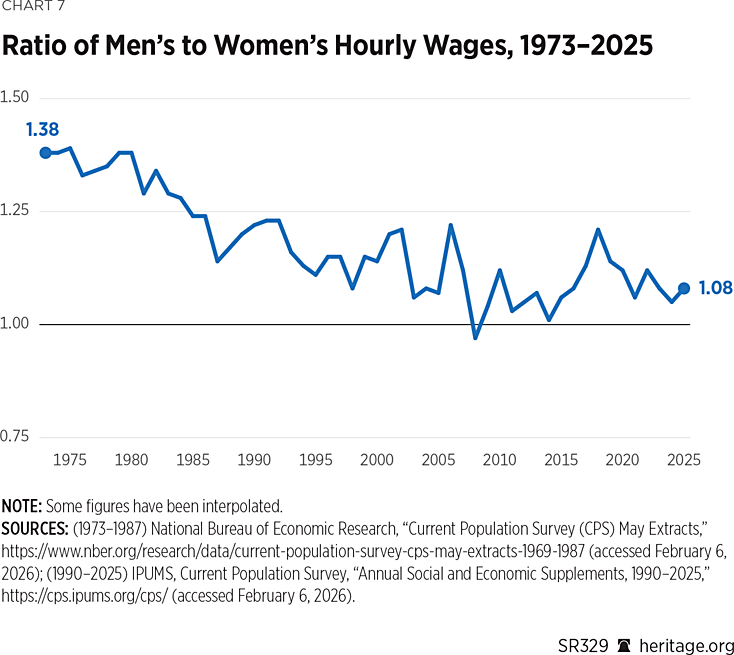
It is possible that this decline contributed to declining marriage rates during the 1970s through the 1980s. However, marriage rates continued to drop for three decades thereafter, even though during much of this time the ratio between men’s and women’s hourly wages was quite flat, and in every period, men have had higher or at least similar wages to women.
Men’s Job Quality
Are there other factors surrounding employment that have made it harder to raise a family? For example, if jobs have become less secure, require more work hours, or are more stressful, these factors could make work-family balance more difficult and thus lead men to delay or forgo marriage.
Using data from the General Social Survey (GSS), we can examine some aspects of job quality over time for employed men at different income levels. The GSS is a nationally representative survey that has examined demographic and social trends in the United States since 1972.[REF]
The following analyses examine men who are most likely out of school but are early on in their careers (ages 25–29), as well as men who are a little further along in their careers (ages 30–35). Men are divided into those making at or below the median income level according to the GSS income variable and those making above the median income.[REF]
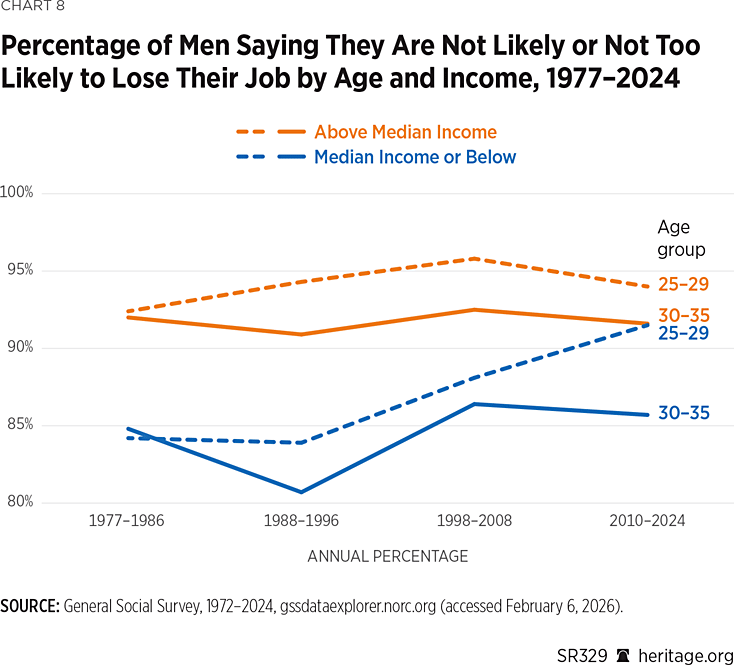
Perceived Job Stability. The GSS measures job stability by asking people how likely they think it is they will lose their jobs. Overall, among employed men ages 25–29, their perceived job stability increased over time. Perceived job stability has also increased or remained the same for men ages 30–35 across income levels. Perceived job stability has generally been above 90 percent for men making above median income and above 80 percent for men making at or below the median income level (and in more recent years, above 90 percent for men ages 25–29 making at or below the median income level).[REF] (See Chart 8.)
Work Hours. If the number of hours a person works in a week has increased substantially among men—particularly if income has not increased with work hours—it may be harder for men to balance work with marriage and family goals. Higher work hours could also mean that men are intentionally spending more time at their jobs than in marriage and family pursuits.
The median number of hours worked in a week has stayed flat at 40 hours for men at or below the median income level in every period measured from 1973 to 2024. This is the case for both men ages 25–29 and men ages 30–35.
For men above the median income level, their median number of work hours increased from 41 per week in the first period (1973–1984) for men ages 25–29 to as high as 48 hours in the 1985–1996 period, but their work hours have declined during the past several years and were once again at a median of 40 hours in the 2012–2024 period. For men ages 30–35 above the median income level, their median work hours rose from 40 hours in the 1973–1984 period to 48 hours in the 1985–1996 period and in the 1998–2010 period but then declined back to 40 hours in the 2012–2024 period.
Overall, median work hours have not changed for men at or below the median income level. For men above the median income level, median work hours rose but have declined during roughly the past decade to 40 hours—lower than they were for more than three decades.
It does not seem that work hours would have influenced marriage rates among men in this income group. Men at higher income levels may have felt greater demands to work more hours or invest more heavily in their careers, perhaps with marriage taking a backseat. However, their median work hours have declined in recent years, likely providing more time for other pursuits.
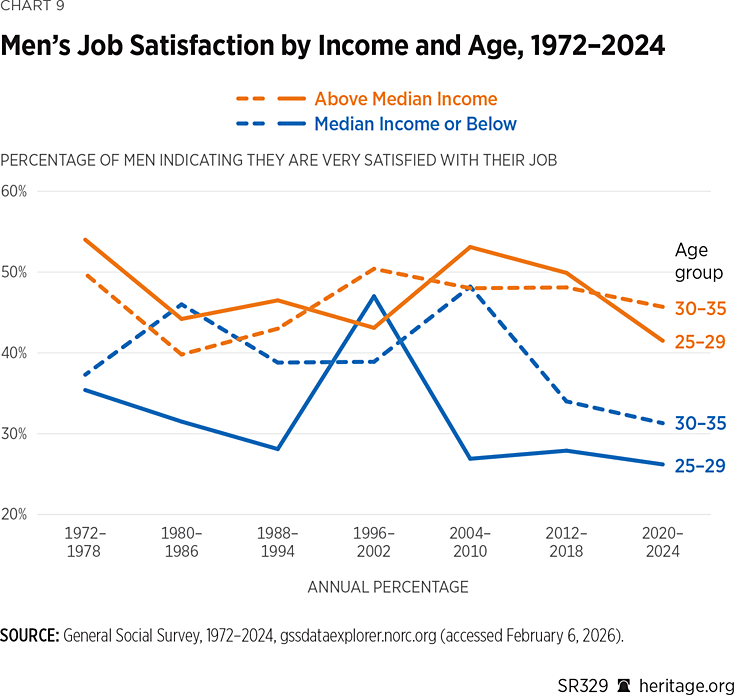
Job Satisfaction. If men are happy with their jobs, they may feel more committed to their employers and more settled in their careers, which in turn may contribute to them feeling more prepared to marry. Job satisfaction could also be linked with ease of taking vacation time or sick leave, opportunities for promotions and raises, and other measures of work-life balance.
There are no clear patterns of the share of men reporting they are very satisfied with their jobs. There was a decline in job satisfaction for men ages 25–29 above the median income level during the 2012–2018 and 2020–2024 periods. There was also a decline in job satisfaction during the past two decades among men ages 30–35 who were at or below the median income. Men ages 25–29 at or below median income have reported roughly steady job satisfaction, with an as-yet-unexplained large peak in 1996–2002. Men ages 30–35 above the median income level have also reported fairly steady job satisfaction over time. (See Chart 9.)
Other Aspects of Job Quality. The GSS also measures several other work quality variables—such as type of job schedule (i.e., day schedule, night shift, etc.), type of work (i.e., permanent employment, freelance, on-call), work stress, ease of taking time off work, frequency of work interfering with family life, and whether one’s job requires extra hours—but most of these survey questions have been included only since 2002 and have been asked in only a few of the survey years since then.[REF]
According to the available data, during the past two decades, men at or below the median income level have generally reported somewhat poorer job quality on most of these measures, with improvements or little change in some areas. For example, the share of men with regular, permanent employment was quite steady for men ages 25–29 at or below median income (74 percent in 2002–2010 compared to 72 percent in the 2014–2022 period). The share of men at or below median income who say work is always or often stressful has also stayed relatively flat over time. The share of men working from home at least once a week went up for men at or below median income ages 30–35. There has, however, also been an increase in the number of men at or below median income who say they have too much work to do it well. A larger share of men at or below median income also reported having a harder time getting time off work across the two periods measured (2002–2010 and 2014–2022). The share saying opportunities for promotion are good also declined a bit during the two periods.
In contrast, on most measures of work-family balance, men with income above the median generally reported similar outcomes between time periods or saw improvements in job quality.
Perhaps for men at or below the median income level, work in the past two decades has become more challenging to balance with other demands. If so, this could play a role in declining marriage rates in more recent years for this group. Still, despite some decline in job quality, the large majority of men have positive reports on nearly all measures of work-life balance.
Overall, at least according to the GSS, men’s job stability and work hours have been steady or have improved. Job satisfaction has declined somewhat in recent years, both for some men at or below the median income as well as for some men above the median income level. More data would help clarify how work-life balance has changed during the past several decades and whether it may have contributed to changes in the marriage rate. Overall, however, there does not seem to be a trend of declining job quality over roughly the past five decades.
Material Expectations
For men at the median level of earnings, inflation-adjusted earnings have fluctuated during the past several decades, although earnings in 2024 were higher than in the early 1960s. In some years raising a family may have been more expensive. But today a median-earning young man can better afford a family than could his predecessors.
Still, perhaps financial expectations surrounding marriage have changed. The problem, in other words, is that people feel they need a higher standard of living before entering marriage than their predecessors did. Many unmarried adults seem to expect to be doing as well as or better than adults in the past who were well into establishing their careers and families.[REF] Such unrealistic expectations may lead to delays in marriage for years. At the same time, bearing children outside marriage is far more common now than it was two generations ago. Such complexity is associated with poorer chances of achieving a healthy marriage down the road.
Profiles of Material Living Conditions of Married Men: 1970 and 2023
Using data from the U.S. Census Bureau, we can examine factors such as homeownership, size of the home, rooms per person, and household amenities. Comparing married men at the median age of first marriage in two periods provides an idea of how material expectations for marriage may have changed over time. These analyses are simply descriptive but may help shed light on this question.
Given the large increase in age at first marriage between 1970 and 2023 (from a median age of 23 in 1970 to 30 in 2023), we should expect that men at the median age of first marriage in 2023 would have more financial means and thus greater material goods due to more time to develop career knowledge, skills, and work experience. The main point of this set of analyses is simply to show how material living conditions for men at the median age of first marriage in recent years compare to such conditions in previous generations.
The second set of analyses will compare married men at today’s median age of first marriage—roughly age 30—with married men at age 30 in 1970 to get a sense of material living standards over time for similarly aged men.
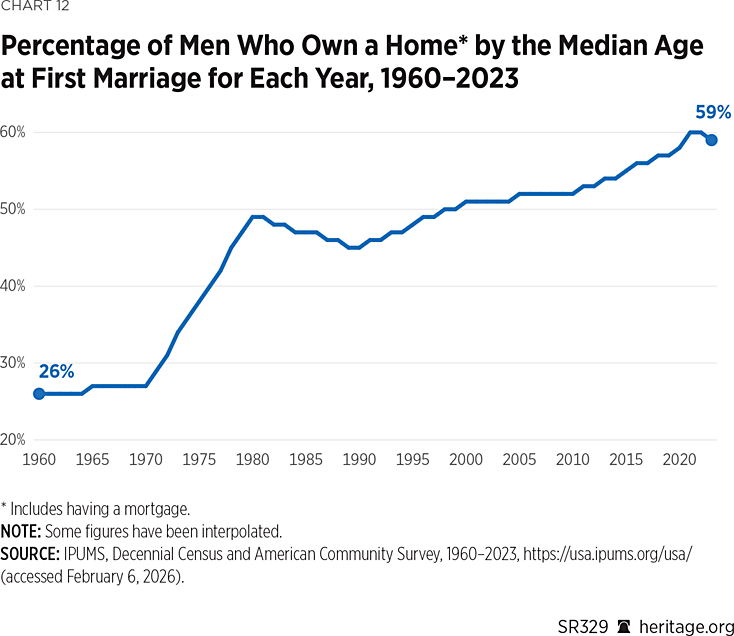
Men at the Median Age of First Marriage in 1970 Compared to 2023. The data show that married men at the median age of first marriage in 1970 were much less likely to be homeowners than men in 2023 were. In 1970, just 27 percent of married men at the median age of first marriage were homeowners. In contrast, in 2023, 59 percent of married men at the median age of first marriage were homeowners.[REF]
The homes of married men at the median age of first marriage in 1970—including both homeowners and renters—were also less spacious than those of married men at the median age of first marriage in 2023. In 1970, men at the median age of first marriage had a median of four total rooms in their homes (which does not include bathrooms, hallways, unfinished basements or attics, utility rooms, or balconies) and a median of two bedrooms. In contrast, in 2023, married men at the median age of first marriage had a median of six total rooms in their homes and a median of three bedrooms. (See Chart 10.)
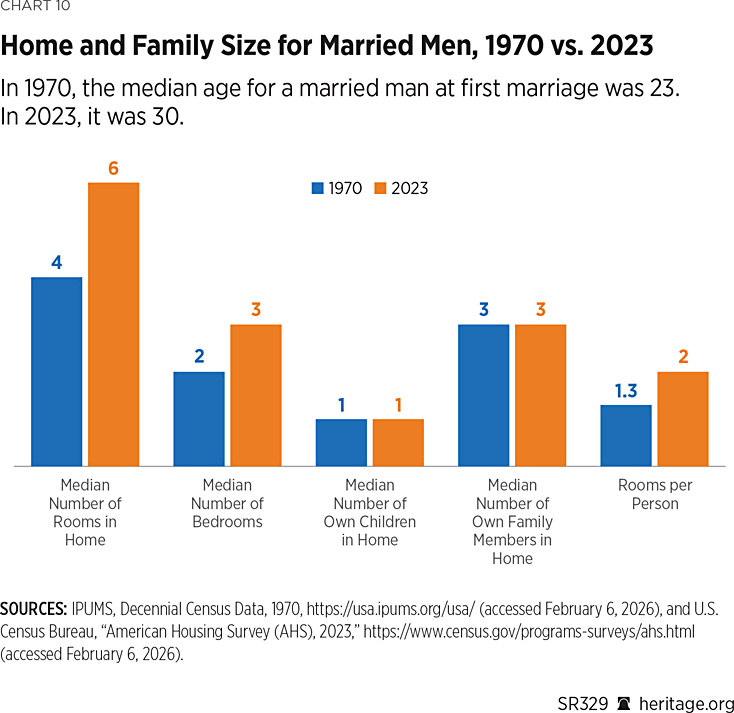
Although men in 2023 had roomier homes, the median number of family members living in the home was the same as for men at the median age of first marriage in 1970: one child and three total family members. Given the difference in size of the homes, though, between the two periods, in 1970 the median number of total rooms per person was 1.3, while in 2023 it was 2.0.
However, men in 2023 were much more likely to have more than one bathroom in their homes than were men in 1970. (See Chart 11.) Among 23-year-old married men in 1970, 86 percent had only one bathroom, while just 4 percent had at least two full bathrooms. (The remaining 10 percent had either 1.5 bathrooms or no full bathrooms.) Among men at the median age of first marriage in 2023, 67 percent had at least two full bathrooms, just 24 percent had only one full bathroom, and the remaining 9 percent had 1.5 bathrooms.
Thus, men at the median age of first marriage in 1970 were less than half as likely to own their homes as men at the median age of first marriage today, and the homes they lived in had at least two fewer total rooms compared to men in 2023 at the median age of first marriage—and closer to three fewer total rooms when bathrooms are included. Despite men at the median age of first marriage being seven years younger in 1970, they had just as many children to provide for as did men at the median age of first marriage in 2023.
It is not surprising that men at the age of 30 would have greater financial resources and thus an increased ability to buy homes or to live in more spacious homes than men at the age of 23 would. However, these data show that people in the past got married (and started having children) much more often when they had fewer resources. They more often lived in smaller homes, whether they were homebuyers or renters. This lends support to the theory that marriage has changed from being a cornerstone of adult life to a capstone, something that occurs only when one can meet a particular threshold of financial success.[REF]
Census data also allow us to examine the types of amenities households had in the past compared to today. These analyses show that homes today are a more deluxe product and that more families in the past got by without time-saving appliances that can make raising a family easier, such as dishwashers, clothes washers, and clothes dryers. Families in the past also got by without air conditioning, central heating, and even telephones.
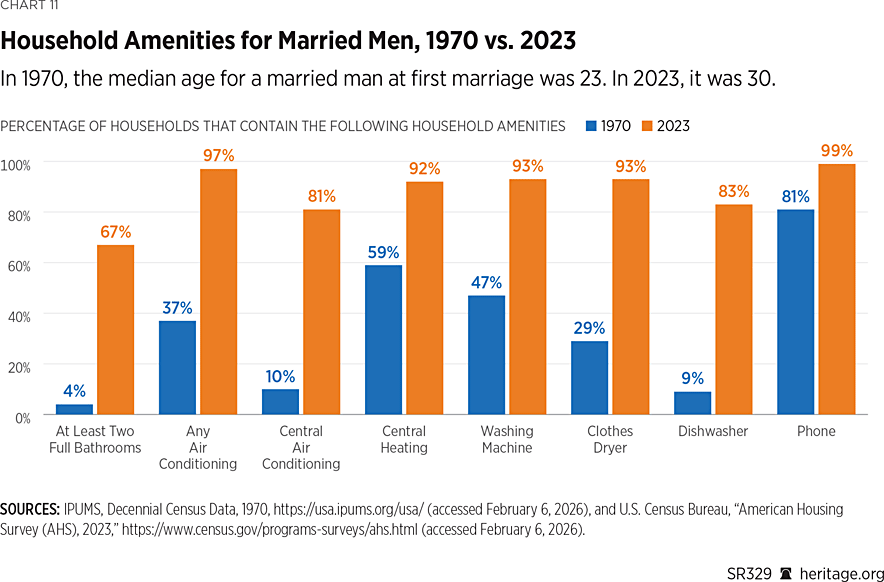
Families today also have many other amenities that were either not yet invented in 1970 or rarely available to the average person, such as microwaves, computers, the internet, tablets, and home assistant devices.[REF]
30-Year-Old Married Men Comparisons: 1970 and 2023. Data show that married 30-year-olds in 1970—who would have been several years into marriage by that age, on average—got by with smaller homes and fewer amenities than do 30-year-old married men today.
Married 30-year-old men in 1970 were nearly identical in the share of homeowners as married men at age 30 today: 59 percent in 2023 and 60 percent in 1970. Chart 12 shows that as median age of first marriage has increased, the share of homeowning men at the median age of first marriage in each year has also usually increased.
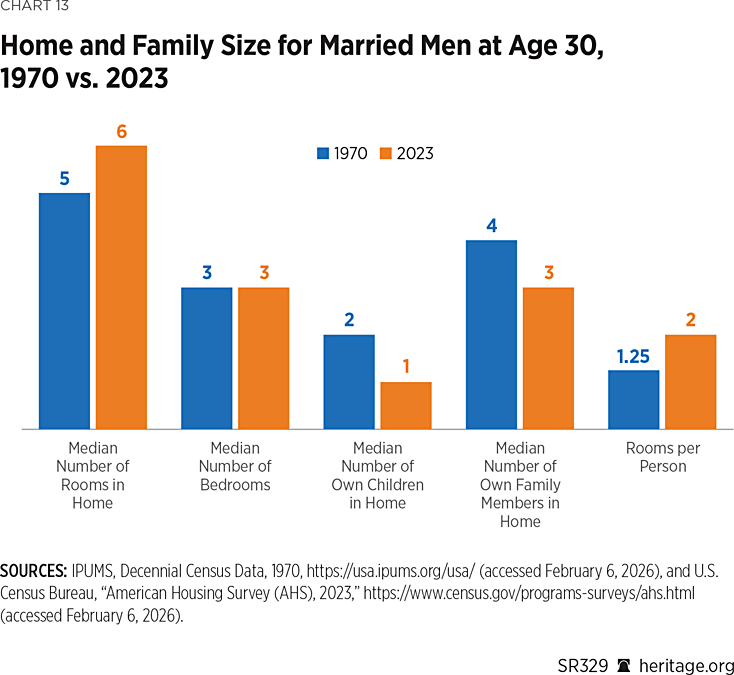
Married 30-year-old men in 1970 had twice as many children as their peers in 2023 did, though, with a median of two children for men in 1970 compared to a median of one child for men in 2023. Given the smaller family sizes today and the roomier homes, the median number of rooms per person for married 30-year-old men in 2023 was two rooms per person, compared to 1.3 rooms per person in 1970. (See Chart 13.) The difference in rooms per person would be greater if bathrooms were also included, as men in 2023 had on average more bathrooms.
The differences in household amenities are less stark when comparing 30-year-olds in both years, but men in 2023 still have many more amenities. Married 30-year-old men today are more likely to have a clothes washer and dryer as well as a dishwasher. Men in 2023 are much more likely to have any air conditioning and to have central air conditioning. They are also more likely to have central heating and a phone. (See Chart 14.)
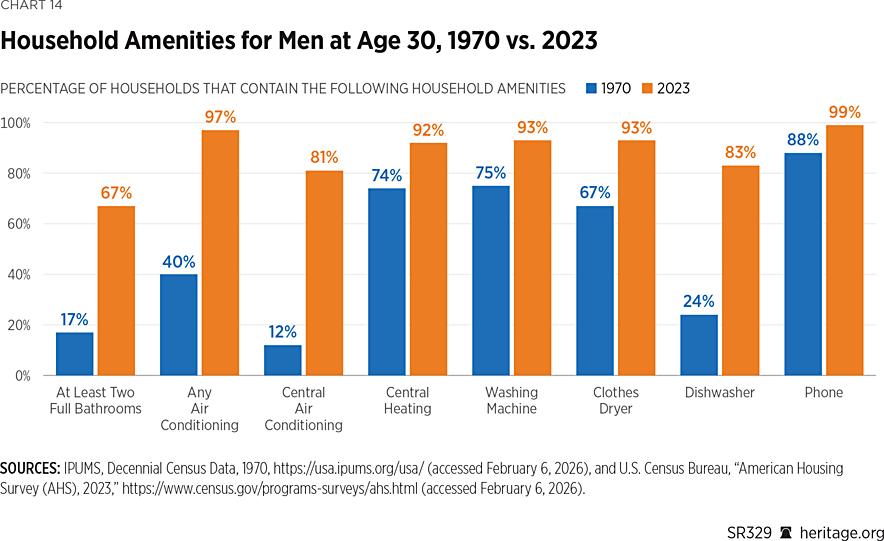
Those entering marriage today are a higher income group than were those in previous decades given the disparity in marriage rates between men with higher incomes and those with lower incomes. Married men in 1970 were a more diverse group as far as income goes compared to men in 2023, which includes fewer men at lower incomes. This selection effect likely accounts for some of the differences in material living conditions between years. But it could also explain why there is a difference in marriage across income levels: In the past it was acceptable to enter marriage with fewer material goods and work upward. Today, people may feel the need to meet a standard of living that well exceeds where their predecessors were well into adult life. Today’s material prerequisites for marriage may be well out of reach for most people at younger ages today and even for many who are older and have moderate levels of income.
This increased level of material prerequisites for marriage may also stand in the way of some men improving their earnings given that marriage seems to provide a boost to men’s income. Increased economic well-being of men also helps their families. Often today, the families of men at lower levels of the income scale are formed outside marriage. This means the families in these income brackets are not as likely to receive the benefits of marriage, including greater economic stability.
Housing Affordability
Still, the housing market may be so distorted that many Americans, and especially aspiring first-time homebuyers, find it hard to buy a home. In recent years, home prices have climbed to a historic high due to government policies that make it harder and more expensive to build new homes, as well as rising interest rates, pricing many Americans out of the market.
Chart 15 shows the share of annual median income that 25- to 29-year-old men would need to pay the mortgage on the median single-family home for the years 1972–2024. Housing affordability remained relatively stable from the mid-1980s. In recent years, though, housing has become the most unaffordable it has been in at least the past 50 years. The mid-1970s also saw a drastic increase in home unaffordability due to high inflation and interest rates.
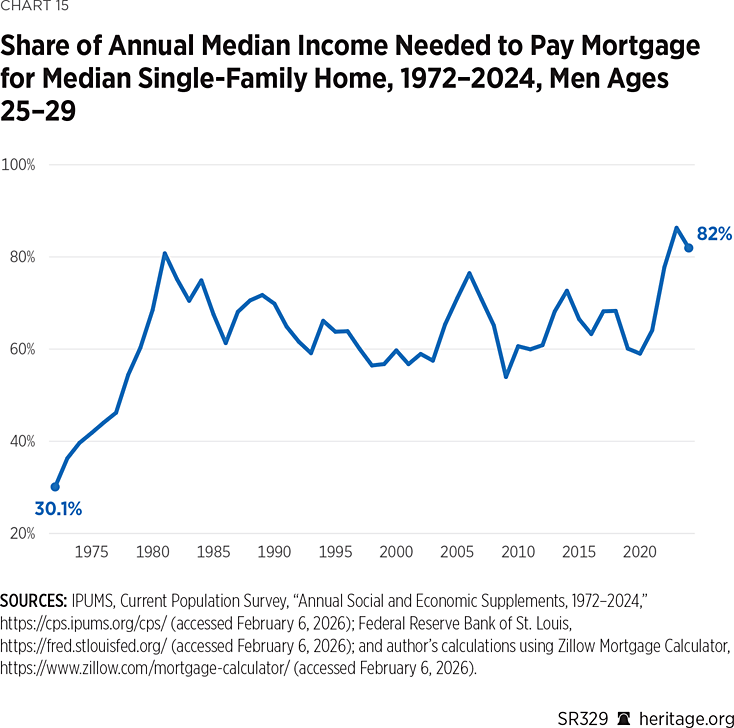
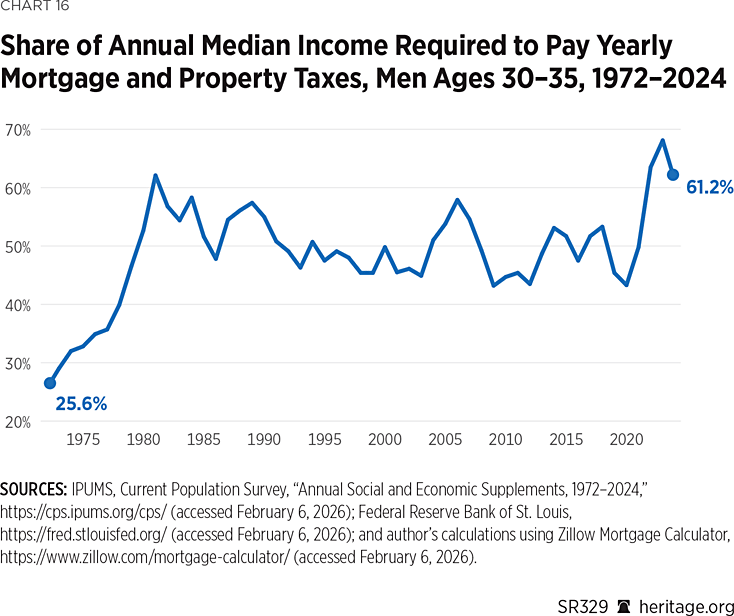
This ratio stayed relatively stable for decades while marriage rates dropped. Adults at this age and income are also likely opting for lower-priced housing. For men ages 30–35, the trend looks similar, although the share of annual income needed to pay for the median mortgage has generally been around 50 percent for roughly the past four decades. (See Chart 16.)
While nationwide median-mortgage-to-income has remained relatively flat for the past four decades, at least until recent years, specific areas of the country have historically had consistently higher home prices to begin with, such as coastal metropolitan areas. These areas have also seen the greatest increases in housing unaffordability in the past few years, pricing all but the highest-income earners out of the market.[REF] In part, home prices reflect higher demand, but high prices are often also driven substantially by restrictive zoning laws that limit the supply of housing and push home prices far beyond what they would otherwise be.[REF]
Excessive environmental regulations and review processes—such as those required by the California Environmental Quality Act and the federal National Environmental Policy Act—also impede construction projects.[REF]
Male Labor Force Participation
Although median earnings have not declined, the share of prime-age men in the labor force has declined from 97 percent in 1955 to 89 percent in 2024.[REF] This includes a 6.7 percentage point drop among men ages 25–34 and a similar drop (7.4 percentage points) among men ages 35–44.[REF]
Among prime-age men (25–54), nearly half of the increase in male inactivity in the labor force between 1968 and 2014 was due to a rise in the number of men reporting disability or illness.[REF] Overall, about three-quarters of prime-age men out of the labor force say they do not want to work. Even among prime-age non-working men who do not report disabilities, less than a third say they want jobs.[REF]
The share of Americans at prime working age reporting poor health or work limitations has remained flat, even as government disability rolls have climbed.[REF] The rise in men reporting disability is likely primarily due to the government’s expanding definition of disability. In the 1980s, the government relaxed the criteria to qualify for disability. Unsurprisingly, far more people entered government disability rolls based on subjective criteria.[REF] The ebb and flow of disability insurance claims alongside economic recessions indicates that the disability insurance program has unintentionally come to serve as both a long-term unemployment insurance program and an early retirement program.
Even if the share of men with health problems has remained relatively flat, the economy should have seen an increase in labor force participation over time. The job market today is more accommodating than in earlier times to those with disabilities. Government disability programs have instead reduced work participation and thus reduced people’s earnings over time.
Part of the reason for the decline in male labor force participation is also likely due to the decline in marriage. Married men are more likely to be connected to the labor force across education levels, likely due to the responsibilities of caring for a family.[REF]
Drug abuse and addiction is another factor driving down labor force participation.[REF] For example, Ben Gitis and Isabel Soto of the American Action Forum estimate that, as a result of opioid use, more than 900,000 prime-age adults were out of the labor force and employment was down by 878,200 in 2015 as compared to 2000.[REF] In a 2017 study, Alan Krueger estimated that increases in prescription opioids account for as much as 43 percent of the drop in male labor force participation between 2000 and 2015.[REF]
Drivers of Marital Decline
As other researchers have noted, today’s model of marriage expects couples to have progressed much further along the economic ladder to enter marriage, even beyond what couples in the past had achieved several years into marriage, if ever. The “cornerstone” model of yesteryear typically began with a young couple with little financial means building a life together and climbing the economic ladder. In contrast, today’s “capstone” model sees marriage as a crowning achievement that occurs after people have reached a certain level of prosperity, often including homeownership.[REF] These expectations seem to have grown over time.
One reason material expectations may have increased is easier access to divorce, as well as an overall increase in family instability. Divorce and single parenthood were more common among parents of Gen Xers, Millennials, and Gen Zers than they were for earlier generations.[REF] Adults today may feel the need to achieve a higher level of individual financial stability prior to entering marriage in case their marriages end. Some researchers find that lower-income single mothers say they want to be financially stable before getting married.[REF] Other researchers find an association between lax divorce laws and women’s likelihood of being in the labor force, suggesting that people more often view personal financial security as insurance in case of divorce.[REF]
Cultural Changes Surrounding Non-Marital Sex and Childbearing. Cultural changes have also allowed marriage to be pushed further into the adult life course. Sexual relationships outside marriage are the norm today.[REF] Having children outside marriage has become typical today, too, particularly in working-class and lower-income communities. Most Americans accept or even embrace this. (There was a small uptick between 2018 and 2021 in the share of Americans saying women raising children on their own is bad for society.)[REF]
Still, why have shifting cultural norms driven down marriage rates more for Americans with fewer financial resources? Unwed childbearing is primarily a trend among the non-college-educated. People at all education and income levels have embraced the cultural push to disconnect marriage and sex, but among the college-educated, roughly 90 percent of children are born within marriage. While the college-educated are most likely to promote the cultural messages that marriage is unnecessary, outdated, and even oppressive, they do not practice what they preach.
Perhaps this is because college-educated women bear a greater opportunity cost to having children outside marriage, including forgoing or delaying their educations and careers. These women are more vigilant about using contraception than are women further down the education and income ladder.[REF]
Women with fewer education and career opportunities, on the other hand, have lower opportunity costs to having children outside marriage and are less likely to use contraception reliably.[REF] Because of the ubiquity of non-marital sexual relationships and the increase in unwed childbearing that has come with it, there is no longer a social expectation that men and women marry (or that men have a responsibility to marry the women they have fathered children with) if women become pregnant.
As marriage has become less common in working-class and lower-income communities, the cultural messages and infrastructures that help young adults form and sustain healthy marriages have eroded, further reinforcing the decline in marriage rates.
The family complexity that unwed childbearing creates can make it significantly harder to achieve a stable marriage down the road, too.[REF] Women who have children outside marriage are less likely to marry.[REF] This could be due, in part, to the fact that single mothers have less time to date and fewer dating prospects.[REF] Unwed childbearing makes family life more complex and stressful if a parent does re-partner or remarry.[REF]
The government means-tested welfare system is also rife with marriage penalties that incentivize lower-income women with children to remain unwed.[REF] Once a couple marries, both of their incomes are counted for the purpose of determining welfare eligibility, so in many cases a household can get more benefits if it remains unmarried. There are more than 90 different means-tested government welfare programs, with an annual cost of $1.7 trillion.[REF] Nearly all of these programs include marriage penalties.
Cultural messages today encourage people to spend more of their young adult years focusing on individual pursuits, too—such as gaining education and developing a career—rather than seeking marriage. Researchers find that parents are much more likely to prioritize career over marriage and parenthood for their adult children as well. The broader culture also more often focuses on individual development for young adults rather than marriage.[REF]
Those who take the college path seem to manage this delayed pathway to marriage better than their peers with fewer economic resources do in that they are less likely to have children outside marriage. On the other hand, those with fewer economic resources are more likely to form families outside marriage, sometimes with multiple partners. This reduces their likelihood of achieving economically stable lives and stable marriages. It also further erodes the social scaffolding in communities that help people attain healthy marriages.
Policy Considerations
Marriage rates have been on a decades-long descent, with major changes in norms surrounding marriage, sex, and childbearing. Policies that increase opportunity and financial well-being for working-class Americans—particularly given the current state of the housing market—should be coupled with a focus on restoring cultural supports for marriage.
Focusing on Marriage, Not Only Economics. A study by Melissa S. Kearney and Riley Wilson found that while the fracking boom led to an increase in births (both non-marital and marital births), it did not lead to an increase in marriage. In contrast, the coal boom in the 1970s and 1980s was associated with an increase in both marriage and marital childbearing but not non-marital childbearing. Changing cultural norms, not economics, likely explain the difference.[REF]
Family Affordability. Policies that make family life more affordable would help all families, and particularly those with fewer resources, achieve greater economic prosperity. This could also help accommodate changes in material expectations for marriage.
High housing costs have likely contributed to declining marriage and birth rates in recent years.[REF] Reforming zoning laws and environmental and building regulations could increase the supply of housing available, particularly the types of homes that would be most accessible for young adults and families.
Policies to help reduce inflation and promote economic growth could ease the economic burdens many people face, including those who are thinking about getting married and starting families.
Labor Force Participation. Increased economic prosperity should begin with increasing the number of prime-age men participating in the labor force. Reforming government disability programs is key to this effort. The criteria for disability should target only those who truly need these benefits. Those on disability should be given more opportunities to work and rehabilitate so that they are not cut off from the labor force permanently.[REF]
Work is linked with better overall well-being.[REF] Many men who are out of the labor force are languishing emotionally and socially.[REF] Engaging in work would help these men not only economically but in other ways.
Welfare Reform. Policymakers should work to reduce marriage penalties in the welfare system. This can be achieved by reducing fraud in means-tested programs, particularly the Earned Income Tax Credit (EITC), where roughly 25 percent to 35 percent of payments are erroneous. EITC reforms that tighten income reporting requirements and create stricter criteria for claiming a dependent child would dramatically reduce fraud. The savings could go toward providing increased benefits for married couples, offsetting other marriage penalties they face.[REF]
Work requirements for welfare programs would boost the incentive for fathers to be engaged in their children’s lives. Requiring work in exchange for benefits ensures that these programs are targeted to those who cannot work and increases the incentive for marriage, as two parents can split the work requirement. Work requirements should be designed so that the number of work hours for single-parent and married-parent families is similar so as not to penalize marriage.
Restoring a Culture of Marriage. Policymakers and other leaders should work to restore a culture of marriage, particularly in communities where marriage has eroded the most. This will require leaders and citizens to engage in efforts from their various spheres of influence: the home, schools, churches, the workplace, legislative bodies, and other organizations.[REF]
States have money from the Temporary Assistance for Needy Families (TANF) program intended to strengthen marriage, yet few states use any of their TANF dollars for this purpose. State legislatures should allocate a portion of this federal funding, combined with state dollars, for healthy marriage education to help people gain the skills and knowledge necessary to form and maintain healthy marriages.[REF]
Educators and educational leaders should do far more to help young adults understand the importance of marriage and to teach them how to achieve healthy marriage relationships. High schools could provide education covering topics such as healthy dating relationships, the benefits and responsibilities of marriage, working through conflict in a healthy manner, and budgeting. As an example, Utah provides its Adult Roles and Responsibilities course to high school students, which covers these topics, among others.[REF]
Community colleges, universities, and workplaces could also help young adults learn how to build healthy dating and marriage relationships. Workplaces, community centers, libraries, and churches could also offer these types of classes.
In addition, the media, the entertainment industry, and those with cultural influence could provide healthier and more accurate messages on relationships and marriage. Television, movies, and social media could depict realistic consequences that result from having multiple sexual partners and show couples working through marital problems in a healthy manner. Public message campaigns could point people to healthy marriage and relationship education classes available to the community and inform people about the benefits of marriage.
Conclusion
Marriage’s steady descent, particularly among Americans with fewer resources, brings with it many consequences for adults and children. While marriage has decreased across the board, most unmarried Americans say they would like to marry. Helping people achieve this dream is important to the pursuit of the good life, as well as to building strong communities.
Policies to promote greater economic opportunities make sense on their own terms. But the norms surrounding marriage and marital childbearing have changed—almost entirely for the worse. Economic policy should first do no harm and, second, remove government-imposed barriers that drive up prices and make it harder to afford a family. Without a massive effort to renew marriage in the culture, however, economic policy will not restore the most fundamental unit of society to its rightful place.
Rachel Sheffield is Research Fellow for Welfare and Family Policy in the Center for Health and Welfare Policy at The Heritage Foundation.



