

Shareholder capitalism, like democracy, is government by the consent of the governed, and consent presumes that someone is keeping minutes. At the Heritage Foundation’s Free Enterprise Initiative, we file shareholder proposals in the unglamorous conviction that corporations answer to owners, and that owners are entitled to know when their capital is being conscripted into causes they never authorized: e.g., unmitigated corporate entanglements with China, charitable-giving policies that discriminate against religious donors, and the quiet migration of DEI and ESG metrics into executive pay.
Persuasion, it turns out, still works. We withdrew half the proposals filed last proxy season, not from fatigue but from success: executives either did what we asked or satisfied us that the offending practice had already lapsed. The proposals that did reach a vote fared less well, but not for want of merit. They foundered most likely because Institutional Shareholder Services and Glass Lewis—the two firms that function as a duopoly—declined to recommend them.
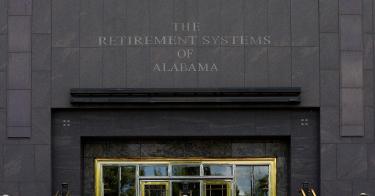
This raises a question Alabama’s public employees have every right to ask: How did the Retirement Systems of Alabama (RSA) vote its proxies? Did the RSA oppose the Heritage’s proposal urging companies to abandon the Southern Poverty Law Center’s “hate map” as a screening tool in charitable-matching programs—a tool that has been used to place Alliance Defending Freedom, Moms for Liberty, and the Family Research Council beyond the pale of employee-giving? Did RSA resist our efforts to strip ESG and DEI criteria from executive compensation formulas? Did it wave through the routine business of firms whose supply chains run uncomfortably close to Beijing?
>>> The RSA and the Fiscal Risks Facing Alabama
These questions are the non-rhetorical kind that an independent, third-party audit could answer. Trustees owe beneficiaries a fiduciary duty to vote shares in the beneficiaries’ financial interest. That duty is, at present, an assumption—asserted, not demonstrated. Remarkably few public pension funds have ever had their proxy votes independently verified so that the people whose retirements are at stake can see the record for themselves. An audit would convert a pious assumption into a documented fact.
Consider the scale of what is delegated and never checked. Pension funds typically hand asset managers and proxy advisors authority over billions of dollars in voting power and then decline to publicize what was done with it. No prudent steward of any other asset—a building, a portfolio, a fleet of vehicles—would extend that kind of blind trust. Shares are not different merely because they arrive with less paperwork.
The proxy advisory industry compounds the problem by its very structure. A duopoly drives most institutional votes, and a duopoly’s conflicts of interest are not diminished by its convenience. When a fund’s voting simply defaults to an advisor’s recommendation, the fund’s actual conduct can drift quietly away from its stated principles, and an audit is the instrument that measures that drift (the gap between what a fund claims to stand for and what its shares, in fact, did).
Shareholder proposals themselves have grown less concerned with returns and more concerned with fashionable causes that can work against beneficiaries’ interests. A review would show where votes served ideology rather than performance, allowing fiduciaries to correct course before the confusion of the two becomes habitual. For a public pension, the true owners are the state’s employees and its taxpayers, and an audit is simply an accounting to them of how power exercised in their name, with their money, was actually used.
>>> Alabama Is Not Alone in Its Racial Quotas for Public Boards
An audit conducted by the same manager or advisor whose votes are under review would settle nothing; it would merely formalize the fox’s tenancy of the henhouse. Only a genuinely independent auditor removes that conflict. Measured against the assets and the voting power involved, the cost of such an audit is trivial (a modest premium for any fund serious about reclaiming command of its own ownership rights).
Alabama’s public records statute—the Alabama Open Records Act—likely makes at least some of this information obtainable already, and scrutiny of proxy voting generally is rising sharply enough that discretion is no longer a reliable shield. What was once filed away unexamined is now the subject of public curiosity, legislative interest, and potentially litigation.
Reform of how public pensions vote their shares will come one of two ways: adopted by fiduciaries (who would rather lead than be led) or imposed on fiduciaries who waited too long to ask the question themselves. The RSA’s trustees would be well advised to choose the former, if only because history’s patience with unaudited power has never been generous. And if, as a cost of doing business, proxy advisers ultimately had to bear the cost of the audit, so much the better.
This piece originally appeared in 1819 News



