
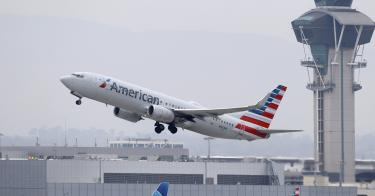
Airlines are gradually getting flight schedules back to normal. Congress can shut down government operations, but when airlines cancelled flights, Americans took notice.
It’s clear that the Air Traffic Organization (ATO), the operational arm of the Federal Aviation Administration (FAA), requires significant resources. The ATO lags far behind its counterparts in Australia, Canada, and Western Europe in deploying twenty-first-century technology.
The ATO now depends on Congress for funding, and delays began because air traffic controllers were not being paid. If the ATO were private, as in Canada, or a public-private partnership, as in some Western European countries, then payments would not be disrupted by shutdowns. More funds would flow in as more people used air travel, just as when more coffee shops open when people want to buy coffee.
Under such a system, user fees would go to the ATO, and it would provide services. There could be multiple air traffic control providers as long as they met government performance standards. Some express safety concerns, but no one worries about flying to London because of privately provided air traffic control.
>>> The Shutdown Is Over, but Not the Need To Reform SNAP
The shortcomings of U.S. air traffic control have been documented for decades by the Government Accountability Office (GAO) and the Department of Transportation’s Inspector General. The latest GAO report, released in December 2024, found that “51 of its 138 systems are unsustainable,” with 17 deemed “especially concerning.” Full upgrades will take another decade.
If the ATO cannot be transformed into a public-private partnership, it can be modernized. Fortunately, in July, Transportation Secretary Sean Duffy secured $12 billion of the $30 billion needed to modernize air traffic Control.
This investment is overdue. Since the Federal Aviation Agency, the precursor to the FAA, was established in 1958, aviation has seen major advances in avionics and engine reliability. Yet, U.S. air traffic control systems have not kept pace.
Despite repeated reform efforts, the FAA’s funding structure has remained largely unchanged for over 50 years. With a budget approaching $20 billion, the agency remains poorly organized and financed.
Unlike every other modern civil aviation authority, the FAA does not charge fees for its services. Its reliance on annual appropriations stifles efficiency and innovation. The FAA should focus on rapidly testing, evaluating, and certifying private-sector innovations rather than slowing progress.
For decades, the FAA led the world in aerospace, from general aviation to commercial space, but that leadership has eroded. Today, its bureaucratic, legalistic, and increasingly politicized processes for rulemaking, innovation adoption, and technology procurement have been overtaken by foreign authorities certifying drones and enabling new entrants, such as air taxis, to thrive.
To restore U.S. leadership in aviation, we must:
- Separate the FAA from the DOT—or at least separate the ATO from the FAA.
- Overhaul the FAA’s funding model so aviation is no longer hostage to annual appropriations or political maneuvering, by privatization if possible.
- Require the FAA to operate more like a business, leveraging its unique authority in personnel and acquisition.
- Authorize the ATO to issue long-term revenue bonds for major projects.
Europe is replacing conventional towers with digital and remote facilities equipped with high-resolution cameras and sensors. In Germany and Scandinavia, a single remote center can manage up to 15 airports. The FAA has yet to deploy digital towers, despite a failed attempt to consolidate operations between Newark Liberty and Philadelphia.
>>> Improper Payments Are Cheating the Taxpayer and Bloating the Federal Budget
It is ironic that America, a bastion of capitalism, should be the only major country with a fully public air traffic control system. This is driven by union pressure and fear of job loss. But there could be more jobs with a private ATC because additional funds would permit expansion.
Dependent on annual appropriations and lacking bonding authority, the ATO implements major projects piecemeal over many years. Its risk-averse culture stems from being embedded within a safety regulator rather than operating at arm’s length from the federal government, as airlines and airports do.
Airlines are working as hard as possible to restore normal flight operations in time for Thanksgiving. Still, one fact is clear: America must modernize its air traffic control system now to prevent future crises.
This piece originally appeared in The National Interest



