
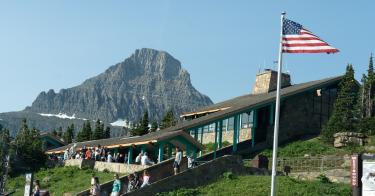
Public lands play a major role in American energy supply and economic strength. The Interior Department’s Bureau of Land Management (BLM) oversees about 245 million acres of such land, roughly one-tenth of the United States, for uses including energy production, animal grazing, and recreation.
Responsible land management sometimes requires taking public land out of use, and Congress established a lawful process for doing so in 1976. But in 2024, the Biden-era BLM introduced a new process that bypasses the one Congress established.
The Trump administration is repealing this rule and returning the agency to the rules Congress enacted almost 50 years ago.
BLM has the task of managing public land according to the “multiple use and sustained yield” principles established in the Federal Land Policy and Management Act of 1976. BLM must balance a variety of productive activities—wind- and solar-power development, oil and gas drilling, mining, timber harvesting, recreation, and more—while maintaining the land in good condition.
>>> Overregulation Has Put Small Banks at Risk
Lands under BLM’s supervision produce billions of dollars each year for the U.S. In fiscal 2023 (the latest data available), activities on BLM lands generated about $250 billion in economic activity and supported more than 900,000 jobs. Between 2015 and 2023, these areas contributed more than $1 trillion to the U.S. economy.
However, a 2024 rule from the Biden administration’s BLM would have allowed the agency to issue leases for “restoration” and “mitigation.” Such leases would lock public lands up and leave them unused, effectively withdrawing the land from public use.
But Congress already established a process for withdrawing public land in the 1976 law, which explicitly requires BLM to use this process. By inventing a separate system to keep public lands away from use through “restoration” and “mitigation” leases, the Biden rule bypasses Congress and thus breaks the law.
The 1976 law installed vital legislative oversight in the land withdrawal process, which the 2024 rule lacks.
For instance, withdrawals of 5,000 acres or more can be rejected by Congress, and the Interior secretary must report detailed information on them for transparency. For emergency withdrawals, the secretary must notify Congress; and any extension of a withdrawal must also be reported to lawmakers. Oversight is essential to prevent bureaucrats from quietly locking up public lands.
As of now, no such leases have been issued, but there are live applications, and potential misuse of this process under a future administration can block productive uses across millions of acres, substantially diminishing economic output on these public lands.
>>> A New Wave of American Offshore Energy
Recognizing these problems, BLM proposed in September to rescind the 2024 rule and return to the original framework. Once finalized, this repeal will remove 24 pages of unnecessary regulation, continuing the Trump administration’s effort to cut red tape that hinders the use of America’s energy and resource abundance.
Unfortunately, rules that restrict land use could return under a different administration in the future. BLM could stretch its interpretation of the law to make it more difficult to access public land for productive use.
A solution to limit this is for Congress to transfer more federal land to the states, which have stronger incentives than Washington to properly manage and use the land for fruitful activities.
Even if some states restrict the use of their public land, the effect is contained within that state and not imposed across the entire country, as when the federal government imposes restrictions.
Until then, the Trump administration’s action to manage public lands for America’s benefit is welcome news.
This piece originally appeared in The Washington Times



