

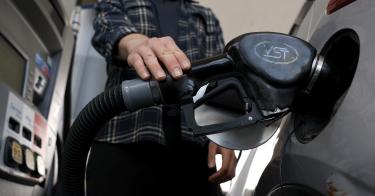
The conflict with Iran is a reminder that strong energy policy produces stronger national security policy.
When instability in the Middle East disrupts global oil markets, the effects are immediate. Prices rise, supply chains running through the region begin fracturing, and adversarial regimes gain leverage. In moments like this, Americans feel the impacts of bad energy policies that discourage energy production.
President Trump’s commitment to fully realize America’s energy potential reflects this reality. While some leaders cite geopolitical instability as a reason to accelerate transition to renewables, that approach overlooks the reality around us.
Investing in renewable energy sources has failed to provide affordable and reliable energy to Americans. Doubling down on that approach would be a mistake, especially for a nation with vast oil and natural gas resources that can provide dependable energy and, if developed, strengthen America’s position during times of crisis.
>>> How America Drilled Its Way out of the Oil-Supply Straitjacket
The U.S. is already one of the world’s leading producers of oil and natural gas. That dominance is the result of American innovation, private investment, and abundant natural resources. But federal policy has not always allowed the U.S. to fully take advantage of this strength.
The Biden administration, for example, explicitly restricted gas and oil development. As a presidential candidate, Biden went so far as to promise to “end fossil fuels.” In its place, Americans were promised a green energy revolution fueled by billions of taxpayer dollars.
What happened? Offshore leasing fell to the lowest levels in nearly two decades. The Department of the Interior approved 30% fewer offshore oil and gas wells in the first two years of the Biden administration compared to the first two years of the first Trump administration.
Even where development was technically allowed, regulatory barriers slowed progress. Energy infrastructure projects often face permitting timelines that stretch on for years. These delays discourage investment and reduce the ability of the U.S. to respond quickly when global supply disruptions occur.
These policies put America in a worse position to withstand this (or any) conflict.
Recognizing the need to reverse course and develop America’s energy resources, the second Trump administration has taken steps to remove these artificial constraints.
Since returning to office, the administration has prioritized expanding access to federal lands and offshore resources, restarting lease sales, and streamlining permitting processes. The One Big Beautiful Bill Act directs the federal government to hold dozens of new offshore lease sales through 2040, dramatically expanding opportunities for domestic oil and gas production.
Perhaps as important, the political chill caused by Biden’s anti-gas and oil rhetoric is long gone, freeing America’s energy sector to invest with confidence that it won’t be shut down by anti-energy politicians.
At the same time, regulatory reform efforts aim to accelerate energy project approvals and encourage investment. The EPA recently removed a Biden-era rule that had created barriers to oil and natural gas production. This single regulatory rollback alone is projected to save $2.5 billion in compliance costs over the next fifteen years. The cumulative cost savings from this and other regulatory rollbacks affecting oil and natural gas production under the second Trump administration are expected to be significantly greater.
These efforts are already producing results. Permits to drill on public lands have increased significantly, rising by 55% in the first year of Trump’s second term. U.S. energy production reached record levels in 2025. U.S. crude oil production grew from by 20% from 11.3 million barrels per day in 2021 to 13.6 million barrels per day in 2025. Offshore oil output reached its highest annual production level on record with 714 million barrels in 2025. Natural gas production has also increased nearly 40% compared to 2021 levels.
>>> How the White House Can Cut Prices at the Pump—and Elsewhere
These efforts to develop American energy resources have been critical in limiting the impact of price increases due to the Iran conflict.
When energy production is constrained, costs rise across the board. Higher fuel prices translate into more expensive groceries, higher utility bills, and increased costs for everyday goods.
Expanding energy production helps reverse that trend. Access to reliable energy sources puts downward pressure on prices, making energy more affordable for American families and businesses. It also dampens impacts of global crises on energy, insulating the U.S. economy from shocks abroad.
A country that has developed reliable energy sources can support allies with exports, reduce reliance on adversarial nations, and maintain its economic strength even in times of conflict. This is a model that both America and her allies should follow.
America’s energy resources are a strategic asset, but only if they are developed and utilized. By embracing policies that expand oil and gas production and unlock America’s vast natural resources, the U.S. can ensure affordable energy, strengthen its economy, and protect its national security in an often-times unstable world.
This piece originally appeared in RealClear Energy



