
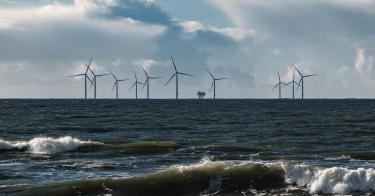
The United States’ decision to pause offshore wind projects due to defense concerns is not only prudent but essential. While wind is often touted as a free source of energy, Western countries cannot ignore the serious threats posed by offshore wind farms both to national security and to the reliability of the electricity grid.
Doug Burgum, the interior department secretary, stated: “Today’s action addresses emerging national security risks, including the rapid evolution of the relevant adversary technologies, and the vulnerabilities created by large-scale offshore wind projects with proximity near our east coast population centers.”
He’s right, and other countries face similar dangers. The Royal Air Force is reportedly concerned about wind turbines in the North Sea interfering with radar signals, complicating efforts to track threats. And Germany is asking wind farms to install their own radar to track planes and ships, amid warnings about the threat posed by Russia to maritime security in the Baltic Sea.
Judge Patti Saris of the district of Massachusetts had ruled on Dec 8 that the president could not withdraw permits for offshore wind, as he had previously sought to do via a January presidential memorandum. Some might suggest that the U.S. president’s move is just the U.S. administration trying to find a different way to achieve the same ends. But the interior department is entirely justified in expressing security concerns about offshore wind.
>>> A New Wave of American Offshore Energy
As America faces escalating threats from adversaries abroad, safeguarding defense infrastructure is paramount. Offshore wind projects, particularly those along the East Coast, could jeopardize critical systems that protect the nation.
Wind turbines can interfere with radar systems, potentially creating blind spots that compromise aviation safety, weather forecasting, and ocean surveillance. Despite years of research, no technological solution appears to have fully mitigated this interference. These disruptions are real and measurable.
Early Warning Radar (EWR) systems are the backbone of America’s missile defense and threat-detection capabilities. Offshore wind farms within EWR’s line of sight could degrade radar performance, delaying response times and confounding target detection. The Trump administration is evidently concerned that the projects it has paused, including Revolution Wind and Vineyard Wind, pose significant risks to these systems.
The Cape Cod space force station’s PAVE PAWS (Precision Acquisition Vehicle Entry Phased Array Warning System) radar is the only early missile detection system on the East Coast. Yet, large offshore wind projects have been assessed as having the potential to interfere with this vital installation. Any compromise to PAVE PAWS undermines the United States’ ability to detect and respond to ballistic missile threats.
Offshore wind projects emit vibrations, electromagnetic fields, and acoustic signals that can travel long distances, potentially interfering with underwater threat detection. These systems are essential for monitoring hostile submarines, unmanned underwater vehicles, and safeguarding undersea cables.
Offshore wind installations could also introduce new vulnerabilities to the electrical grid, including potential cyberattacks and even “kill switch” scenarios from turbines with Chinese components, as warned by a NATO official. Many turbine components are manufactured in China, raising additional concerns about espionage and sabotage. Furthermore, wind farms may obstruct military training routes and hinder Coast Guard search and rescue operations.
Offshore wind can be an economic burden as well as a security risk. Because wind power is intermittent, countries that are reliant on it are discovering that other generation capacity (often gas-fired plants) must remain on standby to provide backup when the wind doesn’t blow. This means two parallel systems are required to operate the grid. Starting and stopping natural gas plants is inefficient and costly; it would be cheaper and more reliable to run natural gas plants continuously. Offshore wind projects can therefore raise electricity costs for consumers while adding instability to the grid.
>>> Transitioning From Coal Through “Creative Destruction”
The following measures would strengthen national and economic security:
Moratorium
The U.S. government should retain its immediate moratorium on new offshore wind projects until comprehensive national security assessments are completed.
Defense-Led Review
The US department of defense, not energy regulators, should lead evaluations of offshore wind proposals to ensure military readiness and radar integrity.
Prioritize Grid Reliability
Policymakers should end mandates for intermittent energy sources and invest in reliable baseload generation, such as natural gas and nuclear.
End subsidies
Congress should end subsidies for renewables that take private capital from reliable baseload generation and instead fund wind and solar.
Secure Supply Chains
Ban the use of foreign-manufactured components in critical energy infrastructure to reduce cybersecurity and espionage risks.
Transparency and Public Safety
Require full disclosure of radar interference studies and emergency response limitations before approving any offshore wind development.
Renewable energy goals must never come at the expense of national defense or economic stability. Offshore wind projects may promise clean energy, but they create potential vulnerabilities that adversaries could exploit and impose unnecessary costs on American families. The interior department’s pause is a necessary step toward ensuring that America’s security and prosperity remain uncompromised.
This piece originally appeared in The Telegraph



