

Middle East
Regional Overview
The Middle East has long been an important focus of U.S. foreign and security policy. U.S. security relationships in this strategically important region at the intersection of Europe, Asia, and Africa are built on pragmatism, shared security concerns, and economic interests that include large sales of U.S. arms that enhance the ability of countries in the region to defend themselves. The United States also has a long-term interest that derives from the region’s importance as the world’s primary source of oil and gas and, increasingly, its role as a transit point for international trade between Asian and European markets.
The region is home to a wide array of cultures, religions, and ethnic groups: Arabs, Jews, Kurds, Persians, and Turks among others. It also is home to the three Abrahamic religions of Judaism, Christianity, and Islam as well as many smaller religions like the Bahá’í, Druze, Yazidi, and Zoroastrian faiths. The Middle East contains many predominantly Muslim countries as well as the world’s only Jewish state.
The Middle East is deeply sectarian, characterized by long-standing divisions that in some cases are centuries old. Contemporary conflicts, however, have more to do with modern radical ideologies constantly vying for power and the fact that today’s borders often do not reflect cultural, ethnic, or religious realities. Instead, they are often the results of decisions by Great Britain, France, and other powers during and soon after World War I as they dismantled the Ottoman Empire.[REF]
However, viewing the Middle East’s current geopolitics through the lens of a Sunni–Shia conflict does not reveal the full picture. For example, it does not explain why Iran—a Shia theocracy—is a primary benefactor of Hamas—a Sunni organization. Cultural and historical division between Arabs and Persians has reinforced the Sunni–Shia split. The mutual distrust between many Sunni Arab powers and Iran, the Persian Shia power, compounded by clashing national and ideological interests, has fueled instability in such countries as Iraq, Lebanon, Syria, and Yemen. Sunni terrorist organizations like al-Qaeda and the Islamic State (IS) have exploited sectarian and ethnic tensions to gain support by posing as champions of Sunni Arabs against Syria’s Alawite-dominated regime and other non-Sunni governments and movements.
Regional demographic trends also play an important and often destabilizing role. The Middle East’s population is one of the youngest and most rapidly growing in the world. The West would view this as a favorable dynamic, but in the Middle East, these “youth bulges” are demographic tsunamis that have overwhelmed many countries’ inadequate political, economic, and educational infrastructures. The lack of access to education, jobs, and meaningful political participation further fuels discontent. Because more than half of its inhabitants are under 30 years old, this demographic bulge will continue to undermine political stability across the Middle East.[REF]
Since 2010, the political situation in the Middle East has been fraught with uncertainty. The Arab Spring uprisings of 2010–2012 eroded the foundations of many authoritarian regimes, erased borders, and destabilized many of the region’s countries,[REF] but the popular uprisings in Tunisia, Libya, Egypt, Bahrain, Syria, and Yemen did not usher in a new era of democracy and liberal rule as many in the West had hoped. At best, they made slow progress toward democratic reform; at worst, they added to political instability, exacerbated economic problems, and contributed to the rise of Islamist extremism.
Contributing to this instability are the expansionist ambitions of the Islamic Republic of Iran. Using the breathing space and funding afforded by the 2015 Joint Comprehensive Plan of Action (JCPOA), for example, Iran exploited Shia–Sunni tensions to increase its influence on embattled regimes and undermine adversaries in Sunni-led states. In May 2018, the Trump Administration left the JCPOA after European allies failed to address many of its serious flaws, including its sunset clauses, and imposed a crippling economic sanctions program in a “maximum pressure campaign” with more than 1,500 sanctions that targeted individuals and entities that were doing business with Iran.[REF] The sanctions were meant to force changes in Iran’s behavior, particularly with regard to its support for terrorist organizations and refusal to renounce a nascent nuclear weapons program.[REF]
However, the Biden Administration sought to resurrect the JCPOA when it came into office. On February 18, 2021, the Biden Administration rescinded its predecessor’s restoration of U.N. sanctions on Iran, and in April, it began indirect talks with Iran that were brokered by the European Union. This corresponded with the lifting of sanctions designations on several entities and individuals several times over the course of the negotiations—largely fruitless efforts meant to inject momentum.[REF] Unacceptable Iranian demands for non-nuclear sanctions relief, including the lifting of U.S. terrorist sanctions on the Islamic Revolutionary Guard Corps (IRGC) and a guarantee that the International Atomic Energy Agency’s investigation of Iran’s nuclear activities would be ended, led to the suspension of negotiations in September 2022.[REF]
Despite Iran’s insistence, the Biden Administration did refuse to lift the terrorist designations of the IRGC.[REF] Anti-regime protests in Iran, sparked by the 2022 murder of 22-year-old Mahsa Amini by the morality police, and Iran’s supplying of missiles and drones to Russia have made further negotiations politically difficult.[REF] The Biden Administration’s inability to maintain economic pressure while engaged in negotiations meant that the regime could press ahead with its nuclear ambitions cost-free. The net result was that Iran was advancing to “one- to two-weeks away” from breakout according to then-Secretary of State Antony Blinken in the summer of 2024.[REF]
Iran’s threat to regional political stability and security also comes in the unconventional empire it has built through sub-state entities like Hamas in the Palestinian territories, Hezbollah in Lebanon, the Mahdi movement and other Shia militias in Iraq, and the Houthi insurgents in Yemen. The Iranian Quds Force, the special-operations wing of the IRGC, has orchestrated the formation, arming, training, and operations of these sub-state entities as well as other surrogate militias. These Iran-backed militias have carried out terrorist campaigns against U.S. forces and allies in the region for many years.
It is in pursuit of Iran’s “ring of fire” strategy—encircling Israel with non-state terrorist groups that force the Jewish state into an extended war of attrition through persistent low-level border conflicts and instability—that Hamas launched an invasion of Israel on October 7, 2023. However, in seeking to disrupt the normalization process between Israel and the Arab states (especially Saudi Arabia[REF]) and to fulfill its stated objective to destroy the Jewish state, Hamas succeeded in triggering the greatest regional geopolitical realignment since 1979 when Israel and Egypt signed a peace treaty and the Islamic Republic overthrew the shah of Iran.
Hamas’s surprise attack on the Jewish holiday of Simchat Torah echoed Egypt’s attack on Yom Kippur in 1973. The terrorist organization succeeded in slaughtering more than 1,200 Israelis, wounding thousands more, and taking more than 250 back into Gaza as hostages. Among the casualties were 34 Americans killed, dozens wounded, and 15 captured.[REF]
Hamas envisioned its “Operation al-Aqsa Flood” as the long-awaited, multifront attack that would see Israel significantly defeated if not destroyed. On October 8, Hezbollah began to launch attacks against Israel from its position in Lebanon. Iran-aligned Shia militias in Iraq also joined the fight against Israel; the first claimed attacks by the so-called Islamic Resistance in Iraq were launched in November 2023.[REF] The Houthis in Yemen would soon launch ballistic missiles and unmanned aerial vehicles (UAVs) against Israel and attack commercial and naval ships in the Bab al-Mandeb Strait, disrupting international commercial shipping lanes.
However, as of October 2025, Israel had emerged in a much stronger military position. It had significantly degraded Hamas’s fighting capability in Gaza and was working to destroy it. The Israeli Air Force decapitated Hezbollah’s leadership, including by killing longtime Secretary General Hassan Nasrallah, and the Lebanese group’s fighting force was severely debilitated by aerial assaults that destroyed most of its long-range missiles, a ground operation into southern Lebanon, and a highly targeted operation against individual fighters using pagers and walkie-talkies that wounded or killed thousands of fighters simultaneously, taking them off the battlefield.
In addition, working with the United States, Israel has conducted numerous airstrikes against the Houthis and their infrastructure in response to continued missile and UAV attacks launched from Yemen, some of which have penetrated Israeli air defenses. In December 2024, the Assad regime fell in Syria—a significant blow to Iran’s regional hegemony as it severed its land bridge to Hezbollah and therefore Tehran’s ability to resupply and rearm the crown jewel of its regional proxy network.
Most consequentially, Israel—along with the United States—conducted an offensive campaign against Iran’s nuclear, military, and regime infrastructure during the Twelve-Day War in June 2025. This campaign followed numerous attacks and counterattacks between the Islamic Republic and the Jewish state in 2024. In April 2024, Iran launched a combined salvo of hundreds of UAVs, cruise missiles, and ballistic missiles in the first direct attack between the two countries. The United States led and coordinated a multinational response that saw air-to-air and surface-to-air interceptions; of the more than 300 projectiles launched, about 99 percent were intercepted by Israeli and partner nations’ air defenses.[REF] In October 2024, Iran launched a second attack of nearly 200 ballistic missiles; in response, Israel conducted an overnight aerial assault that succeeded in destroying Iran’s air defense systems and undeclared nuclear sites.
On June 13, Israel initiated Operation Rising Lion, an aerial assault targeting Iran’s nuclear infrastructure including enrichment facilities, ballistic missile production sites, stockpiles and launching pads, air and missile defense batteries, nuclear scientists, and other regime targets.[REF] Within days, Israel had achieved air supremacy over western Iran, including Tehran.[REF] Iran responded by launching overnight barrages of ballistic missiles and UAVs at military and civilian targets in Israel. Many of these missiles were intercepted by Israel’s multitiered aerial defense system, including Arrow 3, Arrow 2, David’s Sling, and Iron Dome. Israeli fighter aircraft intercepted more than 99 percent of UAVs launched both from Iran and by the Houthis in Yemen.[REF] Two Terminal High Altitude Area Defense (THAAD) batteries that the U.S. had previously prepositioned in Israel also engaged Iran’s missiles.[REF]
Israel’s successful campaign paved the way for the United States to launch Operation Midnight Hammer on June 21, in which seven B-2 bombers flew from Missouri to Iran to drop 14 GBU-57 Massive Ordnance Penetrator (MOP) “bunker buster” bombs on Fordow and Natanz and a submarine in the region launched two dozen land attack cruise missiles against Isfahan.[REF] This was the first direct attack by the United States on Iran and the first operational use of the MOP. In a face-saving measure, Iran launched a limited missile strike on the U.S. Air Force’s Al Udeid Air Base in Qatar; all of the projectiles were intercepted.[REF]
Although Operations Rising Lion and Midnight Hammer struck a decisive blow to Iran’s prestige and capabilities, the Islamic Republic remains a potent force in the region, not least because it retains the ability to rebuild its nuclear program, its ballistic missile arsenal, and its relationship with its regional proxies.
With its enemies on nearly every front defeated or deterred, Israel has refocused its efforts on defeating Hamas in Gaza and recovering the hostages. To apply more pressure on Hamas to release hostages, Israel declared that it would target Hamas’s leadership outside Gaza. This was clearly a threat to the remaining Hamas leaders living in Doha, Qatar. In early September, Israel launched an airstrike against this leadership, targeting members while they deliberated over the newest U.S. offer.[REF] The strike proved unsuccessful, but it demonstrated Israel’s determination to hunt down those responsible for the October 7 attack. Qatar condemned the attack, and the Arab states, including those party to the Abraham Accords, made it known that they considered Israel’s actions to be destabilizing.[REF]
As this book was being prepared, the war against Hamas in Gaza officially ended, but the future of the enclave remains uncertain. On October 13, 2025, the U.S. convened a “Summit for Peace” in Egypt after successfully brokering a ceasefire deal between Israel and Hamas.[REF] On January 26, 2026, the final hostage was returned to Israel, bringing to a close the longest war in Israel’s history.[REF]
Over the two years since Hamas’s attack, Israel had succeeded in turning the deadliest day for the Jewish people since the Holocaust into the greatest demonstration of its military strength and rollback of Iran’s regional capabilities.
Nevertheless, the Houthi rebels in Yemen continue to threaten international commerce from their position on the southwest coast of Yemen. For over a year, the United States engaged in sporadic attacks against Houthi infrastructure. In March 2025, after its return to the White House, the Trump Administration committed to a new offensive against Houthi leadership and its capabilities, notably holding its chief patron—Iran—responsible for the group’s actions. However, following a two-month campaign, the United States ceased operations against the Iranian proxy.[REF] The Houthis continued to launch occasional missiles toward Israel and joined Iran in the Twelve-Day War.
Elsewhere in the region, Tehran has deepened its ties with Kabul following the Biden Administration’s disastrous withdrawal from Afghanistan in August 2021, which paved the way for a Taliban takeover. Iran has used the Afghan border city of Herat to project its influence into Afghanistan, which includes using it to provide arms to the Taliban both before its takeover and in the run-up to the U.S. withdrawal.[REF] The fall of Afghanistan also has opened the door for a revival of al-Qaeda in Afghanistan. Rebuilding the group will take time, but al-Qaeda remains a long-term threat to American interests and citizens as well as to the American homeland.[REF]
The most significant blow to Iran’s regional ambitions is the fall of the Assad regime in Syria. In November 2024, Hay’at Tahrir al-Sham (HTS), formerly known as the al-Qaeda–affiliated Jabhat Fateh al-Sham and before that as the al-Nusra Front, launched a rapid offensive south from its position in Homs to capture Damascus. Neither Assad’s forces nor Russia’s nor Iran’s IRGC provided a defense of the Assad family, who fled to Moscow where they currently reside in exile.
This concludes one chapter in the Syrian civil war that began in 2011 and saw more than half a million people killed and created a major humanitarian crisis. As of June 2025, according to the United Nations High Commissioner for Refugees, 6.5 million internally displaced people and an additional 4.3 million Syrian refugees were still registered in neighboring Turkey, Lebanon, Jordan, Iraq, and Egypt.[REF] The large refugee populations created by this civil war could become a source of recruits for terrorist groups. Portions of this population are already returning home to Syria.
However, the next chapter in the Syrian civil war has begun as various state and sub-state actors vie for control of the country. HTS controls Damascus and many other major cities, but the Alawites who supported the Assad regime maintain resistance along the coast as Turkey encroaches upon the northern territory and Syrian Kurds attempt to establish their own autonomous zones in the northeast. The Islamic State, also known as the Islamic State of Iraq and Syria (ISIS) and the Islamic State of Iraq and the Levant (ISIL) and before that as al-Qaeda in Iraq, retains control in some portions of eastern Syria and western Iraq. Druze factions in southern Syria have sought protection from Israel, which organized the first crossing of Druze leaders into Israeli territory to visit Druze religious sites and communities in the Jewish state.[REF]
Assad’s fall also disrupts Iran’s trafficking in Captagon, a psychostimulant that has become the most in-demand narcotic in the region. Under Assad, Syria was a hub for the drug’s production and trafficking.[REF] The more than $10 billion Captagon trade bankrolled the regime, Hezbollah in Lebanon, and Popular Mobilization Forces in Iraq, and this has sparked a regional drug war that especially affects Jordan, Saudi Arabia, and other countries in the Persian Gulf.[REF] If violence were to break out among rival drug cartels, the effects on the operating environment for U.S. forces could be significant.
Despite the October 7 attack, the resulting war, and regional turmoil, the Abraham Accords are holding. Signed in 2020, these U.S.-brokered agreements normalizing relations between Israel and the United Arab Emirates (UAE), Bahrain, Morocco, and Sudan have created new opportunities for trade, investment, and defense cooperation.[REF] To strengthen the Accords, the United States, Egypt, the UAE, Bahrain, Morocco, and Israel established the Negev Forum, a new framework for regional cooperation with six working groups: Clean Energy, Education and Coexistence, Food and Water Security, Health, Regional Security, and Tourism.[REF] These efforts are important milestones in the diplomatic march toward a broader Arab–Israeli peace.[REF]
While the Hamas attack and Iran’s war against Israel were designed to disrupt the normalization process, the bilateral ties between Accords members remain strong. From 2023 to 2024, trade between Israel and the UAE, Morocco, and Bahrain increased 10 percent, 40 percent, and 843 percent, respectively, totaling over $3.45 billion.[REF] Bringing Saudi Arabia into the Accords remains a primary objective and is often considered a question of “when,” not “if.”
Ultimately, the Abraham Accords reflect a recognition by their member states that bilateral and multilateral trade and commercial, economic, and security ties are a net asset, particularly in the face of shared regional threats. The COVID-19 pandemic, Russia’s war on Ukraine, and the October 7 attack and its effects have undermined national economies and shaken political systems. Moreover, regional economic growth remains low: According to the World Bank, the Middle East and North Africa region grew at 5.8 percent in 2022, 3 percent in 2023, 2.2 percent in 2024, and between 2.6 percent and 2.8 percent in 2025.[REF] At the same time, there is still the potential for the region’s financial and logistics hubs to grow along some of the world’s busiest transcontinental trade routes. In the Persian Gulf in particular, the UAE emirates of Dubai and Abu Dhabi, along with Qatar, are competing to become the region’s top financial center.
As the region’s geopolitical and commercial environments change, the United States maintains strong military security and diplomatic ties with several Middle Eastern nations. Throughout the 20th and early 21st centuries, the United States has weathered upheaval and conflict to pursue its national security interests, partly because of its relationships with Israel, Egypt, Jordan, and the six members of the GCC: Bahrain, Kuwait, Oman, Qatar, Saudi Arabia, and the UAE. These ties are often primarily bilateral. Because the historical and political circumstances that led to the creation of NATO in Europe have been largely absent in the Middle East, the region lacks a similarly strong collective security organization.
In 2017, the Trump Administration proposed the idea of a multilateral Middle East Strategic Alliance (MESA) with its Arab partners.[REF] The initial U.S. concept, which included security and economic cooperation as well as conflict resolution and deconfliction, generated considerable enthusiasm, but the project was sidelined by the Biden Administration. President Trump’s return to the White House in January 2025 suggests that MESA could feature in the Administration’s approach to the region, particularly as it looks to expand the Abraham Accords framework.
In April 2022, shortly after the previous month’s Negev summit, the United States established the 34-nation Combined Task Force 153 (one of five task forces operated by the Combined Maritime Forces) “to enhance international maritime security and capacity-building efforts in the Red Sea, Bab al-Mandeb and Gulf of Aden.”[REF] Then, over the spring and summer of 2022, the United States organized regional discussions about air-defense cooperation.[REF] Building on these agreements, the UAE hosted Negev Forum partners for talks on regional cooperation in 2023.[REF] Traditionally, however, Middle Eastern countries have preferred to maintain bilateral relationships with the United States and generally have shunned multilateral arrangements because of the lack of trust among Arab states.
This lack of trust manifested itself in June 2017 when Saudi Arabia, the UAE, Bahrain, Egypt, and several other Muslim-majority countries cut or downgraded diplomatic ties with Qatar after Doha was accused of supporting terrorism in the region.[REF] These nations severed all commercial land, air, and sea travel with Qatar and expelled Qatari diplomats and citizens. In January 2021, Saudi Arabia, the UAE, Bahrain, and Egypt agreed to restore ties with Qatar during the 41st GCC summit. Per the agreement, Saudi Arabia and its GCC allies lifted the economic and diplomatic blockade of Qatar, reopening their airspace, land, and sea borders. This diplomatic détente paves the way for full reconciliation in the GCC and, at least potentially, a more united front in the Gulf.[REF]
Military training is an important part of these relationships. Exercises involving the United States are intended principally to ensure close and effective coordination with key regional partners, demonstrate an enduring U.S. security commitment to regional allies, and train Arab armed forces so that they can assume a larger share of responsibility for regional security.
Important Alliances and Bilateral Relations in the Middle East
Israel. America’s most important bilateral relationship in the Middle East is with Israel. Both countries are democracies, value free-market economies, and believe in human rights at a time when many Middle Eastern countries reject those values. With support from the United States, Israel has developed one of the world’s most sophisticated air and missile defense capabilities.[REF] No significant progress on peace negotiations with the Palestinians or on stabilizing Israel’s volatile neighborhood is possible without a strong and effective Israeli–American partnership.
Ties between the United States and Israel reached a historic low during the Biden Administration. Before October 7, that Administration actively distanced itself from the Abraham Accords framework and refunded the U.N. Relief and Works Agency for Palestine Refugees in the Near East (UNRWA), for which the Trump Administration had ended U.S. taxpayer funding in 2019 because of the agency’s role in perpetuating the Israeli–Palestinian conflict. During the war, the Biden Administration applied public pressure to Israel over its operational conduct in Gaza and Lebanon and privately withheld critical munitions and supplies that the Israel Defense Forces (IDF) needed to prosecute the war.[REF]
The Trump Administration’s return to the White House has brought renewed support for Israel, including release of the munitions the Biden Administration withheld and approval of additional sales of munitions and other capabilities that Israel requires.[REF]
Saudi Arabia. After Israel, the deepest U.S. military relationship is with the Gulf States, including Saudi Arabia, which serves as de facto leader of the GCC. The Saudis enjoy huge influence across the Muslim world, and approximately 2 million Muslims participate in the annual Hajj pilgrimage to Mecca. Riyadh has been a key partner in efforts to counter the influence of Iran. The United States is also the largest provider of arms to Saudi Arabia and has regularly, if not controversially, sold munitions to resupply stockpiles expended in the Saudi-led campaign against the Houthis in Yemen.
America’s relationship with Saudi Arabia is based on pragmatism and is important for both security and economic reasons. Under the Biden Administration, bilateral relations deteriorated significantly as President Biden seemed intent on turning Saudi Arabia into a pariah state because of the October 2018 murder of Saudi dissident journalist Jamal Ahmad Khashoggi in the Saudi consulate in Istanbul, Turkey. The Administration also turned a blind eye to Houthi aggression on the Arabian Peninsula. For example, the Biden Administration lifted the Trump Administration’s designation of the Houthi Ansar Allah (Supporters of God) movement as a terrorist organization. This persisted despite Houthi drone and ballistic missile attacks against military and civilian targets in Saudi Arabia and the UAE and then against international commercial shipping vessels and U.S. naval ships. Finally, the relationship suffered over oil production disputes, with the Biden Administration threatening “consequences” for Saudi Arabia after OPEC+ cut production in 2022 (although it never followed through on that threat).[REF]
With the return of the Trump Administration, the United States and Saudi Arabia are now on friendlier terms. Within two days of taking office, President Trump redesignated the Houthis as a Foreign Terrorist Organization.[REF] In addition, Saudi Arabia’s Crown Prince Mohammed bin Salman has vowed to invest at least $1.3 trillion in the United States over four years.[REF]
Gulf Cooperation Council. The GCC’s member countries—the UAE, Bahrain, Saudi Arabia, Oman, Qatar, and Kuwait—are located in an oil-rich region close to the Arab–Persian fault line and are therefore strategically important to the United States. The root of Arab–Iranian tensions in the Gulf is Iran’s ideological drive to export its Islamist revolution and overthrow the traditional rulers of the Arab kingdoms.
This ideological clash has further amplified long-standing sectarian tensions between Shia Islam and Sunni Islam. Tehran has sought to radicalize Shia Arab minority groups for the purpose of undermining Sunni Arab regimes in Saudi Arabia, Kuwait, Yemen, and Bahrain. It also sought to incite revolts by the Shia majorities in Iraq against Saddam Hussein’s regime and in Bahrain against the Sunni al-Khalifa dynasty.
GCC member countries often have difficulty agreeing on a common policy with respect to matters of security. This reflects both the organization’s intergovernmental nature and its members’ desire to place national interests above those of the GCC. The 2017 dispute with Qatar illustrates this difficulty.
Another source of disagreement involves the question of how best to deal with Iran. The UAE, Kuwait, and Saudi Arabia, all of which once opposed the Iran nuclear deal, have restored diplomatic relations with Tehran—the UAE and Kuwait in 2022 and Saudi Arabia in a deal brokered by China in March 2023.[REF] Bahrain still maintains a hawkish view of the threat from Iran. Oman prides itself on its regional neutrality, and Qatar shares natural gas fields with Iran, so it is perhaps not surprising that both countries view Iran’s activities in the region as less of a threat and maintain cordial relations with Tehran.
Egypt. Egypt is another important U.S. military ally. As one of six Arab countries that maintain diplomatic relations with Israel, and as one that borders on both Israel and the Gaza Strip, Egypt is closely enmeshed in the Israeli–Palestinian conflict. Though its regional political, diplomatic, and military influence has shrunk over the decades, Egypt remains a leading power.
Relations between the United States and Egypt have been difficult since the 2011 downfall of President Hosni Mubarak after 30 years in power. The Muslim Brotherhood’s Mohamed Morsi was elected president in 2012 and used the Islamist-dominated parliament to pass a constitution that advanced an Islamist agenda. Morsi’s authoritarian rule, combined with rising popular dissatisfaction with falling living standards, rampant crime, and high unemployment, led to a massive wave of protests in June 2013 that prompted a military coup in July. The leader of the coup, Field Marshal Abdel Fattah el-Sisi, pledged to restore democracy and was elected president in 2014—and won re-election in 2018 and 2023 in elections that many considered to be neither free nor fair.
Sisi’s government faces major political, economic, and security challenges, although the government’s tight control of internal security and Egypt’s ban on anti-government demonstrations have limited popular protests. By mid-2023, Egypt was on the brink of economic collapse because of soaring bread prices and high rates of inflation. The Houthis’ disruption of commercial shipping in the Red Sea beginning in the fall and winter of 2023 cost Cairo an estimated $7 billion in transit revenue.[REF]
The post–October 7 war has elevated Egypt’s importance to the United States. Egypt has played an instrumental role as a mediator, along with Qatar, between Hamas and Israel in negotiations for the release of the hostages. However, Cairo has also used its position as a country bordering on Gaza to prevent the outflow of refugees into the Sinai Peninsula, thereby exacerbating the humanitarian cost of the war.
Why the Region Matters
The United States maintains four key national security interests in the Middle East:
- Ensuring the flow of energy out of the region;
- Ensuring the flow of commerce through the region;
- Limiting, if not preventing, nuclear proliferation; and
- Ensuring that the region does not become a launching pad for terrorism directed against the U.S. homeland.
The Middle East is a critical component of the global energy economy. It accounts for 31 percent of global oil production, 18 percent of gas production, 48 percent of proven oil reserves, and 40 percent of proven gas reserves.[REF] In 2023, the Middle East’s daily oil flow constituted approximately 20 percent of global petroleum consumption.[REF] Though the United States is the world’s largest producer and consumer of oil, it imports relatively little of its oil from the Middle East. But because oil is a fungible commodity, the U.S. economy remains vulnerable to sudden spikes in world oil prices.
The Biden Administration’s decision in 2021 to shutter some existing energy production and refuse permission for new exploration made the United States more sensitive to Middle East–based volatility in the energy market. Russia’s invasion of Ukraine in February 2022 caused the price of oil to jump to more than $139 a barrel while gas prices doubled—the highest levels for both in almost 14 years.[REF] The price of oil gradually fell to below $100 a barrel until Hamas’s October 7 attack, which pushed it back up to the $100 mark.
Regional conflict has caused the price to fluctuate from a low of just over $73 in December 2023 to a high of over $91 in April 2024 as the market reacted to the volatility of the regional conflict.[REF] However, significant shocks to the global energy market have not materialized. Even during the Twelve-Day War with direct engagement between the United States and Iran, the global energy markets saw only a 10 percent spike in the price of oil, which jumped from $68 to $75.[REF]
Yet because many U.S. allies depend on Middle East oil and gas, there is also a second-order effect for the United States if supply from the Middle East is reduced or compromised. For example, as of December 16, 2025, Japan was the world’s fifth largest economy, and as of November 18, 2025, it was the world’s second largest importer of liquefied natural gas (LNG), surpassed only by China.[REF] The United States might not have to depend on Middle East oil or LNG, but the economic consequences arising from a major disruption of supplies would ripple across the globe. Thus, tensions and instabilities continue to affect global energy markets and directly affect U.S. national security and economic interests.
Moreover, the region’s significance is not limited to energy. Before November 2023, approximately 12 percent of global trade and 30 percent of global container traffic traversed the Suez Canal, transporting more than $1 trillion worth of goods each year. The Houthis disrupted international shipping lanes by harassing and attacking commercial and military vessels in the area after joining Hamas’s war against Israel in November 2023. As a result, ships had to reroute around the Cape of Good Hope, which in turn led to higher shipping costs, insurance premiums, global food and oil prices, and more.[REF] The total cost has been estimated at nearly $200 billion.[REF]
Nuclear proliferation also presents a significant threat to regional stability, to America’s partners and allies, and potentially to the U.S. homeland. Iran’s pursuit of nuclear capabilities presents a danger not only by itself, but also because Tehran will have a nuclear umbrella to pursue its regional ambitions, notably support for terrorist organizations and ballistic missile development. With nuclear power, Iran will have delivery options: It can place a nuclear warhead on its ballistic missiles and launch a salvo against Israel, needing only one to make it through Israel’s formidable but not impenetrable missile defense system, or smuggle it to a proxy or proxies in the region, thereby making it harder to trace and easier to evade accountability.
A nuclear-armed Iran is also sure to trigger a nuclear arms race throughout the region. Through the Abraham Accords framework, the United States provided the UAE with the materials, equipment, and know-how for a civil nuclear program; it is believed that any agreement with Saudi Arabia for normalization with Israel will also entail a nuclear component. However, these countries would likely seek a military component to these programs if their enemy across the Persian Gulf developed the same.
As the al-Qaeda attacks of late 20th century, culminating in 9/11, made clear, terrorism emanating from the Middle East can target American military and civilian assets in the region or at home. It was largely the significant U.S. presence in the region after 9/11 and robust security measures at home that prevented any similar attack in the nearly quarter-century since then. However, the threat remains real as long as the Iranian regime pursues its stated policy of “Death to America” and jihadist organizations have territory to govern and the financial and other means to launch attacks. Given the millions of illegal aliens who streamed across the open southern border into the American interior under the Biden Administration, the potential for a lone wolf or organized attack that originated in the Middle East obviously remains high.
Finally, instability in the Middle East has a destabilizing impact on the West. The refugees of the Syrian civil war are transforming Europe. Having taken advantage of lax European immigration laws and European nations’ unwillingness and inability to assimilate this large and culturally alien population, the refugees are contributing to the explosion of antisemitism across the continent and to the Islamization of Western society and institutions.
Threats to the U.S. Homeland
No power in the Middle East currently has the capacity to attack the U.S. homeland directly with conventional means. However, the U.S. homeland is still under threat from state and non-state actors that seek to roll back American influence in the region and in the global order more generally.
Iran is chief among these threats and has deployed a variety of means to target the U.S. homeland. Through information, financial, or psychological operations, it actively supports anti-American organizations in an effort to disrupt American society. As the Director of National Intelligence revealed in July 2024, Iran is “seeking to stoke discord and undermine confidence in our democratic institutions” by “opportunistically tak[ing] advantage of ongoing protests regarding the war in Gaza.” Specifically, “[w]e have observed actors tied to Iran’s government posing as activists online, seeking to encourage protests, and even providing financial support to protestors.”[REF]
The regime also has a history of conducting assassination operations on American soil. In 2011, two individuals tied to the IRGC were arrested for plotting to assassinate the Saudi ambassador.[REF] In 2024, an Iranian asset attempted to assassinate then-presidential candidate Donald Trump.[REF]
Iran also conducts cyberattacks against the United States. Following Hamas’s October 7 attack on Israel, a water utility facility in Pennsylvania came under attack by hackers affiliated with the IRGC.[REF] In 2024, the U.S. Treasury Department sanctioned companies and individuals for conducting malicious cyber activity on behalf of the IRGC.[REF] Following Operation Midnight Hammer in late June 2025, hospitals, water dams, and power plants across the United States were on high alert because of possible Iranian retaliation.[REF]
Iran uses these asymmetric means because it currently lacks the ability to reach the United States by conventional means. However, it is systematically developing the ballistic missile technology that might enable it to reach the U.S. homeland. Its arsenal includes short-range and medium-range ballistic missiles with a maximum range of about 2,000 kilometers (km), putting Southeastern and Central Europe within striking distance.[REF]
Reaching the U.S. East Coast would require developing an intercontinental ballistic missile (ICBM) with a range of more than 10,000 km. Iran’s military does not currently possess this capability, but the regime’s civilian space program is developing multistage rockets to launch satellites. A July 2024 U.S. intelligence report notes that Iran’s Simorgh rocket, with its second stage for space deployment, “probably would shorten the timeline to produce an intercontinental ballistic missile, if it decided to develop one, because the systems use similar technologies.”[REF]
Finally, as 9/11 demonstrated, the U.S. homeland is under perennial threat from terrorist organizations, some of which are funded or otherwise supported by Iran.
Quality of Key Allied or Partner Armed Forces in the Middle East
The quality and capabilities of the region’s armed forces are mixed. Some countries spend billions of dollars each year on advanced Western military hardware; others spend very little. Saudi Arabia’s military budget is by far the region’s largest, and Saudi Arabia spent the most in 2023 (the most recent year for which data are available) at 7.1 percent of GDP (Lebanon is noted to have spent 8.9 percent of its gross domestic product on defense, but this is based on estimates and a less reliable figure).[REF] This is followed by Oman (5.4 percent); Israel (5.3 percent); and Jordan and Kuwait (both at 4.9 percent).
Different security factors drive the degree to which Middle Eastern countries fund, train, and arm their militaries. For Israel, which fought and defeated numerous Arab nation-state coalitions throughout its first few decades of independence, the chief potential threat to its existence is now an Iranian regime that has called for Israel to be “wiped off the map” and has developed a network of terrorist organizations on Israel’s borders to implement this objective.[REF] States and non-state actors in the region have invested in asymmetric and unconventional capabilities to offset Israel’s military superiority.[REF] For the Gulf States, the main driver of defense policy is the Iranian military threat combined with internal security challenges; for Iraq, it is the internal threat posed by Iran-backed militias and Islamic State terrorists.
Israel. The Israel Defense Forces is considered the most capable military force in the Middle East, and its operations against enemies in Gaza, Lebanon, Syria, Yemen, and Iran since October 7, 2023, have reinforced this assessment. Iran and Arab countries have spent billions of dollars in an effort to catch up with Israel’s capabilities, but U.S. support preserves Israel’s qualitative military edge (QME). Iran is steadily improving its missile capabilities and, the U.N. conventional arms embargo having expired in October 2020, now has access to the global arms trade.[REF] In response, Arab countries are upgrading their weapons capabilities while establishing officer training programs to improve military effectiveness.[REF]
Israel funds its military sector heavily and has a strong national industrial capacity that is supported by significant funding from the United States. Combined, these factors give Israel a regional advantage despite limitations of manpower and size. In particular, the IDF has focused on maintaining its superiority in missile defense, intelligence collection, precision weapons, and cyber technologies.[REF] The Israelis regard their cyber capabilities as especially important and use cyber technologies for numerous purposes that include defending Israeli cyberspace, gathering intelligence, and carrying out attacks.[REF]
An early lesson from Hamas’s October 7 attack is the need to avoid overreliance on technology and underreliance on the basic tactic of having soldiers man border positions. Israel invested three years and more than $1 billion in a high-tech border fence along Gaza that was intended to function as an alert to prevent infiltration into Israel.[REF] At the same time, the IDF had been cutting required service times for male conscripts (service time remains shorter for female conscripts than it is for their male counterparts) and limiting soldiers’ operational deployments to border posts.[REF] The results were catastrophic.
In recent decades, this reliance on technology has seen Israel invest heavily in its air force. Following its initial 2010 agreement with the United States to procure 20 F-35I Adir stealth fighters, Israel expanded its order numerous times to a now-expected total fleet of 75 aircraft. As of March 2025, the Israeli Air Force (IAF) had received 42 of these fifth-generation fighters with the most recently delivered three arriving at Nevatim Airbase on March 16, 2025.[REF] Deliveries for the third squadron are expected to begin in 2027.
Israel’s F-35I has been actively utilized in various operations including strikes in Syria, Lebanon, and Gaza. Notably, during the 2023 conflict, an Israeli F-35I achieved the first operational shootdown of a cruise missile launched toward Israel by the Houthis. To further enhance its aerial capabilities, Israel secured a $6.75 billion agreement with the United States in February 2025 for the procurement of GPS-guided munitions with deliveries set to begin later the same year.[REF]
In December 2021, Israel also signed a $3 billion deal with the United States to buy 12 Lockheed Martin–Sikorsky CH-53K helicopters and two Boeing KC-46 refueling planes to replace the Sikorsky CH-53 Yas’ur heavy-lift aircraft that have been in use since the late 1960s. As of March 2025, Sikorsky had initiated the integration of Israeli-specific systems into the CH-53K helicopters with deliveries expected to commence in 2028.[REF] Initial delivery of the KC-46A tankers was delayed from their anticipated May 2025 delivery date because of structural cracks. These advanced aircraft are intended to enhance Israel’s operational readiness, particularly in potential conflicts with Iran.[REF]
Israel maintains its qualitative superiority in medium-range and long-range missile capabilities and fields effective missile defense systems that include Iron Dome, David’s Sling, and Arrow, all of which have benefitted from U.S. financial and technical support.[REF] Designed to intercept long-range ballistic missiles, Arrow 3 was first used in October 2023 to intercept ballistic missiles that the Houthis fired from Yemen.[REF] It then featured prominently in Iran’s combined missile and drone attack against Israel in April 2024.[REF] As mentioned, all three systems were used during the Twelve-Day War between Israel and Iran in June 2025.
Israel also has a nuclear weapons capability (which it does not publicly acknowledge) that increases its strength relative to other powers in the region and has helped to deter adversaries as the gap in conventional capabilities has been reduced.
Gulf Cooperation Council. The GCC countries possess the region’s most technologically advanced and best-equipped armed forces, second only to Israel’s. Historically, revenues from oil and gas exports have enabled substantial investments in defense. Despite fluctuations in oil prices, these nations have sustained or increased their military expenditures to address ongoing regional security challenges. For instance, Saudi Arabia’s defense budget for 2025 is $78 billion, up from $75.8 billion in 2024, and accounts for 21 percent of total government spending and 7.1 percent of GDP. Similarly, the overall defense market in the GCC is projected to grow by more than 5.51 percent.[REF] While the GCC may not have the region’s most effective armed forces, these investments have enabled GCC nations to acquire advanced defense hardware, predominantly from the United States, Britain, and France.
The GCC’s most capable military force is Saudi Arabia’s with an estimated 257,000 active-duty personnel—including 130,000 National Guardsmen—and about 25,000 in reserve.[REF] The Royal Saudi Land Forces operate a large fleet of main battle tanks, including approximately 600 U.S.-made M1A2 Abrams. The Royal Saudi Air Force consists of more than 700 aircraft, including more than 440 combat-capable fighters, primarily American F-15 variants and British-made Eurofighter Typhoons and Tornado aircraft.[REF]
In recent years, GCC countries have invested in long-range firepower and precision-strike capabilities. In October 2024, the UAE purchased $1.2 billion worth of advanced Guided Multiple Launch Rocket Systems (GMLRS) and Army Tactical Missile Systems (ATACMS) from the United States.[REF] In March 2025, to strengthen defenses against Houthi drone attacks, Saudi Arabia purchased 2,000 Advanced Precision Kill Weapon Systems (APKWS) valued at $100 million. This follows Riyadh’s October 2024 acquisition of more than 2,000 Hellfire missiles.[REF] These acquisitions reflect a broader GCC effort to modernize arsenals with U.S.-made systems that improve both offensive and defensive precision-strike capabilities.
Nonetheless, air power remains a strong suit of most GCC members. Oman, for example, operates F-16s and Typhoons. Bahrain has enhanced its air force with the acquisition of 16 F-16 Block 70 aircraft from the United States; the first three jets were delivered in March 2024, and the remaining deliveries are ongoing.[REF] Qatar operates French-made Mirage fighters and has expanded its fleet with the purchase of 24 Eurofighter Typhoons from the United Kingdom, deliveries of which commenced late in 2023. Additionally, Qatar has expressed its intention to acquire an additional 12 Typhoons to further strengthen its air capabilities and deepen defense ties with the U.K. These advancements underscore the GCC’s commitment to maintaining advanced and capable air forces amid evolving regional security dynamics.[REF]
After first considering acquisition of the F-35 from the United States, the UAE went with France’s Rafale fighter jet. In November 2020, the U.S. Department of State had notified Congress that it had approved the sale of a $23.4 billion defense package of F-35A Joint Strike Fighters, armed drones, munitions, and associated equipment to the UAE.[REF] After a temporary freeze on arms sales by the Biden Administration, the sale moved forward in April 2021. However, by December 2021, the UAE suspended discussions over the F-35 acquisition, citing technical requirements, operational restrictions, and cost-benefit considerations.[REF] In September 2024, a senior Emirati official stated that the UAE did not plan to resume negotiations with the United States over the F-35; the UAE instead received its first French Rafale fighter jets in January 2025.[REF]
Despite their Western-supplied platforms and hardware, Middle Eastern countries have shown a willingness to use their military capabilities only under certain limited circumstances. The navies of GCC member countries, for example, rarely deploy beyond their exclusive economic zones (EEZs), but they increasingly have been working together to address common regional threats. Kuwait, Bahrain, the UAE, Saudi Arabia, and Qatar have participated in and, in some cases, have commanded Combined Task Force (CTF) 152, formed in 2004 to maintain maritime security in the Persian Gulf.[REF] Egypt commands CTF 153, a 34-nation naval partnership established in 2022 “to enhance international maritime security and capacity-building efforts in the Red Sea, Bab Al-Mandeb and Gulf of Aden.”[REF] In January 2025, the United States and GCC countries launched Exercise Eagle Resolve 2025 in Qatar, a combined joint all-domain exercise aimed at enhancing interoperability and readiness across land, air, sea, space, and cyberspace domains.[REF] Additionally, the GCC’s Peninsula Shield Forces have evolved into a symbol of collective Gulf security that reflects a unified commitment to safeguarding regional stability.
In April 2024, a coordinated multinational defense operation showcased exceptional joint interoperability among the United States, Israel, Jordan, the United Kingdom, and France in response to Iran’s large-scale UAV and missile assault on Israel.[REF] The United States played a pivotal role with American aircraft and naval assets intercepting more than 80 Iranian projectiles before they reached Israeli airspace. The United Kingdom contributed by deploying Royal Air Force (RAF) Typhoon fighters from bases in Cyprus and Romania, successfully shooting down multiple UAVs. France provided radar coverage and, at Jordan’s request, actively intercepted Iranian drones. Jordan, situated along the flight path of the incoming threats, intercepted numerous drones and missiles violating its airspace, demonstrating its commitment to regional security. This collective defense effort, codenamed Iron Shield, resulted in the interception of approximately 99 percent of the 300 projectiles launched by Iran in April 2024 toward Israel, underscoring the effectiveness of international military cooperation in countering complex threats.[REF]
Egypt. Egypt maintains the region’s largest Arab military force with 438,500 active personnel and 479,000 reserve personnel.[REF] It possesses a fully operational military with an army, air force, air defense, navy, and special operations forces. Historically reliant on Soviet military technology until 1979, Egypt has since significantly upgraded its army and air force with U.S. weapons, equipment, and aircraft.[REF] Egypt’s naval capabilities have grown with the opening of a naval base at Ras Gargoub in July 2021 and commissioning of four German-made Type 209/1400 submarines and two Italian-built FREMM frigates, all of which has significantly strengthened its maritime operational capacity.[REF]
Egypt continues to confront persistent terrorist activity in the Sinai Peninsula with groups such as the Islamic State’s Sinai Province (IS-SP) conducting attacks against security forces and civilians. To address these threats, the Egyptian military has intensified operations, including raids and airstrikes targeting terrorist hideouts in such areas as Bir al-Abed, Rafah, and Sheikh Zuweid.[REF] Following Hamas’s October 7 attack on Israel, Cairo closed the Rafah Border Crossing to prevent the infiltration of militants and maintain national security.[REF] The crossing remained closed during the ensuing conflict as Egypt expressed its concerns about potential mass displacement of Palestinians into the Sinai.[REF]
Jordan. The Hashemite Kingdom of Jordan is a close U.S. ally with small but capable armed forces. Jordan’s principal security threats continue to include terrorism, political unrest, the burden of regional refugees, and the growing Captagon drug trade spilling over from Syria and Iraq. Jordan faces few conventional threats from neighboring states, but its internal security has been strained by the presence of Islamist terrorists, some of whom are fighters returning from conflicts in Syria and Iraq. The 2023 Gaza conflict further heightened tensions as Jordan experienced several terrorist incidents and tightened border controls in response to regional instability.[REF] The illicit Captagon trade has prompted Jordan and Syria to coordinate more closely on border security operations to curb smuggling and militant infiltration.[REF] As a result, Jordan’s armed forces remain focused on internal stability, counterterrorism, and securing the kingdom’s northern and eastern borders.
Jordan maintains a robust conventional military capability relative to its size. The Jordanian Armed Forces comprise approximately 100,000 active-duty soldiers and 65,000 reservists.[REF] The Royal Jordanian Army operates a diverse fleet of main battle tanks, including 402 British-made Al-Hussein tanks (Challenger 1); 288 M60A1/A3 tanks; and 274 Khalid tanks (Chieftain).[REF] The Royal Jordanian Air Force’s backbone consists of 43 F-16A/B Fighting Falcons with an additional 12 advanced F-16C/D Block 70 aircraft due for delivery. Jordan’s special operations forces are highly capable and benefit from extensive training and cooperation with U.S. and U.K. military programs.[REF] Jordanian forces have participated in international missions including deployments in Afghanistan and various United Nations peacekeeping operations.
Iraq. Iraq’s military remains hindered by deeply rooted politicization and corruption that emerged after the 2011 U.S. withdrawal. Successive governments have continued to appoint officers based on political loyalty, often favoring Shiite personnel over Sunni, Kurdish, and Christian counterparts.[REF] This favoritism has contributed to dysfunction and has enabled corruption that includes the widespread use of “ghost soldiers” to divert military funds.[REF] Efforts to reform the system, such as anti-corruption committees, have faced setbacks or have been disbanded. Integration of the Popular Mobilization Forces into Iraq’s security forces has raised additional concerns about accountability and sectarian influence, especially following the passage of a controversial 2025 amnesty law affecting those convicted of attacks on U.S. troops.[REF]
Iraq’s armed forces have shown improvement in capabilities and morale, but concerns about Baghdad’s ability to maintain operational effectiveness amid the ongoing U.S. drawdown and redeployment of forces persist. Issues such as the promotion of unqualified military leaders, inadequate logistical support due to corruption, limited operational mobility, and deficiencies in intelligence, reconnaissance, medical support, and air force capabilities persist. These factors historically have undermined operational performance as exemplified by the 2014 collapse of multiple divisions during the Islamic State’s offensive, which led to the fall of Mosul.[REF] In response, the United States and its allies initiated extensive training programs that culminated in Mosul’s liberation on July 9, 2017.[REF] Despite these efforts, however, recent assessments indicate that the Iraqi military’s capabilities remain constrained, particularly in high-end conventional operations, due to a lack of artillery and air power.
The presence of Iranian-aligned militias in Iraq remains a significant obstacle to force unity. Following the October 7 Hamas attack on Israel, some of these militias participated in strikes against Israel, escalating regional tensions.[REF] Notably, on January 28, 2024, the Islamic Resistance in Iraq—a coalition of Iranian-backed groups—claimed responsibility for an attack on a U.S. outpost in Jordan that resulted in the deaths of three American servicemembers.[REF] In response, the United States launched retaliatory airstrikes targeting militia positions in Iraq and Syria. These developments underscore the ongoing challenges that militia groups pose to Iraq’s internal security and regional stability. The planned drawdown of U.S.-led coalition forces by 2026 could further affect Iraq’s security landscape, underscoring the need for continued reforms within its armed forces.[REF]
Relationships with the People’s Republic of China and Russia
China. China has expanded its trade and security relations with many Middle Eastern nations in the past decade. Beijing knows that the region is a vital source of energy fueling its economic growth and military, both of which depend heavily on external resources.
China is the largest consumer of Middle Eastern oil, and its trade with the region has more than tripled in the past 20 years.[REF] Imports currently constitute nearly 70 percent of China’s overall oil consumption, and the Gulf region accounts for 46 percent of those imports.[REF] China’s oil imports will continue to grow to an estimated 80 percent of its total consumption by 2030.[REF]
The PRC’s Belt and Road Initiative (BRI) is designed in part to ensure access to the resources required to sustain China’s economy and military. It would be a grave strategic error to abandon the Middle East and its petrochemical resources, which sustain the global economy, to Xi Jinping and the Chinese Communist Party. Through the BRI, China has strengthened infrastructure, trade, and technology ties, which include its Digital Silk Road projects focused on digital connectivity that have involved deployment of next-generation 5G networks in Saudi Arabia, the UAE, Qatar, and Egypt by Huawei and ZTE.[REF]
In recent years, China and Iran have come into greater strategic alignment. Throughout the Biden Administration, despite sanctions on Iranian oil exports that it maintained from the Trump Administration, four of every five barrels that Iran exported went to China at a total cost to China of more than $140 billion.[REF] This has allowed Iran to maintain and expand its regional influence. In 2021, China and Iran signed a comprehensive strategic partnership agreement that promised significant Chinese investment in energy, transportation, and telecommunications as well as long-term oil and gas contracts.[REF] China also mediated the 2023 détente between Saudi Arabia and Iran and hosted Arab leaders in Beijing in May 2024 to discuss the Israeli–Palestinian conflict.[REF]
China’s regional military presence remains limited but is growing. Beijing’s first permanent overseas base is in Djibouti, situated near the Bab al-Mandeb Strait across from Yemen. The base, which can house 10,000 troops and has been used by Chinese marines to stage live-fire exercises featuring armored combat vehicles and artillery, is strategically located near commercial shipping lanes passing from the Gulf of Aden to the Red Sea. In March 2025, China participated in the Marine Security Belt 2025 exercise with Iran and Russia. This was the fifth year that these joint naval drills, which are focused on strengthening cooperation among the participating naval forces, had been conducted.[REF]
Russia. Russia historically has had limited presence and influence in the Middle East. This changed in 2015 when the Obama Administration proposed a military cooperation partnership between Russia and Syria, which helped to stabilize the Assad regime during the civil war.[REF] In addition to its naval base in Tartus, established in 1971, Russia would build an air base in the coastal province of Latakia. However, the fall of the Assad regime in December 2024 forced Russia to abandon the naval base.[REF]
Despite losing its foothold in Syria, Russia has developed close ties with Iran in recent years as both countries look to support those countering the United States and the West. In November 2022, Moscow and Tehran reached an agreement to manufacture Iranian drones—which have proven highly effective in Russia’s war against Ukraine—in Russia.[REF] In January 2025, the two countries signed a comprehensive strategic partnership agreement that covers trade, military cooperation, science, education, and more.[REF] It includes helping Russia to manufacture Iranian UAVs; nine months later, a Russian Shahed drone was shot down in Romania.[REF]
U.S. Force Presence and Infrastructure
Before 1980, the limited U.S. military presence in the Middle East consisted chiefly of a small naval force that had been based in Bahrain since 1958. Washington had pursued a “twin pillar” strategy that relied on prerevolutionary Iran and Saudi Arabia to take the lead in defending the Persian Gulf from the Soviet Union and its client regimes in Iraq, Syria, and South Yemen.[REF] In 1979, however, the Iranian revolution demolished one pillar, and the Soviet invasion of Afghanistan that December increased the Soviet threat to the Gulf.
In January 1980, proclaiming in a commitment known as the Carter Doctrine that the United States would take military action to defend oil-rich Persian Gulf states from external aggression, President Jimmy Carter ordered the creation of the Rapid Deployment Joint Task Force, the precursor to U.S. Central Command (CENTCOM), which was established in January 1983.[REF]
Until the late 1980s, according to CENTCOM, America’s “regional strategy still largely focused on the potential threat of a massive Soviet invasion of Iran.”[REF] After the collapse of the Soviet Union, Saddam Hussein’s Iraqi regime became the chief threat to regional stability. Iraq invaded Kuwait in August 1990, and the United States responded in January 1991 by leading an international coalition of more than 30 nations to expel Saddam’s forces from Kuwait. CENTCOM commanded the U.S. contribution of more than 532,000 military personnel to the coalition’s armed forces, which totaled at least 737,000.[REF] This marked the peak U.S. force deployment in the Middle East.
Confrontations with Iraq continued throughout the 1990s as Baghdad continued to violate the 1991 Gulf War ceasefire. Baghdad’s failure to cooperate with U.N. arms inspectors to verify the destruction of its weapons of mass destruction and its links to terrorism led to the U.S. invasion of Iraq in 2003. During the initial invasion, U.S. forces numbered nearly 192,000, joined by military personnel from coalition forces.[REF] Apart from the “surge” in 2007 when President George W. Bush deployed an additional 30,000 personnel, the number of American combat forces in Iraq fluctuated between 100,000 and 150,000.[REF]
In December 2011, the U.S. officially completed its withdrawal of troops from Iraq, leaving only 150 personnel attached to the U.S. embassy in Baghdad.[REF] Later, following Islamic State territorial gains, the United States redeployed thousands of troops to the country to assist Iraqi forces against the Islamic State and help to build Iraqi capabilities.
In 2021, the Biden Administration brought America’s combat mission in Iraq to a close and transitioned U.S. forces to an advisory role. U.S. force levels in Iraq declined from 5,200 in 2020 to 2,500 in January 2021.[REF] CENTCOM Commander General Frank McKenzie stated that “[a]s we look into the future, any force level adjustment in Iraq is going to be made as a result of consultations with the government of Iraq.”[REF] In September 2024, the United States announced an agreement with Iraq under which the U.S.-led coalition fighting the Islamic State would end and U.S. troops would leave their bases sometime in 2025.[REF] By September 2025, U.S. forces were beginning to withdraw from parts of the country, leaving a planned residual force in the autonomous Kurdistan Region until September 2026.[REF]
The United States continues to maintain a limited number of forces in other locations in the Middle East, primarily in GCC countries. In 2019, rising naval tensions in the Persian Gulf prompted the additional deployments of troops, Patriot missile batteries, and combat aircraft to the Gulf to deter Iran, but most were later withdrawn.[REF] In August 2022, it was reported that the U.S. State Department had “approved more than $5 billion in arms deals for key Middle East partners, including $3.05 billion in Patriot missiles for Saudi Arabia” to defend itself “against persistent Houthi cross-border unmanned aerial system and ballistic missile attacks on civilian sites and critical infrastructure” and “$2.25 billion in THAAD systems for the United Arab Emirates.”[REF]
In the wake of the October 7 Hamas attack on Israel, the Biden Administration sent two aircraft carrier strike groups to deter Hezbollah or Iran from joining Hamas.[REF] Throughout 2024, the United States maintained two strike groups in the region to deter Houthi attacks and respond to Iran’s ballistic missile strikes on Israel. In December 2023, the United States formed Operation Prosperity Guardian, a multinational coalition formed to address the Houthi threat to international shipping lanes in the southern Red Sea and the Gulf of Aden, and deployed four destroyers under Combined Task Force 153.[REF] In April 2025, two new carrier strike groups remained in the CENTCOM area of responsibility (AOR) with B-2 and B-52 bombers sent to the region as well.
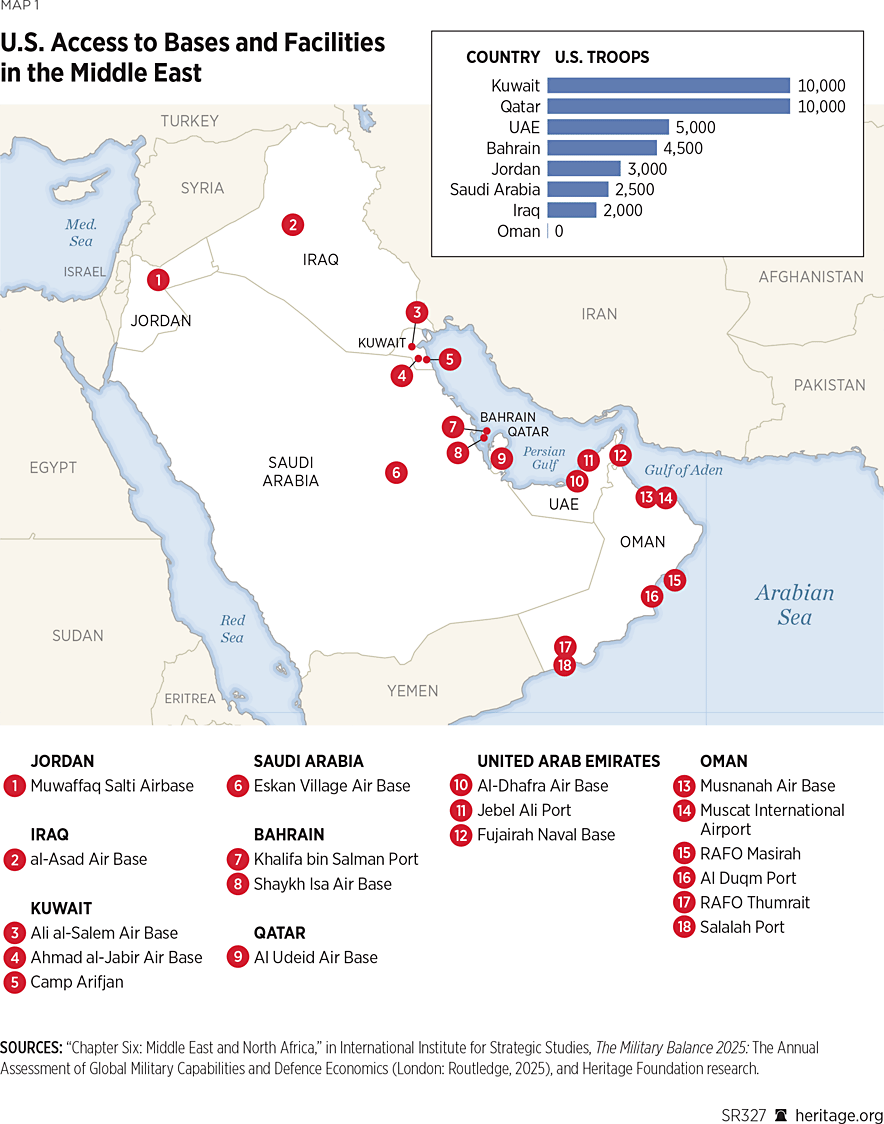
By June 2025, CENTCOM had deployed an estimated 40,000 U.S. troops to 21 countries within its AOR.[REF] Although the exact disposition of U.S. forces is hard to determine because of the fluctuating nature of U.S. military operations in the region,[REF]information gleaned from open sources reveals the following:
- Kuwait. More than 13,500 U.S. personnel are based in Kuwait and spread among Camp Arifjan, Ahmad al-Jabir Air Base, and Ali al-Salem Air Base. A large depot of prepositioned equipment and a squadron of fighters and Patriot missile systems are also deployed to Kuwait.[REF] In February 2025, the U.S. State Department approved a potential $1 billion Foreign Military Sale to Kuwait for design and construction services intended to enhance military infrastructure such as maritime and land facilities at the Mohammed Al Ahmed Naval Base.[REF]
- United Arab Emirates. More than 5,000 U.S. personnel are deployed at Jebel Ali Port, Al Dhafra Air Base, and naval facilities at Fujairah. Jebel Ali Port is the U.S. Navy’s busiest port of call for aircraft carriers.[REF] U.S. Air Force personnel who are stationed in the UAE use Al Dhafra Air Base to operate fighters, UAVs, refueling aircraft, and surveillance aircraft; it is the busiest U.S. base in the world for surveillance flights.[REF] In addition, the United States has regularly deployed F-22 Raptor combat aircraft to Al Dhafra and in April 2021 deployed the F-35 combat aircraft because of escalating tensions with Iran. Patriot and THAAD missile systems have been deployed for air and missile defense.[REF]
- Oman. In 1980, Oman became the first Gulf State to welcome a U.S. military base. While the number of U.S. military personnel in Oman has fallen to a few hundred, mostly from the U.S. Air Force, the country provides important access in the form of over 5,000 aircraft overflights, 600 aircraft landings, and 80 port calls annually.[REF] The U.S.–Oman Strategic Framework Agreement, signed in March 2019, remains foundational, granting U.S. forces access to Omani ports such as Al Duqm, with its capacity to accommodate U.S. carriers that enhances strategic flexibility, and Salalah.[REF]
- Bahrain. More than 9,000 U.S. military personnel are based in Bahrain. Naval Support Activity Bahrain remains the headquarters for U.S. Naval Forces Central Command in Manama and for the U.S. Fifth Fleet, overseeing operations across the Persian Gulf, the Red Sea, and the Arabian Sea.[REF] A significant number of U.S. Air Force personnel operate out of Shaykh Isa Air Base where F-16s, F/A-18s, and P-8 surveillance aircraft are stationed. U.S. Patriot missile systems also are deployed to Bahrain. The deep-water port of Khalifa bin Salman is one of the few Gulf facilities that can accommodate U.S. aircraft carriers. In 2021, Bahrain became an operational hub for the use of new artificial intelligence technology to direct unmanned surface vessels and unmanned underwater vehicles in the CENTCOM AOR.[REF]
- Saudi Arabia. In June 2021, President Biden reported to Congress that approximately 2,700 U.S. military personnel were deployed in Saudi Arabia “to protect United States forces and interests in the region against hostile action by Iran or Iran-backed groups.” The President confirmed that these troops, “operating in coordination with the Government of the Kingdom of Saudi Arabia, provide air and missile defense capabilities and support the operation of United States fighter aircraft.”[REF] The six-decade-old United States Military Training Mission to the Kingdom of Saudi Arabia, the four-decade-old Office of the Program Manager of the Saudi Arabian National Guard Modernization Program, and the Office of the Program Manager–Facilities Security Force are based in Eskan Village Air Base approximately 13 miles south of the capital city of Riyadh.[REF]
- Qatar. The number of U.S. personnel, mainly from the U.S. Air Force, deployed in Qatar “has ranged from about 8,000 to over 10,000.”[REF] The U.S. operates its Combined Air Operations Center at Al Udeid Air Base, which is one of the world’s most important U.S. air bases. The base continues to host the Combined Air and Space Operations Center and serves as the forward headquarters of CENTCOM. Al Udeid supports heavy bombers, tankers, transports, and intelligence, surveillance, and reconnaissance (ISR) aircraft and houses prepositioned U.S. equipment as well as Patriot missile systems.[REF] In January 2024, the U.S. and Qatar agreed to extend the American military presence at Al Udeid for another 10 years.[REF] In January 2025, Space Forces Central (SPACECENT) broke ground on a new campus at Al Udeid to strengthen space operations integration.[REF]
- Jordan. Although there are no permanent U.S. military bases in Jordan, the United States maintains a significant military presence there with approximately 3,813 U.S. military personnel deployed to support counterterrorism efforts and bolster Jordan’s security.[REF] According to CENTCOM, “Jordan remains one of U.S. Central Command’s strongest and most reliable partners in the Levant sub-region.”[REF] The U.S. and Jordan share a robust defense partnership formalized by a Defense Cooperation Agreement that facilitates joint military exercises, training programs, and defense-related collaborations.[REF] Jordanian air bases continue to play a crucial role in U.S. operations, particularly for ISR missions in Syria and Iraq.
CENTCOM “directs and enables military operations and activities with allies and partners to increase regional security and stability in support of enduring U.S. interests.”[REF] Execution of this mission is supported by four service component commands—U.S. Naval Forces Middle East (NAVCENT); U.S. Army Forces Middle East (ARCENT); U.S. Air Forces Middle East (AFCENT); and U.S. Marine Forces Middle East (MARCENT)—and one subordinate unified command, U.S. Special Operations Command Middle East (SOCCENT).
- U.S. Naval Forces Central Command. NAVCENT is CENTCOM maritime component. With its forward headquarters in Bahrain, it is responsible for commanding the afloat units that rotationally deploy or surge from the United States in addition to other ships that are based in the Gulf for longer periods. NAVCENT conducts persistent maritime operations to advance U.S. interests, deter and counter disruptive countries, defeat violent extremism, and strengthen partner nations’ maritime capabilities in order to promote a secure maritime environment in an area that encompasses approximately 2.5 million square miles of water.
- U.S. Army Forces Central Command. ARCENT is CENTCOM’s land component. Based in Kuwait, it is responsible for land operations in an area that totals 4.6 million square miles (1.5 times larger than the continental United States).
- U.S. Air Forces Central Command. AFCENT is CENTCOM’s air component. Based in Qatar, it is responsible for air operations and for working with the air forces of partner countries in the region. It also manages an extensive supply-and-equipment prepositioning program at several regional sites.
- U.S. Marine Forces Central Command. MARCENT is CENTCOM’s designated Marine Corps service component. Based in Bahrain, it is responsible for all Marine Corps forces in the region.
- U.S. Special Operations Command Central. SOCCENT is a subordinate unified command under CENTCOM. Based in Qatar, it is responsible for planning special operations throughout the CENTCOM region, planning and conducting peacetime joint/combined special operations training exercises, and orchestrating command and control of peacetime and wartime special operations.
In addition to the American military presence in the region, two NATO allies—the United Kingdom and France—play an important role.
The U.K.’s presence in the Middle East is a legacy of British imperial rule. The U.K. has maintained close ties with many countries that it once ruled and has conducted military operations in the region for decades. As of 2024, approximately 410 British service personnel were permanently based throughout the region.[REF] This number fluctuates with the arrival of visiting warships.
The British presence in the region is dominated by the Royal Navy. Permanently based naval assets include four mine hunters and one Royal Fleet Auxiliary supply ship. In general, “UK armed forces are involved in three major military operations in the wider Middle East region” including “Operation Kipion, a long-standing maritime security mission in the Arabian/Persian Gulf and Indian Ocean.” In addition, frigates or destroyers in the Gulf or Arabian Sea are generally performing maritime security duties, and (although such matters are not the subject of public discussion) U.K. attack submarines also operate in the area.[REF] In April 2018, as a sign of its long-term maritime presence in the region, the U.K. opened a base in Bahrain—its first overseas military base in the Middle East in more than four decades.[REF] The U.K. has made a multimillion-dollar investment in modernization of the Duqm Port complex in Oman to accommodate its new Queen Elizabeth–class aircraft carriers.[REF]
The U.K. also has a small RAF presence in the region, mainly in the UAE and Oman. A short drive from Dubai, Al-Minhad Air Base is home to a small contingent of U.K. personnel, and small RAF detachments in Oman support U.K. and coalition operations in the region. The U.K.’s Sovereign Base Areas of Akrotiri and Dhekelia in Cyprus have supported U.S. military and intelligence operations in the past and are expected to continue to do so.
Finally, the British presence in the region is not limited to soldiers, ships, and planes. A British-run staff college operates in Qatar, and Kuwait chose the U.K. to help it to run its own equivalent of the Royal Military Academy at Sandhurst.[REF] The U.K. also plays a very active role in training the Saudi Arabian and Jordanian militaries.
The French presence in the Gulf is smaller than the U.K.’s but still significant. France opened a military base in Abu Dhabi in 2009, its first in the Gulf and the first foreign military installation built in 50 years.[REF] The French have 700 personnel based in the UAE along with seven Rafale jets and an armored battlegroup in addition to military operations in Iraq, Saudi Arabia, and Qatar.[REF] French ships have access to the Zayed Port in Abu Dhabi, which is big enough to handle every ship in the French Navy except the aircraft carrier Charles de Gaulle.
Military support from the U.K. and France has been particularly important in Operation Inherent Resolve, a U.S.-led joint task force that was formed to combat the Islamic State in Iraq and Syria. As of May 2021, France had between 600 and 650 troops stationed in the UAE; 600 stationed in Jordan, Syria, and Iraq; and 650 stationed in Lebanon.[REF] The U.K. temporarily redeployed troops back to the U.K. because of COVID-19 but announced in February 2021 that 500 troops would be sent back along with an additional 3,500 troops to boost its counterterrorism training mission in Iraq.[REF] The additional troops will help both to prevent the Islamic State from returning and to manage threats from Iran-backed militias more effectively.
Another important actor in Middle East security is the small East African country of Djibouti. Djibouti sits on the Bab el-Mandeb Strait, through which an estimated 6.2 million barrels of oil a day transited in 2018 (the most recent year for which U.S. Energy Administration data are available) and which is a choke point on the route to the Suez Canal.[REF] An increasing number of countries recognize Djibouti’s value as a base from which to project maritime power and launch counterterrorism operations. The country is home to Camp Lemonnier, which can hold as many as 4,000 personnel and is the only permanent U.S. military base in Africa.[REF] France, Italy, and Japan also have presences of varying strength in Djibouti.[REF]
Key Infrastructure That Enables Expeditionary Warfighting Capabilities
The Middle East is a critical geographic area. Two-thirds of the world’s population lives within an eight-hour flight from the Gulf region, making it accessible from most other regions of the globe. The Middle East also contains some of the world’s most critical maritime choke points, including the Suez Canal and the Strait of Hormuz.
Although infrastructure is not as developed in the Middle East as it is in North America or Europe, during a decades-long presence, the U.S. has developed systems that enable it to move large numbers of matériel and personnel into and out of the region. According to the Department of War, at the height of U.S. combat operations in Iraq during the Second Gulf War, the U.S. presence included 165,000 servicemembers and 505 bases. Moving personnel and equipment out of the country was “the largest logistical drawdown since World War II” and included redeployment of “the 60,000 troops who remained in Iraq at the time and more than 1 million pieces of equipment ahead of their deadline.”[REF]
The condition of the region’s roads varies from country to country. Virtually all roads in Israel, Jordan, and the UAE are paved. Other nations—for example, Oman (29,685 km paved, 30,545 unpaved); Yemen (6,200 km paved, 65,100 km unpaved); and Saudi Arabia (47,529 km paved, 173,843 km unpaved)—have poor paved road coverage.[REF] Rail coverage is also poor. China’s BRI has targeted ports, roads, and railway development in Syria, Iraq, Egypt, and many other countries, and the result could be improved transportation conditions across the region at the expense of U.S. interests.[REF]
The United States has access to several airfields in the region. The primary air hub for U.S. forces is Al Udeid Air Base in Qatar. Other airfields include Ali Al Salem Air Base in Kuwait; Al Dhafra and Al Minhad in the UAE; Isa in Bahrain; Eskan Village Air Base in Saudi Arabia; and Muscat, Thumrait, Masirah Island, and the commercial airport at Seeb in Oman. In the past, the United States has used major airfields in Iraq, including Baghdad International Airport and Balad Air Base, as well as Prince Sultan Air Base in Saudi Arabia.
The fact that a particular air base is available to the United States today, however, does not necessarily mean that it will be available for a particular operation in the future. For example, because of their more cordial relations with Iran, Qatar and Oman probably would not allow the United States to use air bases in their territory for strikes against Iran unless they were first attacked themselves.
The United States also has access to ports in the region, the most important of which may be the deep-water port of Khalifa bin Salman in Bahrain and naval facilities at Fujairah in the UAE.[REF] The UAE’s commercial port of Jebel Ali is open for visits from U.S. warships and the prepositioning of equipment for operations in theater.[REF]
In March 2019, “Oman and the United States signed a ‘Strategic Framework Agreement’ that expands the U.S.–Oman facilities access agreements by allowing U.S. forces to use the ports of Al Duqm, which is large enough to handle U.S. aircraft carriers, and Salalah.”[REF] The location of these ports outside the Strait of Hormuz makes them particularly useful. Approximately 90 percent of the world’s trade travels by sea, and some of the busiest and most important shipping lanes are located in the Middle East. Tens of thousands of cargo ships travel through the Strait of Hormuz and the Bab el-Mandeb Strait each year. However, the Houthis demonstrated how vulnerable this shipping lane is when they began to attack commercial and naval vessels in the fall of 2023.
Given the high volume of maritime traffic in the region, no U.S. military operation can be undertaken without consideration of the opportunity and risk that these shipping lanes offer to America and her allies. The major shipping routes include:
The Suez Canal. In 2023, more than 26,000 ships transited the Suez Canal, accounting for 12 percent of global trade, but tensions in the Red Sea late in 2023 caused transits to fall by nearly 50 percent to 13,200 in 2024.[REF] The Trump Administration’s campaign against the Houthis in the spring of 2025 could cause traffic to rebound, but considering that the canal itself is 120 miles long but only 670 feet wide, 13,200 transits is still an impressive amount of traffic. The Suez Canal is important to Europe because it provides access to oil from the Middle East. It also serves as an important strategic asset for the United States, as it is used routinely by the U.S. Navy to move surface combatants between the Mediterranean Sea and the Red Sea. Thanks to a bilateral arrangement between Egypt and the United States, the U.S. Navy enjoys priority access to the canal.[REF]
The journey through the Suez Canal’s narrow waterway is no easy task for large surface combatants; the canal was not constructed with the aim of accommodating 100,000-ton aircraft carriers. For this reason, different types of security protocols are followed to ensure the security of larger vessels, including the provision of air support by the Egyptian military.[REF] These security protocols, however, are not foolproof. In April 2021, the Suez Canal was closed for more than 11 days after a container ship ran aground, blocking the waterway and creating a 360-ship traffic jam that disrupted almost 13 percent of global maritime traffic. This crisis proves that ever-larger container ships transiting strategic choke points are prone to accidents that can lead to massive disruptions of both global maritime trade and U.S. maritime security.[REF]
Strait of Hormuz. According to the U.S. Energy Information Administration, the Strait of Hormuz, which links the Persian Gulf with the Arabian Sea and the Gulf of Oman, “is the world’s most important oil chokepoint because of the large volumes of oil that flow through the strait.”[REF] In 2024, its daily oil flow averaged “around 20.3 million barrels” per day, the equivalent of “[o]ne fifth of global oil supply.”[REF]
Given the extreme narrowness of the passage and its proximity to Iran, shipping routes through the Strait of Hormuz are particularly vulnerable to disruption. Since 2021, Iran has harassed, attacked, and interfered with over a dozen internationally flagged merchant ships according to the White House and the Pentagon. In April 2024, IRGC naval special forces seized a container ship.[REF] Iran had previously seized two foreign-flagged oil tankers in the spring of 2023.[REF] In response, U.S. Navy warships stationed in the Persian Gulf increased their patrols.[REF] The U.S. needs a naval presence and port access to countries that border the Strait of Hormuz to maintain awareness of Iran’s illicit drug and weapons smuggling.[REF]
- Bab el-Mandeb Strait. The Bab el-Mandeb Strait is a strategic waterway located between the Horn of Africa and Yemen that links the Red Sea to the Indian Ocean. Exports from the Persian Gulf and Asia that are destined for Western markets must pass through the strait en route to the Suez Canal. Because the Bab el-Mandeb Strait is 18 miles wide at its narrowest point, passage is limited to two channels for inbound and outbound shipments.[REF]
- Maritime Prepositioning of Equipment and Supplies. The U.S. military has deployed noncombatant maritime prepositioning ships (MPS) containing large amounts of military equipment and supplies in strategic locations from which they can reach areas of conflict relatively quickly as associated U.S. Army or Marine Corps units located elsewhere arrive in the area. The British Indian Ocean Territory of Diego Garcia, an island atoll, hosts the U.S. Naval Support Facility Diego Garcia, which supports prepositioning ships that can supply Army or Marine Corps units deployed for contingency operations in the Middle East.
Conclusion
The Middle East region remains a key focus for U.S. military planners. Once considered relatively stable because of the ironfisted rule of authoritarian regimes, the area is now highly unstable and a breeding ground for terrorism and the return of regional powers vying for territory and influence.
Overall, regional security has deteriorated in recent years. Hamas’s October 7, 2023, attack on Israel led to the greatest change in the operating environment in a generation. In response to the attack, Israel has effectively destroyed or significantly degraded terrorist organizations and terrorist armies in three locations—Hamas in Gaza, Hezbollah in Lebanon, and the Houthis in Yemen—while defending itself against two unprecedented direct ballistic missile attacks on its soil from Iran. In striking back against the Islamic Republic, Israel and the United States dealt a significant blow to Tehran’s ability to defend its territory, produce ballistic missiles, and advance its nuclear program. This culminated in the Twelve-Day War with Israel destroying much of Iran’s ballistic missile infrastructure and the United States delivering a decisive blow to the regime’s nuclear facilities. Yet Tehran appears to be undeterred in its ambition to dominate the region and acquire nuclear capabilities.
Many of the region’s borders created after World War I are under significant stress. The fall of the Assad regime has created a power vacuum in Syria that the HTS-led transitional government of Ahmed al-Sharaa (previously known by his nom de guerre Abu Mohammad al-Julani) is attempting to navigate, while regional players use the moment to encroach on Syrian territory in a bid to seize territory (Turkey) or establish a forward-deployed defensive position (Israel). Though its caliphate was defeated, ISIS survives in Syria and continues to threaten the integrity of that country and the security of its borders.
In Lebanon, the pummeling of Hezbollah by the Israelis after the Iranian proxy joined Hamas in its war against Israel has created an opportunity for the Lebanese army to reassert control of the country’s southern territory. As this book was being prepared, HTS was battling with Hezbollah on the Syrian–Lebanese border. It remains to be seen whether the new government in Damascus will prevent Iran from using Syria as a land bridge to resupply Hezbollah, which could well significantly reduce the Lebanese terrorist group’s capabilities. Under the direction of the new administration in Syria, Syrian forces have claimed success in anti-smuggling operations. For example, Syrian forces have captured several wanted individuals, have seized large quantities of weapons and narcotics, and claim to have established control of several villages in an effort to combat Hezbollah’s smuggling operations.[REF]
Elsewhere, Yemen’s civil war persists, and the Houthis have used their territorial control and Iranian supply lines to launch attacks against Israel, American naval ships, and international commercial vessels. Despite numerous Israeli and American airstrikes targeting the group’s infrastructure, weapons, and leadership, Iran’s proxy appears to be undeterred.
Iran also exercises significant influence over Iraq. Baghdad has restored its territorial integrity since the defeat of the Islamic State, but the political situation and future relations between Iraq and the United States will remain difficult as long as Iran retains control of powerful Shia militias that it uses to intimidate Iraqi political leaders.[REF]
Though the regional dispute with Qatar has been resolved, the Gulf country has played a unique role in the post–October 7 war, using its position as host to Hamas’s leadership outside of Gaza and close relations with both the United States and Iran to serve as a mediator in negotiations over the return of the more than 250 hostages Hamas captured in its attack.[REF]
Egypt, though stable for the moment, faces its own security challenges. Cairo has prevented refugees from Gaza from entering the Sinai Peninsula largely because of concerns about the spread of Hamas and other terrorist elements into Egypt and to prevent the Palestinian people from relocating to a third country, which is seen as an abrogation of the Palestinian claim to territory in any negotiated deal with Israel. As this book was being prepared, Egypt had sent armored battalions and other forces into Sinai, violating the 1979 Camp David Accords with Israel.[REF]
Jordan also faces threats to its stability. About half of its population is Palestinian, and the Hashemite Kingdom has been unable to stem the flow of weapons smuggled to Palestinian terrorist groups in Judea and Samaria. Amman has engaged with the new government in Damascus and resumed flights between the countries, but much of the borderland remains ungoverned, giving the Islamic State the opportunity to reestablish territory. This area was also the site of an Iranian-aligned proxy group in Iraq’s missile strike against an American outpost that killed three servicemembers in January 2024.[REF]
In response to recent regional upheaval, the U.S. military continues to demonstrate its capacity to surge troops, warships, and supplies to the region in defense of American interests and support of American allies and partners. Decades of military operations in the Middle East have created tried-and-tested procedures for operating across the theater. Personal links between allied armed forces are also present. Joint training exercises improve interoperability, and U.S. military educational courses that are regularly attended by officers (and often royals) from the Middle East give the U.S. an opportunity to influence some of the region’s future leaders. Maintaining a sustainable presence in the region will require leveraging the capabilities of U.S. allies and partners to ensure that vital shared national security interests—energy, trade, nuclear nonproliferation, and countering terrorism—are secured.
America’s relationships in the region are based pragmatically on shared security and economic concerns. As long as these issues remain relevant to both sides, the U.S. is likely to benefit from cooperation with partners and allies in the Middle East when shared interests are threatened.
Scoring the Middle East Operating Environment
As noted at the beginning of this section, there are several regional characteristics that affect the ability of the U.S. to conduct military operations to defend its vital national interests against threats in the Middle East. This assessment of the operating environment uses a five-point scale that ranges from “very poor” to “excellent” conditions and covers four regional characteristics that are of greatest relevance to the conduct of military operations:
- Very poor. Significant hurdles exist for military operations. Physical infrastructure is insufficient or nonexistent, and the region is politically unstable. The U.S. military is poorly placed or absent, and alliances are nonexistent or diffuse.
- Unfavorable. A challenging operating environment for military operations is marked by inadequate infrastructure, weak alliances, and recurring political instability. The U.S. military is inadequately placed in the region.
- Moderate. A neutral to moderately favorable operating environment is characterized by adequate infrastructure, a moderate alliance structure, and acceptable levels of regional political stability. The U.S. military is adequately placed.
- Favorable. A favorable operating environment includes adequate infrastructure, strong alliances, and a stable political environment. The U.S. military is well placed for future operations.
- Excellent. An extremely favorable operating environment includes well-established and well-maintained infrastructure, strong and capable allies, and a stable political environment. The U.S. military is well placed to defend U.S. interests.
The key regional characteristics consist of:
Alliances/Partnerships. Alliances are important for interoperability and collective defense, as allies are more likely to lend support to U.S. military operations. Indicators that provide insight into the strength or health of an alliance include whether the United States trains regularly with countries in the region, has good interoperability with the forces of an ally, and shares intelligence with nations in the region. Political stability. Political stability brings predictability for military planners when considering such components as transit, basing, and overflight rights for U.S. military operations. The overall degree of political stability indicates whether U.S. military actions would be hindered or enabled and reflects, for example, whether transfers of power are generally peaceful and whether there have been any recent instances of political instability in the region. U.S. military positioning. Being able to base military forces or to stage equipment and supplies in a region greatly facilitates the ability of the United States to respond to crises and presumably to achieve success in critical “first battles” more quickly. Being routinely present in a region also helps the United States to remain familiar with its characteristics and the various actors that might either support or try to thwart U.S. actions. With this in mind, we assessed whether the U.S. military was well positioned in the region. Again, indicators included bases, troop presence, prepositioned equipment, and recent examples of military operations (including training and humanitarian) launched from the region. Infrastructure. Modern, reliable, and suitable infrastructure is essential to military operations. Airfields, ports, rail lines, canals, and paved roads enable the United States to stage, launch, and logistically sustain combat operations. We combined expert knowledge of regions with publicly available information on critical infrastructure to arrive at our overall assessment of this metric.
The U.S. enjoys strong military-to-military relationships with many countries in the Middle East, but few can provide the necessary capabilities to defend themselves in the event of a credible threat from a nation-state or terrorist organization, Israel being the lone exception. The multinational response from Middle Eastern and European partners to defend Israel against Iran’s April 2024 UAV and missile attack demonstrates the ability of the United States to coordinate military action among Middle Eastern and European countries with assets in-region in response to a common threat.
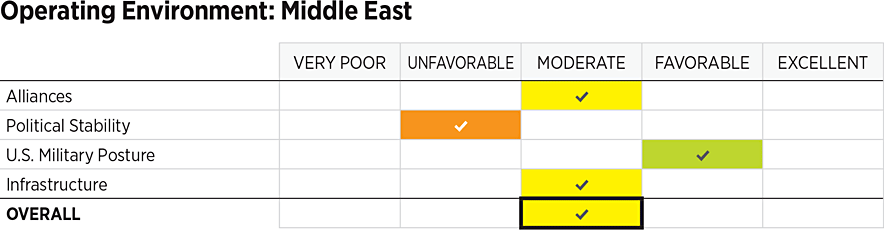
Although destabilizing in the near term, the near-destruction of Hamas in the Gaza Strip, crippling of Hezbollah in Lebanon, and fall of the Assad regime in Syria create long-term opportunities for new, favorable political dynamics to emerge. The U.S. presence is significantly diminished since the height of operations in Iraq and Afghanistan, but its response in the immediate aftermath of the October 7, 2023, attack and subsequent operations against the Houthis and Iran demonstrate the U.S. military’s ability to respond rapidly to a wide range of crises across the region.
Finally, the region’s natural chokepoints—the Suez Canal, Bab al-Mandeb Strait, and Strait of Hormuz, among others—will always pose a risk to free movement within and through the region. In addition, the poor infrastructure within many countries can limit ground-based operations. Yet the U.S. maintains a robust network of air, naval, and ground bases that enable it to launch and logistically sustain combat operations.
Overall, the U.S. has developed an extensive network of bases in the Middle East and has acquired substantial operational experience in combatting regional threats. At the same time, however, many of America’s allies are hobbled by political instability, economic problems, internal security threats, and mushrooming transnational threats. With these considerations in mind the overall score for the region is “moderate,” and we arrived at these average scores for the Middle East (rounded to the nearest whole number):
- Alliances/Partnerships: 3—Moderate.
- Political Stability: 2—Unfavorable.
- U.S. Military Positioning: 4—Favorable.
- Infrastructure: 3—Moderate.
Aggregating to a regional score of: Moderate.
Iran
Regional Overview
The Islamic Republic of Iran experienced profound changes and setbacks from 2024–2025. These changes did not alter Tehran’s bellicosity, anti-American and antisemitic rhetoric, pursuit of violent and malign activities, or desire to export its radical theocratic ideology, but they did impose significant costs on the regime and its ability to project strength across the Middle East.
On October 7, 2023, Iran’s strength was at its zenith. It commanded a network of proxy terrorist groups that gave Tehran influence or control in four separate countries or territories: Lebanon, Yemen, Iraq, and the Palestinian Territories of the Gaza Strip and Judea and Samaria (the West Bank). The Assad regime in Syria served as a client state that provided Iran with a land bridge to Lebanon and the means to supply and support its most vital regional asset, Hezbollah. Assad also granted Iran the ability to establish a military presence in the Syrian Golan Heights and directly threaten Israel’s northern border.
Iran had amassed the region’s largest and most sophisticated arsenal of ballistic missiles. Its ever-expanding capabilities threatened U.S. allies—notably Israel—and interests, and Iran’s developing space program suggests that it was developing the means to put much of Europe (and potentially the U.S. homeland) within missile range. Iran’s nuclear ambitions also continued unimpeded. Having survived the first Trump Administration’s “maximum pressure” campaign, the regime used the Biden Administration’s relentless pursuit of a new nuclear agreement to accelerate its enrichment and production capacity.
The invasion of Israel by Hamas on October 7, 2023, with its intent to unite the Iranian proxy network in a coordinated, multi-front assault to destroy the Jewish state led to a regional war in which Israel engaged and, to varying degrees, defeated Iran’s proxies around its borders. Though not a direct belligerent, the Assad regime also fell in December 2024, further undermining Iran’s ability to project power in the region. This war also featured the first direct engagement between Iran and Israel on April 13, 2024, when the regime launched a salvo of over 300 ballistic missiles, cruise missiles, and drones at Israel. This was followed by another ballistic missile attack on October 1, 2024.
On June 13, 2025, Israel launched Operation Rising Lion to destroy Iran’s ballistic missile inventory, launch and production capacity, and air defense assets and slow the development of its nuclear enrichment program. On June 22, 2025, the United States conducted Operation Midnight Hammer, a coordinated attack against three Iranian nuclear facilities that delivered a crippling blow to Iran’s nuclear programs.
In late 2025, Iran experienced a significant water drought that was exacerbated by government mismanagement and followed quickly by a plunging currency and unstable economic environment. This led in January 2026 to the largest protests in the country’s history. The regime responded to these protests with brutal repression, cutting internet access and killing thousands of Iranians.
Although Iran has suffered significant setbacks and is currently at its weakest point in decades, the regime still poses a threat to America’s interests in the region and, through its asymmetric capabilities, the U.S. homeland.
Iran’s Oil Exports
The Iranian regime depends on its natural resources to sustain its economy and export its revolution and regional ambitions. Oil exports accounted for about 57 percent of Iran’s total export revenue in 2024, making the regime highly dependent on its sale and vulnerable to international sanctions.[REF] Following the first Trump Administration’s maximum pressure campaign, sanctions against Iran were relaxed under the Biden Administration. Iran’s oil production increased from a low of 444,660 barrels per day in 2020 to 1,484,215 barrels per day in 2024.[REF]
The primary destination for this oil is China, which accounts for about 90 percent of Iran’s seaborne oil exports.[REF] Beijing helped to underpin Tehran’s ability to sell at steep discounts when necessary and to accept non-conventional arrangements that reduced exposure to the U.S. dollar-based financial system. Analysts also documented the use of insurance and financing workarounds, some involving state-backed Chinese insurers and opaque financial vehicles that smoothed payments and protected long-term projects tied to oil receipts.[REF]
Additional U.S. sanctions in 2025 targeted specific Chinese refining and logistics entities, including specific terminals, vessels, and insurers alleged to have been central to Iran’s export network. Official actions raised the operational cost for Iran’s traders but did not eliminate the regime’s ability to sell barrels to willing buyers.[REF] Iran lost roughly 26 percent of its potential oil export revenue by the end of 2024 because of sanctions evasion costs.[REF]
In February 2025, the U.S. Department of the Treasury and the U.S. Department of State imposed sanctions on more than 30 persons, vessels, and entities in multiple countries for facilitating Iran’s petroleum exports. In May, the U.S. announced threats of “secondary sanctions” on countries importing Iranian oil, making clear that buying Iranian crude or products could bring U.S. business exclusion.[REF]
In September 2025, U.N.-mandated sanctions that had been suspended under the Joint Comprehensive Plan of Action (JCPOA) were reintroduced through the “snap-back” mechanism: travel bans, asset freezes, prohibitions on funds to specific persons and entities. The European Union’s autonomous measures, including asset freezes on the Central Bank of Iran and several Iranian banks, were also resumed.[REF]
Force Assessment: Asymmetric Capabilities
Islamic Revolutionary Guard Corps/Quds Force. The Islamic Revolutionary Guard Corps (IRGC) and its expeditionary arm, the Quds (Jerusalem) Force, remain Iran’s primary instruments for projecting power, shaping regional conflicts, and pressuring adversaries. Their growing capabilities, which include missiles, drones, cyber operations, intelligence networks, and proxy armies, have enabled Tehran to influence events from the Gulf to the Mediterranean, the Red Sea, and beyond.
Historically, the Quds Force has maintained supply lines via air routes through Syria, Iraq, and Lebanon; land corridors forming the “Iran–Iraq–Syria land bridge;” maritime smuggling in the Red Sea and the Mediterranean; and covert factories in Syria, Lebanon, and Yemen. This network enables Iran to arm its proxies even under heavy sanctions and surveillance. Following the fall of the Assad regime and debilitation of its proxy network, it remains to be seen how the Quds Force will continue to support and supply Iranian assets around the region.
The Quds Force conducts intelligence operations abroad, targeting American, Israeli, Gulf, and Western interests, dissidents, and diplomatic and commercial sites as well as infrastructure and energy assets. It employs informant networks, front companies, operatives embedded in embassies, and cyber-enabled espionage.
Assassination attempts against American officials, among them President Donald Trump, have been traced to the IRGC’s Quds Force.[REF] Similarly, threats made to such former American Administration officials as former White House National Security Advisor Robert O’Brien and former Secretary of State and Central Intelligence Agency Director Mike Pompeo have come from these very forces.[REF] The targeted killing of Quds Force Commander Qassem Suleimani by the United States in 2020 was a severe loss for the organization, as was the targeted killing of IRGC Commander Hossein Salami by Israel in 2025.
Proxy Network. Iran has adopted a political warfare strategy by which it seeks to avoid direct conflict with its adversaries, preferring an indirect approach that emphasizes irregular warfare, asymmetric tactics, and the extensive use of proxy forces. The IRGC has trained, armed, supported, and collaborated with a wide variety of radical Shia and Sunni militant groups as well as Arab, Palestinian, Kurdish, and Afghan groups that do not share its radical Islamist ideology. This includes numerous proxies, particularly the Lebanon-based Hezbollah; Iraqi Shia militant groups; Palestinian groups such as Hamas and Palestinian Islamic Jihad; and insurgent groups that have fought against the governments of Afghanistan, Bahrain, Egypt, Israel, Iraq, Jordan, Kuwait, Morocco, Saudi Arabia, Turkey, the United Arab Emirates (UAE), and Yemen.
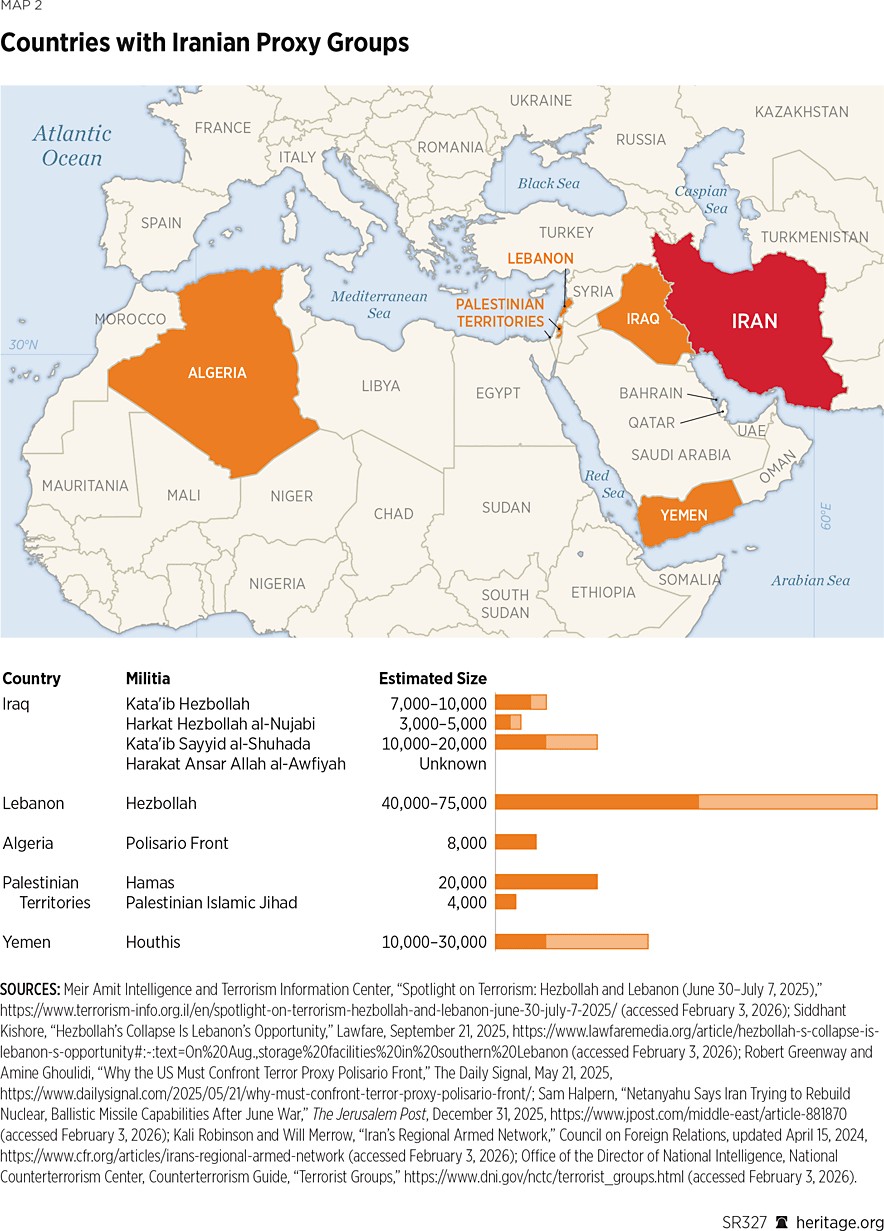
Hezbollah. For more than 40 years, Hezbollah has served as Iran’s key node within a wider network of Iranian proxy organizations spread across the Middle East, Africa, and Central Asia. Hezbollah either has been responsible for or has assisted with dozens of attacks against U.S. targets, allies, and partners and more recently contributed thousands of fighters to aid Iran’s efforts in Syria, maintaining the rule of Bashar al-Assad. Hezbollah functions as a key organization involved in Iranian planning, projection, and attacks across the Middle East and the world generally.
In the 1980s–1990s, Hezbollah made a name for itself by attacking Israeli forces in Lebanon and Israel and by organizing and conducting terrorist attacks against Western targets in Lebanon. The organization also hybridized, gaining further power by entering Lebanese politics and winning seats in the Lebanese parliament. However, its political forays have not moderated the group. In 2006, Hezbollah was strong enough to precipitate a war against Israel by attacking, killing, and kidnapping Israeli soldiers stationed along the Lebanese border. Hezbollah’s arms also allowed it to maintain its power over Lebanon and even resulted in its May 2008 advance into Beirut when the group dispatched Sunni and Druze political foes.
Following the October 7, 2023, Hamas-led attacks against Israel, Hezbollah assisted its Gaza-based Palestinian allies by launching attacks against Israeli border posts, facilitating other Lebanese and Palestinian groups in their attacks from Lebanon, and launching rocket, missile, and drone attacks against Israeli targets.[REF] In July 2024, a Hezbollah rocket attack targeted the Druze border town of Majdal Shams, killing 12 Druze children and wounding 30 others.[REF] One October 2024 drone attack on the Binyamina barracks resulted in the deaths of four Israeli soldiers.[REF] Another Hezbollah rocket attack in October 2024 killed seven, including four Thai farm laborers in northern Israel.[REF] Hezbollah’s repeated and deadly attacks caused about 60,000 Israelis to be displaced from their homes in northern Israel.[REF]
As for Hezbollah itself, targeted retaliatory strikes and other attacks launched by Israel decimated the group’s leadership.[REF] Both Sayyid Hassan Nasrallah, leader of the group for 32 years, and his successor Hashim Safi al-Din were killed in Israeli airstrikes.[REF] Intermediate-level Hezbollah combatant leaders were also effectively targeted during Israeli intelligence operations that utilized explosive-laden pagers and walkie-talkies.[REF]
While Israel was quite effective in destroying large sections of the group’s leadership apparatus, however, Hezbollah is still a functional organization and is actively rebuilding its arsenal.[REF] The group has also resisted attempts to disarm it.[REF] With notable ideological loyalty to Iran, Hezbollah has played a key role in Iran’s attempts to build new radical militant organizations across the Middle East and carry out terrorist activity abroad, and its usefulness to Iran has not diminished.
Kata’ib Hezbollah (Hezbollah Brigades). Founded between 2005 and 2007, Kata’ib Hezbollah is staffed by ideologically loyal and extremely militant Iraqi Shia. Controlled by Iran, the group launched attacks against U.S. forces during the war in Iraq (2003–2011); fielded thousands of recruits for the war in Syria; is one of the largest factions in the Popular Mobilization Front (PMF); and continued attacks against American targets into 2024 operating as the Islamic Resistance in Iraq. The group has also maintained a bellicose anti-American stance. Kata’ib Hezbollah is a key organizational element in the building of Iraqi Shia militias, and its links to other organizations have helped it to form a core of violent groups loyal to Iran.
Harakat Hezbollah al-Nujaba (Hezbollah Movement of the Outstanding or HHN). Formed in late 2012/early 2013, this group is currently led by Akram Kaabi, formerly the secretary general of another major Iranian-backed Iraqi proxy, Asa’ib Ahl al-Haq. From 2012–2024, HHN recruited and supplied thousands of fighters to fight in Syria and was one of the most prolific recruiters among Iran’s Iraqi Shia militias. After the 2020 killing of IRGC-QF commander Qasim Suleimani, Nujaba was increasingly positioned as the leader of a range of front groups including the Islamic Resistance in Iraq.
Kata’ib Sayyid al-Shuhada (Master of the Martyrs Brigade or KSS). Formed in late 2012/early 2013, KSS was initially part of Kata’ib Hezbollah. Its leader, Abu Alaa al-Walai, was jailed by U.S. forces in 2010 for his role in attacking U.S. and Coalition forces in Iraq. By 2013, KSS had helped to recruit thousands of Iraqi Shia to fight in Iraq and Syria. It also has been directly involved in more contemporary attacks against U.S. forces and interests.[REF] In 2023, the U.S. Department of State listed the group and its leader as Specially Designated Global Terrorists.[REF] In September 2025, the U.S. Department of State designated the group as a Foreign Terrorist Organization (FTO).[REF]
Harakat Ansar Allah al-Awfiyah (Movement of the Loyal Supporters of God, or HAAA). HAAA sent hundreds of fighters to Syria and assisted Kata’ib Hezbollah in its control of Iraqi–Syrian border sites.[REF] In 2024, the U.S. government named HAAA as a group involved in the deadly 2024 attack against U.S. forces on the Jordan–Syria border; its secretary general, Haydar Muzhir Ma’lak al-Sa’idi, was listed as a Specially Designated Global Terrorist in June 2024.[REF] In September 2025, the U.S. Department of State designated HAAA as an FTO.[REF]
Iraqi Shia militias, particularly groups networked with Kata’ib Hezbollah, continue to pose a significant risk to U.S. personnel and interests within Iraq and the broader Middle East. Although their participation in the post–October 7 fighting was less than that of Lebanese Hezbollah or Yemen’s Houthis, these groups have provided training, equipment, and support to networks of fighters that have fallen under Iran’s umbrella. As Lebanese Hezbollah addresses losses in leadership resulting from Israeli attacks, Iran may continue its expansionist activities and other militant efforts using these groups.
Hamas. Iran’s support for Hamas is one of the most consequential relationships in Middle Eastern geopolitics. The two actors differ in ideology (Shi’a revolutionary Islamism versus Sunni Muslim Brotherhood Islamism), but they share a strategic alignment in seeking the destruction of Israel. Over the past three decades, Iran’s financial and military aid has been central to Hamas’s development from a grassroots terrorist movement into a governing authority in Gaza with significant military capabilities.
Iran began to support Hamas in the early 1990s, seeing the group as a useful partner within the Palestinian arena. After Hamas’s 2007 takeover of Gaza, Iran became its most important state sponsor, offering a mix of money, weapons expertise, training, and diplomatic backing. Estimates from open-source reporting and statements by regional intelligence officials suggest that Iran has provided tens of millions to hundreds of millions of dollars annually in amounts that have varied from year to year according to political conditions.[REF] Funding mechanisms have included direct transfers through IRGC Quds Force channels, cash shipments through intermediaries, and budgetary support to Hamas’s military wing (Izz ad-Din al-Qassam Brigades) as well as funding from Hezbollah and other proxy forces.[REF]
Iranian funding supports a broad spectrum of Hamas operations, such as purchases of raw materials for weapons production, the construction of terrorist tunnels and fortified positions, and procurement of electronic systems, communications equipment, and explosive materials. Iranian money has helped to cover salaries for Hamas terrorists and their families as well as stipends for Hamas operatives studying or training abroad.[REF]
Iran has supplied Hamas with blueprints, designs, and engineering guidance for rockets of increasing range; expertise in building multi-barrel launchers; and training on propellants, explosive mixtures, and fusion techniques. Much of this supply was smuggled into Gaza via the Philadelphi Corridor alongside the Gaza–Egypt border. Egypt and Sudan failed to stop this smuggling, and the weapons arsenal in Gaza grew steadily.[REF] As a result, Hamas developed Qassam rockets, M-75 and M-302 variants modeled after Iranian or Syrian systems, and longer-range projectiles such as the Fajr-5 missile capable of reaching Tel Aviv and beyond.[REF]
Over the 2010s and 2020s, Iran shared with Hamas designs for surveillance drones, components for simple loitering munitions, and training on assembling unmanned aerial vehicles (UAVs) from smuggled electronics and commercial parts. Iranian support contributed to Hamas’s production of anti-tank explosives, training in ambush tactics, and the use of guided systems smuggled earlier through Sudan or Sinai. Hamas fighters have undergone training in Iran (where they trained ahead of the October 7 attacks); in Lebanon (by Hezbollah); and at times in Syria.[REF]
Iran’s financial and military support for Hamas is a long-term, structural pillar of the region’s strategic landscape. Tehran has invested heavily in Hamas’s military evolution, offering money, weapons expertise, technology transfer, and strategic mentorship. This assistance has strengthened Hamas’s capacity to govern Gaza, resist Israeli military operations, and embed itself within the broader Axis of Resistance.
On October 7, 2023, Hamas invaded Israel and carried out the deadliest terrorist attack in Israel’s history.[REF] More than 1,200 civilians were murdered, 250 were kidnapped back into Gaza, and hundreds of others were raped and wounded. Israel retaliated and over the past two years has eliminated most of Hamas’s core leadership, among them Ismail Haniyeh, Yayha Sinwar, and Mohammed Deif.[REF] Following the cease-fire agreement of October 13, 2025, Israeli Defense Forces (IDF) controlled 53 percent of the Gaza Strip, and Hamas released all of the living Israeli hostages and most of the deceased hostages.[REF]
While it has suffered a heavy blow during Israel’s Operation Iron Swords, Hamas still exists in a semi-operational capacity and continues to benefit from its Iranian enablers. The United States must ensure that Hamas no longer governs the Gaza Strip in any way, as agreed to in the cease-fire agreement, and thus rid the Gaza Strip of all Iranian influence.
Houthis (Ansar Allah). The Houthis emerged from the mountainous northern sections of Yemen in the 1990s as a ragtag group of rebel Shia fighting the central government. Today, they are a well-armed and well-equipped organization that, under the leadership of Abdul-Malik al-Houthi, has about 20,000 fighters.[REF] Around 2005, Iran sent the Houthis Hezbollah advisors to assist in training.[REF] By 2014, the group had captured the Yemeni capital of Sanaa. In 2015, a coalition of Gulf Arab states—Saudi Arabia, the United Arab Emirates, and Bahrain—intervened and bombed Houthi targets and placed some ground forces in Yemen.[REF] Despite this pressure, the Houthis expanded their control of large sections of northern Yemen, including key ports, by 2016.
While Yemen is awash with weapons, Iranian support, particularly the supply of newer missiles and drones, remains a key factor in the Houthis’ continuing aggressiveness and power. According to the Defense Intelligence Agency, since 2015, Iran’s Islamic Revolutionary Guard Corps–Quds Force, “has been smuggling weapons and weapon components to the Houthis, which has enabled the advancement of the Houthis’ military capabilities.”[REF] In February 2025, the Yemeni Coast Guard, with assistance from U.S. Central Command (CENTCOM), intercepted “cruise missiles’ structures, jet engines used in cruise missiles and suicide drones, reconnaissance drones, in addition to marine radars, a modern jamming system, and an advanced wireless communications system.”[REF] All of these systems have been used by the Houthis against commercial shipping and Western naval vessels in the Red Sea.
The Houthis have provided Iran with another means to pressure international trade, launching direct attacks against Saudi Arabia and more recently against Israel. Houthi involvement in attacks against Israel and international shipping increased in the wake of October 7. As Iran attempts to rebuild Hezbollah and continues to entrench itself in Iraq using its Shia militias, the Houthis have taken on a more prominent position within Iran’s proxy army, particularly in the realm of armed attacks using advanced weaponry.[REF]
Ballistic Missiles. By 2025, Iran’s ballistic missile force remained a centerpiece of its conventional deterrent and power-projection strategy. Operated principally by the Islamic Revolutionary Guard Corps–Aerospace Force (IRGC–AF), the program combines a large and diverse missile inventory and a growing national industrial base for missile production with an operational doctrine that integrates missiles with drones, naval forces, and proxy partners across the region. Iran’s missiles have been used both as strategic signals and, increasingly, as operational tools in the flare-ups that erupted in 2024 as well as in the Twelve-Day War of 2025. These launches and their consequences have shaped regional military postures and triggered international sanctions by the U.S. and its allies as well as additional Israeli sabotage countermeasures.
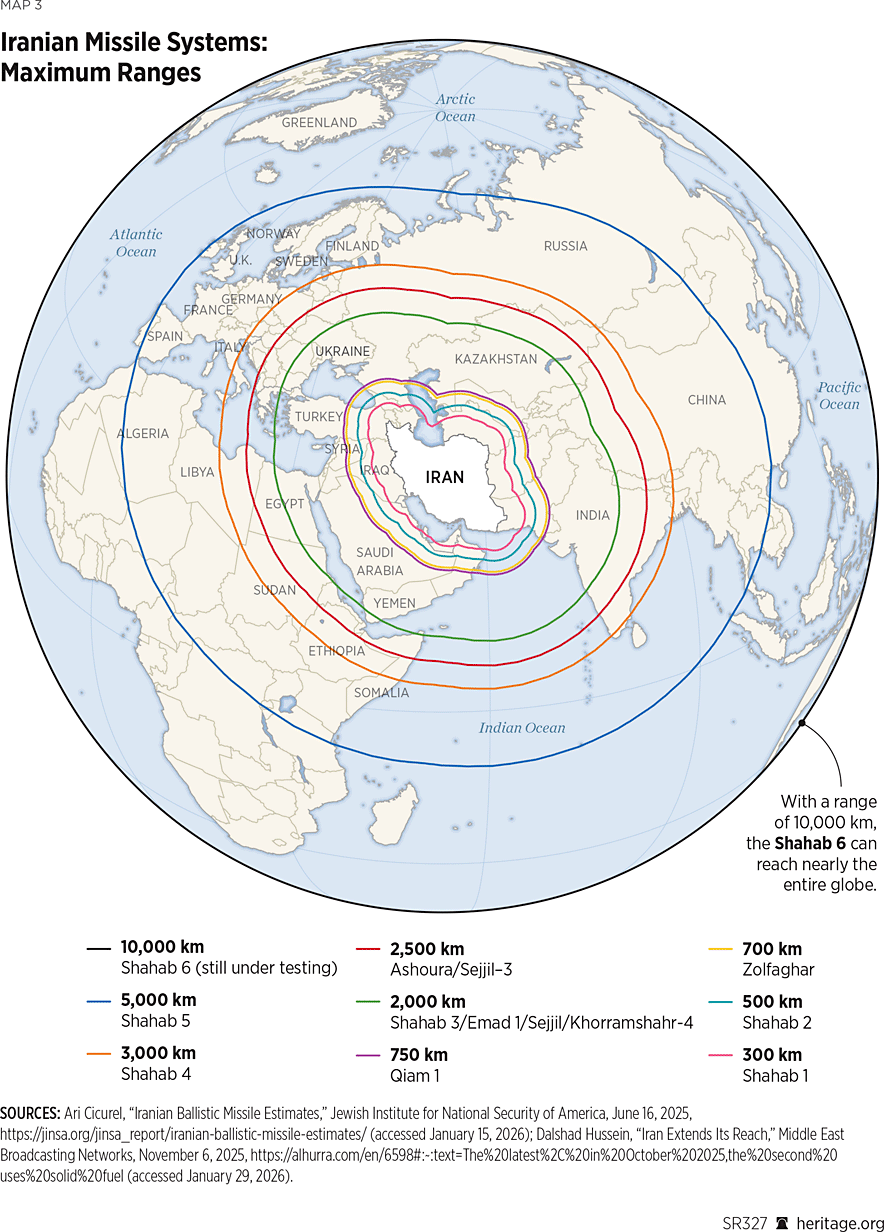
Iran’s missile effort traces back to the 1980s and has matured into a layered force with several distinct missions: Deter attacks on the homeland; threaten adversary infrastructure (bases, ports, energy nodes); and provide asymmetric strike options against regional opponents. The IRGC–AF is the lead service for medium-range and short-range ballistic missiles (MRBMs and SRBMs); the regular army has limited ballistic capabilities. Doctrine emphasizes massed salvoes, distributed launchers, mobile road-based and rail-based launch systems, and concealment in hardened and underground facilities to complicate preemption. These operational choices reflect lessons that Iran drew from fighting in the region and from international attempts to degrade its programs.[REF]
Iran’s arsenal in 2025 consisted predominantly of solid-propellant and liquid-propellant SRBMs and MRBMs with ranges from a few hundred kilometers up to roughly 2,000–2,500 km for the longest-range systems tested or advertised. The inventory included indigenous designs (Shahin/Scud variants, Fateh-series, Zolfaghar, Dezful, Sejjil) and variants derived from foreign designs and adapted over decades.[REF] Iran also continued to expand its ability both to mount different payloads and submunitions and to improve accuracy through better guidance packages and terminal maneuvering—efforts aimed at improving effectiveness against hardened and mobile targets. Estimates of total missiles in inventory vary by source, and intense combat in 2024–2025 affected short-term stock levels.[REF]
The direct Israel–Iran confrontation in 2024 and 2025 brought Tehran’s ballistic missile capability from deterrence into frequent operational use. Heavy barrages launched against Israel in April and October 2024 and during the June 2025 exchanges demonstrated Iran’s capacity to mass-fire and the limits of missile defenses. The exchanges tested multi-layered air defenses and revealed trade-offs for defenders (what most needs to be protected) and for attackers (rate of fire vs. sustaining an arsenal). The combat period also showed that a portion of Iran’s missiles could penetrate sophisticated defenses while a significant percentage were destroyed on the launch pad or intercepted in the atmosphere—highlighting the potency and limits of the program in real operations.
It is estimated that before the Twelve-Day War, Iran possessed approximately 2,000–2,500 medium-range and intermediate-range ballistic missiles. Based on their expenditures and the number of those destroyed by Israeli strikes, that figure is likely fewer than 1,000.[REF] Additionally, estimates suggest that Israel’s strikes destroyed around one-third of Iran’s estimated 350 missile launchers, leaving Iran with approximately 100.[REF]
Iran claims that its missile stockpile did not suffer heavy damage and that its most powerful systems—including the newly developed Rastakhiz missile, which integrates nuclear and electromagnetic pulse strike capabilities—remained in reserve.[REF] An Iranian senior military advisor, Major General Yahya Rahim-Safavi, revealed that “several thousand missiles and drones had been stockpiled in fortified locations for rapid use in the event of any act of aggression.”[REF] Nevertheless, Iran did suffer losses, and efforts have been underway to restore its missile capabilities by rebuilding and modernizing Iran’s air defense systems.[REF]
China is a primary supplier of material to Iran for the production and reconstruction of its missile program. In recent months, intelligence sources have said that several shipments of sodium perchlorate, the main precursor in the production of the solid propellant that powers Iran’s mid-range conventional missiles, arrived from China at the Iranian port of Bandar Abbas at the end of September. Those sources say the shipments, which began to arrive on September 29, contained 2,000 tons of sodium perchlorate bought by Iran from Chinese suppliers in the wake of its 12-day conflict with Israel in June.[REF] The purchases are believed to be part of a determined effort to rebuild the Islamic Republic’s depleted missile stocks. Several of the cargo ships and Chinese entities involved are under sanctions from the United States.[REF]
Space. Iran’s space and rocket programs have given the country more data and experience when developing longer-range missiles, potentially to include ICBMs. “Why do they have a space program?” asked Secretary of State Marco Rubio in June 2025. “Is Iran going to go to the moon? No, they’re trying to build an ICBM so they can one day put a warhead on it.”[REF] In late September, Iran carried out an unannounced missile launch; Iranian parliamentarian Mohsen Zanganeh told Iranian state TV that “we tested one of the country’s most advanced missiles, which until now had not, so to speak, been trialed—and that test was successful…. In other words, I mean to say that even under these conditions we are conducting a security test of an intercontinental-range missile.”[REF]
The Iranians have also declared a desire to advance their capabilities in developing and launching satellites. Iran began its satellite launch program with a symbolic launch of a small satellite in 2009 and by 2020 had launched its first military satellite.[REF] Iran’s program has also suffered numerous failures. In 2019 and 2022, for example, Iran unsuccessfully launched satellites from its Imam Khomeini Space Center.[REF] However, in January 2024, Iran successfully launched its Mahda research satellite along with the Kayhan-2 and Hatef-1 communications and global positioning nanosatellites.[REF] In September, using a rocket developed by the IRGC, Iran carried out its second domestic satellite launch of 2024.[REF]
In addition to trying to develop and launch its satellites domestically, Iran has launched satellites in cooperation with other anti-American powers, particularly China and Russia. In 2022, Russia launched one Iranian-funded but Russian-manufactured optical imaging satellite.[REF] In February 2024, the Russians launched another Iranian-made imaging satellite.[REF] In October 2024, Iran sent a domestically produced imaging and communications satellite to Russia for launch.[REF] In July 2025, Russia launched another Iranian satellite into orbit.[REF] In mid-2024, Iran announced its interest in purchasing advanced Chinese-produced surveillance satellites.[REF] In August 2025, the Islamic Republic announced that it would move to adopt the Chinese BeiDou global positioning system.[REF]
Iran’s efforts in space further demonstrate a desire to develop a domestically capable program aimed at providing increased competence with rocket and missile technology. This drive coincides with Iran’s efforts to build systems that can provide better monitoring of Israeli, U.S., and other troop movements across the region. Iran’s continued partnership with and adoption of Russian and Chinese space systems and launch sites also demonstrate a continued desire to cooperate with anti-American actors.
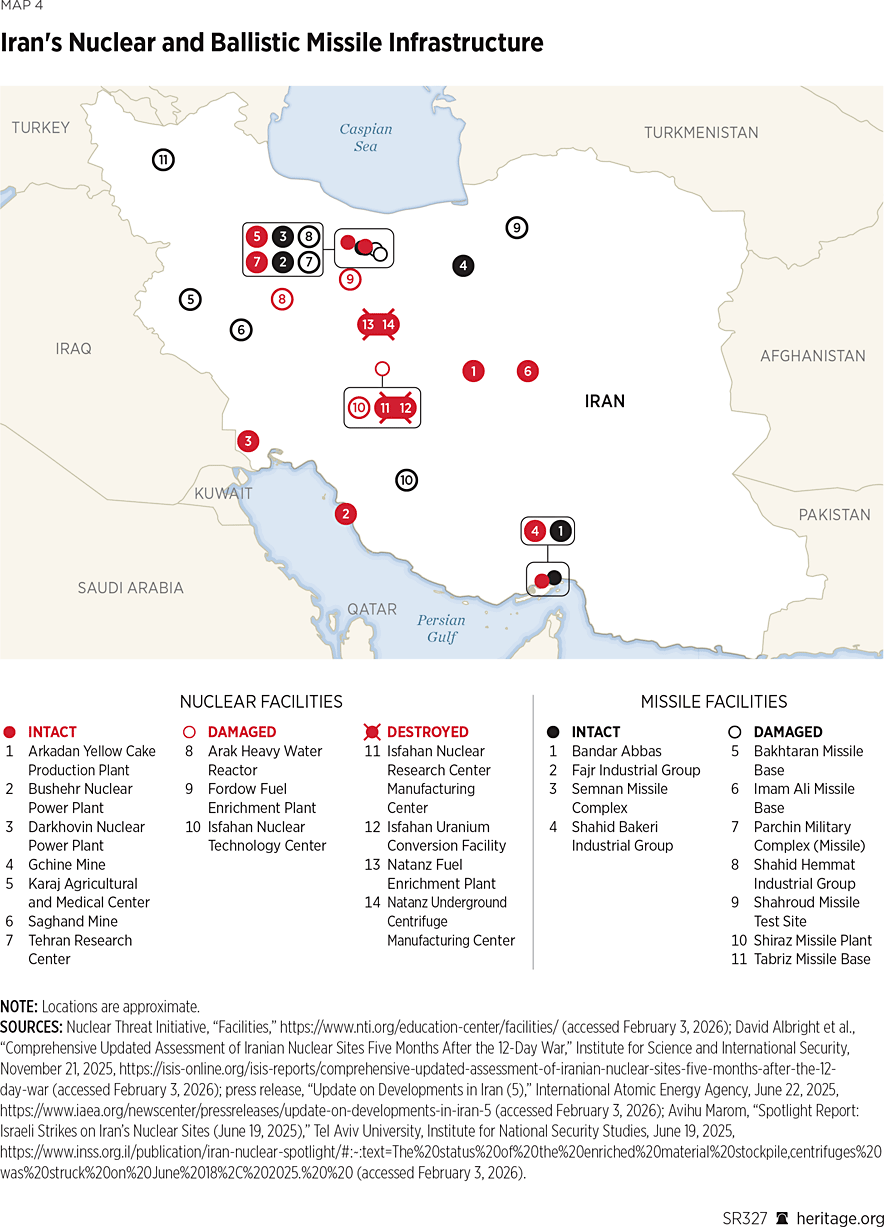
Unmanned Systems. Iran’s advancement in unmanned systems (drone) technology also presents new threats beyond the Middle East. In April 2025, The Times of Israel reported that Spain, Germany, France, and the United Kingdom had dismantled a Hezbollah drone smuggling ring that was shipping material to Hezbollah that it could use to construct drones.[REF] Although the trade in smuggled drone parts was going to the Middle East, the access to parts and equipment demonstrated that Iran could attempt to manufacture drones covertly in the heart of Europe. Adding to this threatening climate, in July 2025, Mohammad Javed Larijani, an advisor to Supreme Leader Ali Khamenei, said that the “Europeans can no longer move about comfortably in their own countries…. It’s entirely possible that in the near future, five drones could strike a European city.”[REF]
Cheap, easy to produce and modify, Iranian drones such as the Shahed-129 and Shahed-136 are systems that have demonstrated their lethality across the Middle East and Europe.[REF] The proliferation of Iranian-designed drones has already made its mark in Eastern Europe. Russia has used thousands of Iranian-designed and Iranian-built drones to target Ukraine and in September 2025 used Iranian-designed drones to violate Polish and Romanian airspace.[REF]
The drone most frequently exported to Russia is the Shahed-136 loitering munition. Designed for simplicity and cost, the Shahed-136 is launched from a catapult that is often placed on a truck or mobile platform. It can travel 1,500 miles (2,500 km) at speeds of up to 125 miles per hour (200 km per hour) and loiter over a target until the most effective moment to strike. The Shahed-136 is a favored model as it is cost-effective and easy to mass-produce.[REF]
In June 2025, Iran unveiled a new drone, the Shahed-107, which appears to possess a more traditional design than the triangle configuration of the Shahed-136 and Shahed-131. Shahed drones are typically slow because of their propellers, are easily detected by air defense systems, and likely fly on pre-programmed routes, which makes them difficult to jam but also difficult to maneuver.[REF] Some of Iran’s other important drones are the Ababil-2, Ababil-3, Ababil-5, Arash, Fotros, Hamaseh, Kaman-12, Kaman-22, Karrar, Kian, Kian-2, Meraj-521, Mohajer-2, Mohajer-4, Mohajer-6, Mohajer-10, and Shahed-149 Gaza.[REF]
China has supported Iran’s drone industry, often by procuring parts on Tehran’s behalf.[REF] Since the Twelve-Day War, China has withheld official material aid despite Beijing’s rhetorical support for Iran and condemnation of Israel, but Israeli media, citing anonymous Western intelligence sources, have reported that China is rebuilding Iran’s missile arsenal.[REF] Iran’s alliance with China remains necessary, primarily because China purchases about 90 percent of Iran’s oil, which provides funding to Iran for the construction of missiles, nuclear weapons, and other military equipment.[REF] Additionally, China supports Iran’s missile production through the supply of sodium perchlorate, a precursor chemical that is used to produce ammonium perchlorate, a vital component of solid rocket fuel in missile production.[REF] In February 2025, Iran received a shipment of 1,000 tons of sodium perchlorate from China.[REF] Iran’s development, export, and production of UAV technology provide one of its more dangerous long-term capabilities.
Force Assessment: Conventional Capabilities
Iran’s conventional military forces, although relatively weak by Western standards, are large compared to those of Iran’s smaller neighbors. Iran’s armed forces remain dependent on major weapons systems and equipment that were imported from the U.S. before the country’s 1979 revolution. Western sanctions have also limited the regime’s ability to maintain or replace these aging weapons systems, many of which were depleted in the 1980–1988 Iran–Iraq war. Iran also has not been able to import large amounts of modern armor, combat aircraft, longer-range surface-to-surface missiles, or major naval warships.[REF]
Iran maintains one of the largest standing armed forces in the Middle East. Its conventional military consists primarily of the Artesh, which is composed of four main branches: Ground Forces (NEZAJA); Air Force (IRIAF); Navy (IRIN); and Air Defense Command (Khatam al-Anbiya). Over the past decade, Iran has invested modestly in modernizing its conventional capabilities, but it continues to rely heavily on domestically produced systems, refurbished legacy equipment, and doctrinal flexibility to offset technological inferiority.[REF]
The Artesh is focused on deterrence and territorial integrity but has increasingly expanded the range of its activities to include participating in maritime patrols in the Gulf of Aden and joint exercises with foreign powers like Russia and China. The Artesh maintains an estimated 350,000 active-duty personnel and 200,000 reservists, and the Ground Forces account for approximately 70 percent of that strength.[REF]
Ground Forces. The Ground Forces remain the backbone of Iran’s conventional military power. Numbers, domestic ingenuity, and terrain familiarity help the force to compensate for its lack (by Western standards) of modern armor or mechanized infantry equipment. The force includes an estimated 1,600 main battle tanks, including Soviet-era T-72s, T-55s, and domestically modified versions such as the Karrar tank, a heavily upgraded T-72 that features improved fire control, reactive armor, and Iranian-made optics.[REF] While still behind contemporary models like the M1A2 Abrams or Leopard 2A7, the Karrar represents Iran’s push for modernization of indigenous weapons.[REF]
Iran’s ground forces deploy a wide range of self-propelled artillery, multiple rocket launchers (MRLs), and short-range ballistic missiles (SRBMs). Domestically produced systems such as the Fajr-5 and Dezful provide the army with deep-strike capabilities up to 300 km, blurring the line between conventional and strategic forces.[REF] Mechanized and motorized infantry units rely on BMP-1/2 IFVs, locally built Boragh APCs, and a growing number of indigenous light tactical vehicles like the Aras and Talaeiyeh series.[REF] Mountain and border brigades are optimized for Iran’s rugged terrain, providing strong defensive depth.
Naval Forces. The Islamic Republic of Iran’s Navy (IRIN) has two main bases: southern fleet command at Bandar Abbas and northern fleet command at Bandar Anzali.[REF] Its fleet includes ships and submarines including Kilo-class submarines produced in Russia.[REF] Iran operates some newer anti-ship missile systems that include anti-ship ballistic missiles, cruise missiles, and anti-radar missiles. Many are domestic copies of Chinese models.[REF] In 2006, Hezbollah used an Iranian copy of the Chinese C-802 missile to strike the Israeli INS Hanit off the coast of Lebanon.[REF] Beyond the missile threats, Iran could repurpose its drone fleet and use them as anti-ship weapons systems.
Iran’s IRGC-Navy also operates dozens of small, manned vessels that could swarm commercial and military vessels. These boats have been used in maneuvers to harass U.S. ships in the Gulf. Iran’s naval doctrine centers on asymmetric disruption.[REF] Iran routinely threatens drone boat attacks on U.S. ships near Bahrain or Qatar as well as coastal missile strikes from IRGC positions along the Strait of Hormuz.
Air Force. The Islamic Republic of Iran Air Force (IRIAF), constrained by sanctions and decades of embargoes on advanced aircraft and spare parts, is the most challenged branch of the Artesh. Nevertheless, through domestic maintenance programs and strategic procurement from allies, the IRIAF has retained operational capability far longer than many expected.
Iran’s fighter fleet consists of a mix of aging Western and Soviet-era platforms that include U.S.-made F-14 Tomcats, F-4 Phantoms, and F-5 Tigers acquired before 1979; Soviet-designed MiG-29 Fulcrums and Su-24 Fencers obtained in the 1990s; and newly reported acquisitions of Su-35s from Russia, deliveries of which are ongoing as of 2025.[REF]
Iran has pursued several domestic projects to bolster the IRIAF. They include Kowsar, a locally produced jet trainer and light fighter derived from the F-5 design, and Qaher-313 (F-313), a prototype stealth fighter unveiled for propaganda value, although its operational status remains doubtful.[REF] The IRIAF also operates Su-24s for deep-strike missions as well as a variety of transport and tanker aircraft. Iran’s emphasis on air defense rather than air superiority has shifted resources toward surface-to-air missile (SAM) systems and radar networks.
Air Defense Command. The Khatam al-Anbiya Air Defense Base now operates separately from the IRIAF, controlling such long-range systems as Bavar-373 (Iran’s indigenous equivalent of the S-300) and Sayyad-4 and Khordad-15 SAMs that are powered by Russian S-300PMU-2 batteries.[REF] This network integrates radar coverage across much of Iran’s territory, posing a credible threat to air operations over Iran. Israeli airstrikes in October 2024 and Operation Rising Lion destroyed much of Iran’s air defense capacity. The Air Defense Command has started to rebuild, but the level of progress remains unclear.[REF]
Threat to the Region
Threats to American Military Facilities and Diplomatic Missions. The United States maintains a significant presence in the region. Iran has launched missile attacks on U.S. military bases in the region on several occasions including in 2020, 2024, and 2025.[REF] In January 2024, an Iranian proxy group in Iraq launched an attack on an American base in Jordan, killing three soldiers.[REF] In July 2024, an Iranian drone launched by the Houthis targeted the U.S. embassy branch office in Tel Aviv.[REF] The Al Udeid base in Qatar and the U.S. 5th Fleet in Bahrain remain key targets for Iranian aggression and fall well within reach of Iran’s missile program, as does the Al Asad base in Iraq. Iran has not hesitated to attack these bases in the past and can easily do so again in the future.
Threat to the Global Commons: Sea. America’s primary strategic interests in the Middle East are to ensure the free flow of energy and commerce through the region. The Strait of Hormuz is the world’s most important oil transit chokepoint. “In 2022,” according to the U.S. Energy Information Administration, “its oil flow averaged 21 million barrels per day (b/d), or the equivalent of about 21% of global petroleum liquids consumption.”[REF] China is the largest consumer of Middle Eastern oil, followed by India, South Korea, and Japan, and more than 80 percent of oil exports through the Strait is destined for Asian markets.[REF] A large percentage of international trade also transits through the Middle East.
Iranian threats to international shipping lanes have remained a constant since the country’s war with Iraq in the 1980s. During that conflict, in the so-called Tanker War, Iraqi and Iranian forces struck oil tankers and threatened port facilities throughout the Persian Gulf. In 1987, following the delivery of Chinese-made Silkworm anti-ship missiles, the Iranians targeted a U.S.-flagged tanker in the Gulf, and the U.S. retaliated by striking Iranian sites and naval shipping in the Gulf.[REF] Iran increased its acquisition and domestic development of anti-ship systems and in mid-2025, following the joint U.S.–Israel strikes on Iran’s nuclear facilities, once again threatened to close the Strait, although it did not act on that threat.[REF]
The Red Sea is another chokepoint that is increasingly used by Iran through its proxies to put pressure on international trade and U.S. partners and allies. In 2023, about 12 percent of global trade volumes passed through the Red Sea.[REF] In addition, with 40 percent of trade from Asia to Europe passing through it, including large amounts of oil and other fuels, Egypt is reliant on the currencies it earns allowing ships to go through the Suez Canal.[REF]
Iran’s backing of Yemen’s Houthis demonstrated their threat to the commons throughout 2025. In November 2023, using a helicopter and smaller vessels, the Houthis seized the Galaxy Leader cargo ship. The crew was released from Houthi captivity in January 2025.[REF] This was followed by more than 100 missile and drone attacks against commercial vessels from late in 2023 through the middle of 2025.[REF] These attacks resulted in the rerouting of hundreds of ships and their cargoes, which cost shippers, manufacturers, and consumers significant revenue. In Germany, Tesla had to shut down a factory due to the slowdown of its supply chains that passed through the Red Sea.[REF]
Threat to the Global Commons: Air. Iran has shot down civilian aircraft during crises. Following the killing of IRGC-QF commander Qasim Suleimani on January 3, 2020, Iranian air defenses accidentally shot down a civilian airliner. On January 8, 2020, Ukrainian International Airlines Flight 752 was hit by two missiles fired by the IRGC, and 176 people were killed. To deter potential counterstrikes from the U.S. following the Suleimani killing, Iran kept its civilian airports open and flights on schedule.[REF]
The belligerency of Iran and its proxies also has had unintended consequences. On October 27, 2023, a drone launched at Israel by the Houthis hit Nuweiba in Egypt.[REF] Later, a missile launched by the Houthis hit Taba, Egypt, injuring six people.[REF] In October 2024, Iranian missiles launched at Israel struck Palestinians that Iran claimed to be “defending.”[REF]
Nuclear Proliferation. Iran’s pursuit of nuclear capabilities threatens to create a domino effect of regional proliferation. Saudi Arabia has vowed that if Iran does build nuclear weapons, it will do so as well.[REF] The United Arab Emirates established its own nuclear program under the 123 Agreement signed in 2009.[REF] Saudi Arabia is currently seeking a similar program, and other countries would likely follow suit.[REF] Egypt is currently constructing a nuclear program similar to the UAE’s but with Russian support.[REF] Bahrain, because of similar fears, recently signed an agreement with the United States on civilian nuclear cooperation.[REF]
Regional Partners: Israel. Israel and Iran had close diplomatic relations until the overthrow of the Shah’s government in 1979. In addition to embassies and direct flights, the two countries cooperated in trade, tourism, and much more. Ever since the Ayatollah regime took power, however, Iran has openly sought Israel’s destruction. This is the only case in which one U.N. member state has called outright for the destruction of another. Iran has used nearly every method it has available to attack Israel, both directly and through its proxies. It has threatened Israel on almost every front, and Supreme Leader Ali Khamenei has denounced Israel as a “malignant cancer.”[REF]
Nor does this stop with Israel. According to the Iranian regime, Israel is merely the “Little Satan;” the United States is the “Great Satan.” The Ayatollah regime believes in reestablishing the Islamic Caliphate and that the Western world is an obstacle that must be overcome if it is to achieve this goal. It therefore wishes to eradicate Western society as a whole, destroy modernity, and replace it with its brand of medieval Islamic theology. Israel is an obstacle for the regime because it represents a Western outpost in the heart of the Islamic world. The State of Israel has not been shy about warning the world of the Iranian threat and exposing it. Israel understands the threat that Iran poses to its very existence, and no country has acted as repeatedly as Israel has to deter Iran. Many other countries have been more passive toward Iranian aggression, but Israel has acted defensively and taken preventive measures against Iran and its proxies whenever it deemed such action to be necessary. Israel’s defensive actions against Iran in 2024 and 2025 weakened the Iranian regime in unprecedented ways, but Iran still maintains its radical ideology and will continue to threaten Israel.
Regional Partners: Saudi Arabia. Since 1979, Iran has maintained a generally hostile stance toward most members of the Saudi-led Gulf Cooperation Council (GCC).[REF] In a sectarian sense, Saudi Arabia is one of the region’s leading Sunni powers and stands in opposition to the radical Shi’ism proffered by Iran. The Saudis also control both of Islam’s holiest sites, Mecca and Medina.
Saudi Arabia’s Shia population lives primarily in its Eastern Province, which has been a center of Iranian provocations. Iran supported local pro-Hezbollah movements there in the 1980s. One of these groups, Hezbollah fi al-Hejaz (also known as Saudi Hezbollah) attacked the U.S. barracks in Khobar, Saudi Arabia, in 1996, killing 19 American airmen.[REF] Following the Arab Spring of 2011–2012, large-scale protests and the growth of small militant sections resulted in Saudi crackdowns. By 2017, the Saudi Shia town of Awamiya saw protests and then fighting between Saudi security forces and Shia militants.[REF] Tensions have eased over the years, but radical elements, some with links to Iran, still inhabit Saudi Arabia’s oil-rich Eastern Province.
The Saudis have also fought such Iranian-backed groups as Yemen’s Houthis. For their part, the Houthis have repeatedly launched rockets, missiles, and drones into Saudi Arabia. In one case, they hit the Islamic holy city of Mecca. In July 2017, the Houthis targeted Saudi oil facilities using missiles. In 2019, they claimed responsibility for targeting major Saudi oil sites in Abqaiq.[REF] However, some analysts and U.S. government officials have said the attack actually originated in Iran and that the Houthis took responsibility to obscure Iranian involvement.[REF] In 2021, Reuters reported that the “Houthis have fired 430 missiles, 851 drones at Saudi Arabia since 2015.”[REF] In 2023, the Saudis drew down their involvement in Yemen and, in a Chinese-brokered deal, cautiously began a rapprochement with Iran. The Houthis ceased their missile and drone attacks against the Saudis around that time, but in April and September of 2025, failed Houthi attacks on Israel resulted in missiles falling within Saudi territory.[REF]
While a level of calm may have been reached among the Houthis, Saudi Arabia, and Iran, this does not mean that the possibility of future conflict has disappeared. From 1987–1990, diplomatic ties between Saudi Arabia and Iran were severed. Diplomatic links were renewed in 1991 and persisted until 2016. However, during that period, Iran continued to back anti-Saudi proxies and attacks against targets in Saudi Arabia (the 1996 Khobar Towers attack) and against individual Saudis (such as the 2011 plot to assassinate Saudi ambassador to the U.S. Adel al-Jubeir in a Washington, D.C., restaurant).[REF]
Regional Partners: United Arab Emirates. Despite regional tensions, the UAE has maintained diplomatic relations and has pursued trade and economic relationships with Iran.[REF] Diplomatic visits have also taken place over the years, and there are direct flights and tourism for both countries.[REF] The UAE is nonetheless cautious in dealing with the Iranians and has suffered attacks from its proxies, most prominently the Houthis.[REF]
The UAE was early to warn the world about the threat that emerged from the Iranian-backed Houthis in the 2000s. It is also believed that the 2024 assassination of a rabbi who lived and worked in the UAE was sponsored and coordinated by Iran.[REF] This was the only such terrorist attack on UAE soil in decades, and the suspects were quickly caught and sentenced to death.[REF]
The UAE has dealt with the Iranian threats quietly but efficiently and for the most part has not ceased to communicate with the regime through official channels as have other countries in the region. However, in strategic areas, the UAE has offered its defense cooperation against Iran. During the 2024–2025 Iranian missile attacks on Israel, as part of CENTCOM, the UAE was helpful in intercepting missiles over its airspace.[REF]
Regional Partners: Bahrain. Home to the U.S. Navy’s 5th Fleet, Bahrain has served as one of many regional flash points that demonstrate heightened Iranian threats against U.S. and Gulf regional partners. With a Shia majority population and a leadership that is predominantly Sunni, and with the failure of Arab Spring protests in 2011–2012, Bahrain has provided a fertile ground for Iran’s machinations. In 1981, the Iran-backed Islamic Front for the Liberation of Bahrain attempted a coup in the island country.[REF] The attempt failed, but it reflects Iran’s early and continued links to Bahraini militant groups. The fact that Bahrain is a signatory to the 2020 Abraham Accords is another source of tension between the two countries.[REF]
In the wake of the 2011 Arab Spring protests and the crackdowns that later ensued, some Bahraini Shia became increasingly militant against the Bahraini state and the United States. A series of Iran-backed Bahraini Shia militant groups began to grow in 2012 and reached their apex in 2015–2016. Bahrain cut off diplomatic relations with Tehran in 2016, and despite some attempts to restart them, relations remain icy.[REF]
Iran-backed Bahraini groups have carried out dozens of bombings and shooting attacks targeted at infrastructure, security forces, and Bahraini leaders.[REF] They have also threatened U.S. forces on the island, particularly the 5th Fleet in Juffair.[REF] When relations between Bahrain and Israel were normalized in 2020, these groups threatened to attack U.S. and Bahraini government sites. Fortunately, U.S. security cooperation with Bahrain and the actions of the Bahraini internal security apparatus have helped to diminish the power of many of these Iran-backed networks.
Even though networks of Iran-backed Shia militants were rolled back in Bahrain from 2013–2018, however, elements of these groups have increased their cooperation and networking with Iran-backed Iraqi groups and with Iran.[REF] Saraya al-Ashtar, designated by the U.S. Department of State as a Foreign Terrorist Organization, has continued to make threats and claim attacks. In May 2024, after years of general silence, the group claimed to launch a drone attack against the Israeli city of Eilat.[REF] On June 19, 2025, three days before the U.S. bombing of Iranian nuclear facilities, the previously unknown Bahraini group Rijal Allah (Men of God) threatened “Zionist and American interests in Bahrain” if Iranian Supreme Leader Ali Khamenei was harmed.[REF]
Despite Bahrain’s success in dismantling local militant groups, Iran and the remaining networks remain deeply linked. The potential to use these networks still presents an active threat both in Bahrain and within Shia-majority zones in neighboring eastern Saudi Arabia.
Syria. By 2025, what remained for Iran in Syria was a crumbling shell of what it had constructed from 2012–2024. Despite deploying thousands of foreign Shia militiamen to Syria and establishing dozens of native militia groups, and despite the support of thousands of Revolutionary Guard Corps members, the groups Iran fostered in the country collapsed in the face of the November 2024 onslaught led by Hayat Tahrir al-Sham (HTS) and other Syrian rebel groups. With the December 2024 fall of Bashar al-Assad’s rule, Iran’s regional projection was made notably more difficult. However, this did not mean that Iran was without assets in Syria or that it would discontinue its destabilizing activities.
Iran had established a long-sought “land bridge” linking it to Lebanese Hezbollah through Iraq and Syria. Disruption of this land bridge was acknowledged by Hezbollah’s new secretary general Naim Qassem in December 2024 when he admitted, “Yes, Hezbollah has lost the military supply route through Syria,” adding that the group would investigate new ways to continue its trafficking of arms and supplies into Lebanon.[REF] Tribal networks with links to drug smuggling that had contributed members to Syrian militias and Lebanese Hezbollah and were often religiously Shia formed one body of elements that remained behind in Syria to advance Iran’s interests.[REF] In the Qusayr region on the Lebanon–Syria border, for example, Syrian Shia villagers aligned with Lebanese Hezbollah continued to engage in weapons smuggling, drug trafficking, and firefights with the new Syrian government. The area had contributed dozens of fighters to Hezbollah, including its elite Radwan unit.[REF] In early 2025, HTS-led Syrian government forces raided the Qusayr region, and the fighting expanded into Lebanon.[REF]
Using a strategy that involved the creation of online front groups, Iran created new organizations for Syria. Rallying pro-Iran Alawite minority leaders, formerly from Bashar al-Assad’s Syrian Arab Army and linked militias from Iran-backed sections of Assad’s Syrian Arab Army, Iran assisted in crafting small militant movements that eventually targeted HTS forces. The HTS response led to days of sectarian bloodletting. The ensuing violence resulted in around 1,500 civilians killed when Alawite villages were targeted by HTS forces.[REF]
Playing a spoiler role and doing so asymmetrically allowed Iran to sow chaos and frustrate hopes of further international recognition for the new authorities in Damascus. Blunted by the loss of Syria, Iran may continue to try to play a spoiler role in the country even if its capabilities are lacking. As Lebanese Hezbollah continues to run smuggling networks through Syria, the country may become a flash point in future incidents involving the HTS-led government in Damascus, Iran, and Iran’s proxies.
Africa: Sudan. Iran’s involvement in Sudan began to deepen in the late 1980s shortly after the rise of Sudanese Islamist leader Omar al-Bashir, backed by Hassan al-Turabi’s National Islamic Front. Both Tehran and Khartoum at that time sought to position themselves as leaders of an Islamic revivalist movement, albeit from different sectarian perspectives. However, by the mid-2020s, Sudan’s foreign policy had shifted dramatically, and in 2016, Khartoum cut ties with Tehran, which severed Iranian access to military bases and transit routes.[REF] In 2019, the Bashir regime was overthrown and replaced by the Transitional Sovereignty Council (TSC) led by General Abdel Fattah al-Burhan. Under Burhan, Sudan joined the Abraham Accords, ending the boycott of Israel. In return, Sudan’s designation in the United States as a state sponsor of terrorism was removed.[REF]
When the civil war between the Sudanese Armed Forces (SAF) and the Rapid Support Forces (RSF) escalated, intelligence reports noted that Iranian-made drones similar to systems supplied to the Houthis had found their way into Sudan’s battlefields.[REF] Frustrated by the lack of engagement from either Jerusalem or Washington, the Sudanese leadership accepted Iran’s offer to reestablish diplomatic relations and military cooperation.[REF] Given Sudan’s strategic location on the Red Sea, this renewed Iranian presence poses a threat to Africa, Israel, and the global commons.
Africa: The Polisario Front. In 2018, Morocco cut ties with Iran because of Iran’s assistance to the Polisario Front, which was provided by Hezbollah’s external operations units and the Iranian embassy in Algiers.[REF] This support included the training of Polisario fighters in guerrilla tactics and the use of advanced weaponry, transfer of man-portable air-defense systems (MANPADS) and other weapons via Lebanese or Algerian intermediaries, and assistance in developing drone capabilities.[REF] Western intelligence assessments have confirmed that some level of communication and technical transfer may indeed have taken place, particularly in the realm of drone know-how and tactical training.[REF]
In 2025, citing threats made by the Polisario to Morocco and the United States, Representatives Joe Wilson (R–SC) and Jimmy Panetta (D–CA) introduced bipartisan legislation to designate the Polisario Front as a Foreign Terrorist Organization.[REF] In 1988, Polisario missiles had brought down two U.S. Agency for International Development aircraft, killing five Americans—and the U.S. had failed to respond with sanctions.[REF] Designation of the Polisario Front as an FTO would help to weaken Iranian aggression and reduce the threats it poses both to Africa and to the world generally.
Threat to the U.S. Homeland
Nuclear. Tehran has invested tens of billions of dollars since the 1980s in a nuclear weapons program that it sought to conceal within its civilian nuclear power program. It built clandestine but subsequently discovered underground uranium enrichment facilities near Natanz and Fordow and a heavy-water reactor near Arak that would generate plutonium to give it a second potential route to nuclear weapons.[REF]
The July 2015 Iran nuclear agreement—formally known as the Joint Comprehensive Plan of Action—lifted nuclear-related sanctions on Iran in January 2016, gave Tehran access to approximately $100 billion in restricted assets, and allowed Iran to expand its oil and gas exports, the chief source of its state revenues.[REF] Relief from the burden of sanctions helped Iran’s economy and enabled Iran to enhance its strategic position, military capabilities, and support for surrogate networks and terrorist groups.
In 2018, President Trump decided to withdraw from the JCPOA and established the “maximum pressure campaign.”[REF] His decision to withdraw from the nuclear agreement marked a return to long-standing U.S. nonproliferation policy. However, during the Biden years, that pressure was lifted, and Iran’s nuclear program accelerated once again. In April 2021, Iran began to enrich its uranium to 60 percent, a short step away from the weapon-grade level of 90 percent.[REF] By June 2022, Iran’s breakout time had fallen to zero. It had acquired enough highly enriched uranium to arm a bomb within weeks if further enriched and could acquire enough for five bombs within six months.[REF] General Mark Milley, then chairman of the Joint Chiefs of Staff, testified before the House Appropriations Subcommittee on Defense on March 23, 2023, that “[f]rom the time of an Iranian decision…Iran could produce fissile material for a nuclear weapon in less than two weeks, and would only take several more months to produce an actual nuclear weapon.”[REF]
On June 12, 2025, the International Atomic Energy Agency’s Board of Governors adopted a resolution formally urging Iran to cooperate and effectively declared Iran to be in breach of its non-proliferation obligations.[REF] In accordance with the Non-Proliferation Treaty, President Trump made it clear in a Truth Social post that in any future deal with Iran, enrichment will not be permitted.[REF]
Later in June, Israel initiated Operation Rising Lion, followed by America’s Operation Midnight Hammer, which combined for the Twelve-Day War that targeted Iran’s ability to produce and launch ballistic missiles and develop its nuclear program. In these strikes, Iran’s three main nuclear facilities—Fordow, Isfahan and Natanz—were significantly damaged or destroyed.[REF] Israeli strikes on Arak, a heavy water reactor, destroyed the facility’s concrete dome and nearby laboratory, making its reconstruction difficult.[REF] This site was also where the headquarters of the SPND nuclear project was located and where Iran stored its nuclear archives.
However, Iran claimed that it took proactive measures to protect its nuclear material and may still possess more than 400 kilograms of near-bomb-grade highly enriched uranium that survived the attacks.[REF] Additionally, satellite imagery shows considerable movement and construction around Pickaxe Mountain, a hidden fortress under construction near Natanz and a suspected location of Iran’s hidden uranium stores. As of this writing, there has been no significant activity around Fordow or Isfahan according to satellite imagery.[REF] Construction on Pickaxe Mountain began in September 2025, but the facility may lack the planetary mixers that are needed to produce solid-fuel propellant.[REF]
Cyber. Iran’s cyberterrorism has long blended espionage, disruption, and psychological operations. By the mid-2020s, Tehran was using cyberspace increasingly to support proxy groups, exert coercive pressure on adversaries, and target civilian infrastructure in ways that blurred the line between cyber warfare and cyberterrorism. Although Iran seldom claims direct responsibility, its intelligence services—particularly the IRGC and the Ministry of Intelligence (MOIS)—have been linked repeatedly to operations intended to intimidate civilian populations, create social fear, or disrupt essential services.[REF]
Iran-linked groups have targeted water systems, power grids, medical networks, transportation systems, and municipal services in such countries as Israel, the United States, Bahrain, and Albania. While most attempts are thwarted, the intent to disrupt civilian life includes attacks attempting to alter water treatment chemical levels, ransomware deployed against hospitals and health networks, and denial-of-service attacks on emergency services or government portals.[REF]
Iran-linked groups have conducted operations aimed at public exposure of sensitive personal information. These leaks are often accompanied by online threats or mass messaging campaigns. Targets have included Iranian political dissidents abroad, U.S. and Israeli government employees, private citizens, and other influential figures. By weaponizing stolen data, attackers aim to intimidate both individuals and institutions such as was tried with the 2024 U.S. presidential election.[REF] Iran and its proxies also have conducted cyber intimidation campaigns such as defacement of government websites with threatening messages, localized attacks on energy or telecommunications providers, and phishing and surveillance targeting specific individuals of influence.[REF]
Iran-linked actors have frequently attempted disruptive intrusions into Israel’s civilian water and transportation systems. Similarly, though not large-scale, Tehran’s actions against Albania, including the shutdown of government services, have been intended to send a broader message: Supporting Iranian opposition groups may carry consequences for a country’s civilian population. Saudi Arabia, Bahrain, and the UAE have experienced recurring cyber disruptions aimed at financial institutions, airlines, and logistics-center sectors that are critical to public confidence and daily life.[REF]
Terrorist and Criminal Activities in the United States. Iran has sought the kidnapping or targeted assassination of political figures in the United States. In 2022, according to the U.S. Attorney’s Office for the Southern District of New York, Iran hired two “high-ranking members of an Azeri faction of the Russian Mob” and another member of the Russian Mob for $500,000 to kidnap or kill human rights activist Masih Alinejad.[REF] In September 2024, Naji Sharifi Zindashti, an Iranian drug lord operating with Iranian intelligence, paid two Canadian Hells Angels $350,000 to commit a contract killing of an IRGC defector living in Maryland.[REF]
In 2024, an Iranian agent named Farhad Shakeri promised to pay Carlisle Rivera and Jonathon Loadholt $100,000 to assist in surveillance and assassination plots assigned by Tehran.[REF] Chief among these plots was a plan to assassinate President Donald Trump. An Iranian dissident activist, Jewish Americans, and Israeli tourists were also on Shakeri’s hit list. Shakeri, formerly incarcerated in the U.S., recruited fellow criminals and ex-convicts for his assassination network.[REF] Other officials from the first Trump Administration also have received credible threats on their lives.[REF]
Iran has also funded civil unrest and protests across the United States since Hamas’s attack on Israel on October 7, 2023.[REF] According to the Director of National Intelligence:
Iranian government actors have sought to opportunistically take advantage of ongoing protests regarding the war in Gaza, using a playbook we’ve seen other actors use over the years. We have observed actors tied to Iran’s government posing as activists online, seeking to encourage protests, and even providing financial support to protesters.[REF]
Networks in the Western Hemisphere. In the broader Western hemisphere, Hezbollah has a growing presence throughout Latin America and supporters in Canada. The proximity of these networks to the U.S. also poses a threat to the homeland. Members of Hezbollah in Canada have been involved in activities linked to illicit financing for the group, including cigarette and weapons smuggling.[REF] In Latin America, Hezbollah’s networks, presence, and state support from countries such as Venezuela continues to pose an increasing and dynamic threat.
Hezbollah’s well-established presence in Latin America provides a series of safe havens—zones to aid the organization financially and potentially strike at the U.S. and American interests. According to the RAND Corporation, the tri-border region linking Argentina, Brazil, and Paraguay “hosts a substantial Lebanese-Muslim population” and “is home to individuals who sympathize with and facilitate the organization’s operations.”[REF] In South America, “the Venezuelan government has created an environment that allows Hezbollah to maintain active cells engaging in drug trafficking, money laundering, and illicit smuggling.”[REF] Writing for the Atlantic Council, Joseph M. Humire has noted that “[the] Lebanese terrorist group has helped to turn Venezuela into a hub for the convergence of transnational organized crime and international terrorism.”[REF] Mexican drug cartels also have worked closely with Hezbollah in the trafficking of drugs and as a means for Iran to attempt to assassinate dissidents and other foes in the United States.[REF]
Great-Power Partnership: Russia and China. Russia and China see Iran as a critical partner in their efforts to challenge Western influence: Russia views Iran as a key actor in consolidating its military and political reach across the Middle East, Africa, and Europe, and China sees Iran as a cornerstone of its Belt and Road Initiative (BRI) and a crucial energy supplier. The signing of the 25-year China–Iran Comprehensive Strategic Partnership in 2021 and Iran’s entry into the Shanghai Cooperation Organization (SCO) in 2022 formalized these trends, embedding Iran into a broader Eurasian bloc centered around Beijing and Moscow.[REF]
By 2025, the Tehran–Moscow relationship had matured into a robust strategic alliance, particularly in the military and energy sectors. Iran has supplied Russia with drones, including the Shahed-136 loitering munitions that have played a critical role in Russia’s operations in Ukraine.[REF] In exchange, Moscow has provided Iran with advanced air defense systems, satellite technology, and aircraft components. Intelligence cooperation has also expanded with both nations sharing surveillance data and electronic warfare techniques.[REF]
Iran and Russia have coordinated oil export strategies to manage global market disruptions caused by sanctions. Russian oil rerouting to Asia led to competition, but by 2025, both countries were working through informal mechanisms to prevent price undercutting. Joint ventures in the Caspian Sea and agreements to expand Iran’s nuclear energy capabilities through Rosatom have deepened the partnership.[REF]
In addition to purchasing Iranian oil, Chinese state-owned enterprises have continued to invest in Iranian transport, telecommunications, and industrial projects under the BRI.[REF] The development of the Chabahar–Zahedan railway and expansion of Iranian ports have integrated Iran further into China’s westward trade routes, making the country a logistical hub connecting Central Asia, the Persian Gulf, and Europe.[REF]
China has also assisted Iran in developing digital surveillance systems and internet infrastructure modeled on Beijing’s “Great Firewall.” This partnership has enhanced the Iranian regime’s internal control, especially amid waves of domestic unrest and conflicts with other countries.
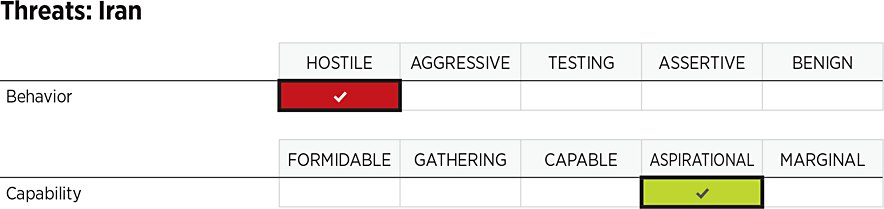
Conclusion
Iran has faced pressure, suffered major leadership losses, and either used or lost much of its missile stocks. In addition, with the setback and potential loss of its nuclear program, a major element of Tehran’s ability to threaten its neighbors has been significantly diminished. Nevertheless, the regime has not relinquished its intent to dislodge any U.S. influence from the Middle East, destroy Israel, and bring other Middle Eastern states under its influence.
Decades of antagonistic relations with its Arab neighbors, active involvement in attacks on Israel, and continued involvement in attacks targeting U.S. forces demonstrate that the Islamic Republic will likely return to an aggressive posture once it believes it can gain enough time to rebuild its proxies and resupply its weapons stocks. In the near term, this could lead Iran to adopt terroristic methods that utilize more plausible deniability.
Iran’s overall capability, damaged from Israel’s 2024–2025 strikes along with the joint Israel–U.S. nuclear strikes, has been degraded and is rated “aspirational.” Iran’s 2025 behavior was still quite aggressive, with repeated missile attacks against Israel and its proxies also launching their own attacks. Iran also responded to the American and Israeli strikes on Iran’s nuclear facilities, although the response was smaller and more targeted. With the new regional dynamics settling in following the Twelve-Day War and the ceasefire in Gaza, Tehran’s current posture is rated “hostile.”
This Special Report is excerpted from The Heritage Foundation’s 2026 Index of U.S. Military Strength, available at https://www.heritage.org/military.



