For decades, agents of the People’s Republic of China (PRC) have conducted malign influence campaigns at the U.S. state level, targeting state and local legislators, state universities, pension funds, and other soft targets. In response, since the first Trump Administration, the federal government has taken steps to raise awareness of China’s subnational threats. In 2022, the National Counterintelligence and Security Center warned about PRC efforts to “exploit” subnational ties with U.S. states to “influence U.S. policies and advance PRC geopolitical interests.”[REF]
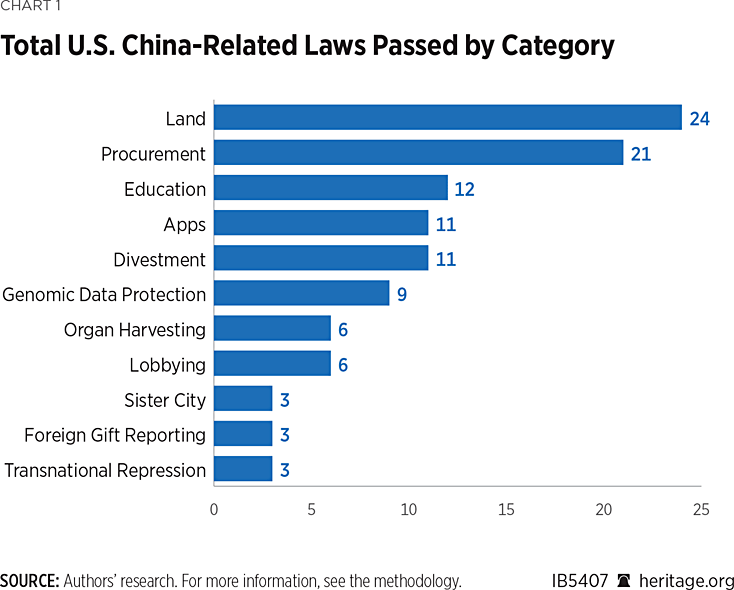
These efforts have borne fruit, as many U.S. states have passed laws and implemented regulations to protect their land, institutions, and people from Chinese influence; 24 U.S. states, for example, have enacted laws regulating foreign ownership of U.S. land, curtailing Chinese efforts to purchase real property for nefarious purposes.[REF] State legislatures passed these measures in response to alarming examples of suspicious Chinese land purchases. In Texas, a retired Chinese general bought 140,000 acres of land near Laughlin Air Force Base, raising concerns about espionage. In a similar case in North Dakota, a Chinese corn milling company purchased 300 acres near the Grand Forks Air Force Base, and in Missouri, China-linked individuals bought a trailer park located near the Whiteman Air Force Base.[REF]
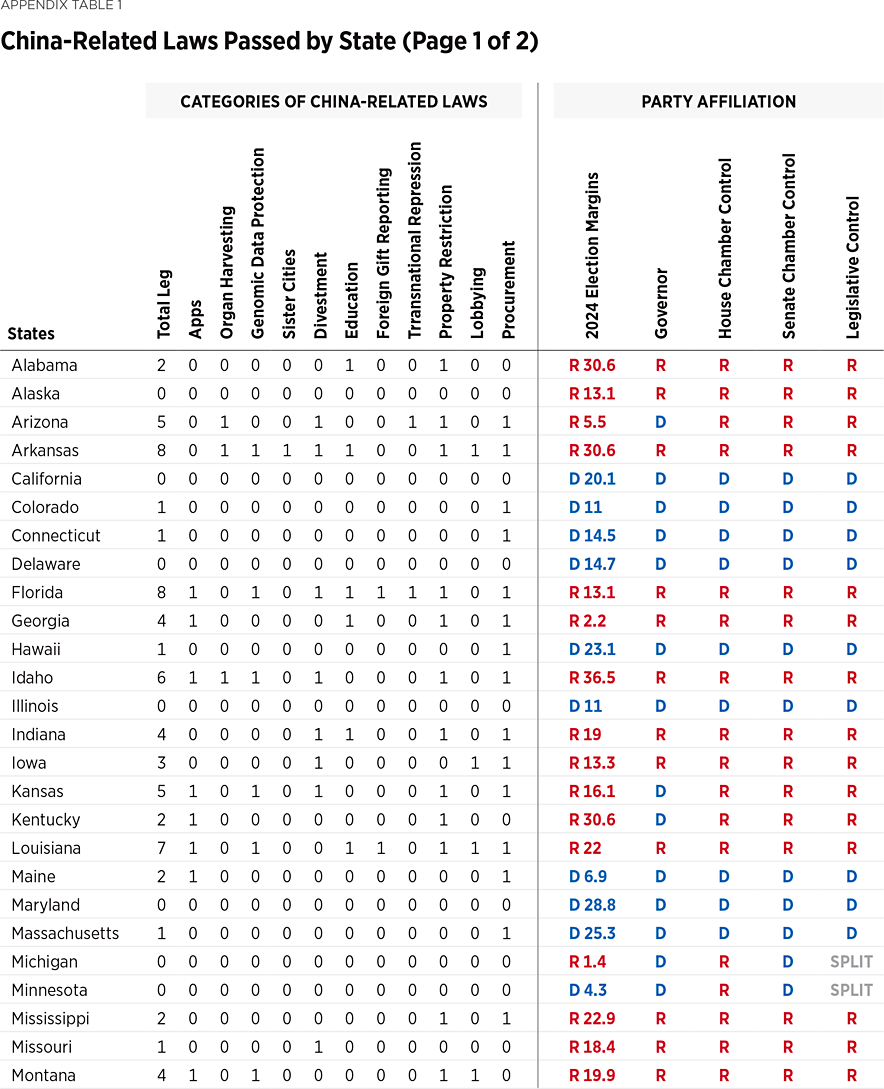
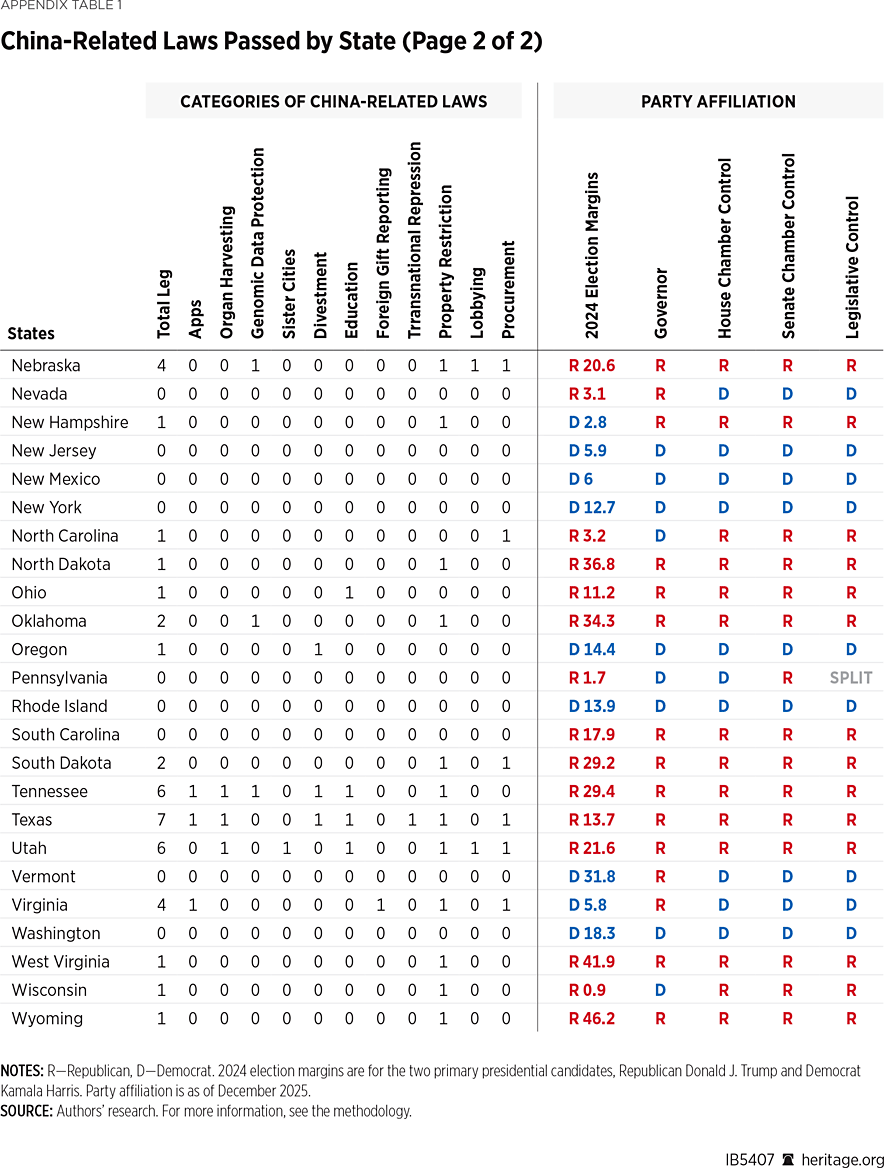
Unfortunately, state-level progress in countering this Chinese influence is unevenly distributed across the nation. Republican states have taken the lead by passing laws in a wide range of issue areas to curtail Beijing’s reach. Democratic states, by contrast, consistently rank among the states that have passed the fewest counter-China laws.
The federal government and advocacy groups must redouble their efforts to reach legislators in blue and purple states about the dangers of the China threat. National security should not be a partisan affair, and federal-level Democratic leaders could also do more to push their state and local constituents to adopt a tough-on-China agenda.
Methodology
U.S. states have passed numerous state-level laws to counter Chinese influence across a wide range of areas. Heritage has selected 11 categories of state laws to counter Chinese influence. This is by no means an exclusive list; some states have passed tough-on-China laws that do not fall neatly into these categories but are so particular to those individual states that they do not justify an additional category.
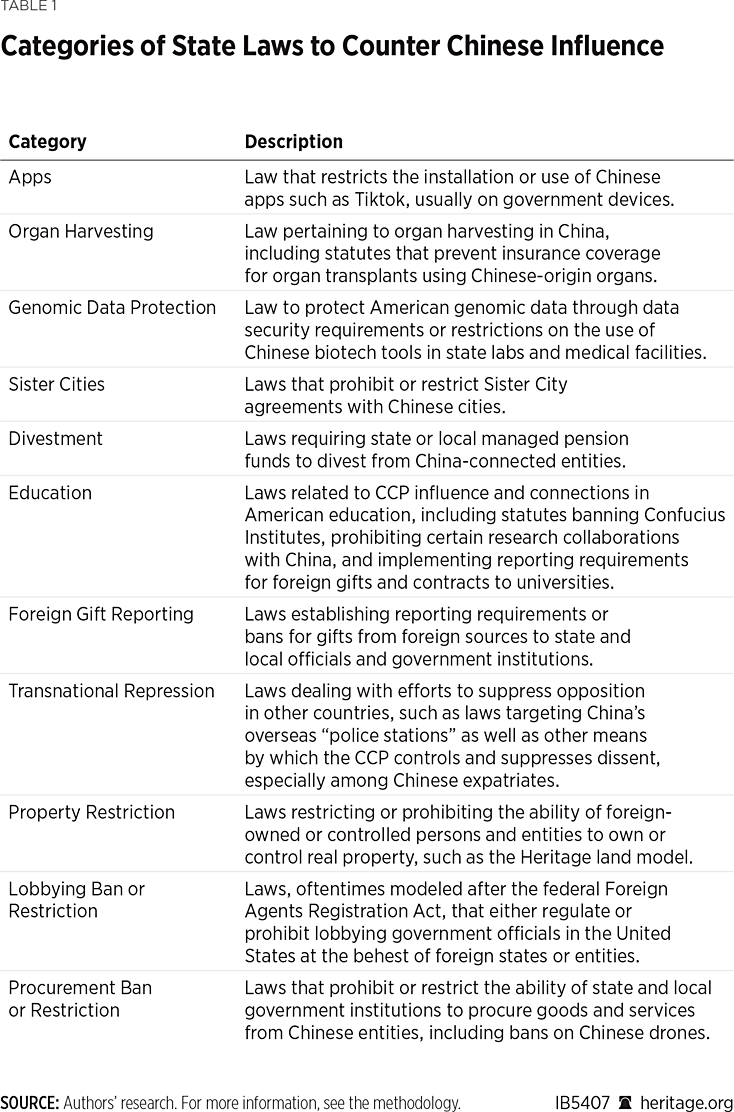
After determining the categories, Heritage staff used Westlaw to search for enacted laws in each of the categories across all 50 states. Heritage staff then used a binary function to record whether a state had an enacted law in each category. For purposes of this Issue Brief, we did not assess or compare the quality of the laws passed.
Some of these tough-on-China laws were passed as part of larger omnibus packages or other complex legislative vehicles. Heritage has done its best to identify every single law passed to counter Chinese malign influence, but some state laws may have been unintentionally omitted from our database.
Next, Heritage staff identified the 2024 presidential election margin. We also identified which party controlled the governor’s mansion, state lower house, and state upper house.[REF]Staff also used data on the partisan control of the lower and upper state houses to assess whether the legislature as a whole is Republican controlled, Democratic controlled, or split between them with each party controlling one chamber.
For the full spreadsheet containing all data, see the appendix.
Results
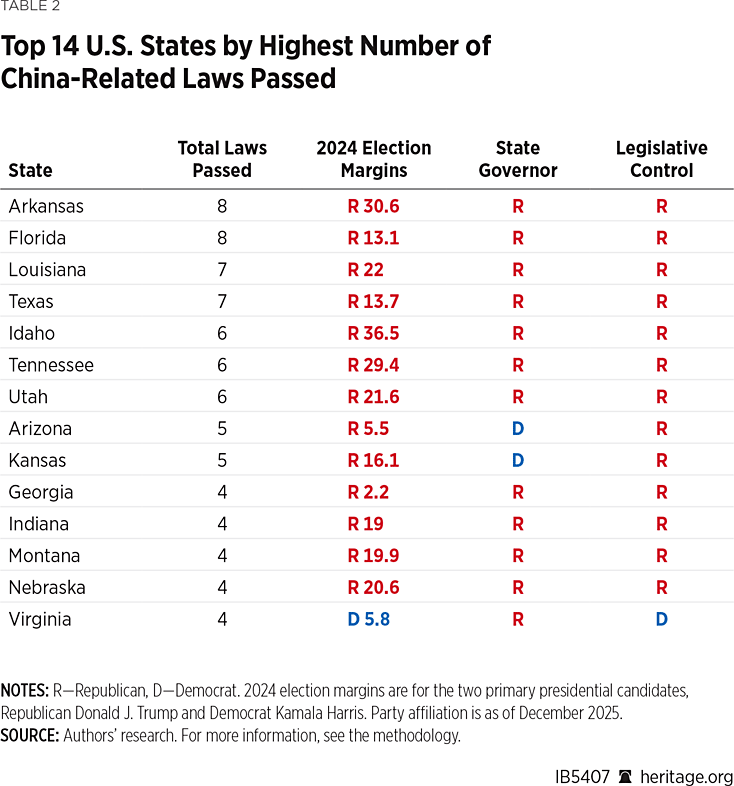
According to Heritage research, Republican states have passed much more tough-on-China legislation than Democratic states have. President Trump won 13 out of the 14 U.S. states with the most tough-on-China laws passed. (The top-14 cutoff is used because five U.S. states are tied for 10th place, having passed four laws each.) As of December 2025, Republican governors controlled 12 out of 14 such states, and Republicans controlled both chambers in 13 out of 14 such states.
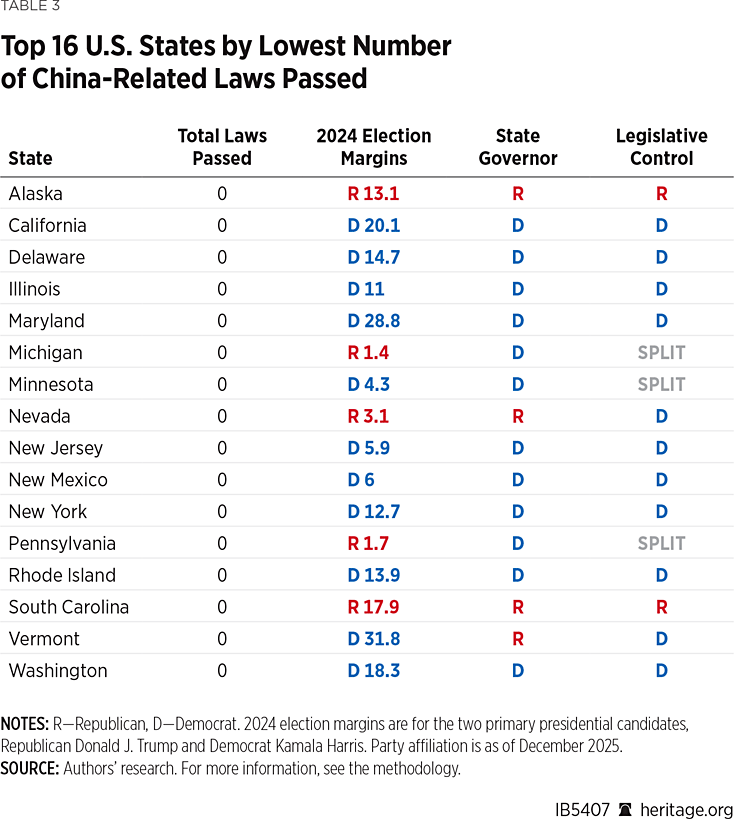
Sixteen U.S. states are tied for last place, having passed no laws to counter Chinese malign influence within their jurisdictions. Most of these states are blue or purple. Vice President Harris won 10 of these 16 states. Democratic governors are in charge in 12 of those states, and Democrats control both chambers in 11 states.
Some categories of tough-on-China laws are more prevalent than others: 24 U.S. states have passed some kind of restrictions on foreign land ownership, and 21 have passed restrictions or bans on the procurement of Chinese goods. Only three states have passed bills restricting sister city relationships with Chinese cities.
Discussion and Policy Prescription
Proving the causal mechanisms behind the partisan divide in tough-on-China law among U.S. states statistically is admittedly difficult. That said, however, several factors may be behind this result.
In general, Republicans tell pollsters that they have a more negative attitude toward China. For example, a 2025 Pew poll demonstrated that 43 percent of Republicans had a “very unfavorable” view of China, while only 24 percent of Democrats did.[REF] The partisan divide among each party’s base may be reflected in the laws passed by their state legislators.
Chinese propagandists and agents often portray legislative efforts to counter Chinese influence as racist toward Chinese and Chinese Americans. These racially charged, bad-faith accusations by Beijing’s proxies may carry greater weight with Democrats.
In certain Democratic states, Chinese agents have achieved significant success in penetrating local and state government and party machinery. For example, the Chinese consulate in New York has successfully recruited numerous supporters across the city and the state, mobilizing voters against tough-on-China candidates and pushing local and state governments to adopt policies favorable to Beijing.[REF] For example, China allegedly recruited Linda Sun, a former senior aide to the New York governor, to advance Beijing’s agenda in state and local government, blocking Taiwanese officials from interacting with the governor’s office.[REF] Similarly, in California, Chinese spies targeted the state’s politicians, collecting intelligence from them.[REF] In one case, a Chinese foreign agent even served as a campaign manager for a city council candidate.[REF]
Conservative advocacy groups, including Heritage Action and State Armor, have been among the most vocal organizations highlighting Chinese subnational influence operations.[REF] However, these groups have focused their outreach on like-minded legislators in Republican states. Thus, Democratic states may not be receiving the same amount of attention from outside groups to encourage them to adopt tough-on-China policies.
The vulnerability of Democratic-controlled jurisdictions represents a significant problem as the juiciest targets for Chinese malign influence are in blue or purple states. New York is the world’s financial center, and San Francisco is a major technology hub. States like Colorado contain critical U.S. military installations. Maryland contains many federal, military, and intelligence facilities of interest to China.
Democratic states should be pressured to elevate efforts to adopt the tough-on-China measures adopted by their Republican counterparts, but many Republican states still have a long way to go. The federal government should also consider naming-and-shaming U.S. states that have failed to take meaningful action to counter Chinese influence. Democratic state legislators can also check out tough-on-China model legislation available at Heritage Action’s Countertheccp.com or State Armor’s website.
Furthermore, advocacy groups should adjust their focus. A critical number of U.S. states have already adopted some form of ban or restriction of Chinese land ownership or procurement of Chinese goods and services, yet that issue continues to get disproportionate attention. Efforts at education should focus on other issue areas that have yet to be tackled by most U.S. states such as restrictions on Chinese lobbying, reporting mechanisms for foreign gifts and contracts, criminalization of international repression, and protection of universities from Chinese malign influence.
Yuichiro Kakutani is a Policy Advisor for China and the Indo-Pacific in the Asian Studies Center at The Heritage Foundation. Paul McCosby is a former Legislative Clerk in the Asian Studies Center. The authors would like to thank Miles Pollard, a Policy Analyst for Economic Policy in the Center for Data Analysis at The Heritage Foundation, for his very helpful analysis of preliminary data.