The American Opportunity Agenda is a suite of policies that will help Americans thrive. It facilitates raising a family, educating children, free association, and growing a business without undue government regulation.
After four years of Democratic mismanagement, the cost of living has become prohibitively high for too many working Americans. The American Opportunity Agenda strives to make the cost of living more affordable, not by providing subsidies and fueling inflation as experienced under President Joe Biden, but rather by thoughtfully removing fraudulent and wasteful spending and restructuring the social safety net to ensure a sound and stable foundation. Specifically, the American Opportunity Agenda promotes:
- Low taxes. A low and predicable tax structure made possible by the elimination of wasteful, woke, and weaponized spending frees individuals to make economic decisions that are better than those made by central planners in Washington or state capitals.
- Light regulation. Regulations are necessary to keep Americans safe but should not place them in a straitjacket that stifles the creative spirit and risk-taking that lead to groundbreaking advances in commerce, technology, medicine, and the arts.
- Abundant American energy. American workers can produce plentiful American energy and the strategic minerals that are needed to develop a strong military and domestic industry, unleashing the full potential of artificial intelligence to harness the wisdom of Western civilization.
Hard-pressed Americans cannot wait for action on the Opportunity Agenda. Americans need relief now—not after the election. Fortunately, many proposals exist that would provide this relief. Accordingly, the first step toward fulfillment of the American Opportunity Agenda is to use the power of budget reconciliation to enact meaningful spending reforms in the coming weeks.
What Is Budget Reconciliation?
Budget reconciliation is a special Senate procedure that allows consideration of a bill without the threat of a filibuster. This means that the bill needs only 51 votes for consideration in the Senate rather than the 60-vote supermajority that applies to most legislation.
The special procedure is available only in very specific circumstances. First, the House and Senate must agree on a common congressional budget resolution that sets out goals for revenues, spending, deficits, and debt. Second, the budget must provide reconciliation instructions to specific committees to prepare legislation that will change spending, revenues, deficits, or the debt limit. Only the instructed committees can use reconciliation to receive 51-vote treatment. Legislation from non-instructed committees cannot be included.
In addition, the legislation prepared by the instructed committees must meet certain tests to ensure that every provision is necessary to produce a budgetary effect. If a provision does not contribute directly to a budgetary effect, it can be excised from the bill through what is known as the “Byrd Rule,” named for the late Senator from West Virginia and expert in parliamentary procedures. The Byrd Rule sets aside the filibuster for budgetary legislation, but not for sneaking through policy provisions that require a 60-vote threshold for consideration under the guise that it was going to affect the budget. The Chairman of the Budget Committee makes that determination, often based on estimates from the Congressional Budget Office (CBO).
Why Is It Important to Use Budget Reconciliation Now?
There are three arguments for using budget reconciliation before the midterm elections:
- Strategic. In the current hyper-partisan environment, reconciliation can be used only when the House, Senate, and White House are controlled by the same party. In fact, reconciliation has not been used in a bipartisan manner since 1997.[REF] It is malpractice not to employ budget reconciliation when voters provide the opportunity.
- Fiscal. Record deficits and growing debt must be reduced or reversed. Excessive government borrowing takes funds out of the private economy, driving up interest costs and making it more difficult for America’s small businesses to afford the capital they need to grow, which in turn depresses tax receipts. Even modest deficit reduction through budget reconciliation would strengthen America’s finances and economy.
- Political. Voters need to see that Congress is doing something to address their concerns. The so-called One Big Beautiful Bill Act (OBBBA)[REF] was a major accomplishment in 2025 and had many constructive consequences, but the resultant tax refunds have come and gone, and significant new legislation is needed to get voters excited about this election season.
Budget reconciliation legislation signed on July 4, 2026, would again bring into focus the wins that were delivered in the 2025 legislation—items like No Tax on Tips, No Tax on Overtime, and No Tax on Social Security.[REF] It would also provide relief for Americans who are beginning their journey in this, the 250th anniversary of the American experiment.
What Policies in Budget Reconciliation Would Advance an American Opportunity Agenda?
Budget reconciliation is ideal for legislating reforms in the government’s mandatory programs, which provide payments or services to any eligible entity. The following reforms in health care, welfare, and taxation illustrate the policies that could be enacted through reconciliation and can provide more than $1.5 trillion in savings over the next 10 years.
Health Care
Make health care more affordable. Health care affordability is polling as one of the top issues for voters this midterm election year. A key way for Congress to address that issue is to encourage health care price transparency. This is the idea behind the Patients Deserve Price Tags Act, a comprehensive health care price transparency bill that has steadily been gaining bipartisan support in the Senate.[REF] As it stands now, the amount paid for any given medical test, procedure, drug, or device can vary widely not only between providers, but also at the same hospital between different payers.
The Patients Deserve Price Tags Act would establish enforceable price disclosure requirements for hospitals, laboratories, imaging centers, ambulatory surgical centers, and health insurers. Requiring that this information be made publicly available is the first step toward enabling patients to know the actual cost of “shoppable” medical services—as well as how much their insurance will pay—before they get a test or procedure.
The bill would also give the businesses and unions that sponsor employment-based health plans the right to obtain full claims and payment data from the vendors administering their plans. Employment-based plans currently cover more than 160 million Americans—roughly half of the population—and federal law requires that plan sponsors must operate their plans in the best interests of their enrollees. Yet plan sponsors often do not have the pricing data and other information they need to ensure that plan funds are being well spent. This is because the vendors upon which those plans rely—insurers, third-party administrators, and pharmacy benefit managers, etc.—often do not share that information with their clients.
The Patients Deserve Price Tags Act would give plan sponsors transparency with respect to where the money is going. They would be able to see not only the differences in reimbursements paid to competing medical providers, but also any fees, discounts, or other compensation that their administrative vendors are receiving from those same providers and from the suppliers of drugs and medical devices.
Enabling employment-based health plans to identify how medical providers and administrative middlemen are being paid will empower them to negotiate better deals with hospitals and other medical providers. It will also enable them to identify wasteful spending and any self-dealing or kickbacks that currently may be lining the pockets of administrative middlemen. The resulting savings will effectively mean that less employee compensation goes into funding escalating health benefit costs and more goes into workers’ take-home pay.
However, arming employment-based health plans with the data to negotiate better deals is only part of the solution. To generate the kind of robust price competition that really drives down costs and spending in other economic sectors, it will be necessary to get patients—who are the ultimate consumers—fully engaged as well. The way to do this is to create incentives for health plans to turn the “actionable information” of price data into “informed action” by patients shopping for care.
To this end, health plans should be encouraged to leverage the data generated by price transparency to empower their enrollees with easy-to-use shopping applications and to offer them tangible rewards for making better value purchases. Congress can encourage that kind of positive change by making three modest adjustments in current law:
- Clarify in the tax code that when a health plan gives a patient a cash reward for choosing to get care from a better value provider, that payment is tax-free to the patient—just like other insurance reimbursements or refunds.
- Modify the tax code so that when patients with Health Savings Accounts (HSAs) get a reward from their health plan, they can deposit it into their HSA without its counting against the maximum annual contribution limit.
- Amend the law that requires health insurers to give enrollees refunds if the plan spends less than 80 percent of premium revenue on medical care or “activities that improve health care quality,” to include plan spending on assisting or rewarding enrollees shopping for better value care as well. This would make certain that insurer investments in shopping apps and providing cash rewards to patients for obtaining better value care would count as spending that benefits enrollees rather than as higher administrative costs for which insurers are penalized.
Price transparency legislation would enable employment-based health plans to renegotiate contracts with providers and vendors to reduce the growth in coverage costs. The CBO and the U.S. Congress’s Joint Committee on Taxation (JCT) can be expected to score that effect as increasing revenues because it would reduce pretax spending on health benefits and increase taxable wages. In December 2023, the House passed H.R. 5378, the Lower Costs, More Transparency Act,[REF] which included much more modest price transparency provisions that were scored by the CBO and the staff of the JCT as increasing revenues by $4.3 billion over the 2024–2033 budget window.[REF]
Offer states flexibility in covering low-income adults. The Affordable Care Act (ACA) Medicaid expansion population consists of work-capable (non-elderly, non-disabled) adults below 138 percent of the federal poverty level (FPL), the vast majority of whom do not have dependent children. The ACA required states to cover this group and provided a permanent enhanced Federal Medical Assistance Percentage (FMAP) of 90 percent to offset the cost.
The Supreme Court of the United States ruled that states could not be forced to adopt the expansion,[REF] but because Congress has not changed the statute, states must choose between covering either all or none of this population. The enhanced FMAP also remains in place, which effectively induces states to give preference to this group of enrollees over other, more needy enrollees.
Recodifying the ACA Medicaid expansion population from “all-or-nothing” to “optional” in the statute would give states flexibility to cover only subsets of that population. In fact, absent the expansion, 24 states would automatically still cover some portion of this population under eligibility pathways that they established before enactment of the ACA.
Repealing the enhanced FMAP would mean that any individuals in this group that a state chose to cover through Medicaid would be funded at the state’s standard FMAP. Simultaneously removing the 100 percent of FPL floor on ACA premium tax credit (PTC) eligibility would mean that any individuals in this category that a state did not opt to cover through Medicaid would automatically qualify for comparable, subsidized exchange coverage.
The basic trade-off for states is that they would no longer receive extra federal funding but would gain increased flexibility and new options for covering this low-income population. That flexibility would be helpful for state lawmakers, not only those in the 10 states that have not yet adopted the expansion, but also those in states that adopted the expansion reluctantly under interest-group pressure. Regardless of how different states respond, these policy changes will likely result in at least the same level of aggregate health insurance coverage and could possibly result in a net increase.
From the federal perspective, the CBO projects that reimbursing states for Medicaid expansion enrollees at standard FMAPs would reduce federal spending by $596 billion over the 2025–2034 period.[REF] Those savings would be offset to the extent that these policy changes resulted in increased take-up of exchange coverage subsidized by the ACA’s refundable premium tax credits.
It is also noteworthy that the feasibility of providing individuals in this population with subsidized coverage through the exchanges has been demonstrated by the Arkansas waiver, which is now in its twelfth year. To obtain federal funding for this population, Arkansas had to adopt the Medicaid expansion. However, Arkansas obtained a waiver to use that funding to provide almost all of its expansion enrollees with exchange coverage. Arkansas’ experience has been that only 7 percent–8 percent of this population have medical needs that make them unsuitable for exchange coverage (and who are instead enrolled by the state in traditional Medicaid).
Furthermore, the same insurers that contract with states to cover Medicaid enrollees through Medicaid Managed Care plans currently offer very similar coverage through exchange plans. Thus, the exchanges already have participating insurers with significant experience covering low-income enrollees.
Restructure ACA exchange subsidies. The ACA’s insurance subsidies are needlessly complex and inflationary. Under the premium tax credit design, premium increases are borne almost entirely by taxpayers. Even more complex and opaque are the ACA’s cost-sharing reduction (CSR) subsidies. The law requires that insurers both offer four different CSR variants of each silver plan and provide each customer buying a silver plan with the variant specified for that customer’s income. The ACA also instructs the Department of Health and Human Services (HHS) to pay insurers separate subsidies based on the estimated cost of providing CSRs, which must then be reconciled at the end of each plan year.
However, Congress has never appropriated funds for CSR subsidy payments to insurers, and the government has never reimbursed insurers for the extra cost of CSRs since 2018. In response, insurers priced the cost of providing CSRs into all of their silver plan premiums—a practice termed “silver loading.” That has made silver plans more expensive than gold plans and, because premium tax credits are calculated off silver plan premiums, has resulted in larger premium tax credit amounts and additional federal spending.
These reforms would simplify and improve the ACA exchange subsidies by eliminating the CSR provisions and reconfiguring how the premium tax credits are income-adjusted. Under the reformed system, premium tax credit amounts would be set such that lower-income enrollees have sufficient subsidies to buy either a more expensive plan with lower cost sharing or a lower-premium plan and use the remaining funds to pay cost-sharing as incurred. The revised design would retain the existing provisions that adjust PTC amounts for age and geography so that an enrollee’s subsidy amount would still align with the actual premiums faced by that enrollee.
The House-passed version of the 2025 reconciliation bill attempted to address the problem of silver loading by simply appropriating funding for CSRs.[REF] The CBO scored that provision as reducing outlays by $30.8 billion over the 2025–2034 period.[REF] However, that provision was not included in the final legislation.
These policy changes should achieve even larger savings, as they would not only eliminate the increase in PTC amounts caused by “silver-loading,” but also increase consumer pressure on insurers to restrain premium growth. The positive fiscal effects would be even greater if these reforms were also accompanied by provisions specifying that PTCs would no longer be paid directly to insurers but instead would be paid into accounts controlled by enrollees as the President has proposed.
The resulting system would also be simpler for both enrollees and insurers. To illustrate, instead of paying the insurer a separate, additional subsidy to turn a specific enrollee’s silver plan into a de facto platinum plan, the new design would provide that enrollee with a large enough subsidy to simply buy a platinum plan. Furthermore, if the funds were deposited into an account, the enrollee could use them either to pay the higher premium for a lower–cost sharing plan (e.g., platinum) or to buy a lower-premium plan (e.g., silver) and use the remaining funds to pay cost-sharing as incurred.
Finally, coupling this reformed subsidy design with enrollee accounts could address the persistent problem of adverse selection among the lowest-income enrollees. Those enrollees are the ones who are most likely to take up the offer of subsidized coverage only when they need treatment. Offering them funds up front in an account could induce more of them to maintain continuous coverage, because if they dropped coverage, they would be “leaving money on the table.”
Defund Planned Parenthood—Again
The problem: American taxpayers are being required to fund organizations that push and provide abortion and sex-rejecting procedures under the guise of health care.
- The one-year clock is ticking. The OBBBA included a provision that deemed certain abortion providers like Planned Parenthood ineligible to receive federal Medicaid reimbursements for one year.[REF] Medicaid reimbursements make up the vast majority of Planned Parenthood’s federal funding.
- America 250 is on track to give Big Abortion a Big Payday. The defund provision is the only item in the OBBBA with a one-year time frame. Unless Congress takes additional action, funding of Planned Parenthood will resume on July 4, 2026—America’s 250th birthday.
- Planned Parenthood is counting down the days. More than 50 clinics have closed in the past year, but Planned Parenthood has pivoted to telehealth services in recent years, and blue state efforts to supplement funding while the OBBBA provision is in effect have helped affiliates to stay afloat. Planned Parenthood openly brags that it is “not only weathering this storm—we’re looking beyond it. Because it will end.”[REF]
- Transgender business is booming. Planned Parenthood hides its sex-rejecting gender activity in an “other” category in its annual reports, so we do not know exact numbers. When gender was first mentioned in the 2015–2016 annual report, 8,153 “Other Procedures, Women and Men,” were reported in the “Other Services” category.[REF] That number ballooned to 50,411 in 2025.[REF] Planned Parenthood openly brags about being one of the most prolific providers of sex-rejecting gender drugs in America.[REF]
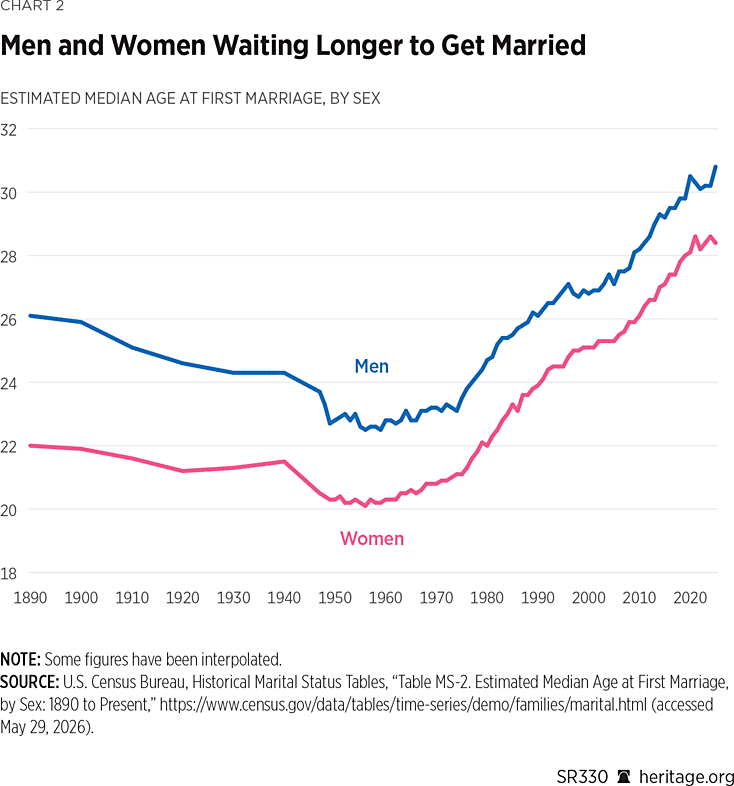
- There are 434,450 reasons to defund Big Abortion. Planned Parenthood reported performing 434,450 abortions in its 2024–2025 annual report—an all-time high.[REF]
- Record-level government funding boosts Big Abortion. For the fiscal year ending June 30, 2025 (right before the OBBBA took effect), Planned Parenthood reported $832 million in government funding.
- Abortion Inc. does not prioritize real health care. Services like preventive care, breast cancer screenings, and pap tests continue to decline year after year.
The solution:
- New reconciliation bill, new opportunity. As Congress works on another reconciliation bill, it must incorporate the defund Planned Parenthood provision and ensure that it is for the full 10-year time frame. A one-year defund has been painful for Planned Parenthood’s bottom line, but it is not enough.[REF]
- Strike a blow for life—and taxpayers. The American people should not send hundreds of millions of their hard-earned tax dollars every year to an organization that prioritizes abortion and undermines the family.
- Women can get high-quality care elsewhere. Other health care providers like Federally Qualified Health Centers that are not entangled with the abortion industry outnumber Planned Parenthood clinics by 15 to 1.[REF]
Welfare
End broad-based categorical eligibility in SNAP. Congress should end broad-based categorical eligibility (BBCE) in the Supplemental Nutrition Assistance Program (SNAP). This will strengthen program integrity and focus benefits on households with genuine financial need. Categorical eligibility should be limited to households that have been receiving meaningful assistance from other means-tested programs, such as at least $50 per month in cash assistance or a substantial benefit like Temporary Assistance for Needy Families (TANF) child care, for at least six months.
Broad-based categorical eligibility allows states to qualify a household for SNAP automatically if the household receives any benefit or service funded by TANF or another means-tested program. Under traditional categorical eligibility, households can qualify for SNAP if they receive cash assistance from TANF, Supplemental Security Income (SSI), or state cash aid programs—programs with strict income and asset limits.
Beginning in the late 1990s, however, categorical eligibility was expanded to allow people to qualify for SNAP if they received even non-cash TANF services. This change dramatically expanded SNAP eligibility because anyone can receive a TANF service, which includes even something as simple as receiving a brochure about TANF.
As a result, BBCE has effectively eliminated SNAP’s asset tests.[REF] Individuals qualifying through BBCE still report income, but they face no asset limits even if they hold substantial savings. This shifts SNAP away from its original purpose as a program for households facing sustained hardship and toward a benefit that is available to people with even a temporary income loss.
According to U.S. Department of Agriculture (USDA) data, roughly 70 percent of SNAP households get on the program through BBCE. In 2018, an estimated five million people received SNAP benefits solely as a result of BBCE at a total cost of approximately $7 billion.[REF]
Congress should end broadbased categorical eligibility by limiting categorical eligibility to households that:
- Receive at least $50 per month in cash assistance or another substantial benefit (such as TANFfunded child care) and
- Have been receiving that assistance for at least six months prior to SNAP eligibility determination.
Ending BBCE is a longstanding policy priority and has been included in legislative proposals such as the SNAP Reform and Upward Mobility Act introduced by Senator Mike Lee (R–UT).[REF]
The Heritage Foundation estimates that reforming broad-based categorical eligibility would save $28.5 billion over the fiscal year (FY) 2023–FY 2032 budget window, using USDA modeling from a 2019 proposed rule.[REF] The CBO has previously scored similar proposals with lower estimated savings—approximately $8.1 billion over a 10-year period—largely due to limited administrative data on participant assets.[REF]
Strengthen SNAP Verification and Household Definitions. To reduce fraud and increase integrity in the Supplemental Nutrition Assistance Program, Congress should reduce reliance on self-attestation as a primary verification method and require states to use secondary data sources (e.g., IRS income data, Medicaid records, and other administrative databases) as the default for determining eligibility. Additionally, all household members should be included by default when calculating SNAP eligibility and benefit amounts with exclusions permitted only when applicants provide documentation demonstrating separate households.
SNAP applicants must report income and household size when applying for benefits. States may verify this information using secondary data sources, including IRS wage data and Medicaid records. However, states are not required to verify applicant claims against these sources, and applicants may override conflicting information through self-attestation.
States are also required to issue benefits immediately based on self-attested information even when discrepancies exist. If fraud is suspected, states may investigate, but benefits must continue during the review. In many states, the lack of sufficient resources to conduct timely or thorough fraud investigations weakens safeguards against improper payments.
Household composition rules further undermine SNAP integrity. SNAP applicants are supposed to include all household members with whom they prepare and share meals. While applicants must include spouses and children, they are allowed to exclude other adults, such as cohabiting partners or roommates. Allowing applicants to exclude household members provides a way for applicants to exclude higher-income people in their households with whom they share food, such as a cohabiting boyfriend. Because applicants must report a spouse but are not required to report a cohabiting partner, the current system also creates a marriage penalty.[REF]
To limit the use of self-attestation, states should be required to rely on secondary data sources as the default for verifying income and household eligibility. Self-attestation should be allowed only when secondary data are unavailable, and benefit issuance should be delayed when material discrepancies remain unresolved. In addition, all household members should be included by default in determining SNAP eligibility and benefit levels with exclusions permitted if applicants provide documentation demonstrating separate financial responsibility, such as separate rental agreements or utility accounts.
A rough estimate suggests that these reforms could save approximately $45.5 billion over 10 years based on the 2024 SNAP overpayment rate (9.26 percent) and the CBO’s projected SNAP outlays for FY 2026–FY 2035.[REF] Assuming that these changes reduce overpayments by 50 percent, substantial savings would result. This estimate does not account for increased administrative costs associated with expanded verification, which the CBO would likely include when providing an official score.
Revenues
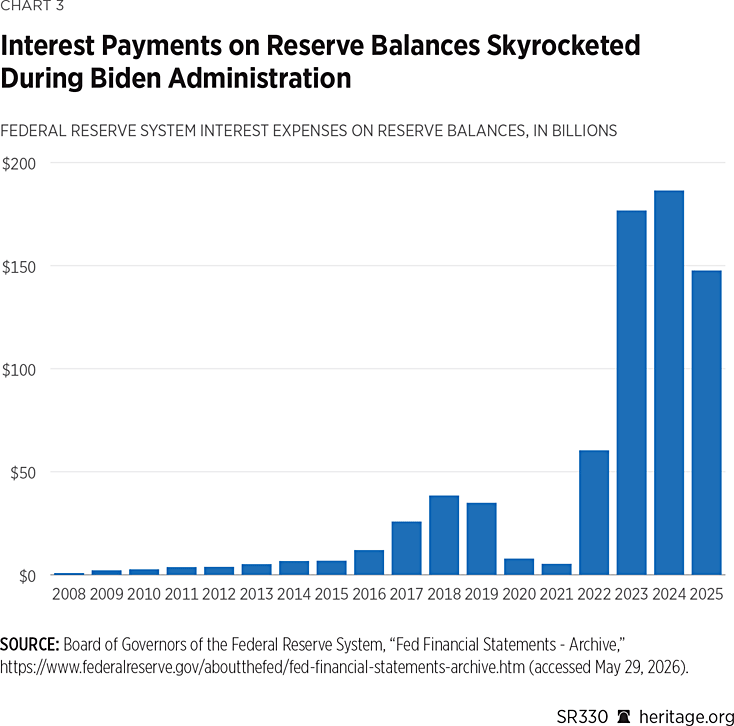
Allow Americans to set aside savings in Newlywed Early Starters Trust (NEST) Accounts. Marriage rates have plummeted over the past few decades as young people have increasingly chosen to delay marriage,[REF] and a growing share of U.S. adults have never married by age 40.[REF] Since 1960, the median age at first marriage has risen steadily to approximately 30.8 for men and 28.4 for women,[REF] and the proportion of adults who are married in their prime childbearing years continues to drop.[REF] The delay and decline in marriage have also translated into a long-term trend of low and declining birth rates,[REF] which could reduce long-term economic growth and tax revenues.
In nationally representative surveys, Americans consistently cite a lack of financial stability as one of the leading reasons they cannot have the number of children they would like to have.[REF] For those who are unmarried, lack of financial stability is often cited as an important reason for why they have delayed marriage.[REF]
Newlywed Early Starters Trust (NEST) Accounts will help to ensure financial stability for the next generation by providing access to savings they can use to help them later in life in the first three years of marriage and when they retire. NEST Accounts are tax-advantaged savings and investment accounts for children, where qualifying newborns would be eligible to receive a one-time credit of $2,500 (indexed to inflation) from the U.S. Treasury into their NEST Accounts in the first year they are claimed as dependents on a tax return. Additionally, they can receive up to $5,000 in contributions from family, employers, or others annually (indexed to inflation) until the beneficiary turns 30 years old or marries.
NEST Accounts would function in much the same way that Trump Accounts established in the OBBBA function.[REF] The main difference between NEST Accounts and Trump Accounts is that beneficiaries can make qualified distributions from their NEST Accounts upon getting married between ages 18 and 30 with any funds not distributed in that window being rolled into their personal retirement accounts. To illustrate, if two people with NEST accounts compounding since birth married at age 28, they would be expected to have approximately $38,000 in today’s dollars (or $90,000 in current dollars) available for starting their married lives together. These accounts will likely have a substantial impact on long-term marriage rates at low up-front costs.[REF]
Who would be eligible for a NEST Account? Any child who has a Social Security number and is under 18 years of age for the entire calendar year can have a NEST Account established in his or her name. The individual setting up or serving as a custodian of the account on the beneficiary’s behalf must also have a Social Security number. As noted, any child who qualifies for a NEST Account and is born after December 31, 2025, would qualify to receive a one-time $2,500 credit (annually indexed to inflation starting from tax year 2028) from the U.S. Treasury into his or her NEST Account. To qualify for the one-time credit, the child must also be claimed as a dependent on a federal income tax return by at least one parent or legal guardian who is a U.S. citizen to avoid benefits flowing to “birth tourists.”
What are the contribution rules? A NEST Account can receive contributions up to $5,000 per year (indexed to inflation starting from 2028) from individuals, employers of individuals with dependents who are NEST Account beneficiaries, and employers of NEST Account beneficiaries. Contributions from individuals are made after tax, but contributions from employers are tax-free up to $2,500 per year. Employers alternatively can elect to allow their employees to make contributions to their dependent’s NEST Account with tax-free payroll deductions up to $2,500 per year. Amounts contributed to a NEST Account are not counted toward contribution limits for traditional IRAs or Trump Accounts. A NEST Account beneficiary can also receive uncapped contributions from federal, state, and local governments and nonprofit organizations that provide general funding contributions to a wide class of beneficiaries selected by age or qualified geographic area, and such contributions would not count toward the annual inflation-indexed $5,000 contribution limit. The one-time $2,500 U.S. Treasury credit for qualifying newborns also does not count toward the annual contribution limit.
What are the conditions for making qualified withdrawals? Generally, withdrawals are ineligible before the beneficiary is 30 years old. On the first day of the calendar year in which the beneficiary turns 30 years old, any balances in the NEST Account convert to a traditional IRA as defined under Section 408(a) of the Internal Revenue Code.
Special rules would apply to NEST Accounts that would allow the beneficiary to take qualified distributions after getting married, provided the beneficiary takes such distributions after turning 18 but before turning 30. Qualified distributions after marriage are limited to up to one-third of the account balance in the first calendar year claimed, up to one-half of the remaining balance in the following calendar year, and up to the remainder of the balance in the third year. If the beneficiary still has a balance after the third year and is still below the age of 30 in the fourth and subsequent years, the beneficiary can choose to continue taking qualified distributions.
To qualify, both spouses must remain married to the same spouse and file as “married, filing jointly” on the same tax return for each tax year during which qualified distributions are made.
How are withdrawals taxed? Qualified distributions up to the after-tax amounts contributed to a NEST Account are tax-free, including earnings and gains. Qualified distributions on any pre-tax contributions, earnings, or gains on contributed amounts are taxed as ordinary income. Unqualified distributions are taxed as ordinary income and are subject to an additional 10 percent tax penalty.
In the case of a marriage that is proven to have been entered into fraudulently for the sake of making withdrawals from a NEST Account, in addition to the ordinary tax assessed and the 10 percent tax penalty, Congress should provide for disgorgement of ill-gotten benefits and protection for cases where one spouse is entirely innocent.
What are the estimated effects of NEST Accounts on federal revenue? The Heritage Foundation has estimated that NEST accounts would reduce federal government revenue by about $94 billion over 10 years.[REF] The estimate assumes that the revenue effects of the NEST Accounts are equivalent to the revenue effects estimated by the Joint Committee on Taxation for the Trump Accounts in the version of H.R. 1 passed by the U.S. House of Representatives on May 22, 2025, adjusted to reflect the current scoring window. It is a static score and does not account for any potential birth rate–related dynamic effects.
Eliminate Federal Reserve interest payments on bank reserves. The Federal Reserve (Fed) is projected to spend over $1 trillion on interest payments to banks for their reserve balances over the next decade.[REF] Eliminating the Fed’s authority to pay interest on reserve balances (over $3 trillion as of March 2026[REF]) would return the central bank to profitability and redirect billions back to the Treasury for the benefit of American taxpayers.
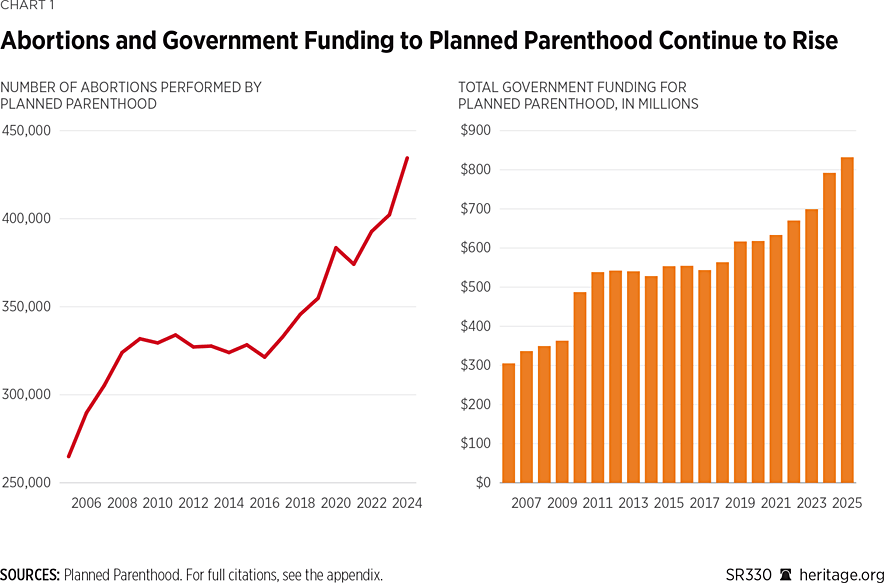
The Federal Reserve’s dual mandate is to promote maximum employment and price stability through monetary policy. The Fed generates revenues through its operations and remits net earnings to the Treasury. However, since September 2022,[REF] the Fed has been operating at a loss as a result of elevated interest payments. For example, interest payments on reserves (IOR) have become the Federal Reserve’s largest expense in recent years, totaling more than $186 billion in 2024 and $148 billion in 2025.[REF]
For its first 95 years of existence, the Fed did not pay interest to banks for balances held in reserve. Instead, banks were regulated by the reserve requirement ratio to hold a certain percentage of their deposits in reserves at the Fed to ensure liquidity to meet withdrawal demand and to influence monetary supply. Higher reserve requirements limited lending (as banks have fewer funds to lend) and pushed up interest rates, whereas lower requirements expanded the money supply and lowered rates.[REF] In 2020, the Fed reduced the required reserve ratio to zero for all financial institutions, which means that all current reserve balances are excess reserves.[REF]
Congress authorized the Fed to begin paying interest on reserve balances in 2006 with implementation planned for 2011, but this was accelerated to 2008 amid the Great Recession.[REF] Paying IOR was meant to encourage banks to hold more in reserves instead of engaging in overnight lending among other financial institutions, which reduced downward pressure on the overnight federal funds rate. However, enabling the Federal Reserve to maintain an exceptionally large balance sheet through trillions of reserve holdings also enables it to create money on a massive scale through quantitative easing without driving short-term rates to zero. This contributes to higher inflation by facilitating prolonged monetary expansion.
This policy has led the Fed to pay out more than $728 billion in interest on banks’ reserve balances from 2008 to 2024, with nearly 60 percent accruing under the Biden Administration.
These payments have disproportionately benefited the largest banks, which hold the bulk of the reserves at the Fed. The top 20 banks received over half ($305 billion) of all IOR payments from 2013 through mid-2025—roughly the same amount received by the other 4,500 banks combined. The top five U.S. banks (JPMorgan Chase, Bank of America, Citibank, Wells Fargo, and U.S. Bank) together received $136 billion from 2013–2024.[REF] Foreign banks have received 40 percent–50 percent of these payments, which has potential political or national security implications in addition to economic implications. Today, reserve balances total $3.02 trillion, approximately 12 percent of the $25.5 trillion total commercial bank assets.
When the Federal Reserve’s operating costs—primarily interest payments on these reserves—exceed its income, remittances to the U.S. Treasury stop and, in some cases, create a deferred asset. This reduces revenue that would otherwise flow to the government, directly increasing the federal deficit and adding to the national debt burden on American taxpayers. This also increases rates on Treasury bills because banks use the Fed overnight window rather than T-bills.
Congress should end Fed interest payments on bank reserves. Eliminating IOR would result in fiscal savings, incentivize banks to lend more stimulating economic activity, and end a perceived subsidy. Repealing the Fed's authority to pay interest on reserves would restore fiscal accountability and ensure that Federal Reserve policies truly benefit taxpayers. Senators Rick Scott (R–FL) and Ted Cruz (R–TX) have introduced legislation (S. 2499, the FAIR Act) that would end the Fed’s authority to pay interest on reserve balances.[REF]
Fix the remittance tax. Remittances are money transfers sent abroad by people working (legally or not) in one country, typically to support their families back in their home countries. More remittances leave the United States than from any other nation. According to the World Bank, the U.S. has been the top remittance-sending country for decades. Nearly $200 billion in remittances left the American economy in 2021.[REF] At least 134 countries received remittances from the U.S. in 2021 in amounts ranging from a few thousand dollars to tens of billions of dollars. Not surprisingly, the top five countries that are recipients of U.S. remittances are some of the top sources of migration to the U.S.: Mexico ($52.6 billion); India ($15.8 billion); Guatemala ($14.7 billion); the Philippines ($12.8 billion); and China ($12.7 billion).
Remittances make up significant portions of countries’ gross domestic product (GDP), and mass migration to the U.S. and sending remittances are consequently highly encouraged by other countries. Remittances are also pushed by globalist organizations as a form of wealth transfer from wealthy to poor nations. For example, the World Bank has a strategy on remittances—reduce remittance costs and increase the volume of remittances—that is guided by the United Nations Development Programme’s Sustainable Development Goals (SDGs).[REF] Globalists, foreign countries, and foreign families of immigrants to the U.S. clearly all benefit from remittances, but the U.S. has been exploited.
The U.S. economy has lost tens of billions to hundreds of billions of dollars each year because this money has left our country—untouched and often untaxed. Worse, a sizeable portion of the money has been ill-gotten gains from unauthorized employment in the U.S. by aliens who are not authorized to work here. Compounding this issue are the lost job opportunities for American citizens and lawful aliens when illegal aliens are hired in violation of the law.
We are now also seeing another form of ill-gotten gains by aliens in the U.S.—welfare fraud. Remittances are transferred in various forms: bank and wire transfers; money transfer operators (Western Union, MoneyGram, or Ria); digital/online platforms; and crypto currency. Carrying or mailing physical cash is riskier and less common. The grossest illustration of money leaving the U.S. that has recently been revealed is suitcases of cash flown out of Minnesota to Somalia to fund, among other things, the designated terrorist group Al-Shabaab.[REF] It is past time for the U.S. to end these exploitive and fraudulent practices.
During consideration of the OBBBA in 2025, Congress created the first tax on remittances at a 5 percent rate level in the initial House Republican tax package. Before the full House vote, the tax rate was lowered to 3.5 percent, which was projected to raise $26 billion over 10 years,[REF] and it was approved by the House. In the Senate, however, both the amount and scope were watered down to a 1 percent tax on cash and cash-like transactions only following lobbying by Mexico and encouraged by the President of Mexico, Claudia Sheinbaum.[REF] After her successful lobbying, Sheinbaum then promoted a government bank card (Finabien) to help Mexicans living in the U.S. avoid the limited 1 percent remittance tax that became law.[REF]
The U.S. economy cannot afford to lose billions of dollars departing the country, especially ill-gotten gains from illegal immigration, unauthorized work, and various forms of fraud. Consistent with this reconciliation option, on May 19, 2026, President Trump signed an executive order to protect America’s financial system from illicit activity, strengthen customer identification requirements for financial institutions, and address the credit risks posed by extending financial services to “the non-work authorized population.”[REF] In the next reconciliation bill, Congress should stop catering to foreign countries and lobbyists and instead represent U.S. citizens. This means preventing remittances sent by aliens who are deportable or not authorized to work here.
These changes would help to prevent future illegal immigration and unauthorized employment. Such changes would also encourage more deportable aliens to depart the U.S. (self-deport) because they would remove two leading pull factors for illegal immigration to the U.S.: work and the ability to send remittances home.
Daniel Kowalski is Director of the Grover M. Hermann Center for the Federal Budget at The Heritage Foundation. Edmund F. Haislmaier is Preston A. Wells, Jr., Senior Research Fellow in the Hermann Center. Nicole Huyer is Senior Research Associate in the Thomas A. Roe Institute for Economic Policy Studies at The Heritage Foundation. Melanie Israel is a Visiting Fellow in the Richard and Helen DeVos Center for Life, Religion, and Family at The Heritage Foundation. Lora Ries is Director of the Border Security and Immigration Center at The Heritage Foundation. Rachel Sheffield is a Research Fellow in the Hermann Center.
Appendix
Planned Parenthood Annual Reports, 2006–2025
- Planned Parenthood Federation of America, Annual Report 2005–2006, https://www.influencewatch.org/app/uploads/2019/08/Planned-Parenthood-Foundation-Annual-Report-2005-2006.-08.2019.pdf (accessed May 29, 2026).
- Planned Parenthood Federation of America, Annual Report 2006–2007, https://www.liveaction.org/assets/1749501264-2006-2007-planned-parenthood-annual-report.pdf (accessed May 29, 2026).
- Planned Parenthood Federation of America, Annual Report 2007–2008, https://www.plannedparenthood.org/files/3813/9984/8526/annual_report2008.pdf (accessed May 29, 2026).
- Planned Parenthood Federation of America, Annual Report 2008–2009, https://www.liveaction.org/assets/1749517332-2008-2009-ppfa_annual_report_08-09-final-12-10-10.pdf (accessed May 29, 2026). See also Fact Sheet, “Planned Parenthood Services,” Planned Parenthood Federation of America, current as of January 2011, https://cdn.cnsnews.com/documents/PLANNED%20PARENTHOOD-2009%20ABORTIONS.pdf (accessed May 29, 2026).
- Planned Parenthood Federation of America, Annual Report 2009–2010, https://www.liveaction.org/assets/1749497475-2009-2010-planned-parenthood-annual-report.pdf (accessed May 29, 2026).
- Planned Parenthood Federation of America, “Annual Financial Report 2010–2011,” https://www.liveaction.org/assets/1749505520-ppfaar2011_110112_vf.pdf (accessed May 29, 2026).
- Planned Parenthood Federation of America, Annual Report 2011–2012, https://www.plannedparenthood.org/files/4913/9620/1413/PPFA_AR_2012_121812_vF.pdf (accessed May 29, 2026).
- Planned Parenthood Federation of America, Annual Report 2012–2013, https://www.plannedparenthood.org/files/7413/9620/1089/AR-FY13_111213_vF_rev3_ISSUU.pdf (accessed May 29, 2026).
- Planned Parenthood Federation of America, 2013–2014 Annual Report, https://www.plannedparenthood.org/files/6714/1996/2641/2013-2014_Annual_Report_FINAL_WEB_VERSION.pdf (accessed May 29, 2026).
- Planned Parenthood Federation of America, 2014–2015 Annual Report, https://www.plannedparenthood.org/files/2114/5089/0863/2014-2015_PPFA_Annual_Report_.pdf (accessed May 29, 2026).
- Planned Parenthood Federation of America, 2015–2016 Annual Report, https://www.plannedparenthood.org/uploads/filer_public/18/40/1840b04b-55d3-4c00-959d-11817023ffc8/20170526_annualreport_p02_singles.pdf (accessed May 29, 2026).
- Planned Parenthood Federation of America, 2016–2017 Annual Report, https://www.plannedparenthood.org/uploads/filer_public/71/53/7153464c-8f5d-4a26-bead-2a0dfe2b32ec/20171229_ar16-17_p01_lowres.pdf (accessed May 29, 2026).
- Planned Parenthood Federation of America, 2017–2018 Annual Report, https://www.plannedparenthood.org/uploads/filer_public/80/d7/80d7d7c7-977c-4036-9c61-b3801741b441/190118-annualreport18-p01.pdf (accessed May 29, 2026).
- Planned Parenthood Federation of America, Annual Report 2018–2019, https://www.plannedparenthood.org/uploads/filer_public/2e/da/2eda3f50-82aa-4ddb-acce-c2854c4ea80b/2018-2019_annual_report.pdf (accessed May 29, 2026).
- Planned Parenthood Federation of America, 2019–2020 Annual Report, https://www.plannedparenthood.org/uploads/filer_public/67/30/67305ea1-8da2-4cee-9191-19228c1d6f70/210219-annual-report-2019-2020-web-final.pdf (accessed May 29, 2026).
- Planned Parenthood Federation of America, 2020–2021 Annual Report, https://www.plannedparenthood.org/uploads/filer_public/40/8f/408fc2ad-c8c2-48da-ad87-be5cc257d370/211214-ppfa-annualreport-20-21-c3-digital.pdf (accessed May 29, 2026).
- Planned Parenthood Federation of America, 2021–2022 Annual Report, https://cdn.plannedparenthood.org/uploads/filer_public/25/ed/25ed2675-fbbc-453b-8b35-f8ddaa025b57/281222-ppfa-annualreport-c3-digital.pdf (accessed May 29, 2026).
- Planned Parenthood Federation of America, Annual Report 2022–2023, https://cdn.plannedparenthood.org/uploads/filer_public/ec/f4/ecf43d92-fcd2-4d11-b299-e67b5c3ac394/2024-ppfa-annualreport-c3-digital.pdf (accessed May 29, 2026).
- Planned Parenthood Federation of America, Annual Report 2023–2024, https://www.plannedparenthood.org/uploads/filer_public/ec/6d/ec6da0d6-98e5-4278-8d11-99a5cba8e615/2024-ppfa-annualreport-c3-digital.pdf (accessed May 29, 2026).
- Planned Parenthood Federation of America, Annual Report 2024–2025, https://www.plannedparenthood.org/uploads/filer_public/cf/d0/cfd08bf5-480a-45da-bb38-c989e9647492/digital-2025-ppfa-annualreport-c3.pdf (accessed May 29, 2026).