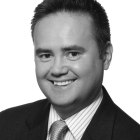
In a June 6 speech before the Center for American Progress and the Century Foundation, United Nations Deputy Secretary-General Mark Malloch Brown gave voice to the displeasure of many at the United Nations over the U.S. insistence that the world organization be dramatically reformed. In unprecedented criticism of the government of a member nation, Malloch Brown chastised the Bush Administration and previous U.S. administrations over their approach to the UN.
As noted by U.S. Ambassador to the United Nations John Bolton, Malloch Brown's New York speech "was a criticism of the American people" that implied that they lack judgment and are unwittingly subject to manipulation by UN "detractors such as Rush Limbaugh and Fox News." Malloch Brown chastised the Bush Administration because it has not sufficiently "highlighted" where the U.S. and the UN are "constructively engaged" and instead "abandoned" the topic to conservative sections of the U.S. media that promulgate "unchecked UN-bashing and stereotyping." What is needed in response, he declared, is for America's leaders to support the UN "not just in a whisper but in a coast to coast shout, that pushes back the critics domestically, and wins over the skeptics internationally." Ambassador Bolton rightly denounced the speech as "condescending and patronizing" and "a very serious affront" to the American people. Bolton called on UN Secretary-General Kofi Annan to repudiate his deputy's comments, which he called "the worst mistake" by a UN official in a quarter century.[1]
Malloch Brown's comments reinforce the need for the Bush Administration and Congress to press for broader U.N. reform. Indeed, it is the insistence of the Bush Administration and many in Congress that the U.N. undertake reform that is behind the bitterness evident in Malloch Brown's speech. He and others are not upset so much that the U.S. engages "fitfully" with the UN, but with the manner of its engagement. There is deep resentment over the willingness of American politicians to point out the evident flaws of the UN and demand that they be resolved.
It is wrong to define U.S. "leadership" in the UN as merely following others who have less of a commitment to reform. Instead of acquiescing to Malloch Brown's desire to see America's engagement limited to paying what the UN demands and supporting its edicts, the United States and its allies must increase their efforts to make the United Nations more accountable, effective, and transparent. On the horizon is a showdown with developing countries that have blocked reform and are threatening to approve the U.N. budget over the objections of the U.S. and the other major donors that capped the budget as an incentive for reform. The Bush Administration and Congress should oppose authorizing the remaining UN budget until the General Assembly approves the Secretary-General's reform measures; if an increased UN regular budget is approved over the objection of the U.S., the U.S. should withhold funding for the United Nations.
UN Intervention in U.S. Politics
In his speech, Malloch Brown warned of the "serious consequences of a decades-long tendency by U.S. Administrations of both parties to engage only fitfully with the UN" and condemned "the prevailing practice of seeking to use the UN almost by stealth as a diplomatic tool while failing to stand up for it against its domestic critics."[2] He singled out for particular criticism Washington's decision to opt out of joining the new UN Human Rights Council, despite that it is not a significant improvement over the hugely discredited Human Rights Commission.[3]
The speech was also an extraordinary intervention in domestic American politics. In what can only be described as the first political stump speech made by an international civil servant on U.S. soil in a critical U.S. election year, Malloch Brown rallied his largely Democratic audience[4] with these stirring words:
Back in Franklin and Eleanor Roosevelt's day building a strong, effective UN that could play this kind of role was a bipartisan enterprise, with the likes of Arthur Vandenberg and John Foster Dulles joining Democrats to support the new body. Who are their successors in American politics? Who will campaign in 2008 for a new multilateral national security?[5]
Malloch Brown's controversial speech is part of a growing trend towards intervention in U.S. political affairs by UN officials. Kofi Annan sparked a major controversy in September 2004, just weeks ahead of the U.S. presidential election, when he described the war with Iraq as an "illegal" violation of the UN Charter in an interview with the BBC.[6] Annan followed these remarks with a further intervention on the Iraq issue in November 2004, when he wrote a letter to U.S., British, and Iraqi leaders appealing for Coalition forces to hold back from retaking the insurgent-held city of Fallujah.[7]
More recently, the Secretary-General tried to influence the American political debate on immigration in a June 5 editorial for The Wall Street Journal.[8] Although it eschewed specific mention of the United States, Annan's article, as well as the release of new UN research on migration, was timed for maximum impact on the immigration issue and arrived just as the House and Senate were working to reconcile major immigration legislation. Such interventions are inappropriate for UN officials and should be rebuffed by both political parties as improper intervention in U.S. domestic politics.
The UN Budget Crisis
The central theme of Malloch Brown's speech, however, deserves closer scrutiny because it gets to the central dispute between those who wish the UN to be fundamentally reformed in the near future and those who prefer the status quo or eschew forceful reform efforts. A key element in Mark Malloch Brown's speech was his insistence that the rest of the world sees the U.S. as hostile to the UN, and "the big stick of financial withholding [has] come to define an unhappy marriage" between the organization and the U.S.[9] The statement is not a coincidence. Looming on the horizon is a major confrontation between the United States, Japan, Britain, and other key UN contributors and the G-77 group of 132 developing nations over whether to approve the remaining UN budget despite lack of progress on reforms-many of which were called for by the Secretary-General himself.
In the wake of numerous UN scandals, the U.S. and other major donors have worked to reform the UN Secretariat. Last fall the General Assembly approved a broad reform agenda and asked the Secretary-General to submit detailed reform proposals. To put teeth behind the reform effort, the U.S. led a campaign to cap the UN assessed regular budget at $950 million, with the remaining budget to be authorized if the reforms are adopted. Annan's reform proposals were, however, blocked in the General Assembly in May by an overwhelming majority (121 to 50), thanks to opposition from the G-77.[10]
The United Nations is expected to exhaust this $950 million by the end of June, potentially prompting a shutdown of the world body. The United States and Japan, which together provide nearly 42 percent of the UN budget, are refusing to approve the rest of the UN budget unless the General Assembly passes the reform proposals. Ambassador Bolton has indicated that the U.S. might support a limited budget extension.[11]
Despite Bolton's compromise offer, Malloch Brown's speech placed blame for the budget impasse squarely on the United States:
It is not because most developing countries don't want reform… the vast majority is fully supportive of the principle of a better-run, more effective UN… unfortunately there is currently a perception among many otherwise quite moderate countries that anything the US supports must have a secret agenda aimed at either subordinating multilateral processes to Washington's ends or weakening the institutions, and therefore, put crudely, should be opposed without any real discussion of whether they make sense or not.[12]
In an interview with USA Today, Malloch Brown also criticized the style of Ambassador John Bolton, whose approach "has led to a naked power struggle where reforms are seen either as weakening or strengthening US control over the organization." Bolton, according to the UN official, is "a real force here, but in a way that provokes a lot of reaction and opposition from others… what you needed was an ambassador who would heal, not deepen rifts."[13] Bolton, by this view, has hindered reform efforts.
In truth, blame for the budget impasse lies at the feet of the opponents of UN reform, who collectively provide less UN funding than the U.S. does on its own. Approval of the budget past the $950 million cap was tied to progress on UN reform. By blocking reform, the G-77 instigated this crisis.
Congress Must Increase the Pressure
Brown's cure to the budget problem is as flawed as his diagnosis. He recommends "inside the tent diplomacy at the UN. No more take it or leave it, red-line demands thrown in without debate and engagement."[14] This strategy is a recipe for inaction. Most UN member states do not want reform and discussion is unlikely to change their position. History shows that substantial reform is best achieved through external pressure, such as financial withholding, or a shocking scandal, such as the Oil-for-Food debacle that helped spur the recent reform agenda.[15] Outside pressure from the U.S. Congress has been effective in spurring UN reform in the past and should be pursued, including updating the United Nations Reform Act of 2005 (H.R. 2745). Without outside pressure and financial incentives, the current reform effort- like past efforts-will fall short of the fundamental reforms needed to improve the UN's effectiveness.
Congress and the Administration should also act immediately to address the looming confrontation over the UN budget. For the past 20 years, the UN has operated under a tradition of adopting budgetary decisions only by consensus. This process was adopted under threat of U.S. financial withholding under the Kassebaum-Solomon Amendment.[16] A recent vote to approve a G-77 resolution to block and delay the reform proposals of the Secretary-General was the first major break with this consensus tradition in two decades. The G-77 is threatening to break the consensus tradition again in order to push the UN budget beyond the $950 million budget cap adopted last December. Abandoning the consensus process on budgetary matters would greatly weaken the influence of the major UN donors that pay the lion's share of the UN budget but constitute a small minority of the membership. To help prevent this from happening, Congress should pass an updated version of the Kassebaum-Solomon Amendment that would withhold 20 percent of the U.S. contribution to the UN regular budget if the membership adopts a budget over the objection of the United States.
Conclusion
Mark Malloch Brown's New York speech was an unwelcome intervention in American politics unworthy of a United Nations official. His remarks will reinforce negative perceptions- already strong following the Oil-for-Food and Congo peacekeeping sexual abuse scandals- of the UN among the American public , and make it harder for the United States to have a constructive working relationship with the UN's political bureaucracy in Turtle Bay.
Malloch Brown's speech underscores the need for Congress to maintain political pressure on the United Nations to undergo serious, far-reaching, and fundamental reform. As House International Relations Committee Chairman Henry Hyde noted, "linking US contributions to the UN with essential UN reforms is not 'unchecked UN-bashing and stereotyping,' but an effort to induce reforms that will allow the United Nations to serve its invaluable function."[17]
Long-term efforts to reform the UN should be complemented by immediate action to address the short-term budgetary crisis. Congress and the Administration should send a clear signal that they will not abide a return to unconstrained growth in UN budgets led by those bearing little financial responsibility. Any attempt to approve the UN budget over the objection of the U.S. should be met with immediate and significant withholding of funds.
Brett D. Schaefer is Jay Kingham Fellow in International Regulatory Affairs in, and Nile Gardiner, Ph.D., is Director of, the Margaret Thatcher Center for Freedom in the Kathryn and Shelby Cullom Davis Institute for International Studies.
[1] "UN Official's Remarks a 'Grave Mistake,' U.S.'s Bolton Says," State Department Documents and Publications, June 7, 2006.
[2] Mark Malloch Brown, "Power and Superpower: Global Leadership in the 21st Century," address to the Century Foundation and Center for American Progress, New York, June 6, 2006, at http://www.un.org/News/Press/docs/2006/
dsgsm287.doc.htm.
[3] See Brett Schaefer and Nile Gardiner Ph.D., "The Right Decision on the UN Human Rights Council," Heritage Foundation WebMemo No. 1031, April 6, 2006, at http://www.heritage.org/Research/International
Organizations/wm1031.cfm.
[4] The audience included former secretary of state Madeleine Albright, as well as Democrat financial George Soros, who also happens to be Mark Malloch Brown's landlord. See "Losing the United Nations," The New York Sun, June 8, 2006.
[5] Malloch Brown, "Power and Superpower: Global Leadership in the 21st Century."
[6] See James Phillips and Nile Gardiner Ph.D., "Kofi Annan's Iraq Blunder," Heritage Foundation WebMemo #567, September 17, 2004, at http://www.heritage.org/Research/International
Organizations/wm567.cfm.
[7] See Nile Gardiner Ph.D., "The UN's Fallujah Folly," Heritage Foundation WebMemo No. 605, November 8, 2004, at http://www.heritage.org/Research/International
Organizations/wm605.cfm.
[8] Kofi Annan, "In Praise of Migration," The Wall Street Journal, June 5, 2006.
[9] Malloch Brown, "Power and Superpower: Global Leadership in the 21st Century."
[10]Press release, "Acting on Budget Committee Recommendations, General Assembly Adopts Text on Management Reform Proposals by Vote of 121-50-2," GA/10458, U.N. General Assembly, Department of Public Information, May 8, 2006, at http://www.un.org/News/Press/docs//2006/ga10458.doc.htm
[11] Paul Taylor, "U.N. risks shutdown over U.S. budget cap - Tharoor," Reuters India, June 7, 2006, at http://in.today.reuters.com/news/NewsArticle.aspx?type=topNews&storyID=2006-06-07T011008Z_01_NOOTR_RTRJONC_0_India-253109-1.xml.
[12] Ibid.
[13] Quoted by Barbara Slavin, "Bolton Struggles to Steer UN Toward Change," USA Today, June 8, 2006.
[14] Malloch Brown, "Power and Superpower: Global Leadership in the 21st Century."
[15] Brett D. Schaefer, "A Progress Report on U.N. Reform," Heritage Foundation Backgrounder No. 1937, May 19, 2006, at http://www.heritage.org/Research/International
Organizations/bg1937.cfm.
[16] The Kassebaum-Solomon amendment to the Foreign Relations Authorization Act for fiscal year (FY) 1986 and FY 1987 was adopted in response to the increasing politicization of U.N. operations and programs and the organization's rapidly increasing budgets. The United States and other Western countries sought unsuccessfully to hold the U.N. to a zero growth budget in the first half of the 1980s. This frustration led Congress to adopt the 1985 Kassebaum-Solomon amendment, which withheld 20 percent of U.S. assessed contributions to the U.N. regular budget and specialized agencies until weighted voting on budgetary matters was adopted. Weighted voting was not adopted, but the U.N. did agree in 1986 to the consensus-based budgeting process as an informal rule.
[17] Press statement by Chairman Henry Hyde (R-IL), June 7, 2006.