

Introduction
America’s armed forces are facing a convergence of events that poses challenging questions for the future. Eight years of warfare in two theaters have understandably consumed the energy and institutional focus of the military services—particularly the U.S. Army and Marine Corps—and worn out equipment at a rate that will require considerable recapitalization. Furthermore, a robust defense requires a growing U.S. economy, but the economic recession has placed a tremendous burden on the federal government and taxpayers, swelling the chorus of voices calling for cutting the defense budget to pay for domestic initiatives. Many policymakers are searching for another peace dividend, which simply does not exist. Finally, President Barack Obama and Congress have openly committed to change the course of American foreign and defense policy.
The U.S. military’s grueling counterterrorism and counterinsurgency operations in this decade have focused the Pentagon’s attention on near-term priorities of winning in Iraq and Afghanistan, training for counterinsurgency, shifting a majority of stateside equipment to Central Command, using the Guard and Reserves as operational forces, dramatically increasing the pay and benefits of servicemembers and their families, and reforming the acquisition process to field platforms more quickly. The military’s enhanced proficiency in irregular warfare—especially given that the U.S. shed these capabilities after the Vietnam War—is a welcome contribution to building a force capable of the full spectrum of military missions. However, the unpredictable international security environment and the long-term planning necessary to field new weapons systems require a military capable of accomplishing a number of broadly defined objectives. These include a Navy that can project power through the maritime domain, an Air Force that can control the skies, an uninterrupted global logistics network, and appropriately sized U.S. ground forces that are sufficiently trained and equipped for both conventional and irregular warfare missions.
The Battle of the Defense Budget
The level of spending required to perform a broad range of missions will require steady, robust funding for several years. Predictable levels of defense spending will allow the military to reset, rebuild, and modernize arsenals and train forces for all types of warfare. However, forcing the military to make unnecessary trade-offs, accepting too much risk, assuming that potential threats will never materialize, or not reducing global military commitments in line with changes in defense strategy could ultimately produce a hollow force that is unready, unable, or too small to fulfill its operational demands or that is at a technological disadvantage on the battlefield.
The current global economic downturn has prompted many to observe that it is somehow necessary to reduce spending. Regrettably, the U.S. defense budget is typically the first target of budget cuts to free funding for domestic programs. Declarations that “tough choices” will be needed on military procurement in the coming years are widespread. Even Secretary of Defense Robert Gates reiterated this mandate during recent testimony before Congress.[1] He then followed through with this mandate by proposing a number of significant procurement changes within the defense budget next year.[2]
Modernizing Military Compensation
Instead of discussing what the military can do without—sacrifices that are often paid with life and limb—the debate over hard choices should focus on the unsustainable costs of the military’s archaic compensation system. Restructuring how Congress pays the military to make it more cost-effective and responsive to the needs of today’s highly mobile workforce would produce significant cost savings for the military. It would also enhance the ability of the all-volunteer force to recruit and retain the most talented individuals the nation has to offer.
Congress should promote the principles of choice and flexibility for military benefits, particularly health care and retirement. Congress should begin by launching a five-year pilot program to replace some current in-kind benefits with cash as proposed by the Tenth Quadrennial Review of Military Compensation. Congress should mandate that the Pentagon report on ways to focus the TRICARE military health care system more on prevention and adopt civilian practices such as an open enrollment period. These types of reforms would help to stabilize and ultimately reduce overall personnel costs. Dollars freed within the defense budget should immediately be reinvested, specifically for modernization.
Reforming Defense Acquisition
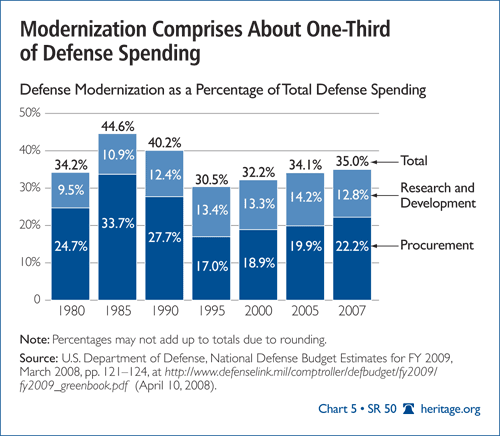
While defense acquisition reform is popular in theory, the sheer size and scope of defense acquisition will make reform difficult unless it is broken down into manageable pieces. First, Congress needs to learn to abstain from typical risk-averse behavior patterns. Members of Congress have often given in to the temptation to overregulate the defense market, which contributes to cost overruns and often inhibits small businesses from breaking into the defense market. Funding a robust procurement account will allow for higher build rates, which will stimulate contractor competition, increase per-unit savings, and provide a steady workload for the nation’s defense industrial base. Congress should also restore the balance between research and development (R&D) and procurement to provide incentives for contractors to push programs into the hands of the military.
Pentagon leaders should work to shorten the contract bidding process and to create an enduring template for producing simple acquisition criteria to reduce the number of protests. As it grows, the defense acquisition workforce must bolster its systems engineering capabilities within buying divisions to reduce reliance on contractors. Finally, Congress should carefully review and approve ways to allow defense contractors to broaden their base of customers abroad, which will reduce costs to the U.S. military and bolster interoperability among allies.
Reforming Entitlements
Finally, the runaway spending on mandatory entitlements (primarily Social Security, Medicare, and Medicaid) threatens to consume all federal revenues and crowd out the defense budget if left unchecked. Although not politically popular, reforming these programs to limit their growth is one of the real “tough choices” that Congress needs to make.
In addition to reforming defense programs and entitlements, Congress needs to spend the defense budget more wisely. One popular proposal for saving money and reducing the defense budget is to root out all supposed fraud, waste, and abuse in defense spending. However, the level of fraud, waste, and abuse has historically been relatively modest compared to total defense spending. Nevertheless, government leaders should take every responsible measure to use tax dollars wisely in providing the best support for the military. Areas in need of reform include private contracting in combat zones and the unnecessary use of emergency supplementals to fund operations that have predictable sizes and scopes. Better addressing fraud, waste, and abuse will require sufficient funding to hire and properly train an adequate acquisition workforce that can manage the number and complexity of defense contracts.
Preparing the Military for the Future
In the coming years, decisions on America’s global military commitments, defense requirements, and the size and scope of the defense budget will largely determine whether America’s military will be prepared for the challenges ahead. As history has shown repeatedly, the effects of defense policy decisions—good and bad—reverberate for decades after the policymakers and Pentagon political appointees have left office.
Future Force: What a Sustained Defense Investment Buys America
The Constitution directs the federal government to provide for the common defense of the nation. The U.S. armed forces are a core means to achieving this end. Any discussion defining the future force should be rooted in the past and reflect the principles that define the U.S. military’s purpose and responsibilities. Their primary task is to protect the nation’s vital national interests. These interests have proven remarkably consistent and enduring over time, despite a threat environment that changes from generation to generation. They include:
- Defending against and deterring strategic attacks on the U.S., including its people, territory, institutions, and infrastructure;
- Protecting Americans against threats to their lives and well-being, short of strategic attacks;
- Preventing the rise of a dominant hostile power in East Asia, Europe, or the Persian Gulf;
- Preserving U.S. security interests in the Western Hemisphere;
- Maintaining access to foreign trade; and
- Retaining unencumbered access to resources.[3]
To protect these interests, U.S. military forces will need to:
- Build a robust complement of capabilities for the spectrum of missions that the armed forces will face,
- Receive adequate funding for ongoing operations,
- Maintain a trained and ready all-volunteer force,
- Prepare for the future, and
- Fundamentally reform military compensation and procurement policies.
The rules for where, when, and how America’s forces should be employed have also remained consistent. Because securing U.S. national interests inevitably places America’s servicemembers in harm’s way, any proposed military intervention should be measured against these battle-tested criteria.[4] Specifically, military intervention should:
- Defend national security interests;
- Not jeopardize the ability of the U.S. to meet more important security commitments;
- Strive to achieve military goals that are clearly defined, decisive, attainable, and sustainable;
- Enjoy congressional and public support; and
- Permit the armed forces to create the conditions for success.
These principles and criteria help to define what the U.S. military is required to do and how the military should be used. They are also a blueprint for the kind of military that the nation will need in the decades ahead.
Spectrum of Challenges and Responsibilities
Establishing a military that has the capabilities and capacity to perform all of its missions—from supporting the home front to intervening overseas and winning the peace to dealing with a variety of terrorist threats to defending against ballistic missiles and cyber attacks—requires a President and a Congress that are willing to prepare, field, and sustain the force to protect America.
The demands placed on America’s armed forces since the end of the Cold War have been as numerous as they are varied. In 1990–1991, the military pushed Saddam Hussein’s Iraqi forces out of Kuwait. Throughout the 1990s, the Army and Marine Corps were ordered to undertake numerous humanitarian and peacekeeping missions in places such as Somalia, Haiti, Bosnia, and Kosovo. Meanwhile the U.S. Air Force engaged in continuous operations to enforce Iraq’s no-fly zones.
Following 9/11, the U.S. military was directed to undertake a global counterterrorism mission, eliminating Islamist militant networks and the states that sponsored or harbored them. In places such as Afghanistan and Iraq, this mission also required the military to protect and build the capacity of nascent democratic governments. While undertaking these counterinsurgency operations, the military was also tasked with reorganizing for emerging threats. Significant numbers of Special Operations Forces have been deployed constantly since 2001 to train local military personnel and to conduct counterterrorism and counternarcotics missions in the Philippines, Colombia, Pakistan, Somalia, and other countries. At the same time, the Navy and Air Force have assisted with the various irregular warfare missions, including maintaining a worldwide logistics chain and intelligence network to support ongoing operations, counter-piracy operations off the Horn of Africa, and counterproliferation efforts. Both services are also contributing tens of thousands of personnel to serve as ground forces in Iraq and Afghanistan. For example, the Air Force is running six Provincial Reconstruction Teams in Afghanistan.
In addition to current operations, the U.S. military remains committed to ensuring access to affordable petroleum for itself and the global economy, protecting Saudi Arabia, and balancing against the unpredictable and destabilizing actions of Iran. In the Pacific region, the United States remains the stalwart against various economically charged and historically contentious states. On the Korean Peninsula, the U.S. military continues to work with its South Korean allies, as it has for the past 50 years, as a bulwark against the aggressive ambitions of the Democratic People’s Republic of North Korea. The U.S. Navy has also worked to defuse tensions and preserve the status quo in the Taiwan Strait. As part of a broader strategy to hedge against the growing ambitions of China, the U.S. has reorganized its basing strategy throughout the region to ensure continued access for the Navy and Air Force.
Globally, the U.S. Navy, Coast Guard, and Marine Corps have upheld their mission of protecting the free flow of goods and services throughout the world’s vast oceans and archipelagos. Because U.S. economic growth is connected to the stability and prosperity of the global economy, the nation uses its naval capabilities to protect sea trade and to ensure that maritime assets can transit freely and safely. This mission is critical because 80 percent of international trade and 67 percent of petroleum is transported by sea, and one-quarter of global trade passes through the Strait of Malacca alone.
Finally, when humanitarian disaster strikes, a strong military enables policymakers to commit the unique and vast resources of the United States to assist the country in need, such as after the 2004 tsunami in the Indian Ocean and the devastating earthquake in Pakistan in 2005.[5]
Fundamental Building Blocks for National Defense
Establishing the right mix of military capabilities will be the military’s greatest challenge in the years ahead. The Pentagon needs to reconstitute its forces because eight years of intense combat operations have worn out equipment and personnel. The armed forces also need to prepare for the future without the luxury of focusing on a single enemy or particular type of conflict.
The sheer diversity of missions the military has been asked to carry out creates immense challenges for identifying the correct mix of needed future capabilities. Recent trends of focusing on irregular missions and counterinsurgency operations have led some to conclude that the future inevitably holds more of the same. Some have argued for adopting a “threats-based” approach, in which the military would recruit, train, and equip forces with an emphasis on the types of missions prevalent among current and anticipated military conflicts. Regrettably, the military does not have the luxury of focusing on one conflict, one region of the world, or one type of mission.
If history is any guide, the U.S. government’s ability to precisely or accurately anticipate emerging threats must be considered before shedding valuable national security capabilities. America’s intelligence community failed to anticipate the North Korean invasion of South Korea in 1950, the Soviet Union’s launch of the satellite Sputnik in 1957, the fall of the Berlin Wall, and the Russian invasion of Georgia in 2008, among other events. These failures are evidence of this trend.
The American strategist Colin Gray has observed how “fine minds, steeped in experience, can make the most appalling political, strategic, and technological misjudgments about the future.”[6] However, such blunders are not just reserved for American leaders. In February 1792, just months before Great Britain found itself engaged in 22 years of almost constant warfare with France, British Prime Minister William Pitt remarked that “unquestionably there never was a time in the history of this country when, from the situation in Europe, we might more reasonably expect fifteen years of peace, than we may at the present moment.”[7]
In many cases, unforeseen events that transpired in a matter of days or weeks have had lasting effects on the international system, rapidly restructuring the global balance of power and ideas in new and unimagined directions. When President Ronald Reagan invested in developing the F-117 stealth fighter in the 1980s to balance against the Soviet military, he did not anticipate that the aircraft would be used to wage war in the Middle East against Saddam Hussein in 1991 or drop munitions during the Kosovo War in 1999. Similarly, when President Bill Clinton reduced the size of the Army and Marine Corps in the 1990s as part of an anticipated peace dividend, no one foresaw the increasing demands that would be placed on America’s land forces after 9/11.
Representative Ike Skelton (D–MO), chairman of the House Armed Services Committee, has identified one dozen “‘contingencies’ since 1977 that required a U.S. military response—four of them major operations and none of which were anticipated.” He argues that the U.S. needs a balanced military force that is equally prepared for conventional and irregular warfare.[8]
Not every potential threat can be predicted, and acquiring the manpower and weapons for a strong military is a time-consuming task. World events and strategy changes move much more quickly than force structure can be built. Building a Navy suited to operate in the littorals or training an officer corps in irregular warfare and counterinsurgency typically takes a generation. Designing, testing, and fielding one new platform—such as the F-22 fighter, B-2 bomber, or DDG-1000 Zumwalt-class destroyer—takes years and often decades.
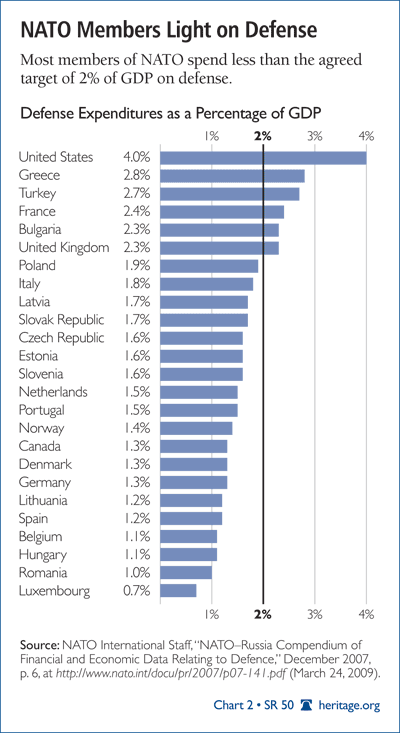
Recognizing these difficulties, some observers insist that a partial solution to planning for the future and reducing the defense budget lies in increasing the burden shared by U.S. allies. America’s allies should assume a greater burden. If they do, the United States could safely adjust the defense budget downward. However, that day is not yet on the horizon. The U.S. should not let the remote possibility that its allies will suddenly begin pulling their own weight become an excuse to continue underfunding the needs of its military. In fact, U.S. decisions to reduce its budget would likely encourage its allies to undertake another round of defense cuts. As Representative Skelton has aptly stated, “To depend on allies to carry out our strategy is the height of folly. At the very least, dependence on allies may force us to limit our strategic goals or make us hesitant to act.”[9] In terms of meeting the overall military needs of the free world, the United States will have to lead by example.
Maintaining a balanced military necessitates an approach that aims to acquire a host of core capabilities to fulfill specific and broadly applied tasks that meet the myriad challenges the military may face.[10] The forthcoming Quadrennial Defense Review (QDR) strategy should define the essential programmatic building blocks of the overall defense structure and the resources needed to maintain and, where necessary, create these building blocks. After seeing the Obama budget blueprint for fiscal year (FY) 2010, Chairman Skelton has counseled moderation in cutting modernization and procurement funding for weapons and equipment. He astutely noted that many weapons in the military’s inventory today are still of use, even if they were developed during the Cold War. “[I]f the military encountered a more traditional force-on-force conflict, troops would need the same type of equipment that would have been required to fight in South Korea or the Fulda Gap, the most likely corridor through which Russian forces would attack in Europe.”[11]
Building Block #1: Strategic defense and deterrence
U.S. strategic forces should protect and defend the peoples, territories, infrastructure, and institutions of the U.S. and its allies against attack. They should do so by dissuading potential enemies from obtaining weapons of mass destruction and the means to deliver them. Where nonproliferation efforts fail, they should deter these enemies from using such weapons, defend against any attempted attacks, and use strategies of resiliency to blunt the impact of attacks that penetrate the defenses.
The broader U.S. strategic posture should be tied to specific targeting requirements and a target set. The overall mix of U.S. offensive and defensive forces and capabilities would fall into three baskets: offensive strategic nuclear forces, offensive strategic conventional forces (frequently referred to as prompt global strike), and defenses. These could include:
- Nuclear-armed intercontinental ballistic missiles (ICBMs);
- Conventionally armed long-range and short-range ballistic missiles;
- Nuclear-armed submarine-launched ballistic missiles (SLBMs);
- Conventionally armed SLBMs;
- Conventionally armed sea-based cruise missiles;
- Nuclear-armed sea-based cruise missiles;
- Bombers armed with conventional bombs and cruise missiles;
- Bombers armed with nuclear bombs and cruise missiles;
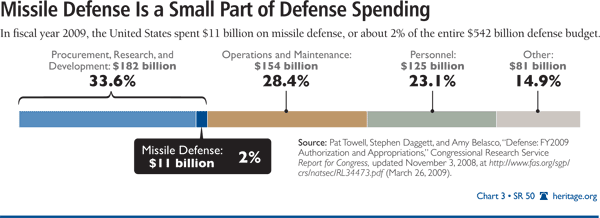
- Ballistic missile defenses;
- Cruise missile defenses;
- Air defenses;
- Counterterrorism defenses; and
- Civil defenses.
Building Block #2: Seizing and holding territory against organized ground forces
The Cold War and the post–Cold War period should remind policymakers of the high likelihood that, within the next 20 years, U.S. ground forces will face an enemy state’s army in a land conflict of significant size and duration. At that time, U.S. ground forces will need to be capable of seizing and holding territory against such an army. This means that the U.S. Army in particular must have heavy forces to accompany the light infantry, airborne, and special operations units.
In terms of acquisition programs for heavy ground combat, the Army will need to obtain the next generation of wheeled and tracked armored vehicles represented by Stryker brigades and the Future Combat Systems (FCS). It will also need to field air and missile defense capabilities organically with its forces through the Patriot and Terminal High Altitude Area Defense systems.
Building Block #3: Counterinsurgency capabilities
America’s post–Cold War enemies have sought to offset the Army’s firepower advantage by avoiding direct engagement in an effort to prolong the conflict long enough to avoid losing.
Since 2001, the United States has fought successive waves of non-state groups that operate asymmetrically as dispersed networks rather than as traditional military forces. Israel’s experience with Hezbollah shows the growing sophistication of the asymmetric threat to the West. Many military commanders argue that the Hezbollah insurgency exhibited greater planning and forethought than the Iraqi insurgency.
History continues to show that U.S. ground forces will need to remain institutionally proficient in conducting counterinsurgency operations. Maintaining counterinsurgency skills is as much about applying doctrine as how the ground forces are structured, trained, and equipped. Counterinsurgency education and training should focus on Army and Marine infantry forces. Both will need systems that permit them to mingle with civilian populations and occupy the same space as insurgent forces. The array of intelligence, surveillance, and reconnaissance capabilities included in the Army’s FCS program should offer potential advantages in this area.
Building Block #4: Growing and modernizing the Reserve Component
Congress should consider mandating the Department of Defense to retain units appropriate to post-conflict tasks after major combat operations in Iraq and Afghanistan subside. This could be achieved by:
- Training and equipping allies to perform these duties,
- Retraining and reorganizing U.S. combat forces, and
- Maintaining unique U.S. post-conflict forces.
Special post-conflict units could be assembled from existing National Guard and Reserve units, including security, medical, engineer, and public affairs commands. Since many responsibilities involved in postwar duties are similar to homeland security and homeland defense missions, these forces could perform double duty. The active and Reserve components should better plan and program together to synchronize modernization investments and to avoid redundant capabilities. Active component modernization programs should be vigorously reviewed and altered to ensure that they meet Reserve component requirements.
Building Block #5: Special Operations Forces
An important element of success in ongoing and future operations will be finding and capturing or eliminating those that believe in violent extremism and use terrorism as a tool. Given that these enemy forces are organized into widely dispersed small cells, U.S. Special Operations Forces are ideally suited for counterterrorism missions. Special Operations units also fulfill vital roles in supporting larger-scale military operations by operating behind enemy lines.
However, these elite forces can do more than just kill or capture. Training and equipping foreign militaries to avoid future conflicts continues to be a critical Special Operations mission. Since 9/11, the U.S. has worked diligently to train and equip foreign militaries in counterterrorism and other military and stability operations. Both U.S. Southern Command and U.S. Africa Command have made building partnerships and enhancing strategic cooperation central pillars of their missions. These initiatives also help to prevent conflict by strengthening respect for civil– military relations.
Building Block #6: Air superiority
Achieving and maintaining control of the skies above joint forces on the ground and at sea is a trademark of the U.S. military and should remain so. The U.S. has maintained this building block by acquiring the world’s most sophisticated aircraft and manning them with the best pilots. Continuing this dominance will require sound decisions about purchasing the right mix of next-generation F-35 and F-22 fighter aircraft.
In the future, air superiority will increasingly be about acquiring the world’s best unmanned combat aerial vehicles (UCAVs). While UCAVs should not replace manned combat aircraft, they will assume greater responsibilities. Both the Air Force and the Navy should continue to explore options for employing UCAVs in a variety of combat missions, including:
- Suppression of enemy air defenses,
- Counternarcotics,
- Attack missions,
- Air-to-air self defense, and
- Boost-phase missile defense in concert with the Network Centric Airborne Defense Element (NCADE) system.
Building Block #7: Long-range bombing
Long-range bombers, particularly those capable of delivering nuclear weapons, make a vital contribution to strategic defense and deterrence. In conventional conflicts, these platforms are essential to delivering ordnance against enemy targets throughout the world. Amazingly, the Air Force continues to rely on the B-52 as the backbone of its conventional long-range bomber force. As of September 2007, the average bomber (including B-1Bs and B-2s) on active duty was almost 32 years old, and this average age will likely reach 40 years before a new bomber is fielded.
Technological advancements and proliferation of global air defense systems in the past decade are making the B-52 more vulnerable. The Air Force’s 2007 white paper on long-range strike also highlighted this dilemma stating, “The B-1 and B-52 are not survivable under the 2015–2020 expected threat picture.”[12] While the last QDR was instrumental in initiating the process to acquire a new bomber, this capability will be lost without reinvestment.[13]
Building Block #8: Projecting power through the maritime domain
The U.S. Navy’s primary responsibility is to defend freedom of the high seas, including protecting sea lines of communications. It shares responsibility with the Marine Corps for projecting power from ship to shore in the littorals. The Navy should retain a robust blue-water capability by maintaining a balance of major surface and subsurface combatants, including aircraft carriers, cruisers, destroyers, and attack submarines.[14] The most prominent capabilities of this cornerstone fleet will remain:
- Controlling the surface of the oceans in broad areas,
- Controlling the air space over these areas, and
- Conducting anti-submarine warfare.
These capabilities enable the U.S. to project military power to distant regions, including Asia, Europe, and the Middle East. They also permit the U.S. to protect vital trade routes. Once the Navy has established a forward presence in distant littoral areas—permitted by its blue-water capabilities—it should partner with the Marine Corps to project power from ship to shore. This will require further balancing the fleet to include amphibious ships, with supporting aviation systems, landing craft, littoral combat ships, minesweepers, and maritime prepositioned assets beyond those required for the blue-water fleet.
Building Block #9: Space access and denial
The U.S. heavily depends on space-based systems to support military operations and the economy. This dependence has evolved into a national vulnerability as states look to offset their military deficiencies with asymmetric strategies. The Pentagon needs to take steps to reduce the vulnerability of its space-based systems and assume the role of guardian of the space-based systems owned and operated by private-sector merchants.
Achieving this will require:
- Robust situational awareness that permits the U.S. military to identify satellites in orbit and better understand their purposes;
- Fielding operationally responsive space systems to increase the resiliency of satellite networks by permitting the rapid replacement of satellites that are damaged or destroyed by natural causes or enemy attack; and
- Offensive and defensive counterspace systems.
Building Block #10: Deterring, protecting, denying, and attacking in cyberspace
Modern warfare increasingly depends on advanced computers, and no nation’s armed forces are more reliant on cyberspace for information superiority than the U.S. military. The requirements for structuring, manning, equipping, and training U.S. cyber forces are still not well understood. The military needs to affirm the military mission of guaranteeing U.S. access to cyberspace and denying access to those that would launch cyber attacks against the U.S. or its allies. The appropriate service should be tasked with developing the necessary operational concepts, trained forces, and equipment to fulfill this mission effectively. To improve U.S. capabilities, this lead service should look for best practices both inside and outside of government, including the private sector’s cutting-edge capabilities.
The military needs a risk-based approach to counter the cyber threat, including an assessment of criticality, threat, and vulnerability. Defense officials also need to implement measures to reduce risk efficiently and effectively. This knowledge and leadership can be developed by establishing effective interagency programs for the professional development of cyber skills through education, assignment, and accreditation.
Building Block #11: Global logistics
To meet U.S. global interests and defense responsibilities, the military must have a logistical infrastructure to support worldwide operations. This infrastructure includes airlift, sealift, prepositioned maritime assets, and military installations and forward operating bases overseas.
The C-17 and C-5 are the backbone of the U.S. strategic airlift. However, with the C-17 production line shutting down in 2010 and the outcome of the next-generation KC-X tanker still undetermined, the reliability of strategic airlift is in some doubt. Fully stocked weapons reserves can help to hedge against future contingencies. Prepositioning military supplies and equipment aboard ships in strategic areas and U.S. sealift capabilities guarantee the availability of needed equipment in the event of a major theater war, a humanitarian crisis, or other incident requiring a military presence. A worldwide information and communications system to manage the broader logistical system is also critical.
Sustaining the Force
Americans are often surprised to learn that federal defense spending is relatively modest by historical standards. While Americans are firmly committed to maintaining a strong national defense, they often defer to their Congressmen to reflect their views and take appropriate action. Regrettably, uncertainty about the stability of the economy has prompted some Members of Congress to call for reducing the defense budget, even though the Joint Chiefs have told them that war-related bills will continue to come due for two to three years after major combat operations subside.
Congress can provide adequately for national security by making a firm commitment to provide enough funding to build and maintain the basic military building blocks. Many of these capabilities must be acquired through next-generation equipment that is not yet in the hands of the military. Under current and future budget projections, the services are scheduled to field new platforms that will anchor U.S. security for the next generation. Even in trying economic times, America can afford the necessary upgrades.
The President and Congress should commit to providing for the nation’s defense. They should not arbitrarily cut the defense budget without a sound fiscal policy, thoughtful strategic defense review, and tangible reductions in global military commitments and operations.
Defense Reform Agenda: Tackling the Genuine “Hard Choices”
In today’s economic environment, it is often stipulated that the military must make “tough choices” about which equipment and weapons systems it can afford to buy. Yet such statements seem absurd amid the flurry of recent government spending and vast expansion of domestic programs. The real concern is that a discussion of tough choices for the military leads to the misunderstanding that the United States can afford to take risks by placing high-stakes bets on what the future might hold. This is a faulty and dangerous assumption.
If Congress is interested in making hard choices—real decisions that strengthen the military and save money in the process—it should focus on reforming the military’s compensation system, improving how Congress participates as a customer in the defense acquisition process, and restructuring federal entitlement programs.
Changing How America Pays the Military
Over the past 60 years, the military pay structure has remained virtually unchanged, even after the U.S. military became an all-volunteer force in 1973. America continues to pay its soldiers primarily according to a one-size-fits-all approach, in which longevity of service is the key determinant of servicemembers’ salaries. This method hurts military recruiting and retention and is largely unresponsive to the needs of today’s highly mobile workforce.
More importantly, the unsustainable and unaffordable trajectory of the military’s compensation system threatens to absorb an increasing portion of the defense budget. If the defense budget remains constant or, worse, declines, this will force cuts in procurement. Major cuts or weapons systems cancellations will ultimately reduce the defense industrial base precisely when this highly skilled workforce should be maintained.
To maintain its professional and capable all-volunteer force, the military needs to modernize its salary system to provide more cash up front. Health care and retirement benefits should be restructured to promote greater choice and flexibility for servicemembers and their families.
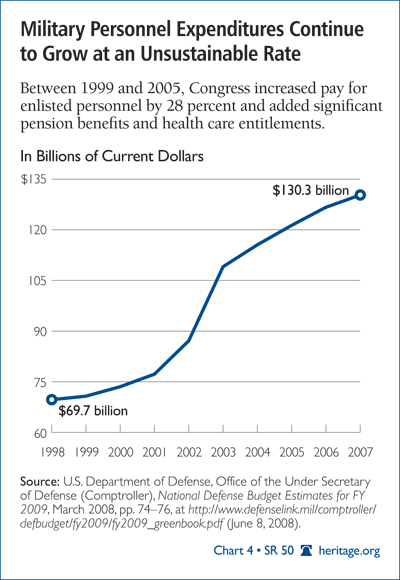
Cash Is King. Compensation to servicemembers is too heavily skewed toward non-cash and deferred benefits. These long-term benefits are valuable only to those who serve 20 years or more. Furthermore, retirement benefits and other deferred benefits do little to entice potential young soldiers, sailors, airmen, or Marines who have no plans to serve in the military longer than one or two four-year enlistment tours. Up-front cash benefits are undoubtedly more effective for recruiting and retention, not only because the value of non-cash benefits is not easily recognized, but also because a system that favors cash would enhance the freedom of each servicemember to decide how best to use those benefits, thus increasing their value.[15]
Moving toward a system that favors cash over deferred benefits will also help to attract recruits who want to serve without making the military a career and are less influenced by the alleged lure of in-kind benefits. Given that younger servicemembers generally value retirement benefits less than the government spends to provide those benefits, cash benefits are more cost-effective for the military.
Such a system would also portray military salaries more accurately. Those in uniform often compare their pay stubs with those of their civilian counterparts. Because military compensation is provided in more than a dozen forms, of which only one is cash, troops often receive the false impression that they are underpaid.
“Rucksack of Benefits.” To be flexible, a new military pay system should adapt to the well-trained and mobile American workforce. The men and women in the military expect to decide when and how to invest their time and skills. Thus, a pay structure tailored to the needs of the modern workforce will attract the most qualified candidates to military service.
The best model for this is what the Pentagon calls a “continuum of service.” Endorsed by both the 2006 Quadrennial Defense Review and the Commission on the National Guard and Reserves, this system would eliminate barriers to moving between active status and reserve status, allowing troops more flexibility to move among the military components and the private sector. In addition to increasing the attractiveness of a military career, the Pentagon would gain more direct access to people with critical skills who would normally stay in the civilian workforce.
Consistent with the flexibility of the continuum model, the Pentagon needs to be able to offer each servicemember a package of benefits that is fully portable as they move among active, Guard, Reserve, federal government civilian, and private-sector positions. This should begin with overhauling the military health care and military retirement systems. Specifically, Congress should:
- Launch a multi-year pilot program to shift new enlistees to a defined-contribution health care system. This would allow uniformed personnel to remain under the same health care system as they move from job to job, with each employer—government or private—contributing to their plans. This approach would increase personal flexibility, place more decision-making responsibility in the hands of the individual, and control costs more effectively.
- Eliminate TRICARE copayments for preventative services to promote prevention. As proposed in the Tenth Quadrennial Review of Military Compensation, Congress should eliminate copayments for preventative services. This would “encourage enrollees to seek out such care, improve their health status, and reduce their overall health care costs.”[16] The report also recommended reducing government health care costs by mandating that military retirees and their dependents enroll in TRICARE only during a designated annual enrollment period.[17]
- Adjust the current retirement plan to begin vesting at 10 years of service in which the military contributes annually to a servicemember’s retirement account. [18] Under the current system, people that leave active duty before completing 20 years do not receive any retirement pay. This is antithetical to the recruiting and retention demands of today’s military and the modern workforce and stymies commander flexibility. Troops should have lifetime retirement plans that are portable and that can absorb contributions from the military and the private sector as well as portions of their Social Security taxes. Any new plan should also allow servicemembers to bequeath accumulated retirement assets to their heirs upon their death without paying estate taxes. Congress should also consider separation pay for those who leave service and consolidating current pay bands. Separation pay would allow defense officials and military leaders to better tailor the force mix and skill sets to meet emerging requirements and missions.
Weapons Acquisition Reform
The cost overruns that plague the defense acquisition process are no secret, and everyone has a solution. However, some perspective is needed: Other than a dozen or so major programs continually discussed in the news, the vast majority of defense acquisitions are going very well. While Secretary Gates has launched a major restructuring of the Pentagon’s acquisition priorities as part of this year’s defense budget, cutting programs and shifting personnel costs into the base budget alone will not change how the military actually buys equipment. Congress should be concerned these cuts are also Pentagon-led, coming long before the White House has issued its National Security Strategy. Defense policy should be subordinate to foreign policy.
The U.S. military tail should not wag the global strategy dog, yet that is precisely what is occurring. Congress can and should have a much larger say as part of this debate. Members of Congress need to carefully examine the assumptions that the Pentagon used to justify many recent procurement decisions and reject those that assume too much risk. Secretary Gates has said the U.S. is conventionally dominant in the medium term. Assuming this is defined by the next 10 to 15 years, military primacy beyond 2025 actually requires research and development to begin now. Early funding for a major program in 2010 typically means that the ship, tank, or plane is at least a decade away from deployment.
Part of the problem plaguing the defense acquisition process is the overstudy and overanalysis of the problem. Often, stricter oversight or simply enforcing current policies and laws would make weapons systems more affordable. Congress has already addressed and is fixing some of the problems, including expanding the government acquisition workforce, which was decimated over the past decade. Inadequate oversight by the skeletal acquisition workforce is the cause of many current acquisition problems, including the use of Lead Systems Integrators and the outsourcing of requirements generation for the military services. The civilian and military acquisition workforces had almost no choice but to outsource.
Updating the military’s acquisition process to reflect a capabilities-based force is overdue. Congress can begin this process by:
- Bolstering systems engineering teams within the acquisition buying divisions. Although some of this capacity has been restored since the downsizing of the 1990s, this process is not happening quickly enough.
- Keeping acquisition criteria simple. There is an urgent need to minimize acquisition criteria to reduce potential for further protests. When more flexibility is necessary—especially when a spiral development program can improve the value of a system—Congress could provide waivers as needed.
- Authorizing objective contracting in which competition may be allowed after qualification tests and production has begun. In objective contracting, price is the prime determinant following tests for qualification. Congress should seek to restore respect for the instant contract even if it means carrying competition well into the production phase if this option is affordable.[19]
Congress will also play a significant part in any acquisition reform. Congress should deregulate the defense market to help new suppliers enter the defense sector more easily, thereby increasing competition. Overhauling foreign export controls, such as International Traffic in Arms Regulations, will require congressional approval. Congress’s risk-averse behavior has also impeded legitimate approval of certain foreign military sales with allied variants, which would have helped the defense industrial base to broaden its base of customers abroad.
Congress, with its propensity to second-guess the Defense Department in program management and intervene in the acquisition process with funding restrictions and earmarks, is a major contributor to the problem.[20]
In testimony before the Senate Armed Services Committee, Secretary Gates outlined steps the Pentagon could take in the near term. Specifically, Congress needs to become a better customer and to manage cost overruns better by:
- Improving the overall efficiency and effectiveness of the defense acquisition system. This should begin with acknowledging that the procurement holiday during the 1990s was a mistake—a mistake from which the Defense Department is still trying to recover. Furthermore, as Secretary Gates has noted, increasing the defense modernization budget should increase the overall size of future buys and drive down unit costs.[21]
- Enabling the Defense Department to break free from the risk-averse behavior patterns that undermine innovation, slow the acquisition process, breed inefficiency, and contribute to cost overruns. Congress needs to resist the temptation to second-guess Defense Department procurement management or to intervene in the acquisition process with funding restrictions and earmarks. In addition, Congress should not conduct show hearings. Instead, Congress should only hold hearings that can reveal shortcomings in the acquisition process that will help to initiate legislative change.
- Resisting the tendency to overregulate. Overregulation has created entry barriers to the defense market. In conjunction with increasing the modernization budget, carefully deregulating the defense market would help new suppliers enter the defense sector and increase competition. More competition is the best way to improve efficiency in the acquisition system.
- Restoring a balance between R&D and procurement. Procurement should account for at least 60 percent of the R&D and procurement budget. This would provide incentives for contractors to push programs out of development and into the hands of the military.
Entitlement Reform
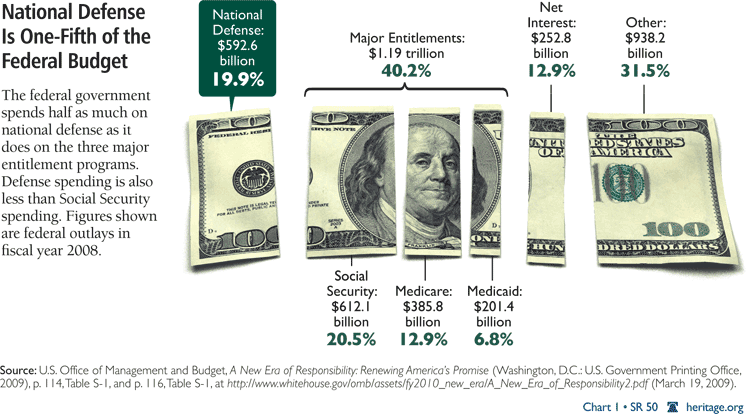
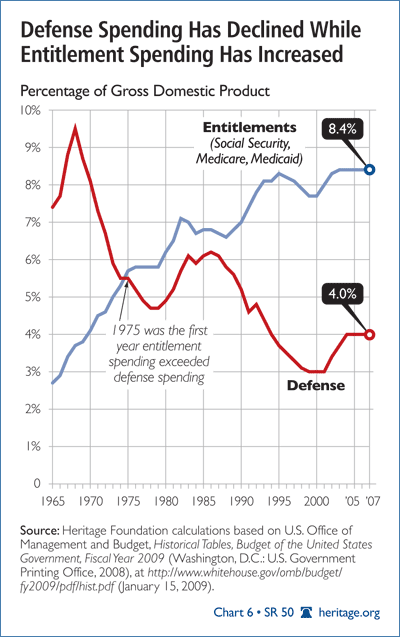
Outlays for Social Security, Medicare, and Medicaid total 8.4 percent of GDP.[22] By 2030, this number is projected to reach 14.2 percent.[23] By comparison, the defense budget to train and equip the force is roughly 4 percent of GDP, less than half of current spending on the three major entitlement programs.[24] The Obama Administration’s FY 2010 defense budget blueprint projects drastic cuts to the defense budget, reducing it to just 3 percent of GDP in 2019.
Taxpayers cannot afford the massive generational transfer of wealth that Social Security, Medicare, and Medicaid will soon require. European economies are already being crushed by their expensive social insurance programs. The United States needs to act now or meet a similar fate. Stimulus bills are simply delaying the inevitable. If these entitlement programs are not reformed quickly, they will crowd out needed defense funding, even though defense expenditures are already at a historic low.
The implications for national defense are clear: Spending enough to train and equip the military will quickly become impossible unless Congress reforms Social Security, Medicare, and Medicaid. Some Members of Congress will likely argue that any reform of these programs is tantamount to a draconian cut, but that is not true, and sound bites are not the answer. None of the current entitlement reform proposals would cut spending on these programs; they would only limit future growth.
As the baby boomers begin to retire, they are also living longer, more productive lives. Congress should gradually raise the retirement age to reflect this change. Congress should also reduce premium subsidies for higher-income retirees and tie benefits to income. Over the long term, Congress should reform Medicare into a market-based system that allows seniors to choose better coverage. Seniors would then benefit from the resulting intense competition among private health plans for their business.
America’s budget priorities have changed and so should its budget process. Congress should ensure that the long-term costs of entitlements are built into the budget process and considered along with other priorities during the annual budget debate. Congress should also put all programs—including entitlements—on a more level playing field. It could do this by creating a long-term budget framework for entitlements and revisiting it every five years. The framework should include triggers that would automatically curtail spending if it exceeds budgeted levels.
Given the size of the Social Security, Medicare, and Medicaid programs, reforming them will take time. Congress needs to start now.
Smart Spending for Defense: Budgeting Wisely, Spending Shrewdly, and Overseeing Competently
Even if Congress addresses the plethora of daunting problems that lie ahead beyond the choice simply to cut weapons systems, further action will still be necessary. Members will need to demand a new era of spending restraint by tackling politically sensitive issues. This will require an honest and uncomfortable debate about how much government the U.S. economy can afford. As guardians of taxpayers’ dollars, Members of Congress need to learn how to say “no” to creating and expanding permanent, unfunded entitlements—particularly to those without any offsets.
Policymakers need to move beyond buzzwords and catch phrases that are largely meaningless in actual dollar terms. Congress can begin by acknowledging that eliminating fraud, waste, and abuse is not a panacea for saving money and reducing the defense budget. Significant measures are already in place to root out these scourges, and the totality of their savings is extremely modest when compared with the total defense budget.
Second, Congress needs to accept that contractors play important roles in winning on today’s battlefield. Congress could further help by focusing on authorizing adequate funding, training, and professional career development for a growing government acquisition workforce. A larger acquisition corps with lucrative career options to oversee the tremendous number of contracts is necessary. This is one recommendation in which most of Washington is in agreement. Finally, the time has come for Congress to stop passing emergency wartime supplementals for the wars in Iraq and Afghanistan and move the full funding into the baseline budget.
Fraud, Waste, and Abuse
Eliminating fraud, waste, and abuse is a fundamental obligation of government. Taxpayers expect and deserve nothing less than prudent spending and critical oversight. Ultimately, it is their money. Washington should spend only what is necessary to provide for the common defense—no more, no less.
The government has many tools to root out bad practices in government. The new Administration and Congress should begin by making aggressive use of the means already at their disposal. However, such efforts are not a silver bullet. These tools have been used repeatedly since the Eisenhower Administration. Historically, even the best efforts to eliminate fraud, waste, and abuse have garnered only a modicum of savings compared to the overall defense budget.
For example, since the Vietnam War, 128 studies have examined perceived problems with the defense acquisition system and have attempted to address fraud, waste, and abuse. Many of today’s problems have been targets of reform for the past four decades. A study on weapons cost growth in 1999 analyzed three decades of reform and concluded: “Despite the implementation of more than two dozen regulatory and administration initiatives, there has been no substantial improvement in the cost performance of defense programs for more than 30 years.”[25]
Following his election in 1968, President Richard Nixon convened the Fitzhugh Commission to study the problems plaguing the military’s acquisition process. The commission rejected the “total package procurement” model used by Secretary of Defense Robert McNamara and helped to initiate efforts to slow development projects, increase testing, and minimize production concurrency. Deputy Secretary of Defense David Packard used the Fitzhugh Commission’s findings to form the Packard Initiative in 1969. One major result of this process was the creation of the Defense Systems Acquisition Review Committee.
Continued problems in the acquisition process, including public reports about $600 toilet seats and $400 hammers, prompted President Reagan to establish the Packard Commission in 1985 to reduce inefficiencies in the defense procurement system. Reflecting on the irony of the situation, Thomas McNaugher noted:
Indeed, the public has a right to some frustration when the same David Packard who fathered the last significant reforms of the acquisition process, upon being called back to Washington to head his own commission on acquisition reform, starts his first press conference by noting that things are no better now than they were when he first entered the Defense Department nearly two decades ago.[26]
The commission found the primary problems with the acquisition process were the same ones identified in previous decades: cost growth, schedule delays, and performance shortfalls. Many of its recommendations were included in the Goldwater–Nichols Reorganization Act of 1986.
The 1990s brought much of the same, including the Performance Review, the Federal Acquisition Streamlining Act, the Federal Acquisition Improvement Act, and the Defense Review Initiative. The information revolution also kicked off efforts by the federal government and the Defense Department to adopt innovative business models to streamline the acquisition process. The 1996 Quadrennial Defense Review promised cost-savings by “implementing modern…business practices” so the Defense Department could be “leaner, more efficient, and more cost effective in order to serve the warfighter faster, better, and cheaper.”[27]
After 9/11, the same narrative on acquisition reform persisted. In June 2005, Deputy Secretary of Defense Gordon England authorized the Defense Acquisition Performance Assessment Project. Unsurprisingly, the report concluded in 2006 that it saw “many of the same issues as problems today that the Packard Commission saw 20 years ago.”[28] Many of its recommendations were included in the 2006 QDR.
A primary result of efforts to improve the acquisition process has been heavy regulation of government contracting. Oversight tools include:
- The Federal Acquisition Regulation (FAR). This was an initiative by President Reagan to standardize and simplify government. Created in 1984 to make government contracting policies uniform, FAR involves virtually every acquisition by every federal agency, governing every step of the process. Every department has added its own supplementary implementation guidelines. The Pentagon, for example, issues the Defense Federal Acquisition Regulation Supplement. All government departments must include dozens of standard terms and conditions dictated by the regulation—many of them nonnegotiable. Mandatory federal conditions also include imposing standards of ethical conduct on contractors. Contractors are barred from making false claims or statements to the government (such as overbilling or charging for services not provided), required to establish procedures preventing conflicts of interest in dealings with federal employers, prohibited from offering or accepting “kickbacks,” and prevented from using appropriated government money for lobbying.
- The Commission on Army Acquisition and Program Management in Expeditionary Operations. The commission recommended that the Army increase the stature, quantity, and career development of its contracting personnel. As part of this effort, the commission suggested expanding the number of civilian and military contracting personnel and ensuring that Army contracting personnel start their careers much earlier. According to Secretary of the Army Pete Geren, the acquisition workforce “has not been properly sized, trained, structured, or empowered to meet the needs of our warfighters, in major expeditionary operations.”[29] To ensure proper oversight in contracting, the Army and Congress should work together to implement these recommendations in a timely manner and commit to maintaining the number and quality of acquisition personnel.[30]
- Federal authority to audit the costs incurred by contractors. These audits also cover their profits, progress, and performance during the agreement period and up to three years after. The government can also take contractors to task through the contracting agency’s inspector general, the Special Inspector General for Iraq Reconstruction, the Army Audit Agency, the Defense Contract Audit Agency, and the Government Accountability Office (GAO). Senate and House committees have also launched their own investigations and held numerous hearings on government contracting during the war. In the first four years after the U.S. invasion of Iraq, the GAO alone issued 68 reports and testimonies.
- A wide range of criminal investigation tools. Virtually all federal agencies have an internal law enforcement component, and the military services have criminal investigation divisions. The Department of Justice can also support efforts to uncover criminal activity on the part of contractors and government employees. Contractors failing to abide by ethical standards or contract requirements can face civil litigation or criminal prosecution, as can civilian employees of the U.S. government. Military personnel are subject to the Uniform Code of Military Justice and, in some cases, can be tried in civilian courts.
Congress should rely on these existing tools to find savings and eliminate waste instead of trying to reinvent the wheel. Piling on more regulations could undermine innovation, slow the acquisition process, further reduce efficiency, and cause more cost overruns. When executed well and pursued vigorously, initiatives to target fraud, waste, and abuse have historically improved defense management and achieved savings, but they have not substantially reduced defense costs.
Expanding the Acquisition Workforce. While some fraud, waste, and abuse have always plagued defense spending, every effort should be made to eliminate wasteful spending. Contracting officers, part of the federal acquisition workforce, are the first line of defense in ensuring that government contracting serves the government well. While the number, size, and complexity of government contracts have skyrocketed, the size of the acquisition workforce remained inadequate, reduced by 50 percent in the 1990s by Congress to realize greater savings. Like other components of the military, the defense acquisition workforce was reduced at the end of the Cold War. To make matters worse, half of the current acquisition workforce will be eligible to retire in 2010.
While the Pentagon acquisition personnel levels fell, private-sector service contracts grew by 72 percent from 1996 to 2005. Not surprisingly, this led to reduced oversight. Compounding the problem is that only 38 percent of Army acquisition and contracting personnel supporting troops overseas (e.g., Iraq) are certified for the positions they hold. More than a year before the war in Iraq began, then-Secretary of the Army Thomas White foresaw this problem and wrote to the Under Secretary of Defense for Acquisition, Technology, and Logistics to point out that one-third of the Army’s budget paid contractors. With a much smaller military workforce, White asserted, “Army planners and programmers lack visibility at the Departmental level into the labor and costs associated with the contract workforce and of the organizations and missions supported by them.”[31]
This was evident before the Pentagon went on its contracting binge. A GAO official confirmed in testimony before Congress that the Army could have benefited from greater savings in the Logistics Civilian Augmentation Program contracts in Iraq if adequate staffing had been available. Because of staffing shortages, acquisition officials were unable to visit all contracting sites in Iraq to ensure requirements were being upheld.
Contractors in Combat
Contractors have become ubiquitous on the battlefield in Iraq and Afghanistan. By 2007, almost 200,000 civilians were working under U.S. government contracts in Iraq and Afghanistan, compared to the approximately 160,000 U.S. combat troops deployed in Iraq alone. According to some estimates, contractors accounted for 40 percent of the costs of combat operations.[32]
The scope of today’s wartime contracting dwarfs that of past military conflicts. The rapid increase in contracting can be traced to a number of factors, including:
- The downsizing of the military in the 1990s, particularly the reduction in service support units that provide everything from fresh bread to fuel;
- The unanticipated length and complexity of post-conflict operations in Iraq and Afghanistan; and
- The increased capacity of the private sector to provide goods and services on the battlefield.
Wartime contracting became controversial almost immediately. As the fighting in Iraq continued, the debate over using contractors in combat became even more contentious.
Like most policy prescriptions, there is no one-size-fits-all solution. Contractors may be the best choice for some missions, but they are not the best fit for every mission. The current process has proven imperfect in determining which missions are appropriate for contractors. The Pentagon can and must do better.
The answer lies in a risk-based approach. This would help to avoid unnecessary risks while incorporating financial and intangible benefits and drawbacks into the calculations. This approach is not new to the defense world. The U.S. Army field manual contains a standardized approach for assessing and managing risk that can be applied to all activities:
- “Identifying threats.
- “Assessing threats to determine risks.
- “Developing controls and making risk decisions.
- “Implementing controls.
- “Supervising and reviewing.”[33]
According to the Army field manual, a hazard is “any actual or potential condition that can cause injury, illness, or death of personnel; damage to or loss of equipment or property; or mission degradation.”[34] Risk is considered the “probability and severity of loss linked to hazards.”[35] The scope of these definitions showcases the wide range of threats and issues that need to be addressed in the immediate future. These concepts offer a reasonable starting point for building a decision-making framework.
Applying this successful model to contractors would be simple. Following this approach of risk mitigation allows policymakers to ask the right questions and to judge:
- The degree to which contractor shortfalls could hinder mission success,
- The safety implications for contract employees and equipment,
- The military resource trade-offs or the effect that spending on contractors offsets or consumes limited resources needed to pursue other goals, and
- The impact that contractors may have on the military’s ability to comply with laws, regulations, and high-level policy guidance and to collect information.
The single greatest shortfall in contracting practices in Iraq and Afghanistan was that Washington lacked the capacity to oversee the massive volume of contracts that it offered. The Special Inspector General for Iraq Reconstruction “found that shortage of personnel (and the widespread lack of required skill and experience among those available) affected all facets of reconstruction assistance.”[36] Because of operations in Iraq, the sheer demand placed on military contracting dwarfed contracting during World War II.
With the benefit of hindsight, it is clear that the presence of competent contracting officers would have prevented or resolved a majority of serious difficulties in managing contracts. This controversy might have been avoided entirely if the military were simply a better customer. Contracting in combat will continue to be an issue until all parties learn and practice better methods.
Emergency Supplemental Spending Bills
Over the past eight years, Congress has used supplemental appropriations bills to fund warfighting operations in Afghanistan and Iraq. This provided a flexible funding mechanism at the outset when it was impossible to estimate the precise costs, and it avoided pitting war funding against the core “peacetime” defense budget, which is needed to build future military capabilities.
Years later, the scope and cost of these operations has become more predictable. The Pentagon needs to incorporate the full funding request for these operations into the regular defense budget beginning in FY 2010.[37] However, if the situation on the ground changes and demands a significantly larger military engagement than is foreseen, Congress could still pass another supplemental bill. Likewise, it would be appropriate to use supplemental appropriations bills to fund new military operations unrelated to those in Afghanistan or Iraq.[38]
Moving the Iraq and Afghanistan appropriations into the regular budget process involves two key steps.
First, Congress should begin the process in the FY 2010 budget. The FY 2009 budget has already been signed into law, and the most recent emergency bill funded the wars through spring 2009. Congress should pass one more emergency bill (without unrelated domestic add-ons) that would fund warfighting through the end of FY 2009. Beginning with the FY 2010 budget, Congress should fund the operations through the regular budget process.
Second, Congress should make war spending the 13th appropriations bill. Congress’s first instinct may be to fold warfighting operations into the regular defense appropriations bill. Keeping it as a separate bill may be better for several reasons:
- Separation preserves the delineation between regular defense spending and ongoing military operations. If money for Iraq and Afghanistan is folded into the defense appropriations bill, all war-related funding increases will be carved out of the regular defense operations. This would leave the rest of the military underfunded. Separate bills would remove that bias and empower Congress to look for offsets across all appropriations bills.
- Distinct funding bills help to preserve the integrity of the discretionary budget baseline. Funding for Iraq in particular is expected to decline in the next few years. Congress will be tempted to allocate all of those savings to new discretionary spending rather than let discretionary spending return to pre-war levels. Hiding war funding within other spending bills would make it too easy for Congress to simply redistribute those savings into new domestic spending. By contrast, placing it in a separate bill will highlight any spending reductions in current military operations and corresponding increases in other domestic spending bills.
- Two bills allow lawmakers to take separate votes on normal defense operations and the wars in Iraq and Afghanistan. Some Members of Congress have called for defunding the troops serving in Iraq and Afghanistan, but continue to support the regular defense budget. Policymakers should have the opportunity to take separate votes on the separate spending bills.
Funding the activities in Afghanistan and Iraq through emergency bills should stop because emergency war funding is not budget neutral. Congress still needs to allocate the necessary funding, but funding operations in Iraq and Afghanistan through emergency bills has resulted in higher domestic spending.
Each year, Congress passes a budget resolution capping total discretionary spending at a specific level for the following year. From that point forward, the House of Representatives and Senate appropriations committees set priorities and make trade-offs to keep spending at or below that level. Without such a cap, Congress could simply give every federal agency and special interest the funding that they request without regard to the escalating overall cost.
Because emergency bills are outside the normal budget process, they are not subject to these ceilings. As a result, any legitimate emergency bill quickly becomes a proverbial Christmas tree for every budget request that did not survive the regular appropriations process, regardless of whether these requests address actual emergencies.
The ever-growing domestic spending attached to emergency defense bills has grown with recent war supplementals. In FY 2006, Congress tried to add $14 billion in unrelated domestic spending to the Iraq and Afghanistan emergency bill. In 2007, Congress successfully added $21 billion in domestic spending to the 2007 emergency warfighting bill. The 2008 emergency bill included an astounding $71 billion in new domestic spending.
If Congress believes that its budget resolution spending caps are too low, then Members should openly debate that point and go on the record supporting larger budget increases. However, for Congress to approve a certain spending cap and then brazenly violate that cap with phony emergency domestic spending defeats the purpose of having a budget.
Even beyond the non-emergency domestic spending add-ons by Congress, war funds should compete with other federal programs within the normal budget process. No single spending item exists in a vacuum. Congress should take the opportunity to set priorities and make trade-offs across the entire federal budget. Lawmakers calling for large increases in troop funding should be willing to offset some of the added funding by cutting lower-priority programs.
To force Members of Congress to make tough decisions, Congress must limit the “emergency” designation to true emergencies that meet the Office of Management and Budget’s criteria. Otherwise, Congress will continue to abuse the emergency designation.
Conclusion
The Obama Administration has inherited a military that is heavily deployed around the world for both war and peace operations in more than 140 nations. After eight years of wartime wear and tear, a top priority should be resetting, recapitalizing, and modernizing the force. Current economic pressures will make balancing these tasks even more difficult in the face of increasing pressure on Congress to make the defense budget a bill payer for domestic spending.
Indeed, calls to reduce the defense budget have returned, couched as an insistence by many that the military must make “hard” or “tough” choices about what it purchases. Targeting the military modernization budget to help to pay the bills is irresponsible and not the place to start. Congress should not even consider cutting weapons systems until a National Security Strategy is in place followed by a Quadrennial Defense Review to justify and explain Pentagon decisions and potentially reduce the global military commitments. If Congress wants to make real tough choices, it should look to reform the military pay structure and update the military’s acquisition process to reflect a capabilities-based force. Congress can help the Pentagon adjust by bolstering systems engineering capabilities within the acquisition workforce and by demanding that acquisition criteria be simplified.
At the same time, Congress needs to spend the nation’s tax dollars wisely. Recognizing the true nature of fraud, waste, and abuse in military contracting and taking steps to limit its impact by expanding the acquisition workforce is essential. While a contentious issue, contracting in combat zones is here to stay. Today’s smaller military simply cannot do everything. The real challenge will be constructing a risk-based management model to help to determine contractors’ proper roles and train an adequate acquisition workforce to manage the growth in military contracts. Finally, Congress should end the use of wartime supplementals for Iraq and Afghanistan and move this funding into the base defense budget.
The United States needs a sound fiscal policy and a comprehensive National Security Strategy to guide strategic and force planning decisions that corresponds to the military’s global responsibilities. Congress has a constitutional duty to provide for the common defense by authorizing sufficient funding to field the broad array of capabilities that the military requires to meet its responsibilities. Accomplishing this will require maintaining the baseline defense budget at the current level (roughly 4 percent of GDP) for the next several years with a special emphasis to maintain a stable modernization account. This level of sustained defense spending would allow the United States to train, equip, and modernize a professional, full-spectrum fighting force to meet its commitments.



