
The Federal National Mortgage Association (Fannie Mae) and Federal Home Loan Mortgage Corporation (Freddie Mac), the major government-sponsored enterprises (GSEs) devoted to housing, hold dominant positions in the U.S. mortgage market.[1] These institutions, while private corporations, have long maintained a special status with the federal government. Prior to federal conservatorship in 2008, financial markets came to believe that these institutions had the federal taxpayer as the ultimate backstop to any excessive risk-taking and eventual financial losses. This special status, along with congressional directives to expand homeownership by underwriting mortgage credit to a substantial number of low-credit borrowers, positioned the housing GSEs to incur serious losses and made them highly susceptible to changes in home prices and the economy.
The GSEs' financial health began to erode seriously in 2006 as nominal housing prices began to decline rapidly after 30 years of price appreciation in the U.S. home market. The macroeconomic shocks that accompanied this decline contributed to the difficulty that many mortgagees experienced in staying current on their loans. Consequently, default and delinquency rates on mortgages spiked, especially among borrowers in the sub-prime market. The GSEs, which had significant exposure to sub-prime mortgages through both their securitizations and direct portfolio holdings, face substantial losses they cannot cover without taxpayer support.
The federal housing policies related to the GSEs have proved costly not only to the federal taxpayer, but also to financial markets and the overall economy. It is time federal policymakers accept that this institutional model has failed and that they should move toward a U.S. mortgage market without Fannie Mae and Freddie Mac.[2]
This report estimates the likely economic effects of eliminating federal GSE activity by Fannie Mae and Freddie Mac in the U.S. mortgage market. The cessation of activity by Fannie Mae and Freddie Mac would effectively translate into a removal of an interest rate subsidy and thus cause mortgage interest rates to rise. We use the IHS Global Insight (GII) Short-Term U.S. Macroeconomic Model—a model that leading government agencies and Fortune 500 companies employ to produce independent economic forecasts[3]—to study the likely trend effects of this policy change on the economy.[4]
Long-Run Impact on the Economy
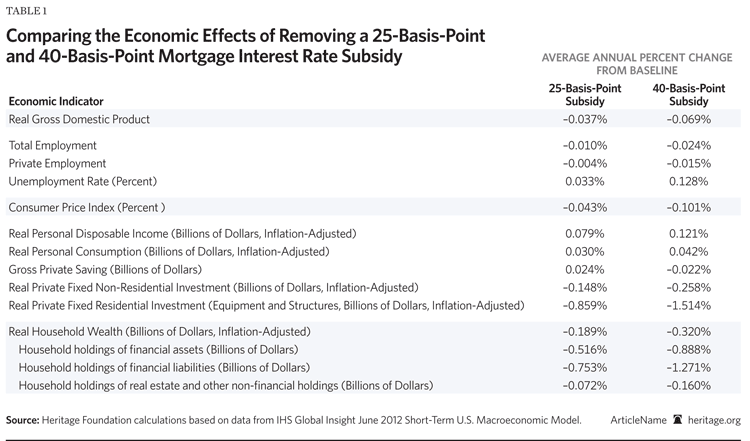
Winding down Fannie and Freddie by ceasing new activity in the mortgage market would have minimal and predictable effects on the U.S. economy. Relative to baseline levels, real (inflation-adjusted) gross domestic product (GDP) declines an average of $6 billion per year over the 10-year forecast period. To put this economic outcome in broad context, the average baseline level of the real economy is $15.8 trillion over the 10-year forecast period, so the impact on the economy over the 10-year forecast is less than 0.037 percent.[5]
Employment. As the real non-housing, nongovernment economy improves relative to the baseline for the 10-year forecast, the labor market stabilizes. The slight slowdown in real output would push down total employment on average 14,000 jobs (0.01 percent) per year and private employment 5,000 jobs (0.004 percent) per year relative to baseline levels. The decrease in the mortgage and housing markets would translate to an average 3,200 (0.43 percent) fewer jobs per year in the construction sector relative to baseline levels. The differences, however, are minuscule relative to the overall labor market—the average level of total employment at baseline is 143 million jobs.
Household Income and Consumption. Real personal consumption declines slightly in the first few years of the forecast period, lagging behind the change in real personal income and real disposable income levels.[6] Real personal income levels trend positive beyond the first few years of the forecast period, driven in part by changes in nominal (not adjusted for inflation) personal interest income.[7] Real disposable incomes would increase on average $11 billion (0.08 percent) per year over the 10-year forecast. Real household personal consumption increases on average $3.2 billion (0.03 percent) per year relative to baseline levels.
Mortgages and Household Deleveraging. The composition of aggregate U.S. household portfolio holdings changes relative to the baseline due to the movement in borrowing and saving costs in the economy. Nominal household financial liabilities decline an average $124 billion (0.753 percent) per year over the 10-year period. The level of household financial assets (nominal) declines an average $281 billion (0.51 percent) per year relative to baseline levels. Household holdings of real estate and other nonfinancial assets decline an average $28 billion (0.072 percent) per year relative to baseline levels.
The cost of mortgage borrowing rises relative to other interest rates, which results in a substitution away from financial leverage in the economy. Home mortgage acquisitions fall an average $10 billion (2 percent) per year relative to baseline levels. Total home mortgages outstanding decline an average $87 billion (0.69 percent) per year over the 10-year forecast.
Homeownership. The rate of homeownership declines on average 0.112 percent over the 10-year period. The policy reform likely leads to tighter credit conditions, which—all else constant—would reduce home sales and thus homeownership, partly as a function of home sales. However, all else is not constant. Changes in other factors that are correlated with home sales, such as the price of homes and disposable incomes, could reduce the effect of the policy reform.
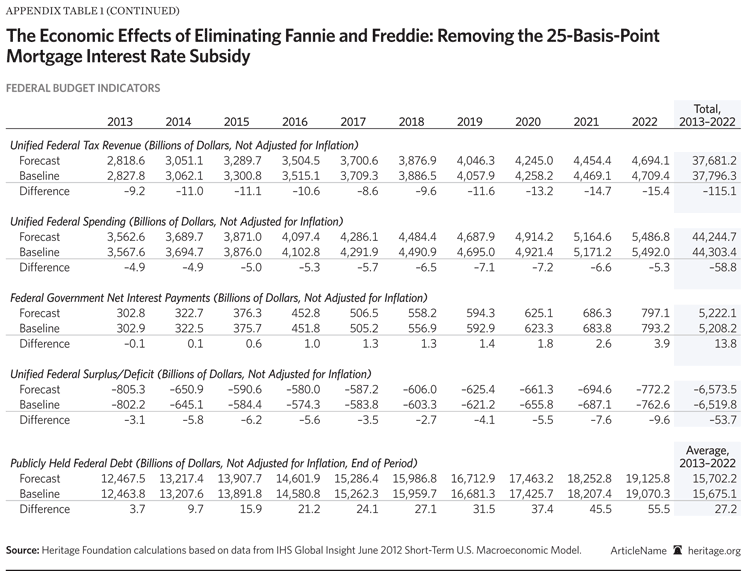
Cost to Taxpayers. Winding down GSE activity could push federal publicly held debt above baseline levels on average $27 billion (0.17 percent) per year relative to baseline levels. This dynamic result compares with the direct costs to the federal taxpayer of more than $150 billion since the 2008 takeover of Fannie Mae and Freddie Mac. The total GSEs' losses will cost the federal taxpayers an estimated $200 billion to $400 billion.[8]
The remainder of this report is structured as follows: Section 2 gives a brief overview of the housing GSEs and their relationship with the U.S. housing and mortgage markets. Section 3 gives an overview of the economic dynamics of the U.S. housing and mortgage markets. Section 4 presents and analyzes the dynamic simulation of the liquidation of the GSEs from the U.S. housing and mortgage markets. Section 5 is the conclusion.
Fannie Mae, Freddie Mac, and the U.S. Housing Market
The housing GSEs have grown significantly in size and scope in the U.S. mortgage market since their origination. Fannie Mae was originally chartered in 1938 as the National Mortgage Association of Washington, and Freddie Mac was created in 1970.[9] Their asset holdings—either through mortgage securitizations or direct portfolio holdings—have increased from approximately 7 percent of total residential mortgage market originations in 1980 ($78 billion) to about 47 percent in 2003 ($3.6 trillion).[10]
By 2010, Fannie and Freddie owned or guaranteed approximately half of all outstanding mortgages in the United States, including a significant share of sub-prime mortgages, and they financed 63 percent of new mortgages originated that year.[11] Other federal agencies, including the Federal Housing Administration and the U.S. Department of Veterans Affairs, insured another 23 percent of home loans. This means that federal taxpayers guaranteed approximately 86 percent of all new mortgage originations in 2010.[12]
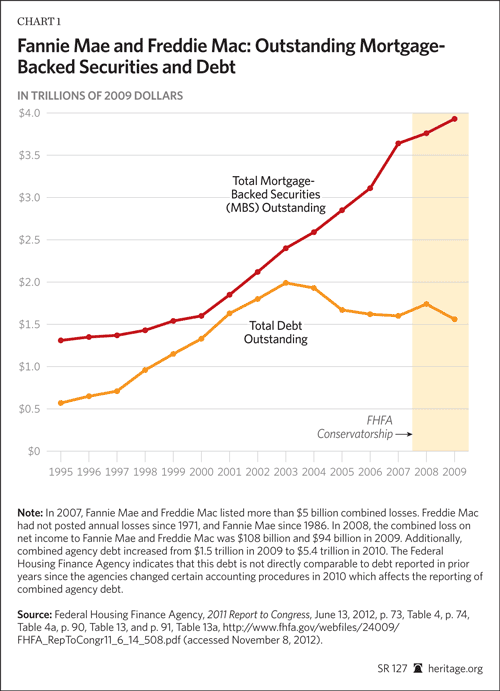
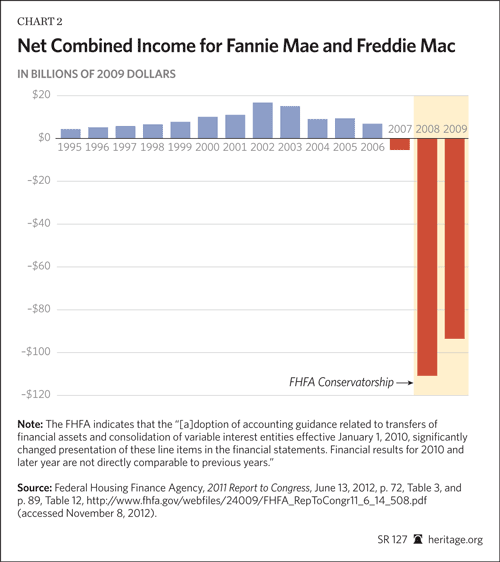
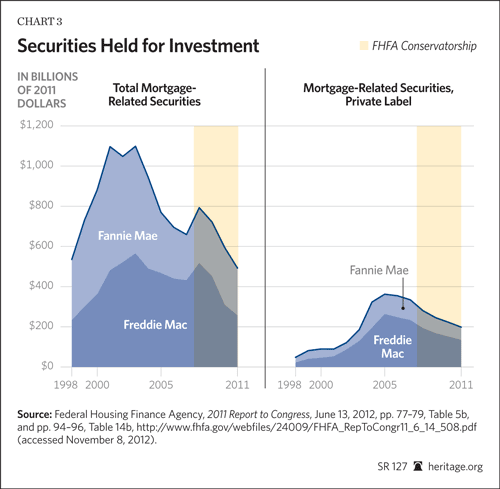
Fannie and Freddie were placed into conservatorship in 2008 to ensure they had the necessary capital to cover losses on the defaulted mortgage assets in their portfolios.[13] The federal take over has directly cost the federal taxpayer about $180 billion through March 2011, and the federal taxpayer could lose an additional $221 billion to $363 billion.[14] (See Chart 2.)
GSE interest rate subsidy
Fannie Mae and Freddie Mac, the mortgage government-sponsored enterprises (GSEs), are for-profit institutions operating under congressionally mandated missions to expand mortgage credit to specific income groups and achieve specific housing goals. Since 2008, Fannie Mae and Freddie Mac reside under the conservatorship of the Federal Housing Finance Agency (FHFA), and the agency debt and other mortgage-related holdings are directly guaranteed by the federal government.[15]
Prior to FHFA conservatorship and the explicit backing of the federal government, market purchasers of the GSE debt believed that Fannie Mae and Freddie Mac's agency debt was implicitly backed by the federal government. This belief stemmed from the many borrowing, tax, and regulatory advantages not conferred to any other shareholderowned corporation, including an official line of credit with the U.S. Treasury.[16] First, Fannie Mae and Freddie Mac were exempt from state and local income taxation. Second, they were exempt from Securities and Exchange Commission registration and bank regulations on security holdings. Third, they held a direct line of credit with the U.S. Treasury, issuing agency debt and borrowing between corporate AAA credit interest rate yields and U.S. Treasury interest rate yields.[17] Last, they received U.S. agency status and the guarantee of the federal government on mortgagebacked securities.
The annual estimated value of these subsidy benefits is substantial, ranging from about $7 billion to $20 billion before FHFA conservatorship. (See Chart 4.)
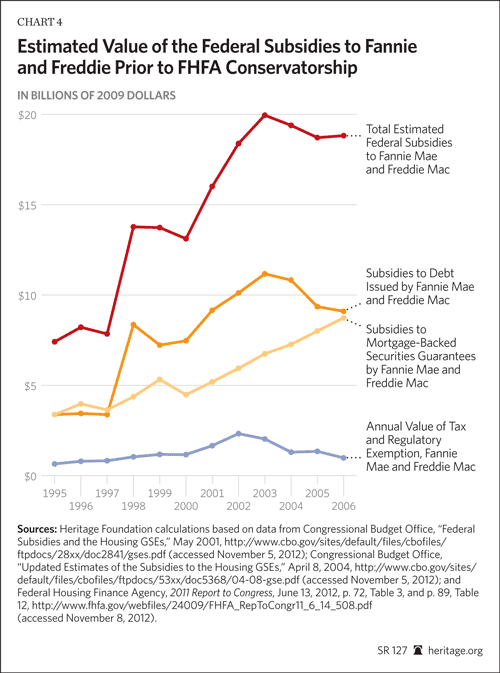
Economists have made several attempts to estimate the value of these federal subsidies.[18] The Congressional Budget Office estimates the "agency debt" subsidy (lower borrowing costs) results in a 41 basis point value to shareholders and borrowers. Fannie Mae and Freddie Mac pass through 25 basis points of the subsidy value to borrowers and its shareholders retain an estimated 16 basis points on each dollar of debt. They estimate a subsidy value on mortgage-backed securities at 30 basis points, where 25 basis points are passed to the borrowers.[19]
Passmore, Sherlund, and Burgess estimate a 40 basis point subsidy to GSE debt and conclude a portion of this subsidy is passed to mortgage borrowers. They estimate that the pass-through of the GSE debt subsidy lowers mortgage rates to homeowners by 7 basis points, or 16 percent of the total 40 basis point subsidy value.[20] Ambrose and Warga estimate the interest rate subsidy toward the lower bound over AA-rated banking-sector bonds (20-29 basis points) and upper bound over AAA-rated bankingsector bonds (43-47 basis points).[21] Kauffman posits that Fannie Mae and Freddie Mac activity resulted in about a 10 basis point spread between the jumbo and conforming interest rates.[22]
Do the GSEs' contributions to a more efficient home mortgage market justify their special privileges? Because of their sheer size, dominance in the U.S. mortgage market, and special borrowing privilege with the U.S. Treasury, Fannie and Freddie have arguably held mortgage interest rates lower by an estimated 20 to 50 basis points.[23] The GSEs do not make failures in the U.S. housing and housing finance markets less likely.[24] Nor is it certain they have an intrinsic market efficiency advantage over other private mortgage underwriters.[25] Rather, the housing GSEs have likely expanded because of the advantage of the low-cost funding[26]—due to the implicit (now explicit) federal government guarantee—and federal government charters.[27]
One of Fannie and Freddie's federal charters or goals over the past two decades has been to expand U.S. homeownership.[28] While there may be some potential benefit to homeownership in the U.S.,[29] using the GSEs to achieve these policy goals is likely an inefficient, risky, and costly way to promote such societal benefits.[30] Congressional testimony shows that banks and lending institutions warned federal policymakers that achieving such outcomes would require departing from more prudent lending standards.[31] Indeed, the housing GSEs attempted to achieve this federal charter by expanding mortgage credit to a substantial share of sub-prime borrowers, which induced a stronger demand for mortgages over time.[32]
What does this mean for federal housing policy? Economists are still debating the causal role that Fannie and Freddie played in the recent housing bubble and the subsequent financial collapse of 2008. Despite this dispute, economists increasingly view the GSEs as a failed institutional model, which shielded them from losses due to their excessive risky behavior while allowing them to reap the rewards during periods of growth.[33]
The underwriting record of housing GSEs contains serious and systemic business and policy errors, and congressional leaders need to recognize the failure of this institutional model. Congressional leaders made the mistakes of creating Fannie and Freddie and subsidizing their activity in the U.S. mortgage market through special access to federal funds and an implicit guarantee.[34] They need to wind down Fannie and Freddie and free the U.S. housing market from the distortions that these institutions create.[35]
Dynamics in U.S. Housing and Mortgage Markets
The housing and mortgage markets affect the overall economy through many macroeconomic channels. For example, households generally treat housing and real estate as both an investment good and a consumption good. Indeed, U.S. households hold a substantial share of their overall asset portfolio in the housing and real estate markets.[36] The composition of total wealth is not the same across U.S. households. Households in the upper-income quintile hold significantly less of their total wealth in housing than households in the lower-income quintiles do.[37]
Changes to the valuation of these assets affect household wealth, which can induce changes in the additional housing (and non-housing) consumption and investment. Numerous economists have estimated that rising household wealth induces demand for new consumption. In fact, this link between housing wealth and consumption is more robust than for other forms of wealth, such as wealth held in the stock market.[38]
This relationship is less robust in the opposite direction, suggesting that declines in housing wealth do not tend to reduce consumption.[39] Additionally, the relationship between housing wealth and consumption is likely asymmetric because younger households may have a higher likelihood than older households to consume out of (positive) changes in housing wealth.[40]
Price fluctuations in the housing market have a considerable effect on the valuation of housing assets.[41] Housing prices change due to both demand-side and supply-side factors. Historically, key determinants for housing demand in the U.S. are price expectations vis-à-vis home prices, income levels, and regional economic performance.[42] Income levels and regional macroeconomic conditions greatly affect both the supply and demand in housing and mortgage markets at the national aggregate level.[43]
Nominal national home prices increased for three decades until 2006.[44] Real (adjusted for inflation) national home prices are more cyclical and have experienced several periods of ups and downs since the 1970s.[45] Regional home prices have followed a different pattern than nominal and real prices at the national level.[46]
House prices are volatile relative to observable changes in fundamentals. Glaeser, Gyourko, and Saiz estimate a model of housing bubbles that predicts that places with more elastic housing supply have fewer bubbles and shorter bubbles, with smaller price increases.[47] Housing supply at the national level looks relatively inelastic, but some regional housing markets have much more elastic housing supplies.[48] In many regional markets, the ratio of home prices to per capita income[49] rose dramatically from 2000 to 2005.[50] Homeowners had strong expectations of future price appreciation.[51]
From 2000 to 2007, there was a combination of a low interest rate policy[52] and an easing of lending standards in the U.S. housing and mortgage markets. Mortgage providers began to loosen lending standards even more than during the 1990s.[53] The GSEs were not exempt from the loosening of home mortgage lending standards.[54] The level of GSE activity increased substantially, whether through direct holdings or securitization.[55] During the 1990s, the GSE share of mortgage loans with high loan-to-value (LTV) ratios rose from around 6 percent of purchases in 1992 to 19 percent of purchases in 1995.[56] By 2007, Fannie and Freddie held "as much as 25 percent of its total loans with LTV above 80 percent and 18 percent with FICO scores below 660."[57]
During the boom period (2002-2006), debt-to-income levels rose sharply for many U.S. households. Mortgage and non-home-related debt rose at a similar pace from 1996 to 2002, but mortgage-related debt accelerated faster than non-home-related debt accelerated from 2002 to 2005[58] While housing-related asset valuations were rising, the level of borrowing activity against the higher home values—home-equity-based mortgage borrowing—also increased.[59] This borrowing behavior remained mostly concentrated among younger households and households with low credit scores, and high initial credit card utilization rates contributed the most to this type of borrowing behavior.[60] From 2006 to 2008, home-equity-based borrowing accounted for a sizeable share of new mortgage defaults.[61]
Since 2006, national home prices have declined substantially, and some regional markets experienced catastrophic decreases. In many regional housing markets during the past couple of years, these price changes and weakening macroeconomic fundamentals (e.g., high unemployment rates and falling household incomes) have put downward pressure on both the demand and the supply of housing and mortgages.[62] The combination of dramatic asset price reversion and macroeconomic instability left—and still leaves—many households unable to stay current on their home payments. Consequently, beginning in 2006, the rate of defaults and delinquencies spiked as prices began to plummet.[63]
Because of the broad reach of the mortgage assets—including direct mortgage holdings and securitizations—to U.S. financial markets,[64] the recent downturn in prices dramatically affected the household wealth.[65] The loss of value in mortgage-related assets significantly affected financial institutions, especially Fannie and Freddie, which were systematically part of the financial system.
The Economic Effects of Fannie and Freddie Reform
In this section, we focus on a dynamic simulation of winding down the housing GSEs and their activity in the U.S. mortgage market. We first give an overview of the macroeconomic simulation and why we employed the GII structural model to study the overall policy question. We then discuss the results of the dynamic simulation.
Macroeconomic Simulation. The GII Short-Term Quarterly Economic Model is a broad, structural model of the U.S. economy with multiple macroeconomic channels that can be used to address the overall policy question relating to the liquidation of Fannie and Freddie. The dynamic simulation of this policy change largely concentrates on the particular macroeconomic channels relating to the potential changes to mortgage interest rates and mortgage terms.[66]
The GII model offers several advantages in addressing this policy question. First, the model consists of robust economic relationships, whether explicit or implicit, based on historical data. Second, we can estimate the general equilibrium effects of the policy change because the model accounts for feedback effects across multiple economic sectors. That is, the model determines the effects that direct shocks to one set of economic series will have on other series in the model. Thus, the model determines the dynamic effects that changes on direct levers (e.g., interest rate shocks) would likely have on indirect channels in the model (e.g., household incomes, the affordability of homes, and changes to household wealth).
Additionally, since this counterfactual experiment compares an economy with Fannie and Freddie with an economy without these GSEs, we ran two simulations to test the sensitivity of the GII model to the 25 basis points assumption. The first simulation assumed the same 25 basis point change in the mortgage commitment rate, and we turned off the Federal Reserve reaction function in the GII model. The second simulation assumed a 40 basis point change in the mortgage commitment rate. Appendix Tables 2 and 3 in Appendix B present the results of these two sensitivity simulation runs.
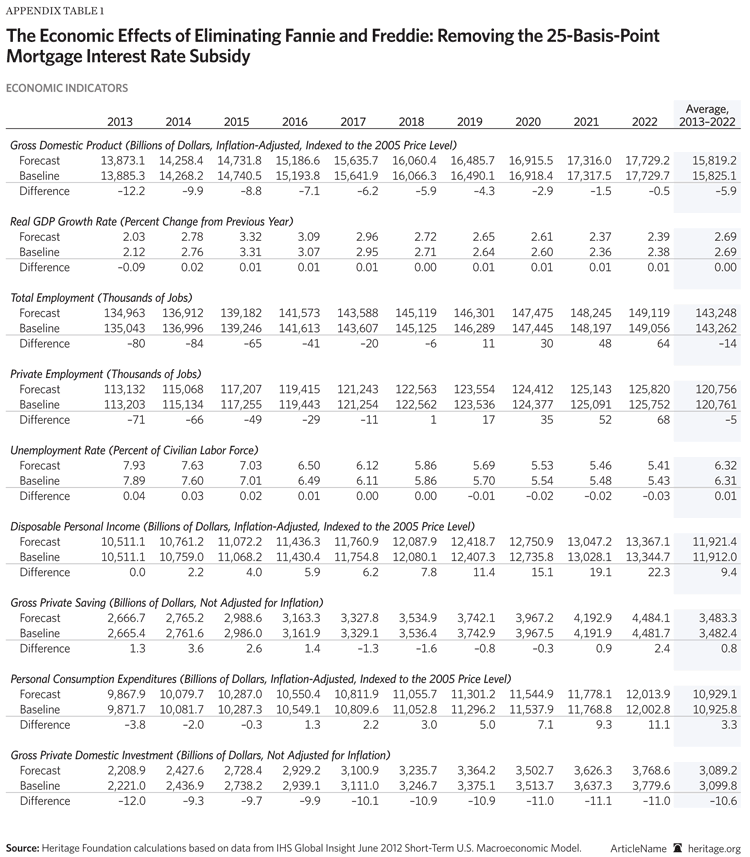
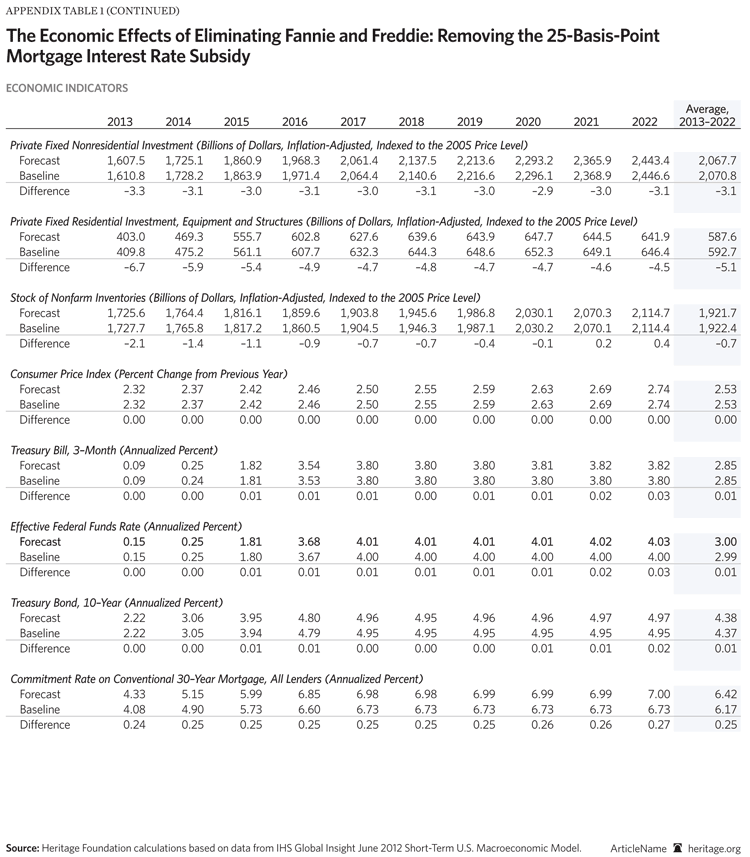
Results of Dynamic Simulation. The U.S. economy is stable in general equilibrium as the policy change of winding down and eliminating the housing GSEs unfolds. In broad context, the overall economy-wide effect is minimal relative to average baseline levels of real GDP ($15.8 trillion). Eliminating the housing GSEs could push the real economy an average of $9 billion below the baseline over the five-year forecast and $6 billion (0.037 percent) per year below the baseline for the 10-year forecast. The non-housing, nongovernment real economy could fall an average of $3 billion below the baseline for the five-year forecast and an average $2 billion below the baseline for the 10-year forecast. These differences in real output are minuscule compared with the overall economy in the forecast period.
The change in real output over the 10-year forecast period would push total employment baseline levels on average 14,000 jobs (0.01 percent) per year. As the labor market stabilizes over the 10-year forecast period, private employment would decrease only 5,000 jobs (0.004 percent) per year relative to baseline levels[67] Additionally, as households take less leverage positions in the U.S., particularly in housing-related consumption, construction-related employment slightly slows by an average of 3,200 (0.43 percent) fewer jobs per year over the 10-year forecast.[68]
The results indicate that household balance sheets improve as real disposable income grows and as spending on durable and non-durable (non-housing) commodities rises. Real personal consumption declines in the first few years, lagging behind the change in real personal income and real disposable income levels. Over the 10-year forecast, real disposable income grows an average of $9 billion (0.079 percent) per year, and real consumption of durable and non-durable goods and services rises $3 billion (0.03 percent) per year relative to baseline levels.
Real personal income levels trend positive beyond the first few years of the forecast horizon largely because of changes in the nominal personal interest income. Nominal personal interest income increases an average of 1.2 percent relative to baseline levels in the five-year forecast period and 1.6 percent relative to baseline levels over the 10-year forecast period. The change in personal interest income is largely driven by changes to a basket of interest rates. This composite of lagged interest rates in the model increases an average of 10 basis points per year to baseline levels over the 10-year forecast period.[69]
As borrowing costs rise, particularly for mortgages, households reduce the amount of housing leverage they hold. Gross private savings increase on average $820 million (0.024 percent) per year relative to baseline levels, and the nominal level of household holdings of financial liabilities declines an average $126 billion (0.75 percent) per year relative to baseline levels.[70] While households reduce their financial debt levels, their holdings of other financial and non-financial assets decline relative to the baseline.[71] Nominal household holdings of financial assets decline 0.52 percent, and holdings of real estate and other non-financial assets decline 0.07 percent.[72] As a result, real household net worth[73] declines an average of 0.19 percent relative to the baseline for the 10-year forecast.
The change in household net worth is an aggregate measure in the GII model and thus does not indicate the relative change between households at different income levels. Wealthier households could likely benefit more from the GSE subsidy than less wealthy households benefit. Without the GSE subsidy, wealthier households have a stronger financial incentive to reduce holdings of both mortgage debt and bond holdings. (See Text Box: Changes in Household Wealth.) Lower wealth households are less likely to hold both mortgage debt and bonds, so a larger portion of the changes to aggregate household net worth likely occurs in wealthier households.
Who Benefits from Changes in Household Wealth?
A crucial question is which households are better off or worse off because of the policy change. Additionally, given a steady-state income—a state in which the economy has converged to equilibrium—would someone prefer to start life in an economy with or without the subsidy. The GII model is limited in its ability to answer these types of welfare questions. We can primarily gain insight to the aggregate changes in household wealth over the forecast frame. Thus, the findings in this study do not give insight into the relative changes in household wealth within income groups.
In a different dynamic general equilibrium framework, Jeske, Krueger, and Mitman find that removing the GSE subsidy would likely widen the gap between the median and average wealth measure. They estimate that the Gini coefficient for (net) wealth would increase 0.67 percentage point. Thus, when comparing stationary wealth distributions between an economy with the GSE subsidy and without the GSE subsidy, they find that removing the subsidy may lead to higher wealth inequality.[74]
In addressing the second question, they find that the welfare gains of the subsidy are monotonically increasing in wealth. Thus, in the hypothetical in which there is a choice to start in an economy without such a subsidy, lower-income households would likely benefit without the subsidy while households with high wealth would benefit from the subsidy. The rationale for this is:
[T]he subsidy keeps interest rates on the financial assets of wealthy households high (since the subsidy fuels a stronger demand), and second, it provides these households (which invest [more] in bonds and leverage substantially in real estate) with a direct subsidy for this investment strategy. Poorer households, on the other hand, derive a large share of their current resources from labor income which is subject to the tax that finances the mortgage interest rate subsidy. Thus these households would prefer having the subsidy and the tax that comes with it removed, especially if their wealth is so low that debtfinanced investment into real estate becomes suboptimal for them and thus the subsidy does not apply to these households.[75]
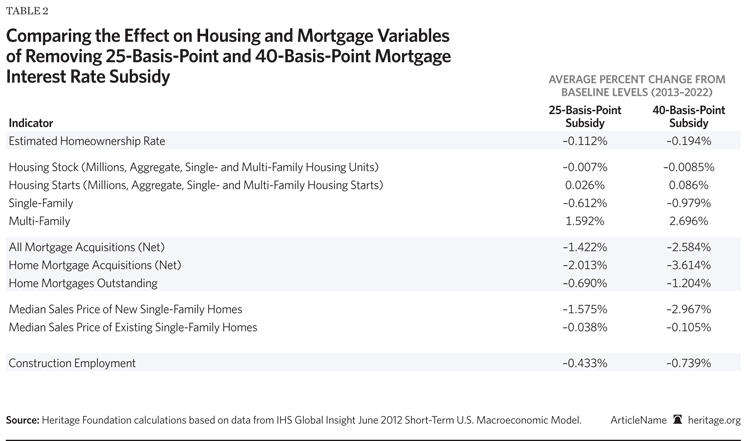
As households respond to the higher borrowing costs in mortgage markets, the level of housing-related and mortgage-related debt declines in the U.S. economy. Total mortgage acquisitions fall roughly 1.42 percent relative to baseline levels, home mortgage acquisitions fall 2.01 percent, and total home mortgages outstanding decline by approximately 0.69 percent.[76] The U.S. housing stock[77] and housing starts experience negligible changes: U.S. housing stock (single-family and multi-family), excluding stock of mobile home units, decreases an average of 0.007 percent relative to the baseline, while housing starts (single-family and multi-family) increase slightly by 0.026 percent.[78]
There is little inflationary pressure in the economy. The year-to-year Consumer Price Index (CPI) changes fall relative to the baseline, and prices begin to rise above the baseline beginning in year 2019. Home prices are also stable over the forecast period. Over the 10-year forecast period, the median price of new single-family homes falls an average of 1.58 percent, while the median price of existing single-family homes declines 0.04 percent.[79] Even a modest decrease in median home prices on existing or new single-family homes should not necessarily matter. If households are making housing-related consumption decisions with lower leverage (debt) positions, then—economically speaking—the slight decrease over the forecast period in the price of these assets should not negatively impact them.
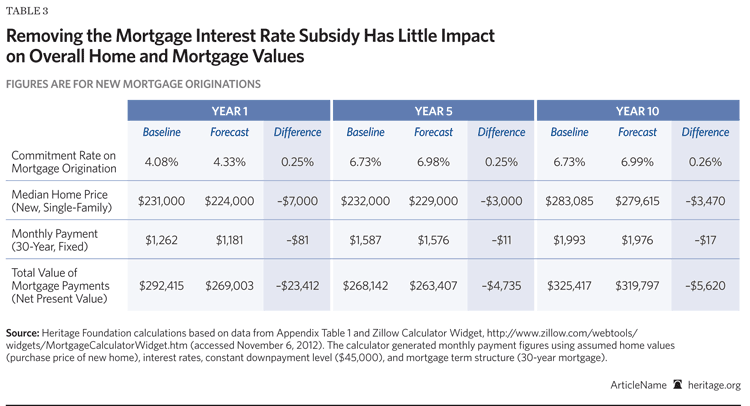
What is the likely impact of eliminating the housing GSEs on U.S. homeownership? Holding all else constant, tighter credit conditions (e.g., raising down-payment requirements) would likely reduce home sales and thus homeownership across the age distribution.[80] However, "all else" would not be held constant. This effect may be reduced by changes in other factors that correlate with home sales, such as the price of homes and disposable incomes. The simulation results indicate that U.S. sales of new homes would fall an average of 0.81 percent and sales of existing homes would fall 1.58 percent over the 10-year forecast period. The results suggest that real household incomes would rise over the forecast period and that the price of new and existing homes would fall slightly. Consequently, U.S. homeownership would decline negligibly by an average of 0.11 percent over the 10-year forecast period.
Federal Publicly Held Debt. Rising long-term interest rates push the interest payments on the federal debt higher. Eliminating the housing GSEs could push publicly held debt higher by an average of 0.17 percent relative to baseline levels over the 10-year forecast.
Eliminating GSE activity in the U.S. mortgage market would result in a minimal and predictable decline in the U.S. economy over the 10-year forecast. Beyond the first few years of the forecast period, as the real economy begins to improve, the U.S. labor market begins to stabilize.
Conclusion
After more than three decades of experience with boom and bust cycles in the housing market, which have affected not only household income and wealth but also financial markets, federal policymakers should seriously reconsider the federal government's role in shaping housing policy. Fannie Mae and Freddie Mac distort the U.S. housing and mortgage market at substantial risk to households and U.S. taxpayers.
The estimates in this report provide additional evidence that the housing GSEs should not be a part of the path to a new housing market and economy. Ceasing new GSE activity would remove a subsidy in the mortgage market—a subsidy that has induced households to take on more debt-related consumption, including in many households that were never in a position to handle the mortgage debt.
The policy reform would have little impact on the overall housing market over the 10-year forecast period. The overall impact on U.S. homeownership is predictable and minimal because the policy reform has little impact on the U.S. economy in the long run. Over the entire 10-year forecast period, the impact on household balance sheets is minimal and predictable resulting in a stabilized labor market and real economy.
Appendix A: Methodology
Overview of the IHS Global Insight Quarterly Model of the U.S. Economy
CDA analysts used the IHS Global Insight 2012 June Quarterly Short-Term Model of the U.S. economy to estimate the overall net economic effects of gradually liquidating Fannie and Freddie. The baseline forecast is the forecast of the economic future with the housing Government-Sponsored Enterprises (GSEs), Fannie and Freddie, in existence.[81]
The IHS Global Insight Quarterly Short-term model is largely an econometrically estimated model of the U.S. economy that combines both demand-side and supply-side features. It is crucial, however, to keep in mind that all of the economic relationships, explicit and implicit, in the GII model as well as other empirical models of the U.S. housing market based on historical data assume the existence of the two housing finance GSEs.[82]
Simulating the Economic Effects of Liquidating Fannie and Freddie
Since the counterfactual experiment compares an economy with Fannie and Freddie with one without them, we run two simulations to test the sensitivity of the GII model to the 25 basis point assumption. The first sensitivity run assumes the same 25 basis point change in the mortgage commitment rate, and we turn off the lever in the GII model for the Federal Reserve reaction function. The second simulation assumes a 40 basis point change in the mortgage commitment rate and leaving the Federal Reserve reaction function turned on. See Appendix Table 2 and Appendix Table 3 in Appendix B for the results of these two sensitivity simulation runs.
To address these policy questions with the GII model, either the variable in question needs to explicitly exist in it or a relationship to a variable inside the model needs to be established using an outside model. Some model variables—those which are identities—cannot be used as levers in a simulation because changing them would invalidate the underlying econometric interrelationship of the entire model.
All changes were introduced to the model as immediate and permanent changes over the full 10-year forecast. Additionally, the changes were introduced in the model to the add-factor (the stochastic/error component) of the variable unless otherwise indicated.[83] Therefore, there is likely some adjustment to the variable over the 10-year forecast where the add-factor was overridden.
Because no variable in the GII model shows the asset valuation of GSE mortgages, the sizeable effect of this change would operate via the interest rates and conditions on mortgage lending. That is, if the GSEs are selling assets as a result of liquidation, then their price would fall, mortgage interest rates would rise, and mortgage lending conditions would likely change.[84]
A crucial question for modeling purposes would be whether these institutions are simply selling mortgages or whether they are also pulling out of the mortgage insurance business. If they are holding mortgages themselves, then this would push interest rates higher. However, if they are no longer providing mortgage insurance, then rates would likely rise by even more, and the lending terms and conditions in the private sector would tighten.[85] As a result, at least in the short run, higher rates and tighter lending conditions would induce change in demand for housing and mortgages, which would push prices (and likely activity) down.
Changes to Interest Rates on U.S. Residential Mortgages. One of the dominant policy channels in the simulation is the change in interest rates in the mortgage markets.[86] At a minimum, liquidating the housing GSEs would increase the cost of borrowing in the short run in the housing and mortgage markets of the U.S. economy. It is widely believed that eliminating the GSEs in the secondary mortgage markets will result in a change in the mortgage interest rate spread.[87] Without the GSE guarantees, mortgage holders—such as pension funds and banks—will want a higher interest rate to offset the increased risk of holding mortgages. The spread could be affected by changes in demand for Treasury securities (which are often an index for mortgages), the supply of Treasuries, or even views of the riskiness of the mortgages and other alternative financial products.
We assume that the impact will be an increase between 25 and 40 basis points.[88] and we assume an immediate and permanent cost of borrowing in the mortgage market. The IHS/Global Insight model has a series that captures the commitment rate on conventional 30-year mortgages (annualized rate and an aggregate of all lenders).[89] This variable is stochastic in the model; therefore, we make the change as an override to the stochastic component of the variable. It is important to note, however, that these levers may not capture potential volatility well. Without the GSEs, we could expect interruption in the supply of funds for mortgages. This could create large or frequent swings in the mortgage rate. We did not assume any exogenous change in volatility to the interest rate series in the model, including the commitment rate on conventional 30-year mortgages.
Estimated U.S. Homeownership Rate. The homeownership rate is not a variable in the model. However, homeownership is related to the number of homes sold, which is derived from the existing single-family home sales in the model. We used an OLS regression model to estimate homeownership as a function of existing single-family home sales (HU1ESOLD). We introduce this new variable into the GII model to generate projected homeownership rates (RHOMEOWNNS) based on the forecasted HU1ESOLD.[90]
Appendix B
About the Authors
John L. Ligon is a Policy Analyst in the Center for Data Analysis at The Heritage Foundation.
William W. Beach is Director of the Center for Data Analysis, and Lazof Family Fellow in Economics, at The Heritage Foundation.



